Tag: Literary fiction

  • A DOCTOR a DAY: A Novel (EveryDoctor Series, Book 1) by Bernard Mansheim, M.D. –  Literary Fiction, Medical, Social & Family Issues

    A DOCTOR a DAY: A Novel (EveryDoctor Series, Book 1) by Bernard Mansheim, M.D. – Literary Fiction, Medical, Social & Family Issues

    A behind-the-scenes look at the life of a medical doctor, from med school to internship to private practice to the courtroom and beyond.

    Dr. Luke James is in private practice. He has a loving wife and young daughter, and in some ways, his work brings joy and affirmation.  But when he started his long journey through the healing profession, he knew there would be times when all his efforts would end in the loss of a patient. As this intensely emotional story opens, Dr. James is in court, defending himself in a malpractice suit in which, as the prosecutor accuses, “You let your patient die.” Told in flashbacks, we see how the lawsuit is calling into question many of the ideals the physician once cherished. He recalls crucial incidents from his fraught, exhausting, sometimes depressing, sometimes uplifting days of doctoring, the many times when his judgment might have prevented — or resulted in — the death of a patient in critical condition.

    As he watches patients die, their last moments provide a profound reminder of the swiftness of death—” like flipping off a switch.” Yet Dr. James will continue to offer words of comfort and try daring remedies. Once he even donated his own blood in hope of a miracle cure for one of his patents. He thinks that the practice of medicine is an art and a craft that must be honed and believes that even the science of medicine inexorably dictates its own terms. As he remembers his work life in all its complex aspects, Dr. James ponders his decision for the patient whose demise is the focus of the malpractice trial. Was he “playing God?” Did he rob the patient of her right to a longer life, even though that would have been a life of an unconscious mind and a body riddled with tubes, unhealable wounds, and deterioration?

    Author, and former practicing physician, Bernard Mansheim has fictionalized the duties and dichotomies of his own experience as a doctor so starkly that there can be no doubt of his deep connection to the questions posed and the answers sought by Luke James. Mansheim started his education with a BA in English Literature, and there is also no doubt of his ability to compose a gripping saga that tears away any blinders we might have had about the glamour of a doctor’s life.

    At one point, Mansheim’s hero realizes he can’t allow himself to cry and begins to build an inner wall to hide some of his worst fears and sorrows, creating a backlog of unexamined depression. In an author’s note, Mansheim states that the suicide rate among doctors is 50% greater than that of the general population. It is known that a doctor a day commits suicide. This dismal trend has followed since 1858. His story boldly reveals some possible reasons for that grim statistic, while leaving room for hope for his embattled protagonist and others like him. This novel lays the foundation for discourse about this public health crisis and may be one of the most important books that you could read this year.

  • The SOMERSET Awards for Contemporary & Literary Fiction 2016 First Place Category Winners

    The SOMERSET Awards for Contemporary & Literary Fiction 2016 First Place Category Winners

    The SMainstream Contemporary Fiction Awardsomerset Awards Writing Competition recognizes emerging new talent and outstanding works in the genre of  Contemporary and Literary Fiction. The SOMERSET Awards is a division of Chanticleer International Novel Writing Competitions.


    Congratulations to the 2016 SOMERSET Awards First In Category Award Winning Contemporary/Literary Fiction Novels:

    • SOMERSET AWARD WINNERS: Meghan Clancy, Justin Bog, Annaliese Darr, Debu Majumdar, Fire Chief John J. Mandeville Alexander Boldizar, Bernard Manheim, M.D.

      Social/Psychological Themes: Wake Me Up by Justin Bog

    • Women’s Fiction: Believe by Annaliese Darr
    • Manuscript: Chhori by Megan A. Clancy
    • Adventure/Suspense: Sacred River by Debu Majumdar
    • Satire/Allegorical: The Ugly by Alexander Boldizar
    • Literary: Everydoctor by Bernard Mansheim
    • Connections: The Fox, Mike, Hilda, and the Green Emerald Cafe Inferno by Chief John J. Mandeville
    • Action/Adventure: The Improbable Journeys of Billy Battles: Book 2, Finding Billy Battles Trilogy by Ronald E. Yates

    CONGRATULATIONS to  Alexander Boldizar author of the SOMERSET GRAND PRIZE winner — The Ugly!

    And UBER CONGRATULATIONS to Alexander Boldizar for The UGLY taking home the OVERALL BEST BOOK for the 2016 Chanticleer International Writing Competitions – The Overall Grand Prize Winner!

    This is the second time that the Somerset Grand Prize Winner has taken home the Overall Grand Prize Ribbon!

    The 2016 SOMERSET Short-Listers competed for these First Place Category Positions. These First Place Category Award Winners’ novels have competed for the SOMERSET Grand Prize Award for the 2016 Contemporary and Literary Fiction. These winners were announced and recognized at the annual Chanticleer Authors Conference and Awards Gala, Bellingham, Wash., on April 1st, 2017.

    The First In Category award winning titles will receive an award package including a complimentary Chanticleer Book Review of the winning title, digital award badges, shelf talkers, book stickers, and more.

    Congratulations to those whose works made the SOMERSET Awards 2016 FINALISTS and SHORT-LISTERS lists.

    We are now accepting entries into the 2017 SOMERSET Awards. The deadline is November 30th, 2017  Click here for more information or to enter.

    More than $30,000 worth of cash and prizes will be awarded to the 2017 Chanticleer Novel Writing Competition winners! Fifteen different  genres to enter your novels and compete on an international level.


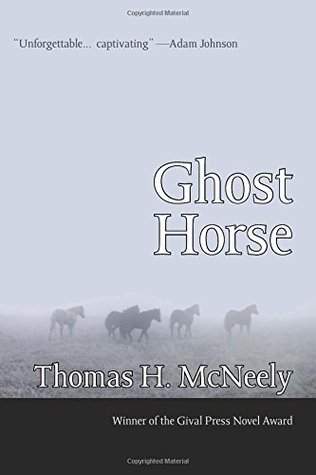
  • Ghost Horse by Thomas McNeely – Literary Fiction

    Ghost Horse by Thomas McNeely – Literary Fiction

    With a firm sense of place and time, Thomas McNeely creates a tableau of class and race segregation juxtaposed with the frailty of youth: One young boy exists in the tormenting forces of his own personal hurricane of a broken family and a broken society that throws him down and swirls him around without regard to their tragic effect on him.

    Eleven-year-old Buddy Turner’s understanding of what it means to be normal hangs in the balance. He’s facing the trials of growing up and a family unit in shambles and his whole world is about to change. It’s the 1970s, Houston, and most kids don’t expect to be thrown into the nasty realities of a broken home. However, this is Buddy’s reality in Thomas McNeely’s debut novel, Ghost Horse.

    Buddy’s mother spends much of her time working in a hospital laboratory while his absentee father comes back to town leaving Buddy with a fresh set of empty promises and his mother with a request for a divorce.

    Buddy’s only escape is working on an animated film with his best friend, Alex Torres. Together, the boys create a film about a ghost horse. Entering into the work helps Buddy avoid the painful realities at home and serves as a buffer for his heartache. Indeed, the movie the boys create is a metaphor for the upheaval Buddy is experiencing in the real world.

    McNeely expertly weaves an intricate and darkly complex story of a boy trying to gain a foothold in a world–a raw, and sometimes, painful coming-of-age story. The book took ten years to pen through the author’s own turbulent waters and his father’s untimely death and at points the reader can see his internal battle emerging in his writing in this heart-rending coming-of-age tale set in the turbulent  1970s.

    In the broader spectrum of the novel, McNeely unleashes his questions about class and racial prejudices, and how adult behavior informs children who are expected to follow suit. Ultimately, however, McNeely’s storytelling is rich with texture and the soulful portrayal of a lost boy, who is un-moored by those whom should care for him the most. Ghost Horse has the weighted emotional cache and heartfelt pertinence that enables the tale to tug at the reader for a very long time.

    5 Star Best Book Chanticleer Reviews round silver sticker

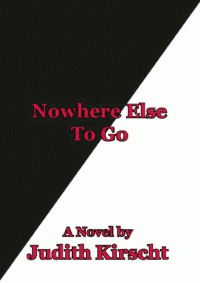
  • NOWHERE ELSE TO GO by Judith Kirscht – Contemporary, Literary Fiction

    NOWHERE ELSE TO GO by Judith Kirscht – Contemporary, Literary Fiction

    It’s the fall of 1968 and America is in the throes of rapid social change and cultural upheaval. Martin Luther King has just been assassinated and body bags filled with 18-year-olds boys are coming back from Vietnam at an alarming rate.  Political unrest and race riots are turning cities into war zones while suburbanites try to buffer themselves against the tumultuous times.

    Nowhere Else to Go by Judith Kirscht masterfully explores these momentous national issues by humanizing them on a personal scale in the small Midwestern college town of Norton Bluffs. The intransigence of the ruling suburbanite whites along with their fears meet head on with the anxieties of the disadvantaged blacks in the halls of education—where the effects of racial polarization are most profoundly felt and magnified in small towns.

    Principal Cassie Daniels, of Red River Junior High School, relentlessly tries to carry on classes, school dances and basketball games even as she encounters the shrapnel from these social upheavals in her beloved school, in her marriage, in her relationship with her two school-aged sons, and within her professional relationships.

    Principal Daniels and the RRJH faculty have already endured the difficulties brought on by racial integration and bussing.  But just when they thought that they had made it past the worst and even came out somewhat ahead with a new wing of classrooms, the Board of Education has more in store for RRJH. It seems that with a bit of “redistricting,”  Red River Junior High, due to its location on the edge of town, can serve as a buffer zone between disadvantaged, mostly black, neighborhoods and those of the affluent white ones.

    The hoped-for, by the town’s politicians, result from this redistricting maneuver is to return a sense of “normalcy” to the town of Norton Bluffs along with the prevention of any violence like last year’s riots at the high school.  And if the redistricting isn’t enough to throw RRJH into a tailspin, The School Board is dictating to use RRJH as a social experiment laboratory for testing some educational “new-think” concepts.  Fresh new teachers have been hired by the School Board for RRJH –and this is where things start to get really interesting.  These new teachers’ tutor in ‘advanced school room theory’ is Principal Cassie Daniels’ husband.  Ben Daniels is an ivory tower burnout hoping to put a new polish on his tarnished idealistic proclivities.  He’s already selected the feisty Louisa Norton as his favorite protégé.

    Principal Daniels can’t help but worry that the escalating racial tensions in her schoolrooms will erupt into violence.  Can she keep her divided faculty members on the same page?  Will those wide-eyed kids from the Flats be able to make “the jump” from the safety of their old elementary school into the open-jawed terrors of junior high?  And just what are Ben and the confrontational Louisa really up to?

    If Cassie Daniels is the strength of the author’s energetic narrative, the teenage students are its pulse, a Greek chorus chanting under the noisy howl of the games adults play.  As expected, a great deal of this novel is devoted to these adolescents’ emotional responses. Particularly endearing are Kirscht’s portrayals of how the kids try to cope with a world that they are too young to understand. Kirscht does an excellent job telling her story from many perspectives.

    No Where Else to Go is a tenacious read that captures the grittiness of the undertow of racism and prejudice.  However, some may find the first several pages a little hard to follow as you are taken instantly into the fray of the battle, but if you hang on, you will find this dense novel to be fast-paced and hard to put down.  I heartily recommend Nowhere Else to Go as a tightly woven and insistently engaging novel about racial prejudice and the blackboard jungle of the 1960s.