Tag: Literary fiction

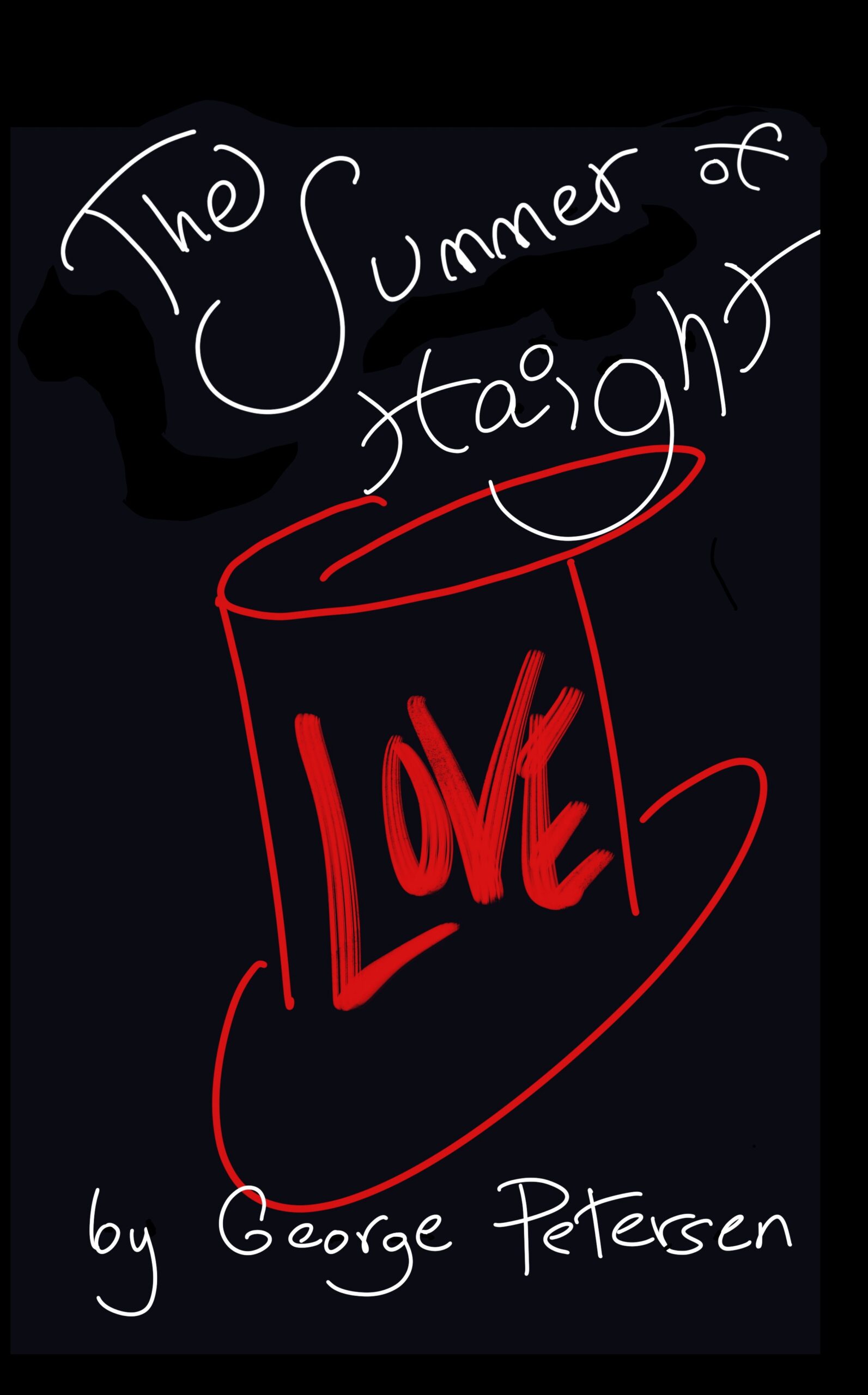
  • THE SUMMER Of HAIGHT by George Petersen – Surreal Fiction, 1960s, Literary Fiction


    In The Summer of Haight, George Petersen opens a doorway into the hallucinatory dreamscape of 1967 San Francisco, where the counterculture’s bright ideals are shadowed by something far more sinister.

    Forget the peace signs and flower crowns. This isn’t a nostalgic romp through Haight-Ashbury. It’s a slow-burning gothic mystery where the air smells of something rotting just beneath the incense, and reality unravels one eerie page at a time.

    The Summer of Haight centers on Longfellow, a straight-laced, impeccably dressed British lawyer living in San Francisco. He’s logical, loyal, and just rigid enough to feel like he’s constantly one step out of place in the groovy chaos of 1960s counterculture. His best friend, the brilliant and eccentric scientist Dr. Jonathan St. Amour, seems to be riding high—hosting elite parties, building a private laboratory under his Victorian mansion, and showing off his mysterious new pet cat, Zelda, who wears a custom-cut diamond in the shape of a cat’s eye.

    Things start to tilt sideways when Jonathan suddenly asks Longfellow to draft a new will—one that leaves everything to a man named Dr. Asmodeus Youngblood.

    This ‘Youngblood’ is nobody Longfellow has ever met, and Jonathan refuses to introduce them. In fact, he makes Longfellow promise not to investigate him. Naturally, this only makes Longfellow more suspicious.

    What follows is a descent into something much stranger than legal drama. Youngblood isn’t just a mystery; he’s a walking contradiction, a man who looks like a flamboyant hippie but moves with something menacing in his step. He sleeps during the day, unnerves everyone in the house, and seems to have an unnatural hold over Jonathan. Even Zelda is terrified of him.

    As Longfellow breaks his promise and trails Youngblood through the fog-choked streets of the Haight, the novel morphs into a fever dream.

    There are LSD-drenched parties, glowing body paint, hallucinatory visions, and ominous signs that Youngblood may not be entirely human. The scenes at the Fillmore Auditorium—strobe-lit nudity and shadowy faceless figures—feel like a cross between Eyes Wide Shut and a haunted lava lamp. At one point, the atmosphere turns almost otherworldly: “Wide-eyed and anxious, I climbed the stairs to the auditorium, a red apple in one hand, a bright yellow balloon in the other… Janis Joplin belted out ‘Summertime’ on stage… tie-dye backdrops bathed in luminous liquid colors… A puppeteer hung a life-size marionette from the balcony so it could dance with the flower girls on the floor below…”

    Despite the surrealism, The Summer of Haight is also about aging, longing, and identity.

    Jonathan’s longing to be young again, to break free from the restrictions of respectability and embrace something primordial, is familiar but also terrifying. Readers will find the story clearly depicts how simple it is to lose oneself while pursuing the illusion of independence.

    The prose is moody, poetic, and at times playfully gothic.

    There’s fog, firelight, hidden blades, secret cellars, and symbolic snakes. But the pace is deliberate; it doesn’t sprint. Rather, it creates a dense atmosphere that allows the reader to feel the dread.

    If you like stories where a seemingly rational world starts to fray at the edges—where one must question not only the nature of the villain but that of reality itself—then The Summer of Haight by George Petersen might be your kind of delirium. It’s haunting, heady, and more than a little hypnotic.

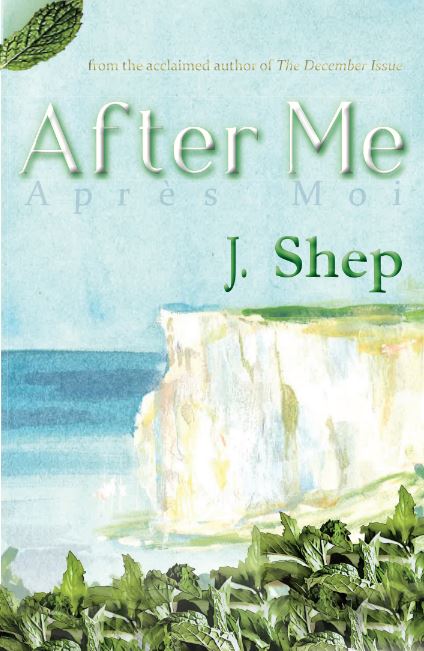
     

  • AFTER ME by J. Shep – Historical Fiction, Family Saga, Post World War II France


    The arrival of a mysterious package makes for an enticing beginning in J. Shep’s After Me. Inside we find a manuscript with the same text as the book we’re about to read. This inventive start lends a sense of realism and truth to what follows and creates a vivid yet hazy quality, like memory itself.

    After Me travels back in time to rural France just after World War II. The setting appears idyllic at first—almost unbelievably so. Still, there’s a disturbing undercurrent felt from the start. Not from an unwanted presence, but rather from an absence.

    Told from the perspective of Ellande, a young boy, he recounts the summer his parents die in an accident and he and his nine-year-old little sister, Madeleine-Grace, are sent to their extended family’s summer home in France. Their care seems competent at first—but cracks in the façade gradually emerge as Ellande begins his tale.

    Aside from their mourning, life seems lovely in the beginning. Lavender-hued skies at sunset, and the scent of peony soap permeate the background of this tale. Ellande recalls the light-filled home’s orderly kitchen where meals are made with fresh herbs from the garden and numerous aunts, uncles, and cousins create a large roster of characters. Readers may feel a bit disoriented encountering so many new names, as well as the French words and traditions sprinkled throughout the text. But that disorientation offers the reader insight into the mental state of the children as they navigate this strange summer of loss and learning.

    The home’s idyllic nature springs almost entirely from a single character: Aunt Adèle. A tireless worker, she keeps the house beautiful and functional, doing the cooking, cleaning, gardening, and taking care of the childcare with grace and joy. As the novel progresses, her surviving siblings emerge as toxic counterpoints who are bitter, unhappy, and unwilling to pitch in around the house.

    While some of their issues and instability can be traced back to the war and its aftereffects, the family strife isn’t just a product of wartime tragedies. Instead, issues that emerge are largely ones of character. Aside from Adèle, the adults in the house share little interest in the traditions, values, and work performed for the betterment of the family. They prioritize idleness and petty feuds, and their children largely take after them.

    As the summer unfolds, the peaceful narrative slowly takes on a sinister quality.

    But Ellande and Madeleine-Grace are different. Their mother Juliette was the sibling most aligned with Adèle, and the children have inherited her sense of tradition and good values. They take pride in helping the childless Adèle around the summer house. Still, with Juliette gone, the burden on Adèle grow heavier. Adèle’s siblings are resentful of her homemaking abilities and unbreakable spirit and continually punish her for a lifetime of perceived slights.

    Though this is a modern novel, it’s written in a traditional style and slow pace, evoking novels of long ago. It has a dream-like quality, with beautifully specific descriptions that exist alongside the uncertainty of memory.

    And readers will be well-rewarded for their patience with the slow early sections. Not only do fantastic details of real traditions emerge as the story progresses—such as the harvesting of fleur de sel—but so does an intense narrative of family and intangible inheritance. As Ellande and Madeleine-Grace come of age, they’re confronted with questions of who will keep those traditions alive, why, and at what cost?

    Ultimately, After Me is a tale of breaking generational curses. A shocking turn near the end seems to suggest that even the most well-intentioned will never escape the burdens of family trauma and destruction. But this is a story within a story, and most of the main characters will find some sort of closure, though the finishing touches may take decades to emerge.

    After Me starts out as gentle and luxurious as a rolling meadow. Yet it ends up confronting some of life’s greatest questions and most haunting mysteries. This combination makes for an evocative novel whose message will linger long after the last page has been turned.


  • THE DECEMBER ISSUE by J. Shep – Journalistic Fiction, Contemporary Social Issues, Literary Fiction


    In The December Issue by J. Shep, a veteran columnist stands up for his controversial work, despite intense public pressure to disavow it.

    Paul, a retiring columnist, has earned vast applause for his amusing, playful, and inspiring monthly column in The Current Front. However, this renown flips on its head after the November Issue’s release, when masses of readers give a hostile retort to his article. His sentiment regarding ‘loss of class’ in American society angered both older and younger readers, as proved by the huge pile of mail on his desk.

    The firm’s management can’t help but notice the trouble their most reliable writer has caused.

    Dolefully, Paul finds himself pressed to put out a public apology and rewrite the December issue, which he had earlier submitted. But in an unlikely turn, sales of the contentious November publication begin to soar. This sudden success, ensuing shortly after news of Paul suffering a horrifying accident hit the airwaves, sends him into a state of wonder and astonishment.

    The December Issue warms up the soul from its first chapter to the last.

    Paul’s engaging arc pays homage to a thriving career in journalism, revealing its benefits and drawbacks. His distinctive point of view forms the backbone of the story, which relates to the modern writing of op-ed pieces with ingenuity.

    Worthwhile conversations, clarity of thought, defined points of view, and unique characters, all contribute to the stellar whole of this book. Author J. Shep writes with colorful, fast-moving, and provocative style, which evokes fascinating ideas in the reader’s mind.

    As Milton Glaser famously said, “There are three responses to a piece of design – yes, no, and wow!” The December Issue insists that one should always aim for ‘wow.’

    This story will inspire, particularly those readers in the featured vocation of journalism. A worthy read that illustrates how one can recognize, support, and develop the diverse talents in their organizations.

    All things considered, The December Issue is a splendid work of enormous value and imagination.

    Available for pre-order now!

    5 Stars! Best Book Chanticleer Book Reviews

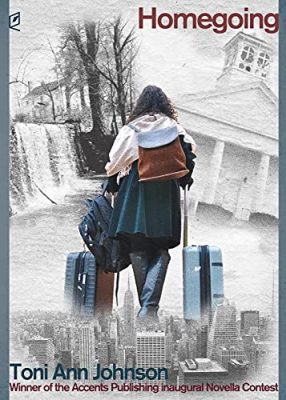
  • HOMEGOING by Toni Ann Johnson – Literary Fiction, Discrimination & Racism, Novella


    Blue and Gold Grand Prize Badge for the Short Novella Homegoing by Toni Ann JohnstonHomegoing by Toni Ann Johnson is an intimate portrait of a middle-aged African-American woman dragging herself hand over hand out of grief and despair.

    This story begins with her aching, echoing pain after the one-two punch of a miscarriage and the dissolution of her marriage. Her journey takes her back to the upper-middle-class white suburb where she grew up, through childhood memories that refuse to be denied and to, of all times and places, a funeral.

    Something and someone is supposed to be buried. Certainly the deceased. But quite possibly the woman who has held on to her losses and her grudges long enough to poison her own future.

    Homegoing explores two literary tropes about the place called “home.” Thomas Wolfe’s posthumous 1940 novel states starkly in its title, You Can’t Go Home Again. But Robert Frost, in his poem The Death of the Hired Man, says, “Home is the place where, when you have to go there, They have to take you in.”

    The home that Madeline Arrington can’t truly go back to represents the past and not the present. She remembers her childhood, as one of the very few black children in a mostly-white suburb, being filled with racist taunts and bullying from children who were never held accountable for making her childhood hell. A hell that seems to be remembered by no one but herself – and she can’t let go of either the original memories or the gaslighting that now surrounds them.

    While Maddie doesn’t want to go home, she can if she must, as she does for the funeral of her former next-door neighbor. And in that return, she learns that the past is dead except in her own memories and that it’s time to let it go – not for anyone else’s sake, but for her own.

    Homegoing offers catharsis.

    While Maddie’s memories of childhood bullying revolve around racism, any adult who was bullied as a child will resonate with Maddie’s experiences. Children are often cruel, and the victims remember their treatment much more harshly and in much more detail than the perpetrators.

    But the past is another country, to quote another classic novel, and they do things differently there – or did. Maddie’s own healing requires her to leave the past behind, and her ability to do so gives the reader hope for a brighter future for the character, and quite possibly for themselves as well.

    Highly Recommended!

    Homegoing by Toni Ann Johnson won Grand Prize in the 2021 CIBA Shorts Awards for Short Stories, Essays, Novelletes, and Novellas.


    Shorts GP gold sticker

    5 Stars! Best Book Chanticleer Book Reviews

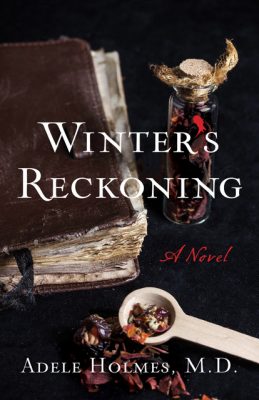
  • WINTER’s RECKONING by Adele Holmes – Southern United States Fiction, Women’s Historical Fiction,


    In Winter’s Reckoning by Adele Holmes, a mercurial new pastor in town threatens the families of two women. 

    Welcome to 1917. A time of suspenders for men and, in the cities, bloomers for women. Horse-drawn wagons range the landscape, stoves burn wood, and people have to use outdoor facilities. A time of few vaccines and no antibiotics. People understood little of most diseases. Germ theory still had ground to cover. Women routinely died in childbirth. Life could vanish in a moment. 

    In rural Jamesville, a Southern Appalachian town, Madeline Fairbanks does what she can to make the lives of friends and neighbors more comfortable. She works as the healer in this community – and has for the past quarter of a century. Madeline eases the passage into and out of life, treating aches and pains in between.

    Maddie comes from a long line of healers. Her grandmother taught her, and she’ll pass along what she knows to her granddaughter in turn. Hannah already has the inclination. The time has almost come to give her the ancestral box, which holds herbal remedy recipes and sketches and notes. That box contains all the learning from the women in their family who came before them.

    Maddie has also trained an apprentice, Renetta Morgan, who is just about ready to begin working in the community, her own community, alone.

    Maddie is white. Renetta is Black. They walk through town together, brazenly traversing from North Main (the white section of town) to South Main (the Black) and back again. Sometimes they go to tend the sick. Sometimes, to the fields and hillsides, gathering the healing flowers and roots and herbs. Other times, they work in Maddie’s cabin, creating tinctures, potions, and ointments. When Renetta learns enough, the two of them must no longer work together.

    The long-promised railroad has recently bypassed the town, spelling a slow death for the community, cut off now from the lifeline of the new transportation. With their Main Street shops shutting down, the townsfolk face hard times. In the South, rigid segregation, Jim Crow laws, black codes, and the Klan divide the community. In Jamesville, the pointy hat boys haven’t been active in recent memory, but that’s about to change. Not everyone turns a blind eye to the flagrant close fraternizing of Maddie and Ren, two uppity women who don’t seem to know their place. Tempers are fraying.

    Into this small town closing in on itself rides a lone horseman one day, who, after a brief look around, announces that he’s the new pastor. Reverend Carl Howard is the match to the powder keg.

    As the town adjusts to this new pastor in their midst, and Reverend Howard takes his measure of the place, we will watch events unfold from the vantage point of three characters, all of whom have secrets to keep. Secrets that could be their undoing.

    With the loss of the railroad, another potential casualty looms – one of education.

    The town is divided on whether to invest in secondary education or not. Currently, only the primary school offers its young charges the most rudimentary learning. Nothing to build on. With more education, Maddie thinks, real change might be possible. Greater equality between peoples, despite their gender or skin color. Greater freedom for women. Or at least a good step in that direction.

    The theme of education and what it can bring – more profound understanding, greater personal freedom and fulfillment, and economic opportunities – underlies the struggle of those for and against keeping women and Blacks “in their place.” One side looks forward to what could be; the other looks back to what has been. The balance of power always tilts in favor of those who have always held it. As the tension mounts, where words fail, violence threatens.

    When a severe winter storm hits, everyone’s lives are suspended.

    As they wait out the freeze, rationing their supplies and tearing up the porch for firewood, Maddie and Ren will come to know things about each other and themselves. And Hannah will grow up a little.

    Set in the brooding rural South, and for a good portion of the novel in the challenging and crystalline world of a deep snowstorm, Winter’s Reckoning is rich in storyline and character with plenty of mystery woven throughout. Simply put, here’s a story that takes on issues whose harm remains with us today. With a climactic pulpit scene that’s not to be missed – and one novel we can highly recommend!

    Winter’s Reckoning was a First Place Winner in the 2021 Goethe Awards.

    5 Stars! Best Book Chanticleer Book Reviews

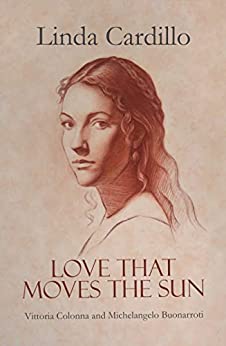
  • LOVE THAT MOVES the SUN by Linda Cardillo – Historical Fiction, Literary Fiction, Renaissance Fiction


      Blue and Gold Chaucer 1st Place BadgeLinda Cardillo debuts triumphantly into historical fiction with her novel, Love That Moves the Sun.


      Vittoria Colonna, an Italian noblewoman and poet born in 1490, lives with grief and isolation. As an adult, she meets and forms a deep friendship with the revered painter and poet Michelangelo. This meeting forms the center point of the novel that takes readers back and forth through time. The story traces Vittoria’s life from her childhood and betrothal to her future husband Ferrante, to her later years with Michelangelo.

      As a child, Vittoria leaves home for the island of Ischia. There, she lives with her betrothed Ferrante and his aunt Costanza d’Avalos.

      Vittoria and Ferrante’s future union will strengthen political alliances. Later, Vittoria becomes a widow and withdraws from public life for several years. One day, she meets Michelangelo, while he paints The Last Judgement in the Sistine Chapel. Their friendship changes each other’s lives forever.

      Cardillo takes great care with the novel’s front matter. She includes lots of material to help the reading experience.

      In the front sections of the book, readers will find a timeline, to help as the novel shifts around. The author also provides a list of historical figures, and fictional characters added for entertainment value. In her author’s note, Cardillo adds that while she followed facts as much as possible, she filled in the gaps with fiction. This shows respect to the life of Vittoria Colonna. Cardillos brings her to life in fiction as Vittoria did for her husband in poetry.

      A theme of polarity shapes Love That Moves the Sun.

      Michelangelo, an artist of paint and of words, “Sees humanity’s secrets and brings them to life on the page.” But the unwavering expectations of the public burden him. Vittoria struggles between staying in her self-imposed seclusion to pray and write, and the powerful pull towards rejoining society and her bond with Michelangelo. The events of the past and present also mirror each other. Events have a subtle organization that sees them building off the context of what happened before. As the past meets with the present, the gaps in Vittoria’s story come together.  Readers get the full picture of her life and feel like they know her strongly.

      Linda Cardillo’s Love That Moves the Sun keeps alive the memory of Vittoria Colonna’s life and work, as a woman who struggled between being a woman of God and a woman in love. Readers of historical fiction and romance should not miss Love That Moves the Sun.

      Love That Moves the Sun by Linda Cardillo won 1st Place in the 2019 CIBA Chaucer Book Awards for Pre-1750s Historical Fiction.


      5 Stars! Best Book Chanticleer Book Reviews


    • The LONG DESERT ROAD by Alex Sirotkin – Literary, Romantic Fiction, Contemporary Fiction

      The LONG DESERT ROAD by Alex Sirotkin – Literary, Romantic Fiction, Contemporary Fiction


      The Chatelaine 2021 Grand Prize Badge for the Long Desert Road by Alex Sirotkin for Romance FictionAlex Sirotkin’s debut novel, The Long Desert Road, navigates the emotional arcs of life in contrast with the greater expanse of the cosmos. Here a young woman must face her addictions while the people around her try to move beyond her backlash.


      We meet Henry Spinoza, a 44-year-old quirky science writer. He ponders his life as half over, looks for the right woman, and wonders if there isn’t more to existence.

      For twenty years, Henry, a science writer, has been researching a non-fiction book on the universe that he intends to write. Henry’s feeling “bored, boring, and budget-conscious…the trifecta of gloom,” as he puts it. But in the middle of this ennui, his sister-in-law invites him to dinner, along with her divorced friend, Isabel Dalton, an attorney, and “the setup is afoot.”

      Meanwhile, Isabel deals with a family crisis. Her daughter Lauren, newly out of rehab, gets into a severe accident with tragic consequences. Determined to stop enabling Lauren, Isabel places her in the Dusty Palms rehab facility for an extended 6-month stay. Lauren struggles through detox and nightmares, therapy sessions and medications, self-destructive escapades, and mother/daughter communications. Lauren’s thinking, actions, and attitude would justify Henry’s subsequent observation that she’s “just your average, somewhat immature, impulsive bipolar twenty two year old with a history of serious trauma, drugs, alcohol and jail.”

      In an effortless blend of conversation, humor, and questioning, Henry and Isabel slowly begin to bond.

      Their relationship blossoms from sushi dinners and casual banter. Henry’s fascinating diatribes about the cosmos and Isabel’s sharing of her daughter’s cunning, manipulative ways deepen their connection. When Lauren’s sudden, unexpected release from rehab threatens to derail the merging couple’s dream trip to Chile (coinciding with Henry’s last bit of research), Henry convinces Isabel that they should bring Lauren along. Amidst the desolate beauty of the hot Atacama Desert, with an infinite sea of stars and planets shining down upon them, these characters find common ground, coming to terms with their inner struggles.

      Sirotkin tells a story richly layered with well-defined characters, an informative narrative, and genuine, probing dialogue. While the characters initially appear in their own chapters, their lives soon become entwined. Multiple subplots quickly move the action forward. The story uncovers a variety of personal and family issues that help these characters recognize their pitfalls. Henry’s enthrallment with the cosmos contrasts Isabel’s frustration and concern for Lauren. Finally, Lauren begins to question her own self-destructive impulses.

      Clearly, much research went into this work.

      The story’s focus on addiction reflects Sirotkin’s personal experience with a similar family situation. He creatively places this sense of concern within the framework of a scientific perspective. Sirotkin keeps the science complex but understandable. Henry’s enthusiasm about the wonders of the sky spreads to the reader. Atop a mountain observatory, Henry shines as a brilliant researcher who openly recognizes that scientific principles don’t necessarily conflict with faith in God in the search for truth.

      The Long Desert Road thoughtfully explores family, friends, relationships, love, loss, and addiction. More importantly, it reveals the minute significance of these intertwining stories within the vast complexity of our star-studded universe. Highly recommended.

      Alex Sirotkin’s The Long Desert Road was the 2021 Grand Prize Winner for the Chatelaine Awards.


      Chanticleer Book Reviews 5 Star Best Book silver foil sticker


    • JETTY CAT PALACE CAFÉ by Judy Keeslar Santamaria – Magic Realism, Psychological Literary Fiction, Literary Fiction

      JETTY CAT PALACE CAFÉ by Judy Keeslar Santamaria – Magic Realism, Psychological Literary Fiction, Literary Fiction

      Judy Keeslar Santamaria’s skillfully crafted debut novel, Jetty Cat Palace Café, takes the reader from the sophisticated urban areas of Washington state to its remote cranberry coast, accompanying professor Morgen Marín on a life-altering quest.

      Like a present-day recipient of a DNA test gone wrong, when 34-year old Morgen, celebrated pianist and music professor, leaves after visiting her elderly grandmother Eleanor, her mind is spinning. Eleanor, preparing for the inevitable, shared family history, documents, and longstanding questions, which blindsided her granddaughter.

      Everything Morgen believed about herself is wrong—not an uncommon experience, but still . . .

      For Morgen, clarity is often elusive. She frequently misperceives the world around her. Like Alice, after she walked through the looking glass, Morgen exists in a kind of alternative universe. While Alice’s experiences were novel, magical even, Morgen’s are not. She lives on the autism spectrum.

      Setting out with her mother’s restored Volkswagen bus and the keys to a storage unit containing family papers and memorabilia, Morgen has a clear sense of purpose. She is on a single-minded journey to find her mother’s stolen cremation urn, learn the identity of her biological father, and free herself from the man who has dominated and abused her for years.

      Her search takes her to a remote fish camp on Washington’s cranberry coast, miles away from the hectic, affluent areas bordering the Puget Sound. The cast of characters she meets are society’s flotsam and jetsam who drifted in on random currents and found safe harbor in this isolated place, straight into the Jetty Cat Palace Café. With the locals’ claims of the place being haunted, the café binds the motley group together with unseen ties.

      How these random people, in this unlikely place, are melded into parts of Morgen’s past and future creates a story that stretches readers’ credulity and imagination. And, as in looking glass land, Morgen learns that things are not always as they seem, random events have meaning within their own context, and actions from the past exist as long as there is someone left to perceive them.

      In Jetty Cat Palace Café, Judy Keeslar Santamaria’s often lyrical, meticulous writing, engaging characters, vivid imagery, and intricate plot work together to create a winner.


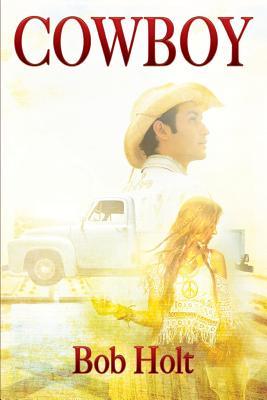
    • COWBOY by Bob C. Holt – Literary Fiction, Vietnam Era Coming of Age, Literary

      COWBOY by Bob C. Holt – Literary Fiction, Vietnam Era Coming of Age, Literary

      Love is at the center of Cowboy, a novel set in the turbulent 1960s. Love of family, friends, country, love of exploring your personal freedoms, and of course, the love you can experience when you’re young that hurts so bad you can taste it.


      Jim Davis is a Texan, born and bred, who knows early on he must sample life away from the insular farm life of his small home town. Life at home is complicated by the turbulent relationship with a highly religious hard-driven father and a younger, football-star brother. Love of country and love of God are never far from the life of his family, but neither is Jim’s love of girls and sex, which carries a level of complexity all its own.

      Jim’s plans for his own future become even more problematic when his father insists that he join the military. When he enlists in the Army, Jim becomes an officer, and, thanks in part to his completion of a dangerous mission—and his girlfriend, the daughter of a general—a successful life in the military seems all but assured.

      Except he’s not biting. What else does the world offer? Jim leaves the military, winds up as a student at an eastern university, and discovers for the first time the drugs, sex, anti-war sentiments and other new feelings that became everyday experiences to others of his generation. All that becomes secondary to his relationship with Trish, the girl he falls in love with, who provides him with even greater complexities and harder choices that he could have ever foreseen. Can he allow her emotional roller coaster to control his life? Then again, can he truly live without her?

      While their relationship is the centerpiece of Cowboy, the novel also provides a sketchbook of the times as seen by a young man who doesn’t necessarily buy into the social revolution in the glowing terms as do many of his contemporaries. Setting aside all that, Jim’s willingness to wait out the twists and turns of Trish’s life will ring true for anyone of any generation who has entered the country of love and discovered there are no paved roads and no roadmap.

      To 21st Century readers, this is a historical novel. It takes place more than a half-century ago when so many of the social mores were first challenged by millions of young people across the world. How people talk to each other sometimes feels stagy. But it still rings true, both to the times and to the emotional makeup of the many characters who appear throughout the novel.

      While Cowboy has the shape and feel of a memoir, it’s a worthwhile read for anyone who wants to remember the ‘60s or has a curiosity about that fabled era that their parents and/or grandparents lived through. More important, however, is the love story of Jim and Trish. The dynamics of their fragile love ring true for anyone of any age.

      Cowboy by Bob Holt won CIBA 2018 Somerset First in Category in the SOMERSET Awards for literature.


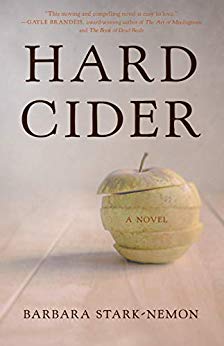
    • HARD CIDER by Barbara Stark-Nemon – Women’s Literature, Literary, Women’s Fiction

      HARD CIDER by Barbara Stark-Nemon – Women’s Literature, Literary, Women’s Fiction


      Somerset Grand Prize Winner Badge for Hard Cider by Barbara A Stark-Nemon

      Abbie Rose Stone is a woman determined to follow her newly discovered dream of producing her own craft hard apple cider while navigating the ups and downs of family life with her grown sons and husband.

      Abbie Rose knows how to deal with adversity, and dives headfirst into this new chapter of her life with energy and passion. She describes her early adulthood years of infertility struggles and the hardscrabble way she built her young family through invasive medical procedures, a surrogate attempt, and adoption barriers.

      After finishing a successful career in education and raising her three sons, Abbie Rose now sees an opportunity to create a new segment of her life’s work in a blossoming business venture. She’s set to take on this new venture by herself, determined to succeed, with or without her husband’s support. Yet, while she lays out her meticulous plans for her cider business, life keeps happening around her, attempting to derail Abbie Rose at every turn.

      Hard Cider is a well-researched second novel for Stark-Nemon, providing intricate details on everything from orchard planning and cider creation to knitted handicrafts. Stark-Nemon leaves no stone unturned and is meticulous with her descriptions of the lands and seasons of Michigan. So much so, that readers may leave this story ready to travel to this Midwest region and will find familiarity in the real-life scenes based on her elaborate imagery.

      The story builds slowly, relying upon richly descriptive settings to create the Stone family and the world in which they live. The tidbits of information presented about infertility, a shocking house-fire, parenting a troubled child, and marital woes are intriguing, and some may find, too brief, leaving the reader wanting more. Which isn’t altogether a bad thing. In fact, the strength of this work is that the reader is left wanting more, imagining what might happen next for this cast of characters we’re not quite ready to leave behind.

      A central theme of this down-to-earth story is the word new. New business ventures, new life changes, new family mixed with old, and new lives for the Stone family. Abbie Rose handles each of these life-altering adaptions with courage and a reflecting thoughtfulness. She teaches those around her what it means to manage life with a grace we can all hope to emulate.

      All in all, Hard Cider is a thoughtful literary novel of one woman and her ambitions to rise above what life has handed her to create an experience of beauty, one that is formed not void of hardship, but despite it. Recommended.

      Hard Cider won Grand Prize in the CIBA 2018 Somerset Awards for Literary Fiction.