

Tag: Legal

  • Jodé Millman to present a Session on “Protecting Your Artistic Rights” at Chanticleer Authors Conference | CAC22

    We are delighted to welcome Jodé Millman to present “Protecting Your Artistic Rights” at CAC22!

    Jode Millman wearing a scarf with skulls

    Jodé Millman is a life long resident of Poughkeepsie, New York, which serves as the setting for her crime fiction. Her writing draws upon her many years as an attorney to capture the tensions that arise when a small community is rocked by tragedy.

    Author of the best-selling SEATS: NEW YORK Theatre guidebook, her debut thriller, The Midnight Call was released by Immortal Works Publishing in 2019. The Midnight Call won the 2020 Bronze IPPY Award, the American Fiction Award for Legal Thriller, was short-listed for the 2019 Clue Award, and received the First Place Blue Ribbon as “Best Police Procedural” by Chantireviews.com.

    Jode will present the following session at CAC 22:  The Writer’s Law School: Protecting Your Artistic Rights

    For writers, it’s difficult to obtain information about protecting your rights in your creative projects. And if you do, it’s difficult to decipher the “legalese.”
    In this workshop designed for writers, we’ll cover the basics of copyrights, trademarks and key provisions of publishing contracts so that you’ll understand the fine print without having a law degree. 
    Details
    In this session, you’ll learn:
    • The differences between Copyright, Trademarks, Patents and Service Marks
    • The Copyright Registration Process and the CASE law
    • What is the Public Domain?
    • What is the Fair Use Doctrine?
    • Which Business Entity is best for my writing career?
    • What are the Right of: Privacy, Libel and Slander?
    • The Anatomy of a Publishing Deal-Contract Basics
    • Resources to help you protect your rights 
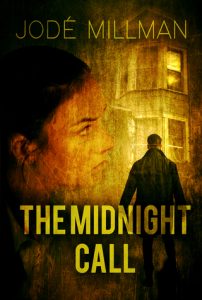
    Read the review of The Midnight Call here!

    Her new thriller, Hooker Avenue is being released by Level Best Books in April 2022.

    Millman developed “The Writer’s Law School,” an educational program designed to inform writers and artists about how to protect their artistic rights. Jode has presented the program to international writing associations, arts organizations and libraries. The schedule for her session on Law and Writing is TBA.

    Presently, she also co-hosts and co-produces Backstage with the Bardavon Podcast. The program invites the listener backstage for intimate conversations with musicians and performers appearing at the Bardavon 1869 Opera House in Poughkeepsie, N.Y. and UPAC in Kingston, NY. Find it wherever you listent o fine podcasts. She is a member of Mystery Writers of America, International Thriller Writers, Sisters In Crime, and Romance Writers of America.


  • The TRIAL of CONNOR PADGET by Carl Roberts – Legal Fiction, Literary, Fiction

    The TRIAL of CONNOR PADGET by Carl Roberts – Legal Fiction, Literary, Fiction

    When is murder justified?

    If you ask the district attorney of this affluent Louisiana community where a man has shot and killed another man, and the murder captured live on TV, there is no justification.

    Jack Carney sees it differently. An affluent middle-aged civil attorney, he considers the killing to be the result of a man pushed beyond his limits by another who seemingly destroyed his marriage, kidnapped his son, and might have been planning a horrible fate for the boy he stole.

    There are real-world consequences to Jack’s taking the case. The shooter, a childhood friend, has no money, so Jack volunteers to take the case free of charge. Jack’s law firm is dismayed, his wife is unhappy with his decision, but Jack’s conscience, his religious convictions, and his military honor will not let him ignore his troubled friend.

    There is no question about whether Connor Padget committed the crime. The real suspense is whether Jack can still lessen the charge of murder to manslaughter when the DA is determined to show no mercy to the defendant; when Connor’s wife and Connor himself put obstruction after obstruction in front of Jack in his determination to have the law do right by his friend.

    While the crime story is suspenseful, it is nearly matched by other nuances that lift this novella well beyond the usual legal procedural.

    Rarely does a book about the law take you this close into the mindset of an attorney. Carney isn’t a criminal attorney but his ability to think “legal” demonstrates how a well-trained mind can work even in a foreign territory like criminal law. His familiarity becomes our familiarity. This is not a blockbuster case; no mob bosses will fall; no bombastic courtroom duels await. What is showcased here, however, is good lawyering, legal competence, and a writer’s commitment to sharing his love of the law with his readers.

    Familiarity also extends to the book’s Louisiana setting. With small but well-crafted touches, you are introduced to the writer’s south, not so much of a bus tour as a first-person sharing of the places where the characters live. You know he knows and loves his south and brings you along for a first-person ride.

    Two marriages—the client’s and the lawyer’s – are central to understanding the fates of both Connor and Jack. Neither is happy nor conventional. Jack’s marriage is particularly at odds: his wealthy wife plans to build a home in an affluent neighborhood and live there whether Jack joins her or not. Their sexuality flourishes, but will the marriage survive? As for Connor’s marriage, the fact that the murdered man played a part in the dissolution of his marriage is clear, but what part remains an open question. Unlike the portrayals of the law and the south in this novel, the path ahead for both marriages remains mysterious throughout.

    This reader can only hope the author rescues Jack Carney from the obscurity he seems determined to want and bring him back for another round or two of tussling with the law and his conscience.