Tag: Laramie Awards

  • LARAMIE Book Awards for Western & Pioneer Fiction 2020 CIBA Award Winners

    LARAMIE Book Awards for Western & Pioneer Fiction 2020 CIBA Award Winners

    Western Pioneeer Civil War Fiction Award

    The Laramie Book Awards recognize emerging talent and outstanding works in the genre of Western, Pioneer, & Civil War Historical Fiction and First Nation Novels. The Laramie Book Awards is a genre division of the Chanticleer International Book Awards (The CIBAs).

    Chanticleer International Book Awards is looking for the best books featuring, the wild west, pioneering, Civil War, North American History, and First Nation Novels. These books have advanced to the Premier Level of Achievement in the 2020 CIBAs.

    The 2020 LARAMIE Book Awards First Place Category Winners and the LARAMIE Grand Prize Winner were announced by Janet Oakley on Saturday, June 5, 2021 at the Hotel Bellwether and broadcast via ZOOM webinar and Facebook Live.

    It is our privilege and profound honor to announce the 1st in Category winners of the 2020 LARAMIE Awards, a division of the 2020 CIBAs.

    This is the OFFICIAL 2020 LIST of the LARAMIE BOOK AWARDS First Place Category Winners and the LARAMIE Grand Prize Winner.
    Congratulations to all!

    • Rebecca Dwight Bruff – Trouble the Water, a Novel  
    • Eileen Charbonneau – Mercies of the Fallen 
    • James Kahn – Matamoros 
    • Daniel Greene – Northern Wolf
    • David Fitz-Gerald – She Sees Ghosts? The Story of a Woman Who Rescues Lost Souls 
    • Gerry Robinson – The Cheyenne Story   
    • J.B. Richard – Jesse   
    • Mike Shellenbergar – Quail Creek Ranch 
    • Mike Shellenbergar – Refuge 
    • J. Palma – The Chaffee Sisters   
    • Fred Dickey – Days of Hope, Miles of Misery – Love and Loss on the Oregon Trail


        The Grand Prize Winner for the CIBA 2020 LARAMIE Awards is:

        Rebecca Dwight Bruff for

        Trouble the Water, a Novel
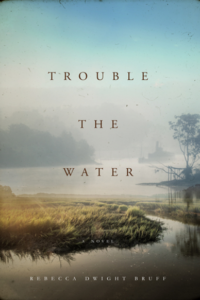
        Cover of Trouble The Water by Rebecca Dwight Bruff

        Blue and Gold Grand Prize Winner Badge for the 2020 Laramie Awards awarded to Rebecca Dwight Bruff's Trouble the Water, a Novel

        The 2021 LARAMIE Book Awards winners will be announced at CAC22 on April 10, 2022. Save the date for CAC22, scheduled April 7-10, 2022, our 10 year Conference Anniversary!

        Submissions for the 2022 LARAMIE Book Awards are open until the end of July. Enter here!

        Don’t delay! Enter today! 

        A Note to ALL the WINNERS: The coveted CIBA Blue Ribbons will be mailed out starting in July. We will contact you with an email to verify your mailing address and other items. We thank you for your patience and understanding.
      • The 2020 Finalists for the 2020 Laramie Book Awards for Western/Pioneer Fiction CIBAs

        The 2020 Finalists for the 2020 Laramie Book Awards for Western/Pioneer Fiction CIBAs

        Western Pioneeer Civil War Fiction Award

        The Laramie Book Awards recognize emerging talent and outstanding works in the genre of Western, Pioneer, & Civil War Historical Fiction and First Nation Novels. The Laramie Book Awards is a genre division of the Chanticleer International Book Awards (The CIBAs).

        Chanticleer International Book Awards is looking for the best books featuring, the wild west, pioneering, Civil War, North American History, and First Nation Novels. These books have advanced to the next judging rounds. The best will advance. Which titles will be declared as winners of the prestigious Laramie Book Awards?

        These titles have moved forward in the judging rounds from the 2020 SHORT LIST to the SEMI-FINALIST POSITION and have now progressed to the 2020 FINALISTS.  

        Congratulations to the following titles who have advanced to the 2020 Laramie Book Awards FINALISTS!

        Laramie Book Awards


        • Fred Dickey – Days of Hope, Miles of Misery  
        • David Fitz-Gerald – She Sees Ghosts? The Story of a Woman Who Rescues Lost Souls 
        • JR Collins – Legend of Swell Branch
        • Eileen Charbonneau – Mercies of the Fallen
        • James Kahn – Matamoros
        • Gerry Robinson – The Cheyenne Story    
        • J. Palma – The Chaffee Sisters   
        • J.B. Richard – Jesse   
        • Mike Shellenbergar – Quail Creek Ranch
        • Mike Shellenbergar – Refuge
        • Rebecca Dwight Bruff – Trouble the Water, a Novel
        • E. Alan Fleischauer – Hunted
        • Daniel Greene – Northern Wolf

        These titles are in the running for the First Place Winners of the 2020 Laramie Book Awards for Western, Pioneer, & Civil War Historical Fiction and First Nation Novels Fiction. 

        The 2020 CIBA FINALISTS were announced at VCAC21 – April 21 – 24, 2021. 

        The Laramie Book Awards 2020 First Place and Grand Prize Winner will be announced at the hybrid CIBA Ceremony that will take place on Saturday, June 5th, 2021 at the Hotel Bellwether. More details will be posted in early May.  

        Which of these works will move forward in the judging rounds for the 2020 Laramie Book Awards for Western/Pioneer Fiction Fiction?

        Good luck to all as your works move on to the next rounds of judging.

        The First Place Category Winners, along with the CIBA Division Grand Prize winners, will be selected from the 23 CIBA divisions Finalists. We will announce the 1st Place Category Winners and Grand Prize Division Winners the CIBAs Ceremonies June 5th, 2021 virtually (Free) and LIVE at the luxurious Hotel Bellwether in Bellingham, Wash.

        VCAC21 laurel wreath

        Register today!


        We are now accepting submissions into the 2021 Laramie Book Awards. The deadline for submissions is July 31st, 2021. The winners will be announced in April 2022.

        Please click here for more information.

        Don’t Delay! Enter Today! 

        As always, please do not hesitate to contact us with any questions, concerns, or suggestions at Info@ChantiReviews.com.


      • The 2020 Laramie Book Awards for Western/Pioneer Fiction – the Semi-Finalists for the LARAMIE Division of the 2020 CIBAs

        The 2020 Laramie Book Awards for Western/Pioneer Fiction – the Semi-Finalists for the LARAMIE Division of the 2020 CIBAs

        Western Pioneeer Civil War Fiction Award

        The Laramie Book Awards recognize emerging talent and outstanding works in the genre of Western, Pioneer, & Civil War Historical Fiction and First Nation Novels. The Laramie Book Awards is a genre division of the Chanticleer International Book Awards (The CIBAs).

        Chanticleer International Book Awards is looking for the best books featuring, the wild west, pioneering, Civil War, North American History, and First Nation Novels. These books have advanced to the next judging rounds. The best will advance. Which titles will be declared as winners of the prestigious Laramie Book Awards?

        These titles have moved forward in the judging rounds from the 2020 Chatelaine Book Awards LONG LIST to the 2020 SHORT LIST and now have progressed to the 2020 Semi-finalists. 

        Congratulations to the following titles who have advanced to the 2020 Laramie Book Awards SEMI-FINALISTS!

        • Fred Dickey – Days of Hope, Miles of Misery  
        • David Fitz-Gerald – She Sees Ghosts? The Story of a Woman Who Rescues Lost Souls 
        • DL Fowler – The Turn      
        • JR Collins – Legend of Swell Branch
        • Eileen Charbonneau – Mercies of the Fallen
        • James Kahn – Matamoros
        • Gerry Robinson – The Cheyenne Story    
        • J. Palma – The Chaffee Sisters   
        • J.C. Graves – Death is a Sharpshooter    
        • J.B. Richard – Jesse   
        • Terry D. Heflin – Scarlet Hem
        • Mike Shellenbergar – Quail Creek Ranch
        • Mike Shellenbergar – Refuge
        • T.K. Conklin – Promise of Spring
        • Rebecca Dwight Bruff – Trouble the Water, a Novel
        • E. Alan Fleischauer – Hunted
        • Daniel Greene – Northern Wolf
        • Barbara Salvatore – Magghie    

        These titles are in the running for the Finalists of the 2020 Laramie Book Awards for Western, Pioneer, & Civil War Historical Fiction and First Nation Novels Fiction. 

        All CIBA Finalists will be announced at VCAC 21 April 21 – 24, 2021.

        Which of these works will move forward in the judging rounds for the 2020 Laramie Book Awards for Western/Pioneer Fiction Fiction?

        Good luck to all as your works move on to the next rounds of judging.

        Laramie Book Awards

        The Semi-Finalists’ works will compete for the First Place Winner positions, and then all will be recognized in the evenings at VCAC21 April 22-24th from 6-8 p.m. PST.

        The First Place Category Winners, along with the CIBA Division Grand Prize winners, will be selected from the 23 CIBA divisions Finalists. We will announce the 1st Place Category Winners and Grand Prize Division Winners the CIBAs Ceremonies June 5th, 2021 virtually (Free) and LIVE at the luxurious Hotel Bellwether in Bellingham, Wash.

        VCAC21 laurel wreath

        Register today!

        We are now accepting submissions into the 2021 Laramie Book Awards. The deadline for submissions is July 31st, 2021. The winners will be announced in April 2022.

        Please click here for more information.

        Don’t Delay! Enter Today! 

        As always, please do not hesitate to contact us with any questions, concerns, or suggestions at Info@ChantiReviews.com.

        VCAC21 laurel wreath


      • WANDERS FAR – An Unlikely Hero’s Journey: Part of the Adirondack Spirit Series by David Fitz-Gerald – Native American Literature, Historical Fantasy Fiction, Folklore

        WANDERS FAR – An Unlikely Hero’s Journey: Part of the Adirondack Spirit Series by David Fitz-Gerald – Native American Literature, Historical Fantasy Fiction, Folklore

        An engaging history of ancient Native American peoples is brought to magical life by author David Fitz-Gerald.

        In the early 1100s, in a region now known to us as the Adirondack Mountains of northern New York, a small band of tribal people is living in longhouses, growing crops, fishing, hunting, and enjoying certain rituals such as face and body painting, occasional migration for food survival, and even seasonal “vacations,” all while willingly obeying a simple form of governance with elements of basic democracy. In this tribe, we meet Wanders Far, a child who earns his nickname after showing a propensity to disappear and explore since he could walk. His mother, Bear Fat, is the recognized chieftainess of their group, mother of a large brood, one of whom is stolen as the book opens. Wanders Far would be considered an unusual child in any society, gifted with a highly accurate memory and the ability to visualize future events. He can also run like the wind, and with his love for travel, he is often the first to see and warn his people of danger, such as a cadre of warriors from a hostile tribe heading towards his home settlement.

        Fitz-Gerald’s book interweaves family chronology, legend (such as tales of Hiawatha), and fact-weighted history into what is essentially a human drama focused on the personal lives of Wanders Far and his cultural community. Through the happenings described, we learn more about how such indigenous people survived and progressed. We see them fishing, hunting, and foraging, as well as loving, celebrating, and mourning. One dominant theme concerns the mixture of tribes in the area – Mohawk, Onondaga, Oneida, Cayuga, and Seneca. We see how they interact, with some being more generally friendly and others being enemies who may become allies as, in the future, they will meld into what is called The Iroquois Confederacy, serving a significant role in the founding of the first European colonies. We see Wanders Far and his relatives – all with earthy, practical names like Squash, Gentle Breeze, and Big Canoe – as real people who laugh and cry, fall in love, make war and form alliances in their nature-bound, intuitively guided, pre-technological circumstances.

        Imbuing his hero with “second sight” along with exceptional physical prowess, Fitz-Gerald states that he was drawn to compose the story of Wanders Far through his own powers of imagination coupled with a fascination for the region where he himself has lived and explored. He draws a dynamic portrait of how specially gifted people were and can still be welcomed into the fold despite their differences. Wanders Far will experience a long life, here skipping from his early twenties to his mid-seventies, and readers will hope that a future novel may reveal more of the exploits of his full manhood. A small hint at the book’s end alludes to a distant identity and makes us want to see more from this multi-talented, highly creative author.

        Wanders Far won First Place in the CIBA 2019 Laramie Awards for American Western Fiction.

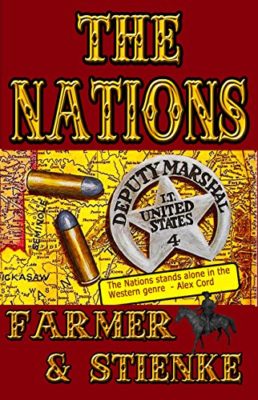
      • The NATIONS by Ken Farmer and Buck Stienke – African American Historical Fiction, Old West History in the USA, Western Fiction

        The NATIONS by Ken Farmer and Buck Stienke – African American Historical Fiction, Old West History in the USA, Western Fiction

        “Return now to those thrilling days of yesteryear,” may sound familiar. It’s the opening for the radio version of The Lone Ranger.

        It’s also an appropriate introduction to The Nations by Ken Farmer and Buck Steinke and not just because the dialog will ring in the reader’s ear as very reminiscent of plenty of classic TV and movie Westerns. But also, because the hero of The Nations, Deputy U.S. Marshal Bass Reeves, may have been the inspiration for the Lone Ranger himself.

        Reeves, born in slavery, was the first black Deputy U.S. Marshal west of the Mississippi. He was also one of the most successful Deputy Marshals of his own or any subsequent era, arresting over 3,000 felons during his long career, but was never wounded by any of the desperate criminals he brought to justice.

        But this story, the first in a 10-book series – at least so far – fictionalizes Reeves’ exploits into something that will be savored by readers looking for the kind of story that Louis L’Amour, Zane Grey and Elmer Kelton used to write – and that William Johnstone still does.

        This adventure pits Reeves and his partner, Deputy U.S. Marshal Jack McGann, against a gang of outlaws known as the Larson Brothers’ gang after its leaders Wesley and Ben Larson. The brothers typify different stereotypes of outlaws, with Wesley as the leader and voice of reason who is in it for the money, while his younger brother Ben is a killer because that seems to be how he gets his kicks.

        The story begins with Wesley and the gang rescuing Ben from the clutches of the law after Ben gets himself captured – yet again – by being overconfident and disobeying his brother’s orders.

        That escape begins a cat and mouse game between Reeves and McGann and the Larson gang, as Ben is captured again, his brother helps him escape, and the lawmen become even more determined to bring them in.

        The Nations reads like a classic western tale of the school of Louis L’Amour and Zane Grey. The lawmen are always on the side of angels, and the outlaws are forever threatening the towns, laws, and lawmen. There’s no question about which side represents the “good guys.”

        And there’s no question that compassionate, professional Reeves is the star of this story. What makes this story shine – is Reeves truly was as good a lawman as the story makes him out to be, a good tracker, an excellent marksman, good at disguises, kind but fair to those he captured – and always riding a white stallion. If any of the above sounds familiar, it’s all part of the reason that some believe Reeves was the inspiration for The Lone Ranger.

        The Nations, and the entire series that follows it, will be loved by readers of those classic westerns and is recommended for that audience.

        Simultaneously, there are welcome differences from the typical stories of those “thrilling days of yesteryear.” Bass Reeves is the hero of this otherwise classic western who hands out evenhanded treatment of all the characters despite the color of their skin.

        Even the female characters are a bit more well-rounded than is usual for the genre, again on both sides of the law. But this story still centers on the male characters – who spend more time with their horses than they do with the women in their lives.

        This story’s grounding is in real history, not just in the characters of Reeves and McGann, but also in the background character of “Hanging Judge” Isaac Parker, who sent the Marshals out to retrieve criminals to be tried and frequently executed. That portrait of life in the American West in its heyday will appeal to readers who are fascinated with that period – and they are legion.

        The Nations won First Place in the CIBA 2014 Laramie Awards for American Western Fiction.


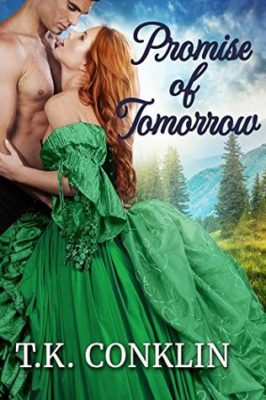
      • PROMISE of TOMORROW (Rimrock Book 1) by T.K. Conklin – Historical Romance, Western Romance, Paranormal

        PROMISE of TOMORROW (Rimrock Book 1) by T.K. Conklin – Historical Romance, Western Romance, Paranormal

        Shyfawn Tucker and her friend Mabel just wanted a little excitement, a chance to see New Orleans, but after their arrival, they are drugged, kidnapped, and taken to the rugged, lawless town of Larksdale. They are to work as prostitutes in a saloon owned by their kidnapper, a ruthless man named Jared. Soon Shyfawn learns that she will be saved from servicing Jared’s clientele, but will become the virgin singer to draw more patrons to the already-thriving business. Mabel, however, suffers a terrible fate, and Shyfawn vows to protect as many of the women forced into service as she can.

        Unbeknownst to Shyfawn, her older sister Jo is planning a rescue mission. Jo enlists the help of David and Matthew Reeves, brothers who own ranches near Rimrock, several days’ ride from Larksdale. Matthew reluctantly agrees although he barely knows Jo and goes along to keep David safe more than anything, but as soon as he sees the captivating Shyfawn, he can’t keep his eyes or mind off of her. A difficult mission is made even more impossible when Jared vows to never stop looking for Shyfawn, and not even the undeniable attraction between Matthew and Shyfawn will be enough to keep her safe.

        Promise of Tomorrow is set in the American West, in the 1830s. It’s a rough and tumble community that places women as property. T. K. Conklin paints an authentic picture of the Old West, even though at times, we may cringe at the treatment women endured.  Women were considered property, often bought, sold, raped, and disowned for the crime of being taken advantage of. Shyfawn’s story of abduction exemplifies this sad scenario. Though the author spares her heroine the burden of rape, Shyfawn is still a captive, a prisoner, kept for the entertainment and profit of Jared, who treats most of “his” women as disposable, and she is under constant threat of rape if she misbehaves. Though she escapes, Shyfawn knows her past involvement, though completely involuntary, with the saloon will forever taint her reputation and will make finding a decent husband nearly impossible. Townspeople will judge regardless of her guiltless purity, and she can never return to her hometown of Charlotte. Even Matthew worries about what her reputation will do for his own when he brings her to work as a cook at his ranch.

        A surprising plot element is a connection the Tucker sisters have to the paranormal. All three sisters have some “otherworldly” ability. To mention more here might be a dead giveaway!

        Conklin has done a great job at creating a world in the same vein as Deadwood – jacked up on romance. Even as the author gives us scenes of trauma true to the Old West, she elevates the positive themes of family, belief in better days, and finding one’s purpose in life. Shyfawn never feels sorry for herself despite the horrors around her. Her optimistic attitude leads her to shake off her sadness and look for the good in virtually everyone. She befriends the ranch hands despite their sordid pasts and even manages to see good in some of the men who hold her captive. She is able to remain positive when her chances are bleak, and her playfulness with everyone–especially Matthew–gives the novel humor and creates a fun, good ole fashioned Western.

        Promise of Tomorrow by T. K. Conklin won the CIBAs 2018 First Place in the LARAMIE Awards for Western Fiction and placed as a Semi-Finalist in the CIBAs 2019 Chatelaine Awards.


      • LIVING WHERE the RABBITS DANCE (Choestoe Book 2) by J.R. Collins – American Western Fiction, Native American Literature, Coming of Age Fiction

        LIVING WHERE the RABBITS DANCE (Choestoe Book 2) by J.R. Collins – American Western Fiction, Native American Literature, Coming of Age Fiction

        In this stirring, coming of age saga by J. R. Collins, an old man shares his recollections of a time when the good old life was turning bad in his home region of the Tennessee mountains.

        Jebediah, known as Jeb, Collins was born in 1815 in a place known to the local Cherokee Indians as Cho-E-Sto-E, “Land of the Dancing Rabbits.” Owing to their closeness and their many shared needs, the family is, in a sense, adopted by the Cherokees. Jeb’s brother marries a Cherokee girl, and he himself is blessed by a sort of spiritual brotherhood with a Cherokee boy named Wolf who was born the same night as he. The story, a sequel to Collins’ earlier work, The Boy Who Danced with Rabbits, opens in 1827 as Jeb and Wolf, just on the brink of adolescence and able to act in manly ways, go on a hunting expedition. They slaughter a huge wild boar and are enjoying their conquest when renegade Indians enter their camp, demanding to know the whereabouts of a female slave who has run away into the woods. The intrepid lads manage to turn their intruders away and set out on their own to find the woman, after being alerted to her possible location by a panther, known in that part of the world as a “painter” cat. They find her nearly dead. Wolf sets her in a cave known to his people for its healing powers, where a huge bear will remarkably take part in her care before Jeb’s sister Anne can arrive with herbs and other remedies she has learned from her Cherokee relations.

        But lurking in the hills at that time are many, even greater dangers, as Jeb and Wolf learn when they encounter two surveyors for the United States Army, even now planning what will someday be called the “Trail of Tears,” driving the indigenous people abruptly, violently, from their spiritual and physical homeland. The reminiscences of Jeb as an old man give hints of that shameful time to come, while he sees his younger self resting rather easily after having helped to save the dying woman who, it evolves, has reason to rejoice at being found by members of Wolf’s tribe.

        Collins was raised in the area about which he writes so knowledgeably. He has an ear for the local dialect that runs throughout the narrative, and sensitive awareness of local lore with its powerful undertones of Native American culture and history. His sense of the tight connection between humans – both Irish and Cherokee – and the land they occupy is a dominant theme, along with the deep distrust both have for government men and the miners that have come to strip the area of its store of gold. Many supernatural events also demarcate the story, like the bear’s healing attention on the wounded escapee, and the many etheric visions experienced by Jeb as he realizes he is growing into manhood through his perils and victories.

        Those with a love of the old ways – both the real, factual events of America’s early development and the mystical imponderables that infuse the natural world of its native peoples – will savor Collins’ dramatic Choestoe series as thus far conceived, and wait excitedly for the next episode.

        Living Where the Rabbits Dance (Choestoe Series, Book 2) won First in Category in the CIBA 2018 LARAMIE Awards for American Literature.


      • A FEMALE DOCTOR in the CIVIL WAR by Richard Alan – US Historical Fiction, Civil War Fiction, Female Doctors Civil War

        A FEMALE DOCTOR in the CIVIL WAR by Richard Alan – US Historical Fiction, Civil War Fiction, Female Doctors Civil War


        Imagine a fearless, hard-as-nails contract surgeon hired by the Union Army who often works 48-hour shifts in battlefield medical tents amputating limbs, healing previously inoperable gut wounds, sewing up children’s hare lips, and diagnosing what we now call PTSD as critical in military patient care as patching physically wounded bodies.

        Meet Dr. Abby Kaplan. And yes, she’s a woman.

        A native of the Pacific Northwest, Dr. Abby stands six feet tall and exchanges her dresses for breeches, totes a gun on her hip, engages in military defensive maneuvers, and is wounded multiple times for her efforts. Dr. Kaplan takes no guff from anyone and uses the language of soldiers appropriate to the situation. In a time when men are in charge and women are not, she wins the respect of her male colleagues in the most gruesome medical cases, winning over even those who could not fathom a woman examining a man’s most private parts.

        Even more remarkable, despite the prejudices of her times, she finds ways to celebrate her Jewish heritage and even finds a man unafraid of her enough to become her occasional lover, but virtually only at her request.

        A woman as strong, complex, and dedicated to medicine probably existed somewhere during that time. A small number of women doctors did work on soldiers during the Civil War. Richard Alan develops his lead with guts and gumption, so much so, that readers will likely fall in love with Dr. Kaplan.

        A Female Doctor in the Civil War pays little attention to romance or sentimentality. Dr. Kaplan’s issues in pre-suffrage America are more about stopping male prejudice from interfering with her work than self-conscious screeds about being a female in a man’s world. We learn little about her past. Her more reflective moments are about the medical debacle she sees as she stitches and saws and mends the broken bodies that fill her medical tents, as well as her reflections on how much more the minds of these soldiers need to be treated during the war.

        When she does find a lover, he is a momentary respite from the battlefield, not a “rescuer.” Their discussions about the differences between men and women are by two adults who respect each other. Others in that period of our history may see Dr. Kaplan’s sex and religion as problems. She sees them at worst as inconveniences that sometimes prevent her from doing her job as well as she thinks she can. Her one weakness, the nightmares that keep plaguing her after her work is done, are those any adult would suffer after working in the carnage she witnesses that is her life.

        In other words, Dr. Abby Kaplan is a strong, capable, and uniquely modern physician working within the social and medical limitations of her time. She is there to do a job only a handful of doctors have the stomach to undertake.

        A Female Doctor in the Civil War won First Place in the CIBAs 2018 Laramie Awards for American Fiction.


      • The FINALISTS Announcement for the LARAMIE Book Awards for Americana Novels – a division of the 2019 CIBAs

        The FINALISTS Announcement for the LARAMIE Book Awards for Americana Novels – a division of the 2019 CIBAs

        Western Pioneeer Civil War Fiction AwardThe Laramie Book Awards recognize emerging new talent and outstanding works in the Americana / Western, Pioneer, Civil War, Frontier, and First Nations Novels. The Laramie Book Awards is a division of the Chanticleer International Book Awards.

        Chanticleer International Book Awards  is looking for the best books featuring cowboys, the wild west, pioneering, civil war, and early North American History, we will put them to the test and choose the best among them to advance in the next judging rounds to discover today’s best books!

        The 2019 CIBAs received an unprecedented number of entries making this book awards program even more competitive. More entries along with more competitive works make the final rounds of judging even more demanding. The judges have requested a new level of achievement to be added to the rounds to acknowledge the entries that they deemed should receive a high level of recognition.

        We decided that this was the time to incorporate the new level – The FINALISTS – as requested by the CIBA judges. This new level will be incorporated into the 2019 CIBAs Levels of Achievement.  The FINALISTS were selected from the entries that advanced to the 2019 LARAMIE Book Awards Semi-Finalists. 

        Laramie Book Awards

        Congratulations to the 2019 LARAMIE Book Awards FINALISTS

        • E. Alan Fleischauer – Rescued  
        • Kit Sergeant – Underground: Traitors and Spies in Lincoln’s War
        • J. R. Collins – Spirit of the Rabbit Place
        • John West – Marshallville
        • Lynwood Kelly – The Gamble: Lost Treasures
        • David Fitz-Gerald– Wanders Far-An Unlikely Hero’s Journey
        • Hayley Stone – Make Me No Grave: A Weird West Novel
        • John Hansen – Hard Times
        • Eileen Charbonneau – Seven Aprils
        • Juliette Douglas – Bed of Conspiracy
        • Mike H. Mizrahi – The Unnamed Girl (The Woodard Chronicles)

        These titles are in the running for the First Place positions of the 2019 LARAMIE Book Awards for American, Western, Pioneer, Civil War, and First Nations novels.

        Good luck to all as your works move on to the final rounds of judging.

        The Finalists and the Semi-Finalists will be recognized at the 2020 Chanticleer Authors Conference and  at the 2019 CIBA banquet and ceremony.

        Congratulations to the authors whose works have advanced to the FINALISTS Level of Achievement!

        Laramie Book Awards

        The 16 divisions of the 2019 CIBAs’ Grand Prize Winners, the First Place Category Position Award Winners, and all Semi-Finalists will be announced at the postponed (due to the Covid-19 pandemic) 2020 Chanticleer International Book Awards Annual Gala, now re-scheduled for Saturday, September 5th, 2020.

        Laramie Book Awards

        Join us at the Chanticleer Authors Conference at the luxurious Hotel Bellwether in Bellingham, Wash. Use our link above to register now for this exciting event!

        We are now accepting submissions into the 2020 LARAMIE Awards Book Awards. The deadline for submissions is July 31st, 2020. The winners will be announced in April 2021.

        Please click here for more information.

        Don’t Delay! Enter Today!

        As always, please do not hesitate to contact us with any questions, concerns, or suggestions at Info@ChantiReviews.com.

      • BLOOD MOON: A Captive’s Tale by Ruth Hull Chatlien – Native American Literature, U.S. Historical Fiction, Western Fiction

        BLOOD MOON: A Captive’s Tale by Ruth Hull Chatlien – Native American Literature, U.S. Historical Fiction, Western Fiction

        A Blue and Gold Badge that says Laramie Western Fiction 2018 Grand Prize Blood Moon A Captive's Tale Ruth Hull ChatlienRuth Hull Chatlien’s historical novel Blood Moon: A Captive’s Tale shines a light on two worlds trying to coexist in the 1860s Minnesota, that of Westward Expansion and white settlers, and that of the complex network of Sioux tribes dealing with starvation and disease. We follow her protagonist, Mrs. Sarah Wakefield, as she is thrust unwillingly into the midst of the Indian Wars.

        Based loosely on the life of real captive, Sarah Wakefield, Chatlien explores both sides of this conflict, through the eyes of our terrified hero, who does what she must to save her life and the lives of her two small children. The first-person narrative in present tense places us in the thick of Wakefield’s narrow escapes, and the presence of the constant threats to her and her children.

        Sarah Wakefield has one goal, to save her children, and if that means dressing like a Sioux and helping her captives gather water, forage and cook food, and set up the teepee, so be it. Her fellow captives, mostly women and children maintain their prejudiced and racist attitudes, but Wakefield does not. She sees her captives as human beings, not “savages,” who are trying to survive just as she is.

        Chatlien expertly exposes the mindset between members of the Sioux tribe who had converted to Christianity and those who refused to convert. She exposes the injustices of an American Government that defaulted on treaty promises, causing starvation, illness, and death among the tribes, and the solution that many tribal warriors felt was their only recourse—war.

        Wakefield sees the dichotomy of those warriors who want to fight and those who have converted to Christianity and become farmers. She feels the losses endured by those who didn’t want to fight because of their beliefs, but she realized that death would be their penalty if they refused.

        The underlying themes in Chatlien’s novel provide us a complex and multidimensional read that captivates. Sarah is married. But her marriage is rocky—okay. Rumors of her past don’t help her present situation. But the woman she becomes as she survives her terror and provides for her children is a woman who will go to battle for a Sioux warrior in a court of law, even if it means losing her marriage and becoming a social pariah. At times readers may wonder if Wakefield might be an unreliable narrator suffering from “Stockholm Syndrome.” Nevertheless, she fights for the warrior who protected her and fights to save his life as he had saved hers.

        The injustices Chatlien shines her fictional light on are bound to grate on the progressive-minded reader of 2020, and the conclusion to this narrative based on real events will undoubtedly leave us wondering how little has changed in race relations in the USA. Chatlien shows how simple gossip and the petty mindsets of the “normal” Christian women were as big a detriment to Wakefield’s survival in the Indian Wars.

        Blood Moon: A Captive’s Tale won Grand Prize in the CIBA 2018 LARAMIE Awards for American Fiction.