Tag: Lab lit

  • CYGNUS AWARDS for SciFi & Speculative Fiction FIRST PLACE Category Winners

    CYGNUS AWARDS for SciFi & Speculative Fiction FIRST PLACE Category Winners

    Chanticleer Book Reviews is honored to announce the First Place Category Winners for the Cygnus Awards 2014, a genre division of the Chanticleer Blue Ribbon Award Writing Competitions.

    cygnus-headerThe Cygnus Awards recognize emerging new talent and outstanding works in the genre of Fantasy, Science Fiction, Paranormal, Mythological, and Steampunk fiction. The Cygnus Awards is a genre division of Chanticleer Book Reviews Blue Ribbon Awards Writing Competitions.

    First Place Category Winners for the Cygnus Awards are:

    • Space Opera Sci-Fi Series: Citadel 7, Earth’s Secret: Enemy of Existence by Yuan Jur
    • Military Sci-fiction: Betrayal on Triton by Ryan Henry
    • Paranormal: The Unbeliever  by Zachary Kitchen
    • Dark Fantasy/Gamer:  Mythborn: Rise of the Adepts by Vijay Lakshman
    • Epic Fantasy: Dream of a Vast Blue Cavern by Selah Tay-Song
    • Speculative Fiction: The Ariadne Connection by Sara Stamey
    • Mythological: The Immortal Game by Joannah Miley
    • Sci-Fi: Shadow of the Last Man, Book 1 by J. M. Salyards
    • SciFi/Cyperpunk: Legacy: The Biodome Chronicles, Book 1 by Jesikah Sundin
    • Time Travel:  Timelapse by Lorrie Farrelly
    • Lab Lit SciFi:  The Borealis Genome by Thomas P. Wise and Nancy Wise
    • New Adult Dystopian: The Cloud Seeders by Jamie Zendt
    • New Adult Sci-Fi: ISO by H.G. Bleackly
    • YA Dystopian: All Is Silence by Robert L. Slater
    • Best SciFi Manuscript:  Natural Selection by Michael Simon

    CONGRATULATIONS!

    The 1st Place Category Winners compete for the CYGNUS AWARDS 2014 GRAND PRIZE position. The 2014 CYGNUS category winner was announced at the Chanticleer Authors Conference and Awards Gala in September 2015. See the Grand Prize Winners.

    • The deadline for The Cygnus Awards 2014 was Jan. 31, 2014.
    • The deadline for The Cygnus Awards 2015 is Jan. 31, 2015.

    GRAND PRIZE Overall Cygnus Awards Winner from 2013:

    2013-CygnusBennett R. Coles, Virtues of War.  

    Titan U.K picked up VoW for a three book deal. Check out the cover reveal from TOR here. 

    Tor.com is pleased to reveal Fred Gambino’s cover art for Virtues of War, a new military science fiction novel from Bennett R. Coles! Virtues of War is the first book in The Astral Saga trilogy, and will be published in June 2015 by Titan Books.

    To view the 2013 CYGNUS Award Winners, please click here.

    To compete in the 2015 CYGNUS Awards or for more information, please click here.

    THE DEADLINE TO ENTER THE 2015 CYGNUS Novel Writing Competitions is January 31st, 2015.

    [fusion_builder_container hundred_percent=”yes” overflow=”visible”][fusion_builder_row][fusion_builder_column type=”1_1″ background_position=”left top” background_color=”” border_size=”” border_color=”” border_style=”solid” spacing=”yes” background_image=”” background_repeat=”no-repeat” padding=”” margin_top=”0px” margin_bottom=”0px” class=”” id=”” animation_type=”” animation_speed=”0.3″ animation_direction=”left” hide_on_mobile=”no” center_content=”no” min_height=”none”][fusion_button link=”https://www.chantireviews.com/services/#!/Fantasy-and-SciFi-Blue-Ribbon-Awards-Writing-Contest/p/21521218/category=5193080″ color=”default” size=”” type=”flat” shape=”pill” target=”_self” title=”” gradient_colors=”|” gradient_hover_colors=”|” accent_color=”” accent_hover_color=”” bevel_color=”” border_width=”1px” shadow=”” icon=”fa-book” icon_position=”left” icon_divider=”no” modal=”” animation_type=”shake” animation_direction=”left” animation_speed=”1″ alignment=”right” class=”” id=””]Enter Now[/fusion_button]

    Chanticleer Book Reviews & Media, L.L.C.  retains the right to not declare “default winners.” Winning works are decided upon merit only. Please visit our Contest Details page for more information about our writing contest guidelines.

    CBR’s rigorous writing competition standards are why literary agencies seek out our winning manuscripts and self-published novels. Our high standards are also why our reviews are trusted among booksellers and book distributors.

    Please do not hesitate to contact Info@ChantiReviews.com about any questions, concerns, or suggestions about CBR writing competitions. Your input and suggestions are important to us.

    Thank you for your interest in Chanticleer Book Reviews international writing competitions.[/fusion_builder_column][/fusion_builder_row][/fusion_builder_container]

  • Bernadette Pajer presents “Emotional Triggers” at CAC

    Bernadette Pajer presents “Emotional Triggers” at CAC

     vertical bj pajer downloadBernadette Pajer, author of the immensely popular Professor Bradshaw Mystery Series, will present a session on “Emotional Triggers that Resonate with Readers” at the Chanticleer Authors Conference 2014

    Emotional triggers unleash the reader’s imagination and create a resonance between the author and the reader. They build castles in the reader’s mind, they instill fear, or hope, or love, in the reader’s heart. Best of all, triggers engage the reader by allowing them the extreme pleasure of participating actively in the story.

    In this workshop, Bernadette Pajer will share her hard-earned “aha” moment that led her to coin the term “Triggers” and will show how you can use this powerful tool to engage your readers and create a loyal readership. 

    Seattle author Bernadette Pajer’s Professor Bradshaw Mystery Series is traditionally published by Poisoned Pen Press. This fast-paced and highly entertaining series takes place in Seattle in the time of Tesla. All four books in this series thus far have earned the coveted Washington Academy of Sciences Seal of Approval for Science.

    An excerpt of Chanticleer's review of this award winning series:

    “Pajer’s vivid writing takes readers to this exciting time that is in the crossroads of scientific investigation and innovation, when automobiles and horse drawn carts compete for the same streets, and the United States reels with political unrest and social upheaval. Readers will warm to the curmudgeonly and reserved professor who has a heart of gold and a penchant for investigation.”

    Discover how “emotional triggers” can take your writing to a new level and increase your readership–no matter what the genre, fiction or non-fiction!

    We invite you to meet other members of the Chanticleer International Community of Authors at this fun and informative three day event featuring:

    • CBR Awards Banquet – You don’t have to be a CBR winner to attend this exciting event.
    • Sessions, workshops, and panel discussions
    • Keynote Speakers: Shari Stauch, Tyler Bird, and Diane Isaacs
    • Networking opportunities
    • Prizes and drawings
    • Books By the Bay Bookfair

    Join us at the elegant  Hotel Bellwether on beautiful Bellingham Bay. Register today! 

     banner

  • An Editorial Review of “Dark Seed” by Lawrence Verigin

    An Editorial Review of “Dark Seed” by Lawrence Verigin

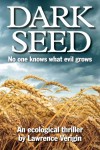
    Genetic engineering, murder, corporate-conglomerate profiteering, Interpol, and a plot to control humanity make Dark Seed, by Lawrence Verigin, a suspenseful thriller novel.

    When jaded journalist Nick Barnes learns that Dr. Carl Elles has contacted him to say that Barnes’ recent article about the positive contributions of Naintosa Corporation is all wrong, Barnes feels compelled to educate the scientist about information laundering—the strategic planting of false information in the media so the planting organization can quote the media later for their own benefit. “It makes total sense,” Dr. Elles replies. “Naintosa employs that strategy on a regular basis.” Nick was about to explain to the scientist why he needed to check Dr. Elles’ information, when the scientist soon proves to Nick  that the journalist is the lazy dupe who just published Naintosa’s propaganda in a complimentary article.

    Nick Barnes is a likeable, self-deprecating, and disillusioned investigative reporter who has been burned before. He now seems incapable of personally investigating much of the information that falls into his lap, preferring to play it safe. However, the time is 2000, so computerized data and communication systems were not as widely available as they are today.

    Nick agrees to help Dr. Elles write an exposé about the actual results and implications of Naintosa’s genetic engineering projects. Then Elles is murdered and suspicious events cause Nick to realize that both he and Dr. Elles’ daughter Morgan are next on the hit list. They team up and run for their lives.

    Through the data in Dr. Elles’ notebooks and clues revealed through meditations and dreams, they discover terrifying links between corporations that produce genetically engineered foods, agricultural chemicals, and pharmaceuticals. The implications are so wide-ranging and so frightening that soon Nick and Morgan find they can no longer trust anyone. And they become more and more convinced that they cannot event trust the food that they eat.

    The author’s personal knowledge of Seattle and Maui, as well as the city of Vancouver, and other places in British Columbia, Canada, shine through with the vivid and detailed descriptions of these locales as the characters race through them. Morgan and other secondary characters are not fleshed out in great detail, but their roles serve to advance the plot efficiently. Verigin deftly includes enough scientific information to ground this “Lab Lit” novel while keeping the reader entertained and in suspense.

    Dark Seed: No One Knows What Evil Grows, is a strong debut novel by Lawrence Verigin that adeptly tackles the pertinent and socially relevant topic of GMO’s with tight writing and fast-paced action. This thriller’s premise of international corporations controlling the food supply and sacrificing human health for the sake of profits is so plausible that it is horrifying. Readers will find themselves rapidly turning the pages to see what happens next in this disturbing “OMG this could really happen”  novel.

  • An Editorial Review of “The Falling Sky” by Pippa Goldschmidt

    An Editorial Review of “The Falling Sky” by Pippa Goldschmidt

    What would it be like to discover two connected galaxies that The Big Bang theory says are impossible?

    Not many people have even imagined facing this question, but in The Falling Sky Pippa Goldschmidt takes readers into the mind of an astronomer who not only observes the connected galaxies but can’t find anything wrong with her own work—no matter how hard she tries to refute her findings.

    This conundrum creates a human drama as fraught with turmoil and heartache as any found in the best novels of any genre.

    Only half of Goldschmidt’s novel is about astronomy, however. The chapter titles alternate between “Now,” in which Jeanette is a young scientist, and “Then,” which focus on her early childhood. Reflections on “Then” are also woven into the fabric of chapters on “Now,” so the reader can understand how Jeanette’s tragic and disturbing childhood has shaped her ambivalent present. This, by the way, is not a story of childhood sexual abuse. Nor does it in any obvious way tie her early childhood experiences to her present sexuality, although I’m sure some readers will find connections.

    In an exquisite scene on a Chilean mountaintop in the first “Now” chapter, Jeanette escapes the windowless control room of the telescope to gaze at the night sky the way she did as a child.

    “She quickly gets her sea legs as she navigates her way from the jewels of the Southern Cross to the fragile puff of the Large Magellanic Cloud, and on to the crowded centre of the Milky Way. There is a rhythm involved in moving from star to star that she can match to her breathing, so at the peak of each breath she arrives at a star and then swings herself onto the next one, spanning the darkness.”

    A paleontologist who finds a fossil inconsistent with the theory of evolution and a climate scientist who discovers a declining temperature trend contrary to global warming are in exactly the same predicament. The controversies surrounding “negative results” in science should make serious readers want to experience the thoughts and feelings of a realistic scientist confronted with a discovery that doesn’t fit the explanation accepted by nearly all trained scientists in their field.

    For readers who aren’t scientists, the most important feature of this part of the story, and the most surprising to many, will be the doubt, even disbelief, that follows such a discovery. Back in Edinburgh, Jeanette tackles head on the possible reasons why her observation might have some explanation that is completely consistent with the Big Bang. The average person may even find Jeanette’s tenacious refusal to accept her own painstaking work pathologically perverse. Experienced scientists, however, will empathize completely.

    And when Jeanette finally decides to publish her finding, hoping someone else will figure out what’s wrong, the reader sees from the inside what it is like to defend research that is inconsistent with a major theory. Her personal stakes are high because her reputation is sure to be questioned. Her job and long-term future could be on the line, too. Several nicely described scenes of in-house seminars and conference papers add weight to the readers’ understanding of Jeanette’s skepticism and her ambivalence about publishing the observation.

    There’s a risk that this review will lead some readers to think The Falling Sky is a cautionary tale about how scientists who deviate from orthodoxy are punished by the scientific establishment. Goldschmidt will quickly disabuse them of this popular misconception.

    Jeanette, the protagonist,  is very much part of the scientific establishment and fiercely committed to its standards, goals and theories. She wants exactly what her colleagues want: more evidence and evidence from different lines of investigation. The latter is nicely embodied in a space telescope project going on in Edinburgh, as well as a lovely subplot involving a galaxy survey. In these details, Jeanette perfectly embodies how almost every young scientist would behave.

    In an important scene Jeanette is pushed into a television appearance that quickly turns into a nightmare that will ring true for any scientist interviewed by the media. Two television “celebrities” misunderstand and ridicule her, and then, ignoring all the qualifications of careful science, they insist on the simpleminded conclusion that one negative finding demolishes a theory that explains tens of thousands of equally careful observations.

    The Falling Sky resolves some of Jeanette’s personal conflicts but leaves the scientific mysteries open to further investigation. No other ending could be more appropriate and authentic. To say more about the story would give away the wonderful twists and turns of the plot. Lay readers and scientists alike will find Goldschmidt’s novel entertaining and discover in Jeanette a thoroughly captivating and charming person, one who will resonate in memory long after they have read the last page of the book.


  • An Editorial Review of “Fatal Induction” by Bernadette Pajer

    An Editorial Review of “Fatal Induction” by Bernadette Pajer

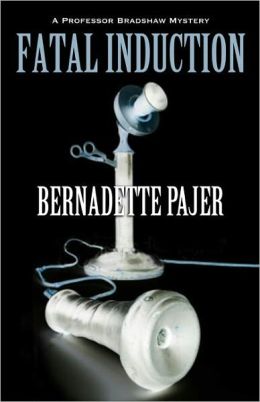
    Set against the backdrop of a national tragedy—the assassination of President McKinley—Fatal Induction by Bernadette Pajer follows Professor Benjamin Bradshaw as he scrambles to catch a killer. The year is 1901 and Seattle is a vibrant and up-and-coming city. Bradshaw, a professor of electrical engineering and a passionate inventor, has entered a new invention competition for a  device that will carry the sounds of a musical theater production through telephone wires to listeners in the comfort of their own homes.

    Bradshaw is unaware that a seemingly trivial domestic concern at home is about to sweep him into the underworld of Seattle. With the needling of his housekeeper, Mrs. Prouty, Bradshaw inspects a peddler’s cart that has been abandoned near his house. “Ralph’s Redeeming Restorative” is emblazoned across the side and upon further investigation, Bradshaw discovers a small and well-loved doll inside the cart that must surely belong to a young girl.

    Bradshaw turns to good friend Detective James O’Brien for help in locating the girl and her father. He discovers the missing peddler’s body in his own neighborhood and quickly realizes that the only witness to his murder may be his missing daughter, Emily, which puts her in grave danger.

    When Bradshaw finds that solving the murder of a roving peddler is not high on the police department agenda, he must rely on his own skills of deduction to locate Emily. Bradshaw finds himself delving into the seedy underbelly of Seattle, the wicked tenderloin district. Death threats are quick to follow and Bradshaw finds himself embroiled in something much larger and more far-reaching than he ever suspected. Bradshaw has something else to cope with as well—his growing affection for a young woman named Missouri, the niece of his best friend and a woman Bradshaw feels he can never be with.

    Pajer’s vivid writing takes readers to this exciting time that is in the crossroads of scientific investigation and innovation, when automobiles and horse drawn carts compete for the same streets, and the United States reels with political unrest and social upheaval. Readers will warm to the curmudgeonly and reserved professor who has a heart of gold and a penchant for investigation. All four books in the series have earned the peer reviewed Washington Academy of Sciences Seal of Approval for scientific accuracy.

    Like all important novels, this mystery has wider implications for the larger world than the story is set in. We posit that the Professor Bradshaw series is on its way to being considered a classic in the mystery genre.

    “Fatal Induction” by Bernadette Pajer was awarded the Overall Grand Prize for Best Book in the Mystery and Mayhem Awards 2013, a division of Chanticleer Blue Ribbon Writing Competitions.


  • An Editorial Review of “Petroplague” by Amy Rogers

    An Editorial Review of “Petroplague” by Amy Rogers

    If you’re a fan of techno-thrillers, you’ll want to read Petroplague by Amy Rogers just for the breath of fresh air it brings to the genre, especially by its characters—all realistic scientists behaving like real scientists would–and a fresh plot that avoids some of the tired clichés—lots of murder, mayhem, and a protagonist who performs a series of almost superhuman feats, one after another, and emerges unscathed. If you don’t usually read techno-thrillers, this one’s definitely worth picking up for the same reasons—it’s different.

    Christina Gonzales, the protagonist, is attractive and has a pleasant personality. However, she doesn’t wear make- up, and she dresses with comfort in mind. She’s investigating a strain of petroleum-eating bacteria, like those used to assist clean-up efforts after the Exxon Valdez disaster, for her PhD thesis at UCLA. Her bacteria, Syntrophus, are different in that they are anaerobic, and they work in concert with other bacteria deep in crude oil deposits to produce methane, the principle ingredient in natural gas. She is also helping her thesis adviser, develop a strain of E. coli that will produce isobutanol, a good but expensive substitute for gasoline.

    Christina shares an apartment with her cousin River and River’s boyfriend, Mickey, which is near the UCLA campus. The real action begins when we learn that an eco-terrorist bomb, which exploded in an underground storage tank of an abandoned gas station in South LA, destroyed Christina’s pilot project and thesis. The tanks, loaded with instrumentation, were filled with low-grade crude oil infected with Christina’s oil-eating bacteria. It quickly becomes clear that Christina’s bacteria were also released by the explosion and have evolved into aerobic organisms that are gobbling up gasoline, diesel fuel, and jet fuel. Also, out of their underground anaerobic environment, the bacteria are producing, not methane but acetic acid and hydrogen, an odorless, invisible and extremely explosive gas. This is the beginning of the LA petroplague.

    Cars, trucks and planes grind to a halt as Christina’s bacteria consume their fuel, while free hydrogen gas causes explosions and fires around the city. In an artful twist, Christina realizes that she has inadvertently passed information to the eco-terrorist. As the cast of characters continues to grow, Rogers weaves them into an intricate plot as the science becomes intriguingly more complex.

    Amy Rogers, a Harvard educated, M.D., and Ph.D.,  writes thrilling science-themed novels that pose “frightening what if? questions.” She grounds her thrillers in fact until the last possible second. Then she blurs the lines between fact and fiction. This is where Rogers well-crafted explanations maneuver her readers to become wrapped up in the story-line and with its compelling characters.

    In the interest of scientific literacy, Rogers added five-pages of technical notes at the end in which she explains the scientific details (with references, bless her heart) and distinguishes between and the  parts where, she admits, “I made this stuff up.” I can recommend Petroplague without hesitation to readers fascinated by real science as well as to my most science-phobic friends. The revelations in her writing will make readers feel like they are insiders in a field that only an elite few understand.

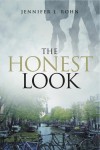
  • An Editorial Review of “The Honest Look” by Jennifer L. Rohn

    An Editorial Review of “The Honest Look” by Jennifer L. Rohn

    In The Honest Look, Jennifer L. Rohn has given life, as only a writer can, to one of the most important aspects of scientific research and science itself—the human aspect. For that reason alone, it is a significant novel about science, but it is also a very beautiful and touching story. The Honest Look could dramatically change the way readers who are not scientists understand the scientific method and what scientists must do in their pursuit of ground breaking research.

    When Claire Cyrus arrives in Amsterdam to begin her job as a senior scientist at a biotech start-up called Neurosys, she is immediately perceived as an interloper by her peers. She quickly falls in love with Amsterdam, only to realize after she takes an apartment there that, while the city is a great tourist destination, it’s not a comfortable place for most expats.

    Undaunted, Claire, perceived as an offbeat prodigy, responds to her outcast status by disappearing into her work, putting in long hours and often sleeping overnight in an armchair she commandeers for her lab. Enterprise and hard work seem to  pay off. She demonstrates that she can ready the company’s only drug to begin its Phase I clinical testing. Simultaneously, a most unlikely romance develops with one of the firm’s principals. But then, just when the success of her contributions promises to solidify her place in the company, she accidentally finds something that doesn’t fit into the working hypothesis on which the company’s only drug is predicated.

    What makes Rohn’s book so noteworthy is that it turns a negative result into a vivid human drama. Most of the time scientists focus on finding evidence that “supports” a general hypothesis, theory or principle, but they also understand that a single negative finding can ruin the generality of every principle and theory in science.

    When a slip of Claire’s thumb takes a sample outside the cells she’s studying, her curiosity and belief in the scientific method lead her to run the incidental sample through her apparatus instead of disposing of it. To her surprise, the analysis doesn’t come out the way the Universal Aggregation Principle predicts it should. And if the principle isn’t true, then Neurosys’ only drug shouldn’t work.

    Now what?  This is where research can get either nasty or exciting, and for Claire, it is both.

    Rohn’s sensitive and perceptive handling of characters’ feelings, a complicated love triangle,  evocative descriptions of Amsterdam, and a realistic glimpse of the daunting years that young scientists must endure to make their reputations add up to a compelling  and engaging read.

    The Honest Look by Jennifer L. Rohn is a thought provoking and riveting  “Lab Lit” novel that draws you into this specialized world and the competitive environment of research scientists.  Highly recommended.