Tag: Judaism

  • THE SPIRITUAL FOREST: Timeless Jewish Wisdom for a Healthier Planet and a Richer Spiritual Life by Andy Becker – Gardening, Ecological Protection, Spiritual Philosophy


    Andy Becker, a small-town lawyer in Washington State, found solace from the demands of his career through the joys of gardening, the forests of the Pacific Northwest, and the spirituality of Judaism. He shares this sensibility in The Spiritual Forest

    In this sequel to The Spiritual Gardener, Becker delivers a quiet, meditative offering that showcases the special connection between ancient Biblical values and the modern concepts of environmentalism.

    The narrative is both informative and thought-provoking. To show the connection between our spirituality and the sacredness of our planet Becker uses questions for the reader as a guide, provides resources to take action in protecting natural treasures, and encourages us to share this knowledge with future generations. In a nod to Dr. Seuss’ cautionary tale, The Lorax, Becker stresses the importance of teaching youngsters about a love and respect for the Earth.

    While Jewish traditions teach that we must care for the Earth to preserve what God created, and the great Chasidic Masters often wrote of their connection to the forest and their love of trees, Becker is quick to point out that this reverence is not restricted to any one religion or culture.

    When a forest is artfully likened to “the greatest synagogue God ever created,” it could just as well be a cathedral. Here he ethereally describes a walk through a grove of old sequoias, their beauty lending a palpable divinity amidst the softness of the forest floor and the shafts of light streaming down.

    In veneration of the author’s Northwestern home state and its far-reaching apple industry, Becker appropriately focuses on the popularity and historical relevance of the “King of all fruits.” In equal fairness, he references the significance of all blooming fruit trees and their embodying principle of shared beauty and bounty.

    Within this slim volume, each of the 18 chapters opens with a relatable and provocative quote ranging from the philosophical words of religious leaders and environmentalists, to those of entertainment moguls, or the simple, yet profound Joyce Kilmer musings that declare, “I think that I shall never see a poem lovely as a tree.” This wide array of voices helps to broaden Becker’s intentions.

    Captivating black & white photographs help introduce each new topic and illustrate in particular the solemn beauty of trees within their natural landscape.

    The images of trees range from a giant entity that extends upwards and out of the roof of a ruin at Angkor Wat, intertwined with its anchoring roots, to a favorite family catalpa tree known to drop its jasmine-scented blossoms like summer snow. Each selection, whether a burned-out forest, a close-up of budding fruit, or a high-angle tree canopy provides a noteworthy accompaniment to Becker’s pondering revelations.

    In his effort to raise awareness about religious thought and the ethereal divinity of our planet, Becker provides an even balance in speaking to our hearts and minds while keeping our souls and spirits rooted.

    A compact, contemplative companion, The Spiritual Forest highlights a gentle yet knowledgeable perspective on blending pious thought and the need to save our natural environment. A powerful book for nature lovers and faithful believers.

     

    5 Stars! Best Book Chanticleer Book Reviews

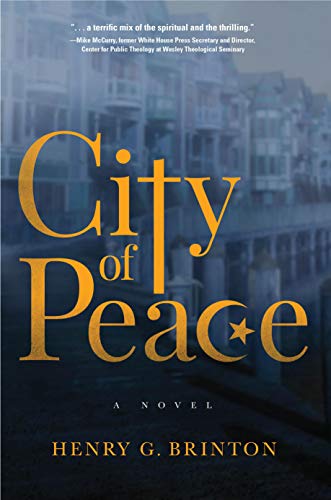
  • CITY Of PEACE by Henry G. Brinton – Murder Mystery, Religious Tension, Multicultural

    M&M Blue and Gold 1st Place Badge Image

    Religions and personalities collide, mix, and meld in this vibrant multicultural, multinational mystery by author Henry G. Brinton, set in the engaging town of Occoquan, Virginia.

    Harley Camden never heard of Occoquan before he is assigned there by his bishop. She insists on a change of venue for him because both his sermons and his management of church affairs have lost their flavor – understandably – after his wife and daughter were killed in Brussels, by Islamic terrorists who used nail bombs to make their horrifying statement.

    Camden realizes that he needs the change, and soon finds that, despite his inner pain, Occoquan has many charms, and many charming residents who go out of their way to make him feel at home.

    Tim, who lays claim to no religion, introduces him to the remarkable history of the region, staunchly abolitionist during the Civil War. Tim also tells him about the Bayatis, an Iraqi family who operate the local bakery. Not long after Camden’s arrival, the complacent riverside town is rocked by sudden tragedy when Norah, the baker’s daughter, is murdered; the presumption made by law enforcement is that her father Muhammad is guilty of a ritualistic killing because Norah had consorted with a man, thus dishonoring her family.

    To preach the Christian gospel, find forgiveness in his enraged anti-Islamic mind, and to find a way to bring together the many strands of spirituality in the town – Christian, Jewish, Muslim – will be a task that Camden never expected to take on.

    Tormented by strange, seemingly prophetic dreams, and guided to meet a Coptic Christian couple and a Jewish woman about whom he receives psychic “messages,” Camden will also befriend the Bayatis and begin, almost without meaning to, to investigate Norah’s murder. In doing so he will uncover obscure but meaningful lore with a bearing on the town’s dilemma, providing regenerative fodder for his emotive sermons. In seeking Norah’s actual killer, he will also imperil himself, and ultimately uncover a terrifying danger hovering over Occoquan.

    Brinton knows whereof he writes, as a Presbyterian minister and well-known journalist whose articles often encompass the themes of multiculturalism, religious understanding, and tolerance.

    Examining as he does the thorny religious and political issues gripping the nation and our world today, Brinton makes Camden a spokesperson for those crucial themes. Mining materials from the history of the Galilean city of Sepphoris as the “city of peace” brings his story into broader focus, while the real-life town of Occoquan is almost a character in the book’s plot, so deeply does Brinton delve into its unique and admirable qualities.

    The first in a series of Harley Camden sagas, City of Peace is a tale of disruption and chaos – followed by reconciliation and interfaith resolve – that will fascinate readers of intelligent mystery fiction and make them seek more offerings from this talented wordsmith.

    City of Peace by Henry G. Brinton won 1st Place in the 2019 CIBA Mystery & Mayhem awards for Cozy & Not-So-Cozy Mysteries.

    M&M 1st Place Gold Foil Book Sticker Image

    5 Stars! Best Book Chanticleer Book Reviews


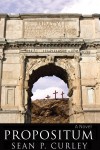
  • An Editorial Review of “Propositum” by Sean Curley

    An Editorial Review of “Propositum” by Sean Curley

    Many know the story of how Jesus Christ came and founded Christianity through the death, resurrection, and crucifixion, but do we know the full story, now millennia old? Sean Curley’s story, Propositum, unfolds to answer this question in a book that is part historical text and part political subversion. Caesars rise and fall by the decisions made by Proculus and Maximus, two great minds who subtly guide the ebb and flow of the Senate and the most powerful voices in Rome, just barely ahead of the crumbling empire.

    The Roman Empire is no longer a Republic; it is failing. Since the death of Augustus Caesar, each of his successors has proven weaker, feeble-minded, and unable to rise to the governance of the former Republic. Proculus, a former senator cannot bear to see his country fall into an inevitable civil war with Judea. His solution is to gather Saul, a young man who admires the senator greatly, his military friend Maximus, and Maximus’ daughter Curia. Each character carries a vital aspect of the plan to fruition. The plan? Create a way for gentiles (non-Jews) to be converted to Judaism without the need for the Jewish laws. Through uniting the two huge groups, Proculus and his allies seek to create a stronger Rome, unified by law and religion.

    The book is well-researched, with each Caesar a nod to history, the knowledge of Jewish communities most akin to Christianity, and Curley’s biblical information shows the clever way religion can be reinvented. The history will put some readers in the mind of the Book of Kings, or, for those less biblically versed, in the dusty classroom where they first had the classics explained to them. While for some, this will distract from the story, the historical distance emphasizes the parallel distance Proculus and Maximus feel from their goals. The disconnection from the reality of their actions proves highly effective as the book progresses.

    Curley plays the long game in the set-up for this book, just like Proculus with his propositum. Antioch is the setting for part one, focusing on Saul and Proculus developing this plan. Saul is the least informed member of the conspiracy, the Jew needed to spread the new religion, and who can be controlled and influenced by his Roman counterparts. Maximus doesn’t receive a proper introduction until Proculus’ first journey to Rome, where he proves himself as a respected and stalwart soldier, with more contacts than you can shake a stick at.

    Curia and Saul (who eventually changes his name to Paul), are two of the most interesting characters, as they are brought into the plan, Curia with full knowledge that a potential war between Judea and the Roman Empire might be just what is needed to solidify the sympathy of the Roman people with the Jews, and Paul none-the-wiser for his efforts. Curia and Paul are linked by Curia’s role as the eyes, ears, and center of the plan in Rome. Without her, Paul’s church of Christianity would wilt and wither, but Paul still cannot bring himself to reconcile one simple aspect of Curia’s personality: she is a woman. Paul’s sexism is often a point of tension between the rest of the group and the proselytizer.

    Most interesting is that this book makes no claim about the validity of religion. There are true believers in these pages who follow the teachings of Jesus Christ. There are visions, there are miracles, but the line between fact and fiction, between belief and self-deception is so blurred that this is a book with many interpretations. Its merit lies in the momentum of the plans, that once started, cannot stop. All of which is aided by Curley’s knowledge of the subject, which highlight and showcase subtlety well in his book. A worthwhile read.

    5 Stars! Best Book Chanticleer Book Reviews