Tag: Instructional & Insightful Awards

  • TEN THINGS EVERY CHILD WITH AUTISM WISHES YOU KNEW by Ellen Notbohm – Autism, Children’s Health, Parenting Hyperactive Children & Children with Disabilities

    A Blue and Gold Badge that reads: I & I Instructional and Insightful Non-Fiction 2019 Grand Prize 10 Things Every child with Autism Wishes you Knew Ellen NotbohmRenowned author and mother of a son with autism, Ellen Notbohm here writes from both a personal and a studied viewpoint.

    Not so long ago, autism was considered incurable, hopeless, a sort of dead-end diagnosis. But with time and attention to real people on the spectrum, we know now that children with autism can become positive, productive adults. The author’s son, Bryce, decided early on to “be happy” despite his differentness. For parents initially facing the diagnosis, there will undoubtedly be challenges, often on a daily, hourly basis, but Notbohm’s diligent exploration assures us that “autism is not awful.”

    The ten messages from your child are 1. “I am a whole child.” My autism is part of me. Even the word “autistic” can classify me negatively. 2. “My senses are out of sync.” I may have heightened, sometimes terrifying sensations that keep me from engaging in ordinary activities. 3. “Distinguish between won’t and can’t.” Just because I balk at a new task, even something simple like riding a bus, doesn’t mean I’m defiant – maybe just scared. 4. “I am a concrete thinker, I interpret language literally.” Don’t speak to me in roundabout ways; just tell me what to do plainly. 5. “Listen to all the ways I’m trying to communicate.” My communication barriers make it hard for me to learn to socialize. Study my body language. 6. “Picture this! I am visually oriented.” Visual cueing really helps. 7. “Focus and build on what I can do rather than what I can’t do.” Watch what I do well; encourage my neatness, my ability to occupy myself without outside stimulation. 8. “Help me with social interactions.” Recognize that sociability will be one of my toughest challenges. 9. “Identify what triggers my meltdowns.” Yes, I may explode sometimes; you can help. 10. “Love me unconditionally.” Don’t base approval on an “if.”

    Notbohm examines each of these simple revelations in fascinating and practical detail, using numerous examples and referencing many authorities, including autistic notable Dr. Temple Grandin. As part of her own mothering experience, Notbohm recalls a lovely, lively example of telling Bryce to “stick to his guns”- an idea that horrified his literal mind. Then he cleverly concludes that she must have meant “gum.”
    Parents, educators, social and community workers should read this dynamic take on an often confusing and misunderstood aspect of human consciousness and development. Notbohm poses common viewpoints about autistic children and offers real strategies for improvement in the child’s outlook and abilities and the parent’s understanding and broader perspective.

    Ten Things Every Child with Autism Wishes You Knew won GRAND PRIZE in the CIBA 2019 I & I Awards for Non-Fiction: Insight and Instruction books.


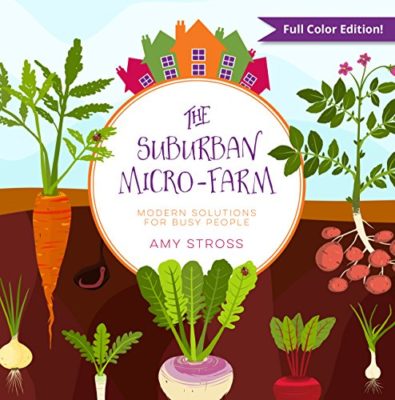
  • The SUBURBAN MICRO-FARM: Modern Solutions for Busy People by Amy Stross – Fruit Gardening, Sustainable Gardening, Garden Design, Gardening & Horticulture Reference

    The SUBURBAN MICRO-FARM: Modern Solutions for Busy People by Amy Stross – Fruit Gardening, Sustainable Gardening, Garden Design, Gardening & Horticulture Reference

    Author, educator, and urban farmer Amy Stross offers a comprehensive look at how to repurpose a small yard in the city for basic sustenance and so much more.
    Award-winning writer Stross has composed a thoroughly practical guide to everything a reader would need to know to do what she did: transform a yard into a farm. Acknowledging that the ground surrounding a town dwelling is hardly what one thinks of when one thinks farmland, Stross draws from her personal experience to show precisely how the transformation can take shape. Her colorfully illustrated manual gives the basics for managing an ample garden space, or micro-farm, almost down to the minute (in fact, seven minutes twice a day).

    Stross was caught between jobs and challenged to make the best use of time and space. Growing the kinds of foods her family liked to eat on a tenth of an acre, preparing and preserving them and, at times offering produce for sale became her grand quest. She shares the wisdom she gained as she gradually moved from beginner to experienced farmhand, to teacher of others. She tells readers what, why, and how to grow sustainable crops from the depths of the soil on up.

    One bias Stross invites us to overcome is that gardens are ugly and should be hidden. She blasted that notion by using the “parking strip” – that piece of land between the sidewalk and the street – for cherry trees, providing not only the beauty of the spring blooms but, after a few years, an abundance of cherries for jams and preserves. She makes useful suggestions about how to explain one’s project to perhaps skeptical or critical neighbors. She recounts our American history of Victory Gardens as a success story supporting the home garden venture. If we can, why should we not provide a good portion of our edibles by our own labor? Later, the author became involved in community gardening, learning from, and helping others in a socially responsible setting.

    Stross’s book combines memoir and good humor with an encyclopedic knowledge of the subject. She starts with soil with composting readily available substances like coffee grounds and eggshells, then covers annual plantings and planning with a micro-farm calendar. Instead of seeing hills, rocks, and other barriers as problems, Stross shows how these can be utilized in the overall strategy of garden planning. Stross goes on to recommend specific plants for specific purposes such as hedgerows, shady areas, and saleable products like cut flowers and homemade soaps. Following her example, readers can become writers, teachers, and sharers of the vast body of information she presents. The Suburban Micro-Farm projects Stross’s personal win-win-win-win: readers will learn, learners will do, doers will share, and all will be the better for it.

    The Suburban Micro-Farm: Modern Solutions for Busy People won First Place in the 2018 CIBAs for Instruction and Insight.


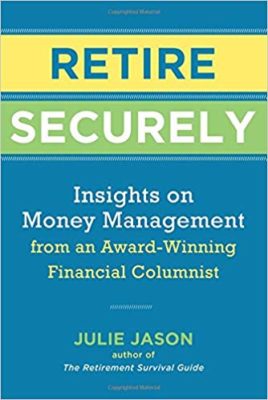
  • RETIRE SECURELY: Insights on Money Management from an Award-Winning Financial Columnist by Julie Jason – Personal Financial Management, Retirement Planning, Budgeting & Money Management

    RETIRE SECURELY: Insights on Money Management from an Award-Winning Financial Columnist by Julie Jason – Personal Financial Management, Retirement Planning, Budgeting & Money Management

    If you’re wondering what the difference is between a Roth IRA and a traditional IRA, then you’ll want to pick up Julie Jason’s Retire Securely: Insights on Money Management from an Award-Winning Financial Columnist. You will be treated to a crash course on financial terms like these and get inside information on saving and investing thanks to scores of conversations she’s had with her readers over the years.
    Plenty of titles on financial planning and investing exist on bookstore shelves, but what makes Jason’s compilation different is that hers is culled from more than 1,000 columns she has written over the years for the Connecticut newspapers, Greenwich Time and the Stamford Advocate. In 2013, King Features syndicated her “Retirement Planning and Investment” column, where she explores topics like 401(k) investing, choosing a financial adviser and how to determine if sending your kid to college is a good value. Jason, who worked as a Wall Street lawyer, money manager, and investment counselor, really knows her stuff: whether it’s unraveling the complicated world of market trends or explaining estate planning, her columns are worth reading and applying to your financial life. Her column has recently moved from King Features to Andrews McMeel Syndicate [Chanticleer Reviews was notified about this change on April 3, 2020].

    “Through my dialogue with readers, I want to share a message of both promise and watchfulness,” she writes in the Introduction. With an easy to follow and conversational tone, Jason invites readers to get financially literate–understanding how to read a mutual fund prospectus, for example. (A prospectus is not literature that you read from start to finish. Instead, it’s designed to protect you, so read it like a warning label on a medicine bottle, she advises.)

    Recognizing that some investors are overwhelmed by financial jargon and the pressure to keep up with the Joneses, she assures her readers that attaining financial security is “a work in progress,” with room for improvement. “I’ve interacted with hundreds of people who wrote to or visited with me to discuss their challenges, concerns, and questions,” she says.

    Our culture’s most significant challenge today, she says, seems to be the pressure Millennials face as they swim in debt. On top of it, Jason points out, this younger generation is in the dark about financial matters. So much so that in 2013, President Obama helped create the President’s Advisory Council on Financial Capability for Young Americans*, designed to educate young people on how to “successfully handle their personal and household finances as they grow into adulthood.”

    Citing statistics, Jason tells us at least half of 18-to 24-year-old adults stated they would have benefited from a high school course on managing their money. Unfortunately, financial literacy isn’t a mandatory class, so the on us falls on parents to approach kids early with guidelines for saving and even borrowing money.

    Because the book idea came from dialogue she had with readers via her column, many of the issues have to do with feeling secure in retirement, as evidenced in chapters like, “It’s Never Too Early for Retirement Planning” and “Understanding the Relationship Between Your W-2 and Your 401(k).”

    We all could take a cue on how to improve our financial know-how, and a number of the columns are especially useful for parents and their children to review at various stages of their financial planning life cycles.

    Lastly, if you’re wondering how republished articles, some from a decade ago, could be relevant today, Jason has taken the time to update some of the columns to keep pace with changes in the market.

    Retire Securely: Insights on Money Management from an Award-Winning Financial Columnist by Julie Jason won First in Category in the CIBAs 2018 I&I Awards for Instructive Non-Fiction.


    *The Council officially ended on January 29, 2013: https://www.treasury.gov/resource-center/financial-education/Documents/PACFCYA%20Final%20Report%20June%202015.pdf


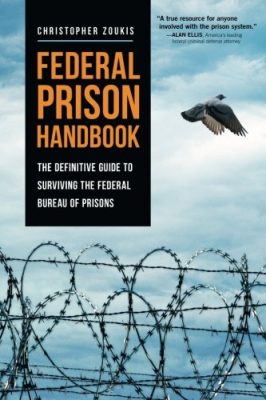
  • FEDERAL PRISON HANDBOOK – The Definitive Guide to Surviving the Federal Bureau of Prisons by Christopher Zoukis – Survival Guide, Non-Fiction, Federal Prison

    FEDERAL PRISON HANDBOOK – The Definitive Guide to Surviving the Federal Bureau of Prisons by Christopher Zoukis – Survival Guide, Non-Fiction, Federal Prison

    In the Federal Prison Handbook-The Definitive Guide to Surviving the Federal Bureau of Prison, Christopher Zoukis has meticulously identified, collected, and organized a compendium of information regarding life in federal prison. Zoukis’ straightforward writing, free of personal bias or opinion, is neither mysterious nor titillating—reality is not sensationalized—it’s not fiction, it’s the facts.

    However, if through some twist of fate, you or a loved one finds yourself in the unthinkable situation of going to prison, it may become the best book you’ve ever read.

    Consider. You’ve been sentenced to serve time in one of the Federal Bureau of Prisons’ 125 stand-alone facilities, a private contract facility, or a satellite prison camp scattered throughout the United States. You, who need directions to find your way through Costco to the deli, must now enter an unfamiliar world with its own lexicon, rules, and consequences. How will you survive?

    As a thirty-year-old federal prisoner, incarcerated since he was a high school senior, Zoukis speaks authoritatively to that question—and other issues you haven’t even considered—and, why would you, with no previous experience or points of reference.

    Zoukis has created a comprehensive guide to seemingly all aspects of prison life—from entering the front doors to the time you leave. He provides annotated, specific information regarding life in this mandated setting, a community which exists within both real and figurative walls. Its written and unwritten rules allow little latitude for divergent behavior or personal desires. And, perhaps equally important, Zoukis delineates the unique customs and unwritten social mores of prison culture.

    Each handbook section cites and explains rules and regulations in detail, as well as providing practical tips, based upon the author’s experiences, observations, and information garnered from extensive interviews of fellow prisoners.  The Federal Prison Handbook disabuses some of the sensationalism created by fiction, tell-alls, and media in general, regarding sexual abuse, gang violence, power hierarchies, and such. The topics are objectively elucidated within the context of the prison rules, consequences, and the overall prison culture.

    Unlike many popular “survival” books, the Federal Prison Handbook will probably not give the reader an emotional rush or provide an epiphany regarding the meaning of life. However, it could prove invaluable to counselors, lawyers, families, and individuals who find themselves facing incarceration in the federal prison system.

    Federal Prison Handbook-The Definitive Guide to Surviving the Federal Bureau of Prison won First Place in the Instruction & Insight Awards in 2017.


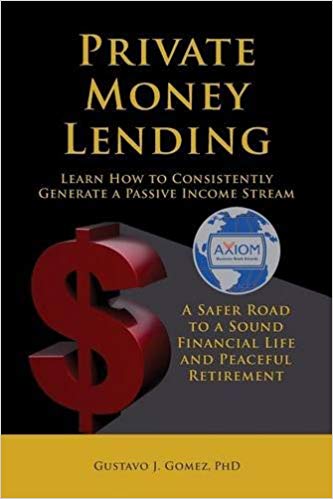
  • PRIVATE MONEY LENDING: How to Consistently Generate a Passive Income Stream by Gustavo J. Gomez, Ph.D. – Budgeting & Money Management, Analysis & Strategy, Personal Finance

    PRIVATE MONEY LENDING: How to Consistently Generate a Passive Income Stream by Gustavo J. Gomez, Ph.D. – Budgeting & Money Management, Analysis & Strategy, Personal Finance

    Are you in retirement, or close to it, wondering how you’re going to make ends meet pulling from your portfolio? Well, you’re not alone if you’re staying up at night thinking about how low-interest rates are killing your investments.

    In a practical and easy to read format, Gomez explains to investors the particulars of a little known, yet potentially lucrative investment technique that can handle the ups and downs of the stock market. Unlike stocks, the underlying security of private money lending is a tangible asset – brick and mortar, so there is another layer of protection for you, the investor.

    But what is Private Money Lending? According to Gomez, it refers to a private individual or organization that lends money. Typically, when you’re looking for financing, you would go to a bank. With private funds, on the other hand, you’re going to an individual or organization that specializes in this type of lending. The upside of private money lending is that it’s less regulated, which means less red tape. The icing on the cake, he says, is that these investments have consistently generated 9 to 12 percent returns* – not bad considering stock market investments have averaged closer to 7 percent, and with much more fluctuations. We can’t forget the economic crash of 2008 when many stock market investments plummeted close to 40 percent.

    In a nutshell, amid the 2008 economic crash, the Federal Reserve lowered interest rates to help boost the US economy, the author explains in fluid and well-organized chapters. The general thinking was to reduce interest rates to encourage people to borrow money, who then would go on to buy more products – all good for the American economy. However, those same low-interest rates translated to less growth for those in retirement. Private money lending offers an alternative strategy that could generate a “predictable, safe, and consistent income stream that this low-interest rate environment does not currently permit,” Gomez says.

    No investment comes without risk, Gomez reminds his readers, so his bottom line advice for investors: do your homework (start with this book), find out who is offering the loan, and check they have a good track record.

    Even though the content derives from Gomez’s doctoral research and dissertation conducted at Florida Christian University in Orlando, it’s not academic in style. In fact, you will find it conversational and accessible, with a thorough glossary of terms (e.g., origination fee, negative amortization, and Private Mortgage Insurance) and recommended reading to further your knowledge.

    Whether you’re in your golden years relaxing on a sandy beach or fast approaching retirement, you will want to read Gustavo Gomez’s Private Money Lending: Learn How to Consistently Generate a Passive Income Stream.

    *as of the book’s publishing (2015)


    Private Money Lending Learn How to Consistently Generate a Passive Income Stream won First Place in the 2017 CIBAs for Instruction & Insight!