Tag: Inspirational

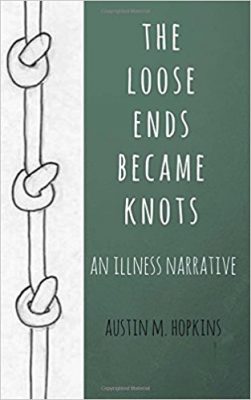
  • The LOOSE ENDS BECAME KNOTS: An ILLNESS NARRATIVE by Austin Hopkins – Memoir, Sexual Awakening, Health and Wellness

    The LOOSE ENDS BECAME KNOTS: An ILLNESS NARRATIVE by Austin Hopkins – Memoir, Sexual Awakening, Health and Wellness

    A young man survives the extremes of sexual abuse, physical harm and emotional chaos in the harrowing and profoundly powerful memoir, The Loose Ends Became Knots: An Illness Narrative by Austin M. Hopkins.

     The experience of sexual violence starts for Hopkins as a teenager, during the time he struggles defining his own sexual identity. The men he meets take advantage of his youth and naiveté, at first, and later, though he gradually becomes wiser to the stark intricacies of a sexual awakening in the world of gay men, he still succumbs to men who use him – with and without his consent. He never seeks such treatment consciously, yet, it continues to happen. What is it about him that attracts predatory partners, he wonders? Hopkins grapples with the many issues that often assail young people dealing with gender identity: How can he reach out to his parents for help when the root of his pain contradicts whom he believes they want him to be? Is he disappointing them? Will they cut him out of their lives? How complicated his life has become since his childhood!

     As encounter after encounter with unkind and uncaring individuals sends him into a downward spiral, three things work together to give him hope: he’s a bright student and doing well in college; he finds an excellent therapist who offers concrete advice and skills that will serve to help him personally and professionally in the years to come; and finally, after courageous self-examination and altered personal perspective, he meets a loving, compassionate partner, who, though not fully understanding the different emotions and energies from Hopkins past, authentically recognizes and acknowledges the unique qualities that his partner brings into their marriage.

     Hopkins has collected this episodic memoir from his journals, poetry and other writings, and added the observations of others, attributing identity where permission was granted. He carefully phrases the depictions of sexual violence in a manner that compels the reader to feel his pain and humiliation. Hopkins does not shrink from the frank sense of shame and self-blame that characterizes his early encounters. Readers unfamiliar with sexual awakening stories may find some of the text hard to work through. And yet, the author presents his work as a gift to those who are on the brink of their own sexual awakening – or who are already there and wonder what next to do – how to live successfully in the malaise of public opinion and family complications. It is through the pain and traumatic recollections that Hopkins expresses himself most eloquently – and it is here where his work, though painful, is the most rewarding. Readers witness a young man triumph over obstacles and begin to actively balance his life with acceptance and love, endeavoring to help others along the way.

    Hopkins’ story is profoundly powerful. And his story is not over – he is, after all, a young man working towards a career in medicine. He offers this narrative to “raise awareness of the pervasiveness of sexual violence within the gay community” as he experienced it. His goal is to help others who are experiencing similar kinds of abuse and hopefully shed a much-needed light in this potentially lonely and frightening time for those whose sexual identity is something other than what certain groups claim as normal.

  • PIZZA WITH JESUS (NO BLACK OLIVES) by PJ Frick – Memoir, Grief & Dying, Devotion, Inspirational

    PIZZA WITH JESUS (NO BLACK OLIVES) by PJ Frick – Memoir, Grief & Dying, Devotion, Inspirational

    Memories of love and despair combine with hope and faith in this honest depiction of one woman’s struggle dealing with grief surrounding the loss of her husband to cancer.

    Author P.J. Frick writes movingly of her successful and courageous battle with breast cancer, to be followed, tragically, by her husband David’s diagnosis—inoperable pancreatic cancer. The couple shares a Christian faith that bolsters them with compassionate community, much-needed emotional support, and the belief that things will be better if not now, certainly in the future. But their faith isn’t their only anchor. The couple often finds joy in their shared love for their pets and pizza for dinners.

    P.J. and David are moving contentedly through life when they must face a series of events the author calls a “hit list.” After they move to a more expensive home, a costly merger at work negatively affects P.J.’s employment. The author, experiencing physical signs of stress, quits her job to pursue a Master’s Degree in Library Science.

    Just when things seem to calm down, P.J. discovers a lump and breast cancer is diagnosed. A plan is made to fight the disease. And the plan is successful! However, David secretly spirals out of control, dealing with the overwhelming stress and grief of almost losing his wife by secretly drinking. When he gradually comes to his senses, he receives his own diagnosis: inoperable pancreatic cancer.

    David passes and P. J. is overcome with grief. One day as she is on a hunt for a neighbor’s lost dog, she has a revelation: God is always waiting for us, even as we stray from His loving care. This knowledge comforts her and aids in her grieving, bringing an ameliorating sense of peace.

    This narrative will touch any reader who has been through even a portion of what she and David experienced. Her retrospective spiritual understanding adds a layer of hope and comfort, underpinned by comments about David’s positive qualities shared by family and friends after his passing. Interwoven with the chronicle of woes are vignettes of pets that provided cheer, even inspiration in this dark time of her life. Significant dreams, especially those about David after his death, seem a necessary part of Frick’s healing process.


  • MY EXTRAORDINARY LIFE by Monica Sucha Vickers – Memoir, Inspirational

    MY EXTRAORDINARY LIFE by Monica Sucha Vickers – Memoir, Inspirational

    Monica Sucha Vickers was born in 1954, her parents’ first child. Their love for her overcame the shock they experienced when they saw that she was severely handicapped.

    Born without legs and missing her right arm, Vickers was probably a “thalidomide baby,” although her mother’s medical records are mysteriously lacking the proof of that speculation. Advised by doctors to institutionalize their tiny daughter, her parents took her home instead, and, without discussing their secret sorrows, they raised Monica with courage and without barriers.

    Her father pushed her to try new things—navigating stairs and participating in sports. Initially sent to a special needs school, she complained that she was out of place there, so she was transferred to typical schooling.

    In college she and a roommate took a long trip out west in the author’s hand-controlled auto, inspiring her to move from the Midwest of her birth with its icy winters to sunny California. She became an expert medical transcriptionist, typing twice as fast with one hand as most of her co-workers could with two. It was here she met and eventually married a construction engineer who designed a special office space for her home business. Together they happily entertained their large extended families.

    After her rather sheltered upbringing, the author gradually saw that the world can be cold and hurtful to people with handicaps; she speaks out boldly on that subject. She states that her grandmother, who taught her to bake, prepare fresh garden veggies, ride a tricycle, even sew and embroider, provided the impetus for this memoir. Her grandmother was, and still is, her hero.

    Vickers writes with a rare combination of gusto and aptly chosen phrasing, reflecting her own spirited but well-planned approach to life’s adversities, of which she has had more than her fair share. Her prose is plain and her observations frank, showing her creative talent along with the ability to objectify her experience in an unusually balanced manner.

    The book contains many photographs showing not only the extent of her disabilities, especially in early childhood, but also the means she has used to overcome them over the course of her tough but courageous life: the heavy but cosmetically sculpted artificial legs, the various wheelchairs, her hand-operated car, her athleticism as a swimmer, her unconventional but very effective typing method. Here, Vickers admonishes readers about what not to do and say to handicapped and wheelchair bound persons, which is enlightening and edifying.

    Avoiding any temptation towards bitterness, especially in the matter of the probable cause of her disabilities, Vickers has boldly included numerous honest appraisals penned by family members and friends about growing up with and knowing her. This willingness to see herself as others see her sometimes brings her back to the awareness of the adage, “People will see your disability before they see you,” a hard lesson that took her a long time to absorb.

    This is an important memoir that serves to bridge a gap between people of all shapes and sizes – no matter what their condition. An honest and courageous chronology of a life that truly deserves to be called “extraordinary.” Monica can be reached via her Facebook page or her website, which is listed at the top of this review.

    5 Star Best Book Chanticleer Reviews round silver sticker

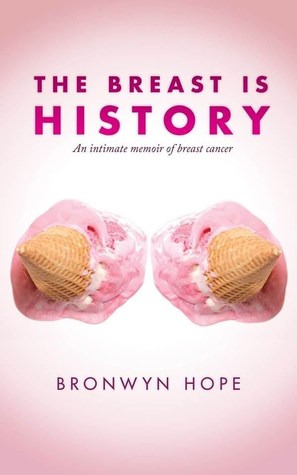
  • The Breast is History: An Intimate Memoir of Breast Cancer by Bronwyn Hope – Inspirational Non-Fiction

    The Breast is History: An Intimate Memoir of Breast Cancer by Bronwyn Hope – Inspirational Non-Fiction

    A realistic, up-close look at life as a cancer patient and survivor. The Breast Is History is a strong tool of hope and humor in the darkest days of any woman’s life.  

    In September 2011, Bronwyn Hope received her initial diagnosis of breast cancer; by March 2013 she had had both breasts removed, had gone through numerous chemo and radiation treatments, taken thousands of pills, and come out of it with a gritty, positive philosophy.

    When she was first diagnosed, a close friend advised her to start a blog, something very far from her mind at that moment. But, her friend reasoned, she could inspire others with her story. This was not a fanciful idea, given that Bronwyn was and is a powerhouse—an avid athlete, media maven, entrepreneur, activist, mother, and writer. She took her friend’s advice and this book is the result, a sometimes day-by-day journal of her battle with a disease she admits we often think of as a death sentence.

    Through the blog and, one suspects, because of her generally extroverted nature, Bronwyn discovered a very positive aspect of her illness: the immediate outpouring of warmth, good wishes, gifts and visits from a host of friends and family members. But as time passed, and her treatments, especially chemo, took their toll, she records many days of lonely suffering, struggling with nausea, pain in every part of her body, the loss of all body hair, and feelings of profound weakness and despair.  Yet she constantly, remarkably, tries to recoup her pre-cancer strength and endurance.

    A visit to a Catholic church and a later whirlwind trip to India provide spiritual insights. During her own cancer challenge, Bronwyn’s sister Fiona was also diagnosed with cancer. Helping Fiona through what she had already experienced became a sustaining factor for Bronwyn.

    The author does not shy away from tough issues, or from the occasional use of profanity when appropriate. She displays a secure knowledge of many complex medications and their effects and side effects. By detailing how her illness progressed, she provides a guideline for others. Her account is not without humor: she had been a large-breasted woman and had named her breasts Nicky and Paris. Nicky was the first to go, early on, and Paris about two years later. Photographs show the author with her once-straight hair, then hairless (with husband and dog getting a shave in sympathy) and then with the incongruously curly hair that grew in later.

    There will be no doubt as one reads this honest account, that Hope has walked the walk and is also very capable of talking the talk. Her wisdom, based on a long, harrowing experience, is anything but saccharine. She concludes, “I am not angry or depressed or saddened by what cancer has taken away from me. I am instead, empowered and strengthened by what it has given me: lessons that are priceless.”

    5 Star Best Book Chanticleer Reviews round silver sticker

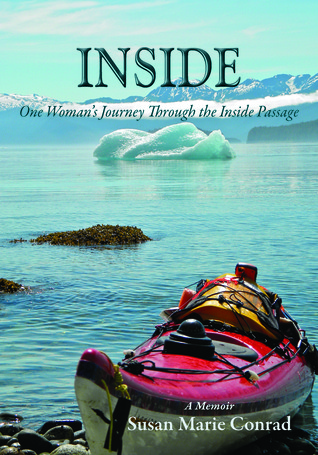
  • INSIDE: One Woman’s Journey Through the Inside Passage by Susan Marie Conrad – an adventure of mind and body

    INSIDE: One Woman’s Journey Through the Inside Passage by Susan Marie Conrad – an adventure of mind and body

    Blue Badge for the 2017 Journey Grand Prize Win of Susan Marie Conrad's Book InsideNonfiction at its finest as one woman faces her inner fears and the outward challenges of paddling solo up the Inside Passage.


    While many of us dream of setting off on an adventure, few of us ever do. But in mid-life, Susan Marie Conrad was determined to stop running from fear and sadness and start paddling toward something positive. Leaving behind a confusing and frequently cruel childhood, a failed relationship, and the cloak of anxiety that often held her in its grip, Conrad embarked on a quest to live her dream of kayaking the Inside Passage from Washington State to Alaska.

    Unlike some celebrated explorers, Conrad was well prepared with expert paddling skills, modern safety equipment, and charts notated by her cherished friend and mentor. But no amount of careful planning could prepare her for weeks of traveling alone.

    During her journey, she experienced the astounding power and beauty of Nature. She paddled in drenching rains, fierce winds, and violent seas. Extreme high tides forced her to rise in the darkness and stand in frigid saltwater holding her gear out of the water until the sea receded and she could sleep again. Grizzly bears prevented her from landing in choice camping spots. Black flies tormented her. Creepy men studied her from boats offshore. Every night she slept with her VHF radio, flare gun, knife, bear spray, cell phone, and SPOT satellite device in her tent, reasoning that if man or beast attacked, she would spray the intruder and fire her flare gun, cut an escape hole, call for help, and then press the 911 button on the SPOT so someone could locate her body.

    Inside brings the reader along on the adventure as Conrad battles her way up the Inside Passage, learning to cope with ever-changing moods of weather and sea, wildlife both friendly and fierce, and the mixed messages of her own mind. Within these pages of eloquent writing and striking photos, readers will sleep to songs of humpback whales, thrill to spectacular scenery, delight in the generosity of strangers, and share in the author’s joy as she discovers the courage and the deep gratitude that comes from experiencing the best and the worst of Nature and humanity. This is a book we highly recommend.

    Inside: One Woman’s Journey Through the Inside Passage won the 2017 GRAND PRIZE in the JOURNEY AWARDS.


  • THE COMPASSIONATE CONSPIRACY by Dr. Phil Johnson, a practical guide to connect the world

    THE COMPASSIONATE CONSPIRACY by Dr. Phil Johnson, a practical guide to connect the world

    With all of the texting, tweeting, and tapping we do on our smartphones, it’s easy to get distracted from life’s true meaning. Thankfully, to help us find our way, Dr. Phil Johnson has published, The Compassionate Conspiracy: A Field Guide to Changing the World – an inspirational guide to a purposeful existence.

    A lovely mix of his personal stories, along with well-known song lyrics, quotes, and research on world poverty and hunger, the book helps us answer the age-old question: “Why am I here?” Dr. Johnson also includes writing exercises and quizzes for reflection.

    The impetus for the book came from childhood. With a “calm wisdom” and realist world view, Dr. Johnson’s mother, who coordinated a food pantry for families in need, would spin a globe and pose, “Philip, where shall we go today?” As he took “voyages” around the world to places like Bolivia, Brazil, and Greenland, Philip soon realized he was most fascinated by Africa. Eventually in 2005, he traveled with his wife to Kenya where he contracted malaria and typhoid fever. Fortunately, he was quickly cured, but witnessing thousands of Africans suffering from famine and illness, he asked: “What can I do to make a difference?”

    The Compassionate Conspiracy is his answer to helping us all discover our passions and develop a personal plan to help those less fortunate. Dr. Johnson crafted this practical guide to connect the world. Did you know that the Latin origin of “conspiracy” is conspirare, which means “to breathe together.” He wanted to write a book so people could help others by “learning to breathe together for the common good, to breathe life into a suffocating world.”

    In the Conclusion, he states: “My singular purpose in writing The Compassionate Conspiracy is to spark a movement to achieve that compelling vision. At the beginning of the twenty-first century, I believe we have the wealth, the wisdom, and the will to breathe hope into the global family.”

    With more than 40 years working with corporations like Ford and IBM and with nonprofits like the United Way and the Juvenile Diabetes Research Foundation, Dr. Johnson is no stranger to helping people around the world. On top of that, he is an ordained minister and practicing pastor at the New Day Community Church in Grand Rapids, Michigan. Dr. Johnson participated in major international events, including the United Nations World Peace Conference in Israel in 1999.

    You will see the book is organized into four parts: 1) Our World is in Critical Condition, 2) The Compassionate Conspiracy, 3) the Compassionate Conspirators, 4)  and A Guide to Becoming a Compassionate Conspirator.

    The foreword, aptly written by Dr. Nido Qubein, a motivational speaker, author, and chairman of the Great Harvest Bread Co., starts us off:

    “Remember, life is about choices. Decide here and now that you want to make the world a better place, and build a plan that will take you there!”

    Qubein is also President of High Point University in North Carolina. It would be difficult to put the book down at this point.

    As the author of six previous books, Dr. Johnson is familiar with writing and publishing,  so be sure to get The Compassionate Conspiracy on your bookshelf too.

    Dr. Johnson’s other titles include: Time-Out! Restoring Your Passion for Life, Love and Work (Stoddart, 1992); Celebrating the Seasons with Children (Pilgrim Press, 1984); More Celebrating the Seasons with Children (Pilgrim Press, 1985); And More Celebrating the Seasons with Children (Pilgrim Press, 1986); Goodbye Mom, Goodbye (Welch Publishing, 1987); and The Great Canadian Alphabet Book (Hounslow Press, 1981).

  • CONFESSIONS of an ASSASSIN by Linda Heavner Gerald

    CONFESSIONS of an ASSASSIN by Linda Heavner Gerald

    Catherine Carnegie, daughter of the Black Sheep of the New York Carnegies, enjoyed the idyllic childhood of wealthy parents. She and her brother Nathaniel attended only the best schools and were cared for by a loving family retainer who made certain they never wanted for anything. However, when Catherine at age eighteen naively asserts her independence, choosing to go to the University of Alabama instead of a northern Ivy League school, her position in the household immediately becomes second-best to her Nat, who has chosen to follow in his father’s footsteps, attending Harvard. And though she has even severely disappointed her beloved grandfather, Catherine holds firm, leaving to attend a southern university to, as she envisions it, become her own version of Scarlett O’Hara.

    Thus begins a series of life-changing mistakes Catherine makes in the name of independence that will cause her heart-wrenching regret in her later years. Once at university, Catherine will come under the influence of a friend who urges her to go to work for a secret government agency. In the beginning, the work is glamorous and exciting. Eventually, though, Catherine will accept the assignment that almost destroys her life.

    Heavner begins this novel as a reminiscence by Catherine who, at fifty years of age, is looking back on a life of bad choices and regrets. She has become a woman who rarely leaves her house for fear of being “discovered” by the agency she worked for, or of taking an action that will cause them to eliminate her. She is tormented by the loss of the only man she has ever loved, and experiences frequent nightmares of the events of her past. As the story unfolds, Heavner hints at the possibility that Catherine’s salvation may come in the form of a package, the contents of which may free her from her pain, regrets, and grief.

    Although Heavner has employed the well-known literary device of telling her story in the style of a memoir, readers may become frustrated with the lack of action in the story, particularly in the early chapters. The story premise is unique and engaging, and many will find it fascinating, though they may become irritated with its obvious craft and editing flaws.