Tag: India

  • The Eternal Radiance of a Diwali Celebration in Indian Literature

    Celebrating the good things in life,

    with hope of happiness and prosperity for you!

    Diwali, or the “Festival of Lights”, is celebrated around the world with family gatherings, prayers, and festivities that transcend geographical and cultural boundaries. The festival marks the victory of light over darkness and good over evil, and has been a profound source of inspiration in Indian literature throughout history.

    Diwali, Festival of Lights, flame, Indian, candle, lantern

     From ancient epics to contemporary novels, Diwali has been depicted India’s rich cultural significance and the deep-rooted traditions. 

    The origins of Diwali come from within the deep cultural history of Indian literature. Ancient Indian texts, particularly the Ramayana describes the festival as a celebration to honor Lord Rama’s return to Ayodhya after his victory over the demon king Ravana. In Valmiki’s epic, the joy of the citizens lighting oil lamps (diyas) to welcome Rama symbolizes the triumph of righteousness and good over evil, light over darkness. This theme of victory is echoed in various forms across different literary genres, capturing the essence of hope and renewal in the original story.

    Hands, flame, lantern, diwali, Hindi The stories that keep it alive!

    Diwali is steeped in and immortalized in various forms of literature. Tales of goddess Lakshmi, the embodiment of wealth and prosperity, and Lord Ganesha, the remover of obstacles, are recounted in regional literature and oral traditions. These stories emphasize the spiritual significance of Diwali, reminding readers of the importance of virtues such as generosity, compassion, and humility.

    Moreover, regional tales often present a more localized version of Diwali, reflecting the diverse customs and rituals practiced across India. Each region brings its unique flavor to the festival, enriching the literary landscape and showcasing the country’s cultural pluralism.

    Diwali in Poetry

    Indian poetry has beautifully encapsulated the spirit of Diwali, often intertwining personal emotions with collective celebrations. Poets like Rabindranath Tagore have used the festival as a lens for enlightenment and spiritual awakening. In his works, the lighting of lamps becomes a symbol of the inner light that guides individuals through darkness, echoing the belief that each person carries the potential for goodness.

    Contemporary poets have also embraced Diwali, infusing it with modern sensibilities. For instance, in urban settings, Diwali is portrayed not just as a festival but as a time of reflection on social issues, consumerism, and environmental concerns. This nuanced representation enriches the literary tapestry of the festival, making it relevant to today’s world.
    Indian, girl, thought bubbles, elephant, man, dancers, books

    Fiction and Diwali

    In novels, Diwali often serves as a backdrop for significant plot developments and character arcs. Writers like Salman Rushdie and Arundhati Roy have woven Diwali celebrations into their narratives, using the festival to explore themes of identity, community, and belonging. For instance, in The God of Small Things, the chaotic yet joyous atmosphere of Diwali reflects the complexities of familial relationships and societal norms.

    Short stories also find a place for Diwali, where the festival acts as a catalyst for change. Authors like Ruskin Bond capture the essence of childhood nostalgia and innocence associated with Diwali, portraying the festival as a time of discovery and learning. These narratives often highlight the values of love, forgiveness, and unity that the festival embodies.

    Diwali, rainbow, flame, lantern


    A New Perspective on the Festival of Lights

    In recent years, contemporary Indian authors have begun to explore the complexities of Diwali in a globalized world. Novels set against the backdrop of migration, urbanization, and multiculturalism depict how the festival is celebrated away from home. This exploration reveals the challenges of maintaining traditions while adapting to new environments, highlighting the ongoing relevance of Diwali in a changing society.

    It’s time to light up the night during Diwali!

    Diwali is more than just a festival; it is a profound cultural phenomenon whose roots in ancient text continue to be explored and expanded upon in today’s literature. It symbolizes hope, unity, and the enduring human spirit, giving light to even the darkest of themes. As we celebrate Diwali, let’s reflect on contemporary Indian authors who continue to share their cultural heritage with the world with stories that illuminate the human condition and the need for hope, happiness, and love.

    Fireworks, Indian, Family, firelight, sparklers, garlands, presents, mandala

    Interested in exploring the wonderful storytelling of Indian authors? Check out these amazing Indian authors!

    Operation Mom

    Master storyteller Reenita Malhotra Hora’s YA romance Operation Mom: My Plan to Get My Mom a Life and a Man takes us on a charming journey through the life of one teen, Ila Isham.

    Hora introduces Ila and her best friend Deepali, two boy-crazy teens on a summer quest. Readers will fall in love with the smart, sassy, angst-filled, rebellious Ila. A typical teenage girl, Ila lives in Mumbai with her mom and Sakkubai, their house manager. Ila’s mother calls her obsessed, but that seems unfair. Is she obsessed just because her every waking minute is spent thinking of Ali Zafar, famous pop icon, singer, and heartthrob? Or is she obsessed with fellow classmate Dev?
    Read more!

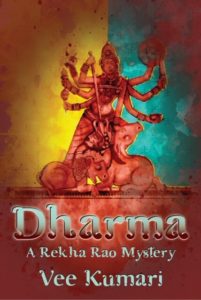
    Dharma, A Rekha Rao Mystery
    By

    A complex murder mystery always requires a little spice. In Dharma, A Rekha Rao Mystery, that extra seasoning is provided by the casting of an Indian American woman as the amateur sleuth, despite her realistic fears for her personal safety.

    Professor Rekha Rao is no Bollywood Mighty Girl. She’s a whip-smart American-born 32-year-old college instructor who must deal with her own PTSD after the murder of her father and her unstoppable passion for releasing the man wrongly convicted of her father’s slaying. That obsession is the reason Rekha was dismissed from her old teaching position. The scene is set for deep, personal involvement in the murder of a colleague, a fellow professor who is killed. And a rare, centuries-old statue excavated from an archeological dig in India is the murder weapon.
    Read more!

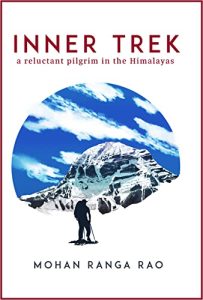
    Inner Trek Cover

    Inner Trek
    By

    A disinclined traveler journeys into the heartland of the revered Mount Kalash Parikarma in Tibet. Inner Trek by Mohan Ranga Rao follows a voyage that culminates in self-discovery and spiritual enlightenment.

    Mohan Ranga Rao, a retired Indian businessman, finds himself between a rock and a hard place when a ruthless Bangalore mob boss threatens him to sell his land at a throwaway price. The situation escalates when he discovers that his trusted lawyer has joined forces with the enemy. He can only turn to his wife for solace.

    With nothing for him to do about his land, Rao vows to trek around Mount Kailash, a holy Tibetan Mountain. This travel memoir traces his and his wife’s journey to the deified Himalayas, the land of Lord Shiva. Rao shares intimate details of his experience, including the spiritual transformation that he went through during his challenging high-altitude trek.

    Read more!

    Night Jasmine Tree Book Cover Image

    Night Jasmine Tree
    By

    Shankar, a recently retired professor of physics, and his wife, Durga, have left Michigan to resettle on Long Island with their son’s family in Debu Majumdar’s award-winning novel, Night Jasmine Tree.

    While the migration from the Midwest to the East Coast is a small one, considering both characters moved from India decades before, the move spurs Shankar to ponder the life he left behind and to reassess his relationship with his sisters and parents.

    In India, there are many different cultures, the main sprouting from the Hindu faith and political structure, the caste system.

    In the West, we may be familiar with this caste system, we mostly are all aware of the ‘untouchables.’ However, what we may not understand, is how rigid the caste systems truly are. Durga and Shankar are not from the same caste. Shankar is Brahmin, his wife is of a lower caste. This difference is enough for Shankar’s family to reject her outright and disown him.

    Read more!


    In the sparkling tradition of Diwali, the Festival of Lights

    May the light of Diwali illuminate your home and heart with happiness and prosperity.

    Happy Diwali from Sharon, Kiffer, David, Dena, Scott, Anya, Andy, and the whole Chanticleer Team!

    Thank you for being part of the Chanticleer Family! 

    lights, lanterns, flames, Happy Diwali, 2024

    You can always submit your book for an Editorial Review with Chanticleer!

    Chanticleer Editorial Review Packages are optimized to maximize your digital footprint. Reviews are one of the most powerful tools available to authors to help sell and market their books. Find out what all the buzz is about here.

    Have an Award Winner?

    The tiers of achievement for the CIBAs

    Submitting toBook Awards is a great way to get your book discovered! Anytime you advance in the Chanticleer Int’l Book Awards, your name and book are promoted right here on our website, through our newsletter, and across social media. One of the best ways to engage in long tail marketing!

    To stay up to date with exciting news about our conference, your next great read, or contest deadlines, sign up for our Newsletterhere!


    Your book deserves to be discovered!

  • THE CHAMELEON: A Jake Palmer Novel by Ron McManus – Global Thriller, Nuclear Weapons, Action & Adventure


    Global Thriller Badge for Ron McManus's book The Chameleon, the 2021 Grand Prize WinnerThe Chameleon: A Jake Palmer Novel by Ron McManus takes on one of the most terrifying issues in the modern world: nuclear weapons in the hands of terrorists.


    Amidst the ongoing conflict between India and Pakistan, the world’s superpowers recognize that both nations possess large nuclear arsenals, which intelligent, well-armed fanatics threaten to steal for their own nefarious purposes. If these weapons went off, they could easily lead to World War III. To prevent this, the U.S. eagerly takes on the role of supervising the security of these weapons in both countries.

    In this terrorism thriller, India and Pakistan clash over the disputed Kashmir region. Pakistan’s leaders decide to secretly deploy a variety of nuclear weapons to the front, sending them along backroads in unmarked trucks. But in a carefully planned attack, terrorists kidnap one of these vehicles containing three nuclear weapons, before substituting a precise duplicate truck to take its place. The theft is not discovered until the decoy truck reaches its destination.

    Jake Palmer, a decorated former SEAL, attorney, and investigative consultant, returns again in this fourth installment of the Jake Palmer series.

    U.S. military Command assigns Palmer to oversee the security of Pakistan’s nuclear weapons during the conflict. He arrives in Islamabad, Pakistan, just as the terrorists pull off the truck switch. A chance satellite photo captures a mysterious road incident involving the truck, giving Palmer and U.S. Intelligence a hint that something has gone wrong.

    It’s now up to Palmer and his team to follow up on this report and sift through myriad unconnected details to discover the theft, and more importantly, where and how the terrorists plan to use the weapons.

    McManus offers a grounded, complicated thriller full of intrigue and intense danger.

    The Chameleon tells its story with remarkable attention to detail and a clear depth of research, giving readers a full understanding of historical, armament, military, and political situations. This well-constructed narrative shows the reader a variety of perspectives and a realistic view of the world’s potential conflicts.

    Palmer is a professional. He’s not given to glib conversation, patriotic speeches, or sentiment. Even a possible romance doesn’t take his laser-like focus away from identifying the crime and stopping its horrific potential. This story stands both as part of a series and on its own. Unfamiliar readers can jump right into this volume and not miss a thing, but instead find a new series to explore.

    The best thrillers shine with authenticity, and The Chameleon is no exception.

    You walk through the crowded streets of Pakistan, join meetings in command centers in Washington and London, and ride the cramped trucks where terrorists do their dirty work. Readers will understand the jargon, the agony that comes with making the right decision at the right time, and the sweat of fear when something goes horribly wrong.

    This mystery holds some of its secrets even to the end. We never meet The Chameleon, nor see what happens from their point of view. The brilliant, evil puppet master who planned these events remains an enigma, but perhaps a subsequent volume will tell their story.

    For readers who enjoy an intelligent thriller that draws much from the real world, The Chameleon is a must-read.

    The Chameleon by Ron McManus won Grand Prize in the 2021 CIBA Global Thriller Awards for High Stakes Suspense.


    5 Star Best Book Chanticleer Reviews round silver sticker

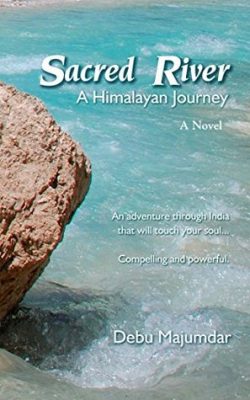
  • SACRED RIVER: a HIMALAYAN JOURNEY by Debu Majumdar – Mystery, Literary, Multicultural, Spiritual Journey

    SACRED RIVER: a HIMALAYAN JOURNEY by Debu Majumdar – Mystery, Literary, Multicultural, Spiritual Journey

    A tour de force of India’s history, religion, culture, philosophy, anthropology, sociology, and politics are neatly packaged as a mystery, await the lucky readers of Debu Majumdar’s latest novel, Sacred River: A Himalayan Journey. All elements of this foundational novel are experienced through a well-developed cast of characters, wealthy and poor, educated and illiterate, as they make pilgrimages to the source of Ganges River.

    The River itself is a character in that it exerts the greatest influence on those who travel to its origin in the Himalayan mountains. In its waters, truths are revealed, and those who ponder its depths must acknowledge how they have lived their lives. The Ganges is the great equalizer; she washes the indigent and the affluent alike. Characters learn that money cannot buy enlightenment, and those who have lived the simplest lives may be much further down the spiritual path than those who’ve had every material advantage.

    Majumdar does a splendid job of giving each character a complete history before individual plots merge into a full and rich narrative. It’s as if he has taken tributaries of a river and studied their routes before entwining them with the flow, force, and beauty of a majestic river. From bonded servant to landed gentry, foreigner to outcast, all will be deeply affected by their journeys.

    This is the set up to a fascinating mystery. It unfolds as the reader learns about the SMS, the Sarva Mangal Society, a philanthropic organization that advocates education for all Indians and the removal of social barriers. Its staff believes that implementing the ancient ideals of India will lay the foundation for a new society, one in which the constant injustices done to the poor will finally halt. Its chief financial officer, Sevanathan Chetti, despairs, however, as to whether enough funds can be raised to continue its important work. He and his associate wonder where the wealth of India has gone. As speculation of a golden hoard hidden in the sacred temples arises, Chetti and his associate scheme to locate and plunder treasure for a noble cause.

    An engrossing and tense subplot unfurls, one that will ensnare a temple swami along with some of the pilgrims to the Ganges. This adventure, which culminates in an enormously suspenseful climax, is an effective counterpoint to the serene and meditative aspects of the novel.

    Majumdar’s prose is rich and spectacularly vivid. Locations are very important in this novel, and his descriptive writing is superb. Readers will feel they are in a marketplace, on the side of the mountain, in a temple, and bathed in light and water. Especially lovely are the passages noting religious rituals and the spiritual significance of the Ganges. The author weaves in Indian legends and morality stories, artfully juxtaposing parallels between ancient tales and his characters’ modern lives. There’s such a breadth of consideration for every aspect of Indian culture that it’s easy to imagine this novel being included on college syllabi for classes related to Hinduism.

    This book is a must-read for anyone with interest in Indian life and culture. Indeed, the author joyfully admits that one could read the book as a travelogue, and we agree! When readers finish this novel, we predict they will experience a deep longing to journey to the Himalayas to see “the maiden in the mountains,” that most sacred river, the Ganges.


    “Money cannot buy enlightenment, but for those who struggle to reclaim one nation’s equality, gold is the currency that will drive two overzealous men on a journey to uncover hidden treasure for the benefit of all. A rich and spectacularly vivid, multi-faceted literary mystery for seekers and skeptics alike.”  – Chanticleer Reviews

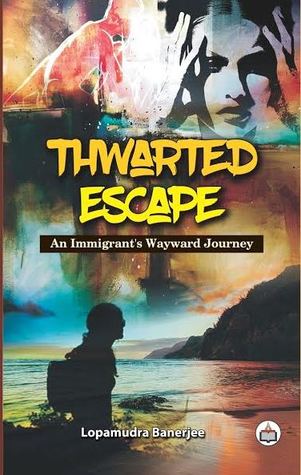
  • THWARTED ESCAPE: An Immigrant’s Wayward Journey by Lopamudra Banerjee – a stirring narrative

    THWARTED ESCAPE: An Immigrant’s Wayward Journey by Lopamudra Banerjee – a stirring narrative

    In her book, “The Art of Memoir,” Mary Karr recalls hearing novelist Don DeLillo once say that a fiction writer starts with meaning and then manufactures events to represent it, whereas a memoirist starts with events, then devises meaning from them.

    Lopamudra Banerjee does just that in her memoir “Thwarted Escape: An Immigrant’s Wayward Journey.” She takes us through a journey of achievements and sorrows while using words to make meaning of her spirituality, her femininity and her literary identity.

    Broken down into four volumes, the book is a collection of essays and articles, many of which were previously published in print, online anthologies and literary journals.

    Depending on which chapter you’re reading, you could say Banerjee is a memoirist, a creative writer, an essayist or a journalist. But no matter what label you choose for her writing, you will see Banerjee has major writing talent – the culmination of a passion that was borne at an early age when she considered words her playmates.

    “I have been in love with these moments of restlessness and release as these clusters have formed a pattern called words. I watched this written world of prose and verse, as with my hands, my body, I absorbed these nuances of creation,” she writes.

    Through the pages, Banerjee transitions from a small town girl in India who makes her way to the United States. She has traveled to many places throughout the US and in one chapter where she derives the book’s title, “Thwarted Escape,” she talks about her departure to Omaha, Nebraska, as in this stirring passage: “I am an ordinary, commonplace refugee in North America, and like many others of my ilk, have embedded myself in a family, far flung from what is called ‘original home.’ Like many others, I am striving to gain the status of the coveted Non-resident Indian, a legitimate work permit to survive in a distant land while my heart continues to ache with the desire to be rocked in the bosom of my mother and to revisit the havens of my childhood.”

    With the power of narrative in her life, Banerjee lives with the secret ambition to “get published” and to let the world read her stories. Thankfully, she has fulfilled her dream of compiling such a book and sharing with us her engaging and well-written stories of grief, death in her family, motherhood, and femininity.

    In a particularly moving section of the book, Banerjee introduces us to Taslima Nasrin, a Bangladeshi novelist and poet who has lived in exile since 1994 amid death threats for her outspoken feminist views and criticism of Islam. With admiration for Nasrin’s voice, Banerjee includes newspaper clippings (scans from the original print versions) of Nasrin and explains some of the abuse and hardship the activist has endured. As a graduate student of English literature, Banerjee harnesses Nasrin’s power and draws parallels to other literary greats.

    “I realize how [fusion_builder_container hundred_percent=”yes” overflow=”visible”][fusion_builder_row][fusion_builder_column type=”1_1″ background_position=”left top” background_color=”” border_size=”” border_color=”” border_style=”solid” spacing=”yes” background_image=”” background_repeat=”no-repeat” padding=”” margin_top=”0px” margin_bottom=”0px” class=”” id=”” animation_type=”” animation_speed=”0.3″ animation_direction=”left” hide_on_mobile=”no” center_content=”no” min_height=”none”][Virginia] Woolf, how Taslima [Nasrin], how Sylvia Plath, trapped and tangled in a women’s bodies, have suffered the heat and passion of their literary selves…”

    Banerjee ends the book with letters she wrote to her family and other people while she was pregnant and during other periods in her life. We readers are grateful Banerjee has found the courage and energy to publish all of these personal stories that are so moving, eloquently written, and significant in both her life and the lives of women.[/fusion_builder_column][/fusion_builder_row][/fusion_builder_container]