Tag: Inciting Incidents – Writing

  • Turning Points and Plot Points in Storytelling from Jessica Morrell’s Editor’s Desk – A Chanticleer Writers Toolbox post

    Turning Points and Plot Points in Storytelling from Jessica Morrell’s Editor’s Desk – A Chanticleer Writers Toolbox post

    Jessica Morrell, Top-tiered Developmental Editor Shares Her Thoughts on Turning Points and Plot Points in Storytelling

    Jessica Page Morrell
    Jessica Page Morrell, Top-Tiered Developmental Editor

    I want to talk about the thresholds and milestones that happen in storytelling, including films. These milestones are given different names by various experts. Most commonly they’re called turning points or plot points.

    Turning Point or Plot Point Development

    Crucial Scenes

    I was recently working on a client’s manuscript and an important scene was taking place in an early chapter creating the first major turning point. It features two main characters about to make love for the first time. It’s a crucial scene because everything in the story will change after this, the stakes will rise, serious repercussions will shape their futures. It’s an especially important scene because it’s the tale of forbidden love and once they’ve crossed this line they’ve admitted censure and danger into their lives. My job is to help the writer make the scene more momentous and intense, making sure the scenes contain enough emotional clout. Because these essential moments need to create major ramifications.

    Turning points are irrevocable changes staged as events or scenes, and are where the story shifts in a new direction. They’re also thresholds so characters pass through into a new situation. These moments, always shown via action, usually have an emotional change that comes with them. –Jessica Morrell

    Before this event, things might return back to normal; afterward, it’s a whole new game.

    One Way Gates

    As I’ve mentioned here before, effective fiction takes your main characters into new physical and emotional territory. Turning points are the thresholds to the other side. They signal the reader that danger and shifting tides lie ahead. I like to think of them as one way gates.

    The new territory can also be new spiritual territory, where principles, beliefs, and hearts are tested. Also, they are often tests and reveal what your protagonist is made of.

    And while turning points shift the direction of the story, keep in mind is that they’re also emotional turning points. I was thinking about them yesterday and how they snatch a protagonist from his or her comfort zone and thrust him or her into a threatening situation.

    Let’s look at The Hunger Games to help identify these crucial moments. It’s the first book in Suzanne Collins dystopian series that takes place in Panem, a country that’s formed after the collapse of North American governments.

    Inciting Incidents

    The inciting incident or catalyst happens on Reaping Day, an annual lottery where each of Panem’s 12 Districts must send two ‘tributes’ to participate in the state-sponsored, fight-to-the-death Hunger Games while the whole country watches the gruesome contest. Because the underlying brutality of the governing regime is an omnipresent threat. The winning district receives food. 
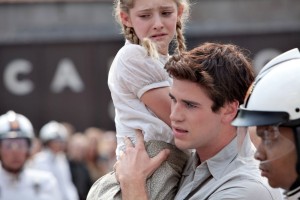
    Reaping Day in The Hunger Games – Gale and Prim (Katniss’ little sister).

    The story reprises the virgin sacrifices that existed in many cultures along with nods to mythical happenings. But then Collins has borrowed liberally from mythology and gory human history including a mashup of Dust Bowl imagery, a Nazi-like regime including the architecture, symbolism, and vicious stormtroopers, along with a hideous disparity between the classes.

    Complications

    At the Reaping, Katniss Everdeen volunteers to replace her 12-year-old sister Primrose in the deadly Games.

    Central Dramatic Question

    This creates the central dramatic question: Will Katniss survive? Then Peeta Mellark is chosen from District 12 too, and wouldn’t you know it, they have some history together because one of the rules of storytelling is Complicate, Complicate, Complicate.

    Katniss and Peeta leave home for the Capital (a threshold) and that’s when readers and movie-goers find out just how twisted and corrupt the Panem leadership is.

    Katniss and Peeta see just how wealthy the governing body is and how poor they are on the deluxe train ride.

    Plot Points Pushing Ahead the Plot’s Trajectory

    It turns out that Peeta is secretly in love with Katniss. Because Katniss needs to win to save her family, this is another complication in an already ghastly competition. Does she care about him too? Will she be forced to turn into a soulless killer to survive? The turning points that follow keep changing and pushing ahead the plot’s trajectory, but all affect her goal to survive.

    Katniss and Peeta decide to become allies and feign love in order to increase their chances of survival. Because the heartless denizens of the Capital love a love story in the midst of their killing field. Back in District 12 Katniss had learned to hunt to feed her family since her father had died in a mining accident. During the exhibition before the Games she gains notice for her archery skills.

    Atmosphere and Landscape

    Another turning point happens when the tributes enter the Arena – a nightmarish landscape where the rules keep changing, monsters and walls of flames appear out of nowhere. And can we just reiterate that these are children and teens operating in this whole blood-soaked nightmare?

    The children and teens from the 12 districts that must fight to the death until there is one survivor. Then, his or her district will receive food. The Hunger Games.

    Secondary Characters: Reflections of the Protagonist and Antagonist 

    The youngest tribute from District 11 is Rue and she represents innocence and all that’s wrong with the government and Games. Though agile and wily, she seems doomed or at least underestimated.

    Once the Games begin in the mad scramble to secure weapons and supplies Peeta and Katniss become separated.

    Katniss has been chased up a tree for safety and that’s when she hears a bird-like call. Rue is nearby in a tree. She warns Katniss of a nearby nest of deadly tracker-jackers (genetically-modified bee monsters). Katniss saws off the branch and the tracker jackers swarm on their adversaries. The girls become allies and readers, and viewers recognize that Rue is surrogate for her sister Prim.

    Rue warning Katniss about the deadly nest of robot yellowjackets.

    As allies they concoct a plan to destroy the Cornucopia, a huge stash of weapons and supplies.

    Reversals and Ramifications

    Returning to Rue after Katniss succeeds, she witnesses her being murdered by another tribute. It is a major turning point in the story.

    The fallout cannot be overstated:

    • Katniss changes from a hunter to a killer, first taking out Rue’s murderer.
    • The story slows down briefly so Katniss can process her grief and feelings.
    • The slave-like conditions the citizens of Pandem live under is emphasized by Rue’s senseless death.
    • It reinforces Katniss’ desire to survive – she will win for Rue.
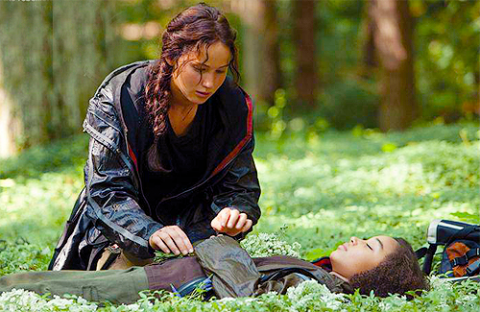
    • Katniss openly defies the Capital when she rings flowers around Rue’s corpse, showing her affection and respect.
    • Katniss uses her weapon for good when cutting flowers to honor Rue.

    The link to this emotional scene is here.

    Then with the Games’ cameras rolling, and honor and respect has been shown to Rue’s corpse, Katniss stands and salutes (as tribute) the other district’s people who are watching via he Games’ cameras, marking her defiance and the beginning of a rebellion. We’re talking major ramifications.

    Katniss’ symbol of defiance and respect is televised to all the districts in the Hunger Games. This simple gesture starts a movement.

    Later, Katniss’ compassion toward Rue saves her own life because Rue’s district sends her food – once again breaking the rules of the Games.

    Before: Rue and Katniss are allies and sisters in the struggle for survival.

    After:  Katniss would rather die than let the government regime win or steal her humanity.

    Question for Writers: What are the before and after statuses in your turning points for your work-in-progress?

    Another excellent example of plot points and turning points is The Toy Story series. It has terrific examples of thresholds that are easily identified because the characters often land in a new setting as they pass through each threshold.

    *Still photos copyright Lion’s Gate Entertainment

    Keep writing, keep dreaming, have heart. Jessica

    Jessica Morrell is a top-tier developmental editor and a contributor to Chanticleer Reviews Media and to the Writer’s Digest magazine. She teaches Master Writing Craft Classes at the Chanticleer Authors Conference that is held annually along with teaching at Chanticleer writing workshops that are held throughout the year. We suggest visiting her website for more articles on writing and the writing life. 


    When you’re ready, did you know that Chanticleer offers editorial services? We do and have been doing so since 2011.

    Our professional editors are top-notch and are experts in the Chicago Manual of Style. They have and are working for the top publishing houses (TOR, McMillian, Thomas Mercer, Penguin Random House, Simon Schuster, etc.).

    If you would like more information, we invite you to email Kiffer or Sharon at KBrown@ChantiReviews.com or SAnderson@ChantiReviews.com for more information, testimonials, and fees.

    We work with a small number of exclusive clients who want to collaborate with our team of top editors on an on-going basis. Contact us today!

    Chanticleer Editorial Services also offers writing craft sessions and masterclasses. Sign up to find out where, when, and how sessions being held.

    A great way to get started is with our manuscript evaluation service, with more information available here.

    And we do editorial consultations for $75. Learn more here.

    If you’re confident in your book, consider submitting it for a Editorial Book Review here or to one of our Chanticleer International Awards here.

    Our 10th Anniversary Chanticleer Authors Conference (CAC22) will be April 7-10, 2022, where our 2021 CIBA winners will be announced. Space is limited and seats are already filling up, so sign up today!  CAC22 and the CIBA Ceremonies will be hosted at the Hotel Bellwether in Beautiful Bellingham, Wash. Sign up and see the latest updates here!
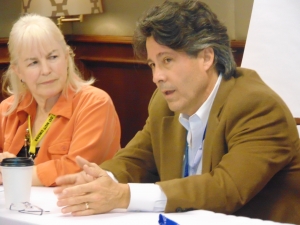
     

    Robert Dugoni
    Robert Dugoni is one of our most popular speakers at the Chanticleer Author Conference.

    Writer’s Toolbox

    Thank you for reading this Chanticleer Writer’s Toolbox article.

    Writers Toolbox Helpful Links: 

    At Its Core, the ‘Twilight’ Saga Is a Story About ________

    The INCITING INCIDENT: STORY, SETBACKS and SURPRISES for the PROTAGONIST

    BEATS & CONFLICT: The Engine for Your Book

  • Popular Tips to Get and Keep Your Writing Groove On – NaNoWriMo or Not – Chanticleer Writer’s Toolbox Series

    IF you are participating in NaNoWriMo, you are getting close to the FINISH LINE! Stay the Course as you try to achieve the 50,000 words goal.


     If you are NOT participating in NaNoWriMo, then we hope that this post will spur you on as write your work-in-progress (w-i-p) or your next work.

    RULE # 1

    WRITE FAST!  EDIT SLOW! 

    Don’t edit your first draft as you write it!

    Writing your first draft should be a mad dash to get your story out of your brain. Don’t hinder it by worrying about each little detail. There will be time for that later. NaNoWriMo or not.

    Not taking our word for that piece of advice?

    Chelsea Cain, a bestselling thriller author (with a TV series to her credit),  gives this piece of advice:

    Write the bare-bones version of the scene first using mostly dialogue, and then move on and in the second draft flesh out the scenes with description and action.

    “Action is dialogue. Dialogue is action.” – Robert Dugoni, Amazon Bestselling Author

    What is YOUR STORY?

    Story is essentially a problem that needs solving for the protagonist. – Jessica Morrell

    • What is your protagonist’s problem that must be solved—or else?
    • What is the worst thing that can happen next to your protagonist?
    • Remember that it is not your problem. It is your protagonist’s problem, obstacle, impossible dream.
    • Start at least one subplot. This subplot(s) should also complicate the protagonist’s goals.

    No matter when the problem begins (it’s always in Act One) the problem is weighty and vexing, perhaps insurmountable. If the problem is not immediately personal, it should become so that it will create a bond (connection) between the protagonist and antagonist. Classic examples are the connection between Sherlock Holmes and Jim Moriarty and Harry Potter and Voldemort. 

    What is the inciting event or threat? 

    The inciting incident might lead to the problem. This event will disrupt the status quo, demand response, and set actions in motion. It’s a threat that unbalances the story world and creates dilemmas that must be dealt with.

    To name a few:

    • The tornado incident in the Wizard of OZ
    • Katniss’s little sister selected for the Hunger Games
    • Luke Skywalker ‘seeing’ and hearing Princess Leia calling for help in Star Wars
     These excerpts above are from The Inciting Incident blogpost


    Environment (internal and external)

    These are great tips to get your creativity groove on!

    • Remember you want to send your protagonist into new emotional territory with new challenges and pressures.
    • And at the same time, she will need to deal with new physical territories such as a new school (Footloose) or a different culture (Dances with Wolves) or a different legal society with different norms (Handmaid’s Tale) or a new environment (Deadwood)  or a different time ( Outlander) or galaxy (Farscape).
    • Don’t be afraid to stage danger in benign or lovely settings or conversely gentle scenes in dangerous and gruesome settings.

    Kiffer’s Note:  I just saw this bucolic scene while watching The Wheel of Time first episode. All white coats and white tents. And then, bam! We learn that the guys in white are not the “good guys” —at all—even if their name is Children of the Light.

    Bucolic looking camp scene in Wheel of Time inhabited by these characters all in white.

    Atmosphere

    • Allow the overall atmosphere and mood to imbue your writing from the get-go.
    • The atmosphere lends itself to the overall tone and mood of a work. Allow it to permeate your work as you write.

    The atmosphere in Shadow and Bone series by Leigh Bardugo

    Or Sex in the City by Carrie Bradshaw

    Why use atmosphere in your first draft? (or during NaNoWriMo)? 

      • Because it will affect your mood and approach to your story.
      • It will make you focus on creating unease–a necessary ingredient not always considered in early drafts.
      • Unease contributes to writing a page-turner.
      • Atmosphere underlines themes–even if you don’t have your themes nailed down yet.

    Here is the link to our Writer’s Toolbox article on Atmosphere

    Emotional Baggage

    • Know your protagonist’s main emotional wound, sometimes called baggage in real life. How is it going to affect his or her ability to solve the story problem? (See the questions below to jumpstart creativity.)

    Remember that Writers (that is you) should carry a notebook everywhere you go. You never know when a brilliant solution is going to appear. Jessica Morrell

      If I could offer a single piece of advice about creating characters it would be this (Jessica Morrell):

      • Take risks with your main characters.
      • Make them stand out from the myriads of fiction published each year.
      • And don’t be afraid to allow eccentricities, quirks, and oddball ways of seeing reality.

      More questions for your protagonist from Jessica Morrell—these are guaranteed to get your creative wheels turning:

      First, ask yourself these questions and then “ask” your protagonist. Have your protagonist go into depth. Find out what your protagonist’s iceberg under the waterline is all about.

      Photo taken in Greenland’s waters.

      Kiffer suggests that you take a walk when you are considering these questions. Be sure to either take notes or record your thoughts on your smartphone while you explore your protagonist’s emotional baggage. Walk a mile in your protagonist’s shoes. 

      • What’s the most embarrassing thing that has ever happened to you?
      • What is your biggest regret?
      • What is your superpower?
      • Who do you cherish most in the world?
      • If you could change one thing about your world, what would it be?
      • What is your average day or schedule?
      • What 5-6 words sum up your values?
      • What do you do after a really bad day?
      • How do you celebrate?
      • The secret you’d never tell your significant other? Your mother? Your sibling?
      • What reminds you of home?
      • What item must you always take along when traveling?
      • Favorite drink?
      • Secret vice?
      • Pizza or tacos? Cookies or tequila?
      • Favorite climate?
      • Reading or television to unwind?
      • Breakfast or coffee only?

      We hope that we helping you, Dear Writer, to arm and prep yourself to get down to the writing of your next work—the reckoning.


      Ernest Hemingway:  There is nothing to writing. All you do is sit down at a typewriter and bleed.

      Stay tuned for more NaNoWriMo Tips // Jump Start Your Novel Tips


      Chanticleer Editorial Services – when you are ready

      Did you know that Chanticleer offers editorial services? We do and have been doing so since 2011.

      Tools of the Editing Trade

      Our professional editors are top-notch and are experts in the Chicago Manual of Style. They have and are working for the top publishing houses (TOR, McMillian, Thomas Mercer, Penguin Random House, Simon Schuster, etc.).

      If you would like more information, we invite you to email Kiffer or Sharon at KBrown@ChantiReviews.com or SAnderson@ChantiReviews.com for more information, testimonials, and fees.

      We work with a small number of exclusive clients who want to collaborate with our team of top-editors on an on-going basis. Contact us today!

      Chanticleer Editorial Services also offers writing craft sessions and masterclasses. Sign up to find out where, when, and how sessions being held.

      A great way to get started is with our manuscript evaluation service. Here are some handy links about this tried and true service: https://www.chantireviews.com/manuscript-reviews/

      Writer’s Toolbox

      Thank you for reading this Chanticleer Writer’s Toolbox article.

      Writers Toolbox Helpful Links: 

      The INCITING INCIDENT: STORY, SETBACKS and SURPRISES for the PROTAGONIST – A Writer’s Toolbox Series from Jessica Morrell’s Editor’s Desk

      ESSENCE of CHARACTERS – Part One – From the Jessica Morrell’s Editor’s Desk – Writer’s Toolbox Series  

      Keep writing, keep dreaming, have heart. Jessica

      Jessica Morrell is a top-tier developmental editor and a contributor to Chanticleer Reviews Media and to the Writer’s Digest magazine. She teaches Master Writing Craft Classes at the Chanticleer Authors Conference that is held annually along with teaching at Chanticleer writing workshops that are held throughout the year. 


      Keep creating magic! Kiffer 

      Kathryn (Kiffer) Brown is CEO and co-founder of Chanticleer Reviews and Chanticleer Int’l Book Awards (The CIBAs) that Discover Today’s Best Books. She founded Chanticleer Reviews in 2010 to help authors to unlock the secrets of successful publishing and to enhance book discoverability. She is also a scout for select literary agencies, publishing houses, and entertainment producers.


      The Secret to Successful Publishing

    • Elements of Successful Fiction to Keep Your Novel Writing Schedule on Track or NaNoWriMo Prompts from Jessica Morrell and Kiffer Brown-Writer’s Toolbox Series The Writing Toolbox

      Elements of Successful Fiction

      If you are partaking in NaNoWriMo, then you have made past the halfway mark by now. Congratulations!

      We hope that this article will provide prompting to spur you on to the finish line!

      The best fiction touches the deep layers in us. A writer achieves this effect by embedding dozens of techniques into his or her story. – Jessica P. Morrell

      Dramatic Question

      • Compelling fiction is based on a single, powerful question that must be answered by the story climax. 
      • This question will be dramatized chiefly via action in a series of events or scenes.
        • Examples:
          • If you are writing a romance, the question always involves whether the couple will resolve their differences and declare their love.
          • In a mystery the dramatic question might be will Detective Smith find the serial killer in time to prevent another senseless death?
          • In The Old Man and Sea, the dramatic question is will Santiago catch the big fish and thus restore his pride and reputation?
        • Assignments:

      An Intimate, Simmering World

      • An intimate world isn’t created by merely piling on details.
      • It means your story world has the resonance of childhood memories, the vividness of a dream, and the power of a movie. 
      • An intimate, simmering world is filled in with shadows and corners and dogs and ice cubes and the sounds and smells of a dryer humming on wash day and a car blaring past, with pop music shaking the windows. These details lend it authority, potency, and a palpable physical existence.
        • Diana Gabaldon’s The Outlander Series simmering details make this time-travel, fantasy, horror, science fiction extremely believable and immersive fiction.
      Outlander — Diana Gabaldon’s details make for immersive fiction

      An intimate story takes us to a specific place and coaxes us to remain there. An intimate story is lifelike and feels as real and complicated as the world the reader inhabits. When he finishes the final pages, and leaves the story world, he should feel the satisfaction of the ending, but also a huge sense of loss. Like a friend has moved to another town just when the friendship had reached a level of closeness and trust. – Jessica P. Morrell

      Characters Built from Dominant Traits

      • Create main characters with dominant and unforgettable traits as a foundation of personality.
      • These traits will be showcased in the story events, will help him achieve or fail at goals, and will make the story person consistent. 
        • For example, Sherlock Holmes’ dominant traits are that he is analytical, Bohemian, opinionated and intelligent. These traits are showcased in every story he appears in along with secondary and contrasting traits. When the character first appears in the first scene, he arrives in the story with his dominant traits intact.
        • Outlander’s Claire and Jamie.
        • Lord of the Rings‘ Gandolf
        • Lisa Wingate’s Before We Were Yours’ villain Georgia Tann
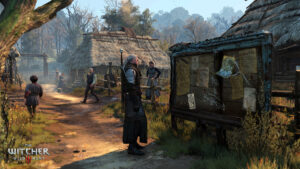
      The Witcher by Andrzej Sapkowski

      Emotional Need

      • The protagonists and main characters are people with baggage and emotional needs stemming from their pasts. These needs, coupled with motivation cause characters to act as they do.
        • For example, in Silence of the Lambs Clarisse Starling is propelled by childhood traumas to both succeed and heal the wounds caused by the death of her father.
        • Robert Dugoni’s Tracy Crosswhite in his The Tracy Crosswhite series.

      Significance

      • The storyline focuses on the most significant events in the protagonist’s life.
        • Example: Robert Dugoni’s Tracy Crosswhite searches for the killer of her sister in his The Tracy Crosswhite series.
        • Craig Johnson’s Longmire series – Sheriff Walt Longmire whose wife was murdered.

      Motivation Entwined with Backstory

      • Motivation, the why? of fiction, is at the heart of every scene, fueling your character’s desires and driving him to accomplish goals. 
      • Motivation provides a solid foundation for the often complicated reasons for your character’s behaviors choices, actions,  and blunders. 
      • Motivating factors provide trajectories for character development, as a character’s past inevitably intersects with his present.
      • Your character’s motivations must be in sync with his core personality traits and realistically linked to goals so that readers can take on these goals as their own.

      Desire

      • Desire is the lifeblood of fictional characters. 
      • Not only do your characters want something, but they also must want something badly.
        • You can bestow on your character flaming red hair, an endearing, crooked grin and a penchant for chocolate and noir movies, but if she doesn’t want something badly, she’s merely a prop in your story, not a driving force. But if she wants to win the Miss Florida contest, take over her boss’ job, or become the first female shortstop for the Atlanta Braves, then you’ve got a character who will make things happen and a story that will be propelled by desire.
        • The Ring from Lord of the Rings is a perfect example of a symbol of desire on so many different levels.
      Frodo and The Ring – LOTR by J.R.R. Tolkein

      Threat

      • Fiction is based on a series of threatening changes inflicted on the protagonist.
      • In many stories, these threats force him or her to change or act in ways he or she needs to change or act.
      • Often too, what the protagonist fears most is what is showcased in a novel or short story. It can be fear of losing his family, job, or health with a dreaded outcome.
      • Fear of losing to a threat or threats provide interest, action, and conflict.

      Causality

      Events in fiction are never random or unconnected. They are always linked by causality with one event causing more events later in the story, which in turn causes complications, which cause more events, which cause bad decisions, etc.

      Please visit our blog post on The Inciting Incident.

      The inciting incident of the Wizard of Oz

      Inner Conflict

      • A fictional character doesn’t arrive at easy decisions or choices.
      • Instead, he is burdened by difficult or impossible choices, particularly moral choices, that often make him doubt himself and question his actions.
      • Inner conflict works in tandem with outer conflict—a physical obstacle, villain or antagonist–to make the story more involving, dramatic, and events more meaningful.

      Complications

      • A story builds and deepens by adding complications, twists, reversals, and surprises that add tension and forward motion.
      • Plots don’t follow a straight path. Instead, there are zigzags, dead ends, and sidetracks.
      • Complications create obstacles and conflict, cause decisions to be made, paths to be chosen.
        • My favorite complication is one from Notting Hill when Spike is standing outside in his underwear strutting around with the paparazzi going wild for a peek at Anna Scott. How could Anna and William ever expect that complication?
      A complication from Notting Hill – the film.

      Midpoint Reversal

      • The middle of a novel comprises more than half its length.
      • At about the midpoint of most novels, a dramatic reversal occurs. The hunter becomes the hunted; a second murder occurs proving the detective has been wrong in his suspicions; a former lover arrives in town to complicate a budding romance.
      • This reversal keeps the middle from bogging down and becoming predictable and also breathes new life and often a new direction into the story.

      Satisfying Ending

      • Every story needs an ending that satisfies the reader while concluding the plot.
      • A satisfying ending does not have to be “happy” or victorious or riding off into the sunset.
      • The final scenes, when the tensions are red hot and the character has reached a point of no return, must deliver drama, emotion, yet a logical conclusion.
      • This is not to suggest that every plot ends with a shoot-out or physical confrontation.
      • Some endings are quieter, more thoughtful. Some endings are ambivalent, some a dramatic or a violent clash of wills.
      • However, there is always a sense that all the forces that have been operating in your story world have finally come to a head and the protagonist’s world is forever changed.

      We are cheering you on to the Finish Line!  You can do it!


      Jessica Page Morrell

      Keep writing, keep dreaming, have heart. Jessica

      Jessica Morrell is a top-tier developmental editor and a contributor to Chanticleer Reviews Media and to the Writer’s Digest magazine. She teaches Master Writing Craft Classes at the Chanticleer Authors Conference that is held annually along with teaching at Chanticleer writing workshops that are held throughout the year. 

      Kiffer Brown

      Keep creating magic! Kiffer 

      Kathryn (Kiffer) Brown is CEO and co-founder of Chanticleer Reviews and Chanticleer Int’l Book Awards (The CIBAs) that Discover Today’s Best Books. She founded Chanticleer Reviews in 2010 to help authors to unlock the secrets of successful publishing and to enhance book discoverability. She is also a scout for select literary agencies, publishing houses, and entertainment producers.


      Chanticleer Editorial Services – when you are ready

      Did you know that Chanticleer offers editorial services? We do and have been doing so since 2011.

      Tools of the Editing Trade

      Our professional editors are top-notch and are experts in the Chicago Manual of Style. They have and are working for the top publishing houses (TOR, McMillian, Thomas Mercer, Penguin Random House, Simon Schuster, etc.).

      If you would like more information, we invite you to email Kiffer or Sharon at KBrown@ChantiReviews.com or SAnderson@ChantiReviews.com for more information, testimonials, and fees.

      We work with a small number of exclusive clients who want to collaborate with our team of top-editors on an on-going basis.Contact us today!

      Chanticleer Editorial Services also offers writing craft sessions and masterclasses. Sign up to find out where, when, and how sessions being held.


      A great way to get started is with our manuscript evaluation service. Here are some handy links about this tried and true service: https://www.chantireviews.com/manuscript-reviews/

      Writer’s Toolbox

      Thank you for reading this Chanticleer Writer’s Toolbox article.


    • The INCITING INCIDENT:  STORY, SETBACKS and SURPRISES for the PROTAGONIST – A Writer’s Toolbox Series from Jessica Morrell’s Editor’s Desk

      The INCITING INCIDENT: STORY, SETBACKS and SURPRISES for the PROTAGONIST – A Writer’s Toolbox Series from Jessica Morrell’s Editor’s Desk
      Fiction features a problem that needs solving and only the protagonist can solve it.

      In short stories, the problem is often introduced by the inciting incident–an event that triggers or launches what follows.

      In longer fiction, the inciting incident might lead to the problem. This event will disrupt the status quo, demand response, and set actions in motion. It’s a threat that unbalances the story world and creates dilemmas that must be dealt with.

      The Wizard of Oz – Inciting Incident

      A simple plot structure is a protagonist struggling to solve an intolerable problem and re-establish order. Jessica Morrell

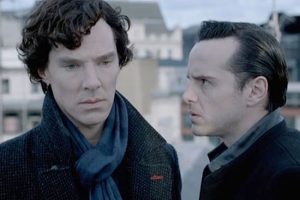
      No matter when the problem begins (it’s always in Act One) the problem is weighty and vexing, perhaps insurmountable. If the problem is not immediately personal, it should become so that it will create a bond (connection) between the protagonist and antagonist. (A classic example is the connection between Sherlock Holmes and Jim Moriarty).

      Sherlock Holmes and Jim Moriarty

      As you know, in real-life problems are sometimes unsolvable and don’t fit neatly into a satisfying narrative arc. Across the globe, there are ‘forever’ problems of climate change, financial inequities, immigrants who need homes, corporate greed, and fascism. No shallow fixes will work, though incremental changes can chip away at underlying issues.

      Closer to home, you might be dealing with a job that drives you crazy, but you cannot leave; family members who refuse to reconcile; health or mental health issues that can only be coped with, not cured; or agonizing decisions about caring for elderly family members. In fact, studies have shown that depression can be linked to seemingly unsolvable problems.

      This is why some people turn to fiction. Where love wins in the end, crimes are solved and justice is served, and friends or families reconcile. But in well-told tales, success never comes easy and it always exacts a toll. Often success comes from the protagonist tapping into inner resources he or she hadn’t accessed before.

      Frodo and the Ring – LOTR

      A FEW STORY  TIPS and HANDY REMINDERS from Jessica Morrell

      • As the story progresses the protagonist forms a plan. Now the plan can be shaky, untested, or desperate, but readers need a  strategy at work.
      • Force your character to solve smaller problems along the way to resolving the major story problem. A detective can dig up a much-needed witness or help a vulnerable street kid.
      • Endow your protagonist with specific, interesting skills and personality attributes that won’t waver and make him or her suited to the task.
      • Create a protagonist who is somehow lacking in something he or she needs for happiness or fulfillment.
      • Burden him or her with emotional baggage and needs, personal demons or addictions, then toss in cast members and subplots that distract, undermine, or hinder.
      • Understand how the problem makes the protagonist feel in each scene: hesitant, unaware, outgunned, overwhelmed, weak, unqualified, terrified.
      • Setbacks and surprises should be baked into the plot.

      Oh, and the protagonist should fail, fall on his face at least a few times along the way to the climax. Because your job as the master manipulator (aka author) is to blindside, torment, and thwart your characters. Again and again, so the outcome is in question and your readers are compelled to keep turning the pages.

      Jessica Page Morrell
      Jessica Page Morrell


      Keep writing, keep dreaming, have heart.  – Jessica 

      Jessica Morrell is a top-tier developmental editor and a contributor to Chanticleer Reviews Media and to the Writer’s Digest magazine. She teaches Master Writing Craft Classes at the Chanticleer Authors Conference that is held annually along with teaching at Chanticleer writing workshops that are held throughout the year. 


      Chanticleer Editorial Services

      Did you know that Chanticleer offers editorial services? We do and have been doing so since 2011.

      Our professional editors are top-notch and are experts in the Chicago Manual of Style. They have and are working for the top publishing houses (TOR, Macmillan, Thomas Mercer, Penguin Random House, Simon Schuster, etc.).

      If you would like more information, we invite you to email Kiffer or Sharon at KBrown@ChantiReviews.com or SAnderson@ChantiReviews.com for more information, testimonials, and fees.

      We work with a small number of exclusive clients who want to collaborate with our team of top-editors on an on-going basis. Contact us today!

      Chanticleer Editorial Services also offers writing craft sessions and masterclasses. Sign up to find out where, when, and how sessions being held.

      A great way to get started is with our manuscript evaluation service. Here are some handy links about this tried and true service:

      https://www.chantireviews.com/manuscript-reviews/

      Writer’s Toolbox

      Thank you for reading this Chanticleer Writer’s Toolbox article.