Tag: Immigrant Family

  • THE COURTESAN’S DAUGHTER by Susanne Dunlap – Historical Fiction, 20th Century, Family Life Fiction


    The Courtesan’s Daughter is a blisteringly smart novel of resilience and the pursuit of one’s dreams, the latest offering by Author Susanne Dunlap.

    The year is 1910, New York. It has been ten years since Justine, a French immigrant, fled from her home country with her daughter Sylvie to seek refuge in the United States. As a seventeen-year-old, Sylvie has passionate dreams: to be a star in the new moving pictures just like the Vitagraph girl she admires. However, her mother hopes that she will become a teacher and pull them out of their impoverished life. As Justine ekes out a living as a seamstress on the Lower East Side, Sylvie discreetly weaves a plan to follow her dreams after meeting an Italian boy, Paulo, who encourages her to follow her ambitions.

    A man from Justine’s past tries to shatter her hope for a comfortable life.

    He haunts her with threats of spilling a secret that involves her previous work as a courtesan, and the crime that forced her to flee. Justine knows that such delicate information could see her sent to prison and even tear apart the fabric of Sylvie’s life.

    When Sylvie finds out about her mother’s supposed betrayal, she runs away from home believing it is no longer safe. The glassy perfection and quiet reserve she had long held of her mother is shattered into a million pieces. Endurance, determination, and unusual pacts take center stage in Justine and Sylvie’s lives as they fight for love, which comes at a precious cost.

    Susanne Dunlap weaves an impressive duality between two different women and their journey as a family.

    Justine’s and Sylvie’s emotional odysseys become progressively aligned, bridging the past and the present. Dunlap offers a bird’s eye view of her two protagonists, showing their thoughts, emotions, and the consequences of their decisions. The book’s neat and lucid prose creates a sense of poise and shows off Dunlap’s mastery as a wordsmith.

    At turns poignant and bleak, and at other times pleasant and vibrant, The Courtesan’s Daughter is a triumph both in its construction and content.

    The author deftly presents a unique period through rich and vivid descriptions, evoking the mood and atmosphere of this time. She adds an extra repast across the pages that informs in striking ways. Powerful and imaginative, Dunlap’s work is one of optimism that reveals the fortitude of humans to stay afloat even in the starkest circumstances.

    The Courtesan’s Daughter draws readers in from the first page with its beguiling beginning. As it hurtles ahead, it holds you rapt up to the last page. Undoubtedly, this story is a tour de force from an author with absolute command of the genre.

     

    5 Stars! Best Book Chanticleer Book Reviews

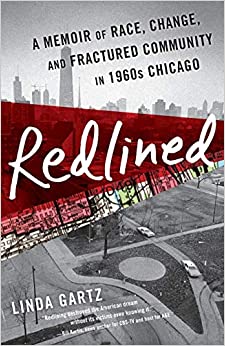
  • REDLINED: A Memoir of Race, Change, and Fractured Community in 1960s Chicago by Linda Gartz – Memoir, Racial Segregation, Sexual Liberation

    Author Linda Gartz tells of her childhood and early adulthood amidst social upheaval in the city of Chicago in her memoir, Redlined: A Memoir of Race, Change, and Fractured Community in 1960s Chicago.


    Gartz grew up the second child of second-generation immigrants to the US. Her father’s father boldly made the trip to the land of opportunity at age 21. She spent much of her childhood in cramped quarters with her parents and her older brother, living alongside strangers. They paid this price for the “dream” – the couple bought a house in a decent neighborhood; keeping roomers, even living in the same flat with them, helped pay expenses.

    Gartz’s grandmother, a talented dressmaker, helped out with childcare and other chores while her mother worked to manage all the finances, tenants, and repairs in their rooming house; she had to do this alone half the year while Gartz’s dad traveled for his job. But Grandma K suffered mental illness and abused Gartz’s mother and father, sometimes violently. Gartz’s father felt oppressed by her presence, which caused ongoing, if mostly unspoken, conflict in the home.

    Chicago’s social and economic upheaval served as a microcosm for national change, and as backdrop for the Gartz family drama.

    African Americans fled the dangerous and economically dead-end South for more promising prospects in places like Chicago. But majority white cities and regions resisted their incursion through restructuring and re-designating neighborhoods and school districts. All the while, the civil rights movement sought large-scale change amidst peaceful protests, riots, and violent reprisals from the law.

    The influx of black workers into her own neighborhood affected Gartz’s choice of schools and friends. Civil rights struggles incited her sympathies while her parents expressed their older prejudice. They feared that all of their hard-earned investments would vanish if “the colored” came in. Still, the teen had black friends and neighbors. She felt touched by the spirit of rebellion in a new testing of societal limits: sexual freedom.

    Gartz felt driven to compose this intelligent account of the changing times when she and her brother “found our gold” in the attic of their parents’ home: diaries, letters, cards, calendars and notebooks reaching back to the couple’s own youth.

    The undercurrent of family tensions became clear. Grandma K’s psychosis put the house on edge. Gartz’s father struggled to balance his home and work life, needing to earn money with a job that required six months of travel across each year, and also supporting his over-burdened wife with the demands of their rooming house with as many as eleven tenants. Her mother saw her behavior in the sexual revolution as shocking. Gartz includes details of the subtleties of “redlining” that allowed cities and regions to keep African Americans down and poor by limiting their ability to own property. Family photos pepper her book, lending emotive touches. The result is a vibrant look at the coming of age of a nation through the eyes of a frank, freethinking woman.

    Redlined: A Memoir of Race, Change, and Fractured Community in 1960s Chicago by Linda Gartz won 1st Place in the 2019 CIBA Journey Book Awards for Narrative Non-Fiction and Memoir.


    5 Star Best Book Chanticleer Reviews round silver sticker