Tag: Humorous

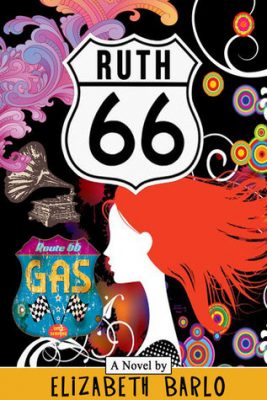
  • RUTH 66 by Elizabeth Barlo – Humorous, YA, Family & Social Issues

    RUTH 66 by Elizabeth Barlo – Humorous, YA, Family & Social Issues

    When a banged-up old bus pulls into his family’s driveway, Charlie has no idea that the rattling junker would be his ride to freedom. For years he’d been suffering under the thumb of a cold-hearted mother and a vindictive twin sister, while his father languished behind bars for tax fraud. The only family member with whom the young man held a loving bond was his grandfather, Opa Bill. Since Bill’s recent death, Charlie has been holding it together by listening to the music he and his grandfather loved. That musical thread weaves its way throughout the story as a sort of narrative jukebox.

    Now Charlie’s respectable Oma Ruth has careened back into his life in a shocking new incarnation: a freewheeling hippie in kaftan and beads, unafraid to swap barbed words with her appalled daughter, nor to insist that Charlie accompany her on her road trip. He’s dead-set against it – he’d just found his dream job at a record store – and is disgusted when his mother dumps him on her mother without hesitation.

    So Charlie sets out with Ruth – and, as it turns out, with Opa Bill, whose urn rests on the dashboard. At first, Ruth’s bizarre behavior and Charlie’s resentment at being dragged along make for a very uncomfortable ride. She insists on traveling without modern technology, but when she relents and allows his iPod and a new stereo system, the thaw begins.

    Although Route 66 is the road they travel as they head west, this is no travelogue about nostalgic remnants of yesterday. This is a journey of discovery: of Charlie’s strength and capacity to love, of Ruth’s ability to be honest with herself, of her secrets and those of her late husband, and of the people who will teach them along the way.

    There’s the comical Count Doobie, and Jonas the Swede, who appreciates Ruth’s beauty and makes her feel truly free. There’s also heartbroken Barry, who, with his daughter Rosie, barely keeps afloat a strip joint in the middle of nowhere, Texas. And there’s even Charlie’s embittered sister Becky, who rediscovers compassion and her affection for her twin away from their mother’s toxic influence.

    Above all, there’s Rosie, the beautiful young woman who pines for her missing mother and valiantly offers to become a stripper to help her father’s business. She sets Charlie’s heart and hormones on fire, turning him into a bumbling puppy before he learns to overcome his insecurities and grow into a hero of sorts. Their relationship becomes entangled in the revelation of Ruth’s secrets, but the resolution is both satisfying and a bit of a relief.

    A word of caution to the straight-laced reader: Ruth has embraced the hippie lifestyle to its fullest, and so you’ll find pot-smoking, swearing, nudity, and sex, as Charlie and Rosie let loose their teenage hormones and Ruth re-engages her lost libido. But far more than that, there is love, forgiveness, and bravery on this journey, not to mention a lot of laughs, some wonderfully wacky moments, and at times exciting and literally explosive revelations.

    5 Star Best Book Chanticleer Reviews round silver sticker

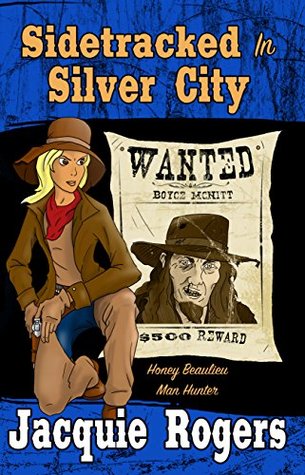
  • Sidetracked in Silver City by Jacquie Rogers – Humorous Western

    Sidetracked in Silver City by Jacquie Rogers – Humorous Western

    Stuffed with memorable characters, including a mule named Pickles and a donkey named Sassy, our heroine Honey Beaulieu navigates the difficult path of being a female bounty hunter in the Western territories, circa mid-1879.

    As one might expect, all kinds of men get in Honey’s way, but it isn’t just Pickles who can show a stubborn streak. Jacquie Rogers’ newest release, Sidetracked in Silver City, is as full of humor and colorful western dialogue as any saddle bruising, gun-toting tale could be.

    The story begins in crisis and with a familiar sense of frustration, as Honey Beaulieu, intent on leaving town as soon as possible and catching her next bounty, is confronted with problem after problem rooting her in place. Rogers is talented in keeping the dialogue moving, even as Honey is often lost in her own thoughts or speaking to a ghost that only she can see, named Roscoe who hangs out with a with a three-legged ghost horse named Luther, naturally.

    Honey’s big heart is on every page as she strives to make enough money to buy a future for herself and others. Talking to her animal companions as if they are humans isn’t all that peculiar for Honey – especially when a racing mule, a bonnet-wearing donkey, a surprise goat, and more than one horse all seem to understand. And while carrying multiple guns and knowing darn well how to shoot them builds the tough outer layer the world sees when they look upon Honey, her aim is to never have to use them. It takes her big, handsome admirer, Sam Lancaster, to see that soft inside of her soul.

    From Silver City to Fry Pan Gulch, Honey wrestles with being in the right place at the right time, whether it’s missing the morning train or being there in time to hold her sister’s hand when she gives birth. For anyone who has ever fought the clock and lost the battle, Honey’s exasperation is palpable. We want her to “get her man” no matter what it takes, and Rogers is quite good at building the dramatic tension with the many characters that both complicate Honey’s plans and endear us to her in this wild, wild west she calls home.

    5 Star Best Book Chanticleer Reviews round silver sticker

  • Ghost Toasties (Good Vampires Book 4) by Karl Larew – Humour/Satire, Vampires, Literary

    Ghost Toasties (Good Vampires Book 4) by Karl Larew – Humour/Satire, Vampires, Literary

    Volume 4 of a trilogy? That’s no typo! It’s just that those Bad Vampires had more mischief up their sleeves—and of course our Good Vampires couldn’t let them get away with it, especially when it seemed the Baddies had a Plot to Destroy Civilization as We Know It! Readers of Volumes 1-3 know that author,  Karl Larew couldn’t leave his readers in the dark…he had no choice but to write a Volume 4. Say hello to Ghost Toasties!

    You Newbies, who haven’t YET read the first three volumes, need to know that there are, indeed, vampires on our planet. The Bad Vampires engineer criminal plots to get human blood (which they cruelly gorge on, leaving their victims dead), creating really weird sorts of mayhem throughout the globe. Even Good Vampires have a metabolic need for small amounts of blood, but they have good human friends or, in some cases, human spouses who willingly, even lovingly, meet their needs in a sexy way – and sometimes by serving real Bloody Marys!

    The Good Vampires do their damnedest to halt the Baddies’ criminal schemes and to extinguish the Bad Vampire population. That’s why the Association of Good Vampires was created. It’s headquartered in New York City, in the Manhattan mansion of their chief, millionaire Mr. Arleigh Granville. The New York Association’s highest-ranking special agents are Mr. Granville’s vampire wife Inge (converted from Bad to Good Vampirism), Lance and his human wife Carol, and Nigerians Nigel and wife Becky, who are aided by bodyguards Gladdy and Dizzy, along with their wives, twins Helovah and Delivah.

    This cast of characters was considerably expanded at the end of Volume 3 by the arrival of five(!) babies—Arleigh Jr., Mary Jane, Reginald, and Pixie and Trixie—born within minutes of each other to the three special agent couples and the two bodyguards and their wives!

    Our story begins with Lance wakening Carol from a nightmare. As Lance tries to calm her, they hear a knock at the door. It is their friends and fellow agents, Nigel and Becky, inviting them to go out for a drink. But, as often happens, the phone rings. Inge, Arleigh’s assistant as well as wife, asks the agents to attend an emergency meeting the next morning. “Bring the babies,” she tells them. “Miss Overy (Arleigh’s secretary) can take care of them.” (Isn’t that what secretaries are for?)

    Somehow the Baddies have learned about the meeting and two men with pistols kidnap the two couples as they walk to HQ with their babies in strollers. Gladdy and Dizzy, of course, come to the rescue, followed by their wives and babies. Once at the meeting, they learn that at least part of the Baddie plot is in its early stages in Hawaii. But how can the special agents go to Oahu when they have babies needing to be fed and diapered?! It is decided that only the two primary agent couples, and Becky’s pet wolf, Wolfie, will fly to Hawaii in Mr. G’s private plane, leaving Mary Jane and Reginald at the mansion with the Granvilles and Miss Overy. Once in Honolulu, they will enlist the aid of Molly Houlihan and her mother, Holy Moly (friends of the Good Vampires from earlier adventures who now run a whore house called the Ukelele Girl) and Beatrice, a prostitute with a heart of gold (well, maybe silver).

    But first they visit the laboratory of Dr. Lester Griswold, Ace Scientist of the Good Vampire Association, who presents them with his newest gadgets, including an Ectoplasmic Dissolver Ray Gun that toasts ghost ectoplasm to a crisp, turning it into “ectoplasmic ghost-toasties” (Aha!). It can also destroy the electronic triggers of nuclear bombs, which the Baddies are apparently collecting for their plot to blow up special targets around the world.

    After the agents pick up their reinforcements at the airport, they head for Bernie Ernie’s house near Opana, where they find a machine labeled Ectoplasmic Synthesizer. When Bernie unsuspectingly arrives, they capture him. He agrees to help, spilling the beans, including news that the Big Boss is called Mr. Very Big (big help!). But who is Mr. Very Big, where is he, and will he continue with his plan to destroy the world? There’s only one way for you, dear reader, to find out, and will you ever be surprised!

    No need to bite your fingernails, however. You know you can trust Karl Larew’s Good Vampire special agents to complete their assignment and get home to their BABIES, especially after an urgent call from Chief Granville:  “All the diapers are dirty, and the washing machine’s broken down… COME HOME AT ONCE!”

    “The Bad Vampires strike again, but this time our Good Vampires have a secret weapon to make Ghost Toasties in the much anticipated and hilarious fourth “spooks and spoofs” book in Karl Larew’s Good Vampire trilogy.” –Chanticleer Reviews

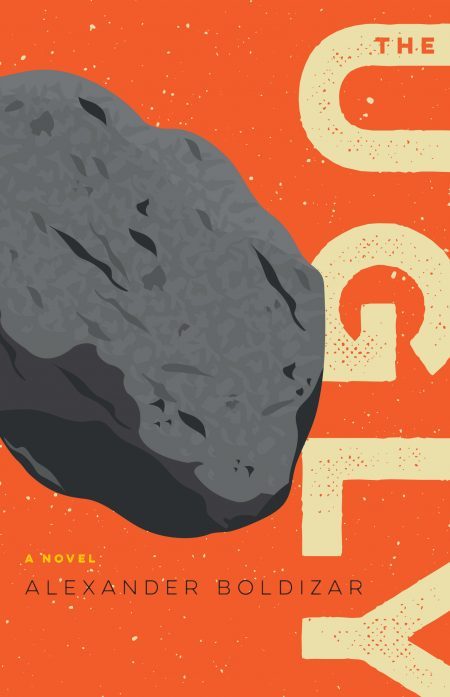
  • THE UGLY by Alexander Boldizar  – Contemporary Satire

    THE UGLY by Alexander Boldizar – Contemporary Satire

    Words thrown as hard as boulders are easy to catch – if you’ve had practice. Just ask our hero, Muzhduk the Ugli the Fourth in Alexander Boldizar’s new release, The Ugly.

    In the great tradition of existentialism, Boldizar brings us a book that is hard to classify. It has aspects of the existential with a fair amount of satirical wordplay and a bit of theater of the absurd thrown in.

    An interconnected story of a Siberian Slovak tribal leader looking for a way to save his land and his people, via Harvard Law School and the Tuareg uprising in Africa. Oh, and there’s dark magic and Winnie the Pooh thrown in as well.

    Muzhduk the Ugli the Fourth is a mountain of a man who comes from a tribe of Siberian Slovaks where honor is found in throwing boulders-yes, actual boulders-and either causing great damage to one’s opponent or catching said boulders without physically breaking.

    When his tribe has their land taken through the clever use of legal wrangling by an American lawyer, Muzhduk heads (on foot) to Boston to attend Harvard Law School. On the way, he floats on an iceberg to the Bering Sea, plays rugby for a college in Canada, and gets a perfect LSAT, which ushers him into Harvard where he hopes to learn the words that will help him win back his land for his tribe.

    It is during this part of the story that the wordplay and Muzhduk’s obvious lack of “sophistication” are most enjoyable. In this first year in law school, Muzhduk observes how words are used to challenge and crush the students, much like the boulder throwing at home. This extended metaphor of words as boulders that can be thrown and cause damage, especially in the world of law where words can be twisted and used within the multiple connotations, is where the book finds its best rhythm and is most enjoyable. It is also where Muzhduk meets an odd assortment of professors and students.

    Interspersed throughout the third person, past tense narrative of Muzhduk’s first year as a One-L at Harvard, is the first person account of his travels in Africa, looking for Peggy, his American girlfriend who has been kidnapped (or perhaps not) by the Tuareg in their war with the government.

    This part of the novel unfolds like layers of an onion. As the One-L year continues chronologically, Muzhduk’s journey in Africa and his reason for being there unfolds with new layers of complexity. Even now, Muzhduk discovers that the dangerous game of words as crushing boulders still is in play, but there are added dangers as well.

    There were times in this novel that it felt reminiscent of Heller or Beckett, as Muzhduk is challenged to understand the strange culture of Harvard Law and also navigate his way through a tribal uprising to accomplish his goals. In both places, Harvard and Africa, the story abounds in wordplay and existential ponderings. Just like reading Beckett or Heller or Buber (there’s a reference to his I-Thou theory in the book), or any other existential writer, The Ugly isn’t for everyone and it’s not an easy read. This eccentrically irreverent work, absurd in the very best sense of the word, will amuse and enlighten.

    Alexander Boldizar is the first post-independence Slovak citizen to graduate with a Juris Doctor degree from Harvard Law School. Born in Czechoslovakia (now the Slovak Republic) in 1971, he resides in Vancouver, British Columbia Canada where he writes, works his mad skills in the economic community of Wall Street, and brings meaningful commentary as an art critic. His writing has won the PEN / Nob Hill prize, represented Bread Loaf as a nominee for Best New American Voices, and been shortlisted for a variety of other awards. He has published over one hundred articles in a variety of venues. He states that his freelance writing pays for his son’s circus school.

  • ZOOMBIES from PLANET X by Karl Larew – Vampire Special Agents to the Rescue!

    ZOOMBIES from PLANET X by Karl Larew – Vampire Special Agents to the Rescue!

    Another madcap adventure of the Good Vampires—especially the hilarious special agents of the New York Good Vampire Association—battling the mean old Bad Vampires to save the world from mayhem comes to us from university history professor and author of wacky spoofs, Karl Larew. Good Vampire-loving readers you know who you are! Prepare for a spookin’ and spoofing good time with this one. To newbies, join the party. You’ll have a rollicking good time. Larew has come through again with a fun read for adults who’ll surely appreciate this mash-up between James Bond, Inspector Clouseau, and Buffy the Vampire Slayer.

    This third volume in the Good Vampire Trilogy commences, not surprisingly, with Lance and Carol snug in bed. Lance pats Carol’s bare bottom before using his spring-powered lancet to make two neat little holes in one nicely rounded cheek and begins to suck her blood. The humanly handsome Good Vampire Lance Blodgett, now married to totally human Carol, leaves no bruises, causes his beloved partner little if any pain, and takes care not to be greedy. After all, Carol must produce more blood for her own needs now that she is pregnant. However, Lance (a professor of vampire lore at a university in New York City) has been away at an academic convention and requires at least a few sucks to appease the vampire’s metabolic need for a ‘nip’ of human blood now and then.

    Once satisfied, he applies a Band-Aid to Carol’s rear-end, and the loving couple turns toward each other with a passionate kiss. But no sooner has their love-making begun when the door buzzer sounds. Punching the intercom button, Lance learns that Nigel and Becky, their friends and New York Good Vampire Association special agent partners, have urgent news. As Lance lets them in the apartment, he can see the excitement in their lustrous, dark Nigerian faces—especially the pregnant Becky’s. (Yes, these newlyweds are expecting also!) Nonetheless, Lance and Carol can’t help but grumble about the exquisite timing of their friends’ unexpected arrival.

    “Sorry, Old Boy,” Nigel apologizes and snickers a bit. But, he explains, they’ve got to burn rubber and get to Headquarters. Their leader, Mr. Granville, needs them NOW. As they leave the building, they discover the legendary Arnold Robertson, Ace Special Agent of all Good Vampire branches in Europe, crumpled up on the floor by the mailboxes in the foyer. Robertson is barely able to mumble a message for Mr. Granville—“pyramid in Egypt-Nubia area…secret of mummies…chemicals for zombies…find pluh, an, et, X”—before dying. The NYC agents call a Good Vampire ambulance to come for Robertson’s body before heading out.

    Arleigh Granville’s Good Vampire hit men, Gladdy and Dizzy, admit the four special agents to the mansion, and they are soon closeted with their leader. Mr. Granville is saddened by Robertson’s death but realizes that it must be related to a new Bad Vampire plot in Europe and, apparently, Egypt, to overcome the Good Vampires and conquer the world. Noticing Carol’s and Becky’s ‘baby bumps’, he wonders if they’re up to accompanying their husbands to Europe to quell the plot (of course they are!), and proceeds to tell them that his wife Inge (a reformed Bad Vampire) is expecting also. Then Gladdy and Dizzy exclaim that their new wives (also reformed Bad Vampires), twins Delivah and Helovah, are suffering morning sickness. The group soon discovers that all five babies are due in October (just possibly on the 9-month anniversary of a super party celebrating the last victory of the Good Vampires over the Bad ones?). Then Lance, rubbing his chin, breaks the happy spell with the thought that perhaps Robertson was trying to say “Planet X” (wherever that is!).

    After a visit to the Good Vampire Laboratory of Doctor Lester Griswold—who presents them with his latest James Bond-like secret weapons: a pen enclosing a long poison-tipped ‘toothpick’ that can pierce mummy bindings; a pistol that shoots a hardening goo that can stop and stick a mummy or a zombie in its tracks; and another pen that is actually a laser gun, whose light makes these critters turn away in pain and might also set them on fire—the four special agents are soon flying across the Atlantic on their way to Paris. Annette in Paris (a Good Vampire) has reported that the Son of Elmer (a very bad vampire) is vowing revenge on all Good Vampires.

    With this news, the special agents’ task is spelled out. Although they team up with Annette and the Paris branch, the agents share a sneaking suspicion that the European group has perhaps been infiltrated by Bad Vampires. (It has happened before!) So, they decide to head to Egypt alone, where they team up with Mr. Granville’s contact, Professor Anwar Jones of the Egyptological Institute. They learn that the fiendish Son of Elmer has discovered a chemical formula that can turn mummies into zombies, who will be sent out to eliminate not only Good Vampires but also many good humans. Their bodies (even un-mummified) will be transformed by the chemical formula into more zombies, who will join the other zombies and the Bad Vampires in their maniacal plan to conquer the innocent human world—unless, that is, our special agents cunningly devise a way to stop them!

    As seasoned readers of Volumes I and II can guess, and newbies will soon discover, the two special agent couples and the professor make their way from one sticky adventure to another by every means of transport imaginable (even roller skates?)—cleverly skirting danger and generally dispatching their enemies with the aid of Dr. Griswold’s ingenious arsenal of James Bondish devices. Exploring a pyramid, they run into both mummies and zombies. The dummy mummies and lumbering zombies aren’t too hard to escape from until they meet up with a zombie on roller skates—he’s soon zooming right on their tails. By golly, he’s a ‘zoombie’!

    Cunningly escaping from the Egyptian zoombies, they head back to France—Alsace and Reims, then to the Rhineland in search of the Son of Elmer (aka “Ralphie”), back to the Paris branch (YES, there HAS been a Bad Vampire infiltration), and once more to Egypt—always remaining a RAT-A-TAT-TAT ahead of the zoombies, not to mention Ralphie and his henchmen.

    Don’t bite your fingernails too short reading all about that, because you’ll soon follow our agents to Nashville, TN. Why? A new venue for zombie business, that’s why, this time involving Vampire Cows, and Ralphie, of course. “Who writes this stuff?” (a voice out of nowhere asks). Enough!

    Remember all those babies due in October? Well, all five mothers-to-be go on maternity leave at a bucolic boondocks mansion in upstate NY, under the care of Dr. Griswold. Needless to say, the boondocks don’t remain bucolic, but you can read all about that, then join our agents in the maternity ward, and, finally, learn why this wild tale ends with a single, innocent-sounding word…breadsticks?

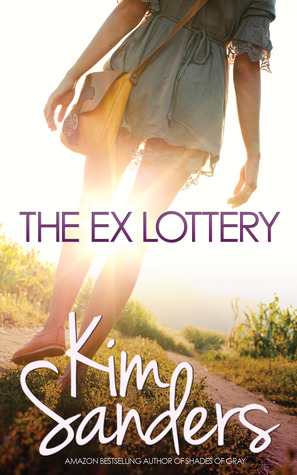
  • THE EX LOTTERY by Kim Sanders – a clever twist on the modern day fairy tale

    THE EX LOTTERY by Kim Sanders – a clever twist on the modern day fairy tale

    When art teacher Tory Adams trades in her heartache for a lottery ticket romantic sparks fly in this humorous tale of misunderstandings, half-truths and the pot of gold at the end of the rainbow.

    Elementary school art teacher Tory Adams grew up believing in the power of love. But after three disastrous relationships, Tory realizes that the “love-at-first-sight” tales spun by her grandmother exist in a time and place of memory, far from the reality of Tory’s world. Or do they?

    On a whim Tory buys a lottery ticket, basing the numbers on the dates she was unceremoniously dumped, and when her numbers come up gold, men start crawling out of the cyberspace woodwork. With an overnight tally of 23 marriage proposals, Tory needs an out.

    Her best friend, Emma, prods Tory into a full head-to-toe makeover, trading in her small town Southern style for a sleek, new cosmopolitan look. And the new Tory “Victoria” Adams is transformed inside as well as out. She packs her designer bags and boards a plane to Ireland, in the hopes of buying the castle where her grandparents kindled their great love.

    Armed with her new attitude, a box of keepsakes and her grandmother’s Claddagh ring, Tory is determined to follow her dream and find the blue dragon of her childhood. But plans are never etched in the proverbial Blarney stone and when the world’s most eligible woman collides with the world’s most reluctant bachelor sparks do fly.

    Author Kim Sanders (“Shades of Gray”– a murder mystery) delivers a fun, eclectic cast of characters in this humorous tale of misunderstandings, half-truths and miscommunications. From Tory’s two geeky exes who are out to claim their parts of the lottery pie to the super-sexy Irish rogue, Shane, whose reluctance and secrecy could lose him the woman he loves, Sanders illuminates the human condition with a gentle insight that has the reader rooting for each character regardless of their motives. And then there’s Tory’s ex, Carter, a Special Forces man of mystery, whose revelations have the power to hurl Tory back into heartache.

    Set in the pastoral beauty and magic of the Emerald Isle, “The Ex Lottery” is a clever twist on the modern-day fairy tale, part rom-com, part travelogue and one hundred percent romance that demands a follow-up book. First Place in the New England Reader’s Choice Awards and Winner of the Chatelaine Award for Contemporary Romance, Kim Sanders’s “The Ex Lottery” is a must-read entertaining romp in the grass for anyone who believes in “romance and happily ever after.”

  • The OYS & JOYS by Marcia Feldt –  Meet the Oys & Joys Sisterhood

    The OYS & JOYS by Marcia Feldt – Meet the Oys & Joys Sisterhood

    True friendship, like the one these four women share, is one of the greatest gifts one can experience in life. Sure, the honesty can hurt, and situations can get messy, but the unconditional love, so obvious in the telling, make for a binding sisterhood that transcends DNA and cannot be broken apart.

    The author uses a first person point of view for each of the women, alternating chapter titles with the name of the friend doing the sharing. While using this format can be a risk, the author executes it exceptionally. Readers will feel they are right there with each one, hearing what they have to say, and feeling the emotions they are experiencing.

    Before the story begins, the author lists three definitions to prepare readers with references to oy, the word for woe from the Yiddish; bubble bath basket list, so much more feminine than bucket list; and wedgie generation, the part of middle age caught between the past and the future, now closer to the end than the beginning.

    In chapter one, readers meet Lizzie:
    “On my sixty-third birthday, my husband packed his bags, golf clubs, leather recliner and fifty-inch man-cave TV into our pontoon boat. And used it as a moving van.”

    As Sassy, Grace, and Ruby arrive at her house to celebrate her birthday, Lizzie gives readers her view of the three others in their cozy group that has been going strong for six years. Their conversations go in many directions, with readers there to begin picking up clues as to their pasts as well as their futures.

    Chapter two presents Sassie:
    “Before the ink dried on our college diplomas, Louie and I packed his old Chevy with our belongings. …I made the decision to return to Texas decades later with Louie in an urn.”

    Sassie shares her move from New York back to Woodhaven, Texas with us, and she then lets us in about her closeness to Lizzie. To both honor her late husband, as well as to fulfill her own dream, Sassie has opened a modeling and dance studio called Loop de Lou.

    In chapter three, Grace shares:
    Ever since my lumpectomy and radiation treatments eight years ago for breast cancer, I’ve smiled at my oncologist. Because clean mammograms rock…until this year. …And the weekend did not improve….Joy started acting weird….She moseyed in with the rear end of her expanded dachshund back wobbling to and fro … Ohmygosh. Did Joy get into some of Rusty’s stash? … I dreamed of shooting Enron’s Ken Lay for stealing Rusty’s career, his self-confidence, and our retirement savings.”

    A job offer from Sassie causes conflict for Grace as she worries if her cancer has returned. Reduced to tears on the phone, Grace is unable to explain to Sassie, who promptly comes over to her house, to talk to her in person.

    Chapter 4 introduces readers to Ruby:
    When I listened to the receptionist at Weinstein, Porter, and Spencer beg me to cover for her while she ran to Walgreens for an Oh-my-God-I-might-be-pregnant test, I almost refused. I had closing arguments to outline for a senior partner, with a deadline zooming around the corner faster than the last lap of the Indy 500.”

    Ruby relented, which is why she was at the reception desk when Sassie entered the law firm with her outdated will, and the connection began.

    By the end of chapter four, readers will feel completely initiated into the group, ready to learn more of the secrets, sorrows, and joys this novel delivers until its satisfying conclusion. The four women are in different situations. Secrets are revealed, hopes and dreams are shared, close calls are divulged, and fears braved.

    This foursome: one is divorced, another widowed, one is in an abusive marriage, and the fourth single have been long-time friends through thick and thin. Their personalities differ greatly, too, but the mix of all of them together is electrifying as they all find shelter under a common umbrella of their friendship that helps them be there for each other though bad and good times – “the oys & the joys.”

    The story of the four friends is vibrantly told with authenticity and poignancy that will resonate with many. Feldt’s sense of humor makes the adventure of The Oys & Joys entertaining, while her heartfelt anecdotes are captivating and will remain memorable long after the last page has been read. If you liked The Divine Secrets of the YaYa Sisterhood by Rebecca Wells, you will enjoy reading The Oys & Joys, by Marcia Feldt.

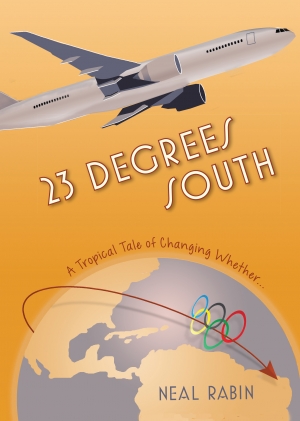
  • 23 DEGREES SOUTH: A Tropical Tale of Changing Whether by Neal Rabin — a fun and adventurous read

    23 DEGREES SOUTH: A Tropical Tale of Changing Whether by Neal Rabin — a fun and adventurous read

    Readers meet Hart, a young American, as he begins a new job as Senior Manager for Maytag in Sao Paulo, Brazil. Chapter one finds him in his new office on a Sunday battling depression by reading the city guidebook he found on his desk, learning the city’s geography and history. He came to the page with a quote that foreshadows the story’s direction.

    “That which you are seeking is always seeking you.”

    The short chapter ends with his childhood friend Simon coming into the office.

    In chapter three, a seemingly innocent sharing of a childhood experience gives insight into the working of the friendship of Hart and Simon.

    “On Hart’s twelfth birthday Mr. Goldman made him a gift of the classic Herman Hesse book “Siddhartha.” He read it then loaned it to Simon, who never gave it back. Simon always believed Hart possessed something he did not. He could never solidly identify what that mystery something was, or decide if lacking it made him jealous, disheartened, or relieved.”

    For those familiar with this classic book an entirely deeper significance surfaces that adds incredible thought- provoking depth to this fast-reading, upbeat story.

    Hesse wrote in German in 1922 about the spiritual journey of self-discovery. First published in the United States in 1951, this novel about Siddhartha and his best friend Govinda gained popularity in the sixties. In it, one seeks truth on his own with the other friend following,

    23 Degrees South will capture all readers with its story of two young friends on different paths who intersect within an action packed story, complete with some hilarious scenes.

    Those readers familiar with Siddhartha, however, will discover even more. While enjoying the more modern plot, they will find symbolism and depth in the reading of this story. Who influences us in our search for self? Does our life have meaning, or does it not make a difference? What obligations do we have to others? What obligations do we have to ourselves? What is the truth of who we really are, and of our purpose in life?

    The author’s characterization is exceptional, with an unusual mix of people with Hart’s beautiful assistant, criminals, a Jesuit priest, and a former Nazi to move along the action. Carmen, Carlos, Lazarus, Gil, and all the other characters come alive in the writing.

    Sub-plots add to the main story, giving background and adding to the substance of the main characters. The realistic dialogue keeps readers involved, and the humor throughout makes the story a fun adventurous read while giving the reader pause to reflect on his or her search for the meaning of life. An exemplary read for today’s hectic pace of living—highly recommended.

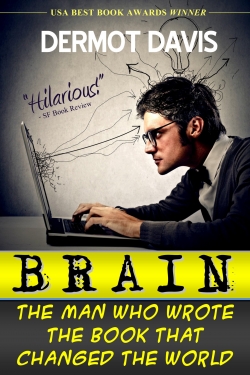
  • BRAIN by Dermot Davis, a rare species of complete entertainment

    BRAIN by Dermot Davis, a rare species of complete entertainment

    Daniel Waterstone has every intention of writing the Great American Novel, and in doing so, he is going to set the ignorant, crazy mass of modern readers straight on what constitutes great literature.  But, after two improbable, failed “masterpieces,” his publisher, the delightfully savvy Suzanne, has told him that success and recognition will best be served by his authoring a book that some of the “great-unwashed” might actually be interested in reading. Daniel likes the idea but is clueless about how to proceed.

    The product of coldly academic and overprotective parents, Daniel entered adulthood as a cynic with a dislike for people, a fear of women, and a conviction that everyone except him was crazy. He had such strong feelings of loneliness that he often thought of himself as an alien trapped on the wrong planet. Although highly-degreed in literature, the rigidly naïve Mr. Waterstone will soon learn that he is obligated to finish one final course: Life 101. And if he is willing to take his lessons, life just might have a little something up its sleeve for him.

    Daniel quickly finds a theme for the book that will liberate him from poverty and his sense of failure; he enters a bookstore where a flamboyant and somewhat other-worldly writer of self-help books is preaching his gospel to an enchanted crowd. When Daniel calls him out as an opportunistic fraud, the guru challenges him to engage in a “mind-meld” that will supposedly free Daniel from some of his hang-ups.

    Amused and seemingly unaffected, Daniel leaves the store cradling an idea for the book that will please the masses: he will write, under a pseudonym, a satire that exposes the pop-psychology industry for what he thinks it is: a total lie, an insult to crazy people done by crazy people. Ironically, his satire becomes the kind of blockbuster success that brings him riches and fame, but at a cost, as author Dermot Davis is happy to tell us all about in Brain: The Man Who Wrote the Book That Changed the World, his mystical and joyous tale of personal growth and fulfillment in the modern age.  

    “Crazy,” the word, the notion, the concept, is the spine from which flows the energy of  Davis’ often tongue-in-cheek fairy tale, its relevance grounded in the infinite variability of human  experience, and its ability to score a few points for emotion in the seemingly endless skirmish between skepticism and belief. Score more points for the stubborn and ineffective Daniel if he can revise the “me-versus-them” definition of “crazy” that has him strapped to the cheap seats of human experience.  

    And, could there be a better word than “crazy” to carry the torch of enlightenment into the shadows of our increasingly soul-less and programmed culture?  Probably not, at least in Davis’ jauntily addictive narrative, an arena in which he holds court with the majesty of an imaginative, accomplished humorist.

    I was not surprised to learn that the author is also a playwright, as his marvelously crafted characters and sets quickly acquire the kind of three-dimensional believability that one expects to encounter in a live theatrical performance or, according to my mind’s eye, a movie (complete with an endearingly haunting soundtrack and a reincarnated Jack Lemmon in the lead role!).

    Dermot Davis’ Brain is that rare species of complete entertainment that can be both deeply philosophical and buoyantly accessible. Laughs, suspense, intrigue, love, and a gentle thread of the paranormal are all there for you, gift-wrapped in a sweet mist of serendipity.  


  • BAD VAMPIRES by Karl Larew, a humorous new take on vampires

    BAD VAMPIRES by Karl Larew, a humorous new take on vampires

    Karl Larew is well known for the depth and breadth of his knowledge in the field of military history, both in academic works and in historical fiction.

    Well, as you might imagine, Bad Vampires has nothing to do with world politics and war, or even reality on the home front. Rather, this versatile author has chosen to entertain us by delving into the practices of the netherworld of 19th-century vampirism, BUT, as it exists in the modern world—the difference being that, today, there are both Bad Vampires and Good Vampires. This is a modern fictional account, and one designed to make you chortle instead of scream. It is a hilarious and refreshingly fun read!

    Rather than a single locale in Transylvania, the vampires in this tale travel from New York to our nation’s capital and its Virginia suburbs, then Hollywood, and on to Hong Kong, and back and forth, in multiple trips, logging who knows how many thousands of miles.

    The 19th-century vampire’s vicious bite and suck method has evolved into a variety of means for the nourishment of vampires. Among Bad Vampires, the process can still end in, well, the end for the blood donor. Good Vampires, however, take care not to let this happen. Further, the New York Association of Good Vampires has rules regarding the infliction of mortal wounds by other means (pistols seem to be the most popular). In any case, Good Vampires are the winners, Bad Vampires are the losers. Bad Vampires have no imagination and can’t put a bullet in the side of a barn, whereas Good Vampires are ingenious in their strategies and never miss a target, even with one hand tied behind them.

    This tale is either carried along or interrupted by outrageously corny puns, double entendres, and other linguistic contrivances designed to tickle the characters and amuse the readers. Larew obviously enjoyed drawing these from old TV shows: Bad Vampire Elmer wants to make a movie about vampires in New York City—”Sucks and the City” it gets labelled by a Good Vampire; another Good Vampire calls the Head Vampire about a new idea. The CHIEF tells him, “GET SMART! I could say that 99 times and still not have said it enough!” Do any readers remember “Henry Aldrich” (Hen-reeeeeeee) on the radio? No? Never mind.

    It’s hard to develop the character of a vampire. In this story, some are good and some are bad. Protagonist Lance Blodgett is a good one and smart as well. In his day life, he’s an assistant professor of anthropology at New York University, specializing in East European folklore. He has a tender streak and loving heart, which he very soon gives to Carol Binghamton, who isn’t a vampire.

    Carol, a computer programmer, finds herself reciprocating Lance’s feelings. She even offers him breakfast, if he’ll bite her where it won’t show. Lance tells her that biting is “too painful and leaves a big bruise. We use little spring-powered lancets, like diabetics use for blood sugar tests.” She kindly offers him a rump.

    I wouldn’t want to spoil the story for you—just give you a taste that hopefully will tempt you to try it yourself. You might say, as Lance did after breakfast, “Oh, very good—[it has] a sort of tangy je ne sais quoi.”