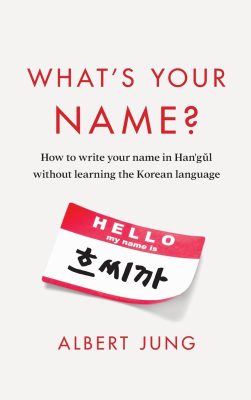
Albert Jung’s What’s Your Name?, subtitled How to Write Your Name in Han’gŭl Without Learning the Korean Language, is more than a primer for learning how to write in the Han’gŭl script — it’s a study of the evolution of the Korean writing system and, through it, the history of Korea itself.
What’s Your Name? offers a crash course in how to write your name in Han’gŭl for anyone who attends international conferences, hosts Korean exchange students, or simply has Korean speakers in their social sphere. Although the reader quickly plunges into the components of the Han’gŭl alphabet, Jung suggests a light read for the basics, and a comprehensive read for those seeking a deeper understanding of Han’gŭl and its evolution.
From absolute beginners to linguistics scholars and students, readers will find valuable reference material and guidance for practice in this extensive text.
Roughly half the book is made up of alphabetical diagrams, charts, examples, and comparisons, along with illustrations of the five main vocal organs used to pronounce the sounds and how to position them. Tables list common names and Han’gŭl characters side by side with their counterparts in English, French, German, Spanish, and Russian.
At the end of each section, Jung includes a handy pop quiz. These will help readers to cement the information for each letter of the Han’gŭl alphabet and build the confidence to forge ahead.
Here’s a brief look at the fundamentals: The vocal organs — molar, tongue, lip, tooth, throat — create top, middle, and bottom sounds, each of which are represented by symbols. Where the top sound symbol represents the shape and movement of the vocal part used, the middle sound symbol describes the sound’s quality: deep, flat, or shallow. Bottom sounds serve to stop the middle sound, either abruptly or slowly. Put together, the three sound symbols create a single character. Repeating this process for each letter in your name, you can transcribe it into Han’gŭl.
After mastering the top, middle, and bottom sounds, the reader moves into an intermediate stage to learn sounds that are more difficult to convey, such as r, l, th, v, f, sh, j, ch, and z, as well as pair letters which combine to make a single bottom sound.
Once readers get the hang of the modern script, they can move on – and back in time – to the earliest form of Han’gŭl, created in the 15th century by King Sejong the Great.
This version incorporated more sound letters, many of which don’t appear in the modern script, and differences with those letters that did survive the centuries are nuanced and subtle. Readers who want to delve deeper into the subject will find tables that show comparisons of names using the 15th-century script with those in modern Han’gŭl. Jung charts the fascinating development between these two forms.
Responding to the intricacies of both the original and the modern writing system, Jung presents the concept of a potential third form: Multiverse Han’gŭl, in which the best of both old and new are combined with global and cultural influences.
The last section of the book expands beyond a focus on linguistics, as Jung contextualizes the founding of Han’gŭl by sharing beautiful woodblock prints of correspondence and other texts, with translations provided.
This section could easily feature in an art history or anthropology class, or a course on the history of Korean literature. Within this section, the footnotes reveal the timeline of the script’s evolution through peeks into the country’s past, including politics, diplomacy, trade, and evangelism, each of which added its own influence to the Korean writing system.
What’s Your Name? by Albert Jung is a comprehensive guide for novices and intermediaries to not only learn how to write their name in Han’gŭl, but to also gain an appreciation for the evolution of a language and a culture that has withstood the test of time.
The fight against tyranny grips readers and obsesses authors to this day.
“Soldiers, Sailors and Airmen of the Allied Expeditionary Force!
You are about to embark upon the Great Crusade, toward which we have striven these many months. The eyes of the world are upon you. The hopes and prayers of liberty-loving people everywhere march with you. In company with our brave Allies and brothers-in-arms on other Fronts, you will bring about the destrruction of the German war machine, the elimination of Nazi tyranny over the oppressed peoples of Europe, and security for ourselves in a free world.” — Order of the Day from Supreme Headquarters Allied Expeditionary Force given before the Invasion of Normandy
Chanticleer’s Personal Connection to WWII
At Chanticleer we often take particular care to honor veterans and those who serve.
Kiffer’s father retired after 36 years of service in the Unites States Merchant Marines & Marine Corps where he served in the WWII, Korean War, and the Vietnam War. He died in 1981 from one hundred percent service related injuries.
From left to right we have Kiffer’s brother Tony, her father, and Kiffer herself in Hawaii during the territory days. Her mother, Antha May, is taking the photo
David’s grandfather also served during WWII, stationed in France as a first generation Quebecois transplant in the United States
Robert Gerard Beaumier Sr. who served in WWII
My father would often tell the story of how his grandfather, Robert, was in France during World War II. At one point a dog came and wouldn’t stop barking at his unit, no matter how much they told it to go away. Finally, Robert said “Va t’en!” and immediately the dog ran off. Everyone was suitably impressed that the dog spoke French! — David
The National World War II Museum in New Orleans has an excellent summary of the lead up and importance of D-Day which we recommend you read here.
Most chilling perhaps is the closing of their thoughts that emphasize how important the landing on Normandy was:
The Normandy invasion was one of great turning points of twentieth-century history. An immense army was placed in Nazi-occupied Europe, never to be dislodged. Germany was threatened that same month by a tremendous Soviet invasion from the east that would reach the gates of Berlin by the following April. The way to appreciate D-Day’s importance is to contemplate what would have happened if it had failed. Another landing would not have been possible for at least a year. This would have given Hitler time to strengthen the Atlantic Wall, harass England with the newly developed V-1 flying bombs and V-2 rockets, continue to develop jet aircraft and other so-called “miracle weapons,” and finish off his killing campaign against ethnic and sexual undesirables.
It is our pleasure to share these wonderful WWII books with you from authors who have written about this time.
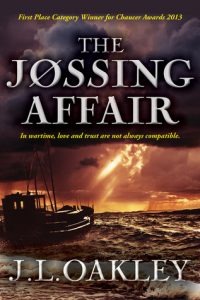
The JøSSING AFFAIR
By J. L. Oakley
At a time when true identities are carefully protected and information can get you killed, heroes emerge to fight the evils of Nazi-occupied Norway in J.L. Oakley’s highly suspenseful and beautifully penned historical fiction novel, The Jøssing Affair.
In a quiet Norwegian fishing village during the Nazi occupation, risk lurks everywhere. Most residents are patriotic members of the resistance, “jøssings,” but there are “quislings,” too. Those who collaborate with the Germans and tout the Nazi propaganda of Nordic brotherhood between the nations. Mistaking the two is a matter of life and death.
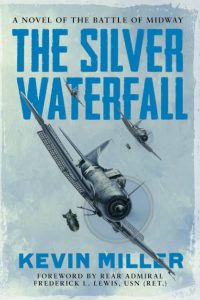
THE SILVER WATERFALL: A Novel of the Battle of Midway
By Kevin Miller
In The Silver Waterfall, author retired U.S. Navy Captain Kevin Miller reveals the intricate and deadly turns of the Battle of Midway, a combat shaped by transforming warfare, and one that would in turn shape the rest of WWII’s Pacific Theater.
After their surprise attack on Pearl Harbor, the Japanese Navy seeks to draw American aircraft carriers into an ambush, to secure Japanese power over the Pacific. In a time of great upheaval for warfare technology, aircraft carriers dominated both sea and sky. So, to destroy the USS Enterprise, Yorktown, and Hornet, Chūichi Nagumo— commander of the Japanese First Air Fleet— brings to bear his own four carriers, HIJMS Akagi, Hiryū, Kaga, and Soryu.
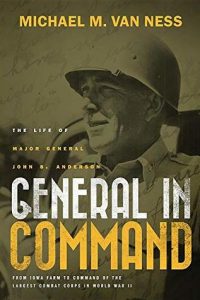
GENERAL in COMMAND – The Life of Major General John B. Anderson
By Michael M. Van Ness
Michael M. Van Ness, the grandson of “the general in command,” has created a remarkable biography chronicling the adventures of a farm boy who rose high rank in the US military and served with distinction in two world wars as a combatant, officer, and sage observer.
Born in 1891, John Benjamin Anderson must have had considerable intelligence as well as patriotism and grit, since he was accepted at West Point Military Academy at age 19, an honor conferred on only 130 applicants per year—and finished in the top third of his class. He would soon serve under General Pershing in the Mexican War, giving him the experience of combat and coincidentally, his first ride in an automobile. That deployment earned him inclusion in Pershing’s ranks in World War I. It was then his diaries began, and though he protested humorously that “I hate to write,” these personal recollections give readers an up-close picture of the devastation of warfare.
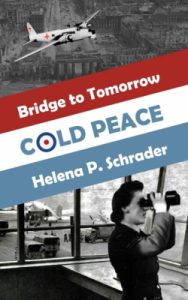
COLD PEACE: A Novel of the Berlin Airlift, Part 1
By Helena P. Schrader
Amidst the ruins of Post-WWII, Berlin struggles to rebuild from the ashes, torn apart and facing down the promise of another bloody dictator. A myriad cast, all shaped by that same war, become entwined with the broken city as its hour of need approaches.
Just as Germany is divided between the Americans, British, French, and Soviets, Berlin has been cut into pieces. But the balance of the occupation powers tips eastward as the Soviet Zone surrounds the city, giving them control of all ways into and out of Berlin – save for the air. The occupation currency is worthless thanks to Soviet over-printing, leaving Berlin on a barter system of cigarettes and black-market trading. In order for Germany to recover, the Western Allies plan to introduce a new currency, even if it angers the Soviet bear.
A young boy in Norway makes a discovery while playing with his dog, opening the mystery of EO-N by Dave Mason, a detective story spanning multiple decades and both sides of the Atlantic, a deep dive into the horrors of Nazi Germany, and a heartfelt love story.
A small metal fragment leads to the discovery of a downed WWII twin-engine Mosquito fighter-bomber hidden in snow and glacial ice for nearly 75 years. The crash site yields an initial set of clues, one of which finds its way across the world to Alison Wiley, a biotech CEO in Seattle. Having recently lost her mother, and, a few years earlier, her brother in Afghanistan, she finds her days full of despair, but the discovery makes a distant connection to her long-lost grandfather, and she flies to Norway. There, she meets Scott Wilcox, a Canadian researcher assigned to investigate the discovery after his government learned that the crashed aircraft belonged to the Royal Canadian Air Force. Their attraction is both intellectual and emotional, but the quest to uncover the plane’s mysteries and the fate of Alison’s grandfather place any romance to the side.
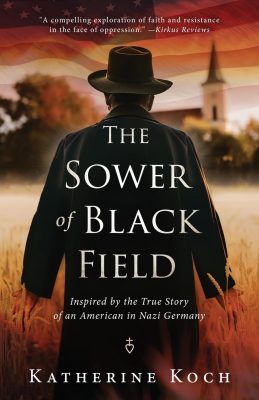
In The Sower of Black Field, Katherine Koch’s historical fiction novel, Father Viktor Koch— a 67-year-old Catholic priest— presides over a monastery in a small German village, as the Nazi regime sweeps through the country.
The time is April, 1941. Fr. Viktor’s order, the U.S.-based Passionists, built the monastery eight years prior, providing employment for most of the villagers and remaining a symbol of their faith.
DEAR BOB: Bob Hope’s Wartime Correspondence with the G.I.s of World War II
By Martha Bolton with Linda Hope
During World War II, Bob Hope traveled almost ceaselessly to outposts large and small, entertaining US troops – and inspiring them; Martha Bolton brings the extent of this work to light in Dear Bob.
Writer Martha Bolton worked with and for comedian Bob Hope. Now, with Hope’s daughter Linda, she has gathered and organized the letters written to Bob by the soldiers he helped.
Hope, English born, and born to entertain, once said he could not retire and go fishing because “Fish don’t applaud.” Among his sizzling lines – and there are hundreds recorded here – he told one audience that he’d gotten a wonderful welcome when he arrived at their camp: “I received a 10-gun salute… They told me on the operating table.”
Eighty Years later, and the sacrifices made in WWII still matter and the fight for a more just world continues. Thank you to everyone who has submitted books to us and been a part of our own journey and learning.
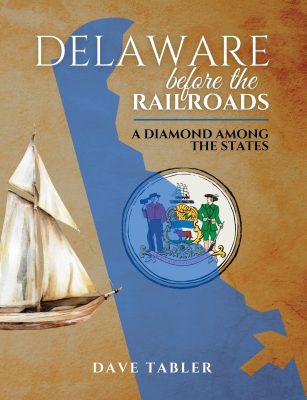
Delaware Before the Railroads by Dave Tabler presents a captivating visual tale of this tiny state, from 1638 to 1832, ranging between early colonial settlements and the aftermath of America’s Independence.
Delaware’s place in this seminal time of United States history is carefully illustrated through pictures with wonderful captions. Delaware Before the Railroads highlights the significant role played by Delaware in America’s creation, uncovering surprising historical details such as the origin of log houses, a heroic figure who thwarted the British invasion of Canada, and the intriguing connection with Captain Kidd.
The pictures and captions are highlighted by sidebar paragraphs that deliver more knowledge about what life was like for the Swedes and Dutch who settled near Delaware Bay. They found, for instance, a “new world” of seafood they didn’t recognize, such as the crabs they called “sea spiders.”
The book explores day-to-day details of this growing society. One fascinating – and unsettling – aspect is the nature of their medicine. They used tools for bloodletting, torturous-looking dental implements, and pharmaceutical ingredients such as benzine, peppermint oil, saffron, peppercorns, and even mercury! The specifics of how these tools were used will chill readers.
Delaware Before the Railroads balances these darker elements with more light-hearted moments in time as well, with one fun fact being that Delaware delegates ratified the US Constitution at The Golden Fleece Tavern in Dover, thus christening Delaware as “The First State.”
The best treasure of the book is in the “Notes on Photographs” section, to which the sidebar paragraphs direct the reader.
This section adds significant anecdotes and details that shed more light on the culture of the time. One discovers that the Swedish colonists named the first non-native settlement, Fort Christina, after the then 12-year-old Queen of Sweden. Or, that the early days of Delaware also gave rise to the iconic log cabin in America, as Swedish and Finnish colonists introduced the style to their new home.
These notes deliver excitement as well as excellent historical information. The famed privateer Captain Kidd once marauded in an area now called Kitts Hammock, one of the places he supposedly buried his treasure. Kidd also colluded with some Delawareans to sell stolen goods from an Indian Ocean takeover of a merchant ship, despite a colonial law forbidding the importation of any goods from the East Indies (due to pirates and privateers).
Pick up Delaware Before the Railroads to join the hunt for Captain Kidd’s buried treasure and learn other intriguing slices of Delaware’s past.
Author Linda Gartz tells of her childhood and early adulthood amidst social upheaval in the city of Chicago in her memoir, Redlined: A Memoir of Race, Change, and Fractured Community in 1960s Chicago.
Gartz grew up the second child of second-generation immigrants to the US. Her father’s father boldly made the trip to the land of opportunity at age 21. She spent much of her childhood in cramped quarters with her parents and her older brother, living alongside strangers. They paid this price for the “dream” – the couple bought a house in a decent neighborhood; keeping roomers, even living in the same flat with them, helped pay expenses.
Gartz’s grandmother, a talented dressmaker, helped out with childcare and other chores while her mother worked to manage all the finances, tenants, and repairs in their rooming house; she had to do this alone half the year while Gartz’s dad traveled for his job. But Grandma K suffered mental illness and abused Gartz’s mother and father, sometimes violently. Gartz’s father felt oppressed by her presence, which caused ongoing, if mostly unspoken, conflict in the home.
Chicago’s social and economic upheaval served as a microcosm for national change, and as backdrop for the Gartz family drama.
African Americans fled the dangerous and economically dead-end South for more promising prospects in places like Chicago. But majority white cities and regions resisted their incursion through restructuring and re-designating neighborhoods and school districts. All the while, the civil rights movement sought large-scale change amidst peaceful protests, riots, and violent reprisals from the law.
The influx of black workers into her own neighborhood affected Gartz’s choice of schools and friends. Civil rights struggles incited her sympathies while her parents expressed their older prejudice. They feared that all of their hard-earned investments would vanish if “the colored” came in. Still, the teen had black friends and neighbors. She felt touched by the spirit of rebellion in a new testing of societal limits: sexual freedom.
Gartz felt driven to compose this intelligent account of the changing times when she and her brother “found our gold” in the attic of their parents’ home: diaries, letters, cards, calendars and notebooks reaching back to the couple’s own youth.
The undercurrent of family tensions became clear. Grandma K’s psychosis put the house on edge. Gartz’s father struggled to balance his home and work life, needing to earn money with a job that required six months of travel across each year, and also supporting his over-burdened wife with the demands of their rooming house with as many as eleven tenants. Her mother saw her behavior in the sexual revolution as shocking. Gartz includes details of the subtleties of “redlining” that allowed cities and regions to keep African Americans down and poor by limiting their ability to own property. Family photos pepper her book, lending emotive touches. The result is a vibrant look at the coming of age of a nation through the eyes of a frank, freethinking woman.
One of the most frequent questions we hear at Chanticleer is “What division should I submit my story to?” All our divisions are divided by genre and sub-genres. Some can be pretty tricky to parse. For example, is your mystery novel a Not-So-Cozy Mystery, a Thriller, or a Global Thriller?
First a breakdown on our Awards program genres, and then let’s talk about why it’s important for authors to understand their own genre.
The Chanticleer Int’l Book Awards (CIBAs)
We currently have 24 different divisions! Six of those are Non-Fiction, and the other 18 are some flavor of Fiction. You can see all of our Awards Divisions here. We’ll start with a focus more on the general sections on our website which are as follows:
Speculative Fiction
Mystery, Suspense, Thriller
Young Adult or Children’s Literature
Historical Fiction
Literary and Contemporary
Romantic Fiction
And, of course, Non-Fiction
Remember we have the Shorts and Series Awards, too, but both of those focus within these genres above. There’s a huge swath of other genres, hence each of the above categories being broken into at least three different genres, but that’s a good place to start.
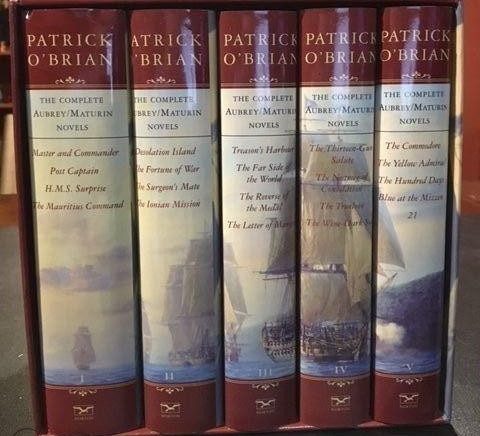
The Complete Aubrey – Maturin Novels Set – 21 complete novels – Kiffer likes how the covers create a scene. And, yes, she has read the complete series.
Patrick O’Brien’s Jack Aubrey and Stephen Maturin series crosses many genres: Historical fiction, action/adventure fiction, romance (yes, romance), military fiction, etc.
The series starts in 1800 with the Napoleonic Wars and carries through to the Battle of Waterloo in late 1815.
Some say Aubrey and Maturin are the inspiration for “inseparable fictional duos” such as Kirk and Spock of the original Star Trek TV series (79 episodes) by Gene Roddenberry, Holmes and Watson sixty stories by Arthur Conan Doyle, Joe Leaphorn and Jim Chee of the award-winning Navajo Nation mystery series by Tony Hillerman, and Walt Longmire and Henry Standing Bear of theLongmire novel series.
Understanding Genre:
When writing in general, it helps to think of your work in terms of different points of view. Often English teachers will refer to this as the Rhetorical Situation of your writing, which comes in the following parts:
Audience: Who will be reading it? This is more than people who buy your book, but also your writing group, beta readers, professional editors you pay, agents, publishing editors, bookstore employees, and then the specific people to who your book will appeal.
Medium: Quite literally what is it written on and how it is delivered. Paper, ebook, audiobook, graphic novels, hybrid.
Message: What it says
Genre: The conventions and context regarding how this information is typically presented
Purpose: The intention of the writing
Naturally, we’re going to focus on Genre here.
Take a moment and consider this question: What is Genre? It may even be worth pausing to write down your thoughts before continuing.
It’s a little more complicated than “Apples and Oranges”
In “Dukes, Deaths, and Dragons: Editing Genre Fiction” from What Editors Do, Tor Executive Editor Diana Gill Diana Gill asks the same question, and she provides her own answer:
“What is genre? Merriam-Webster defines it as ‘a category of artistic, musical, or literary composition characterized by a particular style, form, or content.’ Genres of fiction include mystery, science fiction, romance, fantasy, westerns, erotica, and horror. Genre fiction can be commercial, it can be literary—and it can be both.”
A quick internet search shows that there are typical standards for most genres when it comes to word count, which can help when plotting or editing your work. Let’s look at that genre list from before, but add in word counts:
You can read up on some more of the general rules of genre in this older, but still worthwhile blog from Ruth Harris here.
Standard word counts for different genres are important to keep in mind as knowing how long your novel is affects your storytelling!
Speculative Fiction 90,000-120,000
Mystery 70,000-90,000
Young Adult 50,000-80,000 (much shorter for Early Readers and Middle Grade)
History 100,000
Literary 100,000
Romance, 50,000 + (shorter is usually better for romance)
Non-Fiction is a little too varied to put a fine point on it. George Saunders tells his reader in A Swim in a Pond in the Rain that he received “the Cornfeld Principle” from movie producer Stuart Cornfeld, which states:
“[E]very structural unit needs to do two things: (1) be entertaining in its own right and (2) advance the story in a non-trivial way.”
George Saunders
If your story is excessively long, it may be worth it to look at entire chapters and ask yourself that question. At best, you may find out you have two books, or as we have seen here at Chanticleer, three books instead of one, but no matter what happens your story will probably be stronger for it.
A reminder from Kiffer: Remember each chapter should have its own story arc and should end in such a way that the reader can’t wait to indulge in the next chapter as the story develops its overall arc.
Each story within a series should contain a portion of the overall arc of the series.
This works for whatever genre or genre’s you are working in—even those with fractured time-lines.
What is the point of genre, or, put another way, who uses genre?
This goes back to the question of Audience when we consider a book. Remember who we said might be reading this with an eye toward genre:
Your Writing Circle
Beta Readers
Professional Editors
Agents
Publishing Editors
Bookstore employees
Distributors (the gauntlet of a successful sales strategy)
ISBN – & Cataloging
Library of Congress
Copyright
Your Readers!
While understanding the genre can help you with narrative conventions and writing decisions, writing in a genre also establishes an unspoken contract between you and the reader. If you break the contract, your readers might be a little frustrated with you. That said, common forms of genre blending can be found in Young Adult Fiction, Middle Grade Fiction, and Romance Fiction.
You might be asking why on earth you would need to even bother with a genre when all you want to do is reach your readers directly. Well, there’s a simple answer…
Marketing! Marketing! Marketing!
What will you do to help your book be discovered?
Knowing your genre not only helps you understand the conventions (like length) for what you are writing, but it also helps readers find your book. Think about when you go into a bookstore. Is there a section you automatically beeline for? Do you look to see if they’ve separated out Horror from SciFi and Fantasy instead of putting it all in Speculative Fiction? Are you a frequent peruser of the Local Author shelves? Having clear sections and genres (even more abstract ones like Local Authors) helps to orient your reader to best find your book!
Author Platform = Discoverability
In spite of how having a clear genre can help book sales, we often hear is that someone’s book defies genre, or it can only be described as the most literary fiction around, or it just doesn’t fit one of the 24 Awards divisions we offer. Well, those authors aren’t alone in that feeling.
An interesting example of this is Kazuo Ishiguro’s book The Buried Giant. Ishiguro seemed to be reluctant to call the book fantasy, and indeed you’ll find it in the general fiction section of most book stores. (The same is true for his book Klara and the Sun, which is narrated by a robot, but somehow not science fiction.) Ursula K. LeGuin, a fervent champion of genre fiction, had this to say:
“Familiar folktale and legendary ‘surface elements’ in Mr Ishiguro’s novel are too obvious to blink away, but since he is a very famous novelist, I am sure reviewers who share his prejudice will never suggest that he has polluted his authorial gravitas with the childish whims of fantasy.” (Read the full Guardian article detailing this here)
The Brilliant Ursula K. Le Guin
So What Does Genre Do?
Genre is a form of categorization that helps people sell your books. Ishiguro, as the winner of the Nobel Prize in Literature can sell work on his name alone. And using a genre isn’t so bad! Think about times that you’ve queried for your manuscripts or even when you see people pitching their work on Twitter’s #pitmad event. You see books advertised saying:
The next Harry Potter!
Jack Reacher fans have found their new series!
Friends of Tolkien fantasy will be happy here!
Perfect for Star Trek and Star Wars fans alike!
While these claims may be less original than agents and publishers would like, they get the idea of genre across, and if you’re familiar with those titles you know exactly the kinds of books being described without even reading a summary.
Then there is the advice of J.D. Barker, Master of Suspense
CROSSING GENRES and WHY YOU SHOULD DO IT!
J.D. Barker asked his attendees at his presentation at a Chanticleer Authors Conference session, “What do you write? Thrillers? Mysteries? Paranormal?”
Hands were flying up. Then he asked, “Horror?” Sharon Anderson’s hand flew up. He looked at her for a couple of seconds and said, “I guess you’ll be happy with not making much money, then.”
Say What?
He went on to explain how authors limit their audiences when they use certain words. Horror, it turns out, is one of those words. Many people read thrillers, quite a few read mystery novels, and who doesn’t like a good paranormal? But when you say “horror,” people tend to shy away. Sure, you’ll get your fans. But, as Barker adroitly pointed out, you may not get those readers who love the other genres – and would most likely love what you have to offer, too.
This is important because your horror novel may contain elements of a thriller – why wouldn’t it? Likewise, your novel probably has a storyline that needs solving. The point J.D. was making is this – don’t scare away your readers by telling them your novel is only one thing. Think carefully about your marketing and promote your work in such a way as to garner the largest appeal. (Read the full interview with J.D. in our magazine.)
JD Barker presents at CACs and VCACs.
Having a flexible genre that fits into a more popular one (consider paranormal and horror or paranormal and romance) has the potential to greatly expand your readership.
If you’re having trouble identifying your genre and need another pair of eyes on your work, you can always sign up for one of our Manuscript Overviews here.
Keep an eye out!
Did you enjoy this article? We’re planning on doing a series breaking down the ins and outs of different genres in a series of Genre Deep Dives to help you know if your work is a police procedural or a cozy mystery – or whatever else you might be writing!
Thank you for spending part of your writing day with Chanticleer Reviews!
Chanticleer Editorial Services – when you are ready
Did you know that Chanticleer offers editorial services?We do and have been doing so since 2011.
Tools of the Editing Trade
Our professional editors are top-notch and are experts in the Chicago Manual of Style. They have and are working for the top publishing houses (TOR, McMillian, Thomas Mercer, Penguin Random House, Simon Schuster, etc.).
If you would like more information, we invite you to email Kiffer or Sharon at KBrown@ChantiReviews.com or SAnderson@ChantiReviews.com for more information, testimonials, and fees.
We work with a small number of exclusive clients who want to collaborate with our team of top editors on an ongoing basis.Contact us today!
Chanticleer Editorial Services also offers writing craft sessions and masterclasses. Sign up to find out where, when, and how sessions being held.
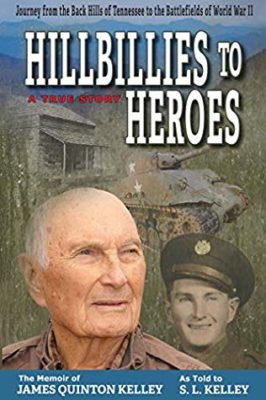
World War II veteran Quinton Kelley recounted his life story to an avid biographer – his daughter, S. L. Kelley, a documentarian and award-winning video producer.
Kelley’s tale begins in Coker Creek, Tennessee, where he was raised on an 80-acre farm, in a log cabin that he described as rough, but “brightened” with flowers. Taught to be honest and hardworking by his parents, he grew up with kerosene lamps for light, a fireplace for warmth and a wood stove for cooking. His recollections are colorful, with language that recalls his roots.
As a boy, he wore shoes only to church or to town and attended a church that doubled as a one-room schoolhouse. Everyone in the region knew someone who made moonshine, “a scruffy bunch,” Kelley called them; the local country store had bullet holes in the walls from fights between that bunch and the storekeeper. In his teens, he began work away from the farm, first for a local gold prospector, then for the TVA. Then in 1940 he heard about World War II and knew he’d be drafted.
The second part of the book shows Kelley leaving Coker Creek for Camp Beale, California, where he became the company carpenter. Assigned to an armored division, the former farm boy showed his worth as the only member of his group who did not need the training to drive a tank. He met fellow recruits from all over America, and despite the manly joshing and rough language among them, the boys in his platoon once generously gave him money to get home when his sister was dangerously ill.
He drove into combat, first in France, then in Germany, as part of an initiative that ultimately saw the end of Hitler’s Third Reich. Kelley (who passed away before the publication of his memoir) did not glorify himself in recounting his war exploits, but vividly described what it’s like to sit in a tank, looking at the action through a tiny window, always in danger of being killed while trapped inside the metal box. There’s not much room, he opined, for mistakes in battle.
In his Tennessee argot, he states that combat “made me a bit jubrous.” Still a homeboy at heart, courting a girl by mail, Kelley noted that French and German people were good farmers, though still using horses, and very orderly in their houses and fields. Camped near Berchtesgaden after victory, he refused to go see Hitler’s former hangout: “I didn’t want to waste a minute on that sorry ol’ scudder.” Once back in the US, marriage to his sweetheart soon followed.
Two books in one, this substantial memoir can be read equally avidly by nostalgic southern and mountain folk as a wide-ranging recreation of simpler times, or by anyone who is drawn to tales of war – both the battles and the long days and hours waiting and watching for the next conflict – as seen up close and personal. Using her writer’s instinct and flair, S.L. Kelley has done a remarkable job of combining her father’s spoken words, his accent, and slant, with those of fellow combatants, and others. Her book would make a splendid gift for old-timers, and a wholesome educational read for younger generations who would do well to remember and revere the sacrifices of America’s soldiers, and a heartfelt recollection that those who make history can be kindhearted and good!
Kiffer’s favorite quote from this book: “…it took all of our personal sacrifices to go from war to peace.” Quinton Kelley






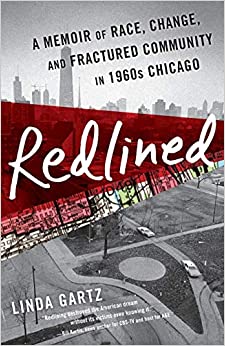
 Author Linda Gartz tells of her childhood and early adulthood amidst social upheaval in the city of Chicago in her memoir, Redlined: A Memoir of Race, Change, and Fractured Community in 1960s Chicago.