Tag: Historical romance

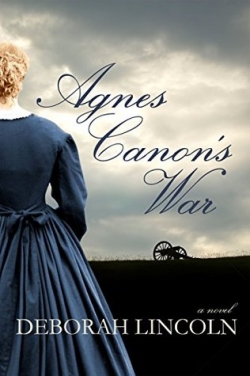
  • AGNES CANON’S WAR by Deborah Lincoln — a Civil War Novel

    AGNES CANON’S WAR by Deborah Lincoln — a Civil War Novel

    Agnes Canon is too intelligent, and too stubborn, to let others make decisions for her. No matter what the consequences, her choices will be her own.

    In this complex historical drama, schoolmarm Agnes Canon, refusing her father’s choice for a husband, leaves the safety of her Pennsylvania childhood home for the wilds of Missouri in the decade before the outbreak of the Civil War.

    On the way she meets, and eventually weds, Jabez Robinson, a medical man who has seen the wonders of the world and war at its foulest. Living in a territory with loyalties on both sides as the national conflict heats up, Jabez and Agnes, equally matched in intellect and stubbornness, abhor the Southern institution of slavery, but also despise the greed and interference of the North. Their struggles are real, and the chaos endured will pit their marriage against a dramatically changing civilization.

    ​Agnes is the pivotal character in this multi-layered story. She endures the pangs of childbirth and the deprivations of family life in a war zone. She watches as friends and neighbors go different ways in the war, and good men fight each other on the home front. She supports Jabez even as his publicly stated political ideals open them to harassment from violent, unprincipled militants.

    Deborah Lincoln, who has based this novel on the life history of her great grandparents, writes with emotional intensity about dark times in an embattled landscape.

    Unlike many Civil War sagas, this one takes no obvious sides. The focus is on Agnes—a vital, strong woman with feminist ideals, and Jabez, the only man smart and determined enough to gain her love. The romance is not overdrawn, though, and there is a complex skein of subplots providing scenes of rousing action and rich historical context.

    Agnes Canon’s War reminds us that war produces equal measures of bravery and barbarism, and those in its midst who hang on to their principles are rare and admirable. An excellent read that explores  love and societal schisms grown in the roots of cultural and political battles between the North and the South.


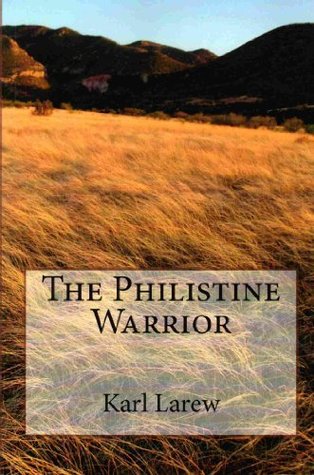
  • THE PHILISTINE WARRIOR by Karl Larew, Ph.D. – War, love, politics, and the emergence of chariots

    THE PHILISTINE WARRIOR by Karl Larew, Ph.D. – War, love, politics, and the emergence of chariots

    There is definitely something for everyone in Larew’s The Philistine Warrior—war, love, politics, and history in the Middle East just before the rule of King David (c. 1,000 – 960 BCE).

    Many readers have enjoyed Karl Larew’s Paul’s Three Wars, the trilogy of U.S. Army Signal Corps officer Paul Van Vliet, and his family, from WWII through the Vietnam War. Larew is quite adept at giving his readers a portal into the very different lives of active military officers and their families (as in contrast with civilian life).

    In The Philistine Warrior, Larew  carries his exemplary skill in this subgenre of historical fiction to the portrayal of the military exploits and family life of an army officer further back in history—way back—to 1115-1110 B.C. While the chariots, arrows, and javelins of that era have been supplanted by tanks, rifles, and bombs, the camaraderie and rivalry among officers and the disruption of their families have remained much the same, changing only in form over the millennia.

    Captain Phicol, trying to escape the humid heat of Askelon, along the Mediterranean coast of Philistia (part of the territory of Canaan, later called Palestine), goes for an early morning swim in the sea. He spies a beautiful young maiden engaged in the same pursuit and watches from a distance as she emerges from the sea totally naked.  As she proceeds to enter the palace of his Uncle Zaggi, Phicol realizes that she is his young cousin Delai.

    Later called to Zaggi’s palace himself, Phicol encounters another officer just leaving. Meeting with his uncle, he learns first that the officer is Major Warati, a new protégé (hmm), and then that Zaggi has received a letter from Melek (King) Nasuy saying that Delai is desired as a bride for his younger brother, Ekosh, who is now a general in the service and the court of Egyptian Pharaoh Ramses IX. Phicol is to escort her to Thebes.  Over the lengthy trip, his feelings for Delai come to surpass those of a cousin, but of course he keeps them to himself, just as 16-year-old Delai does hers regarding marriage to the 45-year-old general.

    Phicol’s rivalry with (newly promoted) Colonel Warati escalates. Larew skillfully draws on his military knowledge to describe the military tactics (as he sees them) of the Philistine ground forces and charioteers, especially those led by Phicol. Returned to Askelon, Phicol is rebuked for engaging in a row with Warati by his uncles Maoch and Zaggi—the Sheren (Lord) and Chancellor, respectively, of Askelon, one of the sovereign cities that comprise Philistia.

    Meanwhile, back in Egypt, Delai has given birth to a healthy son, Akashou. She is convinced that the infant was protected in utero and at birth by the Goddess Inanna of a secret cult, in whom she was led to believe by the temple priest, Ibbi. The role of religion in this time and place, pervaded by politics, makes for a fascinating story in itself.

    When Ekosh’s elder brother, Melek Nasuy, dies, Ekosh is elected (in absentia) Melek of Philistia. Phicol travels to Egypt a second time, carrying this news to the royal couple. Ekosh worries about leaving the Pharaoh—weak as all the Ramses descendants have been since the great Ramses II and Ramses III.  A group of conniving priests will likely seize power, leaving the Pharaoh as a figurehead on the throne.

    When the Danites put the plains city of Ekron under siege, Ekosh, with his aide-de-camp, Phicol, lead the Philistine armies to the rescue. In the aftermath of a minor skirmish, the giant Danite leader Samson escapes in the confusion. An intriguing version of the biblical story of Samson and Delilah ensues that lays the foundation for more political intrigue, betrayal and subterfuge, and plot twists, which leads to more battle strategies and political and personal intrigue. Larew is excellent at giving his readers more insight into how religious dogma affects culture and government along with an interesting history lesson about the rise of nations in the Middle East and Northern Africa– long before the Roman or Greek Empires existed.

    After considerably more horror and sorrow, not to mention political twists and turns, including exile in Assyria, the matured Philistine warrior, his beautiful, loving, and supportive wife, their baby son Achish, and Ibbi—still with them as friend, priest, medical adviser, and not so accurate seer—find themselves welcomed back to a relatively peaceful Philistia.

    The author has come through again with the attention to detail he is known for, though perhaps more of it than some readers like, but fans of historical fiction will relish. His characters are drawn with precision, whether they are good, bad, or downright evil. My personal favorite is Ibbi. Two not mentioned in this review are Rachel, Delai’s slave, then servant, as well as friend and companion. Another is Amphimachus, the venerable yet unassuming High Priest of Dagon, always there when Phicol needs him most.

    Karl Larew, Ph.D. is a retired history professor, so readers should approach this novel (412 pages) as a comprehensive account of the times with introduction of new war technologies such a chariots and organized battle tactics, the long history of the numerous nations/tribes that been warring for centuries, and the events of the time. Larew’s telling from the eyes of a heroic young Philistine nobleman living in ancient Palestine gives readers a new perspective of this time and place in history. However, true to Larew’s style (He can write as deftly about passion and love as he does about battle tactics and military politics.), passion and romance is juxtaposed against the battle tactics and court intrigue, proving that the more things change, the more they stay the same.

  • The CHAUCER Awards for Historical Fiction 2015 Official Finalists Listing

    The CHAUCER Awards for Historical Fiction 2015 Official Finalists Listing

    Pre 1750 Historical Fiction AwardThe CHAUCER Writing Competition recognizes emerging new talent and outstanding works in the genre of  Historical Fiction. The Chaucer Awards is a division of Chanticleer International Novel Writing Competitions.
    More than $30,000.00 dollars worth of cash and prizes will be awarded to Chanticleer Book Reviews 2015 writing competition winners at the Chanticleer Authors Conference April 30, 2016!

    We received an unprecedented amount of entries for the 2015 Chaucer Awards. Due to demand, we will divide the Chaucer Awards into two separate contests for 2016: The CHAUCER Awards for historical fiction prior to 1750 and the GOETHE Awards for Historical Fiction after 1750 until the 1970s.

    This is the Official Finalists List of the Authors and Titles of Works that have made it to the Short-list of the Chaucer 2015 Novel Writing Contest.

    The Chaucer Awards FIRST IN CATEGORY sub-genres  are:  Pre-Historical Fiction, Ancient Historical Fiction, World/International History (non-western culture historical fiction), Dark Ages, Medieval, Renaissance, Elizabethan/Tudor 1600’s, Historical Young Adult.

    The following titles will compete for the FIRST IN CATEGORY Positions and Awards Packages

    • Marc Graham for Song of Songs: A Novel of the Queen of Sheba
    • Daniel K Gilbert for The Eternal Dream
    • Martha Conway for Thieving Forest
    • O.W. Shumaker for  Anna’s Bear -5 Days of Moral Conflict and Fierce Pursuit – In Nazi Germany, 1939 
    • Nicki Chen for Tiger Tail Soup, A Novel of China at War
    • Jim Fuxa for Zizka, The One-eyed
    • Russell Hill & Jeffrey Smith for Mesabi Pioneers
    • Robert Wright for Valhalla Revealed 
    • David E. Huntley – Death Watch Beetle
    • Paul B McNulty for  Spellbound by Sibella
    • Steve Doherty for Operation King Cobra
    • S. Thomas Bailey for Blood Lines-The Gauntlet Runner Book 4
    • Larry K. & Lorna Collins for The Memory Keeper
    • Michael Scheffel for St. Louis Affair: The Adventures of Herbert Falken
    • Andy Kutler for The Other Side of Life
    • Richard Carl Roth for Endangered Eagle
    • T. M. Carter for The Lion of the Cross: Tales of a Templar Knight
    • CG Fewston for A Time to Love in Tehran
    • Joyce DiPastena for The Lady and the Minstrel
    • Catherine A Wilson and Catherine T Wilson for The Order of the Lily
    • Troy B. Kechely for Stranger’s Dance
    • Glen Craney for The Yanks Are Starving: A Novel of the Bonus Army
    • Glen Craney for The Spider and the Stone: A Novel of Scotland’s Black Douglas
    • Leif Gregersen for  Those Who Dare To Dream
    • Kelly-Lynne Reimer for  Broken Glass
    • Amanda Frost for Provenance
    • Deborah Fleming for Without Leave
    • Marina Osipova for The Cruel Romance
    • Brigitte Goldstein for Death of a Diva-From Berlin to Broadway
    • Leon J. Radomile for  The Spear of Lepanto
    • Patrick Gabridge for Steering to Freedom
    • Jocelyn Cullity for The Red Year
    • James Conroyd Martin for  The Warsaw Conspiracy
    • Nancy Foshee for  O’er the Ramparts
    • Susan Örnbratt  for The Particular Appeal of Gillian Pugsley
    • E.A. Haltom for  Gwendolyn’s Sword
    • K.S. Jones for Shadow Of The Hawk
    • Anjali Mitter Duva for Faint Promise of Rain
    • Joan Fallon for The Shining City
    • Joan Fallon for The Only Blue Door
    • Meredith Pechta for The Prejudice that Divides Us
    • Eleanor Tatum for Gray Lace
    • John Hallman for Punic Wars
    • Edmond G. Addeo for A Tale of the Yosemite
    • Bruce Macbain for Odin’s Child
    • Gregory Warwick Hansen  for Pelsaert’s Nightmare
    • Jerrie Brock for Pawn to King’s Right
    • Nicole Evelina  for Madame Presidentess
    • JD Slade for  Last Children of the Valley
    • Jess Curry for  Nixon And Dovey
    • Jayme Mansfield for Chasing the Butterfly
    • Ethel Morgan Smith for Out of Bone
    • Mary Kay Thill for The Uncrowned King: A Story of Lorenzo Medici 
    • E.A. Haltom for Gwendolyn’s Sword
    • Sara Dahmen  for Doctor Kinney’s Housekeeper
    • Joan Fallon for The Shining City
    • Anna Castle for Death by Disputation
    • James B. McPike for The Lost Prophet
    • Paula Butterfield for La Luministe
    • Diana Wilder for  The City of Refuge
    • Glen Alan Burke for Jesse
    • Rose Seiler Scott for Threaten to Undo Us
    • McKendree Long for Higher Ground
    • Helena P. Schrader for  Defender of Jerusalem & Knight of Jerusalem
    • Christian Kachel for Spoils of Olympus: By the Sword

    This is the complete listing of the 2015 Chaucer Finalists. 

    The Chaucer Finalists will compete for the Chaucer Awards First In Category Positions, which consists of Four Judging Rounds.  First Place Category Award winners will automatically be entered into the Chaucer GRAND PRIZE AWARD competition, which has a cash prize of $250 or $500 dollars in editorial services. The CBR Grand Prize Genre Winners will compete for the CBR Overall Grand Prize for Best Book and its $1,000 purse.   

    • All First In Category Award Winners will receive high visibility along with special badges to wear during the Chanticleer Authors Conference and Awards Gala.
    • First In Category winners will compete for the Chaucer Awards Grand Prize Award for the $250 purse and the Chaucer Grand Prize Ribbon and badges.
    • TEN genre Grand Prize winning titles will compete for the $1,000 purse for CBR Best Book and Overall Grand Prize.
    • A coveted Chanticleer Book Review valued at $345 dollars U.S. CBR reviews will be published in the Chanticleer Reviews magazine in chronological order as to posting.
    • A CBR Blue Ribbon to use in promotion at book signings and book festivals
    • Digital award stickers for on-line promotion
    • Adhesive book stickers
    • Shelf-talkers and other promotional items
    • Promotion in print and on-line media
    • Review of book distributed to on-line sites and printed media publications
    • Review, cover art, and author synopsis listed in CBR’s newsletter
    • Default First in Category winners will not be declared. Contests are based on merit and writing craft in all of the Chanticleer Writing Competitions.

    As always, please do not hesitate to contact us with any questions, concerns, or suggestions at Info@ChantiReviews.com. 

    Congratulations to the Finalists in this fiercely competitive contest! 

    Good Luck to all of the Chaucer Finalists as they compete for the coveted First Place Category  positions.

    First In Category announcements will be made in our social media postings as the results come in.

    The Chaucer Grand Prize Winner will be announced at the April 30th, 2016 Chanticleer Writing Contests Annual Awards Gala, which takes place on the last evening of the Chanticleer Authors Conference that will be held in Bellingham, Wash. 

    We are now accepting submissions into the 2016 Chaucer Awards and the Goethe Awards writing competitions for Historical Fiction. Please click here for more information or to enter the contests.


  • MURDER AT THE LEOPARD by R.M. Vassari and Lucia Olivia Lampe, a historical mystery novel

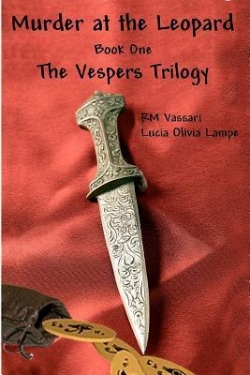
    MURDER AT THE LEOPARD by R.M. Vassari and Lucia Olivia Lampe, a historical mystery novel

    Many times, collaborative efforts by authors—especially with regard to their debut novel—suffer from fledgling attempts to master both the craft and the melding of two writing styles. Not so for this stunningly well-written, debut historical mystery.

    Murder at The Leopard, the first book in the Vespers Series set in Palermo, Italy during the thirteenth century, brings to life a fascinating time in European history. Vassari and Lampe have captured the essence of this era, providing a wonderfully complex tale of greed, past betrayals, revenge, and murder.

    With a deft hand and a talent for storytelling, the authors introduce you to a rich cast of characters, from local tavern owners to spies under the employ of a despot ruler. A simple farmer and his very pregnant wife travel to Palermo, hoping that God will grant their wish for a boy.

    A long-lost brother, an old crusader who has returned home after decades and harbors old secrets, accompanies them. A wealthy merchant sends his ne’er-do-well nephew to guide them on their journey whilst placing him under orders to spy on King Charles’ preparations for war. Local tavern and inn owners hope for good commerce during the upcoming Holy Week celebrations. Against this backdrop, an engaging and entertaining murder mystery unfolds.

    The main heroes of the Vespers Series are the tavern owners Ysabella de Rogerio and her charming husband Amodeus. In this first novel, they’ve timed the opening night of their new neighborhood tavern with Holy Week, to take advantage of the pilgrims who are flooding into Palermo. Unfortunately, the religious holiday also brings together old enemies, and the celebrations at The Leopard quickly turn serious when a wealthy merchant, Ludovico, is murdered. The sheriff arrives, and after a brief investigation, wrongfully arrests Amodeus for the crime.

    Soon after, a second murder occurs, further jeopardizing the reputation of The Leopard and the life savings Ysabella and Amodeus have poured into their tavern.

    It’s up to Ysabella to prove Amodeus is innocent, find the real killer, and save their business. As she begins to dig deeper into the lives of those involved, she uncovers past betrayals, greed, a thirst for revenge that hasn’t faded in the forty years since the Crusades, and even the dirty deeds of spies working to topple the current king.

    Vassari and Lampe have employed accurate historical detail—along with likable and complex characters that quickly become old friends—to give readers an entertaining and engaging read from the very first page. Highly recommended for those who love historical fiction or a good rousing mystery!


  • DEFENDER of JERUSALEM by Helena P. Schrader, second book in historical series

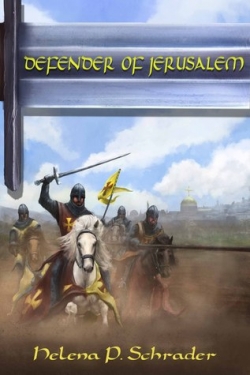
    DEFENDER of JERUSALEM by Helena P. Schrader, second book in historical series

    Defender of Jerusalem is the second novel in Helena P. Schrader’s historical series about Balian d’Ibelin, a twelfth century crusader who rose from his position as a landless second son to become one of the most powerful figures in the kingdom of Jerusalem.  In Schrader’s previous novel about Balian d’Ibelin, readers watched his young adulthood and rise to power at the side of the young leper king, Baldwin.

    Now the Baron of Ibelin, a nobleman in his own right, Balian is married to Maria Comnena, the dowager Queen of Jerusalem and King Baldwin’s stepmother.  Balian proves to be a dichotic leader as he was a forged-in-battle warrior and a supremely capable diplomat.

    Thus, Schrader’s story becomes one about Balian’s family life, focusing more on an ensemble cast of characters than just on Balian himself. As the Christian kingdom of Jerusalem struggles to maintain order and fend off the advances of Salah-ah-Din’s forces, the characters are scattered throughout the kingdom.  This makes for a more fragmented plotline than in the previous installment, thereby reflecting the internal and external political conflicts of the time along with the clash of cultures.  There are several time jumps and switches in perspective throughout the work that may make it feel less cohesive, but they add to the authenticity of the era’s fractured communications.

    The story at the center of the novel is King Baldwin’s desire to find an appropriate heir before his inevitable demise due to leprosy.  With no clear path of succession, there is much court intrigue around this decision.  It often comes down to the women in his life to influence his decisions or make their own way, and it is here that Schrader’s work really shines.

    The author presents her female characters, notably Maria, her daughter Isabella, and Balian’s niece, Eschiva, as powerful, independent women unwilling to let the constraints of the time keep them from helping the kingdom. Maria even commands troops and keeps her people safe during a siege.  These vibrant women make what could be a strictly dry, historical narrative leap off the page.

    Schrader clearly knows her history, so devotees of medieval history will enjoy her occasional indulgence in the details of her research, focusing on troop movements or treaties rather than the characters.  Schrader effectively strikes a balance between the need for historical accuracy and readability in the dialogue.  Nevertheless, her writing deftly portrays the gamut of emotions of this turbulent time.

    Defender of Jerusalem is a well written biographical novel about a little known hero of the Crusades, Balian d’Ibelin, as he attempts to maintain power and order in the face of invading armies and the internal conflicts within Christendom.

    Schrader brings interesting and vivid historical characters to life by adding emotion and valor to her storytelling. Overall, readers who enjoy learning about the intricacies of the Crusades and prefer serious and well-researched historical fiction will relish Schrader’s novels.

  • The CHATELAINE 2014 AWARDS FIRST PLACE Category Winners for Women’s Fiction and Romance Novels

    The CHATELAINE 2014 AWARDS FIRST PLACE Category Winners for Women’s Fiction and Romance Novels

    Chanticleer Book Reviews is honored to announce the First Place Category Winners for the CHATELAINE AWARDS 2014 for Women’s Fiction and Romance Novels, a division of Chanticleer Blue Ribbon Writing Competitions.


    book award for Romance Novels The Chatelaine AwardsThe CHATELAINE  Awards recognize emerging new talent and outstanding works in the genre of Women’s Fiction and Romance Novels. The First Place Category Winners will be recognized at the Chanticleer Authors Conference and Awards Gala held in late September 2015.


    Chanticleer Reviews is proud to be a literary affiliate of the Historical Novel Society.


    Congratulations to the CHATELAINE FIRST PLACE Category 2014 Award Winners:

    • Historical: Catherine A. Wilson and Catherine T. Wilson  for The Order of the Lily  
    • Romance Regency: Kerryn Reid for Learning to Waltz 
    • International Intrigue/World Events: Kristine Cayne for Deadly Betrayal
    • Contemporary: Kim Sanders for The Ex Lottery
    • Mystery/Suspense/Thriller Romance: Donna Barker for Mother Teresa’s Advice for Jilted Lovers
    • Blended Genre:  Janet Shawgo for Find Me Again
    • Inspirational/Restorative: Peggy Patrick for Surrendered II: Pride 
    • Romance & Adventure: Martha Rather for Kismet or Kamasutra
    • Fantasy/Mythological: Danica Winters for Montana Mustangs
    • Jane Austen Inspired: Betty Codd for Eleanor Grace 
    • Debut Novel: Julie LeMense for Once Upon a Wager
    • YA: M.A. Clarke Scott for The Dissimulation of Doves 
    • Women’s Fiction: Kate Vale for Destiny’s Second Chance
    • Women’s Fiction/Humorous: Lisa Souza for  Beauty and the Bridesmaid 
    • First Loves: Jennifer Snow for The Trouble with Mistletoe

    CONGRATULATIONS!

    To view the 2014 Chatelaine Finalists whose works made it to the short list, please click here.

    Good Luck to the Chaucer First Place Category Winners as they compete for the CHATELAINE AWARDS 2014 GRAND PRIZE position!

    The 1st Place Category Winners compete for the CHATELAINE AWARDS 2014 GRAND PRIZE position. The 2014 CHATELAINE category winner was announced at the Chanticleer Authors Conference and Awards Gala in September 2015. See the Grand Prize Winners.

    The deadline for The Chatelaine Awards 2014 was August 31, 2014.
    The deadline for The Chatelaine  Awards 2015 is August 31, 2015.

    GRAND PRIZE Overall Chatelaine Awards Winner from 2013:

    KCHOICESate Vale for Choices

    To view the 2013 Chatelaine Award Winners, please click here.

    To enter the 2015 Chatelaine Awards, please click here. The deadline is August 31, 2015.


    To enter your work into a Chanticleer Writing Competition, please click here. 

    CBR’s rigorous writing competition standards are the reason literary agencies seek out our winning manuscripts and self-published novels. Our high standards are also another reason our reviews are trusted among booksellers and book distributors.Chanticleer Book Reviews & Media, L.L.C. retains the right to not declare “default winners.” Winning works are decided upon merit only. Please visit our Contest Details page for more information about our writing contest guidelines.

    Please do not hesitate to contact Info@ChantiReviews.com with any questions, concerns, or suggestions about CBR writing competitions. Your input and suggestions are important to us.

    Thank you for your interest in Chanticleer Book Reviews international writing competitions.

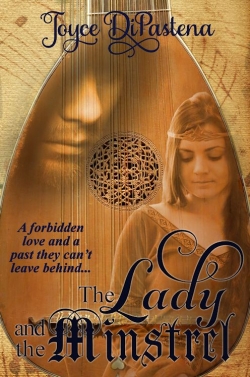
  • The LADY and the MINSTREL by Joyce DiPastena, a medieval romance

    The LADY and the MINSTREL by Joyce DiPastena, a medieval romance

    In this delightful medieval romance, a spirited lady and a vagabond minstrel with a penchant for trouble engage in a battle of wills with a powerful earl in King John’s court.

    Ranulf de Villon, baron of Ashbury Castle and a hard, cruel man, has engineered the betrothal of his daughter, Marguerite of Winbourne, to the ruthless, licentious Earl of Saxton, favored counselor to King John.

    The proposed marriage is one of political expediency for all concerned: Ranulf gains prestige by arranging an alliance with the most powerful earl of the land, and Saxton will use income from the estate that comes to him with Marguerite’s dowry to curry favor with King John.

    Though Marguerite loathes Saxton and has the right—as stated in her grandfather’s will—to refuse Saxton’s hand in marriage, Ranulf has made certain that no one can get news of Marguerite’s plight to the proper authorities before she is wed.

    Ranulf’s wife Leah, Marguerite’s mother, is too afraid of her husband’s violent tendencies to side with her daughter against him. Marguerite’s cousin Richard, who cares deeply for her, is horrified by the prospect of the match and willing to cross Ranulf, but Ranulf’s men are watching his every move. Trapped and powerless, Marguerite turns to the only man who may be able to help her, Robert Marcel, a traveling minstrel.

    DiPastena has once again crafted another epic tale of romance and intrigue in thirteenth century England during the reign of King John. France and England have been at war for years, and the king requires a stream of unlimited funds for his campaigns to take back the duchy of Normandy.

    Women such as Marguerite are viewed as property, as chattels used to produce heirs and to provide assets through their dowries. Members of the peerage survive and hold onto their ancestral lands only by paying court to an ambitious and merciless king.

    The Lady and the Minstrel is the story of two star-crossed lovers, Marguerite and Robert, and their struggle to survive in the face of the ruthless ambitions and political conspiracies that are the order of the day.

    DiPastena has crafted a rich story world that immerses the reader in the culture, the politics, and the language of thirteenth century England. Meticulously researched and deftly told, this historical novel will captivate readers of this genre.


  • The CHATELAINE 2014 AWARDS for Women’s Fiction and Romantic Fiction Finalists

    The CHATELAINE 2014 AWARDS for Women’s Fiction and Romantic Fiction Finalists

    The Chatelaine Awards recognizes emerging new talent and outstanding works in the genre of Women’s Fiction and Romantic Fiction Novels. The Chatelaine Awards is a division of the Chanticleer Awards International Writing Competitions.

    chatelaineWe are pleased to announce the Chatelaine Awards Official Finalists List for 2014 Entries, otherwise known as the “Short List.” The Official Finalists Listing is comprised of entries that have passed the first three rounds of judging from  the entire field of entrants. To pass the first three rounds of judging, more than sixty pages of the works below  have been read and have deemed worthy by the CBR judges of continuing in competition for the Chatelaine FIRST IN CATEGORY positions and their prize packages.

    Congratulations to the CHATELAINE AWARDS 2014 FINALISTS:

    • Isabella Hargreaves  for The Persuasion of  Miss Jane Brody
    • Kathy Bryson for Feeling Lucky 
    • Sarah Katz for Hidden Miracles
    • Catherine A. Wilson and Catherine T. Wilson for The Order of the Lily 
    • Danica Winters for  Montana Mustangs 
    • Jennifer Snow for The Trouble with Mistletoe 
    • Dr. Evan Mahoney for Nongae of Love and Courage 
    • Kaylin McFarren for Buried Threads
    • Deborah Hining for A Sinner in Paradise 
    • Kerryn Reid for Learning to Waltz
    • Peggy Patrick for Surrendered II
    • K.C. Simos  for Ambrosia Chronicles: The Discovery
    • Donna Barker for Mother Teresa’s Advice for Jilted Lovers
    • Diane Green  for Dragon Wife
    • Nadine Christine for Quintal’s Return; Home Again, Home Again; and Remembering Love
    • Ashlinn  Craven  for  Maybe Baby 
    • A. Clarke Scott for A Dissimulation of Doves 
    • Noelle Clark  for Rosamanti 
    • Jamie A. Waters  for The Two Towers
    • Martha Rather for Kismet or Kamasutra  
    • Nancy Marie Bell for Christmas Storm
    • Janet K. Shawgo  for Find Me Again 
    • Betty Codd for Eleanor Grace  
    • Julie LeMense for Once Upon a Wager
    • Kristine Cayne  for Deadly Betrayal 
    • K.C. Berg for  Fallen Angel
    • E.E. Burke for Her Bodyguard
    • Debra Pickett for Reporting Lives
    • Gita Simic and G.T. Symms for As for Costanza
    • Eleanor Tatum for Swamp Home 
    • Cauleen Noël for The Changes Within Us
    • Lisa Souza for Beauty and the Bridesmaid
    • Patricia Sands  for The Promise of Provence 
    • Callie James for Innocent
    • Kim Sanders for The Ex Lottery
    • Jianna Higgins for Just Going and Just Wondering  
    • Sharon Struth for Share the Moon    
    • Kate Vale for Destiny’s Second Chance     
    • Colette Saucier for Viuda

    Good luck to all the Chatelaine Awards Finalists who made the Short List as they compete for the First In Category Positions!

    More than $30,000 dollars in cash and prizes will be awarded to Chanticleer International Blue Ribbon Awards Winners annually.

    cac3The Chatelaine First in Category award winners will compete for the Chatelaine Grand Prize Award for Women’s/Romance Book 2014. Grand Prize winners, blue ribbons, and prizes will be announced and awarded on September 29th at the Chanticleer Authors Conference and Awards Gala, Bellingham, Wash.

    The First In Category award winners will receive an award package including a complimentary book review, digital award badges, shelf talkers, book stickers, and more.

    We are now accepting entries into the 2015 Chatelaine Awards. The deadline is August 31, 2015. Click here for more information or to enter.

    More than $30,000 worth of cash and prizes will be awarded to the 2015 Chanticleer Novel Writing Competition winners! Ten genres to enter your novels and compete on an international level.

    Who will take home the $1,000 purse this September at the Chanticleer Awards Gala and Banquet?

    Last year’s Chanticleer Grand Prize winner was Michael Hurley for The Prodigal.

    Last year’s Chatelaine winner was Kate Vale for Choices

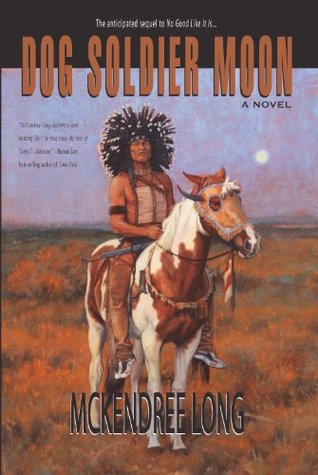
  • DOG SOLDIER MOON by McKendree Long – Historical Post-Civil War Western

    DOG SOLDIER MOON by McKendree Long – Historical Post-Civil War Western

    In this second novel of McKendree Long’s Western trilogy, the adventures of Thomas “Dobey” Walls and Jimmy “Boss” Melton continue, taking in the turbulent post-Civil War years on the Western frontier. An unforgettable read!

    The year is 1866, and the Gray Army has long since surrendered to the Yankees. Dobey and Boss’s friend, Jimmy Ridges, having recently ridden with General Stand Watie’s Confederate Cherokees, travels to Canadian Fort in north Texas, hoping to meet up with his sweetheart Amanda Watson. Along the way, Jimmy spends the night in a Cheyenne hunters’ camp and receives a gift from Chief Black Kettle, a woman named Serenity Killer. Aptly named, the young Cherokee has the potential to cause Jimmy all manner of problems with his lovely bride-to-be.

    Thus McKendree Long begins his second novel, Dog Soldier Moon, reuniting readers with the memorable characters of No Good Like It Is. We ride along with Dobey and Boss and their families as they struggle to make a life for themselves in post-Civil War Texas. Back East, the war may be over, but out West, resentments still run high. Divided loyalties during the war have now hardened into feelings of anger, resentment, and betrayal. Memories of wartime atrocities and injustices are festering wounds in the mind of Boss Melton and others.

    As with No Good Like It Is, Long goes far beyond the simplistic notion of the Civil War as told in American history texts to accurately portray the daily challenges faced by homesteading families, freed slaves, American Indians robbed of their ancestral lands, and ex-soldiers who face the disrespect of the Union army. Heart-warming and at times hilarious adventures are juxtaposed with gritty and emotionally wrenching moments such as Custer’s 1868 attack on Chief Black Kettle’s Cheyenne camp at Washita.

    In Dog Soldier Moon and its prequel No Good Like It Is, author McKendree Long displays a natural gift for storytelling that will delight aficionados of the Western genre and have them anxious to read the next in the series.


  • The CHAUCER AWARDS for HISTORICAL FICTION First Place Category 2014 WINNERS

    The CHAUCER AWARDS for HISTORICAL FICTION First Place Category 2014 WINNERS

    Chanticleer Book Reviews is honored to announce the First Place Category Winners for the CHAUCER AWARDS 2014 for Historical Fiction, a division of Chanticleer Blue Ribbon Writing Competitions.

    The Chaucer Awards for Historical Novels

     The Chaucer Awards recognize emerging new talent and outstanding works in the genre of historical fiction. The First Place Category Winners will be recognized at the Chanticleer Authors Conference and Awards Gala held in late September 2015.

    Chanticleer Reviews is proud to be a literary affiliate of the Historical Novel Society.

    The CHAUCER FIRST PLACE 2014 Award Winners are:

    • Women’s Fiction: J. L. Oakley for Timber Rose
    • Legend:  Kevin Allen and Emma Rose Millar for Five Guns Blazing
    • Legacy: Michael D. McGranahan for Silver Kings and Sons of Bitches
    • Pre-History: Mary S. Black for Peyote Fire
    • Ancient History: Rebecca Locklann for The Thinara King
    • Roman/Grecian Classical: Elisabeth Storrs for The Golden Dice: A Tale of Ancient Rome
    • Middle Ages: Helena P. Schrader for St. Louis’ Knight
    • Late Middle Ages: Lilian Gafni for The Alhambra Decree: Flower from Castile 
    • Elizabethan/Tudor: Syril Levin Kline for Shakespeare’s Changeling: A Fault Against the Dead
    • 1600’s: Donna Scott for Shame the Devil (manuscript)
    • 1700s & 1800s: Karleene Morrow for Destinies
    • Turn of the 19th Century: Ruth Hull Chatlien for The Ambitious Madame Bonaparte
    • Twentieth Century:  David Brendan Hopes for The One with the Beautiful Necklaces (manuscript)
    • World Wars: Gregory Erich Phillips for The Love of Unfinished Years (manuscript)
    • Young Adult: Sharon Short for My One Square Inch of Alaska
    • U. S. History: J. P. Kenna for Beyond the Divide
    • World History: Michelle Rene for I Once Knew Vincent

    CONGRATULATIONS!

    Congratulations to all of the 2014 Chaucer Finalists! Congratulations to those whose works were selected for First Place Category positions. Good Luck to the Chaucer First Place Category Winners as they compete for the CHAUCER AWARDS 2014 GRAND PRIZE position!

    The 1st Place Category Winners compete for the CHAUCER AWARDS 2014 GRAND PRIZE position. The 2014 CHAUCER category winner was announced at the Chanticleer Authors Conference and Awards Gala in September 2015. See the Grand Prize Winners.

    • The deadline for The Chaucer Awards 2014 was June 31, 2014.
    • The deadline for The Chaucer Awards 2015 is June 31, 2015.

    GRAND PRIZE Overall Chaucer Awards Winner from 2013:

    Sean Curley, Propositum   2013-Chaucer-125x1501.png


    To view the 2013 Chaucer Award Winners, please click here.

    To compete in the 2016 CHAUCER Awards or for more information, please click here.
    CBR’s rigorous writing competition standards are the reason literary agencies seek out our winning manuscripts and self-published novels. Our high standards are also another reason our reviews are trusted among booksellers and book distributors.Chanticleer Book Reviews & Media, L.L.C.  retains the right to not declare “default winners.” Winning works are decided upon merit only. Please visit our Contest Details page for more information about our writing contest guidelines.

    Please do not hesitate to contact Info@ChantiReviews.com with any questions, concerns, or suggestions about CBR writing competitions. Your input and suggestions are important to us.

    Thank you for your interest in Chanticleer Book Reviews international writing competitions.