Tag: Historical romance

  • MIST-CHI-MAS by J.L. Oakley – Historical Fiction, Pacific Northwest, Literary

    MIST-CHI-MAS by J.L. Oakley – Historical Fiction, Pacific Northwest, Literary

    A masterful work of historical fiction that charts a deeply compelling romance set in the Pacific Northwest during the fascinating but under-reported second half of the nineteenth century. Award-winning author, Janet Oakley brings us another exceptional work from her heart, Mist-chi-mas: A Novel of Captivity.

    It is 1860 and Washington Territory is rich with a diversity of cultures. British and American military camps are posted on San Juan Island, both groups awaiting the decision of an international committee as to which country will be awarded the land. It will take more than a decade for the committee to determine what is to be the water boundary between Washington and British Columbia.

    Although a previous incident involving a shot pig almost instigated a war, at the start of the Mist-chi-mas, the two military encampments are respectful of the other’s turf and co-exist well.  There’s a bit of society in the area, ladies’ teas and picnics take place, and plenty of business dealings due to the ubiquitous presence of the Hudson Bay Company.

    In addition to the relative newcomers to the Pacific Northwest are the native peoples, a number of Indian tribes, the Haida, the Saanich, and the Songhees peoples, as well the “Kanakas,” the Hawaiians who have been here since the early nineteenth century. Attitudes toward the native peoples vary, with some being appreciative of their contributions to the shipping, trading and lime works industries, and others being condescending or outright violent towards them.

    The history of this area comes vividly to life through the romance of a widow, Jeannie Naughton, and Jonas Breed. Jeannie is the niece of the Scotsman, Archibald Campbell, a major representative of the Hudson Bay Company in the Pacific Northwest, and has arrived from England with her young son. Her reasons for beginning life anew in a foreign land are mysterious and mired in scandal.

    In contrast, everything is known about Jonas Breed, a man whose ethnic heritage and experiences reflect the geography and culture of the region. The orphan of an American trader in the South Pacific and a Welsh mother, he grew up speaking English and Hawaiian. As a youth, he was captured by the Haida and was made a “mist-chi-mas,” a slave.  After several years of servitude, he saves the life of his captor and his status changes.   He is grateful for all he has learned from the Haida, and when he asks for his freedom, it is granted. The Haida respect and trust him.

    Breed’s closest companions and friends are members of the tribal peoples, and he will prove his love and loyalty to them repeatedly. He’s as at home on land as he is on water, reads Ralph Waldo Emerson, and is certainly the most self-reliant character in the book. He may remind some of Natty Bumpo, James Fenimore Cooper’s hero in The Last of the Mohicans.

    The Americans and the British generally regard Breed with great admiration, although there are those who envy him and seek his downfall. In turn, someone threatens Jeannie with his knowledge of her hidden past. Despite this, Jeannie and Jonas find love but also tremendous danger at every turn. Jeannie comes to understand the truth of Breed’s words, “We are all mistchimas.” Some are enslaved by external forces, some by inner forces. Their relationship will prove to be as complicated and compelling as the historical events of the novel.

    J.L. Oakley deserves tremendous recognition for the clearly exhaustive and meticulous research she did in writing Mist-chi-mas. With writing so clear and vivid, Oakley brings time and place to life leaving readers captivated by her craft. She invokes the mountains and the waters with such descriptive beauty and fully creates her characters against this panoramic landscape that challenges and shapes them.

     Can love blossom between the most unlikely pair in a multi-cultural, tension-ripe environment? Author J.L. Oakley breathes life into an often forgotten part of Pacific Northwest history in her beautifully penned novel, Mist-chi-mas: A Novel of Captivity–destined to be a regional classic.

    5 Star Best Book Chanticleer Reviews round silver sticker


  • The TOWERS of TUSCANY by Carol Cram – Literary, Historical Fiction, Pre-Italian Renaissance

    The TOWERS of TUSCANY by Carol Cram – Literary, Historical Fiction, Pre-Italian Renaissance

    Powerful written and richly depicted, historical fiction novel, The Towers of Tuscany by Carol Cram brings to life 14th century Sophia, a talented artist who must find a way to continue her art in secret or have her life put in danger.

    “The bells for nones caught her by surprise…,” drawing Sofia’s mind away from the panel of the Nativity she is painting. She rises, steps over to the narrow tower window, and gazes out across the towers of San Gimignano, in central Tuscany. It is mid-afternoon of a day in March 1338.

    In little more than a page, Carol Cram’s expertly crafted prose transports us across time and space to Sofia’s world. But what we find is not exactly what we might have expected—at least, not I. Sofia is assailed by the pounding of hammers and clanging of iron tools deriving from the endless construction in this rapidly growing town. The air is filled with dust, causing her to squint. Her tower view is so filled with other towers that she has but a tiny, oblique view of the countryside beyond the city walls. She longs to escape the cacophony.

    Hearing her husband below, Sofia does not smile. He was once her Romeo, but not after their marriage. Now she longs to escape Giorgio’s brutish sexual assault on her body night after night, as well as his rigid control over her daily life. At this moment, his angry voice assaults her sensibility: “Wife! What the devil are you doing up there?” She gasps, fearful that Giorgio will learn she is painting and destroy her work! (In the fourteenth century, well-married women were forbidden to engage in “manual” activities.) She hurriedly wipes her hands and scrambles down the tower ladder.

    Thus begins the saga of Sofia, daughter of a master painter who, behind closed doors, taught her from early childhood how to draw and paint. Still in secret, she now works as his apprentice. While Maestro Antonio Barducci is often overtly critical of her work, he is aware that her skill might one day surpass his own, though how she could continue to employ it after he is gone is a quandary contemplated by both. That time arrives sooner than either expected when local political violence leads to Barducci’s death.

    Her father’s dying words reveal a way forward for Sofia, though it turns out to be not an easy one. Leaving Giorgio through subterfuge, she escapes to Siena disguised as a boy (named Sandro, from Alessandro), and her artistry continues in the painting workshop of her father’s friend, Maestro Manzini. Sofia/Sandro lives with few amenities and no small danger of discovery, which could end her life. But, she is painting again, and nothing else matters—at least not for the time being.

    Cram cleverly takes advantage of the workshop setting to share with us some of the techniques and practices of pre-Renaissance painting, which was usually done on wooden panels (carefully smoothed and prepared with gesso), rather than canvas. Paints were made with pigments from natural substances—usually plants—mixed with urine and other materials, some of them poisonous. Painting in 14th century Italy could be dangerous work! Certain techniques are described by Maestro Barducci, whose fatherly voice Sofia often hears in her head, guiding her work as well as her life.

    The best and worst parts of this dramatic, spellbinding work of historical fiction, with its many intriguing characters, deserves of your private reading—every word of it. Readers will find delight in a delicious love story, horror in a representation of the deadly bubonic (black) plague that decimated a large part of the European population of that time, and, in the end, a hint of peace and hope for the future.

    Carol Cram, the author of The Towers of Tuscany and A Woman of Note, is lauded for her skillful and colorful writing, intricate weaving of a many-faceted plot, and minute attention to the details of daily life in a Europe approaching the Renaissance—all in a read you’ll not forget.

    One woman clandestinely practices her art, risking not only her reputation but her life, in pre-renaissance Italy. Carol Cram presents a masterpiece in prose with historical fiction novel, The Towers of Tuscany. A must read!

    5 Star Best Book Chanticleer Reviews round silver sticker

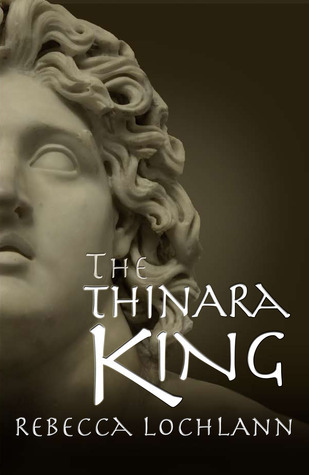
  • The Thinara King by Rebecca Lochlann – Historical Fiction/Fantasy/Mythology

    The Thinara King by Rebecca Lochlann – Historical Fiction/Fantasy/Mythology

    There’s only sorrow for Aridela, the heiress to the throne of Kapthor when she learns her heart is not hers to give freely and every decision she makes concerning her love life brings about dire consequences for her people in Rebecca Lochlann’s The Thinara King, Book 2 of The Child of the Erinyes series.

    When Aridela meets Chrysaleon, a Greek “barbarian” by the standards of her people, she falls in love. Chrysaleon, young, bold and brash, is as smitten with Aridela as she is with him, but he has been promised in marriage to her sister Iphiboë, who is bland and boring by comparison.

    The marriage is all important, though, as it will consolidate his father’s power, linking his lineage with that of the Aridela’s culture, a culture that reveres the power and station of women. Kapthor is ruled by Aridela’s mother Queen Helice and guided by the powerful female oracle Themiste.

    Aridela and Chrysaleon cannot help but consummate their forbidden love, yet as they do, a volcano erupts, devastating the island and killing many of Aridela’s relatives and friends. The volcano, seen as goddess Athene’s handiwork, is blamed on Chrysaleon, who has been identified by Themiste as the “lion” or the Thinara King, foretold in an ancient prophecy linking him to Aridela and a mysterious, unidentified bull figure. The prophecy states that this triad has the power to restore or destroy the world.

    Rebecca Lochlann skillfully immerses the reader in a semi-fictional world of ancient rites and conflicts where characters live, die, and are reborn throughout her series The Child of the Erinyes.

    The product of many years of study and fascination with the era and the mythology, The Thinara King establishes Lochlann’s connection with the novel’s setting and genre by smoothly combining many convincing elements: the handsome hero determined to win the strong-minded fair lady, the dark anti-hero plotting on the sidelines, the wise demi-goddess who keeps her own counsel and manipulates outcomes behind the scenes, the grisly battles fought at close range, and the spectacular festivals marking the passing of the years.

    Lochlann’s over-arching narrative, switching from character to character, is deftly composed, making for many surprises without deviating from the backdrop with its elaborate history-rich trappings.

    A tale of ancient kingdoms, of love promised and lost, heralded victory and hopeless defeat is the second novel in her much-acclaimed series, The Child of the Erinyes – another masterfully written historical fiction novel of Ancient Greece from Rebecca Lochlann.

  • ONCE UPON A SCANDAL by Julie LeMense – Regency Romance/Historical Romance

    ONCE UPON A SCANDAL by Julie LeMense – Regency Romance/Historical Romance

    Since there’s no such thing as a perfect person, we can’t say that Julie LeMense has written a perfect Regency romance.

    Darn close, though.

    Once Upon a Scandal nails it on so many levels: plot and characters driven by the era they live in; smooth, clean writing; a fully realized heroine who’s smart, vulnerable, resourceful, flawed, compassionate, and funny; an aristocrat hero who’s believable as a man; and a fresh, twisty plot that demands pages be turned to find out what happens next.

    Because the story is a romance, we can expect a happy ending. How Jane and Benjamin are ever going to find it, however, remains a mystery until the end. Both are trapped in their roles in society and hide dangerous secrets behind their identities. Jane actually has to give up her identity and become a false person in order to escape poverty and shame. Her sacrifice, it turns out, helps save her country from a traitor—who just might be her own father.

    Operating in disguise creates a satisfying turnabout, wherein the honest woman rejected by society allures the snobs, doyennes, and chauvinists into eating out of her dishonest hand. Jane observes: “Their strict rules and codes of conduct had been instituted for one reason and one alone: to prove themselves superior. They didn’t judge a person’s suitability by intellect, achievement, or even kindness.”

    That thought forms the theme of the novel and the deceptions practiced throughout it.

    Jane’s identity switcheroo is engineered by Benjamin for his own noble yet selfish purposes, though he soon realizes he’s bitten off more than he can chew and falls crazy in love with the real Jane—jeopardizing both of their masquerades.

    The moral and behavioral strictures of society during England’s Regency period seem unbelievable to those of us reading about it generations later. But they were painfully real at the time and forced many a clandestine affair. This suppression gives plausibility to the characters’ secrets and skulduggery; and the era’s lack of technology as we know it allows them to get away with stunts that would be immediately caught, and widely broadcast, today. Thus, when modern anachronisms appear in the narrative, they draw attention to themselves. The word “feminist,” for example, used in conversation by Jane in 1813, was not actually coined until decades later. Bloopers like this in such a period-sensitive novel raise doubts about the rest in the reader’s mind.

    Fortunately, the story holds its own with romantic intrigue and close brushes with disaster. The result is a conflict parfait, with Jane and Benjamin’s impossible love at the top, overlying the contradictions and inequities of their society, which forms a harsh class division between the haves and have-nots, in a country deep at war. In this multi-layer mess, how can anyone dream that true love will conquer all?

    Jane and Benjamin give it their best shot in this classy, cork-screwy romance that turns scandal on its head.


  • A River Divides by Michael J. Roueche – Historical Fiction/Civil War

    A River Divides by Michael J. Roueche – Historical Fiction/Civil War

    Like the first book in Beyond the Woods Series, the second, A River Divides, offers a complex view into life during the Civil War era. This multifaceted book has the same engaging characters found in the first and includes a few new ones, that when combined, will keep readers riveted to the pages.

    The story resumes in winter of 1864, where Betsy Henderson remains outside Staunton, Virginia with a freshly bruised face, worrying whether she’s revealed too much. Will the sheriff find out about her affair with Union soldier Hank? Does the sheriff have enough evidence to capture Walthorpe, the man who gave her the bruise and nearly made away with her fortune? Walthorpe, meanwhile, has another plan up his sleeve, one that will force Betsy to grapple with her southern loyalties, including the secret she’s keeping from Hank—one she won’t be able to hide for long.

    Author Michael J. Roueche does a great job introducing esoteric terms while giving them proper context, thereby helping present-day readers immerse themselves in the historical tapestry he’s created. All the characters in this story demonstrate authentic shades of good and bad, making their choices (and their consequences) even more intriguing. Especially William, the former slave from Betsy’s plantation, whose bond with a new family makes his objective of joining the Union Army a lot more complicated.

    Reading the first in the series isn’t required here but doing so will certainly enhance the experience. Roueche’s ability to sprinkle in enough detail to keep the interest of readers of Beyond the Wood while enticing those who are yet to pick through its pages makes this bittersweet story more than palatable. The sheriff’s point-of-view not only enlightens new readers to the necessary backstory found in the first book but also offers some surprises along the way. Readers will also get a glimpse into Walthorpe’s past and gain insight into his character that will suggest his villainy isn’t as cut-and-dried as it originally appears.

    Roueche writes each character’s voice so distinctly that the reader may not notice the point-of-view shifts within the scenes, a small, but present, distraction. On the whole, Roueche’s beautifully written imagery and ability to immerse readers in place and time will delight and hook readers from the very beginning to the very end.

    By the close of A River Divides, it’s clear that a river divides no more. And the cliffhanger in the final chapter will whet readers’ appetites for the next book in the series.

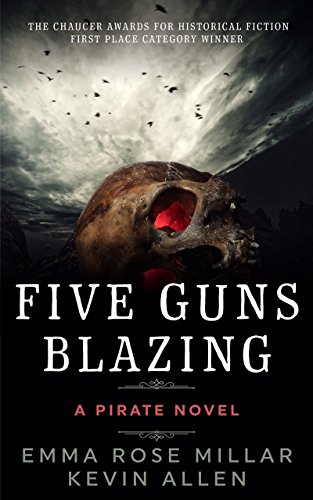
  • Five Guns Blazing: A Pirate Novel by Emma Rose Millar and Kevin Allen – Historical Romance

    Five Guns Blazing: A Pirate Novel by Emma Rose Millar and Kevin Allen – Historical Romance

    Containing exquisite historical imagery and diction in addition to brutal sensory detail of what life was like in 1700’s London and the Caribbean, particularly regarding the slave trade are portrayed in Emma Rose Millar’s and Kevin Allen’s Five Guns Blazing. The word choices, spelling, and dialogue are not only authentic to the time period, they contain a palpable amount of emotional heft.

    Laetitia Beedham, the daughter of a criminal, ends up on the ‘Revenge,’ piloted by known pirate John ‘Calico Jack’ Rackham. When Rackham and his two lady friends, Anne Bonny and Mary Read, are captured by pirate hunter Jonathan Barnet, Beedham must save her friends while a price hangs over her own head.

    Laetitia Beedham’s story begins at age 11 as she watches her chronically reprehensible mother sentenced to a workhouse. Since no provisions are made for the motherless at the time, Laetitia joins her mother in the workhouse disguised as a boy and referred to as “Nathaniel.” Her time in there is short and tragic, but she makes a few friends who introduce her to a life with a slightly better potential for a girl in her circumstances.

    After her mother offends the law again, both mother and daughter are tossed onto the brutal steer of a ship on its way to the Caribbean to work off the transportation sentence. As a temporary slave, Laetitia learns a few hard lessons about what existence is like for those poor people chained to a life of permanent servitude and unforgiving masters.

    Halfway through the book, the pirate ship arrives and Beedham’s mother, true to her nature, sells Laetitia for five guineas to the infamous pirate, ‘Calico Jack’ Rackham, in exchange for her daughter’s maidenhead. Known on the ship only as “Beedham,” Laetitia is constantly unsure of her place, looking for anyone to give her the nurturing that she didn’t get from her birth mother – especially from Pierre Bouspeut, who (like Jack, Mary, and Anne,) is a true-to-life character. In pirates, Laetitia finds unexpected allies, people who care for her and help her along the way. Much to the delight of the reader, these characters aren’t carbon-copy stereotypes of pirates we’ve come to know and expect.

    There are many elements of story that work to tie the character, Laetitia, firmly in place. We get to know her and grow to love her as the thread of her tale is woven into historical characters’ narrative. In Laetitia, we see a bit of Cinderella as well as many of the Caribbean folk tales, which only lends flavor and familiarity to her plight. Sometimes she has trouble reflecting and learning not to trust those who betray her, yet the authors’ purposeful use of significant poetic symbolism adds much-needed justice to Laetitia’s tragic tale.

    Though this book is advertised as a pirate novel, the pirates don’t show up until almost halfway through. When they do, though, the story picks up a significant pace. Knowing that Calico Jack, Pierre Bouspeut, Anne Bonny, and Mary Reed were real people adds to the overall historical appeal.

    Five Guns Blazing is a dark, rich, historical 18th-century tale that weaves real pirates into a fictional story with many unexpected twists and turns. A must read for those interested in immersing themselves in 18th-century life, textures, and shadows.

  • JANE SINCLAIR by Tom Edwards – 1800s romantic adventure

    JANE SINCLAIR by Tom Edwards – 1800s romantic adventure

    A rich romantic adventure set in late 1800s England that is suitable for Young Adults and fans of Romantic fiction, “Jane Sinclair” touches on personal themes of success and failure interwoven with major social and economic issues of the era.

    The tale’s heroine, Jane, is the only child of a Hampshire farming couple that dote on her and offer her every opportunity for education. Clearly exceptional, the girl soaks up learning so that by the time she encounters the upper-class Charles Cholmondelay, destined for study at Oxford, she proves herself his intellectual equal while charming his heart.

    However, his father, the brutal Sir Richard, is determined his son will have nothing to do with a commoner; his threats to her family cause Jane to run away to London, where, desperate and penniless, she fortuitously winds up in the household of a kindly man named Bob. Bob will all but adopt Jane, and, impressed by her honesty and intelligence, will help to set her up in a small business and, ultimately, in the management of a garment factory. There Jane shows her considerable entrepreneurial and leadership skills, and, recalling her own humble origins, demonstrates that she is well ahead of her time in wishing for her factory workers to have basic rights and to be treated more humanely—a cause which is ahead of its time.

    Making a name for herself as the lone female in a high-level business position, Jane meets again with Charles, now graduated and ready to work as a lawyer. They plan to marry soon, but Charles decides he needs one last adventure before he settles down. He sets off to sea with friends, while Jane goes to France and to inspect and purchase a new exotic clothing line. She also develops a friendship with members of the Suffragette movement and shows herself an admirable public speaker on their behalf. When she hears that Charles and his friends have been shipwrecked, though, her idyllic world collapses and she nearly dies from despair. Charles meanwhile is the captive of ruthless pirates, and escape seems all but hopeless.

    The author of this intricately layered saga, Australian Tom Edwards, is himself an artist and adventurer; the scenes he depicts of Charles at sea doubtless come from his own experiences in the Royal Navy, sailing around the world with friends in a small boat, and living in many unusual locales.

    On nearly every page of his tightly constructed story he demonstrates the care he has taken with historical detail, down to the soap brand Jane will use, the clothing she chooses to wear and manufacture, and even the toilets, or “WCs,” she insists on providing for her workers. The dialogue and use of idiomatic phrases also show much care, as does Jane’s a brush with a real person, Mrs. Goulden, mother of the noted English suffragette Emmeline Pankhurst.

    Jane Sinclair by Tom Edwards deftly combines an entertaining and well-conceived rags-to-riches story from the female viewpoint, with a passionate tale of love lost and regained, a stirring vision of manly exploits on the high seas, and a respectful acknowledgment of the ideals of the early feminist movement.

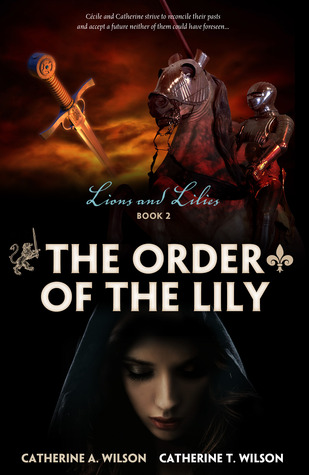
  • The ORDER of the LILY by Catherine A. Wilson and Catherine T. Wilson, a captivating and breathtaking14c tale

    The ORDER of the LILY by Catherine A. Wilson and Catherine T. Wilson, a captivating and breathtaking14c tale

    Twin sisters separated at birth, one cosseted in a lavish lifestyle, the other hidden away behind convent walls meet through letters. In Book 1, The Lily and the Lion, the sisters Cécile d’Armagnac and Catherine Pembroke begin to puzzle out the political reasons behind the separation. They finally are united, but soon their lives are threatened by the power-hungry William Montagu, Earl of Salisbury. Separation being safer than staying together, the sisters part ways once more, this time as fugitives.

    This second installment opens with Cécile and Catherine on the run with their protectors, the knights Simon Marshall and Gillet de Bellegarde. Cécile, having sacrificed her virginity to Edward, the Black Prince, to save her sister’s life, lies in the hull of an England-bound ship, sick from pregnancy and the rough seas. When the Prince’s men commandeer the vessel, Catherine quickly returns the favor by masquerading as Cécile. She’s whisked away to the Prince, while her sister continues to England.

    Lovers’ misunderstandings ensue in the two kingdoms. Cécile and Gillet spar prettily at his Kent family estate, passion and jealousy taking turns as her belly blooms and lovers both threatening and tempting appear. Catherine, on the other hand, quietly falls for Simon, who masks his affection as he keeps her safe from the Prince’s lustful eye. Catherine’s charade lasts only until Salisbury uncovers the truth, compelling Catherine and her cadre of protectors to find a way to escape.

    Their route, however, carries its own agenda. Simon takes Catherine first to a monastery, and then on to the Paris seat of the Knights Templar, as he continues his quest to find the missing, mysterious Lady of Scotland. It’s a subplot that fits into the sisters’ breathtaking saga when the Earl of Salisbury appears, seeking the Lady as well as Catherine. The chase ends at her beginnings, at the convent in which she grew up. Danger quelled for the time being, relationships are allowed to blossom, both for Catherine and for Cécile, whose day of happiness is embellished by an unspoken mission Gillet must attend in the near future.

    This teaser caps a string of events that carry the story forward with expert pacing, passionate entanglements, and a rich language full of clever colloquialisms and a good deal of humor. In contrast, however, the scenes of subjugation remind us of the maltreatment of women that was common and condoned by society. Early in the tale, Cécile is shocked to see Gillet’s sister-in-law routinely beaten by her husband, and then horrified to find her encased in a scold’s bridle. Cécile’s attempt to help the woman results in being subjected to harsh punishment for interfering.

    If there’s one positive outcome to this horrible subjugation is that Cécile stands up against injustice–no matter what the cost. And that is the arc of Book 2: the sisters finding their power in a cruel era of patriarchal oppression. To witness this maturation shines a hopeful light on the third book of the series, The Gilded Crown. The authors have written a captivating and historically accurate story with characters that are vividly portrayed.

    Historical romantics of all ages will enjoy this rollicking affair that continues the story of spirited twins who do battle with cruel relatives, nefarious noblemen, misunderstood suitors, and above all, the constraints on women’s power in 14th-century England and France.

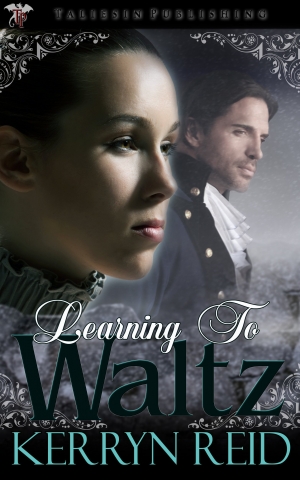
  • LEARNING TO WALTZ by Kerryn Reid, a stunning and refreshing novel in the Regency genre

    LEARNING TO WALTZ by Kerryn Reid, a stunning and refreshing novel in the Regency genre

    When aristocrat Evan Haverfield meets uncommon commoner Deborah Moore, she is in a panicked rush to find her missing son Julian. Evan finds the little boy just in time, near death from exposure, and takes an active, concerned role in his recovery. His escalating involvement with Julian parallels his fascination, perhaps obsession, with Julian’s mother, a reserved, intelligent woman who reads books and speaks with clarity and decorum despite her lowly station in life.

    Widow of a cold, fumbling small-town vicar, daughter of a brutal, profligate father, Deborah wants only Julian’s well-being. She is content to live alone, expecting only rejection and cruelty from men. She finds it difficult to smile for anyone except her son, yet Evan’s apparent interest in visiting, chatting, and offering small gifts is undeniably exciting.

    Evan insists on paying for the child’s schooling so his obvious mental gifts won’t go to waste; but his fixation remains on the dark-haired Deborah, so different from the wild-eyed, loose-mouthed flirts in his social circle. After she yields, once, to his charms, he impulsively asks her to marry him.  Their relationship changes, but not, as he’d hoped, for the better. Deborah is convinced she is no wife for quality. Evan, in a stew of anger, self-pity, and melancholy, hits the road.

    Kerryn Reid has set her engaging story in a place and time when the rich are often excessive in their habits, with prolonged house-parties often leading to debauchery, while the poor struggle for survival and find solace in alehouses and alleyways. Everyone tries to keep their place, as Deborah and Evan strive to do, against the yearnings of the heart.  It is this social tension that stokes Deborah’s refusal to become Evan’s wife—and in turn, provides the undercurrent that provokes in Evan a fear of how his parents will react to his alliance with a commoner.

    Reid’s focus is on her richly developed characters, not just costumes and carriages, though those are not lacking. She has filled her well-conceived saga with a complex and compelling cast: the arrogant well-born beauty who tries in vain to win Evan’s attention, Evan’s grizzled, philosophical “Man Friday” and his goodhearted sisters, Deborah’s earnest, if bumbling, house-helper, and little Julian, the brainy boy who loves books and horses in equal measure.

    Learning to Waltz reminds us that our forebearers also grappled with “modern” issues of abuse, angst, and aching hearts. This well-researched and beautiful Regency romance will appeal to anyone who has ever loved and (almost) lost. A stunning and refreshing novel in the Regency genre.

  • WAIT FOR ME by Janet K. Shawgo – WWII Historical Romance

    WAIT FOR ME by Janet K. Shawgo – WWII Historical Romance

    Second in the three-book Look for Me series, Wait for Me has the strength to capture readers as a stand-alone story with its new characters and historical setting. References to characters in Look for Me, the first book set during the Civil War, give sufficient back-story for the generational story of the White, Bowen, and Keens families.

    After the prologue shows Pearl Harbor on December 7, 1941, establishing the World War II setting, the story begins on September 23, 1940 in New York.

    “Jean Anne White-Shaw was reading the newspaper, listening to Glenn Miller on the radio and waiting for her son to come downstairs.” Songs from the Glenn Miller era become a powerful sensory cue for many scenes, some may say too many, while others may enjoy the trip down memory lane.

    However, the author excellently executes with the dialogue, bringing readers into the events and the characters’ emotions. The dialogue, coupled with excellent characterization, carries the story. It is strong, realistic, and shares considerable insight into the families. Readers connect to the people, and quickly find themselves engulfed in their story.

    Larry White is a reporter, a great nephew of Samuel White, a reporter during the Civil War; Susan Bowen is a nurse, a great niece of Sarah Bowen, a nurse during the Civil War; and Dealer Johns connects to the Keens family, going back to Mack, Sarah’s friend in the Civil War.

    “These were Samuel’s last handwritten notes from Gettysburg. Phillip…carefully removed his mother’s Bible and placed it in front of him. In the Bible was an envelope that contained two items he needed to give to Lawrence. … the necklace and note that were in Samuel’s possession when his body was brought back from Gettysburg.”

    Readers, watching the characters’ paths intersect, will eventually learn the connections to the characters in the first book whose similar paths these characters now follow. The plots and sub plots at times get a bit confusing, but as readers continue, they will make the connections, finding a finished story that is both cohesive and very good.

    The often-unknown role of women in wartime as travel nurses and pilots, as well as the use of herbs for natural healing, adds interesting and relative historical content to the story. The WASP pilots and their active role in the war effort was particularly fascinating reflecting Shawgo’s vigilance with her medical and military history research. Readers may find it interesting that Shawgo, along with being an award winning novelist, is also a travel nurse who goes where and when she is needed for national disasters.

    The satisfying ending holds just enough mystique to give a taste of what will come in the concluding book of the series, Find me Again, as well as stirring curiosity to go back to the first book, Look For Me, for the complete story in this engaging historical romance American saga that spans generations.