Tag: Historical romance

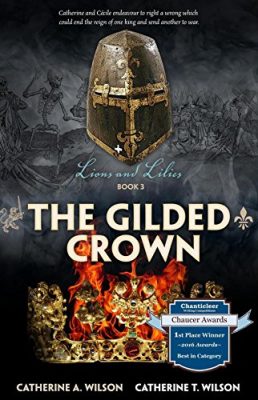
  • THE GILDED CROWN – Book 3, Lions and Lilies Saga by Catherine T. Wilson and Catherine A. Wilson – Medieval Europe, Historical Fiction, Romance

    THE GILDED CROWN – Book 3, Lions and Lilies Saga by Catherine T. Wilson and Catherine A. Wilson – Medieval Europe, Historical Fiction, Romance

    Cécile d’Armagnac and Catherine Pembroke first found each other through letters. The sisters then battled complications while on the run— Cécile, pregnant with a baby from Edward, the Black Prince, a relationship consummated to save her sister, fled with Gillet de Bellegarde, a disgraced knight she grew to love. Meanwhile, Catherine fell for the ever-shy Lord Simon Marshall of Wexford, and together, they managed to escape the Earl of Salisbury and his deadly schemes.

    Now, in The Gilded Crown, both sisters are happily married to their respective suitors. The mission that Gillet was presented in The Order of the Lily must now come to fruition while he resides in an English-occupied France. Meanwhile, Cécile strives to ensure the world, especially a mysterious woman named Adéle, does not find out baby Jean Petit is actually the rightful heir of Edward. Catherine, meanwhile, in Edinburgh after the safe return of Lady Scotland, is still fostering baby Gabriel, the son of her former maid, Anaïs. However, Catherine discovers a surprise of her own: she’s pregnant with Simon’s child.

    Like the other books in the series, the two sisters and their journeys, though taken separately, intertwine in unexpected ways. The Duc Jean de Berri, Cécile’s former suitor, hopes to convince Gillet to entice the Albrets of Bordeaux back to a French throne. Unfortunately, he also assaults Cécile as soon as Gillet leaves. Cécile’s misfortune continues on the way to Bordeaux–she nearly loses her cousin Armand-Amanieu d’Albret to the Black Plague, is captured by no other than the mysterious Adéle, who in turn, kidnaps Jean Petit and takes him to Scotland. In Scotland, meanwhile, Catherine has gotten to know Lady Agnes Dunbar (also known as Black Agnes) and discovers they share a common enemy. The question is whether this foe can be stopped—and if Jean Petit can be kept from danger.

    Catherine and Cécile are forced to further develop the maturity they sharpened in the previous books—but this time, with unexpected losses. Their paths remain uncertain, and it’s unclear where the next book in the series, The Traitor’s Noose, will take them.

    The authors are very skilled at weaving in authentic historical texture to an engaging plot with a lot of unexpected twists. The historical realities, including the treatment of women, like in the previous installments, is very brutal—particularly Cécile’s assault and capture. These parts of the plot can, at times, weigh the story down; however, they also add a visceral element of suspense. The book is not without its light-hearted moments either, particularly in the playful banter between brothers Roderick and Simon, and the very Scottish maid, dubbed, ‘English Mary.’ Readers will also delight in seeing pet antics between Cécile’s cats and an unprepared papillon—indicating that the authors’ authenticity stretches beyond historical accuracy.

    This series is suited to a historical fiction audience looking for an authentic dip into Medieval European life. However, to get the full impact of the overall story arc, readers will do well to start with the first two books in the series before getting their hands on this one.

  • WATCH OVER ME (Code Talker Chronicles, Book 2) by Eileen Charbonneau – Historical Romance, Espionage, Native American, WWII, Thriller/Mystery

    WATCH OVER ME (Code Talker Chronicles, Book 2) by Eileen Charbonneau – Historical Romance, Espionage, Native American, WWII, Thriller/Mystery

    Twenty-four-year-old Kitty Charente is trying to put her life back together. Working as a switchboard operator for a perfumer based in New York City, Kitty wants to put the death of her husband, Phillipe, and the miscarriage of her baby behind her and move forward. But when her boss, Jack, gives her the task of wining and dining an out-of-town salesman, Luke Kayenta, Kitty’s world is turned upside down overnight.

    Luke isn’t like Jack’s usual salesmen. In fact, Kitty’s certain he’s much more when she secretly watches him perform a strange ceremony on the eighty-sixth floor of the Empire State Building.

    Unbeknownst to Kitty, Luke has come for her. Charged with delivering a deathbed letter from Philippe, Luke is drawn to more than Kitty’s grief. Beyond his promise to deliver the smuggled letter, the stories Philippe shared of his beautiful dark-haired wife helped Luke escape his imprisonment in Spain and brought him halfway around the world to find her. Now that he’s found her, he doesn’t want to let her go, despite the danger surrounding him.  Kitty follows his reckless path through the twisting, wartime streets of New York, but will their newfound love be able to protect them from Luke’s pursuers?

    The rebirth of Luke’s tormented soul is the real jewel in this novel, book two of the Code Talker Chronicles. Luke isn’t a Spaniard as Kitty’s been told but a Navajo code talker, and he’s keeping more secrets than the forbidden letter. Tortured in Spain at the hands of Nazis, Luke has yet to truly escape his persecutors and have his mind released to live–and love–again.

    Luke yearns for the simple life of a rancher back in his home state of Arizona. His invaluable work in the intelligence service has cost him more than a pound of flesh, but his chance at love and life with Kitty, his continual inspiration, is built upon a fragile ledge of espionage and the memories of her heroic husband, and now the woman he loves is charged with the task of testing whether his very mind has been compromised.

    In a world of half-truths, crooked policemen, spies, and impersonators, the real question is who to trust. Watch Over Me shows a lively caricature of 1940s New York spinning wildly in the madness of espionage, where secrets and sacrifices threaten the bond of love and the hope of family.

    Watch Over Me by Eileen Charbonneau won First Place in the 2017 CHATELAINE Awards.

  • PASSAGE HOME to MEUSE by Gail Noble-Sanderson – Historical Romance, Post-WWII, Literary

    PASSAGE HOME to MEUSE by Gail Noble-Sanderson – Historical Romance, Post-WWII, Literary

    It’s 1923 and character Marie Durant Chagall is now 27 years old as she tells about her life-altering events in The Passage Home to Meuse, thanks to author Gayle Noble-Sanderson. This is the second historical novel in the Meuse Trilogy. The world around Marie is still reeling from the devastation of World War I. She and the other characters in the book are learning how to continue living, and perhaps more importantly, wishing to find joy once again in life.

    Marie is at home in France, seeking peace within, as well as for those around her. She looks for ways to help others who are in need, and her nursing skills come in handy to help this farming community. Nearby she’s found a sense of belonging with the Sisters at the Chapel, and her friendships continue with Henri and others.

    Under pressure of a persistent letter campaign from her father and her sister Solange, Marie consents to take a voyage from France to New York to visit them, not realizing she’ll discover a secret that awaits her there. Sailing on the incredibly luxurious SS Paris is an exciting trip filled with unexpected experiences, interesting people, and new friends. The author takes the time to engage the reader in the beauty of this voyage. Upon arrival in New York, the contrast of post-war Europe and America is striking, skillfully portrayed, and thought-provoking. After a visit filled with surprises, the journey home propels Marie into grand plans for her future, but will she be able to turn those into reality?

    The author’s extensive research of this historical period permeates every page. Additional notes from her research at the end of the book present fascinating insights into the period. The writing in the novel is charming, and the expansive descriptions of both settings and events ignite the reader’s imagination. All the characters jump off the pages with their hopes and dreams, and even their fears bringing great dimension to their personalities.

    Author Gail Noble-Sanderson is a speech-language pathologist who has published many educational programs for children with special needs. Fortunately for historical fiction readers, she decided to turn her attention to this genre.

    The Passage Home to Meuse is an epic journey back to the post-war world of the 1920’s. Wistfully Marie wonders, “What might have been, what would have been had the war not torn us all apart, rupturing the very soul of our lives?” Somehow she and those around her must find meaning in life again. Every aspect of human nature and the desire to rebuild is explored in this novel, including rebuilding family, whether blood or chosen. Ultimately, Noble-Sanderson explores whether love can indeed conquer all.

    Gail Noble-Sanderson won 1st Place in the 2017 CHATELAINE Awards for The Passage Home to Meuse.


  • The BLACKBIRD by Kristy McCaffrey – Western, Historical, Romance

    The BLACKBIRD by Kristy McCaffrey – Western, Historical, Romance

    An historical sensual romance set in the rustic Arizona territory of the late 1800s, the fourth in the Kristy McCaffrey’s Winds of the West series, The Blackbird hits the mark.   It brings together two tortured souls who also have deep insights and gifts that may help them find their way to each other.

    Tess Carlisle is a spirited but wounded young woman who suffered an assault by one of the men in her father’s gang that left her leg wounded and her soul scarred. Tess’s life was already tough when she began to ride with her father and his band of bounty hunters. She lived with her alcoholic mother and her beloved Abuela (grandmother) until the two older women died in a house fire, brought on by her mother’s depression and drinking. Tess has the ability to tell stories, a gift she learned from her grandmother and Tess knows this ability ties her spirit to the greater world. She sends word to Cale Walker, a man who used to ride with her bounty hunter father, to help her find Hank Carlisle, to find out answers to why her papa would allow one of his men to assault her and then abandon her.

    Cale Walker joined Hank with his band of bounty hunters after a stint in the Army until he had a falling out with Hank over the ruthlessness of some of the other members “methods.”  On his way from leaving Hank, Cale was attacked by a mountain lion and rescued by an Apache tribe, such as those that Hank and Cale hunted. During Cale’s time with a tribe of the Nednai, he learned their healing ways and became a di-yan (medicine man). Cale also has unresolved issues with Hank.

    Cale and Tess are introduced to each other at the very beginning of the novel, when Cale arrives at Tom and Mary Simms’ home, having been summoned there by a letter from his half-sister, who also is Mary’s half-sister. Yes, there are a lot of names that are mentioned at the beginning of this story, and, as the fourth in a series, reading the first one helps set all the other characters in their proper place.

    When Cale and Tess meet, there is an instant connection, one that Tess tries hard to ignore given her past, and one that Cale wants to suppress, because of the wounded spirit he senses in Tess. He wants to protect and help her. As they travel together to find Hank, Tess and Cale are wary of the growing feelings between them. It’s an unforgiving land, and they are both unsure who to trust, including themselves. When Tess is hurt in a fall during an attack, Cale finds his way to Vern, a rancher in the Dragoons where Tess allows Cale to use his healing knowledge to help her leg get strong, and she nurtures a wounded blackbird, aware of its connection to her, wounded and in a cage to heal, but wanting to be free. Can Cale bring her the same kind of healing?

    Blackbird is a sensual romance and has all the aspects one might expect for the genre –  and receives high marks as being a keenly written historical novel. The author’s attention to historical detail is evident in the use of traditional Apache terms and realism of the time. Tess’s storytelling ability and memories of her grandmother also add to the flavor of the novel as she sprinkles her stories and conversation with Spanish phrases. But it is the story of two wounded hearts finding each other in the hardscrabble environment of Arizona during the time of Geronimo that makes The Blackbird go beyond “romance.”

    The storyline is so engaging and intense, it is difficult to put down. The description of the Arizona desert, such as the otherworldly look the Dragoon Mountains, as well as the brutality of both the bounty hunters and some native war parties, show the realities of what life was like during those time, for both the settlers and those Apache tribes that wanted to live at peace without government interference.

    The Blackbird by Kristy McCaffrey won First Place in the 2015 LARAMIE Awards!


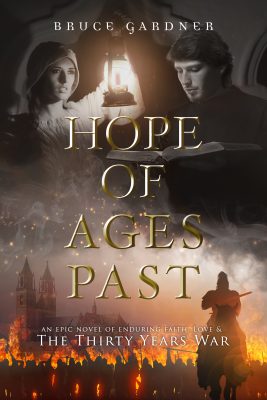
  • HOPE of AGES PAST by Bruce Gardner – Historical Fiction, Thirty Years War, Historical Romance, Family Saga

    HOPE of AGES PAST by Bruce Gardner – Historical Fiction, Thirty Years War, Historical Romance, Family Saga

    A saga writ large on the stage of 17th Century Central Europe,  Hope of Ages Past portrays the deeply personal impacts of religious faith and love amidst the brutality of war.

    Peter Erhart and Hans Mannheim are teenagers when they first meet in the Bohemian capital city of Prague at the outbreak of the Thirty Years War in 1618. These are two of the three central, fictional, characters in Bruce Gardner’s noteworthy interweaving of fact and reasoned conjecture set during the first half of the war. The boys represent the two religious factions in that conflict: Peter is Protestant; Hans, Catholic. The meeting in Prague, based on a real event including actual historical participants, provides the backdrop for a fictional drama that is set in motion when Peter reaches beyond the sectarian divide to help Hans at a moment of deep disgrace. Hans will never forget that kindness.

    As rebellion and conquest fire up across Europe, Peter, in his twenties, becomes a contentedly married Lutheran pastor in Magdeburg, Germany. Opposed by powerful rivals and threatened by the Catholic imperial army now approaching the city, he encounters Anna Ritter – a country peasant girl of uncommon beauty and inner strength who has secretly admired him for years and who is destined to share his trials. Each must fight bravely for the survival of their families and friends when local villains invade countryside cottages and the army, led by an awe-inspiring Black Knight, besieges the city. At the pinnacle of their trial, unthinkable tragedy brings Peter and Anna together and links their fates with Hans, now a grown man with a reputation to prove. Events eventually bring the three together in the siege’s aftermath, and a strange and unexpected reconciliation occurs — one that is put to the ultimate test in a final, horror-filled ordeal.

    Gardner, delving deeply into the philosophical issues at the core of the Thirty Years War, very deftly maintains an over-arching theme of religious differences – and similarities – in the midst of a thrilling, continually evolving panorama of warfare, intrigue, and romance. Interlocking the two storylines – interpersonal and international – is the repeated possibility for human compassion to emerge despite deep religious disagreements. Gardner’s skillfully drawn characters, both Catholic and Protestant, are confronted with choices – to kill, to help, or to ignore their fellow human beings in times of terrible suffering. Gardner fairly and intelligently presents the positions of both groups.

    Love conquers hate and uplifts two great faiths in Bruce Gardner’s Hope of Ages Past, contrasting romance, religion and family cohesion with the upheaval of battle and blood, all balanced by a thought-provoking, well-considered overview of the western world’s Christian heritage.

    Ultimately, Gardner has gifted us with an epic novel of enduring faith and love set amidst the brutality of the Thirty Years War in Europe. A very good read.


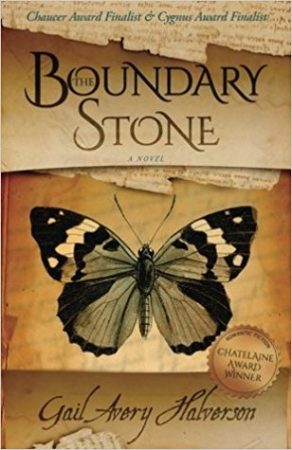
  • The BOUNDARY STONE by Gail Avery Halverson – Historical Romance, Black Plague

    The BOUNDARY STONE by Gail Avery Halverson – Historical Romance, Black Plague

    Catherine Abbott has everything a young lady of quality could wish for in England, 1660’s. She lives on her father’s comfortable estate in the village of Wells, Buckinghamshire and she’s soon to be wed to Miles Houghton, a childhood friend recently returned from several years in France. For Miles, the wedding is just the ticket to free him from his rather large gambling debt. His heart isn’t in it, though, as he still yearns for the Parisian nightlife.


    However, Catherine has had an interest in science, books, and “the mysteries of this world” that inspires her to make complex drawings of butterflies and track the constellations in the night skies. Can she be happy as an idle wife? When she meets Simon, a young doctor who has been assigned to care for her aging, gout-ridden father, she begins to dream of a different future, impossible, she understands, but she still can dream, right?

    Then the Black Plague strikes England. Taking orders from Simon whom he has grown to respect, Lord Abbott orders the village of Wells to be quarantined and ships Catherine’s brother Charles off to the colonies. Miles, unwilling to be hemmed in, flees without a word to Catherine, ignoring their planned nuptials. She, who once helped a servant girl in the throes of childbirth, finds a way to assist Simon in treating plague victims. He recognizes Catherine’s remarkable medical talents and begins to envision a way he and she might someday make a medical partnership. Or will their relationship go beyond the professional?

    Award-winning writer Halverson has given us a character so completely believable, and so empathetic that readers will fall in love with her from the opening scene, when, as a little girl, Catherine sneaks out one night to observe the movements of the stars. We are hooked and are convinced that this heroine is a prodigy who will only find what she seeks in life by breaking the bounds of convention. Drawing on events of the time, such as England’s trade with India, the colonization of America, the controversial issue of autopsies as a means of studying illness, and of course the horrors of the plague itself, Halverson reveals extensive research into the century she writes about. And employing rich idiomatic phrasing and restrained but appropriate accents as needed, she shows her gift for the sound as well as the sense of well-constructed prose. In a short Afterword, the author relates the story of a little English village on which she patterned her fictional Wells, where quarantine did serve to save lives at the time of the Black Plague.

    Set against the backdrop of England’s Black Plague, one woman bravely challenges the rules of stature and class to find her true love and true calling. Historical romance readers will enjoy curling up with Halverson’s first book in The Stockbridge Series and look forward reading the next one.

    5 Star Best Book Chanticleer Reviews round silver sticker

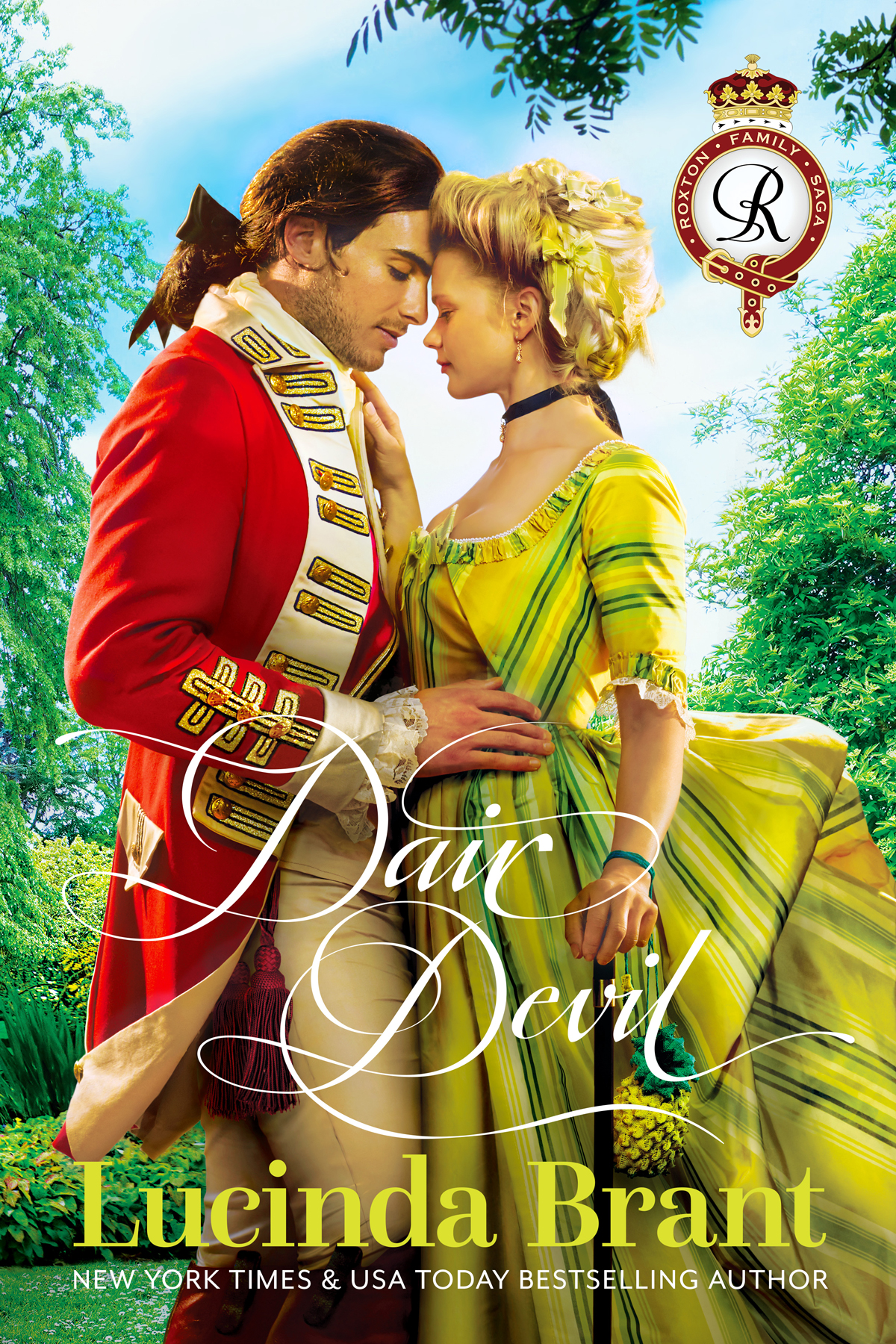
  • DAIR DEVIL: A GEORGIAN HISTORICAL ROMANCE (ROXTON FAMILY SAGA, BOOK 3) by Lucinda Brant – Georgian Historical Romance

    DAIR DEVIL: A GEORGIAN HISTORICAL ROMANCE (ROXTON FAMILY SAGA, BOOK 3) by Lucinda Brant – Georgian Historical Romance

    Alisdair “Dair” Fitzstuart, spy and war hero, wants to enjoy a carefree life now that his service to his country is over. After spending years creating the daredevil reputation that has earned him fame beyond his heroic war efforts, he’s eager to return to the London town life, sample the season’s beauties, and carouse with his lifelong friends, but when his latest escapade literally throws him into the arms of Rory Talbot, his plans are turned upside down.

    Rory, the granddaughter of England’s Spymaster, enjoys her quiet existence cultivating pineapples and spending time with her grandfather. Because of a crippling birth defect, she’s spent her entire life on the sidelines, secretly falling in love with the handsome Major Fitzstuart, who happens to be her brother’s closest friend. She never expects Dair to notice her, but after their chance meeting at the beginning of the novel, Dair can’t seem to get the beauty off his mind. However, his womanizing past complete with an illegitimate son, has everyone, including Rory, questioning Dair’s sincerity. The two must battle the odds if they dare to have a future together.

    With a complicated storyline and abundance of character-rich scenes, Lucinda Brandt delivers in Dair Devil another volume of the Roxon Family Saga. For those unfamiliar with Brandt’s brand of historical romance, this is not a frivolous read. The narration and dialogues are lengthy and complex, the weaving storyline on top of storyline in a masterful fashion, therefore we strongly recommend starting with the first novel in the series, Midnight Marriage, and move on from there. Those who are familiar with Brandt’s work will submerge themselves in the interweaving storyline and swoon to Alex Wyndham’s voice as he narrates series.

    Both Rory and Dair break the typical romance novel mold. Rory’s physical disability is a refreshing change to the typical perfection of the romance heroine. Though still feisty and spunky, Rory’s life is far from the easy existence of the regular heroine; however, her issues don’t hold her back. Rory’s never allows her physical problems to stand in the way of whatever she wants to accomplish, creating an inspirational protagonist, which is uncommon in the traditional romance novel.

    Dair challenges the romance norm as well: he has an illegitimate son, not uncommon in the Georgian time period, but unusual for the heartthrob of this genre. Though typically seen as the hunky bad boy, heroes of romance novels don’t often have illegitimate children, much less a child that plays a role in the plot. Dair not only has a son, he shows his fatherly love repeatedly, again testing the tried-and-true conventions of the “normal” historical romance.

    Lucinda Brant has created a complex story where strength lies in family, and history is more than a setting. Whether siblings or cousins, these characters rely on their bonds and show that love triumphs despite the odds, and although this theme is not unusual within the genre, Brant’s use of familial bonds saturates the plot and creates a web of stories to delight readers of romantic fiction.

  • The SECRET LIFE of ANNA BLANC by Jennifer Kincheloe – Mystery Thriller, Female Sleuth, Victorian

    The SECRET LIFE of ANNA BLANC by Jennifer Kincheloe – Mystery Thriller, Female Sleuth, Victorian

    An intractable and pampered debutante with plenty of pluck turns detective in Jennifer Kincheloe’s award-winning debut The Secret Life of Anna Blanc.


    The year is 1907 in Los Angeles. Anna Blanc may be privileged and beautiful, but the one thing she lacks is freedom. Escaping from her possessive father is more difficult than she thinks since she keeps getting caught in humiliating circumstances, which only taints her social status. Regardless, Anna has a mind of her own and determines to get involved in one area that is entirely unladylike: police work.

    Finding an ad in a local paper, Anna finagles her way into an assistant matron position at the LAPD. While on her first assignment at a local brothel, Anna overhears a conversation between of a police officer and a coroner as they examine the corpse of a prostitute. Although the men rule the young woman’s death a suicide, Anna is convinced that the cause of death is murder, especially when she learns that the harlot’s death is just one in a string of murders.

    Anna commences undercover investigations, which she keeps under tight wraps. In the meantime, the LAPD sets up a sting operation to catch a rape fiend. Anna volunteers, working alongside the handsome but unpredictable Joe Singer. While romance seems to brew between the unlikely pair, Anna’s father makes plans for her to marry a wealthy banker, Edgar Wright. Amid the strange love triangle, Anna hopes to nab both the rape fiend and prostitute murderer. Whether or not she can convince the LAPD of her sleuthing capabilities before another murder occurs remains to be seen.

    Kincheloe does a killer job keeping her audience hooked from one page to the next as her protagonist heroine whose insular life evolves as she faces perils of one kind or other. Kincheloe’s highly-developed cast includes only a handful of supporting characters while the bulk of her cast is made up of colorful foils and red herrings, coming in every shape, size, sex, and demeanor imaginable that befits an early 20th-century setting.

    Tight sentence structures dripping with rich metaphorical descriptions and hyperbole laced with sarcasm, wit, and humor grace the pages of this award-winning debut novel. Scenes heavily peppered with romantic tension, sexual innuendoes, replete with unremitting twists and turns shift between characters resulting in a mighty fine read.

    A top-rate novel “inspired by police matron Alice Stebbins Wells, who in 1910 became the first woman police officer in Los Angeles,” The Secret of Anna Blanc has all the elements of going beyond the bookshelf and onto the Silver Screen.

    5 Stars! Best Book Chanticleer Book Reviews

  • The Writer’s Life: Author Interview with DIANA FORBES – Chatelaine 1st Place Winner, Historical Romance, The Guilded Age

    The Writer’s Life: Author Interview with DIANA FORBES – Chatelaine 1st Place Winner, Historical Romance, The Guilded Age

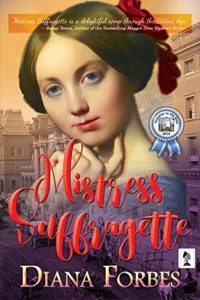
    Diana Forbes writes romantic historical fiction. Her debut novel, Mistress Suffragette is easy to pick up and hard to put down. Recently, I had the opportunity to interview this author and I think you’ll enjoy what she had to say…


    Chanticleer: Tell us a little about yourself: How did you start writing?

    Forbes: I started writing when I was 6 years old. First I wrote poetry. Then I wrote diary entries, heavily influenced by Harriet the Spy. After that, I wrote articles for my school paper. Then I wrote restaurant reviews for the school paper. In college, I wrote features for the college paper.

    Chanticleer: So, basically as soon as you could form cohesive sentences, you were off to the races! Nice job, Diana. But when did you realize that you were an author?

    Forbes: I met with a career coach in 2003 and I told him, “I want to be a writer.” He said, “Why don’t we just say you are a writer since writing is in the doing?”

    Chanticleer: Smart – writing is an active verb… Let’s chat about genre. What genre best describes your work?

    Forbes: Mistress Suffragette, my debut novel, is best described as a romance. It’s historical, so sometimes it’s described as cross-genre: historical-romance. It also has a lot of humor in it.

    Chanti: Cross-genre sweet spot – best of both worlds. What inspired you to write historical/romance? 

    Forbes: I take two writing classes a week in Manhattan where I live, and one of my writing teachers used to tell me, “Don’t worry about the genre. A debut novel is what it is. Just write it.” But, I basically wrote the story I wanted to read. It’s a romance against a very interesting historical backdrop – the late 19th century or Gilded Age.

    Chanti: I love the fact that you continue to work on your craft by taking writing classes. That’s such an important thing to do! Do you find yourself following the rules or do you like to make up your own rules?

    Forbes: I like to break rules selectively. In other words, I love to know what the rules are, then break them if there is a very good reason.

    Chanti: Good. Know the rules, so you know when, why, and how to break them. What do you do when you’re not writing? Tells us a little about your hobbies.

    Forbes: I am an art buff. I like to go to museums and galleries and look around. Recently I have also started going to plays and musicals in Manhattan. I like to poke around antique stores and fairs, too. I have a great respect for history, so if I can learn a little history while I am having fun, that’s even better.

    Chanti: You’re in the perfect place to do all that! Tell us a little about how you structure your writing day.

    Forbes: I am very structured. I am fortunate to have an office that is separate from where I live. I roll into the office at 9 a.m., trying to get in one full hour of reading before the day officially starts, so from 7:30 a.m.-8:30 a.m. Then I write from 9 a.m. until 3:30 p.m., trying to stay off social media and email completely. At 3:30 or so, I return all my emails and hop on social media. After that, I work till between 7 p.m. and 8 p.m. on marketing Mistress Suffragette.

    Chanti: That’s a fantastically structured day! What has been the most helpful marketing tool you’ve used so far?

    Forbes: I really like awards shows. They offer the chance to have the work receive a little recognition as well as a great marketing push. Award shows can also help introduce the work to new readers.

    Chanti: What areas of your writing are you most confident in? What advice would you give someone who is struggling in that area?

    Forbes: Readers often tell me that my strengths are my research, the setting, and the voice. I love stories that whisk me away, and that’s what I aimed for with Mistress Suffragette. I also want to tell untold stories. Some of the things I learned while researching M. Suffragette, I had never ever heard before – even in Political Science classes at my university. Anything I discovered that was really new and really interesting about the time period I made sure to include in the novel.

    Chanti: That’s pretty cool. So, we know that you take two writing classes a week, what other things do you do to grow your author chops?

    Forbes: My writing classes in Manhattan require that I turn in 20 pages at a time to early readers (my classmates) who give me feedback. One of the classes concentrates more on the craft of writing. I also read books about writing. In addition, I look for award show contests that provide feedback, so that I can learn and grow and my writing can improve before I show my work to an agent or editor.

    Chanti: This is how we discovered each other! We’re thrilled you entered your novel into the Chatelaine Awards. What are you working on now? What can we look forward to seeing next from you?

    Forbes: I am working on the sequel to Mistress Suffragette. I see the story as a trilogy. I am not sure when the sequel publication date will be. I write many drafts of my novels before I show them to my agent and editor, so I am somewhere in the revision process.

    Chanti: I certainly hope we get to see the sequels of Mistress Suffragette. Thank you for stopping in! 

    If you love romance (and who doesn’t?) and the Gilded Age, you know what to do! Check out Diana’s website and follow the links to purchase her book, Mistress Suffragette.

    Like her Facebook page and follow her. Trust me, there is more to come from Forbes, and you’ll not want to miss out.


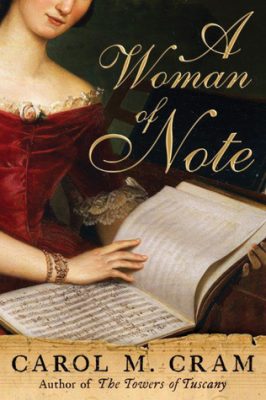
  • A WOMAN of NOTE by Carol Cram – Historical Fiction, Literary, Vienna

    A WOMAN of NOTE by Carol Cram – Historical Fiction, Literary, Vienna

    Isabette Gruber is in a panic. If only her sister were still with her to steady her hands on the keyboard as she plays Beethoven’s Eighth Sonata, known as the “Pathetique,” in her first public concert at Vienna’s Hofburg Palace. Then she hears Johanna’s voice in her head, and her poise and confidence return. The nineteen-year-old Isabette raises her hands, shapes her fingers above the keyboard, and launches into the “Pathetique.” Her powerful performance thrills the audience, whose applause continues through a third bow, and does honor to its composer, Ludwig van Beethoven, whose funeral took place in Vienna that very day, March 29, 1827.

    Filling Isabette’s heart more than the applause, however, are the words of praise from her beautiful, new American friend, eighteen-year-old Amelia Mason, who received four bows for her extraordinary vocal performance. Afterward, Amelia asks the young virtuoso pianist to become her accompanist. Isabette is eager to hear more about this enticing proposition, but Mama arrives with her cloak. Herr Dietrich (her indecorous manager) is waiting with their carriage. “Hurry, Isabette!”

    In A Woman of Note, Carol Cram has crafted a second brilliant female artist, this time a pianist and composer in 19th-century Vienna. Isabette must fight to establish her position in the male-dominated European world of classical music, much as Cram’s Sofia had to do in 14th-century Italy’s world of painting, in The Towers of Tuscany (2014). Cram’s precise, colorful writing enables us to hear the young Isabette playing the “Pathetique” in Hofburg Palace, see her enjoying a stroll with Amelia in the Prater, feel her pain over the loss of father and sister, and appreciate her determined efforts to convince music publisher Herr Weissel to accept her compositions, under the pseudonym of Anson Kruetzer. (Weissel roars with laughter, but agrees!)

    Once home from the Hofburg, Isabette thinks back to her practice session that morning in the small, dusty parlor of the apartment where she lives with her mother. With a heavy heart, she remembers what a happy home this had been when her sister Johanna and she shared both a talent and a love for music and were skillfully taught to play and compose by their proud father. Now Papa is dead, Johanna is in an asylum, and Mama seems to think of Isabette more as a means to an income than as her younger daughter. The tall, lanky girl with a plain face and dull, straight hair never gives a thought to her social life or the possibility of marriage and children. Her every moment is devoted to practicing. Tonight, though, she thinks of a new life with Amelia in it. Soon, they are together every day practicing, but also developing their friendship as they go for long walks around Vienna.

    When piano teacher Josef Hauser, who fancies himself a superior composer, meets the two young women, the story’s complexity grows. Josef is enamored with Amelia’s beauty but enthralled with Isabette’s talent. (In fact, he agrees to become her teacher if she revises his compositions so they will be accepted for publication.) Isabette treasures every minute she spends with the vibrant, cheerful Amelia, but feels uncomfortable when Amelia strokes her arms and kisses her neck. Amelia is jealous of Josef’s attention to Isabette during her piano lessons. Isabette realizes she could love Josef but knows that he is passionate about Amelia and could never feel that way about her. Then Josef’s flutist/poet friend Daniel Leitner joins the threesome. Gentleman that he is, he maintains a discreet distance from the ladies at least for a time.

    Readers will love Carol Cram’s colorful writing and attention to the minute details of daily life at this time in European history. Even more enjoyable, however, will be finding out where her intertwining love stories lead as the characters mature. The book never loses its pace. and readers will be rapidly turning the pages until the very end.

    While the cameo appearances and mentions of such famous musicians as Johann Hummel, Carl Czerny, Franz Schubert, Fredric Chopin, Robert Schumann and his wife Clara, and Louise Farrenc are of course fictional, they add drama and reality to the story, which is based on Cram’s meticulous research. An Author’s Note provides background on actual women composers of the time and place.

    A young virtuoso pianist rises above the many musicians of her time, blazing a path of passion for music and love that is hers and hers alone in nineteenth-century Vienna.

    5 Star Best Book Chanticleer Reviews round silver sticker