
Tag: Historical romance

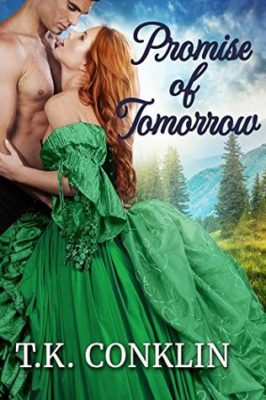
  • PROMISE of TOMORROW (Rimrock Book 1) by T.K. Conklin – Historical Romance, Western Romance, Paranormal

    PROMISE of TOMORROW (Rimrock Book 1) by T.K. Conklin – Historical Romance, Western Romance, Paranormal

    Shyfawn Tucker and her friend Mabel just wanted a little excitement, a chance to see New Orleans, but after their arrival, they are drugged, kidnapped, and taken to the rugged, lawless town of Larksdale. They are to work as prostitutes in a saloon owned by their kidnapper, a ruthless man named Jared. Soon Shyfawn learns that she will be saved from servicing Jared’s clientele, but will become the virgin singer to draw more patrons to the already-thriving business. Mabel, however, suffers a terrible fate, and Shyfawn vows to protect as many of the women forced into service as she can.

    Unbeknownst to Shyfawn, her older sister Jo is planning a rescue mission. Jo enlists the help of David and Matthew Reeves, brothers who own ranches near Rimrock, several days’ ride from Larksdale. Matthew reluctantly agrees although he barely knows Jo and goes along to keep David safe more than anything, but as soon as he sees the captivating Shyfawn, he can’t keep his eyes or mind off of her. A difficult mission is made even more impossible when Jared vows to never stop looking for Shyfawn, and not even the undeniable attraction between Matthew and Shyfawn will be enough to keep her safe.

    Promise of Tomorrow is set in the American West, in the 1830s. It’s a rough and tumble community that places women as property. T. K. Conklin paints an authentic picture of the Old West, even though at times, we may cringe at the treatment women endured.  Women were considered property, often bought, sold, raped, and disowned for the crime of being taken advantage of. Shyfawn’s story of abduction exemplifies this sad scenario. Though the author spares her heroine the burden of rape, Shyfawn is still a captive, a prisoner, kept for the entertainment and profit of Jared, who treats most of “his” women as disposable, and she is under constant threat of rape if she misbehaves. Though she escapes, Shyfawn knows her past involvement, though completely involuntary, with the saloon will forever taint her reputation and will make finding a decent husband nearly impossible. Townspeople will judge regardless of her guiltless purity, and she can never return to her hometown of Charlotte. Even Matthew worries about what her reputation will do for his own when he brings her to work as a cook at his ranch.

    A surprising plot element is a connection the Tucker sisters have to the paranormal. All three sisters have some “otherworldly” ability. To mention more here might be a dead giveaway!

    Conklin has done a great job at creating a world in the same vein as Deadwood – jacked up on romance. Even as the author gives us scenes of trauma true to the Old West, she elevates the positive themes of family, belief in better days, and finding one’s purpose in life. Shyfawn never feels sorry for herself despite the horrors around her. Her optimistic attitude leads her to shake off her sadness and look for the good in virtually everyone. She befriends the ranch hands despite their sordid pasts and even manages to see good in some of the men who hold her captive. She is able to remain positive when her chances are bleak, and her playfulness with everyone–especially Matthew–gives the novel humor and creates a fun, good ole fashioned Western.

    Promise of Tomorrow by T. K. Conklin won the CIBAs 2018 First Place in the LARAMIE Awards for Western Fiction and placed as a Semi-Finalist in the CIBAs 2019 Chatelaine Awards.



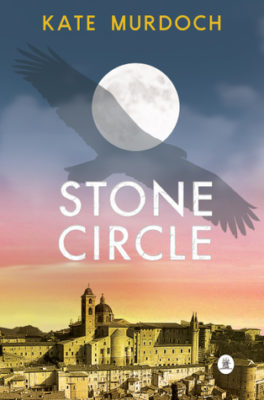
  • STONE CIRCLE by Kate Murdoch – Medieval Italian Fantasy, Coming of Age Fantasy, Romantic Fantasy

    STONE CIRCLE by Kate Murdoch – Medieval Italian Fantasy, Coming of Age Fantasy, Romantic Fantasy

    Since his father’s death, seventeen-year-old Antonius Sardi has become the man of the house, keeping up the spirits and providing for his mother, younger sister, and younger brother. When he takes a job in the household of Conte Leonardo Valperga, he works hard to prove useful in hopes of raising his status above that of a lowly servant. Occasionally, Antonius glimpses Savinus di Benevento, a seer of great renown in the medieval town of Pesaro, and a member of the Conte’s household as well. When Savinus advertises for a new apprentice, Antonius knows this is the opportunity for which he has been waiting, a chance to show his abilities to a man who can appreciate rather than fear them.
    Antonius can read minds, and as soon as Savinus, also skilled in mind-reading and prophecy, learns of this, he immediately agrees to take on Antonius. However, Antonius isn’t the only young man who wants the position. Nichola, the son of Savinus’s very wealthy and powerful patron, believes himself fit for the job. Savinus has no choice but to take on Nichola, who proves himself treacherous and shallow. Moreover, Nichola is annoyed that Antonius is given the role of the primary apprentice while he is relegated to mundane tasks. To make matters worse, Guilia, Savinus’s daughter, seems interested in Antonius. Nichola takes his jealousy to unbelievable lengths, which ultimately threatens Savinus, Antonius, and Giulia’s lives.

    Antonius’s desire to defy the expectations of his class is the most important theme within the novel. He often thinks of his father, a fisherman, who came home exhausted nightly many times after the rest of the family had fallen asleep. On the days he could, he insisted on teaching his children how to read and write even though in their current social status, such skills would be unnecessary. Antonius knows that he has no other option than to fight for the assistant apprenticeship if for no other reason than the memory of his father’s hard work. Less than his best would be a betrayal of his values.

    Kate Murdoch weaves a compelling tale of Medieval Italian life in her coming of age historical fantasy. Here’s a novel that will hook readers from the very first page.

    Stone Circle won a well-deserved First in Category in the 2018 Chaucer Awards for Early Historical Fiction novels.

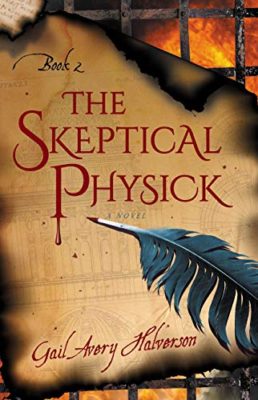
  • The SKEPTICAL PHYSICK (The Stockbridge Series, Book 2) by Gail Avery Halverson – Historical Romance, Romantic Suspense, Renaissance Literary Criticism

    The SKEPTICAL PHYSICK (The Stockbridge Series, Book 2) by Gail Avery Halverson – Historical Romance, Romantic Suspense, Renaissance Literary Criticism

    Blue and Gold Badge that reads: Chatelaine Romance Fiction 2019 Grand Prize The Skeptical Physick Gail Avery HalversonIn the second in a series by author Halverson, an aristocratic, intellectually curious young woman has fallen in love with a young physician, a commoner whose radical experimentations have jeopardized his reputation. The couple is just recovering from the professional and personal rigors of dealing with London’s plague victims when the city is overwhelmed by fire. Their services are needed now more than ever.

    Supported by mentor hospital administrator Father Hardwicke in his medical endeavors, Simon McKensie is finally on the verge of marrying the woman he adores, Catherine Abbott. Even the wealthy, protective Aunt Viola has come to terms with the fact that, though she might not approve the match on social grounds, she sees that Catherine will be happy with Simon.

    If winning her aunt’s approval and administering aid to plague victims wasn’t enough, just days before their planned nuptials, a fire breaks out that threatens to delay them yet again. Worse, Catherine sustains a severe injury on her way to the hospital to help Simon treat burn victims. It seems that there may not be a wedding. But Simon acts quickly and effectively to save the life of his beloved, exchanging wedding vows with her even as she is barely recuperating from her accident.

    The couple enjoys a short respite of marital bliss until their world comes crashing down again as Simon, experimenting with the new innovative field of blood transfusion, is accused of the murder of one of his patients. It will take all of Catherine’s energy and ingenuity to try to save him from the gallows, as enemies who have long despised his radical approaches rush forward to heap accusations on him.

    Halverson follows the storyline begun in her earlier novel, The Boundary Stone. She has built and now sustains the romance between Catherine and Simon – emphasizing his scientific daring and her unusual willingness to step outside the expected role of women of her time and class – against a background of chaos, terror, and death. The author has drawn heavily on factual material about the horrendous fire that began in a little London bakery and destroyed thousands of houses and churches, including St. Paul’s Cathedral, leaving up to 70,000 homeless. Aggravating factors depicted included the Lord Mayor’s selfish unwillingness to act to contain the fire in its early hours, while in contrast, the rather flippant, fun-loving King Charles II steps in once the true extent of the damage becomes evident. Both these real people are characters in the narrative, along with Lady Wilbraham, a brilliant but unsung female architect, but will she be able to save McKensie from the gallows? Halverson brings many nameless figures in history to life to create a vibrant reality and a dynamic plot. Something all historical fiction fans crave.

    With a loving and highly adventurous duo, readers will be looking for Part 3 of this impressive saga.

    The Skeptical Physick won the CIBA 2019 Grand Prize in the CHATELAINE Book Awards for romantic fiction.

  • The PARTICULAR APPEAL of GILLIAN PUGSLEY by Susan Örnbratt  – 20th Century Historical Fiction, Coming of Age Fiction, Historical Romance

    The PARTICULAR APPEAL of GILLIAN PUGSLEY by Susan Örnbratt – 20th Century Historical Fiction, Coming of Age Fiction, Historical Romance

    Irish-born Gillian McAllister knew she was meant for bigger things than a quiet life among her large extended family. Leaving home at seventeen against her protective father’s wishes, Gillian is looking for adventure – and that’s exactly what she finds. She was a nanny for a maharaja, a caretaker for WWII internees, and a nurse on the Isle of Man before finally becoming a wife, mother, and grandmother in London, Canada, where she spent the majority of her eighty-nine years.

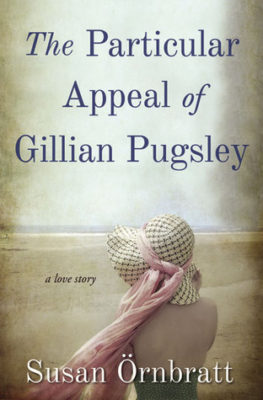
    However, with only weeks to live after being stricken by cancer, she knows her time with her beloved granddaughter and namesake is truly precious. Before she goes, she wants to pass on the poems that capture her long, adventurous life to the junior Gilly in hopes the girl will use the poems to write about her adventure – her hidden love story.

    While on vacation in Canada, the teenage Gillian meets and falls madly in love with Christian Hunter. Her love of Christian consumes her, but she leaves him at the cusp of a war that soon alters the world’s course. Destiny isn’t finished with the pair, and they reunite after the carnage to find their love is as fiery and fierce as ever. However, even a love this strong can’t outrun fate, and Gillian is determined to find a way to show her beloved granddaughter the truth before it is too late.

    The character relationships between Gillian and others is a perfectly developed part of the novel. Gillian’s attachment to her granddaughter is more than just a name. Young Gilly is an aspiring novelist. Both women understand the importance of storytelling and the impact of words. From the moment Gilly was born, Gillian felt the connection between them and believes only Gilly can breathe life into her adoration of Christian Hunter. She entrusts her poems to Gilly without disclosing the story, allowing the girl to uncover the secret hidden for over fifty years. Watching their last days together unfold is touching and reminiscent for any reader who has shared a bond with a grandparent.

    Gillian’s secret love, Christian, is another meaningful relationship. From the time she was young, Gillian knew someone was waiting for her, someone drawing closer with each day, someone staring at the same moon and longing for another. When she meets Christian, she just knows as does he, and though, ultimately, Gillian comes to realize that devoting herself to one man when the world is waiting may not be what she truly wants. But Gillian cannot deny the connection between them. The two are the epitome of opposites attract with his easy-going, unrushed personality, but he immediately sees the effect she has on others, her zest for life. No matter how hard either tries to drown out the thought of the other, they can’t escape their entwined destinies, and their contrary natures create a perfect balance. The dance of fate between Christian and Gillian is thrilling and will keep the reader wondering until the end.

    The gorgeous settings of Gillian’s life are an integral part of her history. The richly painted scenes are beautiful and inspiring for the character as well as the reader. From the sweeping sea cliffs to the serenity of Gillian’s cottage on the Isle of Man, the setting becomes its own character. Gillian both embodies and is affected by the scenery. In the quiet of a winter-draped meadow and the countryside teeming with life, Gillian sees herself and the many lives she’s lived.

    A beautiful theme within this novel is the simple notion of loving life. Even before she steps out into the adult world and leaves Ireland, Gillian knows that life is for living. She wants to squeeze every drop of adventure possible from the time she is given and feast on all that it has to offer. Her ingenuity, spunk, and spicy attitude create an unquenchable need to travel, to meet people, and, most importantly, to make the world a better place. She refuses to settle for a mediocre life and rejects the moderation others preach and try to instill in her. Her “magnificent obsession” isn’t diminished by anything – not heartbreak, a world war, or even death. She lives with passion and gusto, fostering the belief in others that love and laughter, stories and adventures, make life worth living. Her sprawling life’s story is more than just survival and lost love. It’s about finding joy and purpose amongst death and destruction.

    The Particular Appeal of Gillian Pugsley won 1st Place in the CIBAs 2015 CHATELAINE Awards in the category of 20th Century Historical Fiction.


  • ESTELLE: A Novel by Linda Stewart Henley –  American Historical Romance, Southern Fiction, City Life Fiction

    ESTELLE: A Novel by Linda Stewart Henley – American Historical Romance, Southern Fiction, City Life Fiction

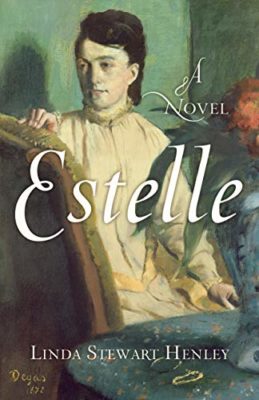
    Twenty-two-year-old museum intern and unknown artist, Anne Gautier, has undertaken a significant project, restoring an elegant house on one of the most beautiful streets in New Orleans. The grand old Creole home has been in her family for many generations, and, when her grandfather died, he left her the house on Esplanade Avenue, where all the best French Creole families once lived.

    There’s only one stipulation: She must restore the property or ownership will revert to the city. Even though the house is not in the best part of town, Anne is determined to celebrate the historical home not only because of her own family, but also because it was an integral part of New Orleans’ history during the visit of Edgar Degas in 1872. In fact, in Anne’s attic, Degas’s notebook gives her the money she needs to begin the restoration.

    Her plans go sideways when someone breaks in and vandalizes the home, leaving behind a threatening note and a mystery to solve. On top of this, Anne is trying to reconcile her feelings about Stella, the half-sister Anne recently met. Is Stella behind the vandalism? She was left out of their grandfather’s will. Anne tries to rely on her new boyfriend, Sam, for advice, but he has begun acting strangely, sneaking around behind her back and hedging his answers to her questions. With no one to lean on, a demanding job, and her own artistic-inspiration waning, Anne may never see her beautiful home and its essential history revived.

    The dual settings of New Orleans in 1870 and 1970 give this novel a unique perspective. The juxtaposition of the Musson and De Gas families’ issues to the modern trials of Anne and her own family provides perspective and education for the reader. Though their struggles seem completely unalike, the parallel stories are paradoxically similar. Estelle De Gas, sister-in-law and cousin of Edgar Degas, is a strong woman trying desperately to hold her marriage to a cheating husband together. At the same time, maintaining the expected appearance of a well-to-do Creole family while knowing the family’s fortunes have fallen.

    Anne is struggling to find her place in the world and to hold together what family she has left while dealing with her own untrustworthy partner, Sam. Though Sam admonishes her for refusing to look at the practical realities of life, she seeks to make her surroundings beautiful, just as Estelle does in encouraging Degas to find his inspiration in la Nouvelle-Orléans. Anne wants desperately to make her own way in the world. Though Estelle isn’t an unmarried young woman, she understands the integral role she plays within her sphere of familial influence. The more Anne learns about Estelle, the more she realizes she needs to take a leaf from her ancestor’s playbook and find her own strength.

    Art plays a huge role in this novel. Edgar and Anne share a similar notion that the life of an artist is not one easily shared with another. Both are suffering from a lack of inspiration and direction. During the time Degas spent in America, he had achieved little recognition, and his brothers hoped he would take an interest (and make an investment) in the family cotton business. Anne has given up her art for her busy internship and her flailing love life. Though the museum job isn’t her dream, she understands art is not an easy way to make a living. She avoids facing the truth just as Degas begins to feel he must help his family by selling his work and sending them much-needed money. Eventually, New Orleans offers both a new subject matter for their art. Anne, with her new-found sympathy for the poor of the city and Edgar with his own family’s business.

    The growth of Anne’s relationship with her half-sister, Stella, is an interesting subplot in conjunction with Anne’s realization about the struggles of poverty-stricken New Orleanians. Anne has only recently learned of her sister’s existence because Stella, the product of a teenage dalliance, was given up for adoption immediately after her birth. Anne’s overwhelming guilt over her half-sister’s lost inheritance haunts her, and though she wants to share, giving up a portion of her estate is not the easiest thing to do. But the hard truth is, Stella is facing eviction from a Section C housing, a slum where the houses are more like shacks. Anne could offer Stella a home in their grandfather’s former home, but will she?


  • ALL THINGS GOETHE! June 2020 SPOTLIGHT on Post-1750 Historical Fiction

    ALL THINGS GOETHE! June 2020 SPOTLIGHT on Post-1750 Historical Fiction

    Post 1750s Historical Fiction Award


    Welcome to the SPOTLIGHT on post-1750 Historical Fiction novels… in other words,
    Welcome to the GOETHE Book Awards!


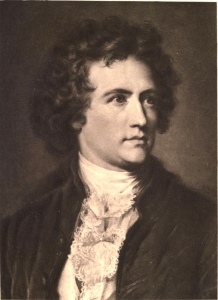
    Why do we like Johann Wolfgang von Goethe so very much? It’s simple! He’s the guy who wrapped up everything we believe in with this simple sentence:


    “Whatever you can do or dream, you can begin it. Boldness has genius, power, and magic in it.” – Goethe


    Of course, this was also said about Goethe (Super Goethe by Ferdinand Mount) that “…[his] company could be exhausting. One minute he would be reciting Scottish ballads, quoting long snatches from Voltaire, or declaiming a love poem he had just made up; the next, he would be smashing the crockery or climbing the Brocken mountain through the fog.”  

    So…, moving on… Goethe was also a very cool guy. In his lifetime, he saw the beginning of the Industrial Revolution in 1750 through Mary Shelley’s publishing of Frankenstein in 1818 – and everything in between! Check out the list of what happened during those nearly seventy decades at the end of this post – you will be A-Mazed!

    Goethe Book Awards Semi-Finalist Badge


    Now, Welcome to the GOETHE Hall of Fame!

    We wish to congratulate 2018’s Goethe Book Awards Grand Prize Winner –

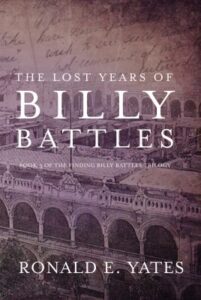
    The Lost Years of Billy Battles by Ronald E. Yates

    Billy Battles is as dear and fascinating a literary friend as I have ever encountered. I learned much about American and international history, and you will too if you read any or all of the books. Each is an independent work, but if read in relation to the others, the reader experiences that all too rare sense of complete transport to another world, one fully realized in these pages because the storytelling is so skillful and thoroughly captivating. Trust me; you’ll want to read all three volumes. Chanticleer Reviewer’s Note

    Mr. Ronald Yates not only won Grand Prize in the CIBAs 2018 GOETHE Awards – he won OVERALL GRAND PRIZE!


    To learn more about Ronald E. Yates, please click here.


    Congratulations to the 2018 Goethe Book Awards First Place Category Winners! 


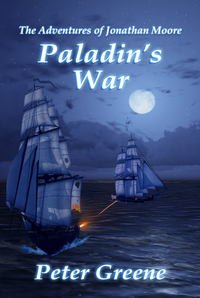
    The GOETHE Book Awards for post-1750s Historical Fiction Grand Prize is awarded to:


    Paladin’s War: The Adventures of Jonathan Moore by Peter Greene

    Congratulations to the 2017 Goethe Book Awards First Place Category Winners! 


    The Goethe Grand Prize Ribbon for Historical Fiction Post 1750s 2016 was awarded to:

    The Jøssing Affair by J.L. Oakley

    Congratulations to the 2018 Goethe Book Awards First Place Category Winners! 

    • Women’s Historical: A Seeping Wound by Darryl Wimberley
    • Manuscript World Wars and Other Wars: In Their Finest Hour by Duncan Stewart
    • North American Turn of the Century: The Depth of Beauty by A.B. Michaels
    • Regency, Victorian, 1700s/1800s: A Woman of Note by Carol M. Cram
    • British/Europe Turn of the Century: Silent Meridian by Elizabeth Crowens
    • Historical Fiction Manuscript: Running Before the Wind by Carrie Kwiatkowski
    • 20th Century: The Boat House Cafe by Linda Cardillo


    Post 1750s Historical Fiction AwardThe deadline for entering manuscripts and recently published works into the 2020 Goethe Book Awards is coming up fast! JUNE 30, 2019 is the deadline!

    For more information, please click here!


    Submit your manuscript or recently released Historical Fiction (post-1750s) to the Chanticleer International Book Awards!


    Want to be a winner next year? The deadline to submit your book for the Goethe Awards is June 30, 2020. Enter here!

    Grand Prize and First Place Winners for 2019 will be announced during our 2020 conference, #CAC20.

    The Grand Prize and First Place for 2020 CIBA winners will be held on April 17, 2021.

    Any entries received on or after June 30, 2020, will be entered into the 2021 Goethe Book Awards that will be announced in April 2022.

     As our deadline draws near, don’t miss this opportunity to earn the distinction your historical fiction deserves!  Enter today!

    The GOETHE Book Awards is a division of the Chanticleer International Book Awards – the CIBAs.

    The 2020 winners will be announced at the CIBA  Awards Ceremony during #CAC20. All Semi-Finalists and First Place category winners will be recognized, the first-place winners will be whisked up on stage to receive their custom ribbon and wait to see who among them will take home the Grand Prize. It’s an exciting evening of dinner, networking, and celebrations! 


    Goethe

    Some events that occurred during  Goethe’s lifetime:

    1750 – The Industrial Revolution began in England
    1756 – Wolfgang Amadeus Mozart was born in Salzburg Austria
    1761 – The problem of calculating longitude while at sea  was solved by John Harrison
    1765 – James Watts perfects the steam engine
    1770 – Ludwig van Beethoven was born in Bonn, Germany
    1774 – Goethe’s romantic novel, The Sorrows of Young Werther, propels him into European fame
    1774 – Goethe’s play Gotz von Berlichingen, a definitive work of Sturm und Drang premiers in Berlin
    1776 –  America’s 13 Colonies declare independence from England. Battles ensue.
    1776 – Adam Smith publishes the Wealth of Nations (the foundation of the modern theory of economics)
    1776 –  The Boulton and Watt steam engines were put to use ushering in the Industrial Revolution
    1783 – The Hot Air Balloon was invented by the Montgolfier brothers in France.
    1786 – Le Nozze di Figaro by Mozart premiered in Vienna
    1789 – George Washington is elected the first president of the United States of America
    1780 – Antoine Lavoisier discovers the Law of Conservation of Mass
    1789 – The French Revolution started in Bastille
    1791 – Thomas Paine publishes The Rights of Man
    1792 – Napoleon begins his march to conquer Europe
    1799 – Rosetta Stone discovered in Egypt
    1802 – Beethoven created and performed The Moonlight Sonata
    1802 – A child’s workday is limited to twelve hours per day by the British parliament when they pass their first Factory Act
    1804 – Napoleon has himself proclaimed Emperor of France
    1808 – Atomic Theory paper published by John Dalton
    1811 –  Italian chemist Amedeo Avogadro publishes a hypothesis, about the number of molecules in gases, that becomes known as Avogadro’s Law
    1811 – Jane Austen’s Sense and Sensibility was published anonymously. It was critically well-received
    1814 – Steam-driven printing press was invented which allowed newspapers to become more common
    1818 – Mary Shelley publishes Frankenstein
    1832 – Goethe’s Faust, Parts 1 & 2 are published posthumously (March 22, 1832)

    In 1830, Eugene Delacroix  created Liberty Leading the People to epitomize the French Revolution. The movement officially began with the Storming of the Bastille on July 14, 1789, a day that is still celebrated in France.  The French people were rebelling against the extreme wealth of the French royal family who overtaxed and underpaid the people of France to the point where they could not even feed themselves and had nothing to lose by going to battle. They were starving to death.  The uprising of 1830 was featured in Victor Hugo’s Les Miserables (1862)

    Claude-Michel Schönberg and Alain Boublil’s (1980s) musical can look at Delacroix’s Liberty Leading the People and hear the lyrics of the song that serves as a call to revolution:
    Do you hear the people sing? Singing a song of angry men? It is the music of a people. Who will not be slaves again.
    Liberty Leading the People by Eugene Delacroix, 1830. On display at the Lourve, Paris.


    Resources 

    *Britannica Encyclopedia 

    ** Oxford Reference

    ***New Yorker Magazine

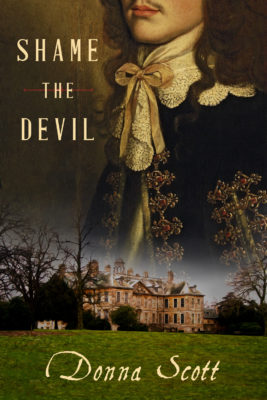
  • SHAME the DEVIL by Donna Scott – Historical Romance, Historical British & Irish Literature, Scottish Historical Fiction

    SHAME the DEVIL by Donna Scott – Historical Romance, Historical British & Irish Literature, Scottish Historical Fiction

    Colin and Roddy Blackburne are sent into indentured servitude in England in 1643 with their father. Gavan Blackburne supported the divine right of King Charles I. Still, after the tragic death of his wife that both Colin and Roddy witnessed, he relinquishes his efforts to protect the remainder of his family.

    The Blackburnes become stable hands at Appleton Hall, where the viscount’s daughter Emma quickly catches the eye of young Colin. Emma is curious about the young Scots in the stable and drags along Alston, the son of Lord Stillingfleet. The four children start a friendship that intertwines their lives forever.

    By 1648 the King is being tried for treason. Emma and Alston are facing pressure to find suitable matches for marriage, and both have secrets to hide. Emma and Colin have professed their love for each other, while Alston has fallen for Stephen Kitts, a man who has a dark past and devious intentions for the future. Colin is forced to flee the day before his family’s servitude ends, leaving only a letter behind. Tragedy strikes when Roddy’s jealousy causes him to betray the young lovers ending in unforeseen consequences.

    Scott’s writing is magnificent. One of the first signs of her skill is how quickly the real-world melts away when reading. History buffs will enjoy the way Shame the Devil effortlessly interlaces the complex historical backdrop into the narrative, while those reading for the romance will not be overwhelmed with historical exposition. While the history of the setting is a crucial element of the story, it mainly shows up in character dialog. The way characters talk about and react to the political tensions of mid-seventeenth-century England fuels the conflicts of the novel and demonstrate how character-driven a story can be.

    The English Civil War takes a back seat to the book’s real action, secrets, and lies. Naturally, in a story of forbidden romances, there is plenty of betrayals, but there is just as much steadfast love. A well-written book like Shame the Devil makes readers invested in the likable characters and the unlikable ones. All of the main characters are complex and feel real within each page. Scott manages to make the character’s flaws and motivations believable and make sense within the narrative to make each character’s story feel complete.

    The intricately woven secrets and lies against the backdrop of an unprecedented dethroning of the monarchy make Shame the Devil a page-turning experience. Historical fiction and romance fans should not miss out on this book. Highly recommended.

    Shame the Devil won First Place in the CIBA 2014 Chaucer Awards for Early Historical Fiction novels.


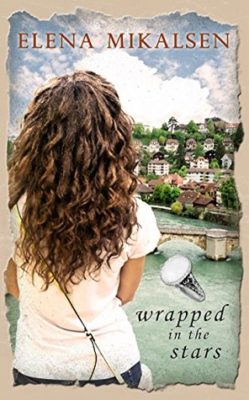
  • WRAPPED in the STARS by Elena Mikalsen – Contemporary Romance, Medical Fiction, 20th Century Historical Romance

    WRAPPED in the STARS by Elena Mikalsen – Contemporary Romance, Medical Fiction, 20th Century Historical Romance

    Maya Radelis has spent the last seven months running from herself. After the death of a patient, she abandons her pediatric residency in New York City for the jungles of Guatemala and the Family Health Volunteers Mission. However, after exhausting her six-month leave, she still cannot bring herself to return to New York. Instead, Maya ends up in Edinburgh, Scotland, where fate intervenes.

    In a small antique shop, an inscribed ring somehow “calls” to her. Unwilling to part with it, Maya purchases the ring and traces its history. She has seven days before she must return to the university and face the consequences of her absence, as well as the investigation of her patient’s death. Fearing she will no longer be allowed to pursue a medical career and dreading the meeting where her fate will be revealed. Maya wants to make the most of her search for the ring’s previous owner, especially after she begins to have strange dreams and memory-like episodes of the woman she thinks owned the ring. Enlisting the help of Pauline, her French friend, she traces an odd, twisting path through Paris then Bern, Switzerland. The more she discovers, the more she begins to question her destiny.

    With its alternating narration, Elena Mikalsen’s Wrapped in the Stars shows two women’s worlds, so far apart and yet so similar. Maya Radelis, an American medical student, is shown in parallel with the life of a Swiss medical student in the years leading up to World War I, Rebecca Miller. Though the obstacles for Rebecca are vastly different than the ones facing Maya, their feelings of uncertainty and their love of medicine are very much the same. Rebecca’s desire to become a doctor comes from a family heritage of medicine and, in some part, from the death of her brother, Karl. Maya is also following a family legacy while hoping to somehow erase the guilt she feels for the childhood death of her twin sister, Ella. Both of these accomplished women have this need to “[e]arn [their] right to be alive” and somehow validate their own existence through medicine.

    Both women share a Jewish ancestry, and neither woman sees the need to marry, desiring instead their independence in a world they have built, instead of the one handed to them through family ties and marriage bonds. While fearing the lonely paths before them, Maya and Rebecca doubt their abilities and often wonder if their sacrifices are truly worth the pain of disappointing others. However, each find men strong enough to understand them both and love them eternally.

    “Synchronicity,” or “meaningful coincidences” plays an enormously important role in the novel. Readers will enjoy following Maya’s story, the twists and detours that create such an interesting plot as her history and future entwine. A tactic Mikalsen skillfully employs to make one wonder just how much we choose for ourselves and how much the universe decides for us.

    Eternal love is the most touching aspect of Maya’s and Rebecca’s stories. The German inscription Maya finds in Rebecca’s ring says it best with its message of living within the heart of another and being forever “therein.” It’s a beautiful message, a love strong enough to defy death and reclaim the lovers a century later. Something is reassuring and peaceful in believing love cannot die. And when all is said and done, what lovers wouldn’t want such a legacy?

    Wrapped in the Stars received First Place in the CIBAs 2018 CHATELAINE Awards for Romantic Fiction.

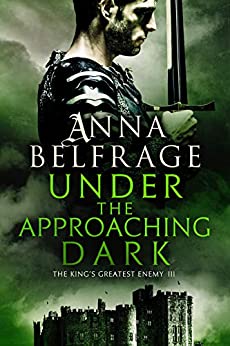
  • UNDER the APPROACHING DARK: The King’s Greatest Enemy by Anna Belfrage – Historical/Biographical Fiction, Medieval Fiction, Medieval Romance

    UNDER the APPROACHING DARK: The King’s Greatest Enemy by Anna Belfrage – Historical/Biographical Fiction, Medieval Fiction, Medieval Romance

    Christopher Marlowe’s The Tragedy of Edward the Second (1592) and Derek Jarman’s film (Edward II, 1991) fans will want to sit up and take notice of how Anna Belfrage navigates her way through this installment of the Under the Approaching Dark, the third book in The King’s Greatest Enemy series. With a vast cast and two kings from the same family to deal with, the challenges were immense. And she’s succeeded.

    The narrative is built around two males – decades apart – who may or may not be alive or dead. Four-year-old Tom arrives at the home of his mother, Kit, and father, Adam – a knight of the realm – in a recently exhumed coffin. No one wants to believe the lad is dead, and William (a vicar; Adam’s brother) recommends not opening the lid to view the rotting remains but assures one and all that the corpse is most certainly the couple’s eldest boy. But Kit never gives up hope.

    The second male, King Edward II, also has difficulty staying alive or dead. Deposed for outlandish behavior in the bedroom and at court, his long-suffering wife Isabella teams up with Roger Mortimer to rule the country and place Edward III on the throne while yet a teenager. To add further twists to the plot, Edward of Carnarvon – after reportedly being killed while under arrest – is provided a resurrection and exile to France.

    Enemies to both Edwards abound. Henry of Lancaster is afraid of losing a considerable amount of land if peace is reached with the Scots and Godfrey of Broseley delights in inflicting pain and torture on anyone who would dare stand in his way to power and riches – man or woman. Kit’s half-sister Alicia is deft at playing both sides to her advantage. But her sibling is not fooled.

    History buffs and devotees of political intrigue will enjoy this generously written account of the royals struggling to stay on the throne even as some of those in their court change allegiances whenever they see an opportunity for personal gain. Belfrage’s sense of pace, in-depth characterization of the principals – coupled with a few surprises along the treacherous journey to safety and security with the minimum of bloodshed – is a remarkable achievement. Her ability to convincingly weave together so many people and narrative threads will keep readers’ interest high and encourage them to snap up the next volume in the series.

    Under the Approaching Dark won first place in the CIBA 2018 CHAUCER Awards for Early Historical Fiction.


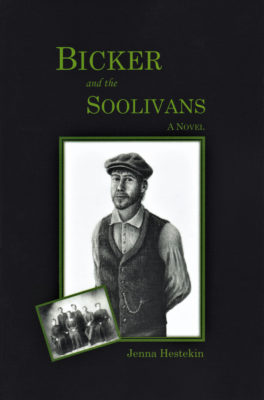
  • BICKER and the SOOLIVANS by Jenna Hestekin – American Civil War Era, Historical & Heartwarming Romance, Family Drama

    BICKER and the SOOLIVANS by Jenna Hestekin – American Civil War Era, Historical & Heartwarming Romance, Family Drama

    The Soolivan family is split apart by the Civil War, but when the ugly side of fate intervenes, a silver lining appears to bring a broken family back together again. While Andy Soolivan is convalescing in the hospital with his new friend, Bicker, he receives news that his uncles have all been killed. In a letter explaining the details, August Soolivan urges his son Andy to come home. The family has suffered enough.

    As the Soolivan family comes back together, a one-armed Bicker arrives like a lost pup looking for a home. He is welcomed into a family that values togetherness above all else. Penelope, the oldest daughter, catches his eye. The only problem is Penelope. She’s hiding the fact that she is engaged to her beau, who is still fighting in the war. She agonizes, though, because he hasn’t written in weeks. But she isn’t the only daughter in the family with secrets to keep. Will fate allow the Soolivan family to find peace when the war has taken so much from them, and will the emerging feelings between Penelope and Bicker be allowed to flourish? Fate and family are at the heart of Bicker and the Soolivans, and everyone from the casual reader to the critic will feel their heart warmed throughout this authentic feel-good story.

    Hestekin’s greatest strength is her ability to create well-developed, engaging characters that fuel a wonderfully character-driven story. The majority of the novel takes place at the Soolivan home and in the nearby small town of Alma, Wisconsin. The characters drive a gripping tale of a family coming together to heal from the losses of a devastating war and the splitting apart again to follow love’s new beginnings.

    Bicker and the Soolivans will sweep you off your feet, make you forget about the current state of world affairs, and fall in love with the antics of a midwestern family in Civil War-era America.

    Jenna Hestekin’s Bicker and the Soolivans earned Semi-Finalist status in the CIBAs 2018 for American Western Fiction, the LARAMIE Awards.


    **You can purchase a copy of Bicker and the Soolivans directly from the author’s website, by clicking here.