Betrayal and a dark side of friendship set the scene for Chris Karlsen’s Killer Friends. Book 4 in the Bloodstone Series delivers a gripping historical thriller with the unsettling realization that sometimes the greatest danger comes not from strangers but from those closest to us.
In late 19th‑century London, detectives Rudyard Bloodstone and Archie Holbrook are drawn into a case when a frantic mother, Henrietta Newell, storms into the bureau to report her missing adult son. The detectives are reluctant to investigate the whereabouts of a thirty-year-old bachelor, dismissing any likely danger until Henrietta throws around her notable political connections, leaving them no choice but to act. What they discover is a tale of deception and murder.
Killer Friends excels in the subtle ways it immerses the reader into its shadowy London setting.
Karlsen’s thorough research penetrates her depiction of Victorian streets, social divides, and the dark corners of the city. The procedural elements feel raw and true to the time, as Karlsen highlights the limitations of 19th‑century policing—no DNA testing, no modern labs, instead it’s intuition, interviews, and thorough legwork, all of which submerges readers deep into the search for clues.
This historical realism grounds the novel, making the detectives’ work feel both precarious and admirable. The author’s background in law enforcement shines through with impeccable credibility, while her storytelling talent ensures the mystery remains engaging.
Bloodstone and Holbrook are complex characters, navigating class divides, political pressures, and moral dilemmas.
The pacing builds steady tension as the stakes rise, secrets unravel, and motives are exposed. The novel’s fusion of character‑driven drama with crime‑solving suspense relentlessly drives the story forward to its heart-pounding final revelation.
Stylistically, Karlsen’s prose is straightforward, capturing both the grit of London’s streets and the emotional turmoil of her characters. The central theme of betrayal among friends resonates strongly, while also reflecting on the cost to those who uncover secrets or speak upt for the truth.
Killer Friends is a rewarding read for fans of historical mysteries and crime fiction in general. By focusing on the fragility of trust and the dangers hidden within friendships, Karlsen delivers a story that is both entertaining and thought‑provoking. While it can be read independently, those who follow the Bloodstone Series will appreciate the continuity and growth of its central detectives.
Friendship and loyalty can be twisted into deadly motives, and the cost of misplaced trust can be fatal. Meet up with Killer Friends and you’ll join a mystery that lingers long after the final page.
CHANTICLEER 10 QUESTION AUTHOR INTERVIEW SERIES
with Award-Winning Author, Dave Mason
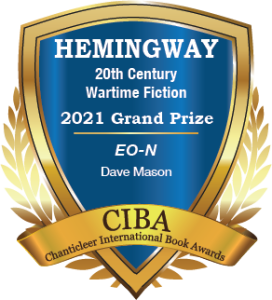
Hello friends, we have another fabulous interview for you today. In 2021, Dave Mason took home the Grand Prize in the Hemingway Awards for his fascinating novel, EO-N. Here, he tells us how EO-N came to be and the subsequent heights it is now reaching! Take a minute or two and get familiar with Dave. You won’t be sorry!
Chanti: Tell us a little about yourself: How did you start writing?
Mason: In my day job, I’m a partner in a strategic design firm, so I write for my clients pretty much every day. For eleven years, my business partners and I hosted Cusp Conference — an annual conference “about the design of everything” — and one of our 2018 presenters suggested writing for fun as a way to reduce stress. I hadn’t written for anything like fun since about third grade, but that somehow made sense at the time, and I just started, mostly on the train to and from downtown, and mostly random stuff at first, but pretty soon my pattern-seeking brain began to put things together (news articles and my own sense of “what if”) and before I knew it, I had what seemed like the beginning of a novel. After sharing with some people who gave the rough manuscript an enthusiastic thumbs up, the damned thing took on a life of its own, and here I am, doing an author interview. Who knew?
Chanti: That’s funny. We knew! When did you realize that you were an author?
Mason: Still not sure that has been internally acknowledged!
Mason’s report card showing his writing chops early on.
Chanti: You’re cracking me up! Let’s talk about genre. What genre best describes your work? And, what led you to write in this genre?
Mason: Historical fiction / mystery? Is that a genre? Both EO-N and the works I have in progress are a little history, a little mystery, and a little contemporary social commentary. Maybe not a typical combination, but it gets me going.
Chanti: YES! Historical Mysteries or Mystery / Historical Fiction is certainl a genre! Owen Parry’s Call Each River Jordan: A Novel of Historical Suspense, Love in the Time of Cholera by Gabriel García Márquez, to name a couple. There are more, trust me. HUGE genre here. Do you find yourself following the rules or do you like to make up your own rules?
Mason: I didn’t realize there were rules. As I said, I never set out to write a novel in the first place. I just wanted some form of relaxation. That didn’t work out too well!
Chanti: You’re killing me. Seriously. Okay, how do you come up with your ideas for a story?
Mason: I’ve been fascinated with history my entire life. I spent my early childhood years in a small village in England, walking to a two-room school through the spooky graveyard of a church built somewhere around the 13th century. I’m the child of parents whose cities were bombed by the Germans, and my father was training to be an RAF pilot when the war ended (lucky for me!). When my family moved to Canada when I was eight, that opened up a whole new world of history to fire my imagination – stories of the Iroquois and Algonquin and Mohawk and coureur de bois were like gold to me. Plus, some archeologists uncovered an entire Roman fort in my little English village just after I moved away! So now I’m drawn to news articles and stories that pertain to newly discovered pieces of history, and I’m also highly aware of current world events and societal trends. So my guess is that my personal worldview + history resulted in EO-N, and is definitely embedded in new work I have on the go.
Chanti: What are you working on now? What can we look forward to seeing next from you?
Mason: I’ve got a couple of things going (Vikings meet Nazis meet NASA, for example), but just like EO-N, I have no idea if they’re any good or not. So as I did with EO-N, I’ll ask my wife if they’re any good (and she’ll say yes) then I’ll ask my siblings for unvarnished feedback (they have no problem providing that!) and will go from there. Both works in progress are in the same vein as my first book — history + mystery + contemporary societal themes, so I’m thinking maybe that’s my thing. Guess I’ll find out.
Chanti: How structured are you in your writing work?
Mason: I write when I feel like writing. And I don’t follow a structure. I recently learned the terms “plotter” and “pantser,” so I’ve tried to figure out which of those I am, and have come to the conclusion that I’m both — a “plantser”? I find I begin with an end in mind, then start, and figure it out along the way, doing all the necessary research and making adjustments as I go. Sometimes I feel as if the characters pretty much tell me what they should do, and I’m just along for the ride. Sort of. I have to admit that as a control freak in real life, it’s pretty cool to be able to create people and have them do crazy things. And kill them.
Chanti: That’s a lot of fun, I do have to admit! How do you approach your writing day?
Mason: With coffee. I like to write early in the morning. Like really early.
Chanti: I get it. When the house is still asleep. What areas in your writing are you most confident in? What advice would you give someone who is struggling in that area?
Mason: I’m not sure I’d say I’m fully confident in any area, but people tell me that my characters are real to them, that my plotting is solid, and that my research is sound. And maybe it’s my visual design background, but the people who ended up acquiring EO-N for film and TV told me they thought the book was “cinematic” — that they could see every scene and element in enough detail to make it real-ish. I have a friend in the live theater business, and he told me once that theater doesn’t happen on the stage, that it happens in the audience’s minds. That’s what I was shooting for with my novel. I didn’t realize it was called worldbuilding until someone used that word, and I googled it! So, my advice? That’s a tough one. The entire storytelling process is complex, and it seems to me you can get 95% of it right and still fail if the 5% takes the reader out of the world you’re trying to put them into temporarily. So it may seem obvious, but get it all as right as you can. Then have a bunch of people whose opinions you trust read it. Then make it even more right. And repeat that until you know you’re done. The grind is part of the fun. And words are a visual medium.
Chanti: I like that. Well said! It’s important to work on your craft. What do you do to grow your author chops?
Mason: I write more, and I listen to the people whose opinions I trust. Lather. Rinse. Repeat.
Chanti: Give us your best marketing tips, what’s worked to sell more books, gain notoriety, and expand your literary footprint.
Mason: I received interest in EO-N from a couple of publishing houses, but when they asked how I was going to market the book I have to admit I was taken aback. I naively assumed that’s what they would do, since I wrote it, my design firm formatted and designed it, and I had connections to editors. In the end, after learning more about the process (I knew nothing) I elected to self-publish. In my day job, I help people market their services and products, so it wasn’t a stretch to take that on. The usual mechanisms — substantial email lists, substantial social media usage (including advertising), and of course, gaining positive recognition in the form of reader reviews and of course awards such as The Hemingway Award (thank you!) are all fuel for the fire. Through those and other more mysterious factors like luck, EO-N ended up being acquired for film and television, which has also spurred interest, and to my continued amazement it has been a bestseller in the US, Canada, the UK, and Australia. My tip is: be good, be noisy, and be visible, because no one cares about your book until they do.
Chanti: Now, that’s what I call a success story! Congratulations to you!Who’s the perfect reader for your book?
Mason: I’m finding that out. EO-N is partly set in WW2, and involves some pretty dark stuff that’s historically accurate. In places it’s pretty action-oriented, and in others it’s pretty emotional. So, it really runs the gamut, and I’m finding out that it appeals to a wide range of people for different reasons. I’ve spoken with readers who are pilots in real life who’ve told me the flying scenes are spot on in terms of the technical stuff and riveting in terms of action. And I’ve spoken with a few book club members who admitted that EO-N was not a book they might have normally picked up, but that the emotional punch of it made them so glad they did. That surprise factor is a wonderful thing to hear.
Chanti: I think that’s what you call a book for just about everyone. Do you ever experience writers block? What do you do to overcome it?
Mason: This isn’t my day job, so I just don’t put that kind of pressure on myself. If it’s there, it’s there. If it isn’t, I’m somewhere else. It’ll happen when it happens.
Chanti: That’s very cool and probably helps a lot. What excites you most about writing?
Mason: I think it’s that I discovered (rediscovered?) something that I really enjoy. And that it actually does the thing that the Cusp Conference speaker said it would do. It relaxes me, while it energizes me. That’s a win-win. And if what I do gives someone a world they can immerse themselves in for a few hours, and they can come back to this one a little better for it, I’m happy.
Chanti: What is the most important thing a reader can do for an author?
Mason: If they enjoy the thing, talk it up! If they don’t, well, we can just keep that between us.
About Dave Mason:
Born in England and raised in Canada, Dave Mason is an internationally recognized graphic designer, a Fellow of The Society of Graphic Designers of Canada, and a co-founder of a number of software companies. He divides his time between Chicago, Illinois and Lunenburg, Nova Scotia. EO-N is his first novel.
Brooding Château du Freudeneck, just outside Strasbourg, France has villains in the drawing rooms, stolen art hidden in the cellars, and bats in the belfry – all the best elements for a 19th-century Gothic mystery.
However, in Michelle Cox’s novel, A Spying Eye it’s the 20th century. The Great War is passed, but the next war already looms on the horizon. The people of Strasbourg feel the growing conflict sharply, at the heart of Alsace-Lorraine, a fertile region that has been contested between France and Germany since time immemorial.
Which means those bats are in the unfortunate head of the elderly Baron Von Harmon, the current lord and master (as much as he’s still able to be, at least) of the Chateau, while the stolen art is pursued by both the villainous Nazis and the only slightly-less villainous agents of Britain’s MI5.
Amongst this strife, Clive and Henrietta Howard visit the Chateau, at the behest of both his mother and his country. They’re filled with conflicting hopes about a second honeymoon after their disastrous first attempt in A Promise Given, while conducting a wild goose chase for a missing occult art masterpiece in the home of Henrietta’s long-lost relations.
The game is afoot from the very first page of this sixth entry in the award-winning series – long before Clive and Henrietta even know that they are being played by both sides, neither of whom intends for them to survive.
While Inspector Clive Howard is certainly the more experienced investigator of this pair, the focus in A Spying Eye is firmly on Henrietta, particularly in contrast to the trials and tribulations faced back home by her sister Elsie and her sister-in-law Julia.
The Strasbourg troubles in which Henrietta finds herself mired combines a search for the roots her family left behind generations ago with an utterly riveting and thoroughly researched investigation into the early years of the Nazi movement, Hitler’s seemingly endless search for mystical and mythical artworks to feed his obsession with the occult, and a real-life mystery wrapped around just what happened to the panel of the Ghent Altarpiece that the Howards oh-so-briefly managed to hold in their hands.
The pace of the story is relentless on both sides of the Atlantic, as Henrietta, Julia, and Elise all face personal, professional, and even criminal crises, in a world marching towards World War II.
Readers who have fallen in love with the detective duo of Howard and Howard will be in rapture over this latest entry. Fans of the bestselling Maisie Dobbs series by Jacqueline Winspear or the Elena Standish series by the late Anne Perry will find just the kind of character-driven, meticulously researched historical mystery that they are craving, set in the fascinating period between the wars.
As A Spying Eye ends, Henrietta gets her hat on the way out the door to her next adventure, A Haunting at Linley, scheduled for release in late October 2023.
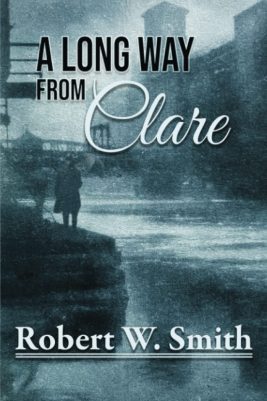
Twenty-four-year-old Conor Dolan had intended to surprise his older brother and catch up after years apart. However, what he finds when he arrives in Chicago will spark a harrowing mystery, in A Long Way from Clare by Robert W. Smith.
Kevin, a beat cop in twentieth-century Chicago’s worst neighborhood, was found six weeks before Conor’s visit, in what the police have dubbed a suicide. However, Conor has his doubts. Each time he asks people about Kevin, he is met with resistance and denial. When Conor speaks with Detective Flynn, the man assigned to Kevin’s case, his suspicions become certainties. Flynn’s bizarre behavior, the minimal effort on the police’s part to investigate, and the men following Conor at every turn convince him to stay in Chicago rather than return to his home in Springfield.
Conor’s determination to find answers to Kevin’s death lead him in a dangerous dance with darkness amidst the shadows of Chicago’s underworld.
He finds an ally in undercover Pinkerton agent Rebecca Fletcher, who has been assigned to find information on a secret Irish society, Clan na Gael. Clan na Gael, a militant organization bent on establishing a united, independent Ireland, is planning the assassination of a visiting British dignitary. And Rebecca has uncovered evidence linking Kevin with them. Now Conor finds himself in the middle of a corrupt city, fighting for justice for poor immigrants and searching for the truth about Kevin’s life. The more he learns about his brother, the less sure he is that he actually wants that truth. At great risk to himself, Conor faces the corruption, where his own destruction is just one misstep away.
A Long Way from Clare revolves around the brotherly love between Kevin and Conor.
The reader sees their relationship through Conor’s memories. Kevin gave up so much to make sure his brother became more than himself. A seven-year-old Conor was once protected from the reality of eviction by Kevin, who strives to make the whole thing seem like a grand adventure even as their mother sends them across the ocean to their uncle. He does this again on the horrifying journey from Ireland to America aboard a cramped, filthy ship. Conor is never fearful because Kevin has given him strength and assurance that all will be well as long as they are together.
As a young adult, Kevin joins the army and later the police force to provide Conor with an education. He made certain Conor became a lawyer while Kevin himself walked the beat of the worst section of Chicago. Conor truly begins to understand Kevin’s sacrifice as he investigates Kevin’s death. However, he also finds a duality in the brother he loved and respected. He’s uncertain and confused when he learns of Kevin’s secretive life, struggling to reconcile this with his kind and caring brother.
Chicago itself becomes an integral part of the novel. The massive government corruption in the early twentieth century defines Conor’s story just as much as the other characters.
Conor’s fledgling law office cannot survive without the consent of precinct bosses, their “heelers,” and the coppers patrolling the ward. Everyone from the local priest to the court clerk has their hands in the coffers. Stuck in the capital of debauchery, Conor cannot fathom how his caring brother has spent most of his adult life working in the ward. The smog, the filth, and the human depravity overwhelm Conor’s upright values. Though he feels the pressure to break laws to benefit his “protectors,” Conor refuses.
The plight of immigrants, especially the Irish, becomes foremost in Conor’s mind since the city itself seems to devour these poor masses.
In his search for answers, he encounters so many people – women in particular – who’ve been abused and used, crushed beneath the feet of men seeking their own freedom from those at the top. They hurt those beneath them because they themselves are being hurt, going so far as to kill their own children rather than allow the city to consume them piece by piece. This dark and horrifying picture of the Windy City is the one that Conor must face.
A Long Wayfrom Clare skillfully entwines the bonds of family, the underbelly of a corrupt city, and the resilience of those who struggle for justice. Robert W. Smith’s storytelling plunges readers into early twentieth-century Chicago to deliver a riveting narrative where the truth is irresistible.
Tom Sawyer Returns is the second book in The New Adventures series by author E.E. Burke.
Readers join a now grown up and far more independent Becky Thatcher as she maneuvers her complicated life in Civil War era Mississippi. Tom has long since left, and Becky is engaged to Union Captain Alfred Temple, who offers her all the safety and security she needs in such uncertain times. But does she love him? Actually love him?
Becky soon discovers that her heart may have other plans.
When an injured Tom Sawyer bursts through her door and collapses onto the kitchen floor, Becky and her father – Judge Thatcher – take him in, care for him, and find out that he may have stumbled into the house for reasons more than the simple rekindling of a lost flame. With Judge Thatcher caught up in a twisted ploy posed by the rebels, Becky must partner up with Tom in order to save her father. But with Tom’s memories nowhere to be found, and his aptitude for ending up smack dab in the middle of trouble, the two find themselves venturing down a twisting road of discovery, mystery, and uncertainty.
Set in a divided world rife with danger and history, E.E. Burke takes characters so close to the heart of Americana and gives them new life.
Fans of Mark Twain’s original work will appreciate the attention to detail and the care in which the story is crafted, paying homage to the original tales of Tom Sawyer and his wild adventures. But this continuation sees a deeper, more intimate portrait of Becky Thatcher – a girl grown into a woman, who’s come into her own confidence and whose sharp mind sees her through many perilous situations.
While the title of the book may be Tom Sawyer Returns, don’t let that fool you – Becky Thatcher is the heart of this book, the backbone, the brains.
Both her and Tom have grown significantly since their childhood days, and Burke expertly takes two kids written nearly 150 years ago and turns them into adults whose life experiences have been shaped by the Civil War; two individuals who are fiercely independent, yet whose attitudes and opinions have been molded by the world they live in. They jump off the page as not simply characters, but as fully realized people. People with complexities, fears, and failures.
Not only does Tom Sawyer Returns take the reader on an adventurous ride filled with plots and ploys, but it also provides a beautiful romance that blooms amidst the thorns of trouble.
E.E. Burke writes with a balance of delicacy and sharpness, showing the true nature of love – that it is something tangled and complicated. As the reader follows Becky and Tom, they’re never made to doubt the pair’s attraction, but to instead find comfort knowing that while their combined history may complicate their feelings for each other, love will still prevail in end. As it always does, and as it always will continue to do.
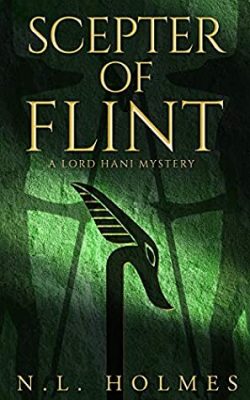
The yearning for justice is a heartfelt sentiment that has stirred people through the ages. The price for justice can be high, and it’s not always predictable who will pay. In this third Lord Hani mystery of ancient Egypt, Lord Hani is confronted with a puzzling dichotomy. It’s a pool of two truths that cannot coexist. And for Lord Hani, neither truth has the desired outcome. Yet, the King has assigned him to solve this mystery of the stealthy tomb robbers. They have broken into several sacred resting places and stolen valuable contents meant to sustain the spirits of those who passed on. Lord Hani must uncover the secret leader to stop these villains, the one determined to wield a Scepter of Flint to spark fires of division, suspicion, desperation, and greed.
As Lord Hani begins the investigation with his reliable assistant and son-in-law Maya, longtime enemy Mahu the police chief continually shows up looking for trouble and looking to get Hani off what Mahu sees as his case. However, Hani continues to puzzle out the mystery of the tomb robbers, why their crimes have started now, and where they may strike next. As he follows the clues, he finds more to this spree than robbery – much more. And now, it’s not just property that is threatened. Now lives are at stake.
Interviewing suspects and witnesses keeps Hani busy between the political new capital and the beloved old capital, a boat ride apart. He and Maya are not alone in their pursuit for the truth; generations of his passionate family, including his father, brother, dear wife, and daughter, join in. From their diverse interests and work Hani gleans insightful information. To make matters even more dire, a terrifying plague sprouts in the capital. So extra care must be taken, and their days are surrounded by the tragedy of the illness.
What Hani ultimately uncovers is shocking, and in the end, the reach of the scepter will put his family and many other innocents at risk. Hani’s trust in others – even his boss – will be tested. If he makes the wrong choices, more innocent victims will suffer. If Hani can’t complete his fight for justice in time, will they all succumb to the Scepter of Flint?
While tomb robberies serve to remind all that nothing on this earth is guaranteed to last, and political forces are turning intolerant toward divergent views, those connected to Lord Hani have the company of a true and trusted friend. Hani and his wife keep a house that is as busy as ever with family and friends coming and going. It often feels like a safe harbor, where all are welcome.
N.L. Holmes arms her fascinating characters with motives and dreams that tug at the heart and places them in a world of highly relatable circumstances. Because Holmes masterfully lays out the unique story and situation of each character, there are no real minor characters. She contrasts the very human foibles with the stunning descriptive passages of the natural beauty surrounding these characters, if only they appreciate it. The reader certainly does. The author’s poetic depictions capture the spirit and renders us helpless in her grasp, then she draws us back to conspiracies, machinations, and perilous plot twists that spark fears of the Scepter of Flint.
The third book in the Lord Hani mysteries, Scepter of Flint, will keep readers glued to the page – and dying for the next book in the series, The North Wind Descends. Those who are new to the series will undoubtedly want to read the first two books, Bird in a Snare and The Crocodile Makes No Sound.
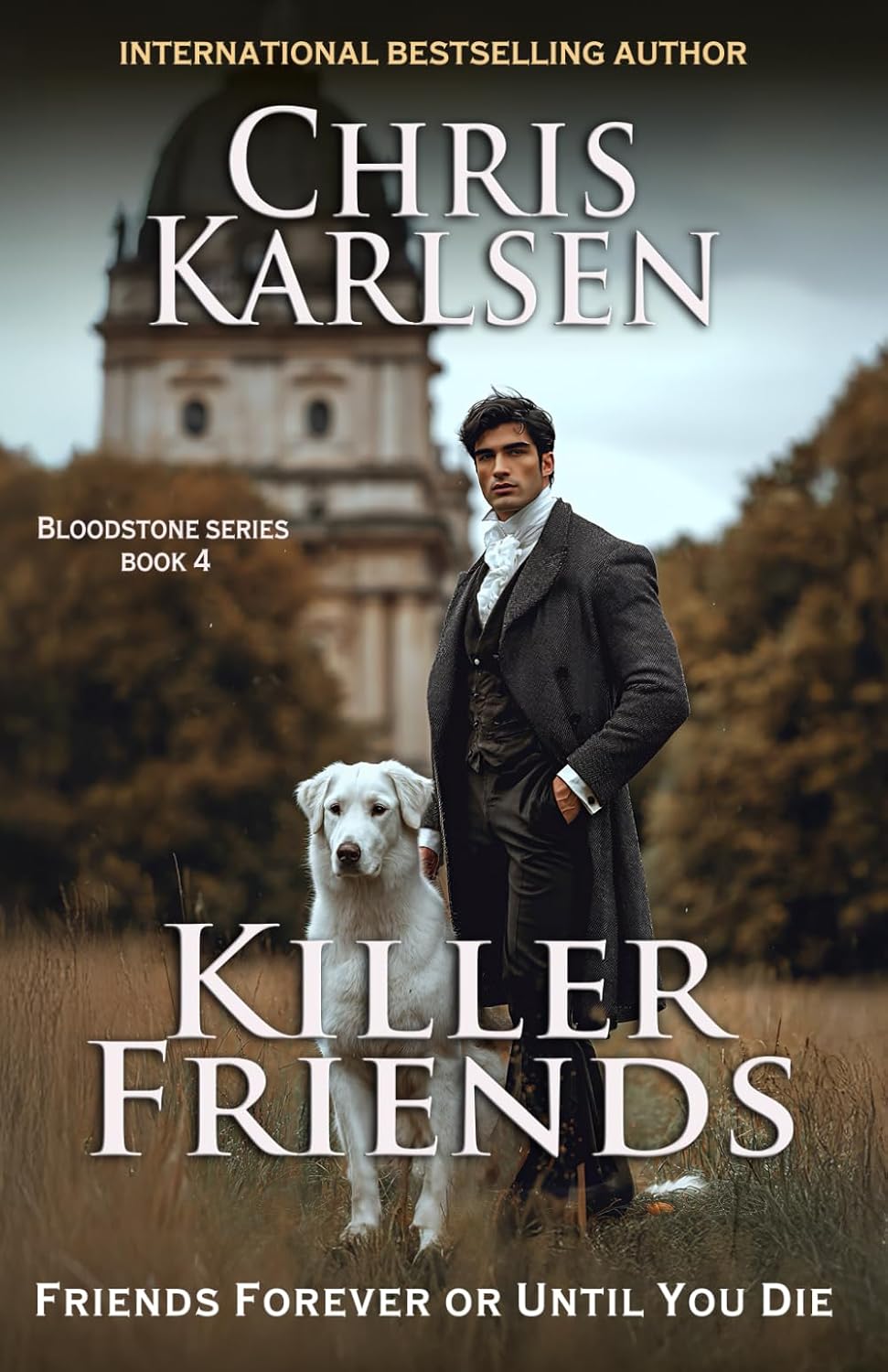
Detective Rudyard Bloodstone is facing the most bizarre crime spree of his career as a copper on the Victorian streets of London. Someone is using a poisonous Cape cobra as a weapon.
What begins as a simple robbery scheme turns deadly when a wealthy businessman is killed via cobra attack, the crimes go from strange to deadly. Rudyard (Ruddy) and his partner, Archie Holcomb, have few clues and no idea what would cause such a change in the criminal’s behavior.
When the criminal returns to the estate and attacks the victim’s daughter, Ruddy’s suspicions are confirmed. With Jack the Ripper still fresh on the minds of every citizen, Ruddy and Archie must locate this criminal quickly or risk the ire of their supervisor and the shame of losing the case to Scotland Yard. But with no clear understanding as to why the victims were targets, no idea of the killer’s identity other than obscure reports of his scarred appearance, and a weapon capable of killing with a single bite, Ruddy faces one of his toughest, deadliest mysteries to date.
The strong characterization of Karlsen’s cast shines brightly within this third edition to The Bloodstone Series. Rudyard Bloodstone, a Holmes-Esque protagonist, has an intuitive “ability to read people and [an] acuity at measuring their nature.” An adept sketch artist and survivor of the Zulu wars, he is more than a talented detective. This no-nonsense former soldier isn’t in the habit of apologizing for doing his job – or his methods – regardless of the social rank and attitude of the Londoners who fail to respect him.
Karlsen’s adept handling of the fiend and murderer, Kip Idrizi, presents an unexpected twist within the novel. His story and reasons for committing the crimes will give readers pause. Kip, an orphan and smallpox-scarred member of the lower class, yearns for a better life. With no education, no hope for betterment, and no friends, except for a cobra he rescued near the docks, he resorts to a life of crime. He hopes to “earn” enough money from “a toff with a fat wallet” to go to America and fade into the background in some small town in the West. His feelings of inadequacy, though leading to heinous acts, are directly related to how he’s treated by those upper-crusters in Victorian society. In this vicious cycle, he cannot escape the jibes and insults, so he, in essence, falls prey to an unscrupulous member of that upper-class group. This situation creates a duality in the reader’s feelings for Kip, where his vicious crimes war with his kindness toward a near-dead reptile and desire for a simple life of obscurity.
Class discrimination presents a significant dilemma for a number of the novel’s characters. Most obviously, this difference in societal treatment affects Kip; however, it extends to the protagonist as well. The distance between the haves and have nots risks blocking Ruddy’s and Archie’s progress in solving their case. Will the duo overcome the pressure and prejudice of class separateness to solve the case and ensure the safety of those who would rather cross the street to avoid the detectives? As in the other Bloodstone Mysteries, readers can expect an exciting story with plenty of twists and turns. Here’s a Victorian detective thriller set to chill your bones. Karlsen delivers a novel that will not be set down until the very last word is read!
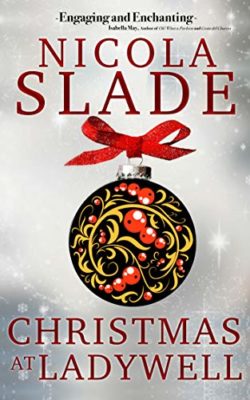
Christmastime in the English countryside, what could be cozier? Nicola Slade casts a charming spell on the reader with her novella, Christmas at Ladywell, A Time for Secrets. The main character Freya Wellman, jolly with the holiday spirit, has much to do to ready her ancient home, Ladywell, for yuletide guests. She happily juggles tasks to ready an adjoining cottage for a visit from a famous American actor and his girlfriend. Freya also cares for her small daughter, Violet, and visits with friends and an interesting assortment of townspeople. Most eagerly, she awaits the arrival of her smart and funny husband, a successful scriptwriter who’s been in America working on a film with the actor.
It’s a busy, festive time, and the reader is more than happy to witness all this gaiety at Ladywell. Of course, that name invites inquiry, one answered by stories that are nestled like Russian dolls in this exquisite book. Freya’s ancestral home is brimming with secrets and enchantment conjured over centuries. While Freya isn’t visited by the ghosts of Christmas past, present, and future, the reader is treated to three fabulous historical tales that chart the experiences of previous inhabitants of this wondrous place of potent, healing waters, invisible flowers, and a legendary, loyal hare.
Whether it’s 1390, 1543, 1825, or the present day, there’s a mystical sisterhood at Ladywell that bridges time, a linking of strong women who tend home and hearth and pass on the secrets of the land. The past re-emerges into the blissful bustle of Freya’s current life as she learns of a family connection with King Richard III. Is this connection tied to a future event? Will the secrets of the past travel to the future?
With the loveliest prose and sharp humor, Slade offers the best Christmas gift for her readers with this gem of a book. Those who read her prior work, The House at Ladywell, will undoubtedly want to read Christmas at Ladywell, but this novella also works marvelously as a separate book. So, put the kettle on, get comfy by the fireplace, let the cat snuggle on your lap, and settle in for a cheerful read that befits the season!
Julia King has begun to have haunting visions of the horrific event she witnessed at the last masquerade ball of London’s 1772-1773 social season, a scene she has been trying ever since to forget—her lover, Roland de Claire, murdered her best friend Annie in cold blood.
Julia considers herself lucky to have found someone willing to wed her after being embroiled in the dreadful courtroom drama surrounding Roland’s crime, in which she was tapped as the only eyewitness.
Now comfortably, if not precisely happily, married to successful, socially acceptable Charles King, she roams her idyllic estate with her sister Lennie, trying to discourage the younger girl’s obvious interest in a dashing sea captain, and suppress her own romantic memories of Roland. Recurring visions of Annie’s murder, however, give Julia the discomfiting sense that all is not as it seems.
When Lennie falls pregnant and has to leave the country in disgrace, Julia is alone with Charles, who is gradually revealed as cunning, ruthless, and utterly domineering. He claims he is the long-estranged brother of her now hung sweetheart Roland, and takes her to the de Claire estate to prove it. There, driven by her nightmares, her suspicions of his motives become so apparent that Charles has her locked in a madhouse.
Author Ledge has constructed a stirring, twisted tale in which something unexpected occurs in almost every chapter. Some readers may find that the beginning of the story moves slowly, but they will be rewarded for their patience when the suspense builds the work into a page turner. She writes equally vividly of grand masked balls, scurvy goings-on in London’s back alleyways, and the creaking decks of a ship at sea. And she neatly ties together all the plot threads into a satisfying ending.
The Red Ribbon proves a satisfying romp for fans of historical fiction, with its glittering ballrooms, bloody frays, mysterious subplots, mistaken identities, and voices from the grave.



 Hello friends, we have another fabulous interview for you today. In 2021, Dave Mason took home the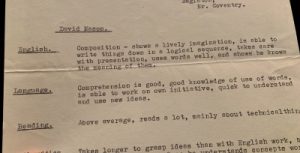


 Born in England and raised in Canada, Dave Mason is an internationally recognized graphic designer, a Fellow of The Society of Graphic Designers of Canada, and a co-founder of a number of software companies. He divides his time between Chicago, Illinois and Lunenburg, Nova Scotia.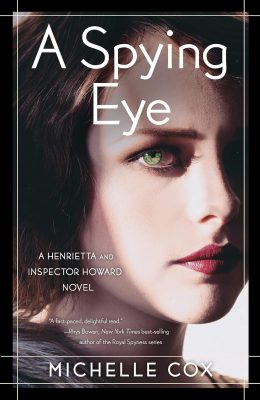
 Brooding Château du Freudeneck, just outside Strasbourg, France has villains in the drawing rooms, stolen art hidden in the cellars, and bats in the belfry – all the best elements for a 19th-century Gothic mystery.

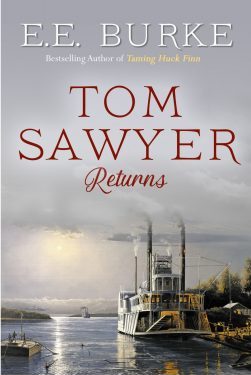
 Tom Sawyer Returns is the second book in The New Adventures series by author E.E. Burke.

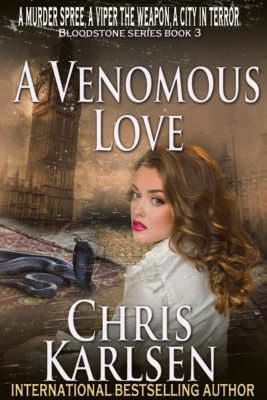
 Detective Rudyard Bloodstone is facing the most bizarre crime spree of his career as a copper on the Victorian streets of London. Someone is using a poisonous Cape cobra as a weapon.