Tag: Historical Fiction

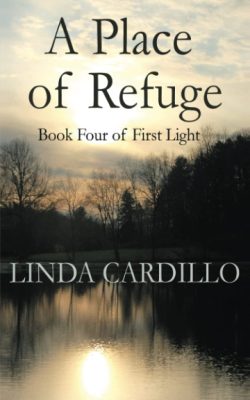
  • A PLACE Of REFUGE: Book Four of First Light by Linda Cardillo – Romance, Historical Fiction, Women’s Literature


    Izzy Monroe has lost herself. Three months after an accident that damaged a portion of her brain, she isolates herself in her parent’s home on Chappaquiddick Island, on the eastern end of Martha’s Vineyard.

    She has spent her life in the world of academia, working on a doctorate in literature at Harvard, but now with her short-term memory gone, she has to give up her dreams. Her emptiness and doubt have left her rudderless and deeply depressed.

    When her former college roommate, Maria, suggests she intern at Portarello, Maria’s grandfather’s self-sustaining farm in the Italian countryside, Izzy isn’t immediately convinced she can make the journey alone much less work at the successful inn and thriving farm. However, Izzy remembers the peace she felt there on the one visit she and Maria made years ago, and she knows this is her only chance to regain any sense of normalcy.

    Daniel Richetelli, a Jesuit priest and Maria’s cousin, is facing a crisis himself. After ten years of self-sacrifice, he has lost his faith and is desperate to find a new path.

    He knows his grandfather can help him find his way, so he leaves the Church and goes to Portarello. A chance encounter with Izzy leaves him reeling. In her, he feels he has found that for which he is searching, but the guilt of his physical attraction to her and the criticism of his sister, Linda, make him once again question who he really is. Meanwhile, Izzy hasn’t felt so much like her old self since the accident. The farm and Daniel are bringing her back to life, but she fears his past will forever stand in the way of their happiness.

    The search for self is the central theme of the novel.

    Izzy remembers the strength she had prior to the accident. She was adventurous and outgoing, a lifelong learner. Not even a disability left over from her bout with childhood polio could keep Izzy down. Half-Wampanoag, half-Irish, Izzy was a warrior from the beginning. She was fearless. Now, she knows she is hiding from this new Izzy, a woman who doubts herself and cannot see past her brain damage to the new life she must build. She is scared to risk the possibility of failure and pain, but Maria convinces her she cannot rediscover herself without taking the risk.

    When she does finally gather the courage to leave her hovering, protective family, she thinks she must keep her inability to remember a secret from the other interns and Maria’s family. She hopes to reinvent herself among strangers and the physical labor of farm life. That journey to self-discovery feels like stepping off the edge of the world, and finding to courage to take that step is a part of reclaiming her life.

    Though she cannot truly interact with the other interns or inn guests because of her memory, she plays the part in yet another step toward normalcy.

    Izzy is amazed by the power she finds in physical labor. Working in the vegetable gardens and tending to the pigs form a sense of connection as her brain begins to heal and form new pathways. This also leads to a deeper appreciation for her Native American heritage, a deeper contemplation of the natural world – a world so foreign to her after years spent in study and academics.

    Her immediate attraction to Daniel and the physical relationship they share also give her purpose.

    United in their vulnerability, the two draw on and strengthen each other. Daniel’s path to the farm began with a forced leave of absence from the Church. He struggles with Jesuit ideology to find God in everything. In fact, he can find his maker in nothing recently. He is not looking forward to the mental grilling his grandfather will give him, but he knows it is the only way to truly rediscover himself. He lacks Izzy’s courage, though, and doesn’t immediately face his indecision.

    Daniel recognizes a mystical power within Izzy, likely from her brush with death, and he is inexplicably drawn to that power. The guilt he feels over his fascination with her and his lack of courage nearly push him to self-destruction, and it is only her love that pulls him back from the brink. She gives him the freedom to be himself, and he gives her the freedom to face her new limitations.

    Just like the archaeological dig occurring on the farm, the two must uncover the treasures buried beneath layers of doubt and uncertainty, and just as those artifacts show a connection to the past, Daniel and Izzy must use their pasts to create a new future.


    5 Stars! Best Book Chanticleer Book Reviews

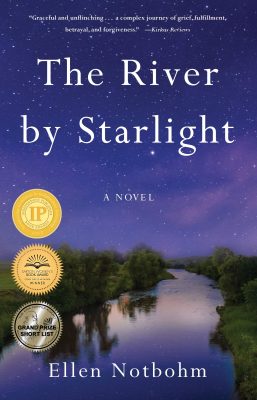
  • THE RIVER By STARLIGHT by Ellen Notbohm – Historical Fiction, Family Fiction, Homestead Era


    Set in the early twentieth century, The River by Starlight by Ellen Notbohm follows Annie (Analiese) Rushton, a woman struggling against her lot in life.

    After a messy divorce leaves her separated from her only child, Annie returns home to her emotionally unavailable and dying mother. A betrayal of Annie’s own mind destroyed her marriage and took away any hope of seeing her daughter again. When she finds a letter from her oldest brother hidden in a drawer by her mother, she decides to join him on his homestead in Montana. Once settled into her new life, she soon forms a whirlwind romance with local business owner Adam Fielding.

    After they marry, Annie wants nothing more than another child, despite the certain risk of her postpartum psychosis returning.

    A string of losses and sickness keeps the passionate couple from their dream of a family until the stress drives them apart. After a jarring separation, Annie gives birth to and loses custody of a little girl she names Nora. Once Annie becomes a member of society again, she works hard to get Nora back from the orphanage and builds a life where they can be together.

    The River by Starlight is historical fiction at its finest. Parenthood and mental health frame this contrast of love and loss.  Throughout the story, Annie is asked how she can just forget the past and move on so easily. The reality is that she does not forget, she must move on to survive. The pain of the past is a character of its own in the story. Its presence and weight are held between Annie, those she loves, and those who love her. Annie struggles to swim her way through troubled waters in a world that believes it would be better off if she drowned. She embodies strength against all odds and the power of love that never dies.

    The River by Starlight by Ellen Notbohm won First Place in the 2018 CIBA Goethe Awards for Post-1750s Historical Fiction.


    5 Stars! Best Book Chanticleer Book Reviews

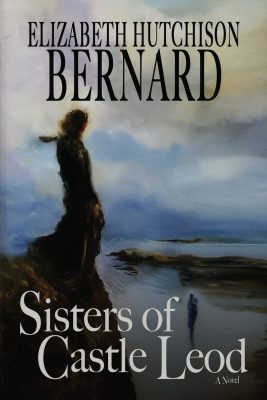
  • SISTERS Of CASTLE LEOD by Elizabeth Hutchison Bernard – Historical Fiction, Sisterhood, Women’s Biographies


    Sisters of Castle Leod by Elizabeth Hutchison Bernard tells the story of Lady Sibell Mackenzie, Countess of Cromartie by her own rights, and the implacable, lifelong sibling rivalry between Lady Sibell and her younger sister Constance, in a fictionalized biography.

    The two sisters became equally famous – if not equally wealthy or respected – in early 20th century Britain in entirely separate spheres while sniping at each other all along the way. As their story moves from their childhood rivalries to the adult consequences of their actions, the sisters grow further apart and more resentful of each other. Or so it seems. The story is told entirely from Sibell’s point of view. The reader never learns Constance’s true motives, only what Sibell believed they were.

    They were opposites in every way.

    Sibell was a serious intellectual who took her many responsibilities – including those to her younger sister – equally seriously. While Constance seemed to be a person of action without thought to consequence. It seems the younger sister expected someone else to always take responsibility for her actions – her father when they were children, and her sister now that they are adults.

    Their divide was exacerbated by the conflict between Constance’s inability to believe in anything that she couldn’t see or touch while Sibell held a deep and abiding respect for spiritualism. Sibell pursued her beliefs ardently, shaping the course of her life. When their story comes to an end, the best hope that Sibell has for reconciliation with her often estranged sister lay only in the next life.

    The most fascinating part of this story of sibling rivalry is that, at its heart, it’s all true.

    Sibell and Constance Mackenzie were not only real people, but they truly were famous in their day, if in opposite ways, for the historical events told in Sisters of Castle Leod.

    While there are brief periods of rapprochement, Sibell and Constance are too different in nearly every aspect of their personalities to overcome the initial rivalry over who held the most of their father’s affection. Each believed it was the other and never moved on from that belief.

    The reader’s sympathies lie with Lady Sibell, as hers are the eyes through which the story is told. At the same time, Lady Constance is a much more vivid and active character, but because Lady Sibell sees all of her sister’s actions and motivations through the lens of their long-held resentments, the reader never knows whether Constance was quite the villain her sister made her out to be.

    Many of Sibell’s thoughts, motivations, time, and attention are paid to her spiritualist beliefs.

    She was certain that the spiritual world influenced the material world around her. Readers who share her beliefs or who are open-minded about spiritualism may find her digressions compelling. However, readers who, like Constance, confine their beliefs to the pragmatic aspects of the world may wish that the story had focused more on the world as Sibell actually saw it than the world that she believed was unseen but revealed only to her.

    In either case, the story of the Sisters of Castle Leod presents a compelling portrait of two very real women in the early years of the 20th century who were famous – not on account of who they married but because of what they, themselves thought, believed, and did. Even if, in spite of their sisterhood, they never did manage to believe in each other.

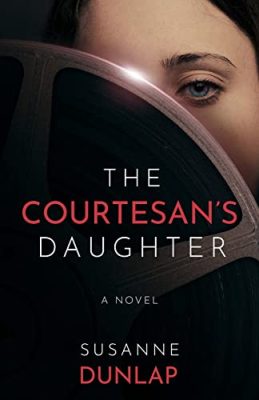
  • THE COURTESAN’S DAUGHTER by Susanne Dunlap – Historical Fiction, 20th Century, Family Life Fiction


    The Courtesan’s Daughter is a blisteringly smart novel of resilience and the pursuit of one’s dreams, the latest offering by Author Susanne Dunlap.

    The year is 1910, New York. It has been ten years since Justine, a French immigrant, fled from her home country with her daughter Sylvie to seek refuge in the United States. As a seventeen-year-old, Sylvie has passionate dreams: to be a star in the new moving pictures just like the Vitagraph girl she admires. However, her mother hopes that she will become a teacher and pull them out of their impoverished life. As Justine ekes out a living as a seamstress on the Lower East Side, Sylvie discreetly weaves a plan to follow her dreams after meeting an Italian boy, Paulo, who encourages her to follow her ambitions.

    A man from Justine’s past tries to shatter her hope for a comfortable life.

    He haunts her with threats of spilling a secret that involves her previous work as a courtesan, and the crime that forced her to flee. Justine knows that such delicate information could see her sent to prison and even tear apart the fabric of Sylvie’s life.

    When Sylvie finds out about her mother’s supposed betrayal, she runs away from home believing it is no longer safe. The glassy perfection and quiet reserve she had long held of her mother is shattered into a million pieces. Endurance, determination, and unusual pacts take center stage in Justine and Sylvie’s lives as they fight for love, which comes at a precious cost.

    Susanne Dunlap weaves an impressive duality between two different women and their journey as a family.

    Justine’s and Sylvie’s emotional odysseys become progressively aligned, bridging the past and the present. Dunlap offers a bird’s eye view of her two protagonists, showing their thoughts, emotions, and the consequences of their decisions. The book’s neat and lucid prose creates a sense of poise and shows off Dunlap’s mastery as a wordsmith.

    At turns poignant and bleak, and at other times pleasant and vibrant, The Courtesan’s Daughter is a triumph both in its construction and content.

    The author deftly presents a unique period through rich and vivid descriptions, evoking the mood and atmosphere of this time. She adds an extra repast across the pages that informs in striking ways. Powerful and imaginative, Dunlap’s work is one of optimism that reveals the fortitude of humans to stay afloat even in the starkest circumstances.

    The Courtesan’s Daughter draws readers in from the first page with its beguiling beginning. As it hurtles ahead, it holds you rapt up to the last page. Undoubtedly, this story is a tour de force from an author with absolute command of the genre.


    5 Stars! Best Book Chanticleer Book Reviews

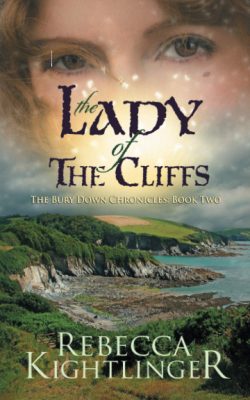
  • THE LADY Of The CLIFFS: Book Two in the Bury Down Chronicles by Rebecca Kightlinger – Historical Fiction, Historical Fantasy, Coming of Age


    In The Lady of the Cliffs, an ambitious sequel in the Bury Down Chronicles by Rebecca Kightlinger, a teenager embarks on a journey that will bring her face to face with unexpected destiny.

    The year is 1286 CE in Cornwall, England. At the turn of her seventeenth year, Megge and her cousin Brighida find themselves dealing with a new loss, one that breaks both their hearts. As heirs to the Book of Seasons and Book of Times respectively, they have to protect the books from sinister hands as they hold knowledge and wisdom that must one day be united. The power of these two books calls for a duty that is far greater than any woman of Bury Down has ever borne.

    As they take part in a final right of passage that the women of Bury Down perform for their dead, Megge, an apprentice weaver, takes on new challenges that Brighida, an apprentice seer, cannot foretell. Megge begins having dreams and visions. In one of her dreams, she sees a rolling sea drive itself into a cove at the foot of a cliff, and a silken voice asking her to return to the cliffs of Kernow, a place that she has only seen in her slumber.

    When a mysterious old woman begins telling strange tales, Megge chooses to heed the call of the voice in her dreams and travels to the sequestered inlet only known as The Sorrows.

    With a gripping and stoic style of magical realism and fantasy, The Lady of the Cliffs hurtles along at a sharp pace.

    This story shows the depths of both great loss and great achievement, even as they’re entwined. Showcasing the close bond among the women of Bury Down offers emotional and inquisitive exploration. Evocative language describes the book’s locations as the author melds folklore, fantasy elements, and a true historical era. Kightlinger also offers helpful references to guide readers through this world.

    This is a fairly large book of 262 pages but the richness of the narrative keeps the reader enchanted until the very end. Kightlinger brings life to all her characters, and her imagination shines from each page.

    Impressionistic and lyrical dialogue highlights scenes from each of the two women’s lives.

    Bridgida misses her mother, whose murder she witnessed; Megge worries about the voice that lingers in her dreams, urging her to go to a place she knows little of. Both mature through times of hardships and duty. These strong and purposeful characters confront situations that challenge their beliefs and comfort, providing us with a thorough look into their quirks and temperaments.

    Altogether, The Lady of the Cliffs is an intricate and lush addition to the historical fantasy genre from one of the literary maestros of our time.


    5 Stars! Best Book Chanticleer Book Reviews

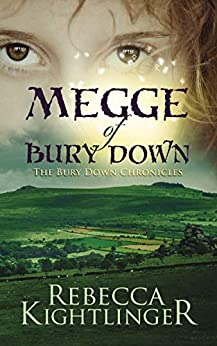
  • MEGGE Of BURY DOWN: Book One of the Bury Down Chronicles by Rebecca Kightlinger – Historical Fiction, Paranormal Fiction, Coming of Age


    Blue and Gold Paranormal 1st Place Best in Category CIBA Badge ImageMegge, a young girl living in thirteenth-century Britain, struggles to find her own path in Megge of Bury Down by Rebecca Kightlinger.
    The daughter of a healer with both practical and spiritual abilities, Megge should by rights have become her apprentice on her sixth birthday, as had others in her family before her. Megge should have become a woman of Bury Down, the sacred burial site of the previous owners of The Book of Seasons and The Book of Time. Her mother, one of two twin girls, had been entrusted with The Book of Seasons, an ancient tome of knowledge of the physical world created and maintained by mystical seers. Brighida, Megge’s cousin and the daughter of her mother’s sister, has been charged with keeping and inscribing The Book of Time, a celestial guide.

    The girls, almost identical in age, are expected to take up the mantle as protectors. However, while Brighida is an obedient and skillful apprentice, Megge fears the power contained within her mother’s book.

    Megge hears strange voices and feels frightening sensations whenever she touches the Book of Seasons. She refuses her destiny, much to her family’s confusion and dismay, and chooses instead the life of a shepherd and weaver. The only person who seems to support Megge’s choices is Morwen, the elderly bard and shepherdess who lives with the family, but even she, with her cryptic messages, seems to be pushing Megge toward another terrible fate.

    However, when dangerous strangers start spouting hate and disturbing the peaceful village near Megge’s home, she may have no choice but to embrace her role. As destiny and fate work against her, Megge must decide whether to take the easy path or become the person everyone else believes her to be.

    Megge’s fear underpins the story, stemming from the unknown, the fear of what happens to her when she first touches the book but also the fear of the fate for which everyone thinks her destined.

    This novel follows Megge’s growth as she grapples with that fear throughout her early years. Initially, her determination not to become a healer seems to her mother to be nothing but childish stubbornness. However, with age and a series of misfortunes, her fear transforms into worry over what she may inadvertently do to injure her family.

    Her fear, and Brighida’s perfection – both physically and as an apprentice – create a level of self-consciousness that makes Megge doubt her every ability. As a plain, shapeless girl, Megge thinks herself beneath the role of a seer, choosing instead to hone her skills in the field and at the loom. Though her work helps give the family much-needed funds, it is far from the mystical beauty that her family expects of her.

    She doubts her path as a Shepherd, with an unshakable voice inside her saying that she truly is a protector.

    Megge sees glimpses of what she might become. This second-sight angers and confuses her as it both confirms her abilities and brings into sharp focus her role in destroying the ideal life she enjoys with her family. She often debates following her mother just to feel loved, as though she belongs in this family of exceptional women with astounding abilities. But the fear of her looming disaster weighs more heavily than any rejection could.

    The world-building in this series is exceptional. The reader is immediately immersed in the complex environment of Bury Down.

    As the daughter of twin caul bearers, Megge and Brighida should be sworn protectors of twin books at once the same and yet vastly different, just like the girls themselves. Their family obligation dates back one thousand years, and the novel begins with a scene from that era. Herbalism combines with spiritualism to create a world where both work seamlessly together in a completely plausible way.

    The history of Murga, the first seer, weaves with Megge’s present in a retelling that allows the reader to learn of Megge’s important role just as Megge does. The rich tales spun by Morwen also develop the plot and create engaging moments of realization. It’s a world that will leave the reader thinking about Megge’s story long after closing the novel.

    Megge of Bury Down by Rebecca Kightlinger won First Place in the 2021 CIBA Paranormal Awards for Supernatural Fiction.


    Paranormal 1st Place gold foil book sticker image

    5 Stars! Best Book Chanticleer Book Reviews

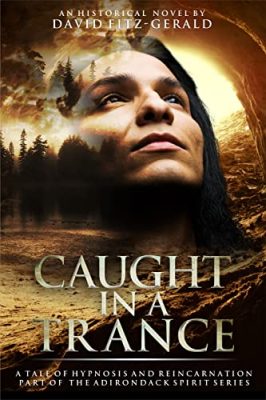
  • CAUGHT In A TRANCE: The Adirondack Spirit Series Book 5 by David Fitz-Gerald – 19th Century Historical Fiction, Mystical, Family Fiction


    Caught in a Trance by David Fitz-Gerald transports readers to Wilmington, New York in 1849, where the scenery is breathtaking, restless spirits hover, and dark secrets lurk.

    Moses Munch grew up in Wilmington, his happy childhood turning into a content adult life as a loving husband, devoted father, and caring friend to many. He dabbles in the transcendental, using his spiritual connection as an aid in guiding others through their troubles. But he is about to learn that sometimes even the best of intentions can lead to terrifying consequences. When an innocent curiosity becomes an obsession, he might lose his friends and family forever. Who will be able to help, when the person who tried to save others is now the one who needs saving?

    Moses Munch’s whole family is devoted to helping others. They want to bring joy to those around them and are the first to act when others are in trouble.

    Moses’ wife Lovina is a caring matchmaker, spreading happiness throughout the community. Their thirteen-year-old son Silas aspires to serve God, assisting the town’s Reverend Hammond in his work. He is a very mature teenager, wiser than many adults. Moses’ mother is secretly aiding black slaves to freedom through an underground escape route. Moses works through the art of what he calls “trancification”. He uses hypnoses to guide people on a spiritual journey into their previous lives, in search of understanding and peace.

    When a neighbor arrives in town, he threatens to destroy this Wilmington’s tranquility. Bartholomieux has just moved to Wilmington and is disrupting families, ridiculing hypnotism, and threatening Moses’ marriage. What is in this man’s past life that drives him? Moses is determined to stop Bartholomieux’s machinations, but he struggles to find a way to do so.

    Curiosity becomes a nagging ache within Moses.

    He enjoys joining his mind with those he helps in, entering trances and traveling into their spirited universe. Moses seeks a way to travel into his own past, and eventually uncovers it. What he discovers is entrancing, and he begins participating in these hypnotisms more and more. What once was an aid for others becomes an addiction, and one day Moses becomes lost in a trance. He cannot save himself, stuck between his past and his present. Though he reaches for his loved ones, the distance is too great. And while he is caught, Bartholomieux works against him.

    Author David Fitz-Gerald offers the fifth book in the Adirondack Spirit series, an engaging and touching story.

    He beautifully describes the setting and shows the consequences of addiction, not only for the person addicted but also for their loved ones. Caught in a Trance is a unique look at the subject because instead of an addiction to drugs, Moses is addicted to his mystical practice. Fitz-Gerald skillfully weaves the emotional impacts of Moses’s addiction throughout the plot.

    Scenes in the spirited universe show artful settings and reveal mystical secrets, keeping the reader enthusiastically turning pages. In the mundane scenes, Fitz-Gerald’s historical research and characters shine. The members of the Munch family show courage as they face their everyday problems, and rely on family loyalty to keep them afloat even in the darkest of times. Readers will root for these characters, and wonder the same question: will Moses ever find a way back to his present life?


    5 Stars! Best Book Chanticleer Book Reviews

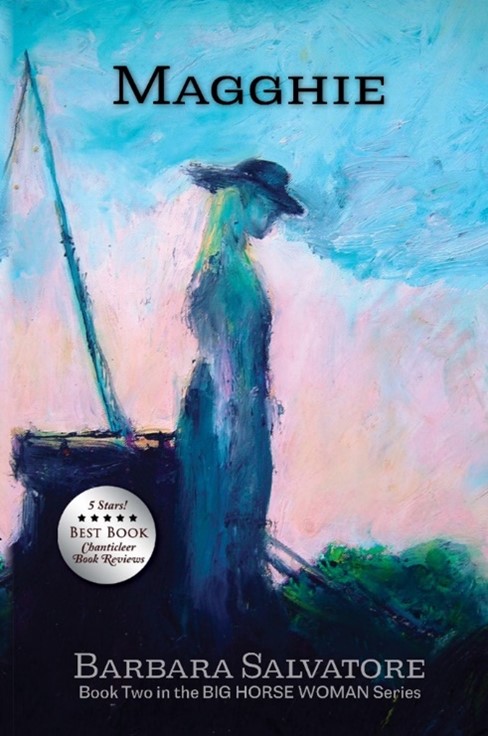
  • MAGGHIE: Big Horse Series by Barbara Salvatore – U.S. Historical Fiction, Women’s Historical Fiction, Horse Fiction


    Laramie Book AwardsAward-winning author Barbara Salvatore brings human foibles, horse traits, and herbal lore together through a young teenage girl’s eyes in her historical fiction novel, Magghie.

    Magghie Wilder has much to cope with, much to learn. She grows up as the only child of Hans and Maye, immigrants from Germany. They make a home in Pennsylvania, in the expanding United States. Hans talks too much, expounding on the simplest issues in grandiose German. He seems to have little time for listening to his curious but often distracted daughter.

    But Hans does teach Magghie how to train and handle the big draft horses needed for heavy hauling and farm work. He encourages her to drive her own team and learn the habits of each one. Maye, by contrast, dreams in quiet and calm, and from her, Magghie learns by watching. Maye understands plant lore deeply and elicits in Magghie the revelation that every green growing thing can be helpful and significant.

    The three live on a successful large farm in relative isolation. Neither religion nor socializing play a role in their routine.

    Things change when Braun, a blacksmith, and his lanky adolescent son, Karl, appear and are kept on as help with horses and farm. Magghie learns a smattering of English from the more worldly-wise visitors. Then, the somewhat chaotic but friendly incursion of a Mormon family follows. Magghie meets the husband, children, and two wives, one of which is pregnant. Maye, recalling the sorrows of losing more than one infant, helps Dora in childbirth. Magghie will watch and come to comprehend why Maye has always seemed so self-enclosed. From the Mormons, Magghie learns something else her parents had resolved never to tell her – the existence of God and the place of religion in human lives.

    Salvatore sets her scene, and the plotlines seem poised for positive outcomes. Until someone brings a life-threatening disease to the valley, creating havoc and despair.

    Salvatore’s current work includes teaching and consulting in Plant Medicine and Horse Care. Since she was thirteen, she has kept a “Dream Journal” and envisions her Big Horse series as a set of four novels, with Magghie being the second book. Her own interests shine clearly through every page of her story, which she tells in a cozy mix of prose and poetry.

    She has appended a lengthy section for her readers, offering further elucidation of the subject matter. This includes the history of Pennsylvania’s settlement, German language usages, extensive notations regarding the Percheron horses used on Wilder’s farm, and further facts about the Mormons’ epic cross-country pilgrimage.

    Salvatore’s Magghie has definite cinematic potential. The story ends with an open invitation to the sequel, promised by the author. That’s good news! 

    Magghie by Barbara Salvatore placed as a Finalist in the CIBAs Laramie Book Awards honoring Americana Fiction, and comes highly recommended!

    5 Stars! Best Book Chanticleer Book Reviews


  • THE VINES by Shelley Nolden – Medical Mystery, Suspense, Historical Fiction


    Clue Grand Prize Badge for The Vines by Shelley Nolden

    Shelley Nolden’s debut novel, The Vines, embraces multiple genres as it chills, fascinates, and horrifies, from historical and magical realism to fantasy and horror.

    Nolden has melded fanaticism, medical anomalies, and the frailties of human behavior together with a historic setting, creating a narrative Kudzu vine that grows rapidly and spares nothing in its path. This particular vine consists of two main branches that intertwine, bridging time and linking parallel realities, one past, one present.

    The Gettler men of Long Island, New York have shepherded a secret medical research project for generations, with the exception of Finn, the youngest man in the family.

    Beginning with Otto, Finn’s great-grandfather, who worked at the Riverside Hospital on North Brother Island at the turn of the 20th century, this family has been consumed by unanswered medical questions about universal conditions that impact the human race.

    Years after Otto’s death, the Riverside Hospital was ultimately closed, leaving North Brother abandoned, subject to the ravages of rats, birds, and vines. However, Finn’s father and grandfather secretly continued Otto’s research at the now crumbling, empty medical facility.

    Although aware of their secret research, Finn had always been excluded from the details, despite his curiosity. What exactly were they doing? And why?

    In 2007, the 28-year-old Finn clandestinely crosses the East River to North Brother. Instead of learning about his family’s secret research, he encounters an unfriendly, mysterious woman, her body scarred from previous physical abuse, yet fit and strong, bathing in one of the abandoned buildings.

    More than a century ago in February 1903, Coraline McSorley, Cora to most, is infected with typhus and quarantined at Riverside Hospital, New York City’s most notorious pesthouse.

    The ensuing story skips back and forth in time, slowly revealing itself through flashbacks, real-time, and places in between. As it grows, The Vines becomes more engaging. Nolden utilizes historical people, places, and events associated with North Brother Island to create a story in which Cora, along with the island itself, are sympathetic characters irrevocably tied to a family whose fanatical, convoluted curiosities dominate every aspect of their lives.

    Several chapters into the book, the hook is set deep, pulling the reader in close and holding them there.

    The Vines offers readers a mystery to be unraveled, connecting dots back and forth in time as the pace and action increase. Rather than ending with a conclusive resolution, The Vines leaves questions for the reader to ponder, matching the curiosity of the story’s characters.

    Readers pulled into this mystery will be glad to find another baited hook dangling just beyond the gateway to the future, as Nolden suggests a sequel is in the works.

    The Vines by Shelley Nolden won Grand Prize in the 2021 CIBA CLUE Awards for Suspense and Thriller Mysteries.


    5 Stars! Best Book Chanticleer Book Reviews

  • AFTER The RISING And BEFORE The FALL by Orna Ross – Historical Fiction, Irish Civil War, Family Saga


    Goethe 2021 Grand Prize Winner Badge for After the Rising by Orna RossAward-winning Irish author Orna Ross has created a volume comprising the first two novels of The Irish Trilogy, drawing from her Irish birth and upbringing for a special grasp of the country’s history, how its wars and political strivings have affected its people directly, personally, over multiple generations.

    Her two books take on a span of time rooted in the early 1920s and delve deeply into the interlocking fate of the extended family and ancestry of Jo Devereux. Jo, the book’s central narrator, leaves Ireland in her twenties, only returning in her forties in 1995 when she learns that her mother is near death.

    The journey back will draw her into the family’s complex relationships, and reacquaint her with Rory, her former, and perhaps only, true love.

    Reading through old family papers, Jo will find out more about her mother, her grandmother, and some of the men from her past. These family secrets are compelling and often painful, driving Jo to discover more, eventually uncovering a murder with people she knew and cared for possibly at its center.

    Underpinning the drama among her closest and most cherished people is her growing understanding of her home country. Ireland’s war for independence from England has always found most emphasis in its popular lore, but the far-less publicized conflict that followed, the Civil War, may have killed more people than the one that preceded it and lingers even today in bitter memory.

    Jo will have to absorb all of these revelations about her forebears while she copes with the ever-changing modern culture in her new home of San Francisco.

    The insider’s gaze at 1960s gay culture and feminism are significant sidebars in both past and present portions of Ross’s vibrant and varied narrative. The book ends with Jo contemplating her future, with some crucial questions yet unanswered, begging a sequel.

    Ross is a highly practiced wordsmith; this series has already garnered recognition, awards, and the attention of the media.

    She is able to mix, match and contrast evocative elements of romance, warfare, women’s rights, men’s feelings, historical nuance, and human-scale humor (especially highlighting that aspect of the Irish conversational flow), all in their appropriate historical niches, developed deftly to keep her story in full motion. This is a book for dedicated readers of any age or clime and will have them waiting attentively for the final installment.

    After the Rising by Orna Ross won Grand Prize in the 2021 CIBA Goethe Awards for post-1750s Historical Fiction.


    5 Stars! Best Book Chanticleer Book Reviews