Tag: Historical Fiction

  • AMBITION, ARROGANCE And PRIDE: Families & Rivals in 18th Century Salem by Sandra Wagner-Wright – Audio Book, Revolutionary War, Biographical Historical Fiction, Family Saga


    Sandra Wagner-Wright’s historical fiction novel, Ambition, Arrogance and Pride tells the story of two powerful families during the founding of America – now brought to life in audio format by award-winning voice actor Christa Lewis.

    Wagner-Wright’s fluid prose lends itself to being read aloud, and listeners will be wholly transported by this tale of early Americana. Life in the Salem/Boston area at the birth of our nation takes wings as Lewis breathes energy into this engaging cast of characters.

    Ambition, Arrogance and Pride explores a few select families as they merge through marriage to form privateering empires. The focus on the women’s point of view gives us a unique perspective on the lives of the powerful men in these families. From the inception of their dreams and aspirations, we follow their journeys in a time without electricity, running water, or antibiotics, a life rustic yet gentle.

    The excellent choice of narrator for this project accentuates the limited role of women in this time and place – as partners to their husbands.

    Wagner-Wright imagines a world where these partnerships are egalitarian, with these women having a say in all aspects of life, from buying real estate to running and investing in business ventures.

    The daily lives of women running households, giving birth, and preparing for funerals bring us back to a time when infant and childbirth mortality were high and tuberculosis ran rampant, with no effective treatment. We grow to care for the central characters and must grieve with them in the face of these losses.

    We explore the United States’ independence story through the eyes of Mary, whose personal ties to the conflict illuminate many of its causes and details. She’s terrified for her family, especially her husband, as the colonies and the sovereign crown of England clash over high taxes and unfair tariffs. After the Boston Tea Party, Mary switches her drink from sweet tea to bitter coffee.

    Wagner-Wright and Lewis pair up to give a rendition of Ambition, Arrogance and Pride that gives us a place within the drawing rooms of the Derby and the Crowninshield families.

    We face the fears and hardships of their seagoing lives, and learn how uncertain and dangerous the future of the American colonies was.

    This historical and somewhat biographical novel based on early American roots provides a glimpse into the lives of people who dared to fall in love, venture into uncharted waters, and create dynasties. We meet merchants who develop trade routes halfway around the world and gamble their life savings on trade with China, India, and beyond. 

    This audio version of Ambition, Arrogance and Pride shines as the well-crafted story unfolds through a reading that deeply understands it. Fans of historical fiction, Americana, and Revolutionary narratives alike will be gripped with interest throughout this book. A must-have for Wagner-Wright fans and readers who want a great listen on long walks, commutes, or road trips.

    You can read the review of the print version of Ambition, Arrogance and Pride here.


    5 Star Best Book Chanticleer Reviews round silver sticker

  • COLD PEACE: A Novel of the Berlin Airlift, Part 1 by Helena P. Schrader – Historical Fiction, Post-WWII, Military Aviation Fiction


    Amidst the ruins of Post-WWII, Berlin struggles to rebuild from the ashes, torn apart and facing down the promise of another bloody dictator. A myriad cast, all shaped by that same war, become entwined with the broken city as its hour of need approaches.

    Just as Germany is divided between the Americans, British, French, and Soviets, Berlin has been cut into pieces. But the balance of the occupation powers tips eastward as the Soviet Zone surrounds the city, giving them control of all ways into and out of Berlin – save for the air. The occupation currency is worthless thanks to Soviet over-printing, leaving Berlin on a barter system of cigarettes and black-market trading. In order for Germany to recover, the Western Allies plan to introduce a new currency, even if it angers the Soviet bear.

    To fight over the city with tanks and planes would mean a third world war and a battle for Berlin that the overwhelming Soviet military force would win without question. This fight must be one of resources and diplomacy. But the Soviets have little interest in rebuilding Germany, preferring to loot from, starve, and rape the defeated Berliners as their means of taking ‘reparations.’

    Amidst gridlock in the Allied Control Council and a populace that largely refuses to elect Soviet sympathizers, SMAD (Soviet Military Administration in Germany) tries to push the Western powers out through intimidation and ever-harsher strangling of transit along the streets and railways.

    Berliners and occupation forces alike try to build their own future, while bearing the weight of the city’s future.

    Robert “Robin” Priestman takes a position as Wing Commander in Gatow, a former Luftwaffe airfield now used by the RAF – located in the British Sector of Berlin – that is, deep inside the Soviet Zone of Occupation, which surrounds Berlin. Memories of his time as a POW haunt him, and he doesn’t understand what the purpose of RAF Gatow even is. However, when a Soviet pilot crashes into a British civilian plane, and as SMAD makes greater plays for unilateral power over Berlin, Robin prepares to use his planes and runway to keep Western opposition alive, for the sake of the Berliners.

    David Goldman’s disapproving father weighs him down with a massive inheritance, forcing him out of the RAF and into a business of his own. But heavier on his shoulders are the old properties owned by his aunt and uncle in Germany – before they were murdered by the Nazi regime. David faces a former Nazi officer in the home that holds so many of his childhood memories and resolves to bring the man to justice.

    Charles “Kiwi” Murray, David’s closest living friend, helps him to build an air ambulance business, AAI (Air Ambulance International). Berlin needs such a service desperately, its hospitals hopelessly overwhelmed, and Robin gladly offers them use of Gatow’s runway. Kiwi’s struggle with alcoholism nearly tears this dream – and his friendship with David – apart. But he won’t lay down and let that happen, pushing himself to get their ambulance off the ground, even as David’s own struggles wear him thin.

    Emily Priestman hopes to reconnect with Robin in Gatow as she helps him with his duties. But she’s even less versed in the diplomacy of the rich and powerful than he is, and knows that she needs to find another purpose, for her own sake as much as that of the ruined city around her. That opportunity presents itself through old friends and new, as she joins AAI to fly their ambulance, saving those who had no chance of survival in Berlin.

    Fear and despair hound the people left in WWII’s wake, kept at bay by the hope for a better life tomorrow.

    Charlotte Walmsdorf lost much of her family, and lives in Berlin’s desperation, refusing to even try crossing the Soviet Zone. But her cousin Christian arrives, and though his hope seems naïve to her, she feels a flicker of her own as she teaches Emily Priestman German, joins AAI, and finds herself drawn to David.

    WAAF Galyna Borisenko, whose father was taken from her by the Soviet Union, makes an unlikely connection with Hero of the Soviet Union, Mila Levchenkova. Both Ukrainian women take the considerable risk of meeting with each other, for the chance to speak honestly with someone who understands the pain of life beneath the USSR. Mila’s strength and courage inspire Galyna, as they form a deep and emotionally impactful friendship.

    The City Council of Berlin refuses to back down to the minority Soviet-controlled Socialist Unity Party (SED). Jakob Liebherr, an ardent councilman, holds firm against Soviet misinformation, arguments with his son, and his own terror. He suffered in a concentration camp for his resistance to Nazi power and knows of the tens of thousands kidnapped by the Soviet Union, doomed to a similar fate. His commitment to democracy contrasts the grim state of Berlin with a gripping sense of integrity and determination.

    As Soviet control tightens, each character will have to act with courage and clarity to withstand their grip.

    Helena P. Schrader blends her character’s internal struggles and desires with the traumas of Berlin, creating a powerful and cohesive read.

    WWII left its mark on each of these people, through the ghosts of dead loved ones, injuries that will never leave them, and responsibilities greater than they ever imagined. Some, like Robin and Emily, reckon with the destruction of Berlin as its former enemies. Blackened shells remain where once there were homes, entire stories are missing from those buildings that still stand.

    And yet, restaurants open with only one floor, people make dinner in their kitchens and keep warm beside the stove. Neighbors lend clothes to one another, and even black-market smugglers can be convinced to give away that which they can’t use. Just as Berlin must make life from its ruins, so must all the people within this story.

    Schrader’s attention to detail illuminates a fascinating place and time in history. Her engaging characters and the tense history offers a gripping blend of fiction and reality that makes the complex political/military situation in post-WWII Berlin approachable and clear for readers, regardless of familiarity with it.

    Helena P. Schrader weaves a tapestry of human resilience and courage against the backdrop of post-WWII Berlin. Cold Peace promises to be a captivating journey that will leave readers yearning for the next installment in this important historical-fiction series.


     

    5 Star Best Book Chanticleer Reviews round silver sticker

  • THE LAST LAIRD of SAPELO by T. M. Brown – Biographical Fiction, U.S. Civil War, Military History


    The Last Laird of Sapelo, by T. M. Brown, is the story of one man’s tragic death in pursuit of justice, as his way of life, too, dies in the flames of a war that he had tried his damnedest to avert.

    Sapelo is one of the barrier islands off the coast of Georgia. As this story opens, the War Between the States has just begun, and the Confederacy plans to use those islands as a bulwark against the Union gunboats that assuredly will extend their blockade of Savannah all the way down the coast. If the blockade succeeds, then the South’s cotton, the fuel of its economic engine, will languish in Southern warehouses instead of sailing to buyers and allies across the sea.

    Colonel Randolph Spalding, the last laird of the title, committed to the war despite arguing vehemently against it. Now an officer in charge of building a garrison on his own land, he’s caught between military duty, and personal responsibility.

    As the Laird of Sapelo, Spalding is duty-bound to protect his family and his property, including more than three hundred enslaved people. .

    The Spaldings consider themselves ‘enlightened’ slaveholders, giving their slaves more time and ‘freedom’ to work for themselves and have leisure, as well as sturdy houses and decent food. Their neighbors call them fools. The Confederate soldiers see the slaves as their rightful prey.

    His military duty is to keep those soldiers in line. His personal duty is to keep his people safe. When those lines get crossed, he moves Heaven and Earth to make it right. Even if those lengths will cost him his own life.

    This fictionalized biography illuminates a little-known, but pivotal, part of the U.S. Civil War: the defense of the Confederate coastline as it happened on the ground, in tiny communities.

    Spalding draws readers into his own story, telling it through letters and diary entries over the first year of that terrible war. His first-person perspective on those early months, at a point when hopes were high but organization was lacking, foretells the inevitable cost of this fight. The Civil War will exact a bloody cost no matter who triumphs on the battlefield.

    Despite the deplorable cause for which he fights, Spalding’s internal conflicts, filled with intense emotion, make him a riveting character. He faces the scant triumphs and ultimate tragedies of a man who fights to preserve his world, only for it to disintegrate in his grasp.

    The Last Laird of Sapelo will fascinate readers interested in the unsung facets of the U.S. Civil War, those looking for a nuanced approach to the origins of the conflict, and anyone interested in the details of military organization – or lack thereof – in 19th-century warfare.

    The Last Laird of Sapelo comes out August 15, 2023, and is available for pre-order now wherever books are sold!

    5 Stars! Best Book Chanticleer Book Reviews

  • THE ADORED ONE: A Novel of Lillian Lorraine and Florenz Ziegfeld by Susanne Dunlap – Biographical Historical Fiction, Historical Theater Life, Biographies of Women


    Step into the glittering world of fame and betrayal in Susanne Dunlap’s The Adored One. At just four years old, Leleanne de Jacques, aka Lillian Lorraine, began her acting career. After fleeing an abusive husband in San Francisco, Mary Anne, Lillian’s mother, moves to Philadelphia, seeing her daughter’s talent as their potential meal ticket.

    Soon after arriving in Philadelphia and changing her daughter’s name, Mary Anne relocates them both again to New York, where she puts Lillian in front of artists who see her potential for print ads. Lillian soon meets Fred McKay, her first talent agent, and she begins performing in Lee Shubert productions.

    When Florenz Ziegfeld sees Lillian onstage, he knows he must have her, both in his productions and his bed. At only sixteen, Lillian signs with Broadway’s biggest producer. She begins to spiral soon after. Drinking and partying become a staple in Lillian’s life, and she is soon keeping more secrets than her young heart can handle. Florenz’s obsession, Mary Anne’s domineering, and Lillian’s own need for approval lead her down a dangerous and lonely path. Losing every friend she ever makes as well as a part of herself, Lillian wonders if the prize of fame is really worth the cost.

    Susanne Dunlap lays out in stark detail the tight threads that bind Lillian to her mother, Mary Anne.

    Mary Anne exploits Lillian rather than giving her the love she needs as her Mother-Manager. Her cruelty begins even before fleeing San Francisco. She constantly assures Lillian of her own stupidity, leaving her daughter thinking she has no choice but to make her fortune on stage, only smart enough to capitalize on her looks. Mary Anne turns every potential friend into a rival, sabotaging Lillian’s ability to make friends.

    Struggling against her mother’s insistence that she should only get to know people who she could use, Lillian spends years trying to find and keep genuine friends. She learns that not everyone is a stepping stone. Sometimes, in fact, some people are just kind for kindness’s sake. As she learns these lessons of humanity, she must also disguise her tiny pursuits for power, creating a rebellion that keeps mother and daughter from being anything more than distrustful roommates.

    Lillian works behind Mary Anne’s back to gain a place on Broadway, denying her mother the “triumph” of being the one to launch her career.

    At just fifteen, she begins signing her own contracts and pretending Mary Anne is her cousin–a live-in maid–putting up a wall that lets her seize control of her life. But with Mary Anne out of the picture, Lillian is forced to rely on Florenz as a pseudo father/lover to guide her through the intricacies of life. Lillian becomes once again dependent, rather than an adult on her own.

    After a lifetime of criticism, Lillian searches for approval in the arms of the men admiring her beauty or paying for her time. Her toxic mother-daughter relationship serves as the root from which Lillian’s troubles grow, from her drinking to her low self-esteem.

    A torrid tale of conditional relationships and ruined dreams, The Adored One shows how Lillian’s friendships are always tenuous.

    Most of the “bonds” Lillian makes throughout her life are dangerous from the beginning or become poisoned over time. Her first true friendship with Rosie Reilly, a fellow chorine–chorus girl–should have been a lifelong connection, a mutual give-and-take. However, Lillian’s notoriety stokes Rosie’s jealousy until it tears them apart.

    Isabelle Springer, a much older, wealthy socialite, visits New York away from her husband and takes Lillian out on the town. Lillian must often be the responsible adult of the duo, and when Isabelle begins using cocaine, then heroin, Lillian is mature enough to see their good times are over. Her outlet for freedom becomes a stain on her reputation, as their friendship haunts Lillian for the rest of her life.

    The most destructive bond she forms is her relationship with Florenz Ziegfeld.

    When Lillian met Florenz, she was only fifteen years old, and he forty-one. Even at her young age, Lillian had already begun using her body and sex appeal to get what she wanted. She knew Florenz was attracted to her and that he could launch her struggling career.

    Long before the Me Too movement, the Broadway scene was full of older men seducing and/or forcing younger women into a position where they felt they had no choice but to do as they were told. However, Lillian understands she, in turn, holds power over this influential man. Obsessed with her beauty and body, Florenz is willing to do just about anything–including offering to divorce his wife and marry Lillian–to possess the ingenue. The teenager feels both powerful and powerless in Florenz’s arms.

    Lilian’s identity is at stake with the relentless pursuit of fame and Florenz’s push to the top.

    When she fights against his total-body control, she loses her reputation and herself. Even when Florenz is out of the country, she still belongs to him, and her choice–free herself and lose her career or remain miserable and in the spotlight–is more than any young woman, much less a teenager, should have to face. And yet, through it all, Lillian’s desire for independence shows the character of this struggling, resilient teenager.

    With a rich historical backdrop paired with complex characters, The Adored One shines a light on the price of fame.

    5 Star Best Book Chanticleer Reviews round silver sticker

  • STIFF HEARTS by Jo Deniau – Historical Fiction, 1950s, Family & Social Issues


    Blue and Gold Somerset First Place Winner Badge for Best in CategoryStiff Hearts by Jo Deniau follows the journey of a youthful soul, Gillian Jeanne Rysert, as she tries to live with openness and connection despite the abuse she suffered from her mother.


    As Gillian stood at the front of her patio, she couldn’t help but wonder whether her mum, Hannah, truly valued her, after going through utmost scorn and hatred. As readers will learn, Hannah could not deliver such love as she had not grown up with it either. Instead, Hannah had chosen to maintain a routine of reminding Gillian of her lamentable birth, without regard for how deep the sentiments would slash her daughter’s spirit.

    Brutality had rocked Hannah’s family and, in turn, Gillian learned early not to oppose Hannah’s remarks under threat of a brisk slap. The two women lacked a mother’s adoration and, so deprived, had hardened their own hearts.

    But hope and excitement would radiantly shimmer on Gillian months later, as she secured herself a job and an apartment in Greenwich Village.

    This unprecedented change delivered much-needed independence and serenity. She began to nurture a sense of self-worth as she found herself at the center of attention in her workplace, away from her heartbreaking past and draconian mother. However, memories still plagued her, including her sister’s and father’s untimely demise, along with her own narrowly-evaded childhood death. These traumas stall her personal transformation and make her question whether she had any chance of ever opening her stiffened heart to love.

    This story will fill myriad readers with empathy, adoration, and understanding, as Gillian’s struggles relate to the social conflicts of the modern day.

    Gillian’s reckoning with her traumatic past shows the hope of awakening to a brighter tomorrow. Stiff Hearts is a tale of resilience in the face of fear, and the courage to leap into new opportunities even if one might falter. All the characters are well-hewn, creating a rich and complex narrative with important lessons to teach.

    As Jo Deniau discloses, being on the receiving end of cruel and unrelenting criticism, especially when it comes from a parent, weighs heavy on the heart.

    Gillian’s story sheds light on the damage of this kind of criticism. It skillfully presses the importance of decent and ethical parenting, to create a haven for children. Deniau is an author whose concept of life is exceptionally alluring, and whose strong convictions and regard for current subjects weave throughout her writing.

    Stiff Hearts by Jo Deniau won First Place in the 2022 CIBA Somerset Awards for Literary and Contemporary Fiction.


    Somerset Awards Chanticleer International Book Awards 1st Place Winner

    5 Star Best Book Chanticleer Reviews round silver sticker

  • AMBITION, ARROGANCE And PRIDE by Sandra Wagner-Wright – Revolutionary War, Biographical Historical Fiction, Family Saga


    Sandra Wagner-Wright’s historical novel, Ambition, Arrogance and Pride, chronicles the rise of some of Salem, Massachusetts’s founding families, through the revolutionary war and beyond as they make their fortunes in far-off ports.

    Wagner-Wright tells this story through several points of view, but it is her strong female characters who carry this story, women like Mary Derby, whose courtship and marriage to George Crowninshield begins this saga.

    We follow Mary as she brings new life into the world while her husband is out at sea as captain of a merchant vessel. Wagner-Wright has done her research, making real the perils of pregnancy and childbirth in the 1700s. In keeping with the time and the rate of infant mortality, we suffer with Mary each time she loses a precious child.

    Men such as Captain Richard Derby and George Crowninshield travel the sea in search of foreign ports, while women like Mary, Lydia, and Eliza hold their families together in this intricate and expertly crafted story.

    Wagner-Wright breathes life into the world through the vernacular of the time and rich descriptions of the dress, table settings, and social decorum, developing a vivid view of Colonial America. These descriptions fascinate readers with the daily lives of merchants and colonists during the time, and the narrative surrounds us with the commerce and influencers of Salem’s politics.

    This story shines a light on famed historical events such as the Boston Tea Party, filling them with the personal stakes of Salem’s central figures. These moments come to life through the eyes of the Derby and Crowninshield families.

    Ambition, Arrogance and Pride immerses us in the lives of families tied by love and marriage as they vie for power, wealth, and status in a volatile and ever-changing world. The Author’s Notes, and Glossary of Terms are filled with fascinating information that helps readers navigate the specific discourse of the time.

    Wagner-Wright’s writing earns a five-star review and will surely delight history buffs and readers of Americana everywhere.


    5 Star Best Book Chanticleer Reviews round silver sticker

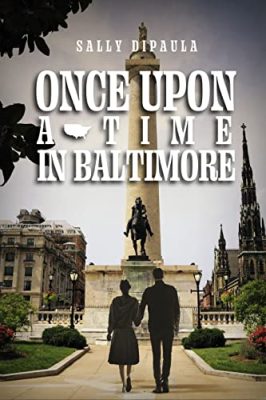
  • ONCE UPON A TIME In BALTIMORE by Sally DiPaula – Historical Fiction, Multi-Cultural, Family Saga


    In Sally DiPaula’s Once Upon A Time In Baltimore, a young couple faces the pains and triumphs of life amidst the changing social mores and ever-present challenges of the 20th century.

    Throughout decades, this story unfolds to reveal their relationships with extended family, and their lifetime commitment holding against the likes of marital strains, discrimination, war concerns, and health issues. Inevitably, there are moments of pondering about the choices they’ve made and worries over what the future holds.

    As an Irish-American girl growing up in Baltimore, young Annie Finnerty suffered the loss of both a parent and sibling. Vince Parisi, the son of Italian immigrants who worked in the restaurant business, also weathered the heartfelt loss of a family member. When the two meet, their definite attraction soon leads Vince and Annie down the expected path of marriage and starting a family.

    With the joining of the Italian Parisis and Annie’s Irish-Catholic Finnerty clan, DiPaula includes familiar details to distinguish the contrasting ethnicities.

    While momentarily at odds in their courtship, in an attempt to reconcile, Vince delivers a chocolate Easter egg gift to Annie. Here Mrs. Finnerty questions its edibility, inferring that Italians are known to poison their enemies. And while Vince looks upon his Italian relatives as extended family, Annie insists on privacy and separation from them.

    Whether family members who succumb to illness or sons going off to war, country club rejections or suspicions of infidelity, DiPaula fills these pages with emotional characters entangled in a bevy of themes from Love and loss, betrayal and heartache, to jealousy and fear.

    Once Upon A Time In Baltimore holds many beautiful moments of family life, coupled with just the right amount of sudden and unexpected twists to pull the reader in.

    Annie deals with panic attacks, frequently overwhelmed by the world around her, while Vince often voices his inner sense of feeling unappreciated. Along a marital route marked by bliss and blisters, separation and counseling help to heal their connection. In the final chapters, we see a contrast between contentment and loneliness. With friends and family of her generation passing, Annie doesn’t enjoy her left-behind Matriarchal status, waiting out her time and suffering from age-related concerns.

    DiPaula delivers chapters in chronological order and maintains a steady pace. With an impressive timeline, the story sometimes jumps ahead, always providing a brief update on where characters are in their present life situations.

    Extensive research went into the details of this century-spanning story.

    From the descriptions of the involved process of starting up a car and the daily routine of running a restaurant, to the available cancer treatments for a key character stricken with the disease, DiPaula’s effort proves thorough and genuine.

    Once Upon A Time In Baltimore is the kind of story that could seemingly be set anywhere. Amidst the joys and sorrows of blended families when a marriage takes place, we see a striving for The American Dream. For individuals who enjoy following emotional family sagas and the generational relationships that play out over many years, DiPaula delivers a rich-in-character, well-crafted, and entertaining novel.


    5 Star Best Book Chanticleer Reviews round silver sticker

  • A LONG WAY From CLARE by Robert W. Smith – Historical Fiction, Conspiracy Mystery, Irish-American History


    Twenty-four-year-old Conor Dolan had intended to surprise his older brother and catch up after years apart. However, what he finds when he arrives in Chicago will spark a harrowing mystery, in A Long Way from Clare by Robert W. Smith.

    Kevin, a beat cop in twentieth-century Chicago’s worst neighborhood, was found six weeks before Conor’s visit, in what the police have dubbed a suicide. However, Conor has his doubts. Each time he asks people about Kevin, he is met with resistance and denial. When Conor speaks with Detective Flynn, the man assigned to Kevin’s case, his suspicions become certainties. Flynn’s bizarre behavior, the minimal effort on the police’s part to investigate, and the men following Conor at every turn convince him to stay in Chicago rather than return to his home in Springfield.

    Conor’s determination to find answers to Kevin’s death lead him in a dangerous dance with darkness amidst the shadows of Chicago’s underworld.

    He finds an ally in undercover Pinkerton agent Rebecca Fletcher, who has been assigned to find information on a secret Irish society, Clan na Gael. Clan na Gael, a militant organization bent on establishing a united, independent Ireland, is planning the assassination of a visiting British dignitary. And Rebecca has uncovered evidence linking Kevin with them. Now Conor finds himself in the middle of a corrupt city, fighting for justice for poor immigrants and searching for the truth about Kevin’s life. The more he learns about his brother, the less sure he is that he actually wants that truth. At great risk to himself, Conor faces the corruption, where his own destruction is just one misstep away.

    A Long Way from Clare revolves around the brotherly love between Kevin and Conor.

    The reader sees their relationship through Conor’s memories. Kevin gave up so much to make sure his brother became more than himself. A seven-year-old Conor was once protected from the reality of eviction by Kevin, who strives to make the whole thing seem like a grand adventure even as their mother sends them across the ocean to their uncle. He does this again on the horrifying journey from Ireland to America aboard a cramped, filthy ship. Conor is never fearful because Kevin has given him strength and assurance that all will be well as long as they are together.

    As a young adult, Kevin joins the army and later the police force to provide Conor with an education. He made certain Conor became a lawyer while Kevin himself walked the beat of the worst section of Chicago. Conor truly begins to understand Kevin’s sacrifice as he investigates Kevin’s death. However, he also finds a duality in the brother he loved and respected. He’s uncertain and confused when he learns of Kevin’s secretive life, struggling to reconcile this with his kind and caring brother.

    Chicago itself becomes an integral part of the novel. The massive government corruption in the early twentieth century defines Conor’s story just as much as the other characters.

    Conor’s fledgling law office cannot survive without the consent of precinct bosses, their “heelers,” and the coppers patrolling the ward. Everyone from the local priest to the court clerk has their hands in the coffers. Stuck in the capital of debauchery, Conor cannot fathom how his caring brother has spent most of his adult life working in the ward. The smog, the filth, and the human depravity overwhelm Conor’s upright values. Though he feels the pressure to break laws to benefit his “protectors,” Conor refuses.

    The plight of immigrants, especially the Irish, becomes foremost in Conor’s mind since the city itself seems to devour these poor masses.

    In his search for answers, he encounters so many people – women in particular – who’ve been abused and used, crushed beneath the feet of men seeking their own freedom from those at the top. They hurt those beneath them because they themselves are being hurt, going so far as to kill their own children rather than allow the city to consume them piece by piece. This dark and horrifying picture of the Windy City is the one that Conor must face.

    A Long Way from Clare skillfully entwines the bonds of family, the underbelly of a corrupt city, and the resilience of those who struggle for justice. Robert W. Smith’s storytelling plunges readers into early twentieth-century Chicago to deliver a riveting narrative where the truth is irresistible.


    5 Stars! Best Book Chanticleer Book Reviews

  • THE MERCHANT From SEPHARAD by James Hutson-Wiley – Historical Fiction, Medieval, Jewish History

    blue and gold badge recognizing The Merchant from Sepharad by James Hutson-Wiley for winning the 2023 Chaucer Grand PrizeJoshua Ibn Elazar, the eager son of a Jewish merchant, travels to al-Andalus (the Iberian Peninsula under Muslim rule) to prove himself in his father’s business. But he finds an unwelcoming, degrading society waiting for him, and begins a journey of misfortune and anger in James Hutson-Wiley’s historical fiction novel, The Merchant from Sepharad.

    Shortly after arriving in the city of Lishbunah, al-Andalus, Joshua is tricked out of the gold for his living expenses. Worse yet, he learns that Jews in Lishbunah suffer under oppressive laws, holding far less status than Muslim citizens. He can only find help in Lishbuna’s Jewish community, meeting Rabbi Hiyya al-Daudi and his son Yaish, who house and feed him.

    They tell him that his father’s colleague, Essua, who was to help Joshua manage a shipment of flax and sugar, has been arrested. Though Essua is eventually released, Joshua fails to secure storage for his goods, as the makhzan (warehouse) he rented is given to a Muslim merchant instead. In his fury at the city’s prejudice, he sets fire to the makhzan, and is forced to flee.

    Thankfully, Rabbi al-Daudi has secret connections to Alfonso Henriques, the Christian King of Portugal.

    Joshua travels with Blazh, a Slav who was enslaved as a boy when his village was raided. They deliver a message of Lishbunah’s weaknesses to Alfonso, who plans to march on Lishbunah with the help of the Crucesignati (crusaders). Al-Daudi hopes that Alfonso’s conquering of the city would be better for the Jews in Lishbunah than the encroaching threat of the Almohad, a Muslim power that demands either conversion or death.

    Joshua travels on to the city of Qurtuba and becomes a student of Rabbi Maimon ben Joseph. However, Joshua’s troubles have only begun. He becomes involved with Karaites, Jews who reject Rabbinical authority, and shares in their far-off dream of retaking Yerushalayim (Jerusalem). Together they leave Qurtuba, only to suffer at the hands of a band of Christian soldiers. Joshua’s fury at the world of Muslims and Christians grows with each misstep in his journey, as he watches friends be killed, loses his father’s respect, and is told over and over again to accept these pains as God’s plan.

    He travels through al-Andalus, across the Mediterranean to Sicilia (Sicily) and Al-Misr (Egypt), and down the Red Sea as he tries to redeem himself in his father’s eyes. He can’t forget the cruelties he suffers, and they weigh on his shoulders. But so too does each kind act keep his spirit alive. As he sees more and more of the world, he measures his desire for retribution against the ideals of his faith.

    The Merchant from Sepharad offers an in-depth, fascinating look into twelfth-century Iberia, the Mediterranean, and the Red Sea.

    From Lishbuna to Qurtuba to al-Yaman, Joshua encounters the subtleties of social life amongst peoples with vastly different histories. Rather than taking a broad view of the dynamics between different cultures in al-Andalus and al-Misr, author James Hutson-Wiley fills this book with specific struggles and clashes. A helpful glossary at the end of the book explains the terms and language of this time and place.

    This dedication to detail makes each new city feel unique, as they were in real life. The people speak and treat each other differently, the pains and joys are weighed out in different amounts, and the ever-turning wheels of history threaten to crush one people while enriching another. As a Jew, Joshua remains an outsider along much of his journey, giving him a fascinating view of the conflicts in his world. Readers will learn much about the power struggles of the twelfth century as they follow him from region to region.

    Joshua becomes an engrossing protagonist through his struggle to succeed as a merchant – and often just to survive.

    His anger drives him to make rash, but understandable, choices. Despite all of the social forces arrayed against him, he hopes to make some kind of change in the world. But when his very life is threatened, more than once, how can he hold on to his ideals and his rage at the same time?

    Friends and teachers on Joshua’s journey show a more hopeful side of humanity. The kind Blazh, patient Maimon, passionate Simon, stalwart Wallo, and others help to shape Joshua’s emotional path. He comes to understand that oppression is shared amongst many people, and one of the few strengths they have is solidarity with one another. Without the generosity of others, Joshua would never have survived. But, of course, the cruelty of the world stings worst when it takes good people from him.

    At the heart of the story lay Joshua’s faith, and sometimes lack thereof.

    He learns from Rabbis, explores the Karaite philosophy, and tries to take solace in his beliefs. Much of his life is shaped by being a Jew, how could it not be in a place like al-Andalus? But while teachers like Maimon urge him to be patient and understanding of God’s plan, others like Simon insist that God demands them to act against their oppressors. He struggled to believe that God could want him to accept all of the pain and death he’s seen. Should he not take up his sling against the forces of Amalek?

    As he learns of new people and their struggles, he considers what unity there is in faith. While his hope of taking Yerushalayim remains far out of reach, perhaps there are still some ways that he can help those who share his hardships?

    The Merchant from Sepharad not only provides lessons on history, but an exploration of Jewish philosophy and scripture. Fans of historical fiction and religious history will adore this story, the third installment in the Sugar Merchant series.


    5 Stars! Best Book Chanticleer Book Reviews

  • EO-N by Dave Mason – Historical Fiction, WWII Fiction, Historical Mystery


    A young boy in Norway makes a discovery while playing with his dog, opening the mystery of EO-N by Dave Mason, a detective story spanning multiple decades and both sides of the Atlantic, a deep dive into the horrors of Nazi Germany, and a heartfelt love story.

    A small metal fragment leads to the discovery of a downed WWII twin-engine Mosquito fighter-bomber hidden in snow and glacial ice for nearly 75 years. The crash site yields an initial set of clues, one of which finds its way across the world to Alison Wiley, a biotech CEO in Seattle. Having recently lost her mother, and, a few years earlier, her brother in Afghanistan, she finds her days full of despair, but the discovery makes a distant connection to her long-lost grandfather, and she flies to Norway. There, she meets Scott Wilcox, a Canadian researcher assigned to investigate the discovery after his government learned that the crashed aircraft belonged to the Royal Canadian Air Force. Their attraction is both intellectual and emotional, but the quest to uncover the plane’s mysteries and the fate of Alison’s grandfather place any romance to the side.

    At first, the crash doesn’t appear exceptional, until certain contradictory and confusing clues emerge that make it clear that the circumstances that led to the plane’s fate were anything but simple.

    EO-N’s story is complex, leading the reader from clue to revelation with a sure hand. And it takes a dark secret from the past and develops it into something that might make the world a better place.

    The details are key to the novel’s success. Readers will wonder whether the facts outlined in the book are based on actual history, and while the specifics of the heinous Nazi activities at the center of the story may differ somewhat from reality, the spirit of the revelations rings true.

    This novel is impeccably researched, and the characters are believable, warm, and heartbreaking. Readers won’t be able to put it down until its perfect conclusion.

    EO-N by Dave Mason won the Grand Prize in the 2021 CIBA Hemingway Awards for 20th Century Wartime Fiction.


    5 Star Best Book Chanticleer Reviews round silver sticker