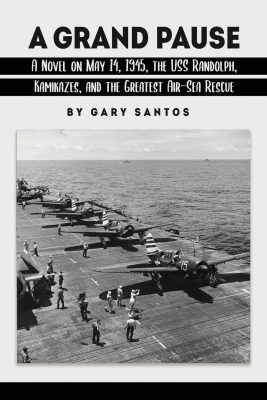
In A Grand Pause: A Novel on May 14, 1945, the USS Randolph, Kamikazes, and the Greatest Air-Sea Rescue by Gary Santos, readers board the US Naval aircraft carrier alongside its crewmen as World War II’s Pacific Theater reaches a critical point.
This compelling novel opens with a startling description of the US Navy caught in the bloodiest and longest battle in its history. Through a wide cast of characters, from sailors to pilots, officers to the deck crew, everyone plays a vital role in keeping the USS Randolph running amidst the most heated naval combat of World War II.
Santos writes every moment of these nightmarish battles with intensity and authenticity.
Rich details provide a visceral experience for the reader as they feel, see, and breathe each nuance of the desperate fight to stop the kamikazes from reaching their targets. These kamikaze attacks move so quickly readers will need to catch their breath. To feel as if an attack is truly happening while turning the pages is a testament to Santos’s talent. His entwining of fact with fiction is seamless.
With meticulous detail, Santos describes the moment when Ensign John Morris and his gunner Cletis Phegley are shot down.
Readers share the stomach-dropping terror of a descent to an unknown fate. When the USS Randolph sets a plan in motion to rescue the men before the Japanese can get to them, their heart-pounding, desperate hope becomes inescapable.
With a lifetime working in aviation, Santos is deft at explaining the intricacies of what the pilots, flight crew, and officers experienced. As the actual son of one of the crew members in this historical event, he delivers its emotional reality with lasting impact.
A Grand Pause is a must-read that will grab the attention of any historical or wartime reader who wants to be truly submerged in a heart-stopping, passionate military story. Gary Santos brings the past into the present!
Matilde’s General, the second book in The Visigoth Saga by Robert S. Phillips, follows young Matilde, daughter to the Visigoth Elodia and the Roman Caius, as she takes part in the looming fall of the Roman Empire.
Showing the same will and cunning exhibited by her mother in Elodia’s Knife, Matilde spends her youth training to fight. She transforms from an 11-year-old bravado into someone stronger, wiser, and ultimately respected by men in power.
Matilde’s General thrusts readers right into battle – and the action keeps blazing throughout this ancient history.
Her stepbrother Alaric, and his fighters – prized by the Roman Emperor Theodisius – are hired to fight in a civil war. Matilde follows behind in secret. When she is discovered, Matilde is grudgingly allowed to help her mother with the medical cart. But nothing has prepared her for the bloody conflict ahead.
Used as arrow fodder, half the Goth fighters are slaughtered, with most of those still alive badly wounded. Compartmentalizing her grief and horror, Matilde helps treat the injured, whose numbers are multiplied when a ferocious storm follows the battle.
As the ragged remainder, including a wounded Alaric, return home, Matilde asks, “Our songs and stories are full of heroic deeds. Why don’t they tell the truth? That war is horrible, and young men die?” Elodia tells her that men are born to fight and protect us – women to be mothers – but Matilde thinks otherwise.
She listens carefully and begins to debate military philosophy with first Alaric, and eventually, all men in her sphere.
Although Rome viewed all non-Romans as barbaric, the Goths held themselves as civilized. All peoples plundered and burned other villages, but the Goths only took what they needed. Matilde’s family experiences this firsthand on their return home to Storgosia. The Huns have destroyed all but the old Roman fortress.
Matilde and Alaric agree that their people can’t remain there. Together, they hatch a plan.
Emperor Theodosius has died, leaving his kingdom split between his two mentally weak sons. The pact between the Goths and the emperor is now nullified. Alaric determines to forge a new one, not only codifying him as magister militum, but also giving his people lands within the Roman empire.
Matilde refines Alaric’s speech to the Goths and is credited by one of the leaders as “wise beyond her years.” It won’t be the only time. In fact, many of the women far outweigh the men in perceptiveness and prudence. This echoes the point that Elodia made to her daughter.
The Goths under chieftain Alaric journey to Constantinople to propose their new pact. Now recognized as a thoughtful advisor by her people, Matilde attends in the guise of a server but whispers counsel in Alaric’s ear. The negotiations last a month, and ultimately, Emperor Arcadius grants Alaric the region of Thessalia, but no military title.
When Arcadius reneges on part of the pact, a battle breaks out, but the top Roman generals Stilicho and Gainas choose not to escalate.
General Gainas takes note of Matilde. Before the Romans return to Constantinople, they demand two hostages as “guarantors of Alaric’s good behavior.” With Gainas’s growing respect for and attraction to Matilde, it’s no surprise that she is chosen.
Robert Phillips imbues Rome with life and color, exciting readers with the ancient city just as it fascinates Matilde herself.
The market stalls are filled with silks, jewelry, and other riches. Matilde joins on weapons drills, astonishing the young men. She watches gladiatorial games and chariot races, realizing that above all, Rome is defined by the constant presence of bloodsport, violence, and death.
But for all its jubilant chaos, Rome is controlled by careful intrigue and political machinations. Matilde has to quickly grasp the tenuous flow of power.
She is taken prisoner as a spy, but soon released back to an ever-more adoring Gainas, who acts on her suggestion to remove the chief minister and take his place. However, Arcadius feels threats closing in on him and starts having generals killed, so Gainas departs with an envoy to recruit more fighters.
Befriended by a general’s wife, Matilde confesses: “Gainas is destined to be the Stilicho of the East […] though he doesn’t know it. He needs a woman to help him fulfill his purpose. I am that woman […] Gainas and I would become the rulers – the effective rulers – of half the world.”
For once, Matilde’s instincts fail her.
On their return to Rome, unrest escalates, and the empire’s slow demise is reflected in Matilde’s personal life. Now very pregnant, she loses the empress’s friendship. Gainas is obsessed with military action, and he no longer takes her counsel. She realizes that, faced with turmoil, “Gainas was too proud to take suggestions from a little girl.”
With few people she can rely on, Matilde will have to survive this collapsing city.
Historical fiction rarely looks into the so-called barbarian tribes who helped bring about the fall of the Roman Empire. The Visigoth Saga illuminates this fascinating and important part of the ancient world.
Phillips bolsters this story with intriguing, authentic details about battle maneuvers, political plotting, and life in general circa 400 CE. Each chapter is introduced with the words of an actual ancient historian. Within this historical veracity, Matilde’s General is made intimate by its intelligent women who love, and understand, their flawed men.
Readers can look forward to Matilde’s story reaching its epic conclusion in book 3 of The Visigoth Saga:Matilde’s Empress.
Hello friends, we have another fabulous interview for you today.
In 2024, David Calloway took home the 2023 Chanticleer Grand Prize in the Goethe Awards division for his fascinating novel, If Someday Comes. Here, he tells us how he was inspired by his own family’s history to write If Someday Comes and the subsequent heights it is now reaching! Take a minute or two and get familiar with David to learn more about his ancestors’ amazing story. You won’t be sorry!
Chanti: Your writing is very personal. What drove you to tell your family’s history?
Calloway: The heart of my wish to write and to tell my family’s story was to record for the coming generations the stories I heard from the old folks as I was growing up. I wanted to preserve the struggles, hardships, and triumphs of my ancestors’ American lives.
I think I always wanted to write, but put no real effort into it early in my life, as I was filled with self-doubts about my ability. Eventually I would overcome my inertia through the feedback and encouragement of close friends and family. In my professional life, I was in the motion picture and TV business, first as a cinematographer, then as a director, and then a producer. From day one, I read every screenplay – all revisions – and watched the words come to life on the screen.
Slowly, I learned what worked to tell stories economically, so some story sense came by osmosis, some by study, some by practice. I took story structure classes, studied Robert McGee. I read Bird by Bird by Ann Lamott and On Writing by Stephen King. I talked with working writers about series and story arcs, plotting, character, and foreshadowing. I also attended writer workshops, retreats, and read other successful novelists.
Chanti: When did you finally feel you were an author and add that to your extensive resume?
Calloway: The day I opened the box that brought the proof copy of If Someday Comes! Up to that point, there were many moving parts, the manuscript, the proof reading, the cover art, the endless formatting. Here in my hand was a real book, something anyone might buy. Unbelievably, it had my name as writer on it. It’s been published for many months, and I still find it hard to introduce myself as an author.
Chanti: Your ancestor’s story is so compelling. What genre best describes your book?
Calloway: If Someday Comes is historical fiction, closely based on the true story of my great-grandfather’s life during the American Civil War. I grew up knowing where people were during that period, but their exact relationships were lost in time, so I filled out the characters and created the tone of the plot as I went. Comments from the old folks like “he was a nice man” are not enough. It’s hard to avoid retroactively applied values to those times, and I’m sure some of my twenty-first century “I have judgement” slipped in there somewhere, but the goal of getting his story into a book was my true goal.
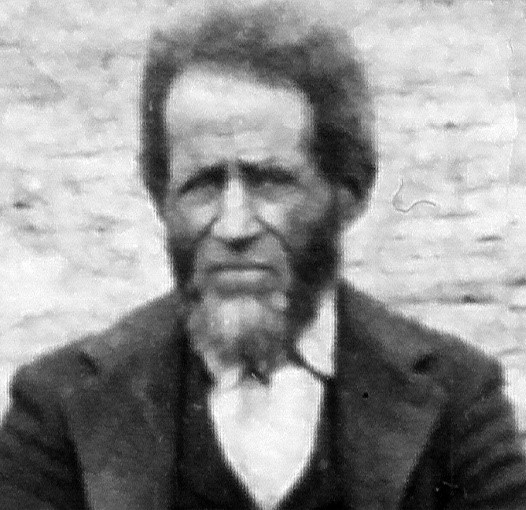
George Calloway
Chanti: How did find the information you used to fill in the background of the story?
Calloway: I read historical accounts of the period and subject, then added in my family’s tales of the past. I also created an outline of events for the story, and I used incidents I read about in books, letters, and newspapers for inspiration. The motivations of people never change for as far back as written history will allow us to see. Well-worn are the old trials of the human condition, and how often do we quote the Romans and Greeks on sex, greed, love, and jealousy. And of course, my own feelings on the same subjects.
Chanti: That’s a rich way to develop both character and story! How do you approach your writing day? What is your routine?
Calloway: “Sporadic” is my routine. I’ll write for several days, then none, then return to the page, then realize I need input, then read more history and other people’s work, stare at the blank screen, castigate my own procrastination, remind myself that no one is going to read this if I decide to cut it-so don’t worry. Then I despair that none will read the book anyway, convince myself that I’m hungry and a snack will get me going. I’ll check my email, take my dog for a walk, and then have lunch with old friends whom I’ve convinced my book is going great.
Ad infinitum.
Chanti: What about writer’s block? How do you handle it when the words just won’t come to you?
Calloway: Staring at an empty page with no ideas popping is tough. I write whatever comes to mind. It may have nothing to do with the book, or it may have a connection later on in the story. Some days are two sentence days, some are two-page days. I concentrate on my rights as an editor and will change or eliminate any thoughts, so I just jump right in.
If I’m really stuck, taking a walk helps. I leave the phone at home, as I find stepping away from it resets the brain. Sometimes I imagine your main character with walking with me. And the phrase “I’ve got to sleep on it” is a maxim I refer to often, because problems are solved and ideas are generated by whatever part of the brain is working at night. It’s an approach that work for me… sometimes.
Chanti: Those are great pieces of advice for breaking out of a block. Beyond writing, what sort of marketing tips do you have for authors?
Calloway: Online ads are the only strategy that has worked for me. Spending lots of money in trade magazines has been a complete bust. I advertise on Amazon and Facebook. Set a budget and see how it works for you. Even so, It’s a struggle. Contacting public libraries, local papers, community clubs (Rotary, Elks, Chamber of Commerce) help – they always need luncheon speakers. I also make a point of being available for online book clubs and chats, and I have a website that has book reviews, awards, and links to other websites. www.IfSomedayComes.com. And I always encourage readers to write reviews online. It really helps others to decide to read the book.
Chanti: What is your next project? Another story about a member of your family?
Calloway: Yes! I am working on my Grandfather James’ story as historical fiction. He was born a slave in 1860, and grew up to become a surveyor and farmer. James and his brothers – all graduates of Fisk University – worked for and with Booker T. Washington in the building of Tuskegee Institute. James ran the farms and also taught farming. He was Tuskegee’s representative sent to Washington, DC to lobby for land grants to help finance the school. Later, James was hired by the German government and traveled to Togo to teach cotton farming.
Chanti: Who are the perfect readers for If Someday Comes?
Calloway: The book is a story of family, both before and during the Civil War. It highlights the close relationships between owner and slave, and as was so often the case, is about one large family separated by race and class.
The story includes the good stuff, like love, courage, ingenuity, as well as the bad stuff of violence, cruelty, famine. Everyone suffered during the war; but remarkably, George (my Great Grandfather) kept everyone alive on both sides of the color line.
It will be a book for anyone interested in the Civil War, the experience of slavery in East Tennessee, and the relationship of whites and blacks in the South.
David Calloway was born in Chicago and grew up in Palo Alto and Berkeley. Calloway holds an MFA from UCLA in Film Production. His first job was as an Editor, progressing to Cinematographer, then a Producer of features and television. He is a member of the Producer’s Guild, the Director’s Guild, and the Academy of Television Arts and Sciences.
Calloway is a Director on the board of the Angel’s Gate Cultural Center and on the board of the Offshore Racing Outreach Foundation.
Calloway lives and works in Los Angeles, California. You can find out more about David Calloway’s writing on his website.
If Someday Comes available on Amazon in print and Kindle, and as an Audible book.
The Faraway Mountains by Radu Guiaşu is a fascinating blend of fiction and autobiography that brings to light the restrictive nature of the Communist Era in Romania and throughout the Eastern European Bloc. Experienced through the eyes of a group of friends, their persistence to find their friend perfectly illustrates the importance of human connection, even within the cold confines of a communist country.
Guiaşu begins his story as a chronicle of the entwined lives of childhood friends Victor, Dan, and Alex—who embark on a quest to find their lost comrade, Gabriel. Along their journey, they debate the important issues of their day.
Their discussions reveal the intricacies of daily life from the broad, to the particular. Topics like the oppressive regime in the country, the egregious ineptitude of some high-ranking officials, the deterioration of living conditions, and the recent and shameful destruction of numerous architectural gems are discussed right alongside the possibility of the national football championship game being another sham, the rising cost of foreign blue jeans on the black market, and the record heat wave they left behind in the capital.
This work pays homage to those exceptional individuals who, in spite of the harsh conditions their government forced on them, retained their moral rectitude, bravery, and irreverent sense of humor. It is also a condemnation of everyone who worked in tandem with these oppressive systems.
In the second part of the book, Guiaşu depicts the mutual desire of two close friends to explore the bright promise of the West.
He goes into great detail about the complexities of obtaining permission to leave the repressive country of his origin. During his quest to weave his way through the red tape, he demonstrates the various ways in which officials took advantage of the situation to preach to the populace about the superiority of communist society and the inevitable, rapid collapse of the West.
As the story portrays, citizens were forced to stand up for a corrupt system where those in power took unjust privileges at the expense of those below them. Through the characters’ conversations we come to understand how the elite’s hatred for the less advantaged populous was fueled by the knowledge that many escaped their control to a less restrictive and more comfortable part of the world.
This novel goes deep into the subject of communism to present a realistic picture of what it is like to live under such an authoritarian form of government.
Guiaşu conveys the catalyst and motivation behind the regime’s blatant deceptions, indoctrination, repeated defeats, and continuous repression by deftly blending his personal experiences with fiction. He expands the story beyond the direct scope of a single person.
This work offers a fresh perspective on the value of freedom and independence while showing the brutal grip of a power that seeks to crush the characters’ last hopes of escaping.
Guiasu’s The Faraway Mountains is a novel that masterfully balances intellectual depth, emotional relevance, and creative perfection during brutally oppressive times.
Readers are fully drawn into the book as its vivid imagery and rhythmic language demystifies complex communist concepts and issues. Clever depictions of the many characters and their variety of reactions show how people deal with ambiguity and look for purpose when faced with hardship.
Shelter in a Hostile World, second installment in Mack Little’s Love and Peace series, is an epic tale of resistance, desire, and tragedy, saturating readers in the complexity of Igbo culture.
Little paints a character-rich portrait of the horrors of enslavement and the unthinkable violence against women in the Caribbean, locking people together in relationships molded by adversity.
Set in 17th century Igboland—the invaded region of Nigeria — and on the island of Barbados, Shelter in a Hostile World is a searingly brief novel packed with mesmerizing prose. It blends genres to create a literary language entirely its own.
Throughout Little’s story, readers follow the life and loves of Badu Obosi, a haunted revolutionary escaping enslavement to protect his daughter from sexual violence.
As he seeks shelter from the hostility of his exterior and inner worlds, he is submerged in memories of his early years as a passionate young man deeply in love with an unattainable girl named Ekemma. Although separated from him by class status in their Igbo community, Badu’s adoration for Ekemma is overwhelming and alters the course of his life.
Badu eventually finds a mature love with his current wife—an equally traumatized yet empowered Irish woman named Saoirse. She forces Badu to come to terms with his ghosts, regrets, and desires so he can release himself of his emotional wounds and forge a new life as a marriage partner and a free man in control of his own destiny.
Throughout it all, the paranormal manifestations of his past—known in Igbo culture as “Duppy”—threaten to undo him. In the end, Badu must let himself be rescued not only from his physical threats, but from the mental and emotional terrors that have kept him from living fully embodied.
Shelter in a Hostile World weaves in and out of time, place, and perspective, allowing us to see how Badu has been shaped by his experiences.
Throughout this short novel, Little masterfully entangles genre and theme — including coming of age, horror, romance, and action — creating an expansive collage that can touch a vast audience.
Little’s writing is not for the faint-hearted. Shelter in a Hostile World is a complicated, difficult story that invites readers to deconstruct plot, themes, and motives and find their way to the truth. Cultural expectations and traditions are troubled by the human experience. Fleshed out in vivid detail, these characters resist the constraints of easy interpretations.
Women experience a variety of sexual traumas, innocent people are the victims of slaveholders’ extreme brutality, and the ghosts of the wronged come back to reconcile with their wrongdoers, often in grotesque ways.
Even so, the novel forges a bridge between the inescapable past and the grueling present, allowing characters and readers alike to pass into a world where peace and hope can be found even amidst the most horrific of circumstances.
In the end, Badu realizes that all the regrets and desires “that pulled him in opposing directions receded until the whole of his thought and purpose crystallized into a ‘shelter in a hostile world.’” Similarly, this novel pulls together threads that appear to be leading in different directions and knits them into something whole and entirely its own.
Infused with sensory language and descriptions of setting, Shelter in a Hostile World pierces readers’ hearts and demands the dignity of their attention.
A Sea of Glass by Gail Avery Halverson is a sweeping historical novel that captivates readers as it takes us from the bustling world of Colonial Boston to the shores of Barbados. But the island’s burgeoning sugar industry harbors dark secrets for those trapped there, either by circumstance or by slavery.
The colonial backdrop is brimming with conflict. Businesses struggle under British taxation enforced by the hated Red Coats. With the dangers of traveling through pirate—and privateer—infested waters, there are more than enough shifting winds to keep readers engaged until the very end.
Lady Catherine Abbott-McKensie, her physician husband Simon McKensie, and their daughter Charlotte, enjoy the pace of life in Colonial Boston, but their peace does not last long.
After a very personal tragedy, Catherine starts imagining life would be better in her homeland of England. But when a free black woman who works for the McKensie’s attempts to do something out of the ordinary, Catherine finds she has reason to stay in Boston and stand up for what she believes is right.
Catherine’s not the only soul struggling in this tenuous world of Colonial America.
Her brother Charles is planning to invest in a sugar plantation in Barbados. He soon sets sail with his wife, Arabella, to visit the plantation in person. But on their way, they are beset by pirates and are separated from each other. Eventually, Arabella makes her way back to Boston, but her trauma from the pirate attack renders her nearly mute.
News of the plundered ship sends Simon to Barbados to find Charles, and they both discover the dark underside of the “Barbados Plan to Prosperity.” A plan with dire costs to both Catherine, Arabella, and the slaves who smolder at their unjust treatment.
A Sea of Glass includes excellently researched details, but its greatest strength is the relationships between the characters.
The reader will find themselves invested in everyone’s lives, both in their successes and perils. The rich emotion behind these characters will make readers empathize deeply with them.
As the third book in the saga of Lady Catherine Abbott and Simon McKensie, A Sea of Glass artfully shares the details a new reader would need, while not frustrating returning fans.
Any lover of historical fiction will find a meaningful read in A Sea of Glass, with the preceding Stockbridge Series fully living up to it.
The Series Book Awards recognize emerging new talent and outstanding works in Genre Fiction (and now Non-Fiction). The Grand Prize Winner, David Fitz-Gerald’s Series, Ghosts Along the Oregon Trail will be promoted for years to come in our annual Hall of Fame article, as well as be featured on the Series contest page year ’round!
The best part about being a Chanticleer Int’l Book Award Winner is the love and attention you get all year ‘round!
While these Award Winning Series are all Multi-book sagas, we are going to showcase the most important part of a Series. The beginning. Having a good start makes it memorable. The first book is the foundation, laying the first stitches into what later becomes a whole tapestry, telling their story.
Join us in celebrating the 2023 First Place Series Winners!
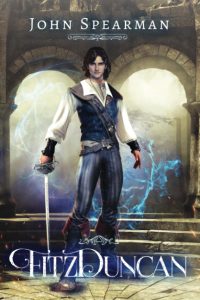
Introducing Casimir “Caz” FitzDuncan, a resident of the medieval kingdom of Aquileia. He makes his living retrieving things when the law will not help.
A woman has come to him, seeking his assistance in escaping a contract to marry a nobleman with a foul reputation. After their meeting, she is kidnapped not far from his residence.
Caz is accused of abducting her and forced to investigate her disappearance. Aided by his friend Freddy, Lord Rawlinsford, and Freddy’s mysterious cousin Lucy, Caz works to find the kidnapper.
Be careful Caz, the closer you get to finding the truth, the more tangled you are in a web designed specifically to trap you.
In this fantasy adventure book series you will be whisked away in a medieval time of magical realism, masters of sword fighting, and action & adventure that won’t allow you to put the book down.
Will Caz be able to rescue an innocent victim and save himself when skill with a sword is not enough?
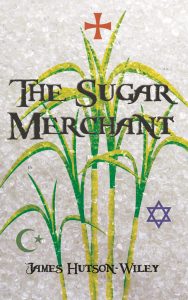
When Thomas’s family is annihilated in a raid, his life changes forever. Wandering for days, starving and hopeless, he is rescued by a monk and is taken to live at the abbey of Eynsham. There he receives a curious education, training to be a scholar, a merchant and a spy. His mission: to develop commerce in Muslim lands and dispatch vital information to the Holy See.
His perilous adventures during the 11th century’s commercial revolution will take him far from his cloistered life to the great trading cities of Almeria, Amalfi, Alexandria and Cairo.
But the world in which he lives is chaotic. Struggling with love and loss, faith and fortune, can Thomas carry out his secret mission before conflict overtakes him?
Spanning the tumultuous medieval worlds of Judaism, Christianity and Islam, The Sugar Merchant is a tale of clashing cultures, massive economic change and one man’s determination to fulfil his destiny.
From Chanticleer: 2019 Chaucer 1st Place Winner
Narrated by a boy who grows up in a monastery and is trained to be a spy, The Sugar Merchant is set in the late 11th Century when the Great Crusades were on the verge of erupting in Europe and the Middle East.
When Thomas is forced to flee after rebels attack his family, he is finally discovered, ragged and starving, by a giant of a man named Leofric. Taken under the wing of the monks at Eynsham Abbey, Thomas is educated while accepting the strict discipline of the Benedictine order. In his late teens, he is surprised and disappointed to learn he will not join the Order but will be employed as an agent and spy. His task will be to find, secretly copy and send back manuscripts written by Islamic scholars. These documents contain knowledge that the Catholic Church needs to maintain its control.
Accompanied by Leofric, who taught him the arts of war based on his own checkered past as a mercenary, Thomas travels to Spain, to the city of Granada (called Gharnatah at the time). His travels will take him through the known Catholic realms and beyond, and, paradoxically, afford him the chance to meet, befriend and be aided in the abbey’s mission by good men of other faiths, both Muslim and Jew. As a cover for his work for Eynsham, he adopts a persona as a merchant of sukkar, or sugar, a commodity that will soon have excellent trading value. When a beautiful Muslim girl crosses his path, all that he has been taught will come into question as he strives to do what he believes to be right.
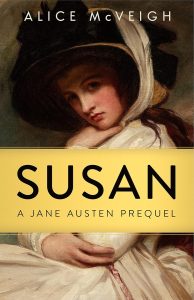
Sixteen-year-old Susan Smithson – pretty but poor, clever but capricious – has just been expelled from a school for young ladies in London.
At the mansion of the formidable Lady Catherine de Bourgh, she attracts a raffish young nobleman. But, at the first hint of scandal, her guardian dispatches her to her uncle Collins’ rectory in Kent, where her sensible cousin Alicia lives and “where nothing ever happens.”
Here Susan mischievously inspires the local squire to put on a play, with consequences no one could possibly have foreseen. What with the unexpected arrival of Frank Churchill, Alicia’s falling in love and a tumultuous elopement, rural Kent will surely never seem safe again…
In Europe, the Nazis are triumphant. England is under siege by air and sea. France has fallen to the Nazi Wehrmacht, which in turn fell on Soviet Russia. The Red Army is reeling in full retreat, with the Nazis at the gates of Moscow itself.
In the Pacific, Japan has been at war with China since 1937. Her war industries depend upon imports of scrap metal and oil from what are now the Allied nations. When an embargo is placed on imports to Japan, they are left with a year’s supply of oil to supply their armed forces.
Japan surrounds American possessions in the Philippines on three sides. The US Army is making a desperate, last-minute attempt to reinforce the Philippines garrison, but the clock is ticking for the Japanese, with their oil running out. The armed forces of Imperial Japan may attack the Philippines at any moment.
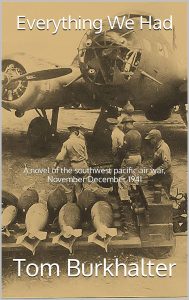
Two brothers, Jack and Charlie Davis, are pilots in the US Army Air Forces. They are part of the reinforcements sent to the Far Eastern Air Force, charged with air defense of the Philippines.
For Jack and Charlie, in a time when the US is on the brink of world war, a simple question must soon be answered: what will I do when the Japanese come?
From Chanticleer:
Everything We Had, book one of Tom Burkhalter’s No Merciful War series is an inexorable thrill that will grip readers tight. It starts with a poker game, through which a main character’s luck soon becomes evident. But will that luck hold out?
Jack—the poker player—and Charlie—Jack’s older brother—have been separated by war, even though that war has yet to be declared. Everything We Had focuses more on the machinations leading up to US involvement in World War II than on actual combat. The gears of war that have so many young men caught in them move with gradual but inevitable force, and so Everything We Had takes a more thoughtful approach to a historic moment in time.
Connecting with the characters is a gradual process as you get to know the intricacies that make up their individual personalities. This sets the reader up to feel the emotions of the characters as they face an uncertain fate, and throughout the book the author’s clear and methodical research shines with details such as specific views, locations, and—most notably—comprehensive descriptions of the airplanes Jack and Charlie pilot. This allows the reader to become deeply familiar with the motivations of the characters and the capabilities of the airplanes they fly.
The importance of their family gradually emerges, too, through their mother’s letters and their memories of their father who flew racing planes. The more readers learn, the more attachment they feel to these characters, giving weight to the growing danger they face.
An overzealous rookie cop. A biased old-boys club. Will she have to shoot her way in? Ro Delahanty never let her dream of becoming a cop out of her sights. Between years of black-belt judo lessons and sharpshooting championships, she thought she could handle anything the academy threw her way. But as the only female rookie on the force, she soon discovers it’ll take a warrior’s determination to get out from behind the desk and into the action.
Knowing she’ll have to work twice as hard for half the respect, she refuses to let distractions like a new boyfriend block her target. And her sacrifices will be well worth it if she can secure a “handle” that brands her as an equal instead of the butt of a joke. When a simple field assignment spirals into a heavily-armed hostage standoff, will Ro and her trusty Sig Sauer P229 .357 aim true or will she miss the shot she’s trained her whole life to take?
Ro’s Handle is the first book in the gritty Ro Delahanty police procedural series. If you like tenacious heroines, crime scene drama, and high-octane shootouts, then you’ll love David Lager’s torn-from-the-headlines tale. Buy Ro’s Handle and test your aim on a straight-shooting criminal case today!
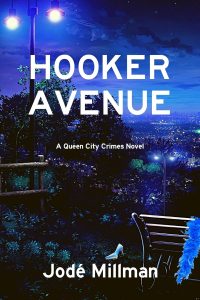
Amid a violent Hudson Valley thunderstorm, Jessie Martin discovers a woman lying unconscious in a roadside ditch. The badly beaten victim, Lissie Sexton, a local prostitute, claims she’s escaped the attack of a killer.
Jessie’s more than a casual driver who passes by; she’s a criminal-defense attorney. And Lissie is more than an ordinary hooker. She’s the key witness in a cold case under investigation by Jessie’s estranged longtime friend, Detective Ebony Jones.
And now Ebony can’t find her witness. Jessie’s new boss has sent Lissie into hiding. If Jessie reveals Lissie’s location she compromises her client, her firm and her professional ethics. If she doesn’t, she risks alienating not just Ebony but the entire police department backing her.
A simple act of compassion forces Jessie to choose between her duty and her friend.
For over three hundred years, that’s what the Hamilton family has called a shrinking swath of farmland in the Appalachian foothills of South Carolina.
Home.
That’s the failing tobacco farm where Walter and Maggie Hamilton choose to raise their three children. Walter has big plans to make the farm more profitable, but his plans are interrupted by World War II and family heartbreak. Walter returns from the war a changed man and finds Maggie, too, has changed, neither of them for the better. But at least their family is together again at…
Home.
More than anything, that’s where their eight-year-old son, Jimmy Hamilton, wants to be. However, after an unspeakable tragedy, he’s sent away from the only life he’s ever known to live with a kindly uncle in North Carolina.
Home.
That’s where Jimmy is finally going to be, unless fate has plans of its own…
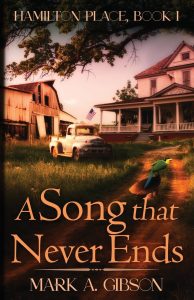
A Song that Never Ends is the first installment of the Hamilton Place series, an epic family saga extending from the Great Depression to present day. Through war and peace, love and loss, triumph and tragedy, follow the Hamilton family on their journey from a run-down farm in South Carolina, through the jungles of Vietnam, to the top of the world in New York City, and beyond the gardens of stone at Arlington.
From Chanticleer:
A Song That Never Ends, the first volume of a two part series by Mark A. Gibson, opens a dramatic fictional saga of the Hamilton family from the late 1930s Depression era, to 1967 and the Vietnam conflict. Here against the backdrop of a South Carolina tobacco farm, we come to witness a family in turmoil.
The calm and reserved Walter Hamilton and his rebellious, impulsive wife Maggie strive to build a life and raise a family. But the couple is tested by a series of misfortunes—miscarriages and stillbirths, and Walter’s enlistment during WWII leaving him with guilt-induced PTSD as he deals with the memory of fallen comrades.
At the center of this heartfelt story is James, the middle child, who at the tender age of eight is forced from his home due to a horrific accident and sent to live with a widower uncle.
James proves to be an extremely intelligent and talented youngster who longs for a connection to his family. In the meantime, he learns from his gracious uncle to deal with dire situations and unexpected circumstances in life, as well as the importance of having a charitable heart. Under the tutelage of this kind, caring, and nurturing man, the story begins to evolve into a coming-of-age tale.
Alice McVeigh – Warleigh Hall Press Jane Austen Series
Tom Burkhalter – No Merciful War
Dave Lager – The Ro Delahanty Novels
Jode Millman – The Queen City Crimes Series
Mark A. Gibson – Hamilton Place
The Grand Prize Winner for the CIBA 2023 SERIES Awards is:
Ghosts Along the Oregon Trail
by David Fitz-Gerald
We are so looking forward to celebrating these incredible book series!
First though, let’s celebrate some recent books in a series that have come our way for review!
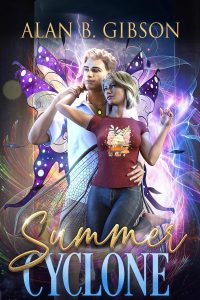
SUMMER CYCLONE: Magic at Myers Beach Book 4
By Alan B. Gibson
The citizens of the three fairy kingdoms clash, forced to live shoulder-to-shoulder alongside ungoverned Outliers. In Summer Cyclone, fourth book of Alan B. Gibson’s Magic at Myers Beach series, unassuming tea-shop manager Stefán tries to find love while keeping all of fairy society from fracturing.
The three fairy kings, Theos, Zsombor, and Christophe, evacuate their people to Myers Beach. It’s only here that they have any chance of recreating fairy dust after their old sources had been poisoned, and saving every fairy life. They take in the Outliers, remnants of a fallen kingdom, and at first find good will between the groups. But with thousands of fairies moving in, they have to keep everyone on a short leash or else risk humans catching wind of their new neighbors. Resentment of these strange Outliers builds.
Stefán, a close confidant to Theos, struggles to keep anti-Outlier sentiment at bay with the help of some enigmatic and knowledgeable new friends. Rumors of him giving the Outliers special treatment grow stronger as some fairies begin to suspect that he’s actually one of them.
Read more here!
SEA TIGERS And MERCHANTS: Salem Stories Book 2
By Sandra Wagner-Wright
Two families vie for power in mercantile 18th-century Salem. Sea Tigers and Merchants, the second book in Sandra Wagner-Wright’s Salem Stories series, returns to a world of treacherous storms, tantalizing wealth, and the demands of high society on its children.
Elias Hasket Derby, Sr. has kept his promise to his wife Eliza—they rule Salem. Hasket’s merchant ships bring in great fortune, while Eliza holds court as the most influential woman in the city’s social spheres. And their ambitions have grown to meet their station. Hasket launches his riskiest endeavor—the Grand Turk, a ship so massive she’s nearly too heavy to be pulled out of the docks. Meanwhile Eliza, snubbed by George Washington’s stay at another family’s mansion, insists they build a house so grand it will put all others to shame.
Such success, of course, draws the envious eye of Hasket’s competitor.
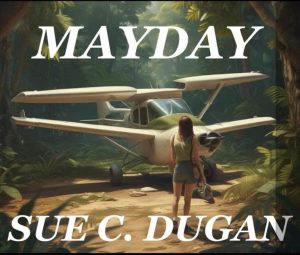
MAYDAY: Land, Sea, and Air Series Book 2
By Sue C. Dugan
In Sue C. Dugan’s middle grade adventure, Mayday: Land, Sea, and Air Series Book 2, thirteen-year-old Jessie and her father, Adam, take an unexpected detour when their plane crashes on a secluded island.
On their final vacation before Adam begins chemotherapy for thyroid cancer, Jessie and her father take off in their Cessna aircraft over the boundless, azure Atlantic Ocean. Jessie’s anxiety about her father’s health is on high-alert during the trip, especially when she remembers her mother’s cancerous death.
Twenty minutes into their flight, the sky grows gloomy, and the wind picks up speed from all sides.
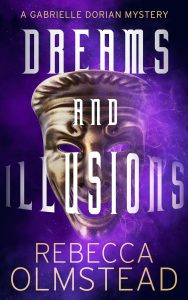
DREAMS And ILLUSIONS: Gabrielle Dorian Mysteries Book 1
By Rebecca Olmstead
Dreams and Illusions by Rebecca Olmstead is a delicate interplay of mysteries balanced on an emotional undercurrent, exploring the immutable ebb and flow of life to find resilience in the shadow of misfortunes.
In the bustling town of Whitman, Gabrielle co-owns the boutique Belle Femme with her best friend, Kate. Radiating the tranquil aura of an empowered business owner, Gabrielle is a caring woman, but burdened with a secret she hides from everyone. Gabrielle is blessed—or perhaps cursed—with prophetic dreams.
Almost as if they are a glimpse into the future, Gabrielle wrestles with dreams that foretell an ominous fate. Soon she is confronted with a series of distressing events that thrust her into a mystery.
This is the journey from beginning to end for the CIBAs Levels of Achievement is so worthwhile! Every list you make means more promotion for you and your work as each list is posted right here on our website, on our social media, and also out in our newsletter!
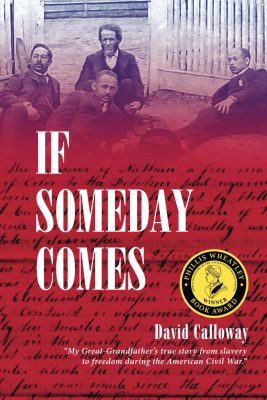
David Calloway’s moving historical fiction, If Someday Comes: A Slave’s Story of Freedom, tells the true story of his great-grandfather George Calloway, born into slavery on January 8, 1829. in Cleveland, Tennessee.
It is a tale of determination, perseverance, and achievement before and during the Civil War. If Someday Comes covers George’s final years in slavery; detailed accounts of the Civil War and its impacts on George and his family, both Black and White.
It is a family saga of survival and endurance.
The story begins in Cleveland, Tennessee, March 6th, 1857. We meet George and his family, his wife Elizabeth, their infant daughter Baby Caroline, and the stratified world of slavery in which they live. Thomas Howard Calloway (Marsa Thom), is their White owner who owns the East Tennessee and Georgia Railroad, the South’s only copper mines, and the local bank. He is one of Cleveland’s prominent town leaders.
Lincoln wins the 1860 election and the White community reacts fearfully. Fort Sumter is attacked, the War begins. The families of East Tennessee are mainly pro union, including Thomas Calloway. Cleveland is ‘occupied’ by the Confederate Army. The Union men flee to join the US Army or hide out in the nearby hills.
George and his family begin to help ‘runaway’ slaves escape north, eventually helping White men to escape to the Union Army. The Confederates take all the guns and food from the Union families.
Times get desperate: Marsa Thom is stripped of all his properties and must go into hiding among the caves in the mountains. George risks his life making repeated trips to the caves to take food and clean clothes to Marsa Thom for the duration of the war. Without the protection of Marsa Thom, George’s family is in constant danger of cruel punishments, violence, and exploitation.
Union and Reb troops fight over the tiny town and vital rail line, with control passing back and forth between the two sides. Treachery and desperation add to the suffering of both the White Calloways and the Black Calloways.
George becomes the undeclared head of both the White and Black families. With grit and determination, he provides for all, protecting them throughout the war.
“I found that to understand America, you must first understand the Civil War. George was then, and remains, a hero of our family.” – David Calloway
This account honestly and vividly depicts an era in history that should never be forgotten.
Those that love the history of the Civil War will be fascinated by this retelling.
David Calloway expresses his hope for the day when America will rise beyond the racist heritage that the founding fathers left behind. This award-winning historical masterpiece, If Someday Comes, combines the author’s relatives’ direct experiences and extensive, meticulous historical research to deliver a story that readers will appreciate through to the very end.
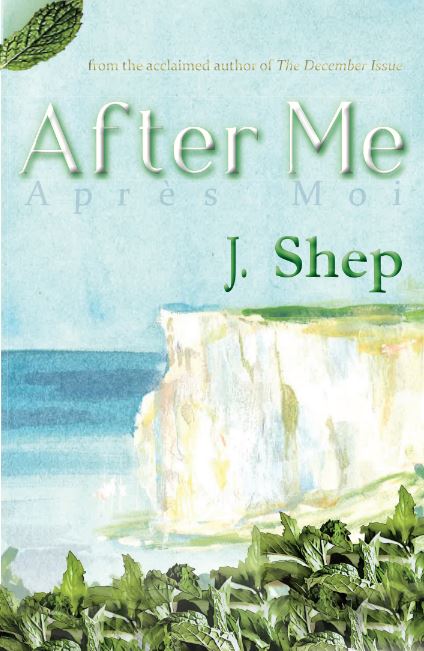
The arrival of a mysterious package makes for an enticing beginning in J. Shep’s After Me. Inside we find a manuscript with the same text as the book we’re about to read. This inventive start lends a sense of realism and truth to what follows and creates a vivid yet hazy quality, like memory itself.
After Me travels back in time to rural France just after World War II. The setting appears idyllic at first—almost unbelievably so. Still, there’s a disturbing undercurrent felt from the start. Not from an unwanted presence, but rather from an absence.
Told from the perspective of Ellande, a young boy, he recounts the summer his parents die in an accident and he and his nine-year-old little sister, Madeleine-Grace, are sent to their extended family’s summer home in France. Their care seems competent at first—but cracks in the façade gradually emerge as Ellande begins his tale.
Aside from their mourning, life seems lovely in the beginning. Lavender-hued skies at sunset, and the scent of peony soap permeate the background of this tale. Ellande recalls the light-filled home’s orderly kitchen where meals are made with fresh herbs from the garden and numerous aunts, uncles, and cousins create a large roster of characters. Readers may feel a bit disoriented encountering so many new names, as well as the French words and traditions sprinkled throughout the text. But that disorientation offers the reader insight into the mental state of the children as they navigate this strange summer of loss and learning.
The home’s idyllic nature springs almost entirely from a single character: Aunt Adèle. A tireless worker, she keeps the house beautiful and functional, doing the cooking, cleaning, gardening, and taking care of the childcare with grace and joy. As the novel progresses, her surviving siblings emerge as toxic counterpoints who are bitter, unhappy, and unwilling to pitch in around the house.
While some of their issues and instability can be traced back to the war and its aftereffects, the family strife isn’t just a product of wartime tragedies. Instead, issues that emerge are largely ones of character. Aside from Adèle, the adults in the house share little interest in the traditions, values, and work performed for the betterment of the family. They prioritize idleness and petty feuds, and their children largely take after them.
As the summer unfolds, the peaceful narrative slowly takes on a sinister quality.
But Ellande and Madeleine-Grace are different. Their mother Juliette was the sibling most aligned with Adèle, and the children have inherited her sense of tradition and good values. They take pride in helping the childless Adèle around the summer house. Still, with Juliette gone, the burden on Adèle grow heavier. Adèle’s siblings are resentful of her homemaking abilities and unbreakable spirit and continually punish her for a lifetime of perceived slights.
Though this is a modern novel, it’s written in a traditional style and slow pace, evoking novels of long ago. It has a dream-like quality, with beautifully specific descriptions that exist alongside the uncertainty of memory.
And readers will be well-rewarded for their patience with the slow early sections. Not only do fantastic details of real traditions emerge as the story progresses—such as the harvesting of fleur de sel—but so does an intense narrative of family and intangible inheritance. As Ellande and Madeleine-Grace come of age, they’re confronted with questions of who will keep those traditions alive, why, and at what cost?
Ultimately, After Me is a tale of breaking generational curses. A shocking turn near the end seems to suggest that even the most well-intentioned will never escape the burdens of family trauma and destruction. But this is a story within a story, and most of the main characters will find some sort of closure, though the finishing touches may take decades to emerge.
After Me starts out as gentle and luxurious as a rolling meadow. Yet it ends up confronting some of life’s greatest questions and most haunting mysteries. This combination makes for an evocative novel whose message will linger long after the last page has been turned.






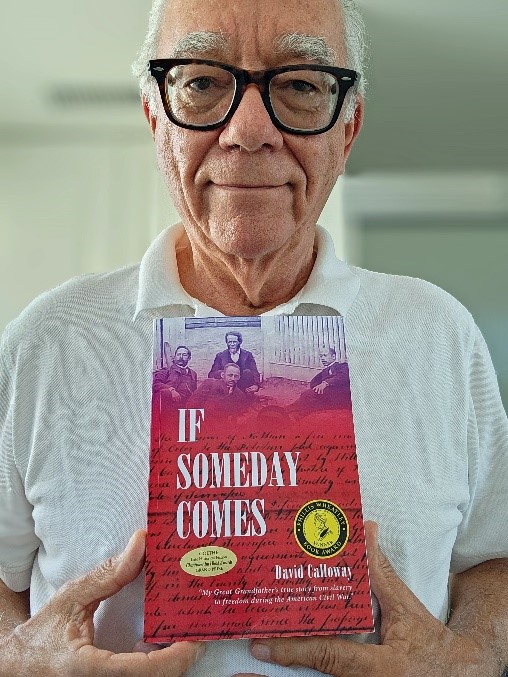

 David Calloway was born in Chicago and grew up in Palo Alto and Berkeley. Calloway holds an MFA from UCLA in Film Production. His first job was as an Editor, progressing to Cinematographer, then a Producer of features and television. He is a member of the Producer’s Guild, the Director’s Guild, and the Academy of Television Arts and Sciences.

 Shelter in a Hostile World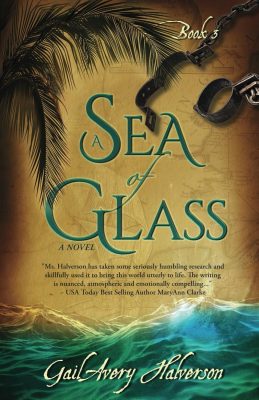


 The Series Book Awards recognize emerging new talent and outstanding works in Genre Fiction (and now Non-Fiction). The Grand Prize Winner, David Fitz-Gerald’s Series, Ghosts Along the Oregon Trail will be promoted for years to come in our annual Hall of Fame article, as well as be featured on the Series contest page year ’round!










 David Calloway’s moving historical fiction, If Someday Comes: A Slave’s Story of Freedom, tells the true story of his great-grandfather George Calloway, born into slavery on January 8, 1829. in Cleveland, Tennessee.