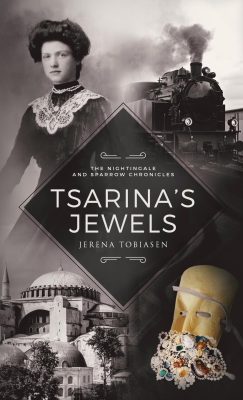
Viscount Simon Nightingale-Temple seeks a life of peace with his beloved Mary after the harrowing years of the Bolshevik Revolution. But in Tsarina’s Jewels, the second book in Jerena Tobiasen’s The Nightingale and Sparrow Chronicles, Simon is dragged back into global conflict through his very family.
While serving in the British Embassy in Petrograd, Simon witnessed firsthand that bloody revolution and the assassination of the Tsar’s family—all but one daughter, Grand Duchess Maria Nikolaevna, the beautiful woman who became his wife.
Maria, “Mary”, hides in plain sight among the British aristocracy, and the couple hope to settle into their lives with Simon’s parents. However, soon after his return, the highest levels of the British government force Simon into service for the newly minted MI6. Under threat of being blamed entirely for the Romanov family’s execution, Simon has no choice but to accept.
Little does Simon know he’ll soon be spying on his own brother.
As the second son, Richard resents Simon’s success and future inheritance. After drinking and womanizing his allowance away, Richard is forced into a job by his father. Though he holds a respectable clerk’s position, Richard steals files concerning the British movements against the Ottoman Empire.
In a bid to become his own man, Richard now races to sell his secrets to the Turkish government.
Simon has to bear the weight of family obligation and looming treason all while trying to maintain his wife’s secret identity. When a threatening figure returns from his past and adds yet more pressure onto his shoulders, Simon’s life might well come crashing down around him.
The characters of Tsarina’s Jewels develop with compelling emotion in the face of trauma and responsibility, most of all Mary.
Mary, heir to the Russian throne, has lost everything—her home, her family, her very heritage. Still healing from her own physical wounds, she now contends with the full force of her grief. The Nightingale-Temple family helps to fill some of her emptiness, but nothing can entirely replace the family taken from her. Not only is she haunted by the happiness they shared, but also the image of their deaths in her dreams.
Despite all of this, she takes up the mantle of nurse to join her mother-in-law Ann as a volunteer in the local hospital. Mary does what she can to comfort a flood of Spanish Flu victims. Many are Russian immigrants, but Mary refuses to let her fears of recognition stop her from tending to her countrymen—in essence her people had the crown not been stripped from her family. Her brave soul is a shining light throughout the novel.
Even Richard shows a growing depth and capacity to change, although he can’t turn back from his crimes.
Initially, Richard seems entirely loathsome, and the novel appears to move in the formulaic classic spy novel. However, even before Richard begins his life-altering exodus from England, the reader sees a shift in his character. Richard is deeply in love with Sally, an unassuming and hard-working woman. Though he doesn’t voice the feeling aloud, his actions clearly show his devotion angst at leaving her.
As Simon gets closer to catching him, Richard weathers his clashing sentiments about the treasonous path to which he’s committed himself.
Tsarina’s Jewels combines thrilling spycraft with the intricacies of 1918 European conflict, a fresh and fascinating continuation for this historical fiction series. Tobiasen explores the internal conflicts of her characters to build them up as familiar, inspiring, and rewarding to care for, giving emotional life to both suspense and history.
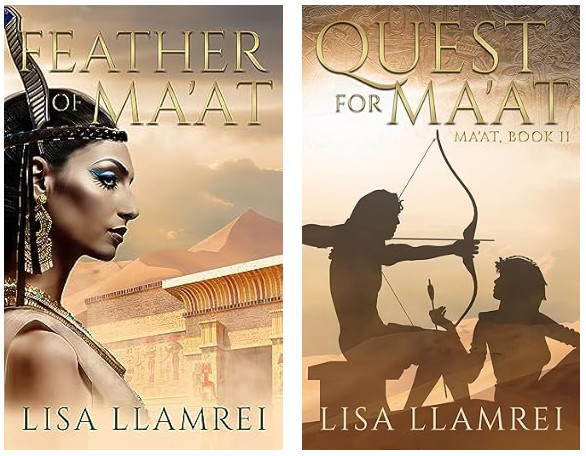
Chaucer Finalist Lisa Llamrei brings her book to life!
Readers will follow her characters’ footsteps through Egypt!
When your mission is to Discover Today’s Best Books, you love to come across good news regarding authors!
Lisa Llamrei, 2024 Chaucer Award Finalist, is combining her passion for Ancient Egypt with her travel expertise to lead an exclusive literary tour in March 2026!
The author behind Feather of Ma’at and Quest for Ma’at isn’t just writing about Nefertiti and Tutankhamun—she’s taking readers directly to their world. As both a travel agent specializing in Egypt and a novelist whose Ancient Egypt trilogy earned recognition in the Chanticleer International Book Awards, Llamrei has crafted a unique itinerary that brings her fiction to life.
“Egypt may be addictive,” warns Llamrei, who first fell in love with the land of pharaohs as a teenager. Her March 5-13, 2026 tour will visit off-the-beaten-path sites like Amarna (ancient Akhetaten, where Nefertiti ruled) and includes exclusive access to King Tut’s tomb—essential stops for readers of her novels.
This isn’t just any Egypt tour. Llamrei has curated experiences that directly connect to her award-winning historical fiction, allowing travelers to walk in the footsteps of the characters she brings to life on the page. From the temples and tombs featured in her books to the vibrant souks of Islamic Cairo, she’s sharing her decades-long love affair with Egypt.
With her second novel already released and the trilogy’s conclusion with her publisher, Llamrei is planning additional literary tours based on beloved novels like Shogun and The DaVinci Code.
Don’t miss out! Several Chanticleer International Book Award divisions have deadlines fast approaching. Whether you’re crafting historical fiction like Lisa’s Chaucer Award finalist Feather of Ma’at or working in any of our divisions, there’s still time to get your work recognized. Our awards provide the credibility and visibility that can transform a passion project into a professional platform—just ask Lisa, who’s now leading international tours based on her award-winning novels.
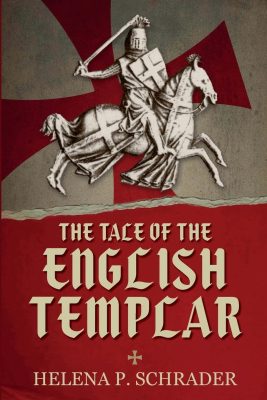
Far from the romantic legends of King Arthur and the Knights of the Round Table, Helena P. Schrader’s The Tale of the English Templar faithfully captures the harsh decimation of the Knights Templar. Schrader offers a sobering, immersive look at one of history’s darkest betrayals. This is historical fiction worthy of legend with its feet planted firmly in research—not myth.
Set in the early 14th century, the novel captures the downfall of the Knights Templar at the hands of French King Philip IV. With the Pope’s reluctant cooperation, the Templars are accused of heresy and tortured until they confess to crimes they didn’t commit. The king’s true motive? Their immense wealth.
Among those captured is Sir Percy de Lacy, an English Templar who is swept up in a raid by local French soldiers and caught in a mass arrest on Friday, October 13th, 1307. What follows is a harrowing account of imprisonment, torture, and unlikely survival.
After being brutalized, Percy miraculously escapes the King’s dungeons, only to be found near-death and nursed back to health by Felice, the strong-willed granddaughter of a powerful and wealthy nobleman—with enigmatic Templar connections.
Felice arranges for Percy to be brought to her grandfather Geoffrey. Together they risk their lives to shelter Percy and ultimately join his mission to save others from the Templar purge raging outside their walls. Though still marked by what he’s endured, Percy heals enough to join Geoffrey in rescuing fellow knights. Driven by loyalty and purpose, Percy risks everything to aid the knights still in peril.
As the adventure unfolds, Felice’s arc rises as one of the novel’s most rewarding. From a teenage girl promised in marriage to a cruel Portuguese noble, she becomes a quiet revolutionary, challenging the roles available to women of her time. Her eventual alliance with Percy and Geoffrey becomes one of shared purpose and moral courage.
The meticulous historical detail includes graphic descriptions of torture and public execution. Readers should be prepared for the historically accurate burning of 54 Templars in an auto de fe, a public execution orchestrated by the Inquisition. These scenes are unflinching but not gratuitous. Schrader’s intent is clear: to help readers grasp the full horror of what was done to these men—and why.
There’s no clear-cut hero in this story. Instead, The Tale of the English Templar explores the ambiguity of morality and faith, and how loyalty, fear, and ambition intersect in dangerous times.
At its core, this is a book about conviction—what we believe, and what we’ll risk to defend it.
Fans of serious historical fiction will find much to admire here. Schrader’s characters are complex, her world brutal but vividly drawn. Readers looking for a fast-paced escape may find the philosophical reflection slows the narrative, but for those who enjoy layered, character-driven stories grounded in historical truth, this book delivers.
The Tale of the English Templar by Helena P. Schrader rewards readers with insight, depth, and a cast of characters who refuse to be forgotten.
This post has links to each of the 16 individual CIBA FICTION Divisions’ Grand Prize and First Place Category Winners. We will have a separate post for Non-Fiction Award Winners which will include the Shorts Awards, and the Series Awards’ winners.
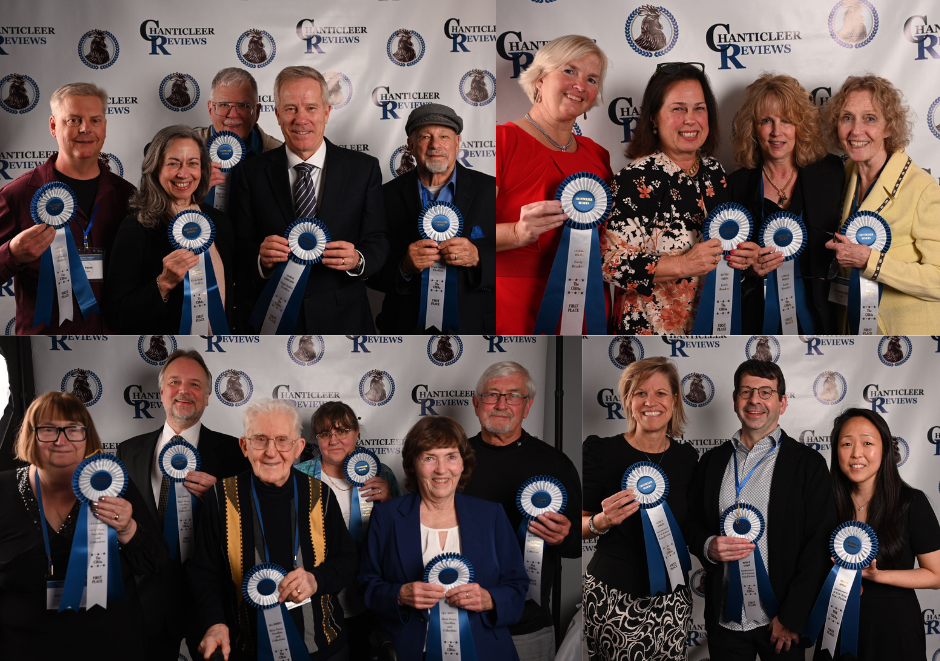
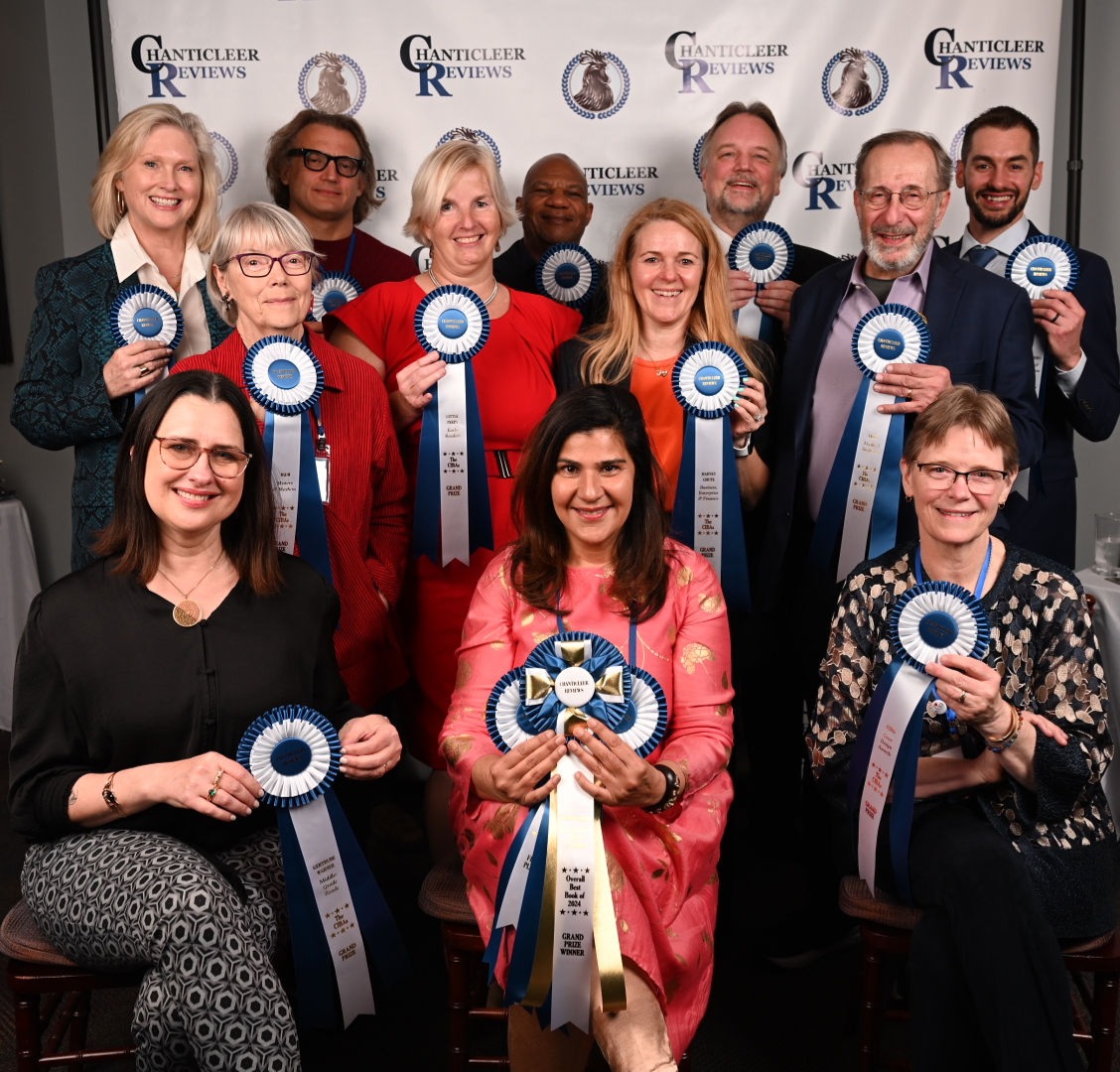
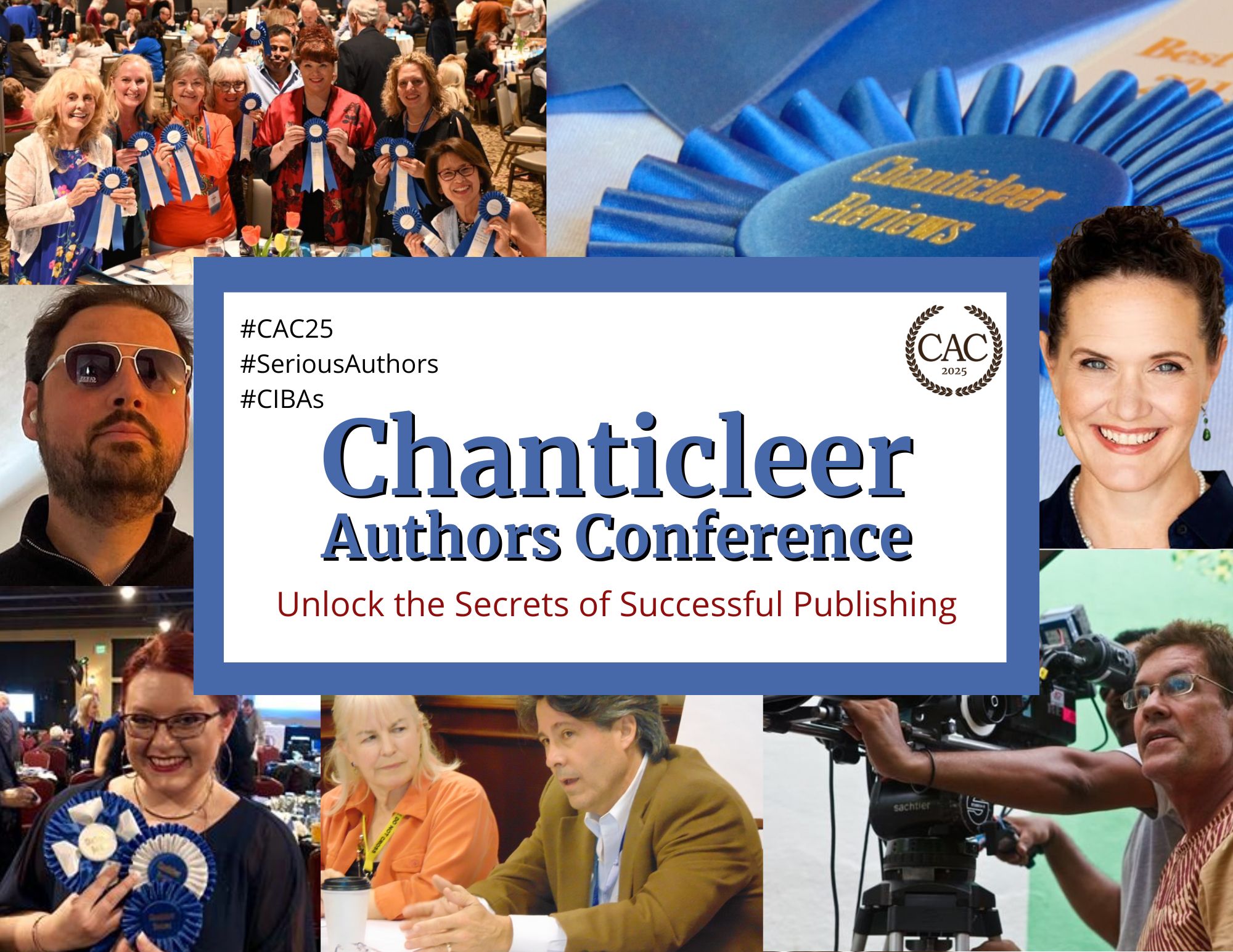
All First Place and Grand Prize winners were announced and recognized at the Chanticleer Authors Conference at the CIBAs Ceremonies on Saturday, April 5that the Chanticleer Banquet. It is a huge honor for us to have the opportunity to recognize all Finalists, First Place Winners, and Grand Prize Winners with you live and in-person!
Let’s take a step back and look at where we came from to make this happen.
Now, presenting the links to the 2024 CIBA Fiction Division Awards Grand Prize Winners!
The Grand Prize Winner for the CIBA 2024 CYGNUS Awards for Science Fiction is:
Ares
By Jayson Adams
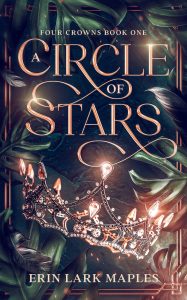
The Grand Prize Winner for the CIBA 2024 OZMAAwards is:
A Circle of Stars
By Erin Lark Maples
The Grand Prize Winner for the CIBA 2024 SHELLEYAwards is:
The Time-Marked Warlock
By Shami Stovall
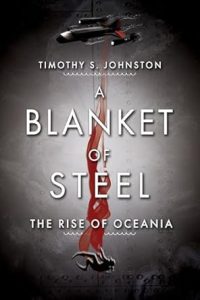
The Grand Prize Winner for the CIBA 2024 GLOBAL THRILLER Awards is:
A Blanket of Steel: The Rise of Oceania
By Timothy S. Johnston
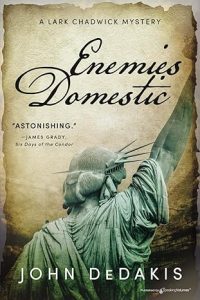
The Grand Prize Winner for the CIBA 2024 CLUE Awards is:
Enemies Domestic
By John DeDakis
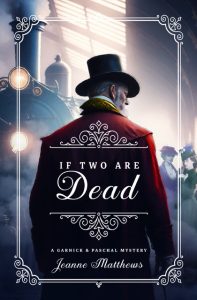
The Grand Prize Winner for the CIBA 2024 Mystery & Mayhem Awards is:
If Two Are Dead
by Jeanne Matthews
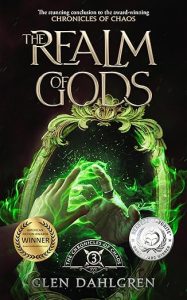
The Grand Prize Winner for the CIBA 2024 DANTE ROSSETTI Awards is:
The Realm of Gods
by Glen Dahlgren
The Grand Prize Winner for the CIBA 2024 GERTRUDE WARNER Awards is:
Back to Bainbridge
by Norah Lally
The Grand Prize Winner for the CIBA 2024 LITTLE PEEPS Awards is:
Island Moon
by Ruth Amanda
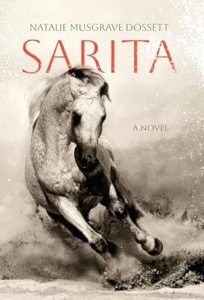
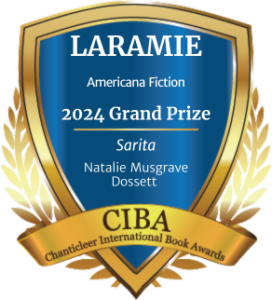
The Grand Prize Winner for the CIBA 2024 LARAMIEAwards is:
Sarita
by Natalie Musgrave Dossett
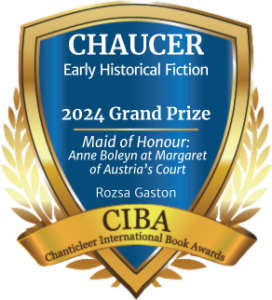
The Grand Prize Winner for the CIBA 2024 CHAUCER Awards is:
Maid of Honour
Anne Boleyn at Margaret of Austria’s Court
by Rozsa Gaston
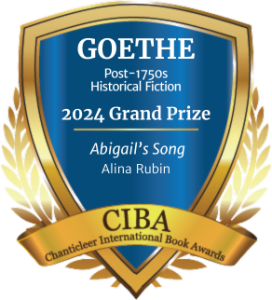
The Grand Prize Winner for the CIBA 2024 GOETHE Awards is:
Abigail’s Song
by Alina Rubin
The Grand Prize Winner for the CIBA 2024 Hemingway BookAwards is:
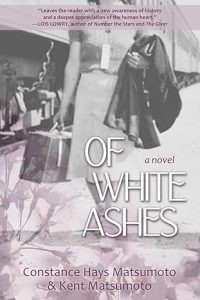
Of White Ashes
by Constance Hays Matsumoto and Kent Matsumoto
The Grand Prize Winner for the CIBA 2024 CHATELAINE Book Awards is:
The Key
by Jo Morgan Sloan
The Grand Prize Winner for the CIBA 2023 HUMOR & SATIRE Awards is:
The Man Who Saw Seconds
by Alexander Boldizar
The Grand Prize Winner for the CIBA 2024 SOMERSET Awards is:
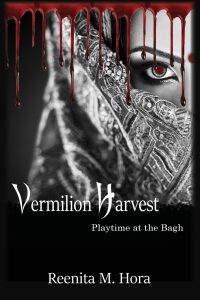
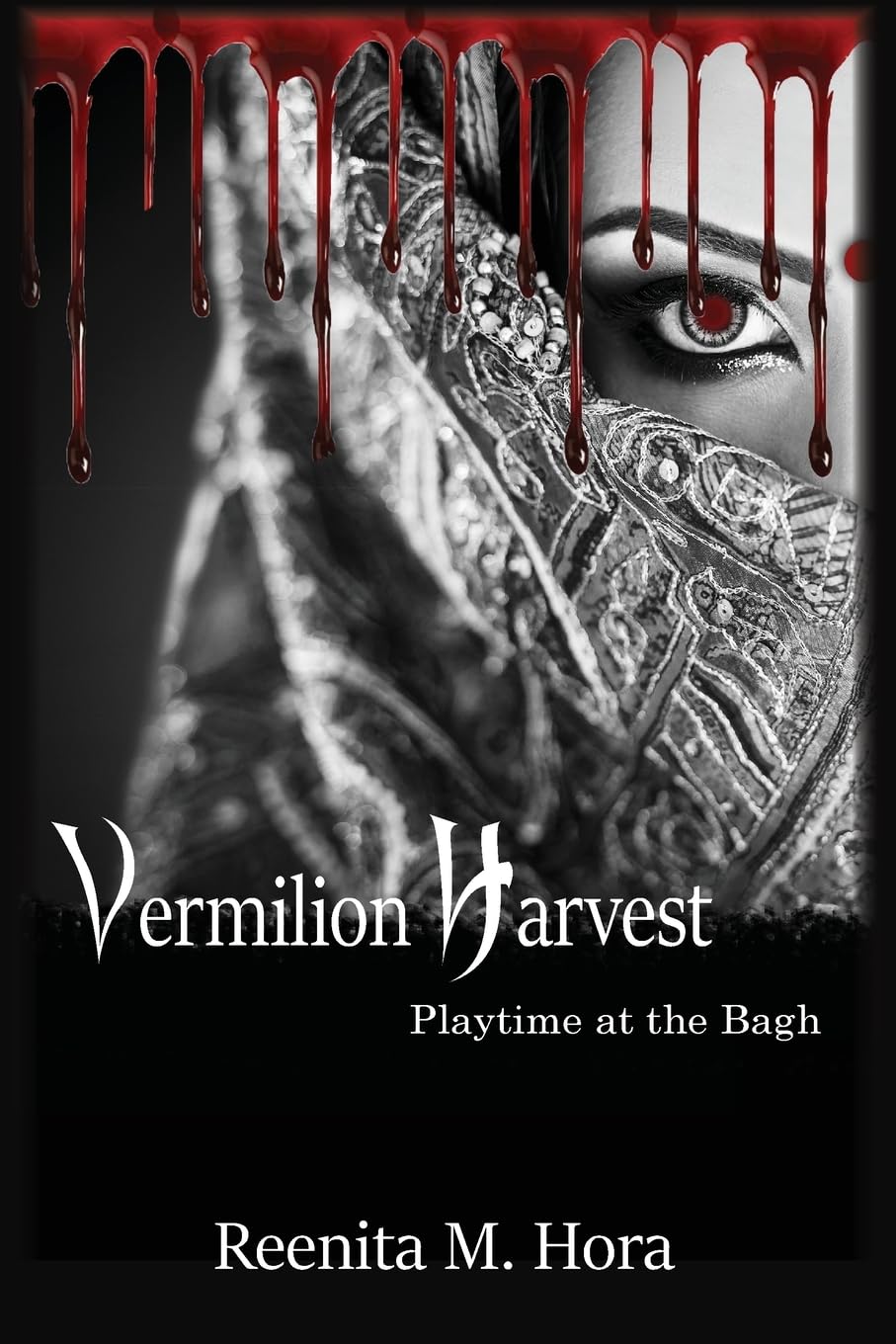
Vermilion Harvest: Playtime at the Bagh
by Reenita Malhotra Hora
We have badges available starting with the Short List. If you need a digital badge reflecting your tier level, please email info@ChantiReviews.com with your division and rank, and we will send you one as soon as possible.
Make sure your Award gets the attention it deserves on Goodreads.com
In the Librarian Manual on Goodreads, you can go to your Book Edit Page — Literary Awards.
You want to list the Award for Chanticleer International Book Awards (CIBA) Winners, and be sure to include the year and what place you received. For example:
The year Long List, Short List, Semi-Finalist, Finalist, First Place, Division Grand Prize, or Overall Grand Prize Winner
Note from Goodreads: “To add a new award or edit an existing award, you’ll need help from one of our volunteer librarians or a staff member.” For assistance, post in the Goodreads Librarians Group.
Always double check that you’ve written everything correctly before posting it. The search function for Awards on Goodreads is both case and punctuation sensitive.
The Overall Grand Prize Winner for the 2024 CIBAs was Reenita Malhotra Hora‘s Book Vermilion Harvest: Playtime at the Bagh
The esteemed WRITER Magazine (founded in 1887) has repeatedly recognized the Chanticleer Authors Conference as one of the best conferences to attend and participate in for North America.
See Non-Fiction, Series, and Shorts Grand Prize Winners here!
See the Official Overall Grand Prize winner Post here!
Well done climbing the CIBA Levels of Achievement!
PROMOTING OUR AUTHORS!
Attn CIBA Winners: More goodies and prizes will be coming your way along with promotion in our magazine, website, and advertisements in Chanticleer Int’l Book Awards long-tail marketing strategy. Welcome to the CIBA Hall of Fame for Award Winners!
This post has been posted on the Chanticleer Facebook Page. We try to tag all authors listed here in the Facebook post. However, for Facebook to allow us to tag an author, that author must LIKE our page and Follow Chanticleer Reviews.
A Note to ALL the WINNERS: The coveted CIBA Blue Ribbons will be mailed out starting inMay. We will contact you with an email to verify your mailing address and other items. You will receive an OFFICIAL EMAIL NOTIFICATION with Digital Badges and more information.
Thank you for participating in the 2024 CIBAs! We are looking forward to reading your future entries.
Sandra Wagner-Wright’s audible version of Sea Tigers & Merchants: A New American Generation, Salem Stories Book 2 continues the sagas of two prominent families that dominate the shipping industry of young Salem. Narrator Christa Lewis fully embodies the unique characters of this swashbuckling historical adventure.
Wagner-Wright takes us back to 1790. In recently independent America, the next generation of the Crowninshield and Derby families try to continue building their fortunes on the treacherous high seas. Threats of pirates, storms, and ever-changing economies drives their fates, their successes, and their failures. Wagner-Wright’s skillful pen brings to life each young person, female and male, as they variously seek out or shun a chance at love on shore.
Captain George Crowninshield and Haskett Derby duke it out for power and control of the Eastern Seaboard, with their families caught up in the contest.
Wagner-Wright shows how these merchants brave great risk through maritime exploits in France, the Netherlands, the West Indies, Africa, and Asia. During their adventures on the sea, these captains fight relentlessly for the vessels—which become as famous as those captains themselves.
Wagner-Wright’s expert knowledge of this time period allows her to illustrate the nuances behind each family’s successes, humiliations, and failures.
She explores a patriarchal society’s desire to control the lives of their women and offspring in pursuit of building empires. We become familiar with the strong women and daughters who support their men and help them make decisions to promote their children and businesses.
Sea Tigers & Merchants recreates the courting process of early Americana, along with other rules and rituals of society at the time. We are taken behind the scenes to see how the women smooth the ruffled feathers of their proud and arrogant husbands, tempering feuds between fathers and sons. Wagner-Wright shows these patriarchs both at their most effective and their most flawed. This lends her male characters a sympathetic human element while highlighting the female power behind these strong men who depend on their women for guidance and counsel.
The post-revolutionary times may have put the war behind them, but they are still fraught with aggressions by the British crown and pirates on the high seas. Wagner-Wright’s historical representation of this period brings to life the real threat imposed by an angry monarch at the mariners of the newly formed nation.
The historical exploration of trade, politics, and romantic alliances in Sea Tigers & Merchants will appeal to any readers who appreciate the revolutionary period in America.
This audible version will further engage and delight listeners through a combination of Wagner-Wright’s masterful storytelling and Christa Lewis capturing the voices of these myriad family members who helped shape a nation.
Gregory Michael Nixon’s Diomedes in Kyprios, book 2 in the Diomedeia Series, continues the adventures of the godlike yet all too human hero, Diomedes of Tiryns, as he seeks to discover a meaningful destiny in the chaos of the Bronze Age Collapse.
We begin after the fall of the Hittite Empire, four years after the destruction of Troy. He emerges from the dark river that runs through the underworld where the sacrifice of the Hittite Great King has just occurred, and he has rescued the Hittite Queen from certain death. Nearly drowned but still alive, he recalls only that he had vowed to reunite with the former Queen of the Hittites, the woman he loves named Lieia, at Paphos on the island of Kyprios (ancient Cyprus).
Lieia must undergo her own “odyssey” to get to Paphos to meet Diomedes. She depends on her band of protectors, but they pay for fare aboard a ship with evil men who cannot be trusted.
After many adventures, Diomedes arrives in Paphos and is recognized from Troy by the Akhaian (Greek) warriors already there. He becomes a war leader and seeks to unite the Peoples of the Sea gathered on the island of Kyprios for chaos is descending from the end-of-the-era Bronze Age Collapse. He attains his goal and at last meets with Lieia, who through incredible circumstances has also arrived and been acclaimed as the Goddess of Paphos.
After a murderous shipwreck, Lieia has struggled to shore and, because of her extraordinary beauty, has been mistaken for a new incarnation of the ancient Kypriot Goddess of Love. The people save her and celebrate her arrival. She is proclaimed Aphrodite—born of the sea foam. She is made Goddess-Ruler of the city, but this makes her enemies, and she becomes uncertain who she really is.
Diomedes and Lieia rule together, he as military commander, she as goddess-queen. Lieia must overcome the dangerous witch, Myrrha, who challenges her power. Diomedes, in his turn, must deal with two vicious villains who caused Lieia’s shipwreck and the beautiful youth, Adonis, Myrrha’s son, who seeks to kill him and become the lover of Aphrodite.
Nixon draws heavily on ancient legends to write these larger-than-life characters, threading them through this novel with great artistry. This is a short book yet a memorable epic, whose vivid setting and colorful characters will stay with the reader long after finishing the book.
In this Audible audiobook version, the narrator, Simon de Deney, captures the dramatic flair and clear articulation one would expect in mythic Greece, among the Hittites, on ancient Cyprus, and all the places this adventure takes us. De Deney is an actor whose classically trained voice will hold the readers’ full attention, leaving them with the metallic dust of the copper mines of Kyprios in their eyes and the sea spray of the vast Mediterranean on their lips.
For first-time readers/listeners of this series, Diomedes in Kyprios can be read as a stand-alone for the previous book is summed up in flashbacks and a chronological prologue. It will appeal to myth lovers of all ages, but also to those drawn to historical fiction based in the ancient Bronze Age and the mysterious Peoples of the Sea (and, of course, to lovers of historical romance). The book contains serious historical credentials, for the author suggests realistic interpretations of a number of unexplained mysteries of the Bronze Age Collapse.
Who doesn’t love a good book? It’s full of angst, misunderstandings, sultry moments, and intriguing characters who break our hearts and sweep us off our feet. Like chocolate, romance is one of those extraordinary genres that can go with almost anything—Historical Romance, Mystery Romance, YA Romance, SciFi Romance, Fantasy Romance, the list goes on!
Nothing is better than sharing a book you love with someone you know will love it just as much as you.
The Science Behind Love
Science tells us that two people falling in love is a mix of biological, chemical, and psychological factors. Wouldn’t these same factors play into a reader falling in love with a book? Picture this, you’re in a bookstore scanning the shelves, suddenly, you see a cover that is beautiful, intriguing, mysterious. You pick it up and read the blurb. It teases you with just enough information to make you want to learn more. You read the first page and find out that what it is telling you is exactly what you were hoping for. Your excitement increases as you envision the night ahead, snuggling under the covers, turning the pages as you fall in love with the characters and join them in their journey to find love. As you read, your heart starts to race with anticipation, you cry, you laugh, and you swear your devotion to the love you’ve found between the covers of a book.
Is there anything better than a great love story?
The Love You Find Between the Covers
Romance is one of the bestselling genres out there, and it’s clear we’re all looking for love stories that move us. But falling in love isn’t a one step process. First, your curiosity is peaked when you first look at a cover, you judge it by look, page count, and other factors to see if it’s a book that fits you, then you find yourself fascinated when something unexpected happens in the first few pages. You’re hooked!
As you continue reading you find yourself captivated by the characters. Perhaps they are way more complex than you had anticipated, and you can’t bear the thought of leaving the story half-read, so you march on, feeling nervous, stressed, afraid, and hopeful as the characters go through the trials and tribulations they face in the plot. Now you are infatuated! You can’t put it down! What’s going to happen? Will they, or won’t they?
As you draw closer to the climax, you find yourself on the same rollercoaster as the characters. You empathize with the characters and want to see the love match made. You fight the despair of coming to the last page, knowing you’ll have to put these wonderful characters away when you are finished. Ohh! The agony!
As you place the book on your own bookshelf you find yourself thirsting for more. More love, more conflict, more moments where you think all is lost, but then…
You realize you’ve fallen in love!
The Chatelaine Awards finds the best romantic novels of the year!
At Chanticleer we love Romance Books, and we love to show it off with ourChatelaine Awards! Check out our current Finalists here! First Place Winners will be announced at the Chanticleer Authors Conference!
The Chatelaine Awards are where we find all our romance books about bookstores and beyond!
Are you looking for your next great romance novel? Find your perfect literary match with these Chanticleer romance authors!
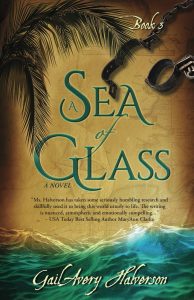
A Sea of Glass By Gail Avery Halverson
CIBA Grand Prize winner Chatelaine division
A Sea of Glass by Gail Avery Halverson is a sweeping historical novel that captivates readers as it takes us from the bustling world of Colonial Boston to the shores of Barbados. But the island’s burgeoning sugar industry harbors dark secrets for those trapped there, either by circumstance or by slavery.
The colonial backdrop is brimming with conflict. Businesses struggle under British taxation enforced by the hated Red Coats. With the dangers of traveling through pirate—and privateer—infested waters, there are more than enough shifting winds to keep readers engaged until the very end.
Lady Catherine Abbott-McKensie, her physician husband Simon McKensie, and their daughter Charlotte, enjoy the pace of life in Colonial Boston, but their peace does not last long.
In Loving Beth, a Christian historical romance by Bonnie Rose Ward, a young woman finds herself in dire straits when her widowed mother dies unexpectedly.
Beth’s father had taken out loans to improve their property, but he was killed in the Civil War, leaving his wife and daughter to struggle to keep up with the payments. Now, Beth is alone without any means to keep her home—finding and taking in two young, abandoned children certainly doesn’t help. But even amidst her troubles, Beth’s thoughts keep going back to the mysterious and handsome stranger who found and brought home the body of her mother.
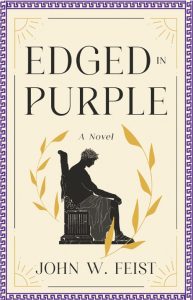
Edged in Purple by John W. Feist welcomes readers to a place outside of time and space, a liminal space where characters of myth wait to return to their fated stories.
The Fold is a beautiful land, a near-utopia shepherded– literally– by Thetis and Peleus of Greek mythology. They raise the heroine of Shakespeare’s The Winter’s Tale, Perdita, after her father had accused her mother of betraying him with another, the whole sad story a product of his own paranoia.
Perdita’s story is proceeding as it was written. She has already met Florizel, the man who should be the hero of her romance– when her story is intersected by another. Just as The Winter’s Tale features royal courts, doomed relationships, mistaken identities, and family murder, so too does an ancient Greek drama: the Oresteia of Aeschylus, the story of Agamemnon after the Trojan War.
After decades spent in a loveless, broken marriage, Crisa wants another chance at love. In Splintered Dreams, a romance novella by Diana Lynn, she must first stumble through her own insecurities to find it.
When Crisa’s husband, Alan, dies unexpectedly she is left with a stark emptiness inside her heart. Her marriage had been a sham. Her husband’s infidelity and lies crushed her idea of love and left her with questions about who she is, what she wants, and will she ever trust someone with her heart again. Casual sexual relationships can’t fill the void. She needs true love.
Physical intimacy is only part of what Crisa desires. She yearns for the kind of love that lasts a lifetime.
Air Boat: Love is an Adventure By Jacek Waliszewski
For readers interested in a unique romance,Air Boat: Love is an Adventureby Jacek Waliszewski offers a distinctive cast of characters and tense excitement in the sky.
Air Boatbrings together a former Special Forces soldier, Luke, who prefers to keep to himself, an independent and sarcastic female pilot, Stella, and a three-legged Husky named Saint who marches to the beat of his own drum. These captivating characters embark on a fast-paced, page-turning tale.
Author Jacek Waliszewski starts this romantic adventure with a suspenseful scene of a vintage plane barreling towards the Twin Cities, accompanied by two F-16 fighter jets, before setting the stage for the two main characters to meet. The mystery of this scene will stick in the reader’s mind, drawing them forward with stark curiosity that only grows in excitement.
Featuring authors like J.D Barker, book doctor Christine Fairchild, and publisher Brooke Warner, our annual conference is shaping up to be excellent! You won’t want to miss out on the best tips around the business of being an author!
Seating is Limited. The esteemed WRITER Magazine (founded in 1887) has repeatedly recognized the Chanticleer Authors Conference as one of the best conferences to attend and participate in for North America.
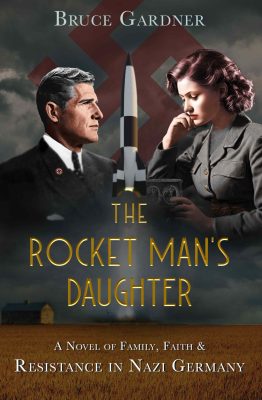
The Rocket Man’s Daughter: A Novel of Family, Faith and Resistance in Nazi Germany by Bruce Gardner tells a harrowing story of German life under the Nazi Regime from 1934 to 1945.
Through the experiences of a young woman whose family is torn by competing loyalties, this riveting tale shines a rarely seen spotlight on some of the most heartwrenching moral dilemmas faced by German civilians and soldiers caught up in the crucible of fascist tyranny and war.
Klara Neumann is the Rocket Man’s Daughter. She’s only fourteen in 1934 when the Führer, Adolf Hitler, finally eliminates all rivals and consolidates his control of Germany under the Nazi Party.
Klara’s family represents a microcosm of the country’s middle socio-economic class, working in government-sponsored roles that demand slavish obedience to the Führer and his decrees. Her father, Erich, is the quintessential ‘rocket man’, a university professor dragged into the Nazi war machine to help his friend and colleague Dr. Wernher von Braun develop the deadly new V-2 rockets intended to terrorize Germany’s future enemies. Her mother, meanwhile, strives to be a dutiful Nazi wife, her brother an honorable Wehrmacht army officer, and her elder sister Elke the devoted leader of a female Hitler Youth section.
Klara—an aspiring nurse—is the philosophical polar opposite of her sister, as Elke is a literal poster girl for the Nazi Party, while Klara does her best to protect her secret Jewish friends from the ever-increasing Nazi persecutions.
As Germany sinks ever deeper into the morass of world war after 1938, the Neumann family members travel further down their divergent paths. Gardner describes with chilling, historically accurate detail the horrific Nazi medical experiments that eventually drive Klara to augment her nursing job by secretly joining a Berlin resistance cell led by relatives of Dietrich Bonhoeffer, the charismatic, anti-fascist Lutheran pastor. Brutally intense, emotionally draining scenes of danger and betrayal follow as Klara and her resistance partners struggle to avoid discovery by a powerful, cunning SS police superintendent who has drawn Klara’s father and sister into his dark web of control and manipulation. Through the ordeal, Klara gradually learns to view her personal sacrifices for the resistance effort as an expected cost of true Christian discipleship, as Bonhoeffer had taught her.
The story moves relentlessly toward its gripping, unforgettable climax in 1945 when Hitler’s V-2 rocket campaign fails to stem the Allied tide and the Soviet Army invades Berlin.
The reader feels the stark terror along with Klara and her fellow citizens as Russian soldiers invade their hiding places and attempt to satiate their pent-up taste for revenge. At war’s end, tensions reach their peak as Klara’s father is hunted down by competing Soviet and American intelligence teams attempting to capture and exploit the expertise of Nazi rocket scientists for their own national purposes in the Space Race to come. Will Klara overcome the seemingly insurmountable odds against rescuing her father from a horrible fate? And can she ever forgive her father’s disreputable wartime decisions and actions?
The defining moral issue, which hangs over everyone involved, is that of responsibility for the terrible crimes of the Nazi regime. On what basis should Nazi-supporting civilians and soldiers be considered war criminals? Were they merely protecting themselves and their families? Were they just following orders? Does that justify their actions?
The Rocket Man’s Daughter expertly depicts the fractures within the fictitious Neumann family to offer the reader some possible answers to these perplexing questions. It’s left to the reader to finally decide.
Despite its expected longer length due to the extended time period and epic nature of the story, The Rocket Man’s Daughter by Bruce Gardner absolutely flies along with suspenseful situations and compelling dialogue the entire way. It’s diverse and vibrant characters raise for the reader many thought-provoking questions about family loyalty, faith, and moral obligation to society under extreme circumstances. In doing so, it proves itself a worthy successor to the author’s previous award-winning novels. The story of Klara Neumann and her family provides yet another example of Gardner’s ability to weave fictional and historical characters into a marvelous portrait of a time and place—one that’s guaranteed to keep readers of wartime historical fiction glued to the page from beginning to end.
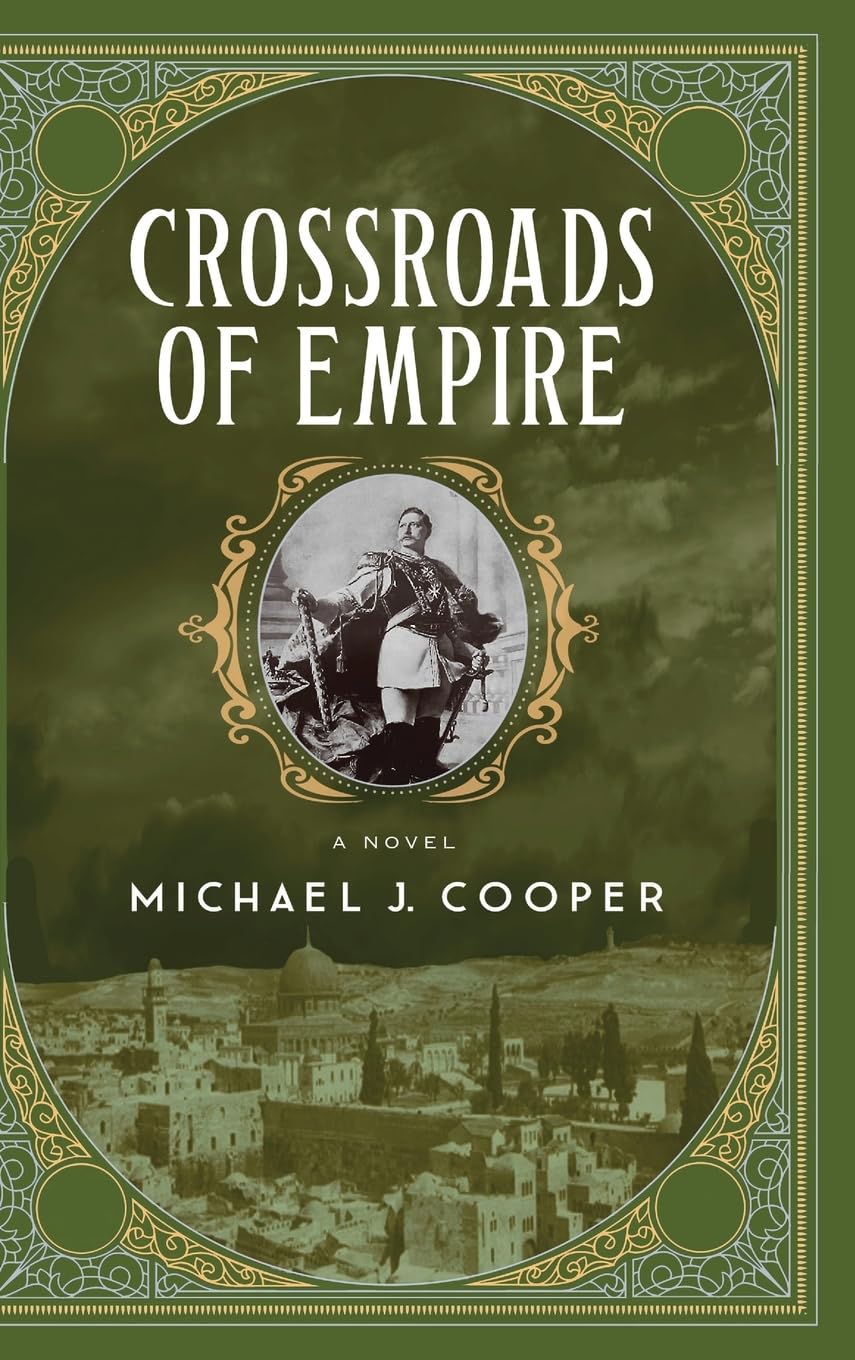
Crossroads of Empire by Michael J. Cooper brings readers back into sixteen-year-old Evan Sinclair’s journey through the battlefields of WWI. The adventures and the war itself pick up right where the award-winning Wages of Empire left off.
As in the first book, Evan begins his part of this story by going missing, this time not just from his father’s perspective, but from his own. Severely injured during his service with the Flemish resistance, Evan is discharged from a French field hospital. He’s on his way back to England by hospital ship when it is sunk by a German U-boat. When he reaches British shores as the sole survivor in a lifeboat, he’s left with amnesia and has no memory of who he is.
Evan’s search for his own identity leads him to Rosslyn Castle, the Sinclair family’s ancestral home in Scotland. There he unravels secret family histories and connections long buried. Finally, with assistance from a wise woman, Evan regains his memory. Without the protection the amnesia provided, he faces a host of painful and traumatic memories.
Crossroads of Empire brings to life a journey of self-discovery set against a backdrop of the war in motion. The horrific trench warfare along the Western Front, the disastrous defeat of the Entente at Gallipoli, and the British route of the Turks at the Suez Canal are made real and vivid to the reader.
Likewise, Evan’s journey takes place while the imperial powers jockey for position at the crossroads of empire in the Middle East as the Ottoman Empire, the ‘sick man of Europe,’ teeters on the brink of dissolution. The British, seeking to expand their colonial empire, feed the flames of Arab independence through T.E. Lawrence’s missions to the Bedouin tribes and to the man who would be king of an independent Arab State, Faisal son of Hussein, the Sharif of Mecca.
Cooper’s skillful storytelling sets an unrelenting pace with the international events of the early twentieth century coupled with Evan’s search for answers—about himself and his family’s history.
Back in England, biochemist and Zionist Chaim Weizmann gives his expertise in the production of key munitions components to the British government in the hope of leveraging his critical contribution to the war effort for the promise of Britain’s backing of a Jewish homeland in Palestine.
And all the while, Kaiser Wilhelm II looms over the conflict, hoping to sweep in and take the prize he’s always coveted – as have so many others over the centuries – Jerusalem.
Cooper deftly lays out separate strands of memorable historical and fictional characters across the globe – from Kaiser Wilhelm to a Red Cross volunteer – to bring this chapter of history to life. He elegantly intertwines the multiple strands he has created, making for a read that is both a gripping page turner and a series of carefully observed character studies.
Two parallel and equally compelling tracks make Crossroads of Empire impossible to put down. First, Evan’s story, which gives readers a young hero they can root for, and then an insightful and multi-dimensional perspective on a dramatic historical struggle now a century in the past, though one that still reverberates in the present.
The war is thus seen through a kaleidoscope of perspectives beginning with Evan’s father Clive Sinclair at work in London’s War Office, and also includes a fascinating array of people and places which allows the reader to fully experience the war through immediate first-hand experiences. These figures, marvelously brought to life, range from Gertrude Bell and T.E. Lawrence to a proto-Nazi Guido von List in the service of the kaiser, to the future King Faisal of Iraq and the future first president of Israel, Chaim Weizmann.
As Evan recovers in Rosslyn Castle unravelling long-hidden family mysteries, the war rages on—from the killing fields of the Western Front, to the debacle of Gallipoli, to Lawrence’s mad race across the Sinai to warn Cairo of an Ottoman attack on the Suez Canal. Throughout, Crossroads of Empire races through its world at a breathless pace that will leave readers gasping for more.
Beautifully written in a voice and in details that capture the era, Crossroads of Empire is a must-read for readers of all ages with high hopes for more of Evan’s adventures yet to come.
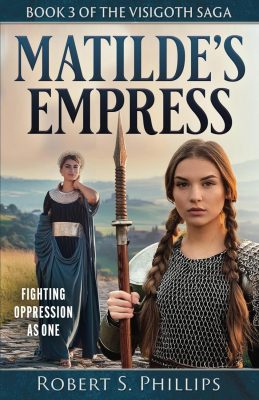
In Matilde’s Empress, book three of The Visigoth Saga by Robert S. Phillips we follow Matilde’s exploits during the decline of the Roman Empire, with unrelenting battles, meticulous period detail, and insight into how Romans and non-Romans alike dealt with shifting alliances and the frequent loss of loved ones.
Now eighteen, feisty and wise Matilde has lost a child, her lover, and her safety. After she escapes to Thessalonica where her stepbrother Alaric presides, a courier brings word of Emperor Arcadius’s desire to rid his Eastern kingdom of the Visigoths. All Roman subsidies for the Goth’s armed forces are canceled.
Ever the advisor, Matilde pushes for Alaric’s people to shift loyalties and align with Stilicho, the sympathetic Roman general who leads the Western kingdom’s military. Under the guise of delivering wedding gifts to the Western Emperor Honorius, a delegation departs to meet with Stilicho. However, not before Matilde enters a three-way marriage with Alaric and his wife, Pentadia.
During her travels, Matilde discovers she’s pregnant.
The web of politics becomes more complicated as Stilicho remains on friendly terms but will not go against the East. Soon after the delegation returns, Matilde gives birth to Theodoric. It quickly becomes apparent that without enough money to go around clans will soon fall on each other and dissolve into pure conflict. The chieftains appoint Alaric as King of the Goths, which bestows on him the responsibility to find his people a fertile land far from their enemies.
As their migration begins, they wade through a land of violence – battles within the barbarian tribes, between barbarian and Roman armies, and between Romans and Huns. Men are slaughtered, and their wives and children are sold to slave traders.
Amidst the bloodshed, Matilde – Queen of the Goths by virtue of her marriage to Alaric – is taken captive. She becomes enamored with a Roman general, Constantius, and they begin an affair.
Political machinations – treachery, poor planning by excessively proud men, frequent shifts of power – create an intriguing plot. But while Matilde’s love affairs provide some respite, the near-constant fighting and casual indifference to death wears at the heart. Even Matilde is not immune to the weight of it: “Constantius allowed the captured legionaries to swear allegiance to Emperor Honorius. Only a few refused. He had them executed, along with all the barbarian prisoners. I thought that brutal, but, indeed, how were we to manage prisoners?”
Even when there’s hope, sorrow lurks nearby: Matilde is finally released to go home to her family, only to find that a sickness has taken many. Alaric insists that their son Theodoric, his only heir, remain with him. He grants Matilde a divorce so that she can return to Italia with Constantius.
The Roman Empire continues its fall, as usurpers such as Constantine arise, and allegiance to the Western and Eastern emperors is easily turned by gold.
All sides continue to loot, plunder, and pillage any unfortified community. Incestuous marriages are made as power plays. When a longtime Roman ally of Alaric’s is murdered, the empire’s last grasp of power loosens. In 410 CE, Alaric leads the Goths to sack Rome.
Lands and migrations are granted, only to see more battle over those lands. Within a year, Britain is no longer Roman. Within eight years, the Romans finally conceded to allowing barbarian tribes to live peacefully within their territory.
Despite her years of foresight and reasoned counsel, men continued to discount Matilde for being a mere woman. Even Constantius loses interest when she fails to provide him with an heir. Her closest friend, Placidia—ready to marry Constantius once the two divorce – tells her, “A wife either produces sons or she is not a good wife. Your brilliance and other qualities were interesting but not essential.”
In a few years, however, Placidia seeks her help in fending off Honorius. Matilde muses, “Of course, I will go. My next adventure is just beginning.”
This final chapter in The Visigoth Saga will satisfy readers with Matilde’s tale of a girl who grows into a woman on her own terms. Phillips dives into the ancient world and brings readers with him to stand side-by-side with a legendary warrior heroine.







 Let’s take a step back and look at where we came from to make this happen.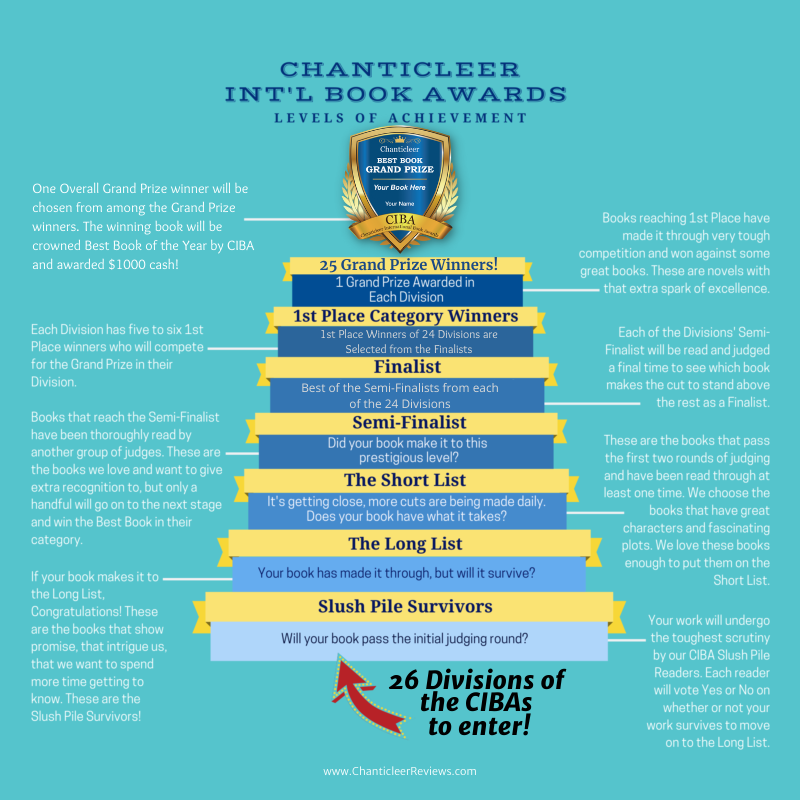
































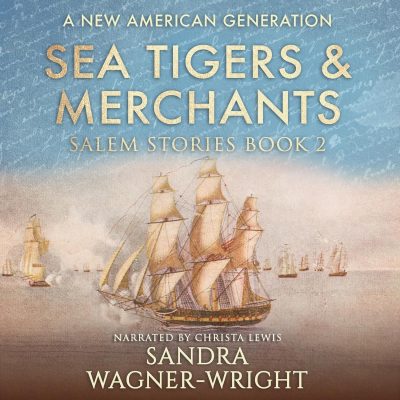
 Sandra Wagner-Wright’s audible version of Sea Tigers & Merchants: A New American Generation, Salem Stories Book 2 continues the sagas of two prominent families that dominate the shipping industry of young Salem. Narrator Christa Lewis fully embodies the unique characters of this swashbuckling historical adventure.








 Crossroads of Empire by Michael J. Cooper brings readers back into sixteen-year-old Evan Sinclair’s journey through the battlefields of WWI. The adventures and the war itself pick up right where the award-winning Wages of Empire left off.