Tag: Historical Fiction

  • The CHAUCER Awards for Historical Fiction – Official 2014 Finalists List

    The CHAUCER Awards for Historical Fiction – Official 2014 Finalists List

    The CHAUCER Awards recognizes emerging new talent and outstanding works in the genre of Historical Fiction Novels. The Chaucer Awards is a division of the Chanticleer International Blue Ribbon Awards Writing Competitions.

    More than $25,000 dollars in cash and prizes will be awarded to Chanticleer International Blue Ribbon Awards Winners annually.

    The Chaucer Awards for Historical Fiction has twelve categories to compete in for First Place Category Positions. The Chaucer First in Category award winners will compete for the Chaucer Grand Prize Award for Best Historical Book 2014. Grand Prize  winners, blue ribbons, and prizes will be announced and awarded on September 29th at the Chanticleer Authors Conference and Awards Gala, Bellingham, Wash.


    cac3

    2013-Chaucer


    We are proud to announce last year’s award winners and this year’s Chaucer finalists at the Historical Novel Society’s 2015 Conference in  Denver, Colorado that will take place on June 27, 2015.


    2015 Historical Novel Society Conference logo

    The CHAUCER Historical Novel Competition Categories are:

    • Women’s Historical Fiction
    • Legacy/Legend
    • Pre-historic
    • Ancient History
    • Medieval, Renaissance, Dark Ages
    • Elizabethan/Tudor
    • 1600s
    • Regency, Victorian, 1700s & 1800s
    • Turn of the 19th century
    • Turn of the 20th century
    • World Wars
    • Young Adult/New Adult
    • World/International History

    Congratulations to following CHAUCER 2014 FINALISTS and good luck to all as they compete for the twelve First In Category positions:

    • Michael S. Pritchett for Saints and Strangers
    • P. Lorraine Buck for By Blood and By Vow
    • J.S. Dunn for Bending the Boyne
    • Mary S. Black for Peyote Fire
    • S. Thomas Bailey for Forest Sentinels: The Gauntlet Runner
    • Kerryn Reid for Learning to Waltz
    • Sandy James for Runaway
    • Michael J. Cooper for The Rabbi’s Knight
    • J. P. Kenna for Beyond the Divide
    • R.N. Vick for Wings of Fury 
    • Patricia Averbach for Painting Bridges
    • Rebecca Lochlann for The Year-God’s Daughter and The Thinara King
    • Jared McVay for The Legend of Joe, Willy, & Red
    • Syril Levin Kline for Shakespeare’s Changeling: A Fault Against the Dead
    • Emma Rose Milar and Kevin Allen for Five Guns Blazing
    • Elizabeth Soloway for The Great Deception
    • Anna Angelidakis for The Icon Thief 
    • T.E. Taylor for Zeus of Ithome
    • J.L. Oakley for Timber Rose
    • Susanne Petito Egielski for Nelson’s Castle: a Bronte Fairy Tale
    • David Brendan Hopes for The One with the Beautiful Necklaces
    • Lilian Gafni for The Alhambra Decree: Flower of Castile
    • Gloria Javillonar Palileo for The Indios
    • William Jarvis for The Partisan
    • Helena P. Schrader for St. Louis’ Knight 
    • Michele Rene for I Once Knew Vincent
    • Jodi Lew Smith for The Clever Mill Horse
    • Catherine A Wilson and Catherine T Wilson for The Lily and The Lion
    • Gregory Erich Phillips for The Love of Finished Years
    • Chelsea Lemon Fetzer for The River Map
    • Ben Sharpton for 7 Sanctuaries 
    • Jeff Ridenour for The Art Procurer
    • Elisabeth Storrs for The Golden Dice: A Tale of Ancient Rome
    • Sharon Short for My One Square Inch of Alaska
    • Ruth Hull Chatlien for The Ambitious Madame Bonaparte
    • Ginger Cucolo for The Knoll and Beyond the Knoll
    • Wendy Roberts for Where the Foxes Say Goodnight
    • Jeff Braun for The Secret of the Just
    • Dr. Evan Mahoney for Nongae of Love and Courage
    • Steph A Amey for Holloway 8632
    • Jeni Renner for Puritan Witch
    • James Zerndt for The Korean Word for Butterfly
    • Michael Hugos for Leptis Magna: Emperor’s Dream on the Edge of a Desert 
    • William Meisheid for The Partisan
    • Donna Scott for Shame the Devil
    • Karleene Morrow for Destinies
    • Gita Simic and G.T. Simm for As for Costanza
    • Michael D. McGranahan for Silver Kings and Sons of Bitches

    Finalists will continue on to compete for a first place category win in their sub-genre, and then for the overall grand prize of the 2014 Chaucer Awards. The First In Category award winners will receive an award package including a complimentary book review, digital award badges, shelf talkers, book stickers, and more.

    We are now accepting entries into the 2015 Chaucer Awards. The deadline is May 31, 2015. Click here for more information or to enter.

    More than $30,000 worth of cash and prizes will be awarded to the Chanticleer Novel Writing Competition winners! Ten genres to enter your novels and compete on an international level.

    Who will take home the $1,000 purse this September at the Chanticleer Awards Gala and Banquet?

    Last year’s Chanticleer Grand Prize winner was Michael Hurley, for The Prodigal.

    Blue Ribbons

    You know you want one! 

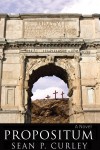
  • An Editorial Review of “Propositum” by Sean Curley

    An Editorial Review of “Propositum” by Sean Curley

    Many know the story of how Jesus Christ came and founded Christianity through the death, resurrection, and crucifixion, but do we know the full story, now millennia old? Sean Curley’s story, Propositum, unfolds to answer this question in a book that is part historical text and part political subversion. Caesars rise and fall by the decisions made by Proculus and Maximus, two great minds who subtly guide the ebb and flow of the Senate and the most powerful voices in Rome, just barely ahead of the crumbling empire.

    The Roman Empire is no longer a Republic; it is failing. Since the death of Augustus Caesar, each of his successors has proven weaker, feeble-minded, and unable to rise to the governance of the former Republic. Proculus, a former senator cannot bear to see his country fall into an inevitable civil war with Judea. His solution is to gather Saul, a young man who admires the senator greatly, his military friend Maximus, and Maximus’ daughter Curia. Each character carries a vital aspect of the plan to fruition. The plan? Create a way for gentiles (non-Jews) to be converted to Judaism without the need for the Jewish laws. Through uniting the two huge groups, Proculus and his allies seek to create a stronger Rome, unified by law and religion.

    The book is well-researched, with each Caesar a nod to history, the knowledge of Jewish communities most akin to Christianity, and Curley’s biblical information shows the clever way religion can be reinvented. The history will put some readers in the mind of the Book of Kings, or, for those less biblically versed, in the dusty classroom where they first had the classics explained to them. While for some, this will distract from the story, the historical distance emphasizes the parallel distance Proculus and Maximus feel from their goals. The disconnection from the reality of their actions proves highly effective as the book progresses.

    Curley plays the long game in the set-up for this book, just like Proculus with his propositum. Antioch is the setting for part one, focusing on Saul and Proculus developing this plan. Saul is the least informed member of the conspiracy, the Jew needed to spread the new religion, and who can be controlled and influenced by his Roman counterparts. Maximus doesn’t receive a proper introduction until Proculus’ first journey to Rome, where he proves himself as a respected and stalwart soldier, with more contacts than you can shake a stick at.

    Curia and Saul (who eventually changes his name to Paul), are two of the most interesting characters, as they are brought into the plan, Curia with full knowledge that a potential war between Judea and the Roman Empire might be just what is needed to solidify the sympathy of the Roman people with the Jews, and Paul none-the-wiser for his efforts. Curia and Paul are linked by Curia’s role as the eyes, ears, and center of the plan in Rome. Without her, Paul’s church of Christianity would wilt and wither, but Paul still cannot bring himself to reconcile one simple aspect of Curia’s personality: she is a woman. Paul’s sexism is often a point of tension between the rest of the group and the proselytizer.

    Most interesting is that this book makes no claim about the validity of religion. There are true believers in these pages who follow the teachings of Jesus Christ. There are visions, there are miracles, but the line between fact and fiction, between belief and self-deception is so blurred that this is a book with many interpretations. Its merit lies in the momentum of the plans, that once started, cannot stop. All of which is aided by Curley’s knowledge of the subject, which highlight and showcase subtlety well in his book. A worthwhile read.

    5 Stars! Best Book Chanticleer Book Reviews

  • Bernadette Pajer presents “Emotional Triggers” at CAC

    Bernadette Pajer presents “Emotional Triggers” at CAC

     vertical bj pajer downloadBernadette Pajer, author of the immensely popular Professor Bradshaw Mystery Series, will present a session on “Emotional Triggers that Resonate with Readers” at the Chanticleer Authors Conference 2014

    Emotional triggers unleash the reader’s imagination and create a resonance between the author and the reader. They build castles in the reader’s mind, they instill fear, or hope, or love, in the reader’s heart. Best of all, triggers engage the reader by allowing them the extreme pleasure of participating actively in the story.

    In this workshop, Bernadette Pajer will share her hard-earned “aha” moment that led her to coin the term “Triggers” and will show how you can use this powerful tool to engage your readers and create a loyal readership. 

    Seattle author Bernadette Pajer’s Professor Bradshaw Mystery Series is traditionally published by Poisoned Pen Press. This fast-paced and highly entertaining series takes place in Seattle in the time of Tesla. All four books in this series thus far have earned the coveted Washington Academy of Sciences Seal of Approval for Science.

    An excerpt of Chanticleer's review of this award winning series:

    “Pajer’s vivid writing takes readers to this exciting time that is in the crossroads of scientific investigation and innovation, when automobiles and horse drawn carts compete for the same streets, and the United States reels with political unrest and social upheaval. Readers will warm to the curmudgeonly and reserved professor who has a heart of gold and a penchant for investigation.”

    Discover how “emotional triggers” can take your writing to a new level and increase your readership–no matter what the genre, fiction or non-fiction!

    We invite you to meet other members of the Chanticleer International Community of Authors at this fun and informative three day event featuring:

    • CBR Awards Banquet – You don’t have to be a CBR winner to attend this exciting event.
    • Sessions, workshops, and panel discussions
    • Keynote Speakers: Shari Stauch, Tyler Bird, and Diane Isaacs
    • Networking opportunities
    • Prizes and drawings
    • Books By the Bay Bookfair

    Join us at the elegant  Hotel Bellwether on beautiful Bellingham Bay. Register today! 

     banner

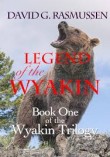
  • Editorial Review of “Legend of the Wyakin” by David G. Rasmussen

    Editorial Review of “Legend of the Wyakin” by David G. Rasmussen

    A Nez Perce shaman’s chant about a meadowlark in the prologue draws us into this fascinating, thought-provoking historical novel. The shaman is chanting about “animal spirits…of wyakin…” in 1865. Then the author moves us forward into our time, as teacher/historian/writer John Thompson and his 13-year-old son Steve are exploring along the Missouri River Breaks of central Montana.

    Steve strays from his father and encounters a huge silver-tipped grizzly bear. The bear is almost upon him when a strangely dressed boy, about Steve’s age, leads him to safety by taking a zigzag path up the loose shale hill. As they near the top, John hears the boy say, in Spanish, “Es Modrables, El Oso” (That is Modrables, the Bear). John grabs Steve’s hand and pulls him up. When they look around, the boy is gone, and so is the bear! Astonished and confused, they head for their SUV. Steve pauses when he hears a meadowlark and seems to understand its song, “Listen and see. There is more.” But it is John who sees—a group of people, obviously of an earlier time, staring with wonder at the SUV. As Steve catches up, they disappear.

    Their shared supernatural experiences compel father and son to research the locale and its history in old ships’ logbooks and personal diaries, revealing the stories of true, historical personages.  The writer in John lets his imagination fill in the blanks of the dry historical documents, or perhaps he was inspired by the spirits of the characters—both human and animal—who are brought to life in Legend of the Wyakin.

    More than just an enjoyable historical novel, Rasmussen’s respect and curiosity for the teaching and traditions of First Nations Native Americans shine through in his writing. He captivated this reviewer with his insight into their beliefs in a spiritual world not just of people, but of animals, trees, thunder, and much more, including riverboat travel on the Upper Missouri River.

    As chapter one begins, Rasmussen takes us back to June 1865 when the Gold Rush was in full swing, as Captain Phillip La Mar, in the wheelhouse of his stern-wheel riverboat, Jupiter, enters the day’s events in the logbook. His major concern is that three crewmen have cholera—the deadly scourge of the riverboats that ply the Missouri River, carrying freight and passengers destined for Fort Benton (Montana) and the goldfields beyond.

    In addition to impatient gold miners, eager to claim a stake and make a fortune, the passenger list includes two Jesuit priests—the arrogant and intolerant Father Dolores and his younger colleague, the service-oriented Father Otis; a Jewish family from Spain—the knowledgeable and skilled Dr. Modrables, his beautiful and helping wife Rosa, and their intelligent and curious 13-year-old son Cortez; and others, such as Mr. and Mrs. Campbell—who soon become embroiled in the struggle for needed cholera treatment resulting from Father Dolores’ insistence that Catholic passengers not accept what he contends is the sorcerous treatment offered by the Jewish Dr. Modrables’ medicinal herb teas, despite their proven efficacy with the three crewmen and others.

    Legend of the Wyakin vividly portrays the mores of the time: racial and religious bigotry, ignorance blinded by fear and greed, rampant disease, and driving desperation that make so many endure danger as they seek a better life. Small acts of kindness from strangers that stand out like beacons in the night during tumultuous and violent times are also vividly conveyed by the author.

    Soon, young Cortez has to draw on the strength and wisdom bestowed upon him by his loving and nurturing parents as he finds himself alone in a strange land. He settles himself into the safety of a cave just below the crest of the sandstone cliffs of the Missouri River Breaks. While exploring the prairie beyond the crest, he encounters, and incredibly befriends, an aging grizzly bear, whom he names Modrables, El Oso.

    Cortez soon makes another unexpected friend, a Nez Perce Indian boy, Samuel, just his age, who speaks English. The boys share their thoughts on many things, including the Jewish, Christian, and Indian religions. Samuel tells Cortez of the wyakin, the animal spirits that guide and protect the lives of Indians, and says that El Oso is surely Cortez’s wyakin, a very powerful one, even though he is not an Indian.

    When violence erupts again, the young Cortez encounters more challenges that he feels he alone must shoulder. But one morning Cortez sees El Oso’s footprints circling their campsite. His wyakin had been following him, protecting him! In the days to come, Cortez realizes that El Oso will always be with him. And his journey in this new land has just begun. This journey is consistently overshadowed by Cortez’s need for a life-changing decision that he must make—should he accept becoming an adopted Nez Perce with the band’s safety and family or try to return to the white-world with its uncertainty and loneliness.

    “There is [fusion_builder_container hundred_percent=”yes” overflow=”visible”][fusion_builder_row][fusion_builder_column type=”1_1″ background_position=”left top” background_color=”” border_size=”” border_color=”” border_style=”solid” spacing=”yes” background_image=”” background_repeat=”no-repeat” padding=”” margin_top=”0px” margin_bottom=”0px” class=”” id=”” animation_type=”” animation_speed=”0.3″ animation_direction=”left” hide_on_mobile=”no” center_content=”no” min_height=”none”][much] more,” as the meadowlark suggests, for Rasmussen’s readers (young and old) to enjoy and learn in this expertly crafted tale of adventure and coming of age. We are looking forward to reading the next book in the “The Wyakin Trilogy” saga by this award-winning Western author.

     [/fusion_builder_column][/fusion_builder_row][/fusion_builder_container]

  • The Chaucer Awards 2013 for Historical Fiction First Place Category Winners

    The Chaucer Awards 2013 for Historical Fiction First Place Category Winners

    Geoffrey-Chaucer-9245691-1-402The Chaucer Awards recognize new and outstanding works in the genre of Historical Fiction Novels.


    Chanticleer Book Reviews is honored to announce the First Place Category Winners for the Chaucer Awards 2013, the Historical Fiction Genre Division of the Chanticleer Blue Ribbon Award Writing Competitions.

    The 1st Place Category winners have completed another four rounds of judging. These works have been read cover-to-cover and have garnered the most votes for the category into which the work was entered.

    The Overall First Place Genre Winner for the Chaucer Awards 2013 is:

    Sean Curley, Propositum

    First Place Category Winners for the Chaucer Awards 2013 are:

    Adventure/Young Adult:  I, Walter by Mike Hartner

    N.A. Western:  Crossing Purgatory by Gary Schanbacher

    World War II (European):  Deal with the Devil by J. Gunner Grey

    Adventure/Romance/YA: “Lady Blade” by C.J. Thrush

    Nordic History:  The Jossing Affair by J.L.Oakley

    Regency:  Traitor’s Gate by David Chacko & Alexander Kulcsar

    Women’s Fiction/WWII: Wait for Me  by Janet K. Shawgo

    Medieval/Dark Ages: Divine Vengeance by David Koons

    Legacy/Legend: Propositum by Sean Curley

    Women’s Fiction/World History: Daughters of India by Kavita Jade


    First place category winners competed for the Overall First Place Genre winner for the Chaucer Awards 2013.

    1st Place Overall Genre winners then competed for the position of Chanticleer Book Reviews Grand Prize 2013 Blue Ribbon for Best Book.

    Chanticleer Book Reviews Best Books will be announced and winners will receive their awards at the CBR Banquet in June 2014.

    The deadline for submitting entries to the Chaucer Awards 2013 was June 30, 2013, midnight.

    The Official List of Finalists for the Chaucer Awards was posted on Oct. 1, 2013.

    We are now accepting submissions to the Chaucer Awards 2015 writing competition.  Enter Here

    Again, congratulations to all the authors whose work made it into the Official Chaucer Awards 2013 Finalists shortlist.

    Chanticleer Book Reviews & Media retains the right to not declare “default winners.” Winning works are decided upon merit only. Please visit our Contest Details page for more information about our writing contest guidelines.

    CBR’s rigorous writing competition standards are the reason literary agencies seek out our winning manuscripts and self-published novels. Our high standards are also the reason our reviews are trusted among booksellers and book distributors.

    Please do not hesitate to contact Info@ChantiReviews.com about any questions, concerns, or suggestions about CBR writing competitions. Your input is important to us.

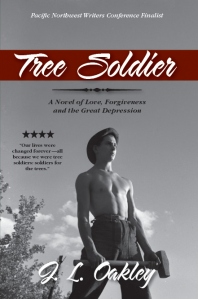
  • Tree Soldier by J.L.Oakley – Historical Fiction, FDR Era Work Camp, Pacific Northwest

    Tree Soldier by J.L.Oakley – Historical Fiction, FDR Era Work Camp, Pacific Northwest

    In this action-packed, emotionally charged historical novel titled Tree Soldier, J.L. Oakley takes us back to the era of the Great Depression. With millions of Americans unemployed, President Franklin D. Roosevelt devised a New Deal work relief program called the Civilian Conservation Corps.

    Some three million unmarried young men went to work in CCC camps across America—building roads and bridges, establishing flood control, and replanting depleted forests. Of the men’s $30 monthly paychecks, $25 was sent to help their desperately poor families.

    Oakley skillfully weaves this history into a suspense-building story of love, forgiveness, and redemption. The story commences with the arrival in 1935 of a new squad of “Tree Soldiers” at Camp Kulshan, a CCC forestry camp in the rugged North Cascades, near the little village of Frazier, Washington.

    While most of the new recruits are sort of rough teenagers from urban New Jersey and New York, our protagonist is a college student who left school and his farm home in eastern Pennsylvania to join up.  The strong and handsome John Parker Hardesty has more than a paycheck on his mind, however. The pensive young man, who sometimes seeks solitude in the forest, is trying to escape his nightmare memories of two tragic events in his life. His fellow recruits nonetheless respect the polite, clean-cut, Park who can also hold his own in the physically competitive proving ground environment of camp life. Many of the new recruits seek out his company, especially a wiry, 18-year-old Italian kid named Mario Spinelli, who takes the upper bunk above Park. Before long Park becomes the squad’s “straw boss.”

    Camp Kulshan is no fun summer camp. The physical training is tough, camp chores are boring, and not all the Tree Soldiers are easy to get along with. The boys of “Joisey Squad” (from the Jersey accents of several) are dubbed “foreigners” and suffer some rough hazing. However, camp life is not all work and no play. The people of Frazier appreciate the camp’s contribution to the community and in friendship arrange baseball games and picnics. The Tree Soldiers reciprocate with a dance in the mess hall. Boys meet girls, sparking romance, but also jealousy. Park is drawn to the dance floor by a pretty, auburn-haired young woman, Kate Alford. He breaks in on an arrogant, self-serving camp officer, David Callister, who has his eyes possessively on Kate. As Park takes Kate in his arms, Callister stalks off the floor.

    As the story’s pace increases, so does the emotion it evokes. Suspense builds as reputations are undermined, treachery and deceit threaten lives on the verge of redemption, while storms brew and forest fires erupt. Oakley’s characters come to life as their respective roles are defined with the drama of trials and tests of wills, and determination builds. Love blossoms, but not without thorns. Friendships are solidified, and trust and support are developed in the face of duplicity and enmity. In the final pages of this compelling book, Oakley introduces one more human trait, one she saw fit to include in its title—forgiveness.

    J.L. Oakley’s Tree Soldier will draw you in and keep you turning the pages.  Tree Soldier won Chanticleer Book Reviews Blue Ribbon Award of Grand Prize in our Published Novels Contest 2012 earning it a coveted CBR star.