Tag: Historical Fiction

  • The CHAUCER Awards for Historical Fiction 2015 Official Finalists Listing

    The CHAUCER Awards for Historical Fiction 2015 Official Finalists Listing

    Pre 1750 Historical Fiction AwardThe CHAUCER Writing Competition recognizes emerging new talent and outstanding works in the genre of  Historical Fiction. The Chaucer Awards is a division of Chanticleer International Novel Writing Competitions.

    More than $30,000.00 dollars worth of cash and prizes will be awarded to Chanticleer Book Reviews 2015 writing competition winners at the Chanticleer Authors Conference April 30, 2016!

    We received an unprecedented amount of entries for the 2015 Chaucer Awards. Due to demand, we will divide the Chaucer Awards into two separate contests for 2016: The CHAUCER Awards for historical fiction prior to 1750 and the GOETHE Awards for Historical Fiction after 1750 until the 1970s.

    This is the Official Finalists List of the Authors and Titles of Works that have made it to the Short-list of the Chaucer 2015 Novel Writing Contest.

    The Chaucer Awards FIRST IN CATEGORY sub-genres  are:  Pre-Historical Fiction, Ancient Historical Fiction, World/International History (non-western culture historical fiction), Dark Ages, Medieval, Renaissance, Elizabethan/Tudor 1600’s, Historical Young Adult.

    The following titles will compete for the FIRST IN CATEGORY Positions and Awards Packages

    • Marc Graham for Song of Songs: A Novel of the Queen of Sheba
    • Daniel K Gilbert for The Eternal Dream
    • Martha Conway for Thieving Forest
    • O.W. Shumaker for  Anna’s Bear -5 Days of Moral Conflict and Fierce Pursuit – In Nazi Germany, 1939 
    • Nicki Chen for Tiger Tail Soup, A Novel of China at War
    • Jim Fuxa for Zizka, The One-eyed
    • Russell Hill & Jeffrey Smith for Mesabi Pioneers
    • Robert Wright for Valhalla Revealed 
    • David E. Huntley – Death Watch Beetle
    • Paul B McNulty for  Spellbound by Sibella
    • Steve Doherty for Operation King Cobra
    • S. Thomas Bailey for Blood Lines-The Gauntlet Runner Book 4
    • Larry K. & Lorna Collins for The Memory Keeper
    • Michael Scheffel for St. Louis Affair: The Adventures of Herbert Falken
    • Andy Kutler for The Other Side of Life
    • Richard Carl Roth for Endangered Eagle
    • T. M. Carter for The Lion of the Cross: Tales of a Templar Knight
    • CG Fewston for A Time to Love in Tehran
    • Joyce DiPastena for The Lady and the Minstrel
    • Catherine A Wilson and Catherine T Wilson for The Order of the Lily
    • Troy B. Kechely for Stranger’s Dance
    • Glen Craney for The Yanks Are Starving: A Novel of the Bonus Army
    • Glen Craney for The Spider and the Stone: A Novel of Scotland’s Black Douglas
    • Leif Gregersen for  Those Who Dare To Dream
    • Kelly-Lynne Reimer for  Broken Glass
    • Amanda Frost for Provenance
    • Deborah Fleming for Without Leave
    • Marina Osipova for The Cruel Romance
    • Brigitte Goldstein for Death of a Diva-From Berlin to Broadway
    • Leon J. Radomile for  The Spear of Lepanto
    • Patrick Gabridge for Steering to Freedom
    • Jocelyn Cullity for The Red Year
    • James Conroyd Martin for  The Warsaw Conspiracy
    • Nancy Foshee for  O’er the Ramparts
    • Susan Örnbratt  for The Particular Appeal of Gillian Pugsley
    • E.A. Haltom for  Gwendolyn’s Sword
    • K.S. Jones for Shadow Of The Hawk
    • Anjali Mitter Duva for Faint Promise of Rain
    • Joan Fallon for The Shining City
    • Joan Fallon for The Only Blue Door
    • Meredith Pechta for The Prejudice that Divides Us
    • Eleanor Tatum for Gray Lace
    • John Hallman for Punic Wars
    • Edmond G. Addeo for A Tale of the Yosemite
    • Bruce Macbain for Odin’s Child
    • Gregory Warwick Hansen  for Pelsaert’s Nightmare
    • Jerrie Brock for Pawn to King’s Right
    • Nicole Evelina  for Madame Presidentess
    • JD Slade for  Last Children of the Valley
    • Jess Curry for  Nixon And Dovey
    • Jayme Mansfield for Chasing the Butterfly
    • Ethel Morgan Smith for Out of Bone
    • Mary Kay Thill for The Uncrowned King: A Story of Lorenzo Medici 
    • E.A. Haltom for Gwendolyn’s Sword
    • Sara Dahmen  for Doctor Kinney’s Housekeeper
    • Joan Fallon for The Shining City
    • Anna Castle for Death by Disputation
    • James B. McPike for The Lost Prophet
    • Paula Butterfield for La Luministe
    • Diana Wilder for  The City of Refuge
    • Glen Alan Burke for Jesse
    • Rose Seiler Scott for Threaten to Undo Us
    • McKendree Long for Higher Ground
    • Helena P. Schrader for  Defender of Jerusalem & Knight of Jerusalem
    • Christian Kachel for Spoils of Olympus: By the Sword

    This is the complete listing of the 2015 Chaucer Finalists. 

    The Chaucer Finalists will compete for the Chaucer Awards First In Category Positions, which consists of Four Judging Rounds.  First Place Category Award winners will automatically be entered into the Chaucer GRAND PRIZE AWARD competition, which has a cash prize of $250 or $500 dollars in editorial services. The CBR Grand Prize Genre Winners will compete for the CBR Overall Grand Prize for Best Book and its $1,000 purse.   

    • All First In Category Award Winners will receive high visibility along with special badges to wear during the Chanticleer Authors Conference and Awards Gala.
    • First In Category winners will compete for the Chaucer Awards Grand Prize Award for the $250 purse and the Chaucer Grand Prize Ribbon and badges.
    • TEN genre Grand Prize winning titles will compete for the $1,000 purse for CBR Best Book and Overall Grand Prize.
    • A coveted Chanticleer Book Review valued at $345 dollars U.S. CBR reviews will be published in the Chanticleer Reviews magazine in chronological order as to posting.
    • A CBR Blue Ribbon to use in promotion at book signings and book festivals
    • Digital award stickers for on-line promotion
    • Adhesive book stickers
    • Shelf-talkers and other promotional items
    • Promotion in print and on-line media
    • Review of book distributed to on-line sites and printed media publications
    • Review, cover art, and author synopsis listed in CBR’s newsletter
    • Default First in Category winners will not be declared. Contests are based on merit and writing craft in all of the Chanticleer Writing Competitions.

    As always, please do not hesitate to contact us with any questions, concerns, or suggestions at Info@ChantiReviews.com. 

    Congratulations to the Finalists in this fiercely competitive contest! 

    Good Luck to all of the Chaucer Finalists as they compete for the coveted First Place Category  positions.

    First In Category announcements will be made in our social media postings as the results come in.

    The Chaucer Grand Prize Winner will be announced at the April 30th, 2016 Chanticleer Writing Contests Annual Awards Gala, which takes place on the last evening of the Chanticleer Authors Conference that will be held in Bellingham, Wash. 

    We are now accepting submissions into the 2016 Chaucer Awards and the Goethe Awards writing competitions for Historical Fiction. Please click here for more information or to enter the contests.


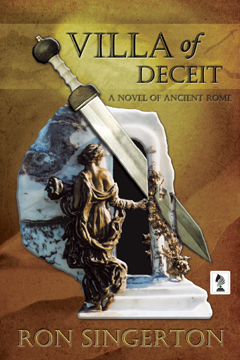
  • VILLA of DECEIT: a Novel of Ancient Rome by Ron Singerton

    VILLA of DECEIT: a Novel of Ancient Rome by Ron Singerton

    Ron Singerton’s “Villa of Deceit” cleverly portrays the transition from the Roman Republic, which had a complex constitution with checks and balances, to the rise of the imperial dynasty of the Roman Empire, which would rule the next four hundred years with an iron hand, by using the microcosm of a Roman family to reflect the changes and undercurrents that were beginning to change the course of Western Civilization.

    The book opens with young Gaius, the hero of the story, intending to celebrate the last night of the Ludi Flores festival with his good friend Appian Dio. But that afternoon, he makes the mistake of attempting to intervene on behalf of a young slave Gaius’s tyrannical father, Toronius, is unfairly punishing. Gaius fails, earning the wrath of his father, and is also injured during the altercation. For Gaius, the incident is further proof of what he has known for some time: Toronius is a brutal man with few scruples, and in Gaius’ eyes, unfit to head the family or the family’s trade.

    However, the laws of first century B.C. Rome are of no help in deterring a man such as Toronius. And Gaius’s young mother, who escapes the suffocating rule of her husband by looking after her own interests, is no ally to her son. Not long after the incident with the young slave, Gaius falls in love with a female slave brought into the household. To save her from his father, Gaius convinces her to flee with him and is disinherited as a result. Unfortunately, tragedy strikes, leaving Gaius alone with young son.

    In Gaius, the author gives us a highly sympathetic character who, though young, is intelligent and moral enough to draw conclusions about such unfair treatment of slaves, and brave enough to make difficult decisions in order to strive to live his life by a better standard. Forced into choices that carry consequences by the limited options available in those times, Gaius leaves the infant with a relative and joins the merciless military to try his luck at becoming a Roman Legionnaire.

    Singerton has done his research, and he paints a very accurate portrait of life for young men during first century B.C. Rome. Fathers demand that they come of age early in life, measuring their manhood and stamina by the number of women they bed in one night, and the amount of fear that they are able to strike into the hearts and minds of others.

    In 70 B.C. Rome, slaves and prostitutes are to be used and then discarded when no longer needed. A slave’s life has little value and is easily replaced by more prisoners who would be taken in the next cold-blooded military conquest.  Imported to Roman households from far away lands, slave were young children, and the women who were sorted as to their best use in the eyes of their captors. Those captured who were of little use were instantly put to death. The Roman Empire would continue to conquer and expand its undisputed rule across three continents for the next four hundred years.

    “Villa of Deceit: a Novel of Ancient Rome” by Ron Singerton will keep readers turning the pages as the author vividly conveys the brutality and wanton disregard of life on and off the battlefield in this cleverly plotted historical novel that speaks to a time that would affect Western Civilization for the next millennium.

  • GOD FACTOR SAGA SERIES by J. Nell Brown, a historical paranormal series

    GOD FACTOR SAGA SERIES by J. Nell Brown, a historical paranormal series

    NOTE ABOUT REVIEWS: While Chanticleer typically does one book review post per book, we chose to have reviews for these short stories and book in this series all together on one webpage. We felt they all complement each other and deserve to be read together to give a greater perspective to the series. All reviews were written by K. Patterson.

    Review of FROZEN PRAYERS by J. Nell Brown: Book 1 of the God Factor Saga

    Readers caFrozen Prayers by J. Nell Brownn expect a superb blend of genres in J. Nell Brown’s Frozen Prayers: Book 1 of the God Factor Saga. This novel is a suspenseful biblical fantasy that weaves love and the paranormal into the lives of two individuals. This is not only a perfect read for someone wanting an enduring love story, but for anyone wanting to explore profound ideas about spirituality and God.


    In 1977, Cillian Finn is born of his mother Mary Finn, entering the world in a dank, dark shack on a    remote island off the Antrim Coast of Ireland. He is the child of rape and unwanted by his mother. That same year, Daniela Cavanaugh is born to missionary parents Austin and Jeanette, in a hospital in Gainesville, Florida. Though she is deeply loved and wanted by her parents, she is a black child growing up in the South, during a time of rampant discrimination. Growing up thousands of miles apart, Daniela and Cillian’s lives will nevertheless become deeply intertwined.

    Shy, young Daniela dreams of a normal life, her days spent playing with a best friend and kindred spirit rather than dealing with the cruelty of reality. However, Daniela possesses a gift—the ability to see far into the past and into the future when she dreams. Her prayers, encouraged by her father, have the power to unlock the mysteries of the world, to bring about wars, and to protect the life of the lonely boy Cillian, living an ocean away in Manchester, England. If Daniela quits dreaming and praying about her kindred spirit, Cillian, what will be the impact on his life?

    At its simplest, this is a novel combining spiritual and paranormal elements in a love story about a young girl who possesses the power of prophecy. It is also the tale of an epic battle between mortals and immortals and of unlocking the mysteries God intended for the world.

    However, J. Nell Brown uses this story to reveal deeper questions about spirituality and how we conduct our lives. Exactly what can one accomplish through the power of prayer? And if you knew how your life would end, would you choose to live it differently? In this deeply spiritual first novel in the God Factor Saga, J. Nell Brown has crafted a heartwarming, sometimes heart-wrenching, and always suspenseful novel that is sure to linger in the minds of readers long after they read the final pages.

    Review of HOUSE GUEST by J. Nell Brown, a prequel short story to the God Factor Saga series

    House Guest by J. Nell Brown  A prequel short story to J. Nell Brown’s God Factor Saga series, House Guest, is an excellent read for   anyone who loves a story that immerses a historical setting into the realm of the paranormal.        Readers of the God Factor Saga will also be thrilled for this new addition to the spiritual and heart-  wrenching series.  

      House Guest tells the tale of the demon Nomed, sent out of the underworld to accomplish a mission    for Lucifer in return for a greatly desired job promotion. Nomed’s assignment is to kill two eight-year-old children, Cillian Finn and Daniela Cavanaugh. Lucifer considers these children to be agents of his enemy, Elohim, who must be stopped before they can achieve their destinies.

    Set in the early days of World War II, House Guest blends rich historical detail with spiritual, paranormal, and horror elements, providing a gripping and entertaining read. 

    Review of A GENERATION OF LIGHTED EVERGREENS by J. Nell Brown: First  Novella in The God Factor Saga series

    A Generation of Lighted Evergreens by J. Nell BrownThe first novella in the God Factor Saga, A Generation of Lighted Evergreens brings readers of the series more spiritual journeys and deeper connections with its minor characters.
    This is the story of Austin Cavanaugh, ten years prior the birth of his daughter Daniela. Austin toils  away in the sugar cane fields of South Florida, drowning out the harsh, grinding reality of his life by  dreaming of the day when he will meet and marry his kindred spirit. He dreams of a future in which  his little girl will lead the life he always envisioned for himself.

    Will Austin’s deep spirituality and belief in God bring him through the trials of his life, to a time in which he will see his dreams realized? As with all of the God Factor Saga stories, J. Nell Brown spins a tale of spirituality that asks important questions about the power of religion and prayer, and enlightens readers with ideas that go beyond the natural world.


  • MASTER OF WESTFALL PLANTATION by Bonnie Stanard, a historical novel

    MASTER OF WESTFALL PLANTATION by Bonnie Stanard, a historical novel

    Bonnie Stanard exposes some of the greatest plights of those who suffered from human bondage and slavery in her book Master of Westfall Plantation. Readers will be pulled into the novel’s eloquent prose that paints the tragic moments of the antebellum South. This captivating and well-researched story will resonate with you long after you read the final page.

    Set in Charleston, South Carolina and a nearby island shortly before the Civil War, the book introduces the central character Tilmon Goodwyn. He is cold toward his beautiful wife Georgiana (who is secretly shamed by her humble background), manipulative and suspicious of his widowed mother Phoebe, (who may be flirting with a sophisticated con man), and extremely cruel to slaves (while believing himself benevolent).

    Tilmon blunders through the business of running a large plantation, yet, underpinned by the pernicious institution of slavery, manages to prosper nonetheless. Given to gambling and pleasing himself, he has already impregnated one slave and developed a seething lust for another—young Kedzie, who has a mind towards freedom and a deep hatred of her master that only stirs his passion more.

    Passing his days in questionable business dealings, watching as his foreman lashes his slaves for the smallest infractions, Tilmon gives us little to like. The only time this arrogant husband, indifferent father, maladroit manager, and cruel overlord shows a smidgen of tender feeling is when Billy, a favorite slave, dies, probably having ingested poison meant for Tilmon himself—but administered by whom?

    Meanwhile Georgiana, meeting by chance with the abolitionist preacher who raised her, plots to have Kedzie sent north via the Underground Railroad, not in sympathy for the girl’s terrible circumstances, but as revenge for her husband’s flagrant infidelity.

    In a telling moment, Georgiana hears the laughter of gypsies and wonders how “a person of such poor circumstance could find anything funny,” not grasping that it is freedom, not wealth, which brings happiness. Readers will no doubt want to cling to hope for Kedzie to find a way out of hardship. As the novel ends, there are muted mentions of events in Kansas and elsewhere that may influence Tilmon’s dark empire that he rules with an iron hand and a perverted morality.

    Bonnie Stanard is a freelance writer and editor whose skills come to the fore in this work, with finely honed language that at times borders on the poetic. Master of Westfall Plantation is part of a series, for which Stanard has assiduously researched her subject matter, even attaching a lengthy bibliography. She focuses on the evil of slavery, expressing, in a brief introduction, her conviction that “a man of good will who conforms to a bad culture is more bad than good.”

    The hopeless plight of those who suffered from human bondage and slavery is fervently depicted in the authentic voices of the “low country.” Stanard’s portrayal of Tilmon and other slave masters who believed themselves “righteous and good” chronicles the juxtapositions that permeated the antebellum South. This unrelenting pessimism and, at times, almost complete lack of even a ray of hope can make the read intense and uncomfortable. Nevertheless, Master of Westfall Plantation is a brilliant work speaking honestly of an unspeakable wrong.

    The Master of Westfall Plantation is a companion novel to Kedzie, Saint Helena Island Slave (2012),  Sonny, Cold Slave Cradle (2013), and Westfall, Slave to King Cotton (2014). All four novels compose the well-researched and well-told Westfall series by Bonnie Stanard.


  • DEFENDER of JERUSALEM by Helena P. Schrader, second book in historical series

    DEFENDER of JERUSALEM by Helena P. Schrader, second book in historical series

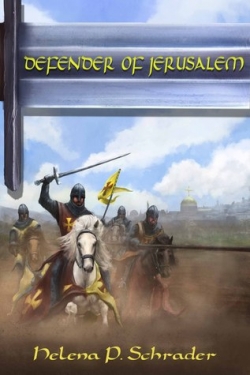
    Defender of Jerusalem is the second novel in Helena P. Schrader’s historical series about Balian d’Ibelin, a twelfth century crusader who rose from his position as a landless second son to become one of the most powerful figures in the kingdom of Jerusalem.  In Schrader’s previous novel about Balian d’Ibelin, readers watched his young adulthood and rise to power at the side of the young leper king, Baldwin.

    Now the Baron of Ibelin, a nobleman in his own right, Balian is married to Maria Comnena, the dowager Queen of Jerusalem and King Baldwin’s stepmother.  Balian proves to be a dichotic leader as he was a forged-in-battle warrior and a supremely capable diplomat.

    Thus, Schrader’s story becomes one about Balian’s family life, focusing more on an ensemble cast of characters than just on Balian himself. As the Christian kingdom of Jerusalem struggles to maintain order and fend off the advances of Salah-ah-Din’s forces, the characters are scattered throughout the kingdom.  This makes for a more fragmented plotline than in the previous installment, thereby reflecting the internal and external political conflicts of the time along with the clash of cultures.  There are several time jumps and switches in perspective throughout the work that may make it feel less cohesive, but they add to the authenticity of the era’s fractured communications.

    The story at the center of the novel is King Baldwin’s desire to find an appropriate heir before his inevitable demise due to leprosy.  With no clear path of succession, there is much court intrigue around this decision.  It often comes down to the women in his life to influence his decisions or make their own way, and it is here that Schrader’s work really shines.

    The author presents her female characters, notably Maria, her daughter Isabella, and Balian’s niece, Eschiva, as powerful, independent women unwilling to let the constraints of the time keep them from helping the kingdom. Maria even commands troops and keeps her people safe during a siege.  These vibrant women make what could be a strictly dry, historical narrative leap off the page.

    Schrader clearly knows her history, so devotees of medieval history will enjoy her occasional indulgence in the details of her research, focusing on troop movements or treaties rather than the characters.  Schrader effectively strikes a balance between the need for historical accuracy and readability in the dialogue.  Nevertheless, her writing deftly portrays the gamut of emotions of this turbulent time.

    Defender of Jerusalem is a well written biographical novel about a little known hero of the Crusades, Balian d’Ibelin, as he attempts to maintain power and order in the face of invading armies and the internal conflicts within Christendom.

    Schrader brings interesting and vivid historical characters to life by adding emotion and valor to her storytelling. Overall, readers who enjoy learning about the intricacies of the Crusades and prefer serious and well-researched historical fiction will relish Schrader’s novels.

  • The CHATELAINE 2014 AWARDS FIRST PLACE Category Winners for Women’s Fiction and Romance Novels

    The CHATELAINE 2014 AWARDS FIRST PLACE Category Winners for Women’s Fiction and Romance Novels

    Chanticleer Book Reviews is honored to announce the First Place Category Winners for the CHATELAINE AWARDS 2014 for Women’s Fiction and Romance Novels, a division of Chanticleer Blue Ribbon Writing Competitions.


    book award for Romance Novels The Chatelaine AwardsThe CHATELAINE  Awards recognize emerging new talent and outstanding works in the genre of Women’s Fiction and Romance Novels. The First Place Category Winners will be recognized at the Chanticleer Authors Conference and Awards Gala held in late September 2015.


    Chanticleer Reviews is proud to be a literary affiliate of the Historical Novel Society.


    Congratulations to the CHATELAINE FIRST PLACE Category 2014 Award Winners:

    • Historical: Catherine A. Wilson and Catherine T. Wilson  for The Order of the Lily  
    • Romance Regency: Kerryn Reid for Learning to Waltz 
    • International Intrigue/World Events: Kristine Cayne for Deadly Betrayal
    • Contemporary: Kim Sanders for The Ex Lottery
    • Mystery/Suspense/Thriller Romance: Donna Barker for Mother Teresa’s Advice for Jilted Lovers
    • Blended Genre:  Janet Shawgo for Find Me Again
    • Inspirational/Restorative: Peggy Patrick for Surrendered II: Pride 
    • Romance & Adventure: Martha Rather for Kismet or Kamasutra
    • Fantasy/Mythological: Danica Winters for Montana Mustangs
    • Jane Austen Inspired: Betty Codd for Eleanor Grace 
    • Debut Novel: Julie LeMense for Once Upon a Wager
    • YA: M.A. Clarke Scott for The Dissimulation of Doves 
    • Women’s Fiction: Kate Vale for Destiny’s Second Chance
    • Women’s Fiction/Humorous: Lisa Souza for  Beauty and the Bridesmaid 
    • First Loves: Jennifer Snow for The Trouble with Mistletoe

    CONGRATULATIONS!

    To view the 2014 Chatelaine Finalists whose works made it to the short list, please click here.

    Good Luck to the Chaucer First Place Category Winners as they compete for the CHATELAINE AWARDS 2014 GRAND PRIZE position!

    The 1st Place Category Winners compete for the CHATELAINE AWARDS 2014 GRAND PRIZE position. The 2014 CHATELAINE category winner was announced at the Chanticleer Authors Conference and Awards Gala in September 2015. See the Grand Prize Winners.

    The deadline for The Chatelaine Awards 2014 was August 31, 2014.
    The deadline for The Chatelaine  Awards 2015 is August 31, 2015.

    GRAND PRIZE Overall Chatelaine Awards Winner from 2013:

    KCHOICESate Vale for Choices

    To view the 2013 Chatelaine Award Winners, please click here.

    To enter the 2015 Chatelaine Awards, please click here. The deadline is August 31, 2015.


    To enter your work into a Chanticleer Writing Competition, please click here. 

    CBR’s rigorous writing competition standards are the reason literary agencies seek out our winning manuscripts and self-published novels. Our high standards are also another reason our reviews are trusted among booksellers and book distributors.Chanticleer Book Reviews & Media, L.L.C. retains the right to not declare “default winners.” Winning works are decided upon merit only. Please visit our Contest Details page for more information about our writing contest guidelines.

    Please do not hesitate to contact Info@ChantiReviews.com with any questions, concerns, or suggestions about CBR writing competitions. Your input and suggestions are important to us.

    Thank you for your interest in Chanticleer Book Reviews international writing competitions.

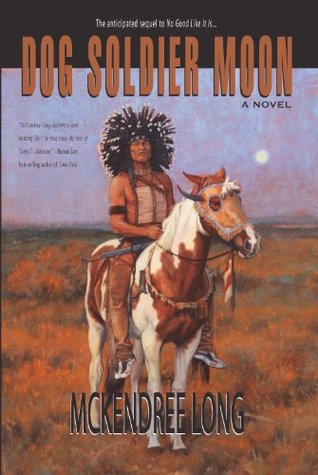
  • DOG SOLDIER MOON by McKendree Long – Historical Post-Civil War Western

    DOG SOLDIER MOON by McKendree Long – Historical Post-Civil War Western

    In this second novel of McKendree Long’s Western trilogy, the adventures of Thomas “Dobey” Walls and Jimmy “Boss” Melton continue, taking in the turbulent post-Civil War years on the Western frontier. An unforgettable read!

    The year is 1866, and the Gray Army has long since surrendered to the Yankees. Dobey and Boss’s friend, Jimmy Ridges, having recently ridden with General Stand Watie’s Confederate Cherokees, travels to Canadian Fort in north Texas, hoping to meet up with his sweetheart Amanda Watson. Along the way, Jimmy spends the night in a Cheyenne hunters’ camp and receives a gift from Chief Black Kettle, a woman named Serenity Killer. Aptly named, the young Cherokee has the potential to cause Jimmy all manner of problems with his lovely bride-to-be.

    Thus McKendree Long begins his second novel, Dog Soldier Moon, reuniting readers with the memorable characters of No Good Like It Is. We ride along with Dobey and Boss and their families as they struggle to make a life for themselves in post-Civil War Texas. Back East, the war may be over, but out West, resentments still run high. Divided loyalties during the war have now hardened into feelings of anger, resentment, and betrayal. Memories of wartime atrocities and injustices are festering wounds in the mind of Boss Melton and others.

    As with No Good Like It Is, Long goes far beyond the simplistic notion of the Civil War as told in American history texts to accurately portray the daily challenges faced by homesteading families, freed slaves, American Indians robbed of their ancestral lands, and ex-soldiers who face the disrespect of the Union army. Heart-warming and at times hilarious adventures are juxtaposed with gritty and emotionally wrenching moments such as Custer’s 1868 attack on Chief Black Kettle’s Cheyenne camp at Washita.

    In Dog Soldier Moon and its prequel No Good Like It Is, author McKendree Long displays a natural gift for storytelling that will delight aficionados of the Western genre and have them anxious to read the next in the series.


  • The CHAUCER AWARDS for HISTORICAL FICTION First Place Category 2014 WINNERS

    The CHAUCER AWARDS for HISTORICAL FICTION First Place Category 2014 WINNERS

    Chanticleer Book Reviews is honored to announce the First Place Category Winners for the CHAUCER AWARDS 2014 for Historical Fiction, a division of Chanticleer Blue Ribbon Writing Competitions.

    The Chaucer Awards for Historical Novels

     The Chaucer Awards recognize emerging new talent and outstanding works in the genre of historical fiction. The First Place Category Winners will be recognized at the Chanticleer Authors Conference and Awards Gala held in late September 2015.

    Chanticleer Reviews is proud to be a literary affiliate of the Historical Novel Society.

    The CHAUCER FIRST PLACE 2014 Award Winners are:

    • Women’s Fiction: J. L. Oakley for Timber Rose
    • Legend:  Kevin Allen and Emma Rose Millar for Five Guns Blazing
    • Legacy: Michael D. McGranahan for Silver Kings and Sons of Bitches
    • Pre-History: Mary S. Black for Peyote Fire
    • Ancient History: Rebecca Locklann for The Thinara King
    • Roman/Grecian Classical: Elisabeth Storrs for The Golden Dice: A Tale of Ancient Rome
    • Middle Ages: Helena P. Schrader for St. Louis’ Knight
    • Late Middle Ages: Lilian Gafni for The Alhambra Decree: Flower from Castile 
    • Elizabethan/Tudor: Syril Levin Kline for Shakespeare’s Changeling: A Fault Against the Dead
    • 1600’s: Donna Scott for Shame the Devil (manuscript)
    • 1700s & 1800s: Karleene Morrow for Destinies
    • Turn of the 19th Century: Ruth Hull Chatlien for The Ambitious Madame Bonaparte
    • Twentieth Century:  David Brendan Hopes for The One with the Beautiful Necklaces (manuscript)
    • World Wars: Gregory Erich Phillips for The Love of Unfinished Years (manuscript)
    • Young Adult: Sharon Short for My One Square Inch of Alaska
    • U. S. History: J. P. Kenna for Beyond the Divide
    • World History: Michelle Rene for I Once Knew Vincent

    CONGRATULATIONS!

    Congratulations to all of the 2014 Chaucer Finalists! Congratulations to those whose works were selected for First Place Category positions. Good Luck to the Chaucer First Place Category Winners as they compete for the CHAUCER AWARDS 2014 GRAND PRIZE position!

    The 1st Place Category Winners compete for the CHAUCER AWARDS 2014 GRAND PRIZE position. The 2014 CHAUCER category winner was announced at the Chanticleer Authors Conference and Awards Gala in September 2015. See the Grand Prize Winners.

    • The deadline for The Chaucer Awards 2014 was June 31, 2014.
    • The deadline for The Chaucer Awards 2015 is June 31, 2015.

    GRAND PRIZE Overall Chaucer Awards Winner from 2013:

    Sean Curley, Propositum   2013-Chaucer-125x1501.png


    To view the 2013 Chaucer Award Winners, please click here.

    To compete in the 2016 CHAUCER Awards or for more information, please click here.
    CBR’s rigorous writing competition standards are the reason literary agencies seek out our winning manuscripts and self-published novels. Our high standards are also another reason our reviews are trusted among booksellers and book distributors.Chanticleer Book Reviews & Media, L.L.C.  retains the right to not declare “default winners.” Winning works are decided upon merit only. Please visit our Contest Details page for more information about our writing contest guidelines.

    Please do not hesitate to contact Info@ChantiReviews.com with any questions, concerns, or suggestions about CBR writing competitions. Your input and suggestions are important to us.

    Thank you for your interest in Chanticleer Book Reviews international writing competitions.


  • NO GOOD LIKE IT IS, Book One by McKendree Long, a post-Civil War Western

    NO GOOD LIKE IT IS, Book One by McKendree Long, a post-Civil War Western

    In his meticulously researched, debut historical Western, McKendree Long takes the reader on a journey to the Civil War era, as experienced by homesteaders and soldiers in the far-flung outposts of the Old West. A must-read for fans of the genre!

    Second Lieutenant Thomas “Dobey” Walls, a West Point Graduate, and Corporal Jimmy Melton, a non-commissioned soldier, meet at the military outpost of Fort Gibson, just off the Arkansas River, in 1859. As they work side-by-side to protect wagon trains traveling through their territory, fighting off roaming bands of raiders and Kansas “Jayhawkers,” the two men become fast friends.

    No Good Like It Is  follows the daily lives of these men as they work at the Old West outposts, journey to Texas to join up with the famous Texas Terry’s Rangers during the Civil War, and ultimately search for the remaining members of a Wall’s homesteading family in the wilds of Texas Panhandle country.

    Long’s gifted ear for the true vernacular of the time and his detailed descriptions of the Old West place the reader right in the middle of the action along with these two men and the colorful characters they encounter during their adventures.

    Walls and Melton embody the best of human values, exemplified through the valor of their actions, their honesty, and their determination to fight for what they believe to be just and right. These men leap off the page, remaining memorable long after the reader finishes the book.

    But above all, this is the story of men who meet and become friends, and whose characters are shaped by a series of dramatic historical events that defined our country.

    This novel goes beyond the typically simplistic view of the Civil War, delving into the divided loyalties of the homesteaders in the American West who found their families and friends fighting on opposite sides of the war. Long accurately portrays the dangers and shifting alliances of the Old West during the war, exposing the reader to a very different view of the war’s effects on the western states.

    No Good Like It Is, the first of three gritty action-packed novels that follow the adventures of Dobey Walls and Jimmy Melton, well written with historical accuracy and authentic dialog.  Readers will be eager for the sequels.

  • BECAUSE of the CAMELS, by Brenda Blair

    BECAUSE of the CAMELS, by Brenda Blair

    Because of the Camels is an inspiring story about a little known account of the incredible journey that brought Egyptian camels to rugged Texas in the mid-1800s. This historical novel skillfully weaves more into the story than just a depiction of what happened; it is a story of many cultures, the coming upheaval with the war that changed our nation, and the pioneering of the West and of Texas.

    More uniquely interesting was the portrayal of people from two different cultures, East/Islamic and Western/Christian, encountering their societies and customs for the very first time that is enlightening about the isolation of different cultures before the age of television or radio.

    Elizabeth McDermott, an up and coming socialite from one of Galveston’s most prominent families has no idea of the grand adventure that awaits her when the camels arrive in port. Nor do the three young men Alex, Nate and Hassan who accompany the camels. Their lives will intersect in ways that none of them could have imagined.

    But this is not just Elizabeth’s story, nor is there ultimately one main character; more it is the story of how bringing the camels effected the lives of those half-way around the world, the military men who were in charge of the special mission to procure the animals and then get them back to U.S. for the Army Camel Corps, the brave Egyptian young man who accompanied the camels, the plight of non-whites in ante bellum Texas, and the arrival of German immigrants. Tensions soon mount from the effect of all of these new cultural aspects clashing.

    To counterbalance some more of the gritty scenes that are historically accurate of the time, there are also many delightful scenes.  But readers should be aware that the author did not overlook the racism and subjugation of people of color that was prevalent at that time. I felt that her descriptions were so vivid that they truly took you back to Egypt, to the trans-Atlantic sail, to the crushed covered streets of Galveston, to the beautiful colored bays and its abundance of life that surrounded Saluria; to the vast expanse of the prairie grasses in the unsettled lands near San Antonio. Each scene is so well depicted that one effortlessly travels back in time to become part of the adventures told. U.S. history and military buffs will appreciate this well-researched book. Those looking for an antebellum romance will also enjoy reading it.

    Not only was I captivated by the imagery the author created, but I was taken away by how well each character in the story was developed. The author developed each and every character so well that you can’t help but feel that you are having tea with Elizabeth, riding the camels with Hassan and Alex, sitting around the campfire listing to the tales spun by the camel men, and rocking on the porch with Jeremy.

    The story of the camels’ journey to America and the part they played in American history is one that I found to be most informative and entertaining. Ms. Blair had me turning the pages to find out what will happen to the McDermott family, Hassan and the camel men, Alex and his Uncle Babcock, Nate and his grandfather, as well as the many other characters. This is one story I will not soon forget.

    Because of the Camels was awarded the Laramie Awards First Place for Historical Western Novels. The Laramie Awards is a division of Chanticleer Novel Writing Competitions.