
Tag: Historical Fiction

  • CHAUCER BOOK AWARDS 2017 Short Listers for Historical Fiction pre-1750s

    CHAUCER BOOK AWARDS 2017 Short Listers for Historical Fiction pre-1750s

    The Chaucer Awards for Historical NovelsThe CHAUCER Writing Competition recognizes emerging new talent and outstanding works in the genre of  Historical Fiction pre-1750s. The Chaucer Book Awards is a division of Chanticleer International Novel Writing Competitions.

    More than $30,000.00 dollars worth of cash and prizes will be awarded to Chanticleer Book Reviews 2017 writing competition winners at the Chanticleer Authors Conference April 21st, 2018!

    This is the Official Semi-Finalists List of the Authors and Titles of Works that have been SHORT-LISTED for the Chaucer 2017 Book Awards. These titles will now compete for the First In Category positions.

    The Chaucer Awards FIRST IN CATEGORY sub-genres are:  Pre-Historical Fiction, Ancient Historical Fiction, World/International History (non-western culture historical fiction pre-1750s), Americas-Historical Fiction Pre-1750s, Dark Ages/Medieval, Renaissance, and Elizabethan/Tudor 1600’s.

    • Kenneth W. Meyer – Lion’s Shadow
    • Edward Rickford – The Serpent and the Eagle
    • K.M. Pohlkamp – Apricots and Wolfsbane
    • Richard T. Rook – Tiernan’s Wake
    • DJ Munro – Slave to Fortune
    • Catherine A Wilson and Catherine T Wilson – The Traitor’s Noose: The Lions and Lilies 
    • Crystal King – Feast of Sorrow: A Novel of Ancient Rome
    • Gita Simic/G.T. Sim – Occam’s Razor
    • Lilian Gafni – Flower from Castile: A Safe Haven
    • Elizabeth Crowens – A Pocketful of Lodestones, Time Traveler Professor Series Book 2
    • Val Jon Jensen II – The People’s Crusade
    • Joseph Scott Amis – To Shine with Honor, Book One: Coming of Age
    • Marcia Fine – Hidden Ones: A Veil of Memories
    • Elisabeth Storrs – Call to Juno: A Tale of Ancient Rome
    • Susan E Kaberry – The Good Shepherd and the Last Perfect
    • Brett Savill – The Medici Apprentice 
    • Leigh Grant – Mask of Dreams
    • Susan E Kaberry – The Chatelaine of Montaillou
    • Ken Frazier – Alexander of the Ashanti
    • Prue Batten – Guillaume: Book Two of The Triptych Chronicle
    • Martha Kennedy – Martin of Gfenn
    • Christian Kachel – Spoils of Olympus II: World on Fire

    Good Luck to all of the 2017 Chaucer Short-Listers as they compete for the First Place Category positions.

    First In Category announcements will be made at the Awards Ceremony. The Chaucer Grand Prize Winner and First Place Category Winners will be announced at the April 21st,  2018 Chanticleer Writing Contests Annual Awards Gala, at the Chanticleer Authors Conference that will be held in Bellingham, Wash. 

    We are now accepting submissions into the 2018 Chaucer Awards and the Goethe Awards writing competitions for Historical Fiction. Please click here for more information.

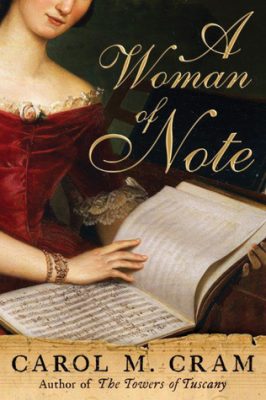
  • A WOMAN of NOTE by Carol Cram – Historical Fiction, Literary, Vienna

    A WOMAN of NOTE by Carol Cram – Historical Fiction, Literary, Vienna

    Isabette Gruber is in a panic. If only her sister were still with her to steady her hands on the keyboard as she plays Beethoven’s Eighth Sonata, known as the “Pathetique,” in her first public concert at Vienna’s Hofburg Palace. Then she hears Johanna’s voice in her head, and her poise and confidence return. The nineteen-year-old Isabette raises her hands, shapes her fingers above the keyboard, and launches into the “Pathetique.” Her powerful performance thrills the audience, whose applause continues through a third bow, and does honor to its composer, Ludwig van Beethoven, whose funeral took place in Vienna that very day, March 29, 1827.

    Filling Isabette’s heart more than the applause, however, are the words of praise from her beautiful, new American friend, eighteen-year-old Amelia Mason, who received four bows for her extraordinary vocal performance. Afterward, Amelia asks the young virtuoso pianist to become her accompanist. Isabette is eager to hear more about this enticing proposition, but Mama arrives with her cloak. Herr Dietrich (her indecorous manager) is waiting with their carriage. “Hurry, Isabette!”

    In A Woman of Note, Carol Cram has crafted a second brilliant female artist, this time a pianist and composer in 19th-century Vienna. Isabette must fight to establish her position in the male-dominated European world of classical music, much as Cram’s Sofia had to do in 14th-century Italy’s world of painting, in The Towers of Tuscany (2014). Cram’s precise, colorful writing enables us to hear the young Isabette playing the “Pathetique” in Hofburg Palace, see her enjoying a stroll with Amelia in the Prater, feel her pain over the loss of father and sister, and appreciate her determined efforts to convince music publisher Herr Weissel to accept her compositions, under the pseudonym of Anson Kruetzer. (Weissel roars with laughter, but agrees!)

    Once home from the Hofburg, Isabette thinks back to her practice session that morning in the small, dusty parlor of the apartment where she lives with her mother. With a heavy heart, she remembers what a happy home this had been when her sister Johanna and she shared both a talent and a love for music and were skillfully taught to play and compose by their proud father. Now Papa is dead, Johanna is in an asylum, and Mama seems to think of Isabette more as a means to an income than as her younger daughter. The tall, lanky girl with a plain face and dull, straight hair never gives a thought to her social life or the possibility of marriage and children. Her every moment is devoted to practicing. Tonight, though, she thinks of a new life with Amelia in it. Soon, they are together every day practicing, but also developing their friendship as they go for long walks around Vienna.

    When piano teacher Josef Hauser, who fancies himself a superior composer, meets the two young women, the story’s complexity grows. Josef is enamored with Amelia’s beauty but enthralled with Isabette’s talent. (In fact, he agrees to become her teacher if she revises his compositions so they will be accepted for publication.) Isabette treasures every minute she spends with the vibrant, cheerful Amelia, but feels uncomfortable when Amelia strokes her arms and kisses her neck. Amelia is jealous of Josef’s attention to Isabette during her piano lessons. Isabette realizes she could love Josef but knows that he is passionate about Amelia and could never feel that way about her. Then Josef’s flutist/poet friend Daniel Leitner joins the threesome. Gentleman that he is, he maintains a discreet distance from the ladies at least for a time.

    Readers will love Carol Cram’s colorful writing and attention to the minute details of daily life at this time in European history. Even more enjoyable, however, will be finding out where her intertwining love stories lead as the characters mature. The book never loses its pace. and readers will be rapidly turning the pages until the very end.

    While the cameo appearances and mentions of such famous musicians as Johann Hummel, Carl Czerny, Franz Schubert, Fredric Chopin, Robert Schumann and his wife Clara, and Louise Farrenc are of course fictional, they add drama and reality to the story, which is based on Cram’s meticulous research. An Author’s Note provides background on actual women composers of the time and place.

    A young virtuoso pianist rises above the many musicians of her time, blazing a path of passion for music and love that is hers and hers alone in nineteenth-century Vienna.

    5 Star Best Book Chanticleer Reviews round silver sticker

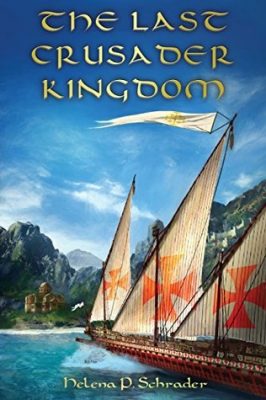
  • The LAST CRUSADER KINGDOM: DAWN of a DYNASTY in TWELFTH-CENTURY CYPRUS by Helena  P. Schrader

    The LAST CRUSADER KINGDOM: DAWN of a DYNASTY in TWELFTH-CENTURY CYPRUS by Helena P. Schrader

    In the Introduction and Acknowledgements section of her fascinating novel, The Last Crusader Kingdom: Dawn of a Dynasty in Twelfth-Century Cyprus, Helena P. Schrader notes that “. . . the historical basis for this novel is very thin,” and that the book serves as “a fictional depiction of events as I believe they could have happened.” Upon finishing the book, one concludes that only the rare reader would disagree with Schrader’s version of the historical events that comprise her narrative. Her comprehensive research and impressive scholarship are evident on every single page. This is a work of historical fiction, admittedly, but Schrader clearly was tireless in exhuming every possible detail to piece together as authentic a history of medieval Cyprus, 1193-1198, as possible.

    The establishment of a Latin Kingdom on the formerly Byzantine island of Cyprus in the late twelfth-century is as engrossing and intricate a chapter in history as possible, one that involved a plethora of cultures, religions, family dynasties, battles, treaties, and, inevitably, human greed and vanity. Schrader addresses both public and private lives and demonstrates how their intertwining shaped history. She considers all classes of society, from barons to beggars. It would be easy to get lost amongst the riveting and numerous details, but the author takes the reader by the hand and offers a guided tour to people, places, and events. The novel includes a Cast of Characters, Genealogical Charts for the Houses of Jerusalem, Lusignan, and Ibelin, as well as historical maps of Cyprus and the Outremer. Her Historical Notes underscore the depth of her research, and she also provides a glossary to orient the reader with historical and regional terms.

    Schrader matches her exhaustive research with a thoroughly captivating narrative. Her prose shimmers with elegant confidence and wit. The story traces how this strategically positioned island, formerly fraught with the greatest animosity between the inept and despised Frankish ruler, Guy de Lusignan, and the Greek Orthodox natives is pacified even after the influx of Latin immigrants.  How all this came about is as exciting and adventurous tale as anyone could imagine. Schrader pays keen attention to how power is grasped, nourished, and maintained, and her tale demonstrates the essential and timeless balance of politics, religion, economy, and public relations. Although the novel takes place in medieval times, much of it could serve as a primer for twenty-first-century global politics and diplomacy.

    One might expect the medieval world to be dominated by men, yet the author fully addresses the lives of women. Obviously siring male heirs was of importance in the twelfth century, but Schrader does not limit episodes involving female characters to pregnancy and birth. She emphasizes their role as astute advisers to their husbands and other male relations. The women understood that marriages were opportunities for strategic alliances and personal power. Queens and wives of public figures were keenly aware of the critical public relations roles they played in binding their subjects to the ruling families.

    The reader also learns a wealth of information on shipbuilding, irrigation, aqueducts, woodcarving, piracy, on and on.  The Last Crusader Kingdom is not just the story of key families ascending to power; it’s also an enlightening overview on the state of technology, the arts, and crime at the close of the twelfth century. The reader trusts Schrader’s depiction of events as accurate in large part because her meticulous research makes every scene vivid and memorable.  Schrader matches her exhaustive historical research with a thoroughly captivating narrative.  Her prose shimmers with elegant confidence and wit.

    Helena P. Schrader is an author who doesn’t just bring history to life but one who reminds us that each passing moment is also history. To understand the events reported on the front pages of today’s newspapers, there’s no greater teacher than the past. The Last Crusader Kingdom is filled with lessons we’d be foolish to neglect.

       5 Star Best Book Chanticleer Reviews round silver sticker

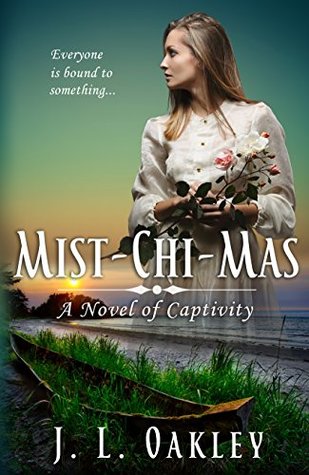
  • MIST-CHI-MAS by J.L. Oakley – Historical Fiction, Pacific Northwest, Literary

    MIST-CHI-MAS by J.L. Oakley – Historical Fiction, Pacific Northwest, Literary

    A masterful work of historical fiction that charts a deeply compelling romance set in the Pacific Northwest during the fascinating but under-reported second half of the nineteenth century. Award-winning author, Janet Oakley brings us another exceptional work from her heart, Mist-chi-mas: A Novel of Captivity.

    It is 1860 and Washington Territory is rich with a diversity of cultures. British and American military camps are posted on San Juan Island, both groups awaiting the decision of an international committee as to which country will be awarded the land. It will take more than a decade for the committee to determine what is to be the water boundary between Washington and British Columbia.

    Although a previous incident involving a shot pig almost instigated a war, at the start of the Mist-chi-mas, the two military encampments are respectful of the other’s turf and co-exist well.  There’s a bit of society in the area, ladies’ teas and picnics take place, and plenty of business dealings due to the ubiquitous presence of the Hudson Bay Company.

    In addition to the relative newcomers to the Pacific Northwest are the native peoples, a number of Indian tribes, the Haida, the Saanich, and the Songhees peoples, as well the “Kanakas,” the Hawaiians who have been here since the early nineteenth century. Attitudes toward the native peoples vary, with some being appreciative of their contributions to the shipping, trading and lime works industries, and others being condescending or outright violent towards them.

    The history of this area comes vividly to life through the romance of a widow, Jeannie Naughton, and Jonas Breed. Jeannie is the niece of the Scotsman, Archibald Campbell, a major representative of the Hudson Bay Company in the Pacific Northwest, and has arrived from England with her young son. Her reasons for beginning life anew in a foreign land are mysterious and mired in scandal.

    In contrast, everything is known about Jonas Breed, a man whose ethnic heritage and experiences reflect the geography and culture of the region. The orphan of an American trader in the South Pacific and a Welsh mother, he grew up speaking English and Hawaiian. As a youth, he was captured by the Haida and was made a “mist-chi-mas,” a slave.  After several years of servitude, he saves the life of his captor and his status changes.   He is grateful for all he has learned from the Haida, and when he asks for his freedom, it is granted. The Haida respect and trust him.

    Breed’s closest companions and friends are members of the tribal peoples, and he will prove his love and loyalty to them repeatedly. He’s as at home on land as he is on water, reads Ralph Waldo Emerson, and is certainly the most self-reliant character in the book. He may remind some of Natty Bumpo, James Fenimore Cooper’s hero in The Last of the Mohicans.

    The Americans and the British generally regard Breed with great admiration, although there are those who envy him and seek his downfall. In turn, someone threatens Jeannie with his knowledge of her hidden past. Despite this, Jeannie and Jonas find love but also tremendous danger at every turn. Jeannie comes to understand the truth of Breed’s words, “We are all mistchimas.” Some are enslaved by external forces, some by inner forces. Their relationship will prove to be as complicated and compelling as the historical events of the novel.

    J.L. Oakley deserves tremendous recognition for the clearly exhaustive and meticulous research she did in writing Mist-chi-mas. With writing so clear and vivid, Oakley brings time and place to life leaving readers captivated by her craft. She invokes the mountains and the waters with such descriptive beauty and fully creates her characters against this panoramic landscape that challenges and shapes them.

     Can love blossom between the most unlikely pair in a multi-cultural, tension-ripe environment? Author J.L. Oakley breathes life into an often forgotten part of Pacific Northwest history in her beautifully penned novel, Mist-chi-mas: A Novel of Captivity–destined to be a regional classic.

    5 Star Best Book Chanticleer Reviews round silver sticker


  • THE RABBI’S GIFT by Chuck Gould – Ancient Historical Fiction, Heartwarming Romance

    THE RABBI’S GIFT by Chuck Gould – Ancient Historical Fiction, Heartwarming Romance

    Faith and fact weave together in a beautifully rich tapestry of fiction and fantasy set in ancient times that presents plausible answers to long-standing mysteries in Chuck Gould’s The Rabbi’s Gift.

    When the wealthy merchant Eli encounters master builder Yakob and his impetuous son Yusuf in a dispute with the despotic ruler Herod, he intervenes, saving them by employing them to work on a project of his own. They will help construct a new mansion for Eli’s son, Aban, who is soon to be married.

    But what will become of Aban’s twin, Miriam? Miriam is the first-born and as custom demands, should marry first, but what man would want her? With her quick-wit, unconventional bent, and a strong rebellious streak, everyone knows she is unsuitable for the position of dutiful wife. Besides, every suitor her father presents to her, she stubbornly rejects.

    Yusuf and his father work diligently for Eli. Yusuf constructs stunning mosaic courtyard imbued with astrological and scientific significance. As the work continues, Miriam clandestinely assists Yusuf and before long, the two fall in love. Of course, such a match could never be. Miriam is wealthy, and Yusuf is only a humble tile setter. But, some prophecies and priestly visions are far more powerful than worldly considerations. What obstacles must be overcome to allow twists of faith, fate, and fortune to fall into place and open the door for the couple’s true and epic love?

    Author Chuck Gould has created a remarkable blend of Biblical characters, legends, and speculations in this star-crossed romance between Miriam and Yusuf. He depicts Miriam as a healer whose remedies are nothing short of miraculous, and Yusuf as an unschooled savant in mechanical, scientific, and philosophical knowledge. Gould also draws on a myriad of dramatic players – some of whom are firmly set in historical accounts, which serves to create a multiple viewpoint story, widening the scope of his novel without distracting the reader.

    Gould’s handling of this grand drama shows a true grasp of the writer’s craft. He deftly combines various elements from lore throughout his storytelling making The Rabbi’s Gift a powerfully rich tale. Using older spellings and secular text, along with Gould’s strategic planting of clues along the way, fortifies the story and draws the reader in.

    Babylonian astrology and Jewish mysticism combine with Roman history to create a timeless story of passion and fate in Chuck Gould’s The Rabbi’s Gift.

    5 Star Best Book Chanticleer Reviews round silver sticker

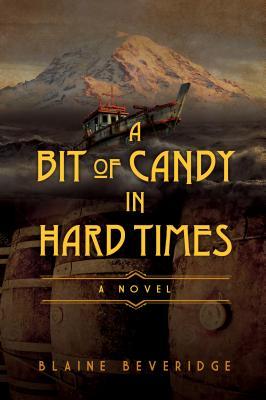
  • A BIT of CANDY in HARD TIMES by Blaine Beveridge – Historical Fiction, Political, Prohibition, Pacific Northwest

    A BIT of CANDY in HARD TIMES by Blaine Beveridge – Historical Fiction, Political, Prohibition, Pacific Northwest

    It’s midnight in May and Prohibition is the law of the land. A boat packed with Canadian liquor is racing through the waters off Portland, Maine, and a heavily-armed US Coast Guard Cutter is in hot pursuit—hungry for another kill. The smugglers are about to get paid for their sins—one way or another.

    Emmett Dougal has a penchant for working on boats the Coast Guard loves to shoot at. As he hits bottom and realizes he’s out of options, he returns to his home turf near Seattle weighed down by an identity crisis—Emmett’s a wanted man. Even his brother, a county sheriff, swears out a warrant against him. It’s hard to survive when you’re always looking over your shoulder, or your only skill sets involve fishing and smuggling. To make matters worse, he doesn’t even have a boat.

    Blaine Beveridge’s initial foray into the world of fiction is a winner with his smooth, confident, and engaging writing style. A Bit of Candy in Hard Times is set in a time where alcohol was illegal, but people wanted it more than ever and were willing to pay handsomely for it.

    Beveridge’s clever yet restrained use of syntax and vocabulary is smart, entertaining, and brings the settings, characters, and story alive, grabbing the reader immediately and never lets go. He displays real talent for crafting vivid, yet measured descriptions of the Puget Sound area, boats, fishing styles and equipment, residences of the poor to the affluent, and other items that resurrect the Prohibition era. Of note is his solid and consistent artistry crafting bright, vibrant scenes ranging from a ride at Coney Island, to a seedy bar where a man can buy bootleg beer, attending an opulent holiday celebration, or the grittiness of a dark, waterside warehouse filled with illegal liquor and suspicious clientele.

    The well-crafted characters are compellingly believable. As Beveridge trowels on the conflict his characters act, react, or rebel accordingly, adding delicious texture and tension to the story. Trust between parties can sometimes be measured in what remains in the bottle. The usual concrete line between right and wrong is about as real as the yellow brick road. Characters stagger between moral and immoral guided only by the immediate situation, mood, relationships, or the amount of money or liquor involved.

    Beveridge is an award-winning screenwriter, an alumnus of The Writer’s Program at UCLA, former Program Administrator for Film and Television at UCLA Extension, served as an executive board officer of the Pacific Northwest Writers Association, and a US Army Vietnam Veteran.

    A Bit of Candy in Hard Times starts with a bulls-eye and enthralls to the last page. It’s tough to put down, so arrange your schedule accordingly. You’ll be waiting for Beveridge’s next book.

    5 Star Best Book Chanticleer Reviews round silver sticker

  • DEATH of a DIVA: from BERLIN to BROADWAY by Brigitte Goldstein – Historical Fiction, Mystery, Thriller & Suspense

    DEATH of a DIVA: from BERLIN to BROADWAY by Brigitte Goldstein – Historical Fiction, Mystery, Thriller & Suspense

    An innocent man is charged with the murder of a stage diva in 1941. Misia Safran’s mission is to save him while unraveling the layers of a woman’s life she idolized, in Brigitte Goldstein’s exceptionally well-researched novel, Death of a Diva: From Berlin to Broadway.

    Misia Safran stops in a horrified state of shock in front of a newsstand, headlines reading: Stella Berger brutally murdered in her dressing room! Stella was Misia’s mentor, and as heartbroken as she is, the police are charging an innocent man in her murder and she must do everything in her power to save him.

    The police investigation begins when two New York City Police Officers take Misia into custody for questioning. The two detectives’ interrogation turns verbally abusive and threatening body language before she is finally released, remaining under suspicion as an accomplice. Her motivation to take every risk, investigate every clue, and follow every trail to the end anchors her determination to exonerate an innocent man, restore her good name, and punish the real villain who killed Stella Berger.

    The murder of Misia’s beloved Stage Star is the axle that turns the wheel of the story. Misia’s long journey begins, wading through uncertain relationships with friends (or are they foes?) and uncovering dark conspiracies. She examines each possible culprit for motive and studies their behavior throughout her search for the true killer. Energized during the eras of WWI and WWII, the murder mystery is rich in character studies, historical accounts, and plot twists.

    Misia Safran, a German Jewish immigrant, escaped the pending cruelties of Hitler, and experiences double doses of prejudice from a few in America. The Diva, Stella Berger, was also a German (but kept her Jewish heritage a secret) who had emigrated to America because of her open and vocal hatred of Hitler and the Nazis during her monologues after every stage performance.

    Brigitte Goldstein presents a sharp analysis of events from the big picture to the minute – often, stream of consciousness – detail, revealing her historical expertise and keen research skills. Readers who appreciate the intricacies of the English language and sophisticated prose will enjoy Goldstein’s work. A dictionary might enhance the enjoyment for some readers as the author does utilize German and French in her dialogue.

    The author’s unique style manages intricate character studies via mini-memoirs for each key player. The reader gains an understanding of their involvement, motivation and actions surrounding the winding twists of the tale, and their relationships to each other.

    The proof reading is near perfect and the story proceeds at a good pace and grips the reader—Death of a Diva is a mystery novel hard to put down. The resolution closes the case and though it may take time, we believe the damaged hearts might heal. Brigitte Goldstein is an author to watch.

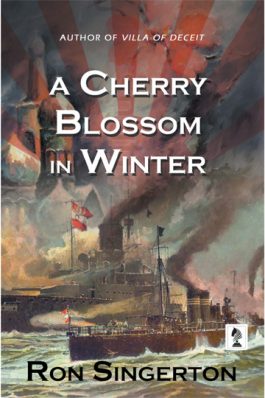
  • A CHERRY BLOSSOM in WINTER by Ron Singerton – Historical Fiction, Literary, War/Military, Romance

    A CHERRY BLOSSOM in WINTER by Ron Singerton – Historical Fiction, Literary, War/Military, Romance

    The story behind any war is a difficult one to tell. A Cherry Blossom in Winter by Ron Singerton takes us into not just one, but two, cultures at the turn of the last century in an attempt to show us both sides of a decisive naval conflict that would shape both countries and people for years to come.

    Alexei Brusilov is a young man destined for a talented future. He is bright and courageous, lightning-quick with a saber, and longs to join the Russian Naval Academy at the turn of the 20th century.  Like his father before him and many nobles of the Russian court of Tsar Nicholas II, Alexei sees his path as a military one, full of honor and discipline. Trouble always begins at home, however, as Alexei’s best friend becomes involved with Marxist revolutionaries ready to overthrow the Tsarist regime. Luckily, elements beyond his youthful control are in motion and before he can be caught for treason, Alexei will find himself in another world, another culture, and called upon to use all of his wits for the sake of love.

    Ron Singerton’s book, A Cherry Blossom in Winter, is a blending of historical and romantic fiction as we follow the young Russian Alexei to Japan and his first true test of manhood. He is there to accompany his father, Count Brusilov, a man of violent temper who disdains all things Japanese. But politics are politics, and all hints are pointing to a coming war between their two countries. It could be strategically important for young naval officers to understand Japanese in the near future, but Alexei’s goals are of a more personal nature. Readers will struggle with him as he attempts to make friends and learn the language, absorbed by the beauty and culture he sees. High Society, Religion, and Honor will all have different definitions by the time Alexei unexpectedly returns home.

    Yet the Moscow court and the Tsar have not been idle. A violent peasant revolution seems closer to reality all the time, as Alexei enters the Academy on the cusp of a family crisis. Everything seems to be on the verge of great, though not necessarily peaceful, change as the young man, now a brave naval cadet, attempts to finish school.

    In this way, Singerton’s book does a great job in presenting this pre-war time as one of both personal and national conflict.  History buffs need only go to the official record to discover the facts, the dates, and the battle locations of the Russo-Japanese war, but A Cherry Blossom in Winter works hard to make it a visceral experience. By pulling in the geopolitics of the beginning of the last century, along with developments such as the introduction of Marxist ideology, the near-collapse of Russian court nobility, anti-Jewish pogroms, the mistreatment of Russian peasants, and widespread anti-Asian sentiment, the overall effect is a slow-build to the climatic and brutal naval battle. Singerton’s use of the actual historic names for places, battle ships, and generals on both sides of the conflict also help the reader to feel right in the middle of that dangerous time. And yet the wartime reality is carefully balanced with not just one, but several love stories. Passion, whether for love or war, is keenly portrayed.

    Complex in its historical scope and list of characters, A Cherry Blossom in Winter is more successful in understanding men at war than the background love stories. This book won’t be for every romance reader as the plot points issue from exceptionally visceral entanglements – however, history buffs and those who love wartime epics will devour the read. Reminiscent of Puccini’s Madame Butterfly, readers will journey through an emotional landscape as dangerous as the raging battles themselves.

    5 Star Best Book Chanticleer Reviews round silver sticker

  • The TOWERS of TUSCANY by Carol Cram – Literary, Historical Fiction, Pre-Italian Renaissance

    The TOWERS of TUSCANY by Carol Cram – Literary, Historical Fiction, Pre-Italian Renaissance

    Powerful written and richly depicted, historical fiction novel, The Towers of Tuscany by Carol Cram brings to life 14th century Sophia, a talented artist who must find a way to continue her art in secret or have her life put in danger.

    “The bells for nones caught her by surprise…,” drawing Sofia’s mind away from the panel of the Nativity she is painting. She rises, steps over to the narrow tower window, and gazes out across the towers of San Gimignano, in central Tuscany. It is mid-afternoon of a day in March 1338.

    In little more than a page, Carol Cram’s expertly crafted prose transports us across time and space to Sofia’s world. But what we find is not exactly what we might have expected—at least, not I. Sofia is assailed by the pounding of hammers and clanging of iron tools deriving from the endless construction in this rapidly growing town. The air is filled with dust, causing her to squint. Her tower view is so filled with other towers that she has but a tiny, oblique view of the countryside beyond the city walls. She longs to escape the cacophony.

    Hearing her husband below, Sofia does not smile. He was once her Romeo, but not after their marriage. Now she longs to escape Giorgio’s brutish sexual assault on her body night after night, as well as his rigid control over her daily life. At this moment, his angry voice assaults her sensibility: “Wife! What the devil are you doing up there?” She gasps, fearful that Giorgio will learn she is painting and destroy her work! (In the fourteenth century, well-married women were forbidden to engage in “manual” activities.) She hurriedly wipes her hands and scrambles down the tower ladder.

    Thus begins the saga of Sofia, daughter of a master painter who, behind closed doors, taught her from early childhood how to draw and paint. Still in secret, she now works as his apprentice. While Maestro Antonio Barducci is often overtly critical of her work, he is aware that her skill might one day surpass his own, though how she could continue to employ it after he is gone is a quandary contemplated by both. That time arrives sooner than either expected when local political violence leads to Barducci’s death.

    Her father’s dying words reveal a way forward for Sofia, though it turns out to be not an easy one. Leaving Giorgio through subterfuge, she escapes to Siena disguised as a boy (named Sandro, from Alessandro), and her artistry continues in the painting workshop of her father’s friend, Maestro Manzini. Sofia/Sandro lives with few amenities and no small danger of discovery, which could end her life. But, she is painting again, and nothing else matters—at least not for the time being.

    Cram cleverly takes advantage of the workshop setting to share with us some of the techniques and practices of pre-Renaissance painting, which was usually done on wooden panels (carefully smoothed and prepared with gesso), rather than canvas. Paints were made with pigments from natural substances—usually plants—mixed with urine and other materials, some of them poisonous. Painting in 14th century Italy could be dangerous work! Certain techniques are described by Maestro Barducci, whose fatherly voice Sofia often hears in her head, guiding her work as well as her life.

    The best and worst parts of this dramatic, spellbinding work of historical fiction, with its many intriguing characters, deserves of your private reading—every word of it. Readers will find delight in a delicious love story, horror in a representation of the deadly bubonic (black) plague that decimated a large part of the European population of that time, and, in the end, a hint of peace and hope for the future.

    Carol Cram, the author of The Towers of Tuscany and A Woman of Note, is lauded for her skillful and colorful writing, intricate weaving of a many-faceted plot, and minute attention to the details of daily life in a Europe approaching the Renaissance—all in a read you’ll not forget.

    One woman clandestinely practices her art, risking not only her reputation but her life, in pre-renaissance Italy. Carol Cram presents a masterpiece in prose with historical fiction novel, The Towers of Tuscany. A must read!

    5 Star Best Book Chanticleer Reviews round silver sticker

  • A CROWDED HEART by Andrea McKenzie Raine – Literary, Historical Fiction, Veteran/PTSD

    A CROWDED HEART by Andrea McKenzie Raine – Literary, Historical Fiction, Veteran/PTSD

    Willis Hancocks survives fighting in Western Europe during World War II but faces continuing battles of the mind at war’s end in Andrea McKenzie Raine’s poignant study of the plight of the former soldier in her historical novel, A Crowded Heart.

    Willis decides to remain in London rather than return to his native Canada where his parents and sister live near Vancouver. Eager to put the war behind him, he marries Ellie, an intelligent young woman who has studied art at Cambridge University. Her affluent parents approve of Willis, and her father offers to finance his new son-in-law’s study of law at Cambridge. The newlyweds’ future could not look rosier.

    This is, however, the story of a man who is haunted by the terrors of the battlefield. Life cannot proceed smoothly for someone who wakes from sleep in terror, who is plagued by survivor guilt, anxiety, and depression. Willis struggles to find his footing but repeatedly fails as he fights personal battles with alcohol, infidelity, and deception.

    Admittedly, these are poor weapons of choice to face the daily struggle of postwar life, and although he has periods of relative calm and sobriety, his sins and regrets continue to multiply. He recognizes his inadequacies as a husband and a father of two sons, one born out of wedlock to a mistress. Although Willis manages to earn his degree in law and launch a practice with his war buddy, Sam, he is never victorious at achieving inner peace.

    Raine wisely expands the narrative of the novel to reveal the wide net of war. Willis is not the only victim; the people in his life experience the after-shocks of fighting as well. Ellie is a dutiful wife but she is alone in her marriage, painting in secret because she can’t share her work with her emotionally remote, often absent husband. Willis spends years away from his family in Canada, neglecting them, and returns only when summoned after his mother’s death. He doesn’t engage with either of his sons and arranges to abandon the younger one altogether. It’s clear that the war will leave its mark on the next generation as well.

    The ending of the novel is not surprising, but it is powerful and deeply affecting. One is left thinking of all the soldiers who escape death but are nonetheless robbed of their lives. Standing beside them are loving, distraught family members and friends, people who fervently hope for a cure – some miracle that will return traumatized veterans to their former selves. Not to give up on those who have already given up on themselves is the challenge. Raine reminds us that doing so requires a full heart, indeed, a crowded heart.

    5 Star Best Book Chanticleer Reviews round silver sticker