 We are excited and honored to officially announce the Grand Prize Winner and the First Place Category Winners for the 2017 GOETHE Book Awards for Post-1750s Historical Fiction Novels at the fifth annual Chanticleer Authors Conference and Chanticleer Book Awards Ceremony. This year’s ceremony and banquet were held on Saturday, April 21st, 2018 at the Hotel Bellwether by beautiful Bellingham Bay, Wash.
We want to thank all of those who entered and participated in the 2017 GOETHE Book Awards, a division of the Chanticleer International Book Awards.
When we receive the digital photographs from the Official CAC18 photographer, we will post them here and on the complete announcement that will list all the genres and the Overall Grand Prize Winner for the 2017 Chanticleer International Book Awards. Please check back!
Click here for the link to the 2017 GOETHE Shortlisters! An email will go out within three weeks to all Shortlisters with links to digital badges and how to order Shortlister stickers.
Congratulations to the 2017 GOETHE SHORTLISTERS!
Gregory Erich Phillips, the author of the 2014 Overall Grand Prize Winner, Love of Finished Years, announced the First Place Award Winners and the Grand Prize Winner for the 2017 GOETHE Book Awards at the Chanticleer Awards Banquet and Ceremony.
Congratulations to the First Place Category Winners of the 2017 GOETHE Book Awards.
An email will go out to all First Place Category Winners and Grand Prize Winners with more information, the timing of awarded reviews, links to digital badges, and more by May 21st, 2018 (four weeks after the awards ceremony). Please look for it.
2017 GOETHE Book Awards First in Category Winners for post-1750s Historical Fiction Novels are:
- A Cherry Blossom in Winter by Ron Singerton
- The Boy Who Danced With Rabbits by J.R. Collins
- Full Circle: A Refugee’s Tale by Joe Vitovec
- Fenian’s Trace by Sean P. Mahoney
- Paladin’s War by Peter Greene
- The Shape of the Atmosphere by Jessica Dainty
And now for the 2017 GOETHE Grand Prize Book Awards Winner for Post-1750s Historical Fictional Novels is:

Paladin’s War: The Adventures of Jonathan Moore
by Peter Greene
This post will be updated with photos from the awards ceremony. Please do visit it again!
The deadline to submit to the 2018 GOETHE Book Awards is June 30, 2018.
Our next Chanticleer International Book Awards Banquet will be held on Saturday, April 20th, 2019, for the 2018 winners. Enter your book or manuscript in a contest today!

 We are excited and honored to officially announce the Grand Prize Winner and the First Place Category Winners for the 2017 CHAUCER Book Awards for Pre-1750 Historical Fiction Novels at the fifth annual Chanticleer Authors Conference and Chanticleer Book Awards Ceremony. This year’s ceremony and banquet were held on Saturday, April 21st, 2018 at the Hotel Bellwether by beautiful Bellingham Bay, Wash.

 Here is a novel of utmost despair, but also the determination of the human spirit to do what is right and survive in the face of grave danger. Set in Northern Florida in the 1920s, A Seeping Wound by Darryl Wimberly centers on the nefarious activities of the Blue Turtle Turpentine Camp, one woman’s life in that camp, and a young veteran’s search for his missing sister.

 Brock Harker, World War II fighter pilot returns home to the Pacific Northwest on leave. He’s searching for a little peace once he finds his half Japanese wife who vanished while he was away. What he finds is Murder Beside The Salish Sea by author Jennifer Mueller, who artfully pulls Brock into an intriguing plot that hides the darkest of secrets.
 Mae Keaney is looking for a way back to her childhood, back to safety, and finds it in a property on Chappaquiddick Island. A wind-tattered cottage and an old boathouse she envisions as a café will be her haven, as long as she can keep her regrets and sorrows hidden.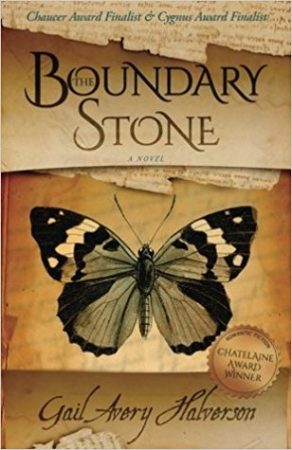
 Catherine Abbott has everything a young lady of quality could wish for in England, 1660’s. She lives on her father’s comfortable estate in the village of Wells, Buckinghamshire and she’s soon to be wed to Miles Houghton, a childhood friend recently returned from several years in France. For Miles, the wedding is just the ticket to free him from his rather large gambling debt. His heart isn’t in it, though, as he still yearns for the Parisian nightlife.
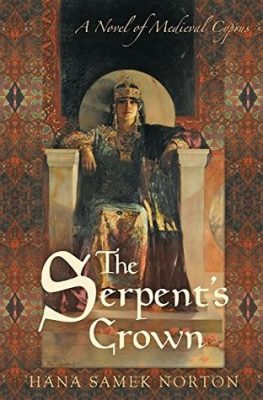
 Hana Samek Norton begins her epic and engrossing novel of historical fiction, The Serpent’s Crown; A Novel of Medieval Cyprus, with this quotation: “It sometimes happens that exploits, however, known and splendidly achieved, come, by length of time, to be less known to fame, or even forgotten among posterity.” (Itinerarum Peregrinorum et Gesta Regis Ricardi) How fortunate for readers, then, that the author brings to life a captivating chapter of history that occurred in Cyprus and Jerusalem in the early thirteenth century.
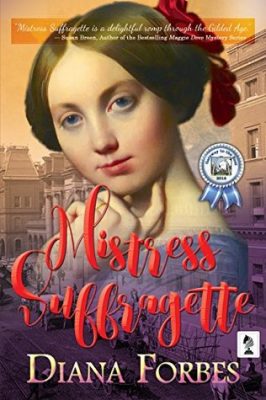
 Forbes: I am very structured. I am fortunate to have an office that is separate from where I live. I roll into the office at 9 a.m., trying to get in one full hour of reading before the day officially starts, so from 7:30 a.m.-8:30 a.m. Then I write from 9 a.m. until 3:30 p.m., trying to stay off social media and email completely. At 3:30 or so, I return all my emails and hop on social media. After that, I work till between 7 p.m. and 8 p.m. on marketing Mistress Suffragette.