Tag: Historical Fiction

  • 10 QUESTION INTERVIEW WITH MULTI-AWARD WINNING AUTHOR JANET OAKLEY – Author Interview, Historical Fiction, Award-Winner

    10 QUESTION INTERVIEW WITH MULTI-AWARD WINNING AUTHOR JANET OAKLEY – Author Interview, Historical Fiction, Award-Winner

    Janet Oakley is one of those authors who seems to show up everywhere – all at once! She’s won multiple awards and rightly so. Her novels and short stories are compelling, rich, and historically precise. She is a generous author and committed to her work. She knows what it takes to succeed in this business.

    Ladies and gentlemen, I give you multi-award winning author, Janet Oakley.

    Chanticleer: Tell us a little about yourself: How did you start writing?

    Oakley: I was born in D.C. and grew up Pittsburgh. It was a creative house with my mother a pianist, my dad a physicist. There was no TV in the house, so we pretty much used our imaginations. My parents both loved books and read to my brothers and I every night. The original Carnegie Library in downtown Pittsburgh was my haunt.

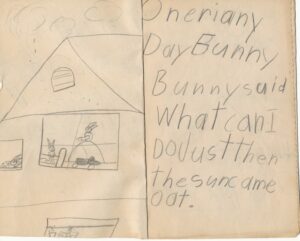
    Like many published authors, I started writing early—in second grade. My oeuvre was a series, illustrated by myself, called Funny Bunny.
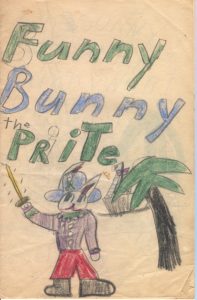
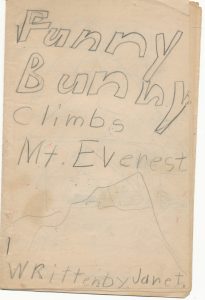
     

    In fifth grade, I wrote my first historical fiction, with questionable historical facts. In college when I majored in history, my writing became more serious as I learned to do research and write essays and articles. In my sophomore year, I got an internship at the Smithsonian Institute. I was given an office in the annex of the Library of Congress and spent a whole quarter going through early 19th century magazines and newspapers looking for images of Native Americans. I returned to D.C. my senior year to research my thesis on the Comanche Indians as Prisoners of War and after graduation, I was awarded a stipend to work in the Smithsonian’s Anthropology Archives. I worked there until I left for Hawaii the following year. This experience of doing research and writing in my early years led to writing my first novel, The Jossing Affair. I haven’t looked back.

    Chanticleer: That’s quite a rich growing up there, Janet.  When did you realize you that you were an author and not only a historian?

    Oakley: I spent nearly ten years pitching and query Jøssing and the other novels I was developing with little success but it wasn’t until I took a writing intensive class in 1999 at UW that I found a different way to publish and expressed myself– the personal essay. Though not one of my assignments at UW, the first thing I ever had published, other than some letters to the editor at my local newspaper, was an essay in Rugby Magazine, entitled, “On Being Rugby Mom.” I had started the essay on lunch break at UW. That success led to sending in essays to the Cup of Comfort series (part of the Writer’s Digest publishing house) I had five essays published in anthologies with titles like A Cup of Comfort for Women, A Cup of Comfort for Mothers and Sons and others. In 2006, I won first place at Surrey International Writers for my essay, “Drywall in the Time of Grief.”  I realized then that I could write material acceptable for publication and get edited by a great editor. (We’re still friends) Then I could say I was an author. When indie publishing came into being, I was ready to publish my novels.


    Chanticleer What genre best describes your work?

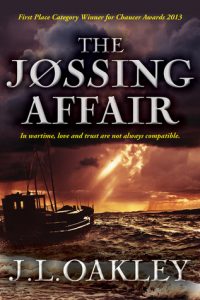
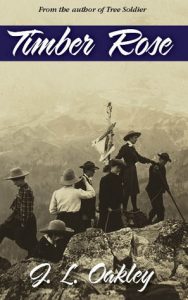
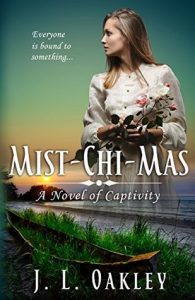
    Oakley: Historical fiction, for sure. I love history and those little known, often forgotten events in both local and international history. Like Hawaiians in the Pacific Northwest in the 19th century (Oakley’s novel Mist-Chi-Mas: A Novel of Captivity is a timeless and important story that addresses what life was like for Pacific Islanders in the PNW). Women climbing mountains in skirts in 1907 (Timber Rose is Oakley’s novel about the first women’s hiking club). These historical tidbits have become the background for several of my historical novels. Historical fiction, however, has many aspects to it and can fit into thrillers and mysteries.  My WWII novel, The Jøssing Affair, has been called a historical thriller and for the past three years, I have been writing mysteries set in Hawaii—a place I love—with some history in them. The Jøssing Affair was awarded the Goethe Book Awards Grand Prize  for Historical Fiction, a division of the Chanticleer Int’l Book Awards.
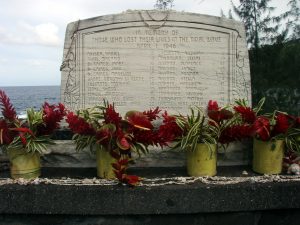
    Coconut Island for one. Its historical background rests on the 1946 April Fools Day tsunami that wiped out Hilo. I got an inkling of its destruction and loss of life while teaching at Hilo Adult School—one of my students, a 4th-grade teacher, was a survivor. It wasn’t until I researched the tsunami for Coconut Island, did I learn its full impact: 96 people lost, homes and businesses destroyed. The tsunami arrived from the Aleutian Islands in under 5 hours. History has its own compelling storyline which I love to set my characters in and see how they do. Even in a mystery. I can’t seem to get history out of anything I write!

    Chanticleer:  So even your mysteries have a strong vein of historical running through them. Can you tell us a little more about that? 

    Oakley: Curiosity and family stories of homesteading in Kansas, Indian Territory and the NW in the late 1800s got me hooked on history. I grew up on stories of one great-grandfather who was a Union surgeon at the Battle of Gettysburg, another great-grandfather in the 1870s Hayden expedition to Yellowstone. My great-grandmother saw Lincoln on his way to his inauguration, then later went out to Kansas where her parents taught at Shawnee Mission. I’ve always wondered about people who lived in different times. What type of technology did they have available? How did they manage with their technology? What their lives were like without our modern conveniences. What made them succeed, be happy in life? My mom also influenced me as she loved history and love historical fiction herself.

    Chanticleer: How does being an author affect your involvement in your community?

    Oakley: Writing historical fiction has opened opportunities to talk about the history behind my novels. The Jøssing Affair, set in Norway during WWII, has been a popular book club choice as we have a large community of Scandinavians in the state, but I think my first published novel, Tree Soldier, has a more important impact.
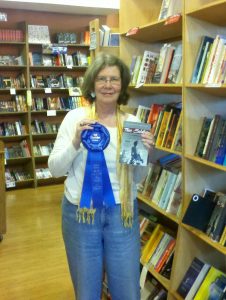
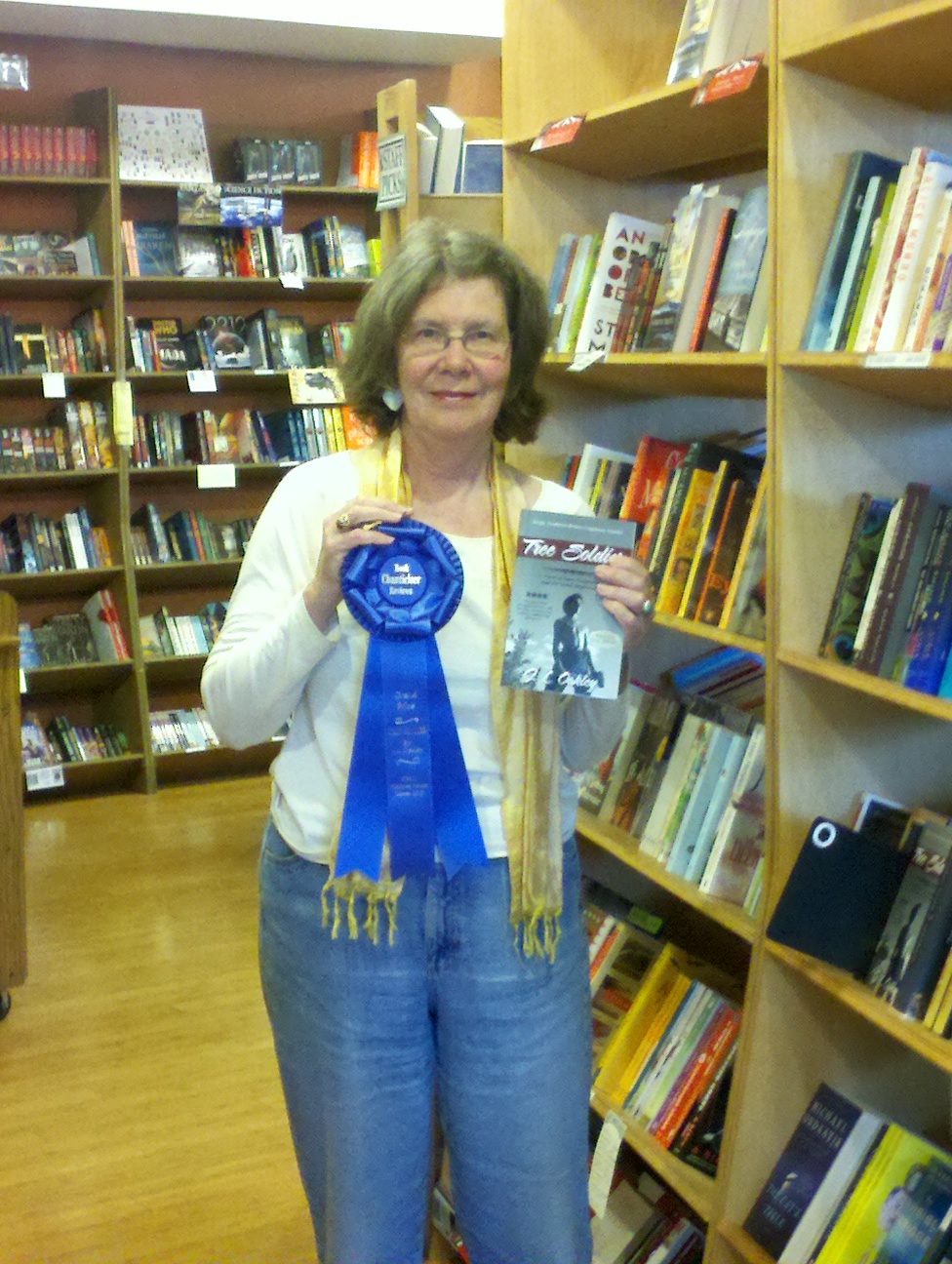
    Janet Oakley at Village Books with her Chanticleer Grand Prize Ribbon

    I grew up listening to my mother’s stories of the Civilian Conservation Corps boys from New Jersey who showed up at Lowman, ID in 1933. Part of the New Deal was to put young men back to work in environmental projects, these young men had been lifted out of their block in Jersey City and sent West. Tree Soldier came as a result of my need for a history paper for my Master’s in Elementary Education. I interviewed five gentlemen who had been in the CCC. I began to present talks on the CCC and in 2013 was accepted into the Washington Humanities program. For two years, I went around Washington State talking about the CCC in Washington State (1933-1941) each time before I went to a new community, I researched the camps in their area and added the findings to my talk. Then Tree Soldier was awarded the Chanticleer Grand Prize for Best Book. A presentation in Clarkston, WA led to an invitation to have Tree Soldier be selected as an Everybody Read for the Palouse area in both Washington and Idaho. What an honor! And a learning experience on how to present and engage with readers in the libraries. Not much later, Tree Soldier was again a book read for four libraries on the Olympic Peninsula.

    I think the thing I am most proud of is being behind the installation of a CCC worker statue at Glacier Washington ranger station. As an educator, for me, this statue from a national CCC program, helps visitors to the Mount Baker National Forest learn and appreciate the work of out-of-work boys from long ago. When we dedicated the statue on June 16th, a 98-year-old CCC boy from Camp Glacier came. It was so wonderful to see the attention he received. Since then a 96-year-old CCC boy has contacted me through his granddaughter. I hope to meet him soon.

    Chanticleer: Good work, Janet! What are you working on now? What can we look forward to seeing next from you?

    Oakley: I’m working on the sequel to The Jøssing Affair, set in Norway a year after WWII. Rewriting my Kindle World mystery novellas and publishing them as Hilo Bay Mysteries. Once the third book is complete, I plan to do a boxset both in ebook and paperback.

    Chanticleer: Can’t wait to see where this book takes you. It’s important to work on your craft. What do you do to grow your author chops?

    Oakley: I write every day, usually in the morning starting at 8:00 AM. I belong to several writers groups, including a critique (going for 16 years now) and I am a member of the Independent Writers Studio where I work on WIPs with a wonderful editor and other members.

    Chanticleer: That seems to be more than a simple commitment – it’s a way of life! Good for you. What craft books have helped you the most?

    Oakley: Better than craft books, I have been taking classes from the authors and well-writing teachers such as Donald Maas on and off for over 25 years, Diana Gabaldon, Robert Dugoni and many other fine writers and teachers. Usually at conferences.

    Chanticleer: What is the most important thing a reader can do for an author?

    Oakley: Write a review on Amazon. It carries more weight than any other review site. Books need reviews in this crowded publishing world.

    Chanticleer: Good point. What do you do when you’re not writing? Tells us a little about your hobbies.

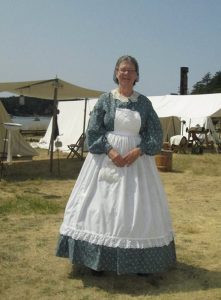
    Oakley: For the past 35 years, I have researched and then taught hands-on history workshops to at schools children through Allied Arts and on my own and at a county museum. I wrote several social studies curriculum for Whatcom County schools and a national park. Following the publication of the curriculum for the San Juan Island National Historical Park in 1995, I began to give demonstrations on 19th-century foodways there. Soon I joined English Encampment, an annual gathering of reenactors at the national park as Miss Libby, an 1860 schoolmarm. Great fun! I also garden. Like words, the flowers and veggies need nurturing.
    Chanticleer: Thank you for being with us, Janet Oakley. You are an inspiration and your passion is contagious!


    Now, it’s your turn to show your support! Please find and follow Janet as she shares her writing, life, and insight into living a successful author-life.

    You can find her here:

    Facebook:  https://www.facebook.com/janet.oakley.12

    Website: https://www.jloakleyauthor.com/ 

    If you would like to read Oakley’s books, here is a list of her titles can be found at Village Books, Barnes Nobles, or by clicking on the Amazon links below:

    Timber Rose

    Tree Soldier

    Mist-chi-mas: A Novel of Captivity

    The Jossing Affair

    The Hilo Bay Mysteries:

    Coconut Island

    Hilina Pali

    Volcano House


  • The TRAITOR’S NOOSE, Lions and Lilies, Book 4 by Catherine A. Wilson – Historical Fiction, Medieval, Romance

    The TRAITOR’S NOOSE, Lions and Lilies, Book 4 by Catherine A. Wilson – Historical Fiction, Medieval, Romance

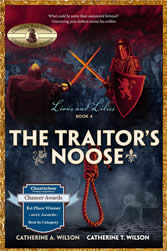
    Chaucer Grand Prize Winner Badge for The TRAITOR'S NOOSE by Catherine A. WilsonFans of this widely admired and masterfully written series, Lions and Lilies, will not be disappointed with its concluding, volume, The Traitor’s Noose. The impressive scholarship, riveting dramatic scenes, and sweet romances that characterized the previous books are on full display here as well. The co-authors note, “…this is not a historic account but a ‘medieval adventure with a dash of romance, using history as its background. We have tried at all times to remain faithful and accurate to that history, but it is a fictional story.”  Nonetheless, the reader need only review the lengthy bibliography included to gain a sense of the breadth of work the authors undertook to put this magnificent story on the page.

    Set mainly in England and France during the 14th century, the main characters are Lady Cecile de Bellegarde, Catherine Marshall, and their husbands. Catherine and Cecile, twin sisters separated at birth, have forged a bond that no person or event can break. While they live in different nations, Catherine in England and Cecile in France, their lives have many parallels. They are both married to courageous but unjustly maligned knights. Simon Marshall and Gillet de Bellegarde love their wives deeply, seek to protect them at all costs, and avenge any harm or cruelty done to them. That does not mean that they will readily divulge their fears to their spouses or recount the horrifying episodes they have survived, however.

    Catherine is aware that Simon is under suspicion for murder, she knows her husband’s melancholy and reserve are caused by deeper worries. While Gillet experiences traumas on and off the battlefields from his involvement in the campaign to reclaim Brignais and rid France of routiers (mercenary soldiers.)

    The husbands have their secrets and the sisters will share their marital woes with one another via a correspondence that beautifully dovetails the major events taking place in England and France. When finally apprised of what their husbands have been facing – blackmail, extortion, incarceration, and torture – they not only stand by their spouses but play key roles in extricating them from the darkest of situations. Amongst royals and routiers, there is no end of conniving, jealousy, brutality, and treason. One must understand the game to outplay enemies, and the sisters will do whatever is necessary to have their husbands by their sides. But who is the true traitor and whose neck should be lassoed with the noose? The authors weave a rich and intricate plot, every strand shimmering with suspense and romance.

    Along the way, readers will delight in the details provided of everyday medieval life. The authors’ attention to dress, food, architecture, and language bring the late Middle Ages alive as the main characters experience opulence during the heralded era of knighthood and chivalry. (Oh, to be attired in an exquisitely embroidered gown, hair held in place by a headdress and veil! Or to be lifting a goblet of wine at a sumptuous feast held in lavish quarters in Windsor Castle or Orthez Castle!)

    The darker side of medieval life is also examined, however; details of incarceration and of torture via racks and pins in fingers will likely send shivers down readers’ spines. A fascinating section of the book deals with apothecary science, the wonders, and horrors that can be wrought with oils and herbs. Anyone with a love for all things medieval must read this book and, indeed, the entire series.

    While the ending of the novel is most satisfying, it’s also bittersweet. It’s hard to say good-bye to these captivating characters and close the book on the 14th century. How wonderful, then, to turn the page and discover that the authors have provided a sneak peek of the first volume in their second series! Stay tuned for Roar of the Lion. The adventure continues!

    Traitor’s Noose, Book 4 of the Lions and Lilies series won Grand Prize in the 2017 Chaucer Awards. 


  • PALADIN’S WAR, The Adventures of Jonathan Moore, Book 3 by Peter Greene – Historical Fiction, Y/A Action/Adventure, 19th Century

    PALADIN’S WAR, The Adventures of Jonathan Moore, Book 3 by Peter Greene – Historical Fiction, Y/A Action/Adventure, 19th Century

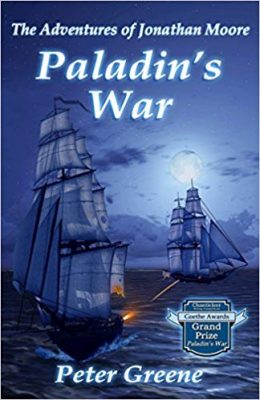
    Grand Prize Winner for Goethe Awards: Paladin's War by Peter GreeneThe magic of living in 19th century England comes to life in the early chapters of Peter Greene’s delightful, but also exciting, story—with British Navy Midshipman Jonathan Moore and daughter of the Governor of the Bahamas, Delain Dowdeswell, enjoying the fashionable new treat of ice cream, then joining their friends and family members at the boat race in Dover on a beautiful day. Granted, that wasn’t how everyone lived, and even these special few lived daily lives far less comfortable than do most ordinary people today. But they didn’t know that.

    Jonathan is the son of Admiral Nathaniel Moore, who had been imprisoned in France during the Napoleonic wars. This happenstance orphaned the boy, who lived a sorry few years on the streets of London until he was found by his father’s friend, Captain Walker. The admiral was eventually rescued, and he and Jonathan were reunited. Delain and her sisters, Penelope and Rebecca, had been sent by their parents to live with the Walkers, who, with the help of Barbara Thompson, were tasked with teaching the sisters to become ladies. That seems unlikely for the irrepressible, fourteen-year-old adventuress, Delain, who once stowed away on the HMS Poseidon, from which she fired more than one cannon shot in battle!

    Shortly after the race at Dover, however, the young midshipman, also fourteen, boards the HMS Paladin, along with his former street friend Sean Flagon, soon to become a Marine captain, board the HMS Paladin, leaving their friend Delain behind as they head straight into an adventure way beyond their expectations. Not surprisingly, Delain soon finds herself in a spy adventure right in London. And perhaps not so strangely for these three musketeers, their adventures overlap.

    Greene paints not only the scenes in London but those on the Mediterranean, the Adriatic, and even the Black Sea with vivid color and action. He allows us to experience life on the sailing ships of His Majesty’s Royal Navy, telling us what the officers and crew wear, what they eat, where they sleep, how they talk, and especially what they do. As Peter Greene writes in his Acknowledgments, he “hoped to create a series that would capture the excitement and thrill of being on one of His Majesty’s wind-powered warships in the [Lord] Nelson era.”

    The action on the HMS Paladin, as well as her sister ship, the HMS Echo, mostly unbeknownst to each other, rise to a fever pitch as they find themselves engaged in an explosive battle not with the French, but with the Russians and even the Turks! As you might guess from the overall tone of Greene’s story, the British, at least most of them, live to return to England.

    This book was such fun to read. I’m hoping Peter Greene will give us a Book Four. Meanwhile, those who haven’t read Books 1 and 2 of The Adventures of Jonathan Moore, Warship Poseidon, and Castle of Fire, as well as a number of earlier books, will have some good reading to tide them over.

    5 Star Best Book Chanticleer Reviews round silver sticker


  • The SUGAR MERCHANT by James Hutson-Wiley – Medieval, Historical Fiction, Spy & Church

    The SUGAR MERCHANT by James Hutson-Wiley – Medieval, Historical Fiction, Spy & Church

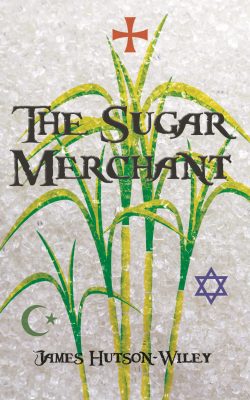
    Narrated by a boy who grows up in a monastery and is trained to be a spy, The Sugar Merchant is set in the late 11th Century when the Great Crusades were on the verge of erupting in Europe and the Middle East.

    When Thomas is forced to flee after rebels attack his family, he is finally discovered, ragged and starving, by a giant of a man named Leofric. Taken under the wing of the monks at Eynsham Abbey, Thomas is educated while accepting the strict discipline of the Benedictine order. In his late teens, he is surprised and disappointed to learn he will not join the Order but will be employed as an agent and spy. His task will be to find, secretly copy and send back manuscripts written by Islamic scholars. These documents contain knowledge that the Catholic Church needs to maintain its control.

    Accompanied by Leofric, who taught him the arts of war based on his own checkered past as a mercenary, Thomas travels to Spain, to the city of Granada (called Gharnatah at the time). His travels will take him through the known Catholic realms and beyond, and, paradoxically, afford him the chance to meet, befriend and be aided in the abbey’s mission by good men of other faiths, both Muslim and Jew. As a cover for his work for Eynsham, he adopts a persona as a merchant of sukkar, or sugar, a commodity that will soon have excellent trading value. When a beautiful Muslim girl crosses his path, all that he has been taught will come into question as he strives to do what he believes to be right.

    James Hutson-Wiley writes about places he knows, having traveled in the Near East and Europe in his career in international finance. And he has obviously done extensive and intensive historical research to compose this multi-layered story. The plot, and Thomas’s peregrinations through it, encompasses subjects as vast and diversified as the burgeoning sugar trade to the hierarchy of the Catholic Church.

    The author paints a vivid picture of such ancient places as Lundenburh (London), Al Mariya (Almeria) and Granada. But he has also created an empathetic hero in the young Thomas who, without the burden of bias though mindful of his moral duty, is able to see beyond religious differences and choose genuine friendships with people of other beliefs.

    The Sugar Merchant combines medieval lore with adventures on land and sea, stirring romance, arcane information about daily life in Europe in with the time frame, and all-encompassing religious tolerance that has significance for today’s world.


  • The SEMI-FINALISTS for the 2018 GOETHE BOOK AWARDS for Post 1750s Historical Fiction

    The SEMI-FINALISTS for the 2018 GOETHE BOOK AWARDS for Post 1750s Historical Fiction

    Post 1750s Historical Fiction AwardThe Goethe Book Awards recognize emerging new talent and outstanding works in the genre of Late Historical Fiction set after the 1750s. The Goethe Book  Awards is a genre division of Chanticleer International Book Awards (#CIBA).



    Chanticleer Book Reviews is looking for the best books featuring Late Period Historical Fiction. Regency, Victorian,18th Century, 19th Century, 20th Century, World and other wars, history of non-western cultures, set after the 1750s, we will put them to the test and choose the best among them. (Looking for Chaucer Pre-1750 Book Awards or Laramie Western/Pioneer/Civil War Book Awards, just click on the links.)

    These Semi-Finalists will compete for the coveted five positions of the First  Place Category Winners of the 2018 GOETHE Book Awards in the final rounds of judging.  The First Place Category winners will automatically be entered into the Goethe GRAND PRIZE AWARD competition.  The 16 CBR Grand Prize Genre Winners will compete for the CBR Overall Grand Prize for Best Book and its $1,000 purse. First Place Category and Grand Prize Awards will be announced and recognized at the Chanticleer Awards Banquet and Ceremony on Saturday, April 27th, 2019, Bellingham, Washington.

    These titles are in the running for the limited First Place positions of the 2018 GOETHE Book Awards novel competition for post-1750s Post Historical Novels.

    All Semi-Finalists will be recognized at the 2019 Chanticleer Authors Conference and CIBA Banquet & Ceremony.

    Good luck to all in these next final rounds of judging to see which titles will move forward.

    CONGRATULATIONS to:

    • Carol M. Cram – The Muse of Fire
    • J.L. Oakley – Mist-chi-mas: A Novel of Captivity
    • J. R. Collins – Living Where the Rabbits Dance
    • Jocelyn Cullity – Amah & the Silk-Winged Pigeons
    • Ellen Notbohm – The River by Starlight
    • Richard Alan –  A Female Doctor in the Civil War 
    • Josanna Thompson – A Maiden’s Honor
    • Rosalind Spitzer – Anna’s Home
    • Jeffrey K. Walker – None of Us the Same
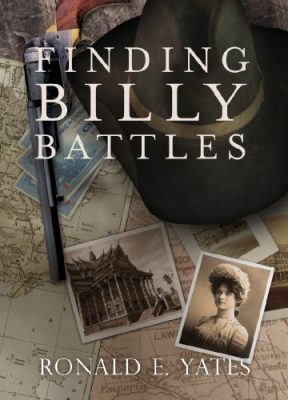
    • Ronald E. Yates – The Lost Years of Billy Battles (Book 3, Finding Billy Battles Trilogy)
    • Kit Sergeant – 355: The Women of Washington’s Spy Ring
    • R. S. Rowland – Portrait of a Bitter Spy
    • Ruth Hull Chatlien – Blood Moon: A Captive’s Tale
    • John Hansen – Unfortunate Words
    • Patricia Suprenant – Behind the Scarlet Letter
    • Michelle Cox – A Promise Given 
    • Tom Edwards – Jane Sinclair
    • K. M. Sandrick – The Pear Tree

    All Short Listers and SemiFinalists will receive high visibility along with special badges to wear during the Chanticleer Authors Conference and Awards Gala.

    Good Luck to each of you as your works competes for the 2018 GOETHE  Book Awards First Place positions and the Goethe 2018 Grand Prize.  

    To view the 2017 Goethe Book Awards winners, please click here.

    The Goethe Grand Prize Winner and the First Place Category Position award winners will be announced at the April 27th, 2019 Chanticleer Book Awards Annual Awards Gala, which takes place at the Chanticleer Authors Conference that will be held in Bellingham, Wash. 

    We are now accepting submissions into the 2019 GOETHE Book Awards writing competition. The deadline for submissions is June 30th, 2019. Please click here for more information. 

    As always, please do not hesitate to contact us with any questions, concerns, or suggestions at Info@ChantiReviews.com. 

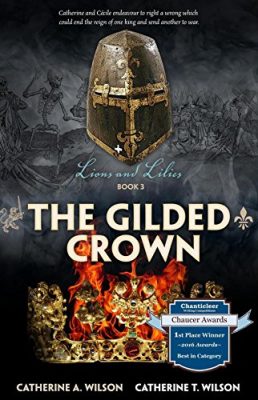
  • THE GILDED CROWN – Book 3, Lions and Lilies Saga by Catherine T. Wilson and Catherine A. Wilson – Medieval Europe, Historical Fiction, Romance

    THE GILDED CROWN – Book 3, Lions and Lilies Saga by Catherine T. Wilson and Catherine A. Wilson – Medieval Europe, Historical Fiction, Romance

    Cécile d’Armagnac and Catherine Pembroke first found each other through letters. The sisters then battled complications while on the run— Cécile, pregnant with a baby from Edward, the Black Prince, a relationship consummated to save her sister, fled with Gillet de Bellegarde, a disgraced knight she grew to love. Meanwhile, Catherine fell for the ever-shy Lord Simon Marshall of Wexford, and together, they managed to escape the Earl of Salisbury and his deadly schemes.

    Now, in The Gilded Crown, both sisters are happily married to their respective suitors. The mission that Gillet was presented in The Order of the Lily must now come to fruition while he resides in an English-occupied France. Meanwhile, Cécile strives to ensure the world, especially a mysterious woman named Adéle, does not find out baby Jean Petit is actually the rightful heir of Edward. Catherine, meanwhile, in Edinburgh after the safe return of Lady Scotland, is still fostering baby Gabriel, the son of her former maid, Anaïs. However, Catherine discovers a surprise of her own: she’s pregnant with Simon’s child.

    Like the other books in the series, the two sisters and their journeys, though taken separately, intertwine in unexpected ways. The Duc Jean de Berri, Cécile’s former suitor, hopes to convince Gillet to entice the Albrets of Bordeaux back to a French throne. Unfortunately, he also assaults Cécile as soon as Gillet leaves. Cécile’s misfortune continues on the way to Bordeaux–she nearly loses her cousin Armand-Amanieu d’Albret to the Black Plague, is captured by no other than the mysterious Adéle, who in turn, kidnaps Jean Petit and takes him to Scotland. In Scotland, meanwhile, Catherine has gotten to know Lady Agnes Dunbar (also known as Black Agnes) and discovers they share a common enemy. The question is whether this foe can be stopped—and if Jean Petit can be kept from danger.

    Catherine and Cécile are forced to further develop the maturity they sharpened in the previous books—but this time, with unexpected losses. Their paths remain uncertain, and it’s unclear where the next book in the series, The Traitor’s Noose, will take them.

    The authors are very skilled at weaving in authentic historical texture to an engaging plot with a lot of unexpected twists. The historical realities, including the treatment of women, like in the previous installments, is very brutal—particularly Cécile’s assault and capture. These parts of the plot can, at times, weigh the story down; however, they also add a visceral element of suspense. The book is not without its light-hearted moments either, particularly in the playful banter between brothers Roderick and Simon, and the very Scottish maid, dubbed, ‘English Mary.’ Readers will also delight in seeing pet antics between Cécile’s cats and an unprepared papillon—indicating that the authors’ authenticity stretches beyond historical accuracy.

    This series is suited to a historical fiction audience looking for an authentic dip into Medieval European life. However, to get the full impact of the overall story arc, readers will do well to start with the first two books in the series before getting their hands on this one.

  • INFANTS OF THE BRUSH – A Chimney Sweep’s Story by A.M. Watson – Historical Fiction, Chimney Sweep/Child Labor, Georgian Era

    INFANTS OF THE BRUSH – A Chimney Sweep’s Story by A.M. Watson – Historical Fiction, Chimney Sweep/Child Labor, Georgian Era

    A little boy is sold into an apprenticeship as a chimney sweep in eighteenth-century London, and soon learns the horrors of that profession.

    Six-year-old Egan lost his father from an accident at sea, and now, may lose his little sister from illness. The only way his penniless mother can save her daughter is to sell Egan into an apprenticeship in order to purchase medicine. As a small boy, he will make an ideal “broomer;” a businessman named Armory gladly takes Egan into the fold. Under Armory’s absolute dictatorship he will sleep with other wretched boys on soot sacks, eat gruel, get bloody beatings for the slightest infraction, and risk his life almost daily.

    One small comfort is an older boy named Pitt who empathizes with the new boy’s homesickness and instructs him, strictly but not unkindly, in the tricks of the trade. The lads find ways to cheat Armory when possible, striving to save up money to buy themselves out of his domination. But the dangers are real and terrifying. Broomers work inside chimneys and on rooftops, sometimes naked to make themselves even smaller in order to fit inside flues as confining as nine by nine inches. Many a boy, Egan learns, has been burned to death or horribly disfigured, crippled for life or asphyxiated inhaling poisonous gasses.

    The only protection the boys receive is a periodic bath with brushes and brine to “toughen” their skin. When Egan finds a valuable piece of jewelry, he believes he has a way out. But to make it happen he must deal with a larcenous silversmith, and in the end, finds himself dependent on the greedy Armory for assistance.

    Debut novelist Watson was drawn to compose this gripping tale when she studied a 1722 legal case – Armory v. Delamirie – on which she has based Infants of the Brush. She felt compelled to examine the conditions endured by chimney sweeps, most of them children, in that era; her fictional hero Egan and his cohort emerged from that research. She depicts the London street scene with an ear for the dialect and an eye for the unsavory aspects that made life for all poor people at the time depressing and disastrous. An occasional visit by the sweeps to a grand home shows the contrast; Watson writes of an instance when a rich boy sees Egan and runs screaming from the room. There are some kind faces, though, such as the church folk Egan encounters one lonely Christmas and a sympathetic sea captain who is able to change his circumstances for the better.

    Watson, a teacher and an attorney, has clearly made a serious investigation into the general conditions of London in 1720, regulations regarding chimney cleaning, monetary values and other vital elements needed to construct this vibrant story. The characters of Egan, Pitt, Armory, and others are skillfully drawn, and the harrowing images of young children forced into brutal, life-threatening labor are unforgettable.

    Infants of the Brush offers a disturbing but elucidating glimpse into a time and place when, even in a civilized country, poor children’s lives were shockingly undervalued, and their labor exploited. In the author’s skillful hands, though, there is a welcome ray of hope shining through to the conclusion of this haunting saga.


  • PASSAGE HOME to MEUSE by Gail Noble-Sanderson – Historical Romance, Post-WWII, Literary

    PASSAGE HOME to MEUSE by Gail Noble-Sanderson – Historical Romance, Post-WWII, Literary

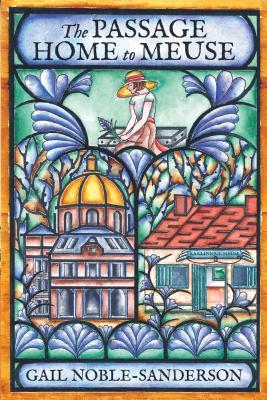
    It’s 1923 and character Marie Durant Chagall is now 27 years old as she tells about her life-altering events in The Passage Home to Meuse, thanks to author Gayle Noble-Sanderson. This is the second historical novel in the Meuse Trilogy. The world around Marie is still reeling from the devastation of World War I. She and the other characters in the book are learning how to continue living, and perhaps more importantly, wishing to find joy once again in life.

    Marie is at home in France, seeking peace within, as well as for those around her. She looks for ways to help others who are in need, and her nursing skills come in handy to help this farming community. Nearby she’s found a sense of belonging with the Sisters at the Chapel, and her friendships continue with Henri and others.

    Under pressure of a persistent letter campaign from her father and her sister Solange, Marie consents to take a voyage from France to New York to visit them, not realizing she’ll discover a secret that awaits her there. Sailing on the incredibly luxurious SS Paris is an exciting trip filled with unexpected experiences, interesting people, and new friends. The author takes the time to engage the reader in the beauty of this voyage. Upon arrival in New York, the contrast of post-war Europe and America is striking, skillfully portrayed, and thought-provoking. After a visit filled with surprises, the journey home propels Marie into grand plans for her future, but will she be able to turn those into reality?

    The author’s extensive research of this historical period permeates every page. Additional notes from her research at the end of the book present fascinating insights into the period. The writing in the novel is charming, and the expansive descriptions of both settings and events ignite the reader’s imagination. All the characters jump off the pages with their hopes and dreams, and even their fears bringing great dimension to their personalities.

    Author Gail Noble-Sanderson is a speech-language pathologist who has published many educational programs for children with special needs. Fortunately for historical fiction readers, she decided to turn her attention to this genre.

    The Passage Home to Meuse is an epic journey back to the post-war world of the 1920’s. Wistfully Marie wonders, “What might have been, what would have been had the war not torn us all apart, rupturing the very soul of our lives?” Somehow she and those around her must find meaning in life again. Every aspect of human nature and the desire to rebuild is explored in this novel, including rebuilding family, whether blood or chosen. Ultimately, Noble-Sanderson explores whether love can indeed conquer all.

    Gail Noble-Sanderson won 1st Place in the 2017 CHATELAINE Awards for The Passage Home to Meuse.


  • CHAUCER Book Awards for Pre-1750s Historical Fiction – The SHORTLIST  for 2018  the CIBAs

    CHAUCER Book Awards for Pre-1750s Historical Fiction – The SHORTLIST for 2018 the CIBAs

    Pre 1750 Historical Fiction AwardThe CHAUCER   Book Awards recognize emerging new talent and outstanding works in the genre of  pre-1750s Historical Fiction. The CHAUCER Book Awards is a genre division of Chanticleer International Book Awards and Novel Competitions ( The #CIBAs).


    These titles have moved forward in the judging rounds to the 2018 CHAUCER Book Awards SHORT LIST. These entries are now in competition for the limited 2018 CHAUCER  Semi-Finalists from which the First Place Category Positions will be chosen. The CHAUCER Book Awards Semi-Finalists and First Place Positions along with the CHAUCER Grand Prize Award Winner will be announced at the Awards Gala on Saturday, April 27th, 2019. 

    Chanticleer Book Reviews is seeking for the best books featuring Pre-1750s Historical Fiction, including pre-history, ancient history, Classical, world history (non-western culture), Dark Ages and Medieval Europe, Renaissance, Elizabethan, Tudor, 1600s, we will put them to the test and choose the best among them. (Looking for Goethe Post 1750 contest or Laramie Western/Pioneer/Civil War contest?)

    These titles are in the running for the next round – the SEMI-Finalist positions for the 2018  CHAUCER  Book Awards novel competition for pre-1750s Historical Fiction. Good Luck to All!

    • Nicole Evelina – Mistress of Legend (Guinevere’s Tale Book 3)
    • Robert Wright – King David’s Lost Crown, Book 1 Before They Awaken Trilogy
    • Prue Batten – Michael – Book 3 of the Triptych Chronicle
    • Edward Rickford – The Serpent and the Eagle
    • Bernard Mann – David & Avshalom — Life and Death in the Forest of Angels
    • Brett Savill – Medici Apprentice
    • Gregory Hansen – Pelsaert’s Nightmare
    • P.K. Adams – The Greenest Branch, a Novel of Germany’s First Female Physician
    • Amy Wolf – A Woman of the Road
    • Eileen Stephenson – Imperial Passions – The Porta Aurea
    • Helena P. Schrader – Rebels against Tyranny: Civil War in the Crusader States
    • Charlene Newcomb – Swords of the King
    • Anna Belfrage – The Cold Light of Dawn
    • Anna Belfrage – Under the Approaching Dark
    • Kate Murdoch – Stone Circle
    • Jehan d’Elleby – Lanz & Gwenhevre: Love Against the Tide

    Congratulations to these authors for their works moving up to the Short List from the slush pile.  These novels will now compete for the (Semi-Finalists) Positions!

    The CHAUCER  Short Listers will compete for the SemiFinalists positions that will compete for the CHAUCER First-In-Category Positions.  First Place Category Award winners will automatically be entered into the CHAUCER GRAND PRIZE AWARD competition.  The CBR Grand Prize Genre Winners will compete for the CIBA Overall Grand Prize for Best Book and its $1,000 purse.

    Good Luck to each of you as your work competes in the 2018 CHAUCER International Book Awards. 

    The Chaucer  Grand Prize Winner and the Five First Place Category Position award winners will be announced at the April 27th, 2019 Chanticleer Book Awards Annual Awards Gala, which takes place at the Chanticleer Authors Conference that will be held in Bellingham, Wash. 

    CHAUCER Grand Prize Award Winners Catherine T. Wilson & Catherine A. Wilson with Edward Rickford and DJ Munro.

    We are now accepting submissions into the 2019 CHAUCER Book Awards writing competition. The deadline for submissions into the 2019 CHAUCER  Book Awards is June 30th, 2019. Please click here for more information. 

    As always, please do not hesitate to contact us with any questions, concerns, or suggestions at Info@ChantiReviews.com.