
Tag: Historical Fiction

  • LUCKY ROCKS by Murray Richter – Coming of Age, Children’s Action/Adventure, Children’s Historical Fiction

    LUCKY ROCKS by Murray Richter – Coming of Age, Children’s Action/Adventure, Children’s Historical Fiction

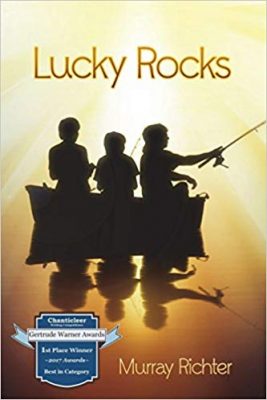
    Lucky Rocks by Murray Richter is the stuff boys’ dreams are made of: escaping chores, ditching little sisters, playing pranks on each other, heading out to Uncle Oliver’s (the General), and sticking up for each other on the football field. Did I leave anything out? Oh, yes, there’s a hunt for sunken treasure, too.


    This action-packed romp set in 1979 takes us on summer vacation we will never forget. We meet sixth-graders Kevin (Kev man), our hero; Preech, the brains of the group; and Rudy, the quarterback, and football star. They raise some dust as they race their bikes down the back roads of their small Texas town as they head out for adventure every day; whether it be to a fishing hole, a rough neighborhood where they lose Rudy, or to Uncle Oliver’s where they learn about life the fun way, though “The General’s” stories.

    When Rudy shows up with a black eye, Kev man and Preech know there’s trouble at home, but Rudy won’t talk about it, not to anyone, not even Uncle Oliver. Rudy’s stepdad, a rough and gruff oil rigger, seems the likely culprit behind Rudy’s black eye, and Kevin and Preech are determined to help their friend. But first and foremost is an adventure, and Uncle Oliver has invited them on a treasure hunt.

    With their parents’ permission, the boys go on the hunt, but on their dive to a sunken ship, they find more than they are looking for. Richter develops a plot filled with action and fun with spine-tingling elements of danger and tension that pulls us along as we witness Kevin, Preech, and Rudy conquer their fears and help each other out of danger, time and time again.

    As summer ends, Richter takes us back to school and the football field where Rudy and Preech display their skills on the field. Kevin lags behind, but his friends aren’t about to let him down. They stick up for Kevin on the field and with the coach, but does that kind of friendship help win big games or make touchdowns?

    Richter creates a world where Kev man, Preech, and Rudy conquer all the odds. They even find ways to help Uncle Oliver solve his “lady” problems. Here’s a solid middle-grade read, especially for boys, that shows how the power of friendship can become a super-power, a power we should all be so lucky to have.

    Lucky Rocks by Murray Richter won 1st Prize in the CIBA 2017 Gertrude Warner Book Awards for Middle-Grade Fiction.


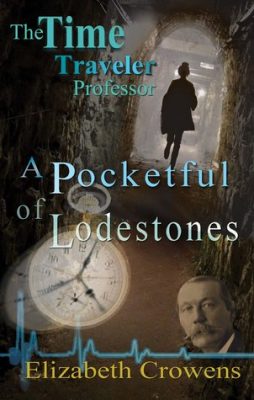
  • The TIME TRAVELER PROFESSOR, Book Two: A POCKETFUL of LODESTONES by Elizabeth Crowens – Alternate History/Sci-fi, Time Travel, Steampunk

    The TIME TRAVELER PROFESSOR, Book Two: A POCKETFUL of LODESTONES by Elizabeth Crowens – Alternate History/Sci-fi, Time Travel, Steampunk

    A musician-turned-time-traveler is in for more than he bargains for during his World War I experiences in book two of Elizabeth Crowens’s The Time Traveler Professor, Book Two: A Pocketful of Lodestones.

    John Patrick Scott volunteers for the Royal Scot Army. His life drastically shifts from one of comfort in Germany to misery in no-man’s-land trenches in Belgium and France. Fortunately, he has in his possession his grandfather’s heirloom timepiece (his time-travel device), his journal, and the mysterious red book, which is the essential item that connected him to Arthur Conan Doyle in the first place. Now separated from the famed author, John uses his middle-of-the-night sentry duty to delve into the metaphysical and psychic world, while Arthur does his time-traveling in hopes of finding the red book.

    Because of John’s prophetic abilities, he is known by his fellow soldiers as a fortune teller and Le Conteur (storyteller); the latter due to the red book’s magic of creating impending tales (often horrific) veiled in allegory. Strange things occur when John begins seeing soldier ghosts, and the name Aliskiya Lleullne, his future self, pops up in various situations, especially among an enigmatic man who goes by the moniker of Benedyct Boniface. A battlefield accident produces more supernatural weirdness for John. After recuperating, he takes on a military-intelligence position in London, where he and Arthur reunite. The two reignite their time-traveling passion, intending to go back to feudal Japan. Instead, they are in for a big surprise when they end up in London’s Elizabethan era.

    Award-winning author, Elizabeth Crowens, opens A Pocketful of Lodestones with an author’s note, explicitly encouraging steampunk readers to read Silent Meridian, book one of the Time Traveler Professor Trilogy, before probing into book two. While Crowens sprinkles aspects of Silent Meridian’s plot, the references are too light and do not offer an in-depth understanding. Thus, her cautionary note warrants merit.

    That said, there is a lot more going on in this novel compared to the first book. Having first-hand experience with the horrors of war, John’s arrogance all but disappears. He spends more time meditating on humanity—focusing on the plight of his military comrades—and less on himself, except unresolved issues from his past and future time travels. John also discovers that his penchant for predicting the future and storytelling acts as a healing balm for his struggling troop.

    A Pocketful of Lodestones is a meal of a read, which will surely satisfy Sherlock Holmes and history aficionados.

    Author, Elizabeth Crowens won 1st Place for her novel in the CIBA 2017 Paranormal Awards.


  • CASTLE of FIRE (Book 2 of The Adventures of Jonathan Moore series) by Peter Greene – Sea Adventures Fiction, War & Military Fiction, Children’s Action/Adventure

    CASTLE of FIRE (Book 2 of The Adventures of Jonathan Moore series) by Peter Greene – Sea Adventures Fiction, War & Military Fiction, Children’s Action/Adventure

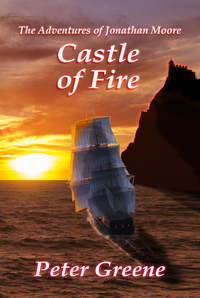
    Midshipman Jonathan Moore scrambles aboard just in time for the departure of the HMS Doggard (a horrible name, soon replaced with her original name, the Danielle). The latecomer is welcomed by some of his friends from an earlier voyage on the HMS Paladin, including Seaman Sean Flagon, Lieutenant Thomas Harrison, Bosun Steward, and even Captain William Walker.

    Jonathan had not expected to be on this voyage, as he was only recently reunited with his father, Captain (soon to be Admiral) Nathaniel Moore, who had been captured and imprisoned by the French earlier in the Napoleonic Wars. This left Jonathan orphaned on the streets of London until he and Sean were pressed into service on the Paladin. But Captain Moore escaped and returned to England. While loath to see Jonathan leave, he eventually realizes that he must allow his son to follow in his footsteps in the Royal Navy.

    After meeting with Captain Walker, Jonathan finds his quarters in the cockpit, shared with the other midshipmen, a rude Wayne Spears, and his sidekick Timothy Lane. Jonathan thinks he will simply avoid the two and spend time with Sean and his other friends, but when Spears pushes Sean to the floor, enmity ensues.

    The Danielle’s arrival in Nassau brings relief. Delain Dowdeswell, whom Jonathan had befriended on an earlier voyage to Nassau, is spotted rappelling down a cliff overlooking the harbor—the adventurer that Jonathan and friends already know. Delain’s sisters, Rebecca and Penelope, deliver an invitation to Captain Walker from their father, the governor, to dine at the mansion, bringing his officers and Sean. At dinner, Jonathan is paired with Delain, Harrison with Rebecca, and Sean with Penelope, whose company they enjoy even more than the scrumptious food. Lady Dowdeswell asks the captain if her daughters can be accommodated on the ship for its return trip to London, where they are to receive further education—a request happily agreed to by all except Delain, who fears an end to her adventuring.

    On the balcony after dinner, Jonathan gives Delain a silver necklace with a dolphin pendant that he had bought in London for her. Her delight is interrupted by Spears’s intrusion. Harrison approaches, fearing trouble, but Jonathan remains cool. It is Delain who finds revenge by “accidentally” tromping on Spears’s toe with her sharp heel. Spears will not forget this, nor his desire to end Jonathan’s career in the Navy, or perhaps his life altogether.

    Before the Danielle departs in search of pirates, the captain agrees to take Delain and her teacher, along with Jonathan and Sean, to a nearby island where they hope to see turtles hatch and make their run to the sea. They are rowed ashore by marines Hudson and Hicks, who will stay overnight with them until the Danielle returns. Delain and Jonathan arrive in time to help the tiny turtles reach the sea by chasing away the seagulls. Delain is a delightful, resourceful young woman who manages to be at the center of everything that happens. What the trio of Jonathan, Delain, and Sean discover in the ancient “Castle of Fire” and its secrets will have readers holding their breath!

    Peter Greene has done it again—another well-penned, colorful, action-packed tale to be read for pure pleasure. Make sure you don’t miss Books 1, Warship Poseidon and 3, Paladin’s War. Highly recommended!


  • FEAST of SORROW by Crystal King – Ancient Rome, Biographical, Family Saga

    FEAST of SORROW by Crystal King – Ancient Rome, Biographical, Family Saga


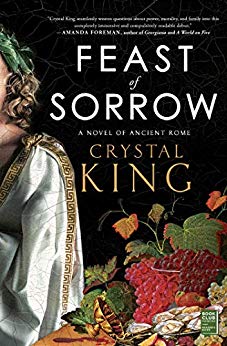
    In the twenty-sixth year of Augustus Caesar’s reign, Marcus Gavius Apicius purchased nineteen-year-old Thrasius for twenty thousand denarii, enough money to buy more than sixty normal slaves, but Thrasius is more than the typical slave. Born to a slave woman who died in childbirth and whose name he never knew, Thrasius has trained for seven years as a cook in the kitchens of Flavius Maximus, a man known for his unforgettable dinners, and Apicius hopes the young coquus will lead him to the ultimate culinary fame, gastronomic advisor to Caesar himself.

    Grateful to be saved from the cruelty of the slave trader, Thrasius throws himself headlong into the new role and proves tremendously successful, but an ominous prophecy given to Apicius on the day he purchased Thrasius looms over every achievement. As Apicius climbs higher and higher in the Roman political world, Thrasius becomes an ever-growing asset eventually becoming more advisor than cook and feels the pressure of helping Apicius accomplish his fame at any cost, even his family and friends. His chase for fame becomes both consuming and destructive. Though Apicius refuses to see the price of his obsession, Thrasius knows a reckoning is coming and prays the gods can save him from the man who controls his life.

    This masterful thirty-year tale rejuvenates life in ancient Rome, a place where favors become life-changing, where people are bought and sold, and where death could reside in a glass of wine or in a snake-filled box. The complex, rich storyline, entwines real Romans with endearing fictional characters. Readers will recognize historical figures like Pliny and Ovid, who burst to life on the pages of this novel. Though perhaps not as well-known as some of the other characters, Marcus Gavius Apicius, an overly ambitious man who bankrupted his vast fortunes with his sumptuous cenas and expensive gifts, is credited with the first cookbook and a cooking school. Readers will see the rise and fall of this man who desired fame over everything. His single-minded ambition is contrasted with Thrasius, his fictional foil in many respects. Where Apicius wants his recipes in every Roman kitchen and his name spoken in jealous whispers, Thrasius seeks only to create good food and safe life for his love, Passia.

    Fate plays a major role in the lives of the characters and poses important philosophical questions throughout the novel. From the opening pages, the importance Romans placed on omens, fortunes, and premonitions is evident. Apicius, a man who refuses to acknowledge the undesirable part of his sinister fortune, often with acts with dire consequences, begging the question is fate fixed, or do men create their own? In taking charge of his destiny, does he, in essence, destroy himself?

    Even when he is told that he will have “as much sadness as there is success,” he continues to connive and conspire until he loses everything. He finally gains his coveted position but at the expense of a man’s life and a debt which will take everyone he loves.

    In his blindness to everything but fame, he turns this prophecy into truth, bringing about the “greater failures [clustered] to the sides” of each success. Even the wholesome Thrasius isn’t immune to the question of fate versus free will when he curses Sejanus, a cruel, unscrupulous man. Though his curse takes twenty-five years to come to fruition, Thrasius wonders how much blood is on his hands when the culmination of the curse also results in the death of people Thrasius loves. Has he doomed himself by fiddling with fate? In taking fate into their own hands, both Apicius and Thrasius pay enormous costs.

    Obscene wealth and devastating poverty. The height of fame and the desolation of obscurity. On the backs of many, one man builds his legacy while another prays for freedom. Feast of Sorrow creates a world where curses are feared, blessings hinge on blood sacrifice, and history becomes real.

    Feast of Sorrow by Crystal King won 1st Place in the CIBA 2017 Chaucer Awards for Early Historical Fiction.


  • The SINS of RACHEL SIMS by Dennis M. Clausen – Absurdist Fiction, Historical Fiction, Psychological

    The SINS of RACHEL SIMS by Dennis M. Clausen – Absurdist Fiction, Historical Fiction, Psychological

    With a nod to Nathaniel Hawthorne and the accused adulteress Hester Prynne in his renowned literary classic, The Scarlet Letter, Dennis Clausen sheds a familiar light on the central character in the multi-faceted psychological tale The Sins of Rachel Sims. In this intriguing two-fold drama, a desperate young woman searches for her own true identity while simultaneously unraveling the mystery behind a woman’s disappearance from decades in the past.

    In May of 1952, the dark-haired Midwestern beauty Rachel Sims mysteriously disappears from the haunting riverbanks of Hodges Island. While gossip mongers spout that the immoral young wife ran off with a well-dressed gentleman from Iowa, the local cemetery caretaker, “Crazy Charlie,” insists he sees Rachel, aka “The Lilac Lady,” walking the island on quiet spring evenings.

    Some twenty years later, Laura Fielding, a graduate student at the University of Minnesota, begins to question who she really is when she stumbles upon an incriminating letter that suggests the couple that raised her are not her biological parents, and the three have been living with stolen identities. The startling information gives Laura a pause and reasons to question her broken relationships and a diagnosed bonding disorder.

    The upheaval triggers her obsessive need to uncover the truth. With the help of eccentric psychiatrist Ned Finley and his friend Aurther Schlepler, a proven psychic who’d helped police with difficult cases – though now a patient in the Farmington Mental Hospital – Laura attempts to find answers about her past and explore the secrets of her childhood memory. Through a combination of regressive hypnosis, a psychic’s intuition, professional insight, and Laura’s own detective work, a winding journey leads her to the area of Point Tyson and reveals plausible a connection to the vanishing Rachel Sims.

    Far beyond a typical cloak-and-dagger rendering, Clausen weaves a more subtle, yet palpable essence of evil lurking in the shadows of this double-edged story. From threatening messages warning characters to “stay away” to the heated glow of a lit cigarette in the dark, Clausen expertly gives his readers nuances of suspense that serve to heighten the drama and keep us glued to the page.

    Through a detailed narrative, Clausen creates an artful balance of people and place. Here Laura’s investigation takes her on a circuitous path showcasing both beauty and danger, from the natural Hodges Island environment where fragrant lilacs bloom amidst an overgrowth covering hidden death traps.

    Legend maintains Hodges Island was inhabited by warrior spirits and “Heaven’s Outcasts” and Laura needs help to unravel this mystery along with the deep secrets of the puritanical church community and the self-righteous male-dominated religious enclave attempting to hide its own sins. To Laura’s benefit, an eclectic group of die-hard locals including – but not limited to – record clerks, diner patrons, and gravestone cutters offer bits of information to help her piece the puzzle together.

    The plot is moved at a steady pace, with action going back and forth between the past and present. A recurring dream from Laura’s childhood serves as an essential connector for these two timeframes. While she contemplates old photographs or finds hidden Bible inscriptions, the feelings of déjà vu are always with her and enhanced in the text with Laura’s italicized thoughts and feelings about her past and the meaning behind the newly found discoveries.

    Like the regressive therapy used to tap into Laura’s childhood, Clausen’s tale revisits a once-thriving rural community ensconced in a history shadowed by lies and deceit. Above all, it proves a well-crafted, compelling read for those drawn to intricate layers of mystery that confront long-buried secrets.

    The Sins of Rachel Sims by Dennis Clausen was Shortlisted in the 2017 CIBAs, in the M&M  Awards for Mystery Novels.


  • BECOMING JONIKA by PJ Devlin – Coming of Age, Multiculturalism, Historical Fiction/Young Adult

    BECOMING JONIKA by PJ Devlin – Coming of Age, Multiculturalism, Historical Fiction/Young Adult

    Immersed in the nostalgia of classic summer camp experiences, Becoming Jonika is the coming-of-age story of Joni Byrnes, who, after finding herself on the wrong side of the law, receives a second chance at St. Augustine of Hippo’s summer camp in the trouble-ridden summer of 1969.


    Set against the backdrop of the Vietnam War and the aftermath of Martin Luther King Jr.’s assassination, Joni Byrnes is just trying to live a normal teenage life. At the cusp of high school, Joni’s parents send her to Redwood Academy, where they believe Joni will become their ideal daughter. In reality, Joni is quickly labeled by her elite classmates as a loser and an outcast, and the only place Joni feels like herself is in a swimming pool.

    One day after practice, she meets Ishmael, who used to be on her neighborhood swim team and is now recently returned home after being discharged from the military. Ishmael treats Joni like she is special, and because of her insecurities and desire to be loved and accepted by others, she falls head-over-heels for him and follows him down a dangerous path that lands her in a courtroom at the mercy of a judge.

    Instead of sending her to Juvie, the judge gives Joni the opportunity to make amends. She becomes the swimming instructor at a camp for young African-American children. Becoming an outcast yet again as the only white counselor, Joni learns about of her campers’ and co-counselors’ home lives. She sees their courage and perseverance and tries to move on from her own past; becoming her own person in the face of expanding generational and racial divides.

    The hand-drawn look of the cover and the journal-like appearance of the interior create a physical representation of Joni’s report to the judge, pulling readers in and immersing them into the story. The descriptions of the inescapable humidity of summer, the coolness of pool water, and the sweetness of bug juice all feel within reach. In addition to the rich descriptions of Joni’s surroundings, PJ Devlin achieves authentic characterization in the development of Joni and those she encounters throughout the novel.

    Joni’s feeling of being an outcast and a loser hits her upon arrival to Camp St. Augustine of Hippo, where she is different in every way from the people around her. In a heart-to-heart with Joni, one of the counselors’ is explicit about what being at camp means, “For us, that’s freedom. For you, camp’s a prison. That’s the difference.”

    As the summer progresses, Joni is given the name Jonika and finds herself surrounded by people who like her despite their differences. Jonika describes these feelings in her report, “We were different on the outside but not on the inside.”  By summer’s end, she’s uncertain about returning to her old life, but takes courage from the powerful lessons she learned at summer camp. She leaves Joni’s problems and insecurities in the past and instead becomes the person she chooses to be — Jonika.

    Becoming Jonika by PJ Devlin won 1st Place in the 2017 Dante Rossetti Awards for Young Adult Fiction.


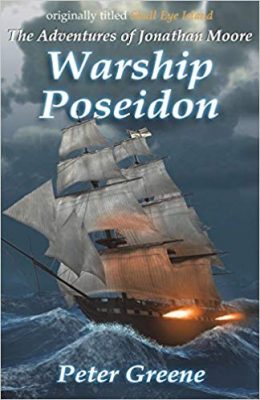
  • WARSHIP POSEIDON (The Adventures of Jonathan Moore, Book 1) by Peter Greene – Coming of Age, Maritime War, Treasure Hunt – Action / Adventure

    WARSHIP POSEIDON (The Adventures of Jonathan Moore, Book 1) by Peter Greene – Coming of Age, Maritime War, Treasure Hunt – Action / Adventure

    Author Peter Greene often read to his two children at bedtime. But one night, the bookshelf held nothing that enticed them. So, as he explains in the Acknowledgements to this book, he decided to tell them a story. The first words that came out of his mouth were: “Twelve-year-old Jonathan Moore lived in a three-sided wooden box at the end of a dark and filthy alley.” Thus was born the title character of The Adventures of Jonathan Moore, who Greene decided should be “as normal and as human as any real child,” whether in the nineteenth or the twenty-first century.

    In England of the early 1800s, help for orphans was the duty of family or church. When twelve-year-old Jonathan Moore’s mother dies, and he hears nothing from his father, a Navy captain, he shuns appealing to either family or church. Thus, he finds himself homeless on the streets of London. Fortunately, he makes friends with a boy of similar age, Irish-born Sean Flagon. Together, the boys manage to sweep enough London chimneys to keep them from starving, until one rainy day when first Sean and then Jonathan are snatched by a group of men and soon find themselves in a cage strapped to a cart headed for the Chatham docks. They’ve been “pressed” into service on one of His Majesty’s warships, the Poseidon, which they soon discover isn’t such a bad lot at all.

    The two boys look in awe at the rows of cannon (cannon being both singular and plural in England). And when shown to the closet of a room that is to be their new quarters, they realize that, though tiny, it’s dry, and there are rope hammocks to sleep in, wrapped in blankets. That certainly beats a leaky wooden box in an alley, with a piece of board for a cover. Better yet, they’re soon sitting at tables on the main deck, where hot fish stew is served for dinner (as it is most days, they soon learn), accompanied by hardtack or softtack (hard bread or rolls). The next morning Jonathan awakes to see huge white sails unfurled in the wind. The Poseidon is underway.

    Much adventure and not a little danger await them, from one side of the North Atlantic to the other. After all, England is at war against France, and Napoleon Bonaparte has many fine French warships. One of them is the Danielle, which the Poseidon and her crew encounter more than as they make way from Lisbon to the Bahamas.

    The aim of both these enemy warships is to search for an ancient Spanish treasure chest, which an equally ancient map indicates is buried on Skull Eye Island. On peaceful days at sea, there are lessons to be learned about being a seaman—taught aboard ship by experienced sailors, junior and senior officers, and even Captain Walker. The boys’ lessons also include fencing and swordsmanship, which stand in good stead when they must battle the French crew aboard the Danielle.

    This thrilling tale of high adventure is not without an element of poignancy, however. Jonathan senses that several on board the Poseidon knew or know about his father, Captain Nathaniel Moore, who the boy had assumed was dead. They seemed to recognize him by name, and they treat him with more caring and respect than the other young boys, including his friend Sean. Yet, they consistently change the subject when he tries to question them.

    Exciting and fast-moving as Warship Poseidon is, the tale is rendered even better by its author’s skill as a storyteller. Greene has thoroughly researched this era—including its shipbuilding, the administrative management of both English and French Navy vessels, the design of the warships themselves, and how their crews lived aboard them and battled from them. The story is presented in infinite detail, painted in vivid color, and written in a literary style. Much care has gone into the characters’ speech—emulating the language of the time while ensuring that it can be understood by its twenty-first-century readers, whether they be young or old—since this tale is one to be read with pleasure by all generations.

    To Peter Greene we would say—in British parlance both then and now—”Huzzah! Huzzah! Huzzah!” So, have great fun reading Warship Poseidon and then proceed without delay to Books Two and Three: Castle of Fire and Paladin’s War. But don’t stop there! Mr. Greene declares there may be a prequel in the works as well as another type of series beginning!


  • WISSAHICKON SOULS: A Wissahickon Creek Story (Vol. 1) by PJ Devlin – U.S. Historical Fiction, African American Fiction, African American Romance

    WISSAHICKON SOULS: A Wissahickon Creek Story (Vol. 1) by PJ Devlin – U.S. Historical Fiction, African American Fiction, African American Romance

    Claire Penniman, a free black born in the Germantown section of Philadelphia in the early 1800s, is only six years old when she’s indentured to Raymond and Anna Williams, white landowners who have known her family for years. Elizabeth and Moses, Claire’s parents, have already indentured their older son, Samuel, to the Williams in hopes that both children will learn reading, writing, and arithmetic as well as valuable life skills in exchange for working the land and tending the animals.

    Wissahickon Farm quickly becomes part of Claire. She immediately befriends five-year-old Lawrence, the youngest Williams son. As Claire and Lawrence grow older, so does their bond. Anna agonizes over her son’s attachment to the black girl, and her relationship with Claire suffers. Near the end of her twelve-year indenture, Claire and Lawrence’s love leads to pregnancy. The teenagers marry and run away to Haiti, a newly independent country of liberated slaves, to live together in peace as man and wife. Over time, however, hardship and disaster chip away at their love, and Lawrence struggles to find his place in a country where he’s called, the blanc.

    Set in the early 19th century when trains are new and steamboats rule, Wissahickon Souls spans thirty years in the life of Claire Penniman. She grows from an impetuous, daring little girl to a strong, independent woman. Claire’s journey, both physically and mentally, showcases the trials of African Americans in the 1800s. Though Claire’s family has a long history of living in freedom in a Northern city, they are far from free. Prejudice lurks around every bend in Germantown and Philadelphia, and the Penniman family keeps a dangerous secret – the family “business.”

    For decades, the Penniman family has helped runaway slaves find safe havens by delivering hundreds of “packages” farther north, giving permanent refuge to some of the runaways they save. Through the fictional Penniman family, Devlin shows the commitment and courage of people who risked much in the cause of freedom.

    An important motif of Wissahickon Souls revolves around sewing. Claire’s sewing skills become the tie that binds and the fix for broken things. She learns her craft from her mother and grandmother, just as she learns to help slaves to freedom from her father. Claire not only sews clothing to support her family, but she’s also adept at stitching together wounded flesh. Respect for her skill leads to repeated calls for help. Her excellent hand proves racial division can be transcended.

    Lawrence and Claire’s love story is a tragedy reminiscent of Romeo and Juliet. The innocence of their first love becomes victim to profoundly rooted racism, including the subtle but soul-sapping racism of Lawrence’s righteous mother. From vicious white men to a raging flash flood, Lawrence repeatedly saves Claire but is unable to stand beside her in public.

    In childhood, Claire’s spirit and friendship blind Lawrence to their racial differences. Her pregnancy forces him to confess their love to his parents, who refuse to accept the relationship. After marrying and traveling to Haiti, the teenage couple faces unimaginable daily hardships – made worse by Haitians acceptance of Claire while mocking Lawrence as the blanc.

    Lawrence’s increasing alienation drives him to drink and gamble, and he loses Claire’s respect. During ten years of exile, they and their two children struggle to find their place, and their love falters. The death of Lawrence’s father, Raymond, provides the impetus to return to Philadelphia and separate lives – Lawrence to Wissahickon Farm; Claire and the children to her family home.

    Though this is Claire’s story, Lawrence’s mother, Anna, plays a crucial role. Despite her recognition of Claire’s intelligence and savvy, Anna’s world is ruled by the impregnable boundaries of cultural presumptions about the African race. The theme of Wissahickon Souls plays out fully through Anna’s soul searching and her ultimate decision.

    Even in graphic scenes depicting racism’s horror, Devlin’s writing is beautiful and professional. The historical setting is authentic. Readers will walk alongside Claire on her sprawling journey as a freeborn black in the early 19th century when slavery was the rule of the land.


  • The BOY WHO DANCED WITH RABBITS by J. R. Collins – U.S. Historical Fiction, Romantic Action/Adventure, Family Saga

    The BOY WHO DANCED WITH RABBITS by J. R. Collins – U.S. Historical Fiction, Romantic Action/Adventure, Family Saga

    J.R. Collins has given a voice to an ancestor, Jeb Collins, who was almost killed at birth – twice. His survival is significant for that, but also for the fact that in another part of the Georgia mountains, a Cherokee boy, Wolf, is born on the same night. The families of the two boys will meet and mix in the early days of American settlement when everyone had to struggle for survival, and such friendships were still possible.

    Jeb learns smatterings of Cherokee language, and Wolf and his kin pick up English with a sharp mountain twang from their settler neighbors. Together Jeb and Wolf explore the mystical, mountainous part of Appalachia named Cho-E-Sto-E for the prevalence of rabbits there.

    Both of the boys’ fathers remember and despise the British who killed the American rebels and betrayed the Indians who agreed to help them; and both hate all evil-doers, like the ones who kidnapped Jeb’s sister or the sneak-thieves who stole from Jeb’s family. But most of all, they will stand united against a nearby tribe that wants Wolf’s sister as a bride for their leader.

    The author grew up in the region he describes so vividly in this, his first novel, and has a sequel, the award-winning, Living Where the Rabbits Dance. The story, focusing on the boy’s view of a sometimes-dangerous world, is told in a satisfyingly recognizable dialect, using many endearing folk expressions – one of our favorites being, My heart melted like butter on a hot biscuit.

    This multilayered saga presages the time that will come when the Cherokees will be marched away on the Trail of Tears, and family connections like those depicted here will be destroyed in the name of Manifest Destiny. It is heartening to read about the few years enjoyed by such friends as Jeb and Wolf when they could roam the land together with the approval of their elders. There is a finely-honed homage paid to two religions, the Christianity of the Collins clan and the animist visionary beliefs of the Cherokees, each playing a role in Jeb’s perceptions of the world around him.

    From learning to fish to making bead bracelets from local gemstones, to seeing visions invoked by Cherokee spirits, here is a tale of a boy coming of age in a significant time and place. Collins’ book records that history, that atmosphere, with equal measures of zeal and reverence.

    The Boy Who Danced with Rabbits by J. R. Collins won First Place in the 2017 CIBAs for the Goethe Awards, Western Fiction.

  • LOVE and OTHER CONSOLATION PRIZES: A Novel by Jamie Ford – Family Saga, Asian American Literature & Fiction, Historical Fiction

    LOVE and OTHER CONSOLATION PRIZES: A Novel by Jamie Ford – Family Saga, Asian American Literature & Fiction, Historical Fiction

    In 1902, the year of the Boxer Rebellion in China, five-year-old Yung Kun-ai watches as his mother buries his newborn sister in a tiny grave that she has dug with her fingers. The starving mother hadn’t been able to feed her. She kisses her son and gives him her only possession, a filigreed hairpin, then tells him he must remain in the cemetery until his “uncle” comes to take him to America, to a new life in a new world. “This is my gift to you,” she says as she shuffles away.

    These words, and the poignant story that follows, bring to mind two words from the title of author Jamie Ford’s New York Times bestseller first novel—‘bitter’ and ‘sweet’. This is his third…worthy of equal praise.

    Yung spends that chilly night shivering, in fear of the nearby fighting between rebels and soldiers, and in doubt of his future. But his mother’s gift does indeed come to pass. A voyage of many weeks in the hold of a freighter takes him to Seattle. His early years there are not easy, however. Fathered by a white missionary, he is a half-breed and the brunt of taunting and worse by both his peers and his elders. Nonetheless, he ably gains an education, takes the name of Ernest Young, and begins to earn a living as the twelve-year-old houseboy and driver at a high-class brothel called The Tenderloin in Seattle’s Garment District. The other occupants—servants as well as the ‘working girls’—become the family he has yearned for. Some years later, he has his own family with Gracie, a Japanese immigrant known as Fahn when he met her (for the second time) at The Tenderloin.

    The story hops back and forth between the first and seventh decades of the century, centering on Seattle’s Alaska-Yukon-Pacific (AYP) Expo in 1909 and the city’s World Fair in 1962. A raffle at the former is what brings Ernest to The Tenderloin. During the latter, Ernest and Gracie’s daughter Juju, a journalist, has been asked by her editor to write a then-and-now story of the two fairs, based on interviews with old-timers who have been to both. Her primary interviewee is to be her father, she thinks, but he stalls her, offering only tidbits—nothing that would put her story on the front page. Why is he so reluctant? Is there a tale he doesn’t want to share, not only with the newspaper’s readers but even with his daughter?

    This historical novel is brought to a literary level not only by the author’s expertise with language but also by the extent of his research into the facts around which the story is woven. In an Author’s Note, Ford explains that his inspiration for writing is a “never-ending appetite for lost history—the need to constantly turn over rocks and look at the squishy things underneath.”

    For this novel, one of those rocks was the 1909 Alaska-Yukon-Pacific Exposition. From yellowing newspaper articles relating to the Expo, he learned that both the suffrage movement and “social evils” such as brothels (not only the moral evil but the spread of syphilis) were at their height in Seattle at that time. One article told of a child (named Ernest), who was donated by the Washington Children’s Home Society as a raffle prize at the AYP. Another described a climb up Mount Rainier by Washington suffragettes. Much was written about the plight of East Asian immigrants, economically forced into servitude and prostitution. Jamie Ford drew on these articles and other historical documentation to create this touching story and to bring to life its colorful and accurately drawn characters.