Welcome to the SPOTLIGHT on post-1750 Historical Fiction novels… in other words,
Welcome to the GOETHE Book Awards!
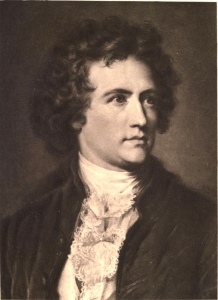
Why do we like Johann Wolfgang von Goethe so very much? It’s simple! He’s the guy who wrapped up everything we believe in with this simple sentence:
“Whatever you can do or dream, you can begin it. Boldness has genius, power, and magic in it.” – Goethe
Of course, this was also said about Goethe (Super Goethe by Ferdinand Mount) that “…[his] company could be exhausting. One minute he would be reciting Scottish ballads, quoting long snatches from Voltaire, or declaiming a love poem he had just made up; the next, he would be smashing the crockery or climbing the Brocken mountain through the fog.”
So…, moving on… Goethe was also a very cool guy. In his lifetime, he saw the beginning of the Industrial Revolution in 1750 through Mary Shelley’s publishing of Frankenstein in 1818 – and everything in between! Check out the list of what happened during those nearly seventy decades at the end of this post – you will be A-Mazed!
Now, Welcome to the GOETHE Hall of Fame!
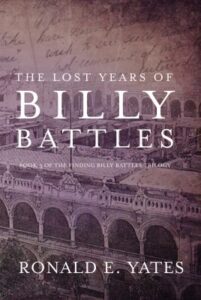
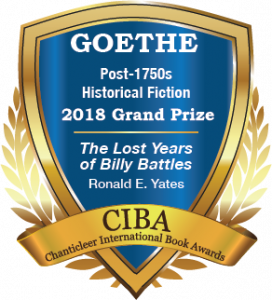
We wish to congratulate 2018’s Goethe Book Awards Grand Prize Winner –
Billy Battles is as dear and fascinating a literary friend as I have ever encountered. I learned much about American and international history, and you will too if you read any or all of the books. Each is an independent work, but if read in relation to the others, the reader experiences that all too rare sense of complete transport to another world, one fully realized in these pages because the storytelling is so skillful and thoroughly captivating. Trust me; you’ll want to read all three volumes. Chanticleer Reviewer’s Note
Mr. Ronald Yates not only won Grand Prize in the CIBAs 2018 GOETHE Awards – he won OVERALL GRAND PRIZE!
To learn more about Ronald E. Yates, please click here.
Congratulations to the 2018 Goethe Book Awards First Place Category Winners!
Submit your manuscript or recently released Historical Fiction (post-1750s) to the Chanticleer International Book Awards!
Want to be a winner next year? The deadline to submit your book for the Goethe Awards is June 30, 2020.Enter here!
Grand Prize and First Place Winners for 2019 will be announced during our 2020 conference, #CAC20.
The Grand Prize and First Place for 2020 CIBA winners will be held on April 17, 2021.
Any entries received on or after June 30, 2020, will be entered into the 2021 Goethe Book Awards that will be announced in April 2022.
As our deadline draws near, don’t miss this opportunity to earn the distinction your historical fiction deserves! Enter today!
The GOETHE Book Awards is a division of the Chanticleer International Book Awards – the CIBAs.
The 2020 winners will be announced at the CIBA Awards Ceremony during #CAC20. All Semi-Finalists and First Place category winners will be recognized, the first-place winners will be whisked up on stage to receive their custom ribbon and wait to see who among them will take home the Grand Prize. It’s an exciting evening of dinner, networking, and celebrations!
Goethe
Some events that occurred during Goethe’s lifetime:
1750 – The Industrial Revolution began in England
1756 – Wolfgang Amadeus Mozart was born in Salzburg Austria
1761 – The problem of calculating longitude while at sea was solved by John Harrison
1765 – James Watts perfects the steam engine
1770 – Ludwig van Beethoven was born in Bonn, Germany
1774 – Goethe’s romantic novel, The Sorrows of Young Werther, propels him into European fame
1774 – Goethe’s play Gotz von Berlichingen, a definitive work of Sturm und Drang premiers in Berlin
1776 – America’s 13 Colonies declare independence from England. Battles ensue.
1776 – Adam Smith publishes the Wealth of Nations (the foundation of the modern theory of economics)
1776 – The Boulton and Watt steam engines were put to use ushering in the Industrial Revolution
1783 – The Hot Air Balloon was invented by the Montgolfier brothers in France.
1786 – Le Nozze di Figaro by Mozart premiered in Vienna
1789 – George Washington is elected the first president of the United States of America
1780 – Antoine Lavoisier discovers the Law of Conservation of Mass
1789 – The French Revolution started in Bastille
1791 – Thomas Paine publishes The Rights of Man 1792 – Napoleon begins his march to conquer Europe
1799 – Rosetta Stone discovered in Egypt
1802 – Beethoven created and performed The Moonlight Sonata 1802 – A child’s workday is limited to twelve hours per day by the British parliament when they pass their first Factory Act
1804 – Napoleon has himself proclaimed Emperor of France
1808 – Atomic Theory paper published by John Dalton
1811 – Italian chemist Amedeo Avogadro publishes a hypothesis, about the number of molecules in gases, that becomes known as Avogadro’s Law
1811 – Jane Austen’s Sense and Sensibility was published anonymously. It was critically well-received
1814 – Steam-driven printing press was invented which allowed newspapers to become more common
1818 – Mary Shelley publishes Frankenstein 1832 – Goethe’s Faust, Parts 1 & 2 are published posthumously (March 22, 1832)
In 1830, Eugene Delacroix created Liberty Leading the People to epitomize the French Revolution. The movement officially began with the Storming of the Bastille on July 14, 1789, a day that is still celebrated in France. The French people were rebelling against the extreme wealth of the French royal family who overtaxed and underpaid the people of France to the point where they could not even feed themselves and had nothing to lose by going to battle. They were starving to death. The uprising of 1830 was featured in Victor Hugo’s Les Miserables (1862)
Claude-Michel Schönberg and Alain Boublil’s (1980s) musical can look at Delacroix’sLiberty Leading the Peopleand hear the lyrics of the song that serves as a call to revolution:
Do you hear the people sing? Singing a song of angry men? It is the music of a people. Who will not be slaves again.
Liberty Leading the People by Eugene Delacroix, 1830. On display at the Lourve, Paris.
Imagine a fearless, hard-as-nails contract surgeon hired by the Union Army who often works 48-hour shifts in battlefield medical tents amputating limbs, healing previously inoperable gut wounds, sewing up children’s hare lips, and diagnosing what we now call PTSD as critical in military patient care as patching physically wounded bodies.
Meet Dr. Abby Kaplan. And yes, she’s a woman.
A native of the Pacific Northwest, Dr. Abby stands six feet tall and exchanges her dresses for breeches, totes a gun on her hip, engages in military defensive maneuvers, and is wounded multiple times for her efforts. Dr. Kaplan takes no guff from anyone and uses the language of soldiers appropriate to the situation. In a time when men are in charge and women are not, she wins the respect of her male colleagues in the most gruesome medical cases, winning over even those who could not fathom a woman examining a man’s most private parts.
Even more remarkable, despite the prejudices of her times, she finds ways to celebrate her Jewish heritage and even finds a man unafraid of her enough to become her occasional lover, but virtually only at her request.
A woman as strong, complex, and dedicated to medicine probably existed somewhere during that time. A small number of women doctors did work on soldiers during the Civil War. Richard Alan develops his lead with guts and gumption, so much so, that readers will likely fall in love with Dr. Kaplan.
A Female Doctor in the Civil War pays little attention to romance or sentimentality. Dr. Kaplan’s issues in pre-suffrage America are more about stopping male prejudice from interfering with her work than self-conscious screeds about being a female in a man’s world. We learn little about her past. Her more reflective moments are about the medical debacle she sees as she stitches and saws and mends the broken bodies that fill her medical tents, as well as her reflections on how much more the minds of these soldiers need to be treated during the war.
When she does find a lover, he is a momentary respite from the battlefield, not a “rescuer.” Their discussions about the differences between men and women are by two adults who respect each other. Others in that period of our history may see Dr. Kaplan’s sex and religion as problems. She sees them at worst as inconveniences that sometimes prevent her from doing her job as well as she thinks she can. Her one weakness, the nightmares that keep plaguing her after her work is done, are those any adult would suffer after working in the carnage she witnesses that is her life.
In other words, Dr. Abby Kaplan is a strong, capable, and uniquely modern physician working within the social and medical limitations of her time. She is there to do a job only a handful of doctors have the stomach to undertake.
A Female Doctor in the Civil War won First Place in the CIBAs 2018 Laramie Awards for American Fiction.
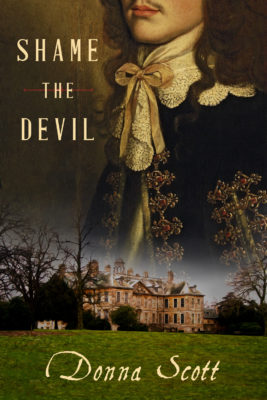
Colin and Roddy Blackburne are sent into indentured servitude in England in 1643 with their father. Gavan Blackburne supported the divine right of King Charles I. Still, after the tragic death of his wife that both Colin and Roddy witnessed, he relinquishes his efforts to protect the remainder of his family.
The Blackburnes become stable hands at Appleton Hall, where the viscount’s daughter Emma quickly catches the eye of young Colin. Emma is curious about the young Scots in the stable and drags along Alston, the son of Lord Stillingfleet. The four children start a friendship that intertwines their lives forever.
By 1648 the King is being tried for treason. Emma and Alston are facing pressure to find suitable matches for marriage, and both have secrets to hide. Emma and Colin have professed their love for each other, while Alston has fallen for Stephen Kitts, a man who has a dark past and devious intentions for the future. Colin is forced to flee the day before his family’s servitude ends, leaving only a letter behind. Tragedy strikes when Roddy’s jealousy causes him to betray the young lovers ending in unforeseen consequences.
Scott’s writing is magnificent. One of the first signs of her skill is how quickly the real-world melts away when reading. History buffs will enjoy the way Shame the Devil effortlessly interlaces the complex historical backdrop into the narrative, while those reading for the romance will not be overwhelmed with historical exposition. While the history of the setting is a crucial element of the story, it mainly shows up in character dialog. The way characters talk about and react to the political tensions of mid-seventeenth-century England fuels the conflicts of the novel and demonstrate how character-driven a story can be.
The English Civil War takes a back seat to the book’s real action, secrets, and lies. Naturally, in a story of forbidden romances, there is plenty of betrayals, but there is just as much steadfast love. A well-written book like Shame the Devil makes readers invested in the likable characters and the unlikable ones. All of the main characters are complex and feel real within each page. Scott manages to make the character’s flaws and motivations believable and make sense within the narrative to make each character’s story feel complete.
The intricately woven secrets and lies against the backdrop of an unprecedented dethroning of the monarchy make Shame the Devil a page-turning experience. Historical fiction and romance fans should not miss out on this book. Highly recommended.
Shame the Devil won First Place in the CIBA 2014 Chaucer Awards for Early Historical Fiction novels.
The Goethe Book Awards recognize emerging new talent in post-1750s Historical Fiction. The Goethe Book Awards is a division of the Chanticleer International Book Awards (The CIBAs).
The Goethe Book Awards competition is named forJohann Wolfgang von Goethe who was born at the dawn of the new era of enlightenment on August 28, 1749.
Chanticleer International Book Awards is looking for the best books featuring Late Period Historical Fiction. Regency, Victorian,18th Century, 19th Century, 20th Century, World and other wars, history of non-western cultures, set after the 1750s, we will put them to the test and choose the best among them.
The 2019 CIBAs received an unprecedented number of entries making this book awards program even more competitive. More entries along with more competitive works make the final rounds of judging even more demanding. The judges have requesteda new level of achievementto be added to the rounds to acknowledge the entries that they deemed should receive a high level of recognition.
We decided that this was the time to incorporate the new level – The FINALISTS – as requested by the CIBA judges. This new level will be incorporated into the 2019 CIBAsLevels of Achievement. The FINALISTS were selected from the entries that advanced to the 2019 GOETHE Book Awards Semi-Finalists.
Congratulations to the 2019 GOETHE Book Awards FINALISTS
Vanda Writer –Paris, Adrift
Kari Bovee –Peccadillo at the Palace
Kari Bovee –Girl with a Gun
PJ Devlin –Wissahickon Souls
John Hansen –Hard Times
Mary Adler –Shadowed by Death: An Oliver Wright WWII Mystery
Lee Hutch –So Others May Live
Mike Jordan –The Runner
Sandra Wagner-Wright –Two Coins: A Biographical Novel
J.G. Schwartz –The Pearl Harbor Conspiracy
Marina Osipova –How Dare The Birds Sing
Lisa Braver Moss – SHRUG: A Novel
These titles are in the running for the First Place positions of the 2019 GOETHE Book Awards for post-1750s Historical Fiction
Good luck to all as your works move on to the next rounds of judging.
Congratulations to the authors whose works have advanced to the FINALISTS Level of Achievement!
The 16 divisions of the 2019 CIBAs’ Grand Prize Winners, the First Place Category Position Award Winners, and all Semi-Finalists will be announced at the postponed 2020 Chanticleer International Book Awards Annual Gala, now re-scheduled for Saturday, September 5th, 2020.
Join us at theChanticleer Authors Conferenceat the luxurious Hotel Bellwether in Bellingham, Wash. Use our link above to register now for this exciting event!
We are now accepting submissions into the 2020 GOETHE Awards Book Awards. The deadline for submissions is June 30th, 2020. The winners will be announced in April 2021.
The CHAUCER Book Awards recognize emerging new talent and outstanding works in pre-1750s Historical Fiction. The CHAUCER Book Awards is a division of the Chanticleer International Book Awards (The CIBAs).
The Chaucer Book Awards competition is named forGeoffrey Chaucerthe author of the legendary Canterbury Tales. The work is considered to be one of the greatest works in the English language. It was among the first non-secular books written in Middle English to be printed in 1483.
Chanticleer International Book Awards is seeking the best books featuring Pre-1750s Historical Fiction, including pre-history, ancient history, Classical, world history (non-western culture), Dark Ages and Medieval Europe, Renaissance, Elizabethan, Tudor, 1600s. Our judges will read them to discover the best among them. The CIBAs discover today’s best books!
The 2019 CIBAs received an unprecedented number of entries making this book awards program even more competitive. More entries along with more competitive works make the final rounds of judging even more demanding. The judges have requesteda new level of achievementto be added to the rounds to acknowledge the entries that they deemed should receive a high level of recognition.
We decided that this was the time to incorporate the new level – The FINALISTS – as requested by the CIBA judges. This new level will be incorporated into the 2019 CIBAsLevels of Achievement. The FINALISTS were selected from the entries that advanced to the 2019 CHAUCER Book Awards Semi-Finalists.
Congratulations to the 2019 CHAUCER Book Awards FINALISTS
James Conroyd Martin –Fortune’s Child: A Novel of Empress Theodora
Gail Avery Halverson –The Skeptical Physick
Susanne Dunlap –Listen to the Wind
Linda Cardillo –Love That Moves the Sun: Vittoria Colonna and Michelangelo Buonarotti
Cryssa Bazos –Severed Knot
Kate Murdoch– The Orange Grove
June Hall McCash –Eleanor’s Daughter: A Novel of Marie de Champagne
James Hutson-Wiley –The Sugar Merchant
Alexandrea Weis –Realm
Catherine Mathis –Death in Coimbra
Patricia J. Boomsma –The Way of Glory
A.L. Cleven –26.2
Anna Belfrage –The Cold Light of Dawn
E. L. Diamond –The Wolf of God
These titles are in the running for the First Place positions of the 2019 CHAUCER Book Awards for pre-1750s Historical Fiction
Good luck to all as your works move on to the next rounds of judging.
Congratulations to the authors whose works have advanced to the FINALISTS Level of Achievement!
The 16 divisions of the 2019 CIBAs’ Grand Prize Winners, the First Place Category Position Award Winners, and all Semi-Finalists will be announced at the postponed 2020 Chanticleer International Book Awards Annual Gala, now re-scheduled for Saturday, September 5th, 2020.
Join us at the Chanticleer Authors Conference at the luxurious Hotel Bellwether in Bellingham, Wash. Use our link above to register now for this exciting event!
We are now accepting submissions into the 2020 CHAUCER Awards Book Awards. The deadline for submissions is June 30th, 2020. The winners will be announced in April 2021.
To fully understand this rich immersive novel about a 17th Century mutiny and its murderous aftermath – a prime candidate for a “crime-of-the-century” label – it’s best to understand the true story of what happened in 1629 off the coast of what is now Indonesia.
The Batavia was a treasure-laden fleet ship of the powerful Dutch East India Company, the global Amazon of its time, with more than 300 men, women, and children on board. But the Batavia’s fate was sealed by a greedy captain and a mysterious pharmacist who hijacked the ship for its booty and crashed it on a speck of an island off the Australian coast.
When survivors of the shipwreck landed, Jeronimus Cornelisz the pharmacist, and his followers were said to have murdered upward of 100 of them. Historians believe that some were brainwashed to kill one another, take women survivors as sex slaves, and slaughter several children. Some individuals place Cornelisz in the same evil company as serial killers Charles Manson, Ted Bundy, and Jeffrey Dahmer.
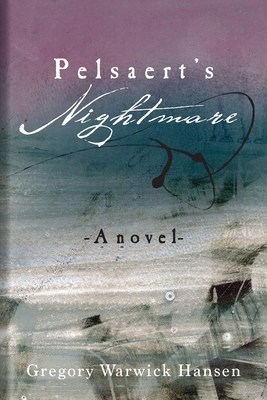
The most complete historical record of the massacre came from Francisco Pelsaert, the Company’s senior representative on board the wrecked ship. His diary, written shortly after the Batavia tragedy occurred, is the basis for this novel.
We are taken deep into Pelsaert’s story who is dying as the book opens. We get to know him as a Company man, no less dedicated to commerce than any globe-traveling corporate soldier of our own times. But as the story of the Batavia unfolds, we also see the politics of the era, an understanding of the competing political forces in the 1600s ransacking the world for treasure and spices – the Dutch, Spanish, and English – entities no less complicated but far more vicious and venal than today’s international trade warriors. The truth be told, these times were hellish. Deaths, almost unimaginable tortures, and barbarism were rampant in this era, and the novel spares the reader few details of them.
Even as Pelsaert provides us with a detailed accounting of the Batavia disaster, written in graphic and often profane language, he also stares deeply into his own complex past, jumping in time from past to present and back again. We see how a road warrior of those times thought and acted, as unsparing of himself as he is of his contemporaries. You may not ultimately like the Company man, but he will treat you to a reading experience of a world both far removed from our own and yet sadly familiar.
Pelsaert’s Nightmare won First-Place in the CIBAs 2018 Chaucer Book Award for pre-1750s historical fiction.
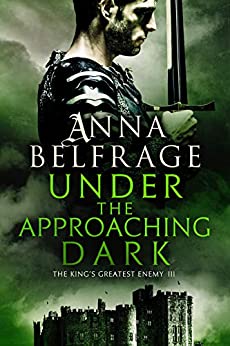
Christopher Marlowe’s The Tragedy of Edward the Second (1592) and Derek Jarman’s film (Edward II, 1991) fans will want to sit up and take notice of how Anna Belfrage navigates her way through this installment of the Under the Approaching Dark, the third book in The King’s Greatest Enemy series. With a vast cast and two kings from the same family to deal with, the challenges were immense. And she’s succeeded.
The narrative is built around two males – decades apart – who may or may not be alive or dead. Four-year-old Tom arrives at the home of his mother, Kit, and father, Adam – a knight of the realm – in a recently exhumed coffin. No one wants to believe the lad is dead, and William (a vicar; Adam’s brother) recommends not opening the lid to view the rotting remains but assures one and all that the corpse is most certainly the couple’s eldest boy. But Kit never gives up hope.
The second male, King Edward II, also has difficulty staying alive or dead. Deposed for outlandish behavior in the bedroom and at court, his long-suffering wife Isabella teams up with Roger Mortimer to rule the country and place Edward III on the throne while yet a teenager. To add further twists to the plot, Edward of Carnarvon – after reportedly being killed while under arrest – is provided a resurrection and exile to France.
Enemies to both Edwards abound. Henry of Lancaster is afraid of losing a considerable amount of land if peace is reached with the Scots and Godfrey of Broseley delights in inflicting pain and torture on anyone who would dare stand in his way to power and riches – man or woman. Kit’s half-sister Alicia is deft at playing both sides to her advantage. But her sibling is not fooled.
History buffs and devotees of political intrigue will enjoy this generously written account of the royals struggling to stay on the throne even as some of those in their court change allegiances whenever they see an opportunity for personal gain. Belfrage’s sense of pace, in-depth characterization of the principals – coupled with a few surprises along the treacherous journey to safety and security with the minimum of bloodshed – is a remarkable achievement. Her ability to convincingly weave together so many people and narrative threads will keep readers’ interest high and encourage them to snap up the next volume in the series.
Under the Approaching Dark won first place in the CIBA 2018 CHAUCER Awards for Early Historical Fiction.
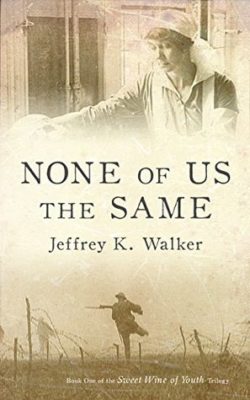
Five young friends from then-English Newfoundland and Ireland together join a regiment to serve in the war, as does a young nurse from Dublin. At first, a reader might be lulled into thinking this is a light-hearted Irish dialect-filled romp a la Finian’s Rainbow, but the novel takes us deep into the lives of its characters as they serve in the bloody trenches, convalesce, and try to live normal lives despite the physical and emotional damages they suffered.
Diedre, the tough but emotionally scarred nurse, Jack, who left “bits” of him on the battlefield, Will, with his invisible yet no-less devastating wounds—these are a few of the complex yet wholly identifiable characters who become alive through this novel’s pages. These are no simplistic people. Their humanness, their frailties confronted by the awfulness of the war, gives the book its special heart.
As much as we live through the late 1910s and early 1920s, there are few strictly historical passages. The characters live in those times, not declare them. There are no “war is over” scenes, only the heartbreaking aftermath of the war’s end on the characters. Yet, the book ends with the central characters’ futures well in hand, moving through the post-war era with the 1920s, Prohibition, and the foreshadowing of “the Troubles” beginning to play a part in all their lives.
Above all, the book is about enduring friendships and the nature of being human. The author compels us with his characters and how they rally together in times of crises and stand up for one another when the going gets tough. There is no sugar-coating what happens to them, and yet their long-standing bonds are what pulls them through for readers to form a special connection with one and all of them. The reader may be better for having met them all. Certainly, None of Us the Same will stay with the reader long after the book is put down.
None of Us the Same is the first of three novels in the series entitled “Sweet Wine of Youth,” and won First Place in the CIBA 2018 GOETHE Awards for Historical Fiction.
Ruth Hull Chatlien’s historical novel Blood Moon: A Captive’s Tale shines a light on two worlds trying to coexist in the 1860s Minnesota, that of Westward Expansion and white settlers, and that of the complex network of Sioux tribes dealing with starvation and disease. We follow her protagonist, Mrs. Sarah Wakefield, as she is thrust unwillingly into the midst of the Indian Wars.
Based loosely on the life of real captive, Sarah Wakefield, Chatlien explores both sides of this conflict, through the eyes of our terrified hero, who does what she must to save her life and the lives of her two small children. The first-person narrative in present tense places us in the thick of Wakefield’s narrow escapes, and the presence of the constant threats to her and her children.
Sarah Wakefield has one goal, to save her children, and if that means dressing like a Sioux and helping her captives gather water, forage and cook food, and set up the teepee, so be it. Her fellow captives, mostly women and children maintain their prejudiced and racist attitudes, but Wakefield does not. She sees her captives as human beings, not “savages,” who are trying to survive just as she is.
Chatlien expertly exposes the mindset between members of the Sioux tribe who had converted to Christianity and those who refused to convert. She exposes the injustices of an American Government that defaulted on treaty promises, causing starvation, illness, and death among the tribes, and the solution that many tribal warriors felt was their only recourse—war.
Wakefield sees the dichotomy of those warriors who want to fight and those who have converted to Christianity and become farmers. She feels the losses endured by those who didn’t want to fight because of their beliefs, but she realized that death would be their penalty if they refused.
The underlying themes in Chatlien’s novel provide us a complex and multidimensional read that captivates. Sarah is married. But her marriage is rocky—okay. Rumors of her past don’t help her present situation. But the woman she becomes as she survives her terror and provides for her children is a woman who will go to battle for a Sioux warrior in a court of law, even if it means losing her marriage and becoming a social pariah. At times readers may wonder if Wakefield might be an unreliable narrator suffering from “Stockholm Syndrome.” Nevertheless, she fights for the warrior who protected her and fights to save his life as he had saved hers.
The injustices Chatlien shines her fictional light on are bound to grate on the progressive-minded reader of 2020, and the conclusion to this narrative based on real events will undoubtedly leave us wondering how little has changed in race relations in the USA. Chatlien shows how simple gossip and the petty mindsets of the “normal” Christian women were as big a detriment to Wakefield’s survival in the Indian Wars.
Blood Moon: A Captive’s Tale won Grand Prize in the CIBA 2018 LARAMIE Awards for American Fiction.
The Soolivan family is split apart by the Civil War, but when the ugly side of fate intervenes, a silver lining appears to bring a broken family back together again. While Andy Soolivan is convalescing in the hospital with his new friend, Bicker, he receives news that his uncles have all been killed. In a letter explaining the details, August Soolivan urges his son Andy to come home. The family has suffered enough.
As the Soolivan family comes back together, a one-armed Bicker arrives like a lost pup looking for a home. He is welcomed into a family that values togetherness above all else. Penelope, the oldest daughter, catches his eye. The only problem is Penelope. She’s hiding the fact that she is engaged to her beau, who is still fighting in the war. She agonizes, though, because he hasn’t written in weeks. But she isn’t the only daughter in the family with secrets to keep. Will fate allow the Soolivan family to find peace when the war has taken so much from them, and will the emerging feelings between Penelope and Bicker be allowed to flourish? Fate and family are at the heart of Bicker and the Soolivans, and everyone from the casual reader to the critic will feel their heart warmed throughout this authentic feel-good story.
Hestekin’s greatest strength is her ability to create well-developed, engaging characters that fuel a wonderfully character-driven story. The majority of the novel takes place at the Soolivan home and in the nearby small town of Alma, Wisconsin. The characters drive a gripping tale of a family coming together to heal from the losses of a devastating war and the splitting apart again to follow love’s new beginnings.
Bicker and the Soolivans will sweep you off your feet, make you forget about the current state of world affairs, and fall in love with the antics of a midwestern family in Civil War-era America.
Jenna Hestekin’s Bicker and the Soolivans earned Semi-Finalist status in the CIBAs 2018 for American Western Fiction, the LARAMIE Awards.
**You can purchase a copy of Bicker and the Soolivans directly from the author’s website, by clicking here.






 Imagine a fearless, hard-as-nails contract surgeon hired by the Union Army who often works 48-hour shifts in battlefield medical tents amputating limbs, healing previously inoperable gut wounds, sewing up children’s hare lips, and diagnosing what we now call PTSD as critical in military patient care as patching physically wounded bodies.

 Colin and Roddy Blackburne are sent into indentured servitude in England in 1643 with their father. Gavan Blackburne supported the divine right of King Charles I. Still, after the tragic death of his wife that both Colin and Roddy witnessed, he relinquishes his efforts to protect the remainder of his family.




 The CHAUCER Book Awards recognize emerging new talent and outstanding works in pre-1750s Historical Fiction. The CHAUCER Book Awards is a division of the Chanticleer International Book Awards (The CIBAs).



 Ruth Hull Chatlien’s historical novel Blood Moon: A Captive’s Tale shines a light on two worlds trying to coexist in the 1860s Minnesota, that of Westward Expansion and white settlers, and that of the complex network of Sioux tribes dealing with starvation and disease. We follow her protagonist, Mrs. Sarah Wakefield, as she is thrust unwillingly into the midst of the Indian Wars.
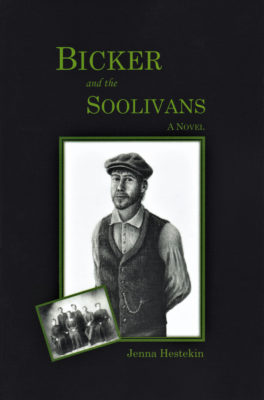
 The Soolivan family is split apart by the Civil War, but when the ugly side of fate intervenes, a silver lining appears to bring a broken family back together again. While Andy Soolivan is convalescing in the hospital with his new friend, Bicker, he receives news that his uncles have all been killed. In a letter explaining the details, August Soolivan urges his son Andy to come home. The family has suffered enough.