Tag: Historical Fiction

  • BUT NOT FOREVER by Jan Von Schleh – Y/A Value & Virtues, Y/A Clean & Wholesome Romance, Y/A Time Travel

    BUT NOT FOREVER by Jan Von Schleh – Y/A Value & Virtues, Y/A Clean & Wholesome Romance, Y/A Time Travel

    Like most fifteen-year-olds, Sonnet McKay loves a good adventure. Still, when she, her siblings, and cousins discover a deserted Victorian mansion in the middle of the woods outside a ghost town near Seattle, they get much more than they bargained for. In an upstairs bedroom, Sonnet inadvertently steps inside a time travel portal and is whisked away to 1895. In her place stands Emma Sweetwine, an identical doppelganger for Sonnet.

    Emma’s family was prominent when Monte Cristo was a booming mine town, but life is not what it seems for the oldest of the Sweetwine children. With a mother who seems to despise her and a secret engagement, Emma’s life is oppressive and controlled – a sharp contrast to the spirited, independent Sonnet. With no idea how or why they were switched, Sonnet and Emma must quickly adjust to their new environments and rely only on their closest friends and family. But like any good story, time is running out for the girls as both of their lives rush in opposite directions. They must find a way back to their own times before their chance is gone forever.

    Family, both those of birth and those of choice, is a significant theme of this novel. Sonnet has a close familial support system in her twin brother Evan, older sister Jules, cousin Niki, and best friend and cousin Lia. She has been surrounded by a loving family her entire life and spends part of each summer with her Aunt Kate, her father’s sister. Without doubt or hesitation, Evan, Jules, Niki, and Lia spring into action to both cover Sonnet’s absence and find the impossible path back to 1895. Rapp, a boy who has only known Sonnet for a day before her disappearance, is also a seamless part of the rescue brigade. This group instantly takes Emma into their embrace and makes her feel safe and loved, a first in her life. Though Sonnet has little help from Emma’s family, she quickly builds that friendship network she enjoys in her modern life. It is only with the support of the sixteen-year-old Sweetwine family nanny Kerry; Maxwell the teenage family driver; and Tor Emma’s secret betrothed, that Sonnet will hatch an escape plan. Both groups vow to take care of each girl, respectively, and help them keep the faith to make everything possible.

    The difference between Sonnet and Emma will highlight the struggle and growth of women in the world. Sonnet isn’t burdened by the many stifling rules, both spoken and unspoken, that Emma must endure. Emma is forced to hide her true self, her true feelings, none so much as those she has for Tor. As an immigrant tasked with a life of menial labor, Tor should never be a part of Emma’s social circle, much less her fiancé. She has no close female friends and must remain docile and meek even when her mother demeans and abuses her. She is stifled by all who should love and support her. Sonnet, with her modern mind and outspoken nature, fights all of those restrictions and leaves Emma’s life better.

    Sonnet makes Emma stronger, and Emma teaches Sonnet how to appreciate love in her life. In the very oppression, Sonnet finds the enjoyment of her freedom, and Emma’s liberation will create a connection to Sonnet that she can’t even imagine.

    But Not Forever won the CIBA 2019 Grand Prize in the DANTE ROSSETTI Division for Y/A novels.


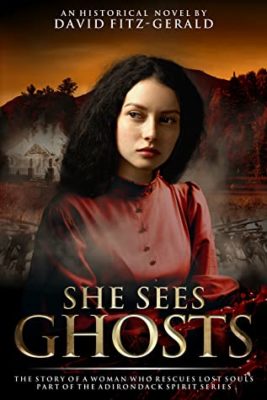
  • SHE SEES GHOSTS – Part of the Adirondack Spirit Series by David Fitz-Gerald – Historical Fiction, Paranormal Fiction, Civil War Fiction

    SHE SEES GHOSTS – Part of the Adirondack Spirit Series by David Fitz-Gerald – Historical Fiction, Paranormal Fiction, Civil War Fiction

    Laramie Western Fiction 1st Place Best in Category CIBA Blue and Gold BadgeA gentle and patient story, She Sees Ghosts is a unique addition to the historical fiction genre. Take a break from the hectic modern world and get transported to a simpler time where the full effect of the industrial revolution has yet to change America’s face forever.

    Mehitable lives with her large loving family in a small town in New England and has been hiding a secret her whole life. She sees the spirits of the departed and wishes they would leave her alone. The town is busy getting ready for the upcoming New Year celebration, which will not only mark the start of a new century but also happens to be Mehitable’s sixteenth birthday. On the cusp of adulthood, all around Mehitable, there is talk of love and marriages, but she does not feel ready and wants to keep enjoying her current life.

    After Mehitable rejects the troublesome Anson Smudge, tragedy strikes.  Anson accidentally starts a fatal fire that claims Mehitable’s family’s lives, leaving her to face the turn of the century alone. Years pass, and she slowly learns to live with her grief but is still visited by the ghost of Anson every night. After moving with her friend Polly and her husband Reuben to rural upstate New York, Mehitable begins to see countless souls of soldiers from past wars, and there she finds her calling. By helping these lost souls, will Mehitable find a way to move on?

    She Sees Ghost is a perfect choice for readers who like multifaceted stories with paranormal elements, historical fiction, and Christian influences. Fans of coming-of-age stories will especially like She Sees Ghosts as the story centers around Mehitable’s struggles and her journey to help lost souls. Some books are driven by action, while others allow the characters to unveil the truth behind their pain. This is a story more akin to the latter. Fitz-Gerald weaves characters that will live in readers’ hearts long after putting the book down.

    David Fitz-Gerald has a knack for writing historical fiction with supernatural influences. She Sees Ghosts is the second in the ongoing Adirondack Spirit Series. In this installment, time is a big theme. Mehitable’s story begins at the turn-of-a-century, where she grows up hearing stories of the fight for independence. She experiences a cultural tradition for storytelling where people look into the past for lessons to bring into the future.

    A story about love, loss, and the various forms grief can take over the yearsFitz-Gerald’s She Sees Ghosts is a compassionate tale about a woman using her unique gifts to help those around her, living or long passed.


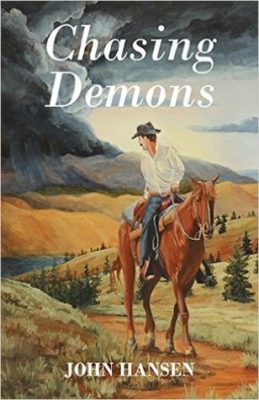
  • CHASING DEMONS by John Hansen – War & Military Action Fiction, Westerns, Action & Adventure Fiction

    CHASING DEMONS by John Hansen – War & Military Action Fiction, Westerns, Action & Adventure Fiction

    In the first several pages of Chasing Demons, a novel of the Old West not long after the American Civil War, the following happens to U.S. Army Private Gus O’Grady: he kills two Apache Indians, saves the lives of a troop of U.S. soldiers, kills two more Indians, kills a bad guy, winds up being mistaken for a man who may have robbed a bank of $20,000 in gold, and gets arrested for possibly being the man who raped a lass in an Arizona town populated by Mormons, and meets a woman he thinks is far too good for him. Oh yes, and he deserts the Army after 13 years.

    That’s just for openers.

    Gus is a complex character. He knows his strengths—he’s an excellent soldier—but understands his weaknesses—not being fond of authority and deathly afraid of the effects of alcohol on him. He is also awkward in the extreme when it comes to women. He doesn’t shoot anyone that doesn’t deserve to be shot and lets his nobler impulses rule when others might run or turn to wickedness.  He hopes his deserter status remains a secret, but it keeps on leaking out at the most inopportune times despite his impressive list of good deeds. Trying to forge a new path for himself in the dog-eat-dog, unforgiving times of our post-Civil War western frontier is no easy task.

    Gus’s life, his demons, and his existential quandaries could well have been produced as a film noir set in fog-shrouded San Francisco during the late 1940s, shot in black and white, bad, bad guys and good-hearted dames with a past, bodies falling left and right, a sense of foreboding as the central character tries to escape his fate even as we well know he never will. No less an authority than the puritanical motion picture industry Production Code of the 1930s laid out the fate that awaits guys like Gus, even the best of them: “Sympathy with a person who sins is not the same as sympathy with the sin or crime of which he is guilty. We may feel sorry for the plight of the murderer or even understand the circumstances which led him to his crime: We may not feel sympathy with the wrong which he has done.”

    Poor Gus . . . or maybe not. The book keeps his ultimate fate to the final page. No fair peeking!

    Chasing Demons is for anyone who enjoys a fast-paced well-written, articulate novel. The memorable characters, clever plot, and terrifically entertaining story is every reason for you to wander into your favorite saloon, listen to the piano player banging out “Buffalo Girl Won’t you Come Out Tonight” on his tinny piano, watch the Five Card stud game over in the corner, then sit down at the bar, order a whiskey, two fingers if you please, and start reading Chasing Demons. Oh, and keep your revolver handy. You never know when you’ll need it.

    Chasing Demons won 1st in Category in the CIBA 2018 LARAMIE Awards for Western Fiction.


  • The 2019 Overall Chanticleer International Book Awards Grand Prize Winner – 2019 CIBAs

    The 2019 Overall Chanticleer International Book Awards Grand Prize Winner – 2019 CIBAs

    We are honored and excited to announce the Best Book Overall Grand Prize Winner of the 2019 Chanticleer International Book Awards – the 2019 CIBAs

    Chanticleer Reviews Grand Prize Ribbons!

    Who took home the coveted Overall Grand Prize Best Book Blue Ribbon? 

    There are 17 Grand Prize Blue Ribbons, but only one will Overall Grand Prize Blue Ribbon for Best Book. The competition is fierce and competitive. We love each one, but only one can win.

    Who will be able to display and promote the gorgeous Grand Prize Badge in all book promotions for the winning title?

    17 authors made it to the exclusive CIBA Grand Prize Levels

    Which title will receive the Chanticleer Reviews Package and be featured in the  Chanticleer Reviews magazine winter quarter’s edition? 

    There were 17 CIBA Grand Prize Division Winners!

    Who will be interviewed and featured in our well-trafficked website?  

    All of the CIBA Grand Prize Division Award Winners will be featured!

    Who will receive the Overall Best Book Grand Prize Book Award Winner’s $1,000 USD? 

    There is only one $1,000 USD check at this time for the one CIBA OVERALL BEST BOOK.

    CONGRATULATIONS to

    James Conroyd Martin,

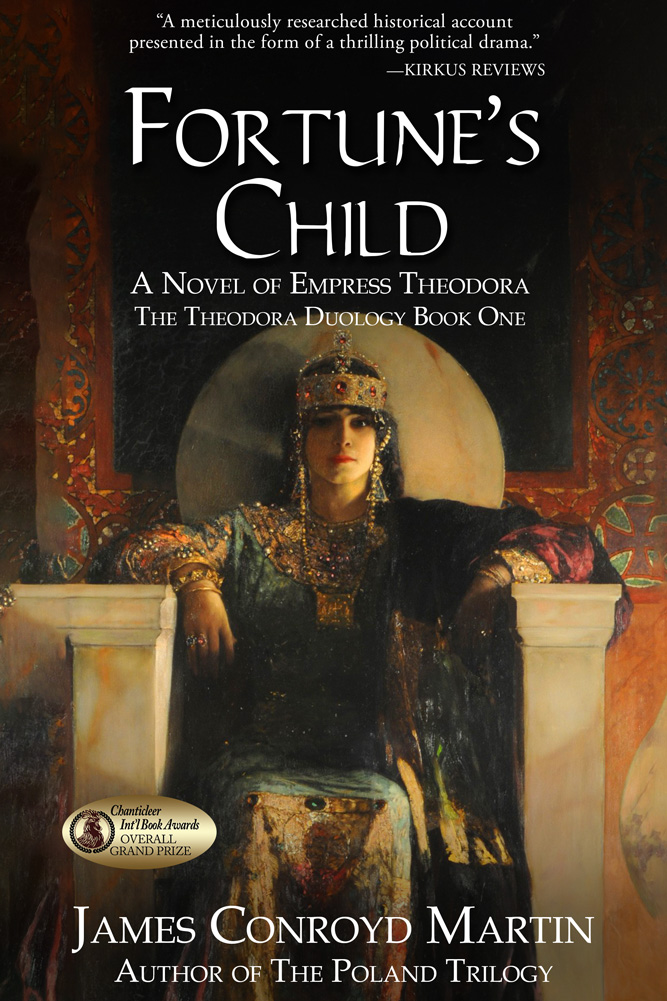
    author of the 2019 CIBA Overall Best Book Fortune’s Child: A Novel of Empress Theodora 

    The journey of  Fortune’s Child: A Novel of Empress Theodora by James Conroyd Martin in the 2019 Chanticleer International Book Awards. 

    James Conroyd Martin, author of the Overall Best Book of the Chanticleer International Book Awards selection: FORTUNE’S CHILD: a novel of Empress Theodora


    Fortune’s Child: a Novel of Empress Theodora authored by James Conroyd Martin advanced from the entry level of all submissions into the 2019 Chaucer Book Awards for Pre-1750s Historical Fiction to the division’s Long List. From there, it advanced to the Chaucer Book Award’s Shortlist. Then it advanced in the next rounds to the Semi-Finals. More than half of all the 2019 Chaucer entries have fallen off the list and did not advance to the Semi-Final rounds. For works to advance to the Premier FINALIST rounds in each division, they must have been entirely read, rated, and then ranked by the CIBA judges for an overall average score of at least 8 out 10. From that point, the competition becomes fierce. Each judge evaluates the works competing for the limited first place category positions for each division. And then the judging continues as the selections are made for the CIBA Grand Prize Winners.

    Each year, we find the quality of the entries and the competitiveness of the division competitions increasing exponentially. We added a new level to the judging rounds in 2019—the premier Level of FINALIST per each CIBA Division. The CIBA judges wanted to add the Finalist Level of Achievement as a way to recognize and validate the entries that had outstanding merit but were not selected for the very few First Place Award positions within each genre division.

    We want to thank each and every one of the 2019 CIBA judges.

    Without your passion and labor of love for books, the Chanticleer International Book Awards would not exist and we could not fulfill our mandate:  Discovering Today’s Best Books!

    THANK YOU JUDGES!

    The Chanticleer International Book Awards Discovers Today’s Best Books!

    We want to thank all who have entered and participated in the prestigious CIBAs.

    We invite you to click on the links below that honor and recognize all 17 Divisions of the CIBAs First Place Award Winners and Division Grand Prize Winners. 

    PART ONE – The 2019 Chanticleer International Book Awards Division Winners

    PART TWO – The 2019 Chanticleer International Book Awards Division Winners

    PART THREE – The 2019 Chanticleer International Book Awards Division Winners

    Additionally, there are links on the Chanticleer Reviews website recognizing and announcing the works that advanced to the Premier Finalist Level of the 2019 CIBAs.

    The winners were recognized at the Virtual Chanticleer Authors Conference and Awards Ceremonies that were held on during VCAC September 8 – 13, 2020 by ZOOM webinars based at the luxurious Hotel Bellwether, Bellingham, Wash.

    You know you want a coveted Chanticleer Reviews Blue Ribbon! 

    Submit your works (manuscripts or novels published after or on January 1, 2018, are accepted) to the prestigious Chanticleer International Book Awards today! Entries are being accepted into the 2020 and now 2021 CIBAs in all 17 fiction divisions and five non-fiction divisions. 

    Be sure to register early for the 2021 Chanticleer Authors Conference that will start on April 16th, 2021 with the 2020 CIBA banquet and ceremony scheduled to take place on Saturday, April 17th, 2021 at the luxurious Hotel Bellwether in Bellingham, Wash. If we cannot move forward with CAC21 due to the coronavirus, we will host another LIVE and HYBRID Chanticleer Authors Conference and 2020 Chanticleer Int’l Book Awards ceremony.

    Pivot and Oscillate are the Words for Today’s Challenging Times as We All Learn Together! 

    An email will go out to all 2019 CIBA award winners prior to October 31, 2020, with instructions, links, and more information about the awards packages. We appreciate your patience. As stated many times before “One does not need to be present at the CIBA ceremony and banquet to win. But it sure is a lot more fun!” –even if it is virtual!

    As always, please contact us at Chanticleer@ChantiReviews.com with any questions, concerns, or suggestions!

    Be well. Stay Healthy. Take Care!

    The Chanticleer Reviews Team

  • GOETHE Book Awards for Post-1750s Historical Fiction – 2019 CIBAs

    GOETHE Book Awards for Post-1750s Historical Fiction – 2019 CIBAs

    Post 1750s Historical Fiction AwardCongratulations to the First Place Category Winners and the Grand Prize Winner of the GOETHE Book Awards for Post-1750s Historical Fiction, a division of the 2019 CIBAs.


    The Search for the Best New Post-1750s Historical Fiction

    Chanticleer Book Reviews is celebrating the best books featuring Late Period Historical Fiction. Regency, Victorian, 18th Century, 19th Century, 20th Century, World and other wars, History of Non-Western cultures – all set after the 1750s. We love them all.

    The 2019 GOETHE Book Awards First Place Category Winners and the GOETHE Grand Prize winner were announced at the Virtual Chanticleer Authors Conference that was broadcast via ZOOM webinar the week of Sept 8 -13, 2020 from the Hotel Bellwether in Bellingham, Wash.

    Kaylin McFarren, CLUE Grand Prize winner 2017 – Twisted Threads, announced the 2019 GOETHE Book Awards.

    This is the Official 2019 LIST of the GOETHE Book Awards First Place Category Winners and the GOETHE Grand Prize Winner.

    Congratulations to All! 

    • Vanda Writer – Paris, Adrift 
    • Kari Bovee – Peccadillo at the Palace  
    • PJ Devlin – Wissahickon Souls   
    • Mary Adler – Shadowed by Death: An Oliver Wright WWII Mystery   \
    • Mike Jordan – The Runner     
    • J.G. Schwartz – The Pearl Harbor Conspiracy 

    The GOETHE Book Awards

    Grand Prize Winner is

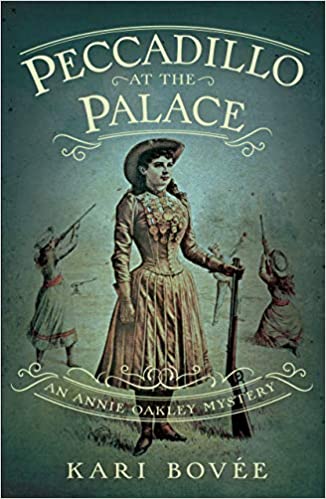
    Peccadillo at the Palace – An Annie Oakley Mystery

    by Kari Bovee


    This is the digital badge for the 2018 GOETHE Grand Prize Winner – The LOST YEARS of BILLY BATTLES by Ronald E. Yates.

    How to Enter the GOETHE Book Awards?

    We are accepting submissions into the 2021 GOETHE Book Awards until June 30, 2021. Submissions into the 2020 CHAUCER Book Awards are closed. 

    The 2020 GOETHE Book Awards winners will be announced at CAC 21 on April 17, 2021.

    Don’t delay! Enter today! 

    A Note to ALL the WINNERS: The coveted CIBA Blue Ribbons will be mailed out starting in mid-October. We will contact you with an email to verify your mailing address and other items. We thank you for your patience and understanding.

    If you have any questions, please email info@ChantiReviews.com == we will try our best to reply in 3 or 4 business days.

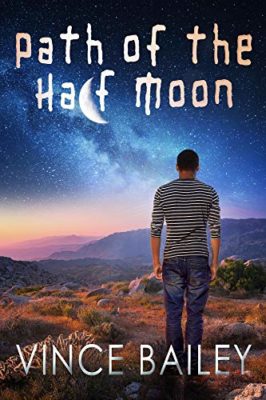
  • PATH of the HALF MOON by Vince Bailey – Historical Fantasy, Supernatural Thrillers, Historical Thrillers

    PATH of the HALF MOON by Vince Bailey – Historical Fantasy, Supernatural Thrillers, Historical Thrillers

    Paranormal Supernatural Fiction 1st Place CIBAAfter being charged with burglary and attempted arson, fifteen-year-old African American boxer, Curtis Jefferson, has been sent to Fort Grant, a juvenile detention area in Arizona in Vince Bailey’s Path of the Half Moon.
    All of the creepy stories and whispered warnings about the former US military outpost used by the US cavalry to eliminate the Apache a hundred years ago pale in comparison to the truth Curtis finds there. Curtis faces racism from both inmates and guards, to make matters worse, he is also very aware of the presence of something not of this world. He quickly discovers (though he doesn’t want to admit it) that he is sentient to the fort’s bloody past atrocities. As the site where Pinal and Aravaipa Apaches were slaughtered, the fort seems to be a crossroads where past and present meet. From mournful coyotes to hundreds of circling vultures, Curtis can’t escape the strange visions and events inside and outside the fort. When he attracts the unwanted attention of Harvey Huish, an inmate with unusual abilities, Curtis creates a powerful enemy bent on revenge and humiliation.

    A major theme of the novel is the power of language.

    It appears in numerous aspects of the plot from the Apache cursing the white man’s cunning use of his complicated and deceitful tongue to Randy’s appreciation of Howard Cosell’s elevated vocabulary. The frame-story technique within the novel establishes the concept of storytelling and the influence of words. Curtis’s story is narrated by Vince, Curtis’s new friend, who relays it to the reader at the same time Curtis is telling him. As a natural-born storyteller, Curtis is the storyteller in town, and Vince sees the story as a treasure, a jewel, that Curtis has seen fit to share with him and thus sees himself as somehow honored in receiving the tale. Vince values the story as more than just words; it makes him more significant for having heard it. Though the story is unbelievable at times, Curtis does what all great storytellers do – he creates a suspension of disbelief, granting the listener the right to believe, to feel that “[a]ll things are possible,” an idea repeatedly given by various characters within the story. Through the telling, Curtis finds solace in giving his outlandish tale an authentic voice.

    The theme of language also appears later in the character of Will Farnsworth, Harvey’s tortured attorney. As the newest and most talented attorney in the firm that represents the Huish family, Will has been given the unachievable task of pacifying Harvey during his imprisonment at Fort Grant. Like many lawyers, Will uses words in “purposed profusion,” trying unsuccessfully to befriend Harvey and later intimidating him with language. He attempts to use his words as weapons, rather than tools for communication, a failure which leads to his enslavement to the abhorrent Harvey.

    Another aspect of the novel is the blurring of time.

    The sinister fort itself is one part of this theme because it seems to exist in two time periods, its tragic past and its purposeful present. Curtis repeatedly sees images of days past that cross into his present-day 1960s. In fact, his first day at the fort, he witnesses a hanging from the Indian uprising days. Later, Curtis crosses this boundary himself and crosses paths with a murdered Apache boy. The Headmaster, Roy Whitcomb, known by all as the Lieutenant, never leaves the fort but is stuck it seems within Fort Grant’s time loop, effectively becoming “the man in the maze,” the Pima tribal emblem. He is forever trapped within the maze’s limitations and obstacles, unable to make the right choices and find his way into the next plane, the gift of a better existence. The very retelling of Curtis’s story symbolizes this blurring of time as well. During the entire story, Vince’s watch remains fixed when Curtis begins his tale, time seemingly suspended along with his disbelief.

    Path of the Half Moon won First Place in the CIBA 2018 Paranormal Awards for supernatural novels.


    Paranormal 1st Place Winner Sticker

    5 star book award sticker


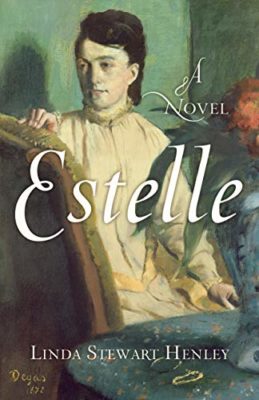
  • ESTELLE: A Novel by Linda Stewart Henley –  American Historical Romance, Southern Fiction, City Life Fiction

    ESTELLE: A Novel by Linda Stewart Henley – American Historical Romance, Southern Fiction, City Life Fiction

    Twenty-two-year-old museum intern and unknown artist, Anne Gautier, has undertaken a significant project, restoring an elegant house on one of the most beautiful streets in New Orleans. The grand old Creole home has been in her family for many generations, and, when her grandfather died, he left her the house on Esplanade Avenue, where all the best French Creole families once lived.
    There’s only one stipulation: She must restore the property or ownership will revert to the city. Even though the house is not in the best part of town, Anne is determined to celebrate the historical home not only because of her own family, but also because it was an integral part of New Orleans’ history during the visit of Edgar Degas in 1872. In fact, in Anne’s attic, Degas’s notebook gives her the money she needs to begin the restoration.

    Her plans go sideways when someone breaks in and vandalizes the home, leaving behind a threatening note and a mystery to solve. On top of this, Anne is trying to reconcile her feelings about Stella, the half-sister Anne recently met. Is Stella behind the vandalism? She was left out of their grandfather’s will. Anne tries to rely on her new boyfriend, Sam, for advice, but he has begun acting strangely, sneaking around behind her back and hedging his answers to her questions. With no one to lean on, a demanding job, and her own artistic-inspiration waning, Anne may never see her beautiful home and its essential history revived.

    The dual settings of New Orleans in 1870 and 1970 give this novel a unique perspective. The juxtaposition of the Musson and De Gas families’ issues to the modern trials of Anne and her own family provides perspective and education for the reader. Though their struggles seem completely unalike, the parallel stories are paradoxically similar. Estelle De Gas, sister-in-law and cousin of Edgar Degas, is a strong woman trying desperately to hold her marriage to a cheating husband together. At the same time, maintaining the expected appearance of a well-to-do Creole family while knowing the family’s fortunes have fallen.

    Anne is struggling to find her place in the world and to hold together what family she has left while dealing with her own untrustworthy partner, Sam. Though Sam admonishes her for refusing to look at the practical realities of life, she seeks to make her surroundings beautiful, just as Estelle does in encouraging Degas to find his inspiration in la Nouvelle-Orléans. Anne wants desperately to make her own way in the world. Though Estelle isn’t an unmarried young woman, she understands the integral role she plays within her sphere of familial influence. The more Anne learns about Estelle, the more she realizes she needs to take a leaf from her ancestor’s playbook and find her own strength.

    Art plays a huge role in this novel. Edgar and Anne share a similar notion that the life of an artist is not one easily shared with another. Both are suffering from a lack of inspiration and direction. During the time Degas spent in America, he had achieved little recognition, and his brothers hoped he would take an interest (and make an investment) in the family cotton business. Anne has given up her art for her busy internship and her flailing love life. Though the museum job isn’t her dream, she understands art is not an easy way to make a living. She avoids facing the truth just as Degas begins to feel he must help his family by selling his work and sending them much-needed money. Eventually, New Orleans offers both a new subject matter for their art. Anne, with her new-found sympathy for the poor of the city and Edgar with his own family’s business.

    The growth of Anne’s relationship with her half-sister, Stella, is an interesting subplot in conjunction with Anne’s realization about the struggles of poverty-stricken New Orleanians. Anne has only recently learned of her sister’s existence because Stella, the product of a teenage dalliance, was given up for adoption immediately after her birth. Anne’s overwhelming guilt over her half-sister’s lost inheritance haunts her, and though she wants to share, giving up a portion of her estate is not the easiest thing to do. But the hard truth is, Stella is facing eviction from a Section C housing, a slum where the houses are more like shacks. Anne could offer Stella a home in their grandfather’s former home, but will she?


  • The QUISLING FACTOR by J. L. Oakley – Historical European History, Wartime Fiction, Historical Military Thriller

    The QUISLING FACTOR by J. L. Oakley – Historical European History, Wartime Fiction, Historical Military Thriller

    During World War II “quisling” became a byword for a particular type of traitor, one who not only betrays their own country but also actively collaborates with the invaders. The origin of the term was taken from an actual person, a Norwegian named Vidkun Quisling, who didn’t merely cooperate with the Nazis but actually headed a collaborationist regime in his own country.

    The Quisling Factor takes place in the immediate post-war period, as the Nuremberg Trials are gearing up in Germany. Norway is conducting its own post-war legal purge of collaborators at all levels of government.

    The story is a direct follow-up to the author’s award-winning World War II novel, The Jøssing Affair. This second novel focuses on the physical and emotional toll of war, and its precarious weight of peace on the survivors.

    While the events of J. L. Oakley’s latest novel directly relate to those in The Jøssing Affair, each book is quite capable of standing alone. The first one deals directly with the dangers of war, particularly for those who were part of the anti-Nazi resistance. The Quisling Affair is a peacetime story. While the novel definitely deals with the war’s aftermath, it also sits on the chilling crossroad between a spy thriller and Nordic noir, as the dangers faced by former intelligence officer, Tore Haugland, his wife Anna and his Norwegian family face in two directions.

    During the war, Tore was captured by the Gestapo, then tortured by Henry Oliver Rinnan, a Norwegian who ran a notorious organization that targeted resistance organizations in the Trondheim region. He is now scheduled to testify against Rinnan and his vicious gang. While those leaders are in prison, someone on the outside clearly does not want Tore to testify. His family is being threatened to perhaps block his testimony. There is also the possibility of betrayal from within. Not all of Tore’s Norwegian family is willing to accept his half-German, half-American wife as they are unable to separate their suffering at the hands of the Nazis from her heritage.

    This meticulously researched historical epic delves deeply into the traumas of all the survivors, whether military, resistance, or civilian, as well as peering into the abyss that lies between the horrors behind them and the hopefully brighter future ahead. The reader sees into Tore’s mind and empathizes with the way that his war continues to eat at him – and his heart that has chosen not just to survive but to love again.

    We highly recommend The Quisling Factor for readers looking for an exceptional post-WWII story, for a fantastic thriller with both espionage and domestic elements, and for anyone who loves Nordic noir and would like to see it set in another era. This book is a winner.

    The Quisling Factor won the Hemingway Book Awards Grand Prize for the 2020 Chanticleer Int’l Book Awards.


  • ALL THINGS GOETHE! June 2020 SPOTLIGHT on Post-1750 Historical Fiction

    ALL THINGS GOETHE! June 2020 SPOTLIGHT on Post-1750 Historical Fiction

    Post 1750s Historical Fiction Award


    Welcome to the SPOTLIGHT on post-1750 Historical Fiction novels… in other words,
    Welcome to the GOETHE Book Awards!


    Why do we like Johann Wolfgang von Goethe so very much? It’s simple! He’s the guy who wrapped up everything we believe in with this simple sentence:


    “Whatever you can do or dream, you can begin it. Boldness has genius, power, and magic in it.” – Goethe


    Of course, this was also said about Goethe (Super Goethe by Ferdinand Mount) that “…[his] company could be exhausting. One minute he would be reciting Scottish ballads, quoting long snatches from Voltaire, or declaiming a love poem he had just made up; the next, he would be smashing the crockery or climbing the Brocken mountain through the fog.”  

    So…, moving on… Goethe was also a very cool guy. In his lifetime, he saw the beginning of the Industrial Revolution in 1750 through Mary Shelley’s publishing of Frankenstein in 1818 – and everything in between! Check out the list of what happened during those nearly seventy decades at the end of this post – you will be A-Mazed!

    Goethe Book Awards Semi-Finalist Badge


    Now, Welcome to the GOETHE Hall of Fame!

    We wish to congratulate 2018’s Goethe Book Awards Grand Prize Winner –

    The Lost Years of Billy Battles by Ronald E. Yates

    Billy Battles is as dear and fascinating a literary friend as I have ever encountered. I learned much about American and international history, and you will too if you read any or all of the books. Each is an independent work, but if read in relation to the others, the reader experiences that all too rare sense of complete transport to another world, one fully realized in these pages because the storytelling is so skillful and thoroughly captivating. Trust me; you’ll want to read all three volumes. Chanticleer Reviewer’s Note

    Mr. Ronald Yates not only won Grand Prize in the CIBAs 2018 GOETHE Awards – he won OVERALL GRAND PRIZE!


    To learn more about Ronald E. Yates, please click here.


    Congratulations to the 2018 Goethe Book Awards First Place Category Winners! 


    The GOETHE Book Awards for post-1750s Historical Fiction Grand Prize is awarded to:


    Paladin’s War: The Adventures of Jonathan Moore by Peter Greene

    Congratulations to the 2017 Goethe Book Awards First Place Category Winners! 


    The Goethe Grand Prize Ribbon for Historical Fiction Post 1750s 2016 was awarded to:

    The Jøssing Affair by J.L. Oakley

    Congratulations to the 2018 Goethe Book Awards First Place Category Winners! 

    • Women’s Historical: A Seeping Wound by Darryl Wimberley
    • Manuscript World Wars and Other Wars: In Their Finest Hour by Duncan Stewart
    • North American Turn of the Century: The Depth of Beauty by A.B. Michaels
    • Regency, Victorian, 1700s/1800s: A Woman of Note by Carol M. Cram
    • British/Europe Turn of the Century: Silent Meridian by Elizabeth Crowens
    • Historical Fiction Manuscript: Running Before the Wind by Carrie Kwiatkowski
    • 20th Century: The Boat House Cafe by Linda Cardillo


    Post 1750s Historical Fiction AwardThe deadline for entering manuscripts and recently published works into the 2020 Goethe Book Awards is coming up fast! JUNE 30, 2019 is the deadline!

    For more information, please click here!


    Submit your manuscript or recently released Historical Fiction (post-1750s) to the Chanticleer International Book Awards!


    Want to be a winner next year? The deadline to submit your book for the Goethe Awards is June 30, 2020. Enter here!

    Grand Prize and First Place Winners for 2019 will be announced during our 2020 conference, #CAC20.

    The Grand Prize and First Place for 2020 CIBA winners will be held on April 17, 2021.

    Any entries received on or after June 30, 2020, will be entered into the 2021 Goethe Book Awards that will be announced in April 2022.

     As our deadline draws near, don’t miss this opportunity to earn the distinction your historical fiction deserves!  Enter today!

    The GOETHE Book Awards is a division of the Chanticleer International Book Awards – the CIBAs.

    The 2020 winners will be announced at the CIBA  Awards Ceremony during #CAC20. All Semi-Finalists and First Place category winners will be recognized, the first-place winners will be whisked up on stage to receive their custom ribbon and wait to see who among them will take home the Grand Prize. It’s an exciting evening of dinner, networking, and celebrations! 


    Goethe

    Some events that occurred during  Goethe’s lifetime:

    1750 – The Industrial Revolution began in England
    1756 – Wolfgang Amadeus Mozart was born in Salzburg Austria
    1761 – The problem of calculating longitude while at sea  was solved by John Harrison
    1765 – James Watts perfects the steam engine
    1770 – Ludwig van Beethoven was born in Bonn, Germany
    1774 – Goethe’s romantic novel, The Sorrows of Young Werther, propels him into European fame
    1774 – Goethe’s play Gotz von Berlichingen, a definitive work of Sturm und Drang premiers in Berlin
    1776 –  America’s 13 Colonies declare independence from England. Battles ensue.
    1776 – Adam Smith publishes the Wealth of Nations (the foundation of the modern theory of economics)
    1776 –  The Boulton and Watt steam engines were put to use ushering in the Industrial Revolution
    1783 – The Hot Air Balloon was invented by the Montgolfier brothers in France.
    1786 – Le Nozze di Figaro by Mozart premiered in Vienna
    1789 – George Washington is elected the first president of the United States of America
    1780 – Antoine Lavoisier discovers the Law of Conservation of Mass
    1789 – The French Revolution started in Bastille
    1791 – Thomas Paine publishes The Rights of Man
    1792 – Napoleon begins his march to conquer Europe
    1799 – Rosetta Stone discovered in Egypt
    1802 – Beethoven created and performed The Moonlight Sonata
    1802 – A child’s workday is limited to twelve hours per day by the British parliament when they pass their first Factory Act
    1804 – Napoleon has himself proclaimed Emperor of France
    1808 – Atomic Theory paper published by John Dalton
    1811 –  Italian chemist Amedeo Avogadro publishes a hypothesis, about the number of molecules in gases, that becomes known as Avogadro’s Law
    1811 – Jane Austen’s Sense and Sensibility was published anonymously. It was critically well-received
    1814 – Steam-driven printing press was invented which allowed newspapers to become more common
    1818 – Mary Shelley publishes Frankenstein
    1832 – Goethe’s Faust, Parts 1 & 2 are published posthumously (March 22, 1832)

    In 1830, Eugene Delacroix  created Liberty Leading the People to epitomize the French Revolution. The movement officially began with the Storming of the Bastille on July 14, 1789, a day that is still celebrated in France.  The French people were rebelling against the extreme wealth of the French royal family who overtaxed and underpaid the people of France to the point where they could not even feed themselves and had nothing to lose by going to battle. They were starving to death.  The uprising of 1830 was featured in Victor Hugo’s Les Miserables (1862)

    Claude-Michel Schönberg and Alain Boublil’s (1980s) musical can look at Delacroix’s Liberty Leading the People and hear the lyrics of the song that serves as a call to revolution:
    Do you hear the people sing? Singing a song of angry men? It is the music of a people. Who will not be slaves again.
    Liberty Leading the People by Eugene Delacroix, 1830. On display at the Lourve, Paris.


    Resources 

    *Britannica Encyclopedia 

    ** Oxford Reference

    ***New Yorker Magazine

  • A FEMALE DOCTOR in the CIVIL WAR by Richard Alan – US Historical Fiction, Civil War Fiction, Female Doctors Civil War

    A FEMALE DOCTOR in the CIVIL WAR by Richard Alan – US Historical Fiction, Civil War Fiction, Female Doctors Civil War


    Imagine a fearless, hard-as-nails contract surgeon hired by the Union Army who often works 48-hour shifts in battlefield medical tents amputating limbs, healing previously inoperable gut wounds, sewing up children’s hare lips, and diagnosing what we now call PTSD as critical in military patient care as patching physically wounded bodies.

    Meet Dr. Abby Kaplan. And yes, she’s a woman.

    A native of the Pacific Northwest, Dr. Abby stands six feet tall and exchanges her dresses for breeches, totes a gun on her hip, engages in military defensive maneuvers, and is wounded multiple times for her efforts. Dr. Kaplan takes no guff from anyone and uses the language of soldiers appropriate to the situation. In a time when men are in charge and women are not, she wins the respect of her male colleagues in the most gruesome medical cases, winning over even those who could not fathom a woman examining a man’s most private parts.

    Even more remarkable, despite the prejudices of her times, she finds ways to celebrate her Jewish heritage and even finds a man unafraid of her enough to become her occasional lover, but virtually only at her request.

    A woman as strong, complex, and dedicated to medicine probably existed somewhere during that time. A small number of women doctors did work on soldiers during the Civil War. Richard Alan develops his lead with guts and gumption, so much so, that readers will likely fall in love with Dr. Kaplan.

    A Female Doctor in the Civil War pays little attention to romance or sentimentality. Dr. Kaplan’s issues in pre-suffrage America are more about stopping male prejudice from interfering with her work than self-conscious screeds about being a female in a man’s world. We learn little about her past. Her more reflective moments are about the medical debacle she sees as she stitches and saws and mends the broken bodies that fill her medical tents, as well as her reflections on how much more the minds of these soldiers need to be treated during the war.

    When she does find a lover, he is a momentary respite from the battlefield, not a “rescuer.” Their discussions about the differences between men and women are by two adults who respect each other. Others in that period of our history may see Dr. Kaplan’s sex and religion as problems. She sees them at worst as inconveniences that sometimes prevent her from doing her job as well as she thinks she can. Her one weakness, the nightmares that keep plaguing her after her work is done, are those any adult would suffer after working in the carnage she witnesses that is her life.

    In other words, Dr. Abby Kaplan is a strong, capable, and uniquely modern physician working within the social and medical limitations of her time. She is there to do a job only a handful of doctors have the stomach to undertake.

    A Female Doctor in the Civil War won First Place in the CIBAs 2018 Laramie Awards for American Fiction.