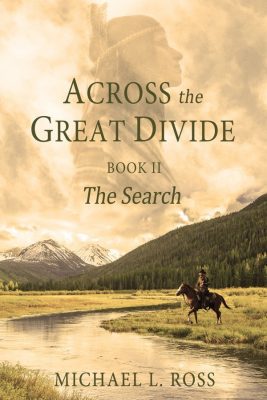
The Search (Across the Great Divide: Book II)by Michael L. Ross brings to life the history and events of the Westward Expansion in a post-Civil War US. In this sequel to The Clouds of War (Book I), we once again follow Will Crump, now a young Confederate Veteran, a POW survivor, and a sufferer from what must be PTSD. With the war over, nightmares and tension with the family disrupt his life and plans to marry his pre-war sweetheart. He wants to get away from civilization, build a little cabin in the mountains, and live in peace.
Will strikes out on his horse Dusty and soon picks up a stray dog he names Lightening. Both animals play essential roles in Will’s survival throughout his journey, and readers will worry for and root for them as much as for Will as they face the wild west head-on.
Early on, Will witnesses a native woman trying to escape two native men who seem to be holding her captive. When he realizes her life is in jeopardy, Will jumps into action and puts his sharpshooting skills to work. At this point, Will struggles to control his incapacitating panic amidst the flashbacks brought on by firing his rifle. He rescues the young woman, Dove, and they travel together.
The last thing Will finds is peace, and he begins to think that coming west might have been a mistake. Nevertheless, he and Dove reach Fort Laramie, where Will grows to respect and even love a native woman. Nevertheless, he has made a vow to return her to her people, and he will not rest until he has done so.
There are a host of characters surrounding Will, many of whom come directly from history. Through extensive research into the events of the time, Ross has developed a plot and narrative that is believable and entertaining. History comes alive with his expert storytelling prowess, and he does not shy away from incorporating the brutal attitudes of the US government and its citizens toward Indigenous peoples.
Ross remains true to his story, and the result is a read that will not disappoint. This book can easily be read as a stand-alone book but might inspire readers to go back and read Book I and anticipate Book III’s release. For fans of Ross and stories set around the Civil War-era, or those new to the historical fiction of the Westward Expansion, this novel informs and entertains in a fast-paced, page-turner that is stunning in its descriptions and satisfying to the very end.
Ross uses one character, Gabe, as a sympathetic lens to expose the subtle differences between the tribes and that of the whites that overrun native hunting lands. Gabe serves as a go-between for Will in his pursuit of returning Dove to her father and in negotiations for the couple’s marriage.
Within the context of the settlers’ infringement on the migratory nature of indigenous people, the story unfolds. The Indigenous peoples’ very way of life is threatened and pressed to acts of desperation, leaving readers to wonder if Will and Dove’s story will ever come to fruition.
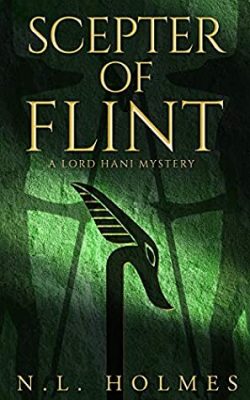
The yearning for justice is a heartfelt sentiment that has stirred people through the ages. The price for justice can be high, and it’s not always predictable who will pay. In this third Lord Hani mystery of ancient Egypt, Lord Hani is confronted with a puzzling dichotomy. It’s a pool of two truths that cannot coexist. And for Lord Hani, neither truth has the desired outcome. Yet, the King has assigned him to solve this mystery of the stealthy tomb robbers. They have broken into several sacred resting places and stolen valuable contents meant to sustain the spirits of those who passed on. Lord Hani must uncover the secret leader to stop these villains, the one determined to wield a Scepter of Flint to spark fires of division, suspicion, desperation, and greed.
As Lord Hani begins the investigation with his reliable assistant and son-in-law Maya, longtime enemy Mahu the police chief continually shows up looking for trouble and looking to get Hani off what Mahu sees as his case. However, Hani continues to puzzle out the mystery of the tomb robbers, why their crimes have started now, and where they may strike next. As he follows the clues, he finds more to this spree than robbery – much more. And now, it’s not just property that is threatened. Now lives are at stake.
Interviewing suspects and witnesses keeps Hani busy between the political new capital and the beloved old capital, a boat ride apart. He and Maya are not alone in their pursuit for the truth; generations of his passionate family, including his father, brother, dear wife, and daughter, join in. From their diverse interests and work Hani gleans insightful information. To make matters even more dire, a terrifying plague sprouts in the capital. So extra care must be taken, and their days are surrounded by the tragedy of the illness.
What Hani ultimately uncovers is shocking, and in the end, the reach of the scepter will put his family and many other innocents at risk. Hani’s trust in others – even his boss – will be tested. If he makes the wrong choices, more innocent victims will suffer. If Hani can’t complete his fight for justice in time, will they all succumb to the Scepter of Flint?
While tomb robberies serve to remind all that nothing on this earth is guaranteed to last, and political forces are turning intolerant toward divergent views, those connected to Lord Hani have the company of a true and trusted friend. Hani and his wife keep a house that is as busy as ever with family and friends coming and going. It often feels like a safe harbor, where all are welcome.
N.L. Holmes arms her fascinating characters with motives and dreams that tug at the heart and places them in a world of highly relatable circumstances. Because Holmes masterfully lays out the unique story and situation of each character, there are no real minor characters. She contrasts the very human foibles with the stunning descriptive passages of the natural beauty surrounding these characters, if only they appreciate it. The reader certainly does. The author’s poetic depictions capture the spirit and renders us helpless in her grasp, then she draws us back to conspiracies, machinations, and perilous plot twists that spark fears of the Scepter of Flint.
The third book in the Lord Hani mysteries, Scepter of Flint, will keep readers glued to the page – and dying for the next book in the series, The North Wind Descends. Those who are new to the series will undoubtedly want to read the first two books, Bird in a Snare and The Crocodile Makes No Sound.
An engaging history of ancient Native American peoples is brought to magical life by author David Fitz-Gerald.
In the early 1100s, in a region now known to us as the Adirondack Mountains of northern New York, a small band of tribal people is living in longhouses, growing crops, fishing, hunting, and enjoying certain rituals such as face and body painting, occasional migration for food survival, and even seasonal “vacations,” all while willingly obeying a simple form of governance with elements of basic democracy. In this tribe, we meet Wanders Far, a child who earns his nickname after showing a propensity to disappear and explore since he could walk. His mother, Bear Fat, is the recognized chieftainess of their group, mother of a large brood, one of whom is stolen as the book opens. Wanders Far would be considered an unusual child in any society, gifted with a highly accurate memory and the ability to visualize future events. He can also run like the wind, and with his love for travel, he is often the first to see and warn his people of danger, such as a cadre of warriors from a hostile tribe heading towards his home settlement.
Fitz-Gerald’s book interweaves family chronology, legend (such as tales of Hiawatha), and fact-weighted history into what is essentially a human drama focused on the personal lives of Wanders Far and his cultural community. Through the happenings described, we learn more about how such indigenous people survived and progressed. We see them fishing, hunting, and foraging, as well as loving, celebrating, and mourning. One dominant theme concerns the mixture of tribes in the area – Mohawk, Onondaga, Oneida, Cayuga, and Seneca. We see how they interact, with some being more generally friendly and others being enemies who may become allies as, in the future, they will meld into what is called The Iroquois Confederacy, serving a significant role in the founding of the first European colonies. We see Wanders Far and his relatives – all with earthy, practical names like Squash, Gentle Breeze, and Big Canoe – as real people who laugh and cry, fall in love, make war and form alliances in their nature-bound, intuitively guided, pre-technological circumstances.
Imbuing his hero with “second sight” along with exceptional physical prowess, Fitz-Gerald states that he was drawn to compose the story of Wanders Far through his own powers of imagination coupled with a fascination for the region where he himself has lived and explored. He draws a dynamic portrait of how specially gifted people were and can still be welcomed into the fold despite their differences. Wanders Far will experience a long life, here skipping from his early twenties to his mid-seventies, and readers will hope that a future novel may reveal more of the exploits of his full manhood. A small hint at the book’s end alludes to a distant identity and makes us want to see more from this multi-talented, highly creative author.
Wanders Far won First Place in the CIBA 2019 Laramie Awards for American Western Fiction.
As we step toward Valentine’s in quarantine, we might be a little further from our loved ones than normal, but hopefully that doesn’t mean we’re further away from love. Just like we can stay in touch with each other in different ways, we can take a moment to appreciate the different types of love we still have access to.
Love is a gross exaggeration of the difference between one person and everybody else. Like all young men, you greatly exaggerate the difference between one young woman and another…. And the only way to make sure of that is to keep changing the man; for the same man can never keep it up. – George Bernard Shaw
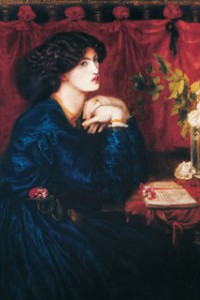
Now we like Shaw for his obscure connection to our Chatelaine Awards, which you can read about here (the long and short of it is that Shaw based Eliza Doolittle’s character from My Fair Lady off of Jane Morris, the woman, Jane Morris, in the Chatelaine portrait by Dante Rossetti).
Anyway, Shaw’s opinion on the ability of men to offer variety aside, did you know the Greeks have seven different names for love? Let’s dive in!
The Greeks Seven Names for LOVE with Recommended Book Titles from Chanticleerian Authors whose works we love.
1) Eros:
Eros is what we normally think of when we first hear the word love, the romantic and the passionate. Here are some great titles we recommend for the Eros readers out there.
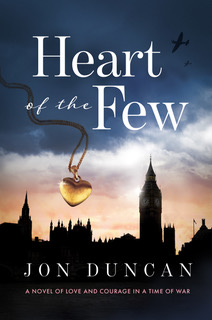
Heart of a Few by Jon Duncan: It isn’t distance that makes the heart grow fonder in this novel, but the thrill of trying to save the world from fascism in WWII. Here the aristocratic Livy Ashford falls for pilot Jamie Wallace. Like the couple’s passion for each other, the reader’s own delight will draw them through this book in a flash!
The Skeptical Physick by Gail Avery Halverson: Fire, plague? Nothing can keep these Simon McKensie and Catherine Abbott apart! Gail Avery Halverson dives deep into the romance and the historical details that inspired the background setting for this whole novel. Winner of the Grand Prize in the Chatelaine Awards
2) Philia:
Philia is more of the love for our intimates and friends, those who we choose to keep close to us. Titles for the friendly readers out there.
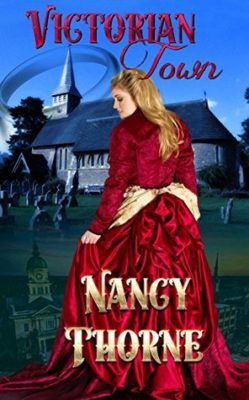
Victorian Town by Nancy Throne: A Time Traveling young woman finds friendship and joy in the past. Abby Parker never quite felt she belonged at home, but a magic ring that transports her back in time gives her a chance to make real connections and stand out in a time where outspoken women are often pushed to the side. First Place Category Winner in the Dante Rossetti Awards
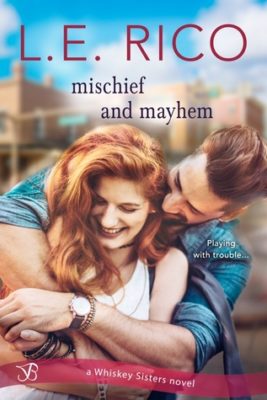
Mischief and Mayhem by L.E. Rico: Jameson O’Halloran might be surrounded by steamy looking men, but don’t be fooled. This story focuses most on the ties of family and the family we choose as we move through this veil of tears to live our best life. First Place Category Winner in the Chatelaine Awards
3) Ludus
Ludus is a close cousin of Eros, the playful, flirtatious love that is a little harder to make work over a Zoom room. For all you sassy flirts, we recommend the following
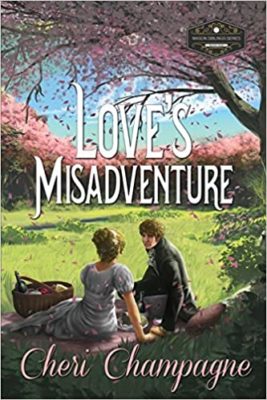
Love’s Misadventures by Cheri Champagne: The title says it all as you jump into Miss Anna Bradley’s hurried search for a husband, being in danger of forever living as a spinster at the ripe old age of 25. Written in the tradition of Jane Austen for the modern reader, this novel features debonair gentlemen who can keep their distance and pack a picnic, while delightful friendships make up a wonderful background cast of characters. First Place Category Winner in the Chatelaine Awards
Secrets Revealed by Kate Vale: Sometimes what’s meant to be fun and easy turns into something more, as happens when Owen Haskins and Faith Russell’s initial tense relationship breaks through to romantic as the casual adversaries turn into casual lovers and then maybe more. First Place Category Winner in the Chatelaine Awards
4) Storge
Storge is the unconditional love that we hope comes from family, chosen or otherwise. These titles are great reads for those who love family connection.
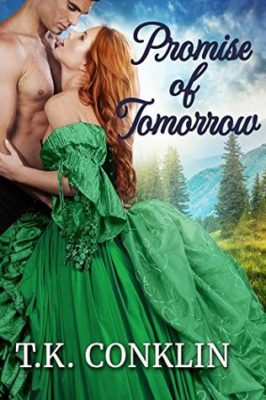
Promise of Tomorrow by T.K. Conklin: When Shyfawn Tucker’s adventure with her friend Mabel leads to disaster, the two need to figure out how to survive on their own. Meanwhile, Shyfawn’s sister Jo isn’t the type to sit around while her family is kidnapped. A story rich in romance, but that explores the ties that bind family together and what it means to find the best in everyone while still being true to yourself.
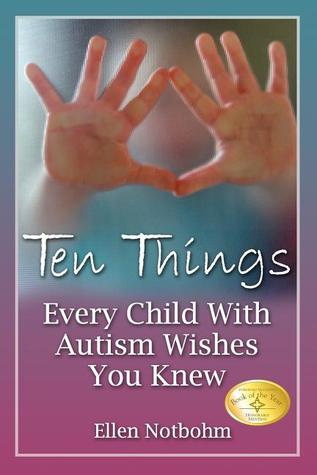
Ten Things Every Child with Autism Wishes you Knew by Ellen Notbohm: A beautiful book for parents who are struggling to better understand their children. Probably the highlight of the list is 10. “Love me unconditionally.” Don’t base approval on an “if” along with an emphasis on people with autism being whole and not promoting a harmful narrative of fixing people. A thoughtful look at the ways we can unconditionally accept people regardless of difference. Winner of the Grand Prize in the Nonfiction Instructional & Insight Awards
5) Philautia
Philautia is probably the most forgotten love we need to try and remember, which is self-love.
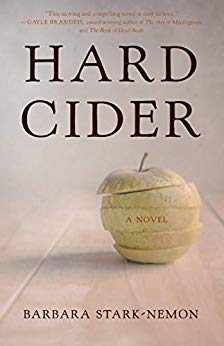
Hard Cider by Barbara Stark-Nemon: After building up a family and life that she can be proud of, Abbie Rose isn’t one to call it quits. She embarks on a totally new career path to keep living life to the fullest and be the truest version of herself that she can be. Winner of the Grand Prize in the Somerset Awards
The Knock by Carolyn Watkins: Sometimes understanding your family’s love means loving yourself when they can’t be there. Carolyn Watkin’s beautiful look at childhood with a deployed parent will tug on your heartstrings. First Place Category Winner in the Little Peeps Awards
6) Pragma
Pragma is another good overlapping love that’s usually connect to other loves. This one encompasses committed, companionate love.
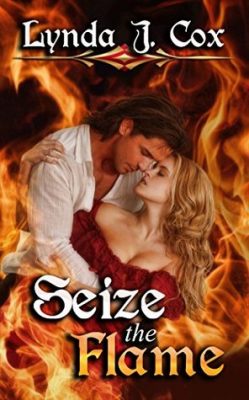
Seize the Flame by Lynda J. Cox: A story of forgiveness and finding a way to love again. Will Drake Adams and Jessie Depre be able to overcome the traumas of their past and their current betrayals to find love together again?
My Sister’s Super Skills by Lauren Mosbeck: Sometimes commitment and love mean helping our family through tough times. Mosbek does an excellent job laying out fun tools to help kids deal with anxiety and depression, especially with the current state of the world. First Place Category Winner in the Little Peeps Awards
7) Agápe
Agápe: The last and biggest love that is empathetic and universal love.
Blossom – The Wild Ambassador of Tewksbury by Anna Carner: The story of how Carner and her husband took a deer into their family and then try to raise awareness to keep her safe. Balanced with reflection of Carner’s own youth, a beautiful reminder that we are all connected with the tone of a nature thriller. First Place Category Winner in the Journey Awards
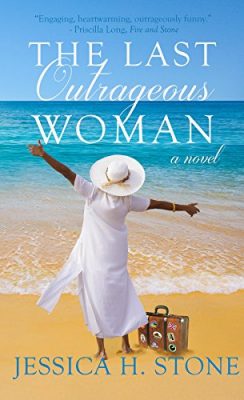
The Last Outrageous Woman by Jessica Stone: Sometimes a past lover’s dream can take you places you never dreamed possible. That’s what happens eighty-six-year-old Mattie decides to embark on a worldwide adventure with her best friend Edna and Edna’s niece. It’s a whirlwind of fun where each woman seeks fulfillment in their own way while jumping into an international stage and connecting with the wider world at large.
Do you have another type of LOVE to add to the list? We do!
BIBLIOPHILIA – The LOVE of BOOKS
Are you a Bibliophile? We are!
Here are some of Kiffer’s favorite earworms (aka lyrics) concerning love.
Because all you need is love. Love is all you need. The Beatles
Love will bring us together. Captain and Tennille
Love lifts us up where we belong. Joe Cocker and Buffy Sainte-Marie
What the world needs now is love, sweet love. Hal David
Happy Valentines Day! From all of us Chanticleer Reviews!
Love comes in many forms and so do our contests! Submit here! Want to tell us about some of the favorite loves you’ve read? Talk to us on Twitter, Facebook, or join us here on The Roost.
In the charming and heartfelt Pinto! Based Upon the True Story of the Longest Horseback Ride in History, M.J. Evans brings to life a forgotten piece of American history. Here from a unique perspective, Evans recaptures the legendary journey of the Overland Westerners, a group of four men on horseback who rode over 20,000 miles across the US, over 3 years. Their goal was to visit each of the 48 state capitols, be photographed with the governor, and ultimately reach California for the triumph of the 1915 World’s Fair Panama-Pacific Expo. Of the seventeen horses who joined the trip, whether traded, sold, or lost along the route, only one heroic equine made it the entire way.
Pinto was that beautiful, 6-year-old black & white Morab, i.e., half Morgan/half Arabian horse. Only 15 hands high but sturdy and well-proportioned, he had always dreamed of accomplishing something great. The opportunity comes about when George Beck chooses Pinto to join his ambitious cross-country trek. Clearly, the two develop a special bond rooted in heart and determination.
In a story that blends history, travelogue detail, equine knowledge, and adventure, this book is so special because the narrative is told from Pinto’s point of view. Whether struggling with variations of the terrain, observing human frailties – consider in the aftermath of a stolen saddle, Pinto opines, “I don’t like the evil side of men.”; performing as a show horse, or posing for photo ops; the arduous adventure keeps us invested.
Humor and pathos play hand in hand throughout the chapters. Whether revealed in the act of a pile of manure deposited in response to a dishonest rancher’s nefarious business tactics or the harrowing lesson of a near-drowning due to improperly secured horse packs, this well-crafted storyline moves steadily forward. Throughout their odyssey, the riders sold postcards and calendars to help fund their endeavor, though often they found it difficult to pay bills or feed themselves. While hard times often had them relying on others’ generosity, pep talks and song helped buoy their spirits, and the well-being of the horses was always a priority.
As an avid horsewoman, Evans weaves relative informative tidbits throughout this work. These range from artful descriptions of horses forming small familial bands rather than joining herds, dealing with colic’s precarious nature, and understanding the consequences of a horse’s improperly fitted tack or harness.
Evans retrieved much of her research from the Overland Westerners’ diaries, journals, and photographic materials, housed in the Oklahoma City National Cowboy Museum, as well as historical museums in Washington State. Much of the dialogue is based on the actual writings. Choice conversations and actions serve to showcase individual personalities and the emotional sentiments of trek participants, through the likes of facing belly-high snows on a precarious trail; appreciating the comic relief and antics of a companion dog, Nip; or witnessing the rough and declining character of some who overindulge in alcohol. While certain details were created from Evans’ own imagination, such embellishments heighten the excitement and enhance the drama.
In a nod to the classic Black Beautystory, one of her childhood favorites, Evans felt it necessary for Pinto to tell this tale. Though targeted for a middle-grade audience, history buffs and horse lovers of all ages will enjoy this rare account. The glowing result is informative, entertaining, engaging historical fiction that creatively explores a monumental horseback ride, now destined to be remembered.
Pinto! won the CIBA 2019 First in Category Gertrude Warner Awards for Middle-Grade Fiction.
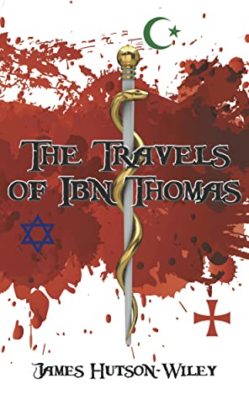
In an ancient world split in three by religion, a conflicted young man seeks the truth about his past and builds his future in this colorful panorama created by author James Hutson-Wiley.
Ibn Thomas, the book’s narrator, taken from his boyhood home In Aegyptus after his father and mother disappeared, lives in a monastery where he is mocked for his name and his knowledge of Arabic. At age 12, the monks send him from England to Salerno, Italy, where he will study medicine, supported, he learns, by considerable wealth to which he is heir from the commercial activities of his father, a trader in Al-Sukkar, or sugar, considered a precious commodity at the time.
After successfully completing his studies, he is sent to Sicily, where he will be appointed chief physician by the queen after saving her son Ruggerio’s life. But the monks have given him a secret assignment, a role that his father also undertook – to spy on certain members of the Sicilian leadership. He will also ally with the Islamic and Jewish family members, cordially doing business with his loving Uncle Assad, a Muslim, and with Jusuf, a Jew who considers himself the boy’s uncle. All of them hope to discover their friend and relative, the missing sugar merchant, alive.
As Ibn Thomas travels through the Mediterranean region beset by pirates, massacres, plagues, and intrigues, he has a personal goal: to reach the Holy Land, where the great religions that seem so far apart as to cause war and hatred, and that live so strongly within him, have their roots.
Author Hutson-Wiley has fashioned his sequel to The Sugar Merchant with an eye to the smallest detail. In this vibrant tale, the inner workings of the early Roman Catholic Church can be seen as it quells rebellion within its own ranks and battles fiercely with Islamic forces. The mysterious, almost magical realm of medicine, combining science and spiritualism, has been clearly researched to the last detail, in a way that modern readers, now used to herbal remedies as an alternative to scientific pharmacology, will find fascinating.
In an amusing episode, Thomas and a school friend decide to experiment with the drugs they give their patients, one of them being a weed called “kanab.” Not surprisingly, they wind up thoroughly stoned. Importantly, the author deftly puts us solidly inside the mind of his protagonist, a man who knows his profession, tries to reconcile his intermingled religious beliefs, and often berates himself for his pride even as his perspicacity allows him to save many lives. Hutson-Wiley has traveled the regions he so vividly depicts in his career in international trade and, through the engaging perspective of Ibn Thomas, gives readers a fresh look at how some of the paradigms of our current geopolitical landscape came into being.
In Fast Backward, David Patneaude’s most recent YA novel, fifteen-year-old Bobby sets out on his morning newspaper route, but what happens next blows his shorts off, literally. First, he witnesses a blinding light that grows into a mushroom cloud, but no one on the military base where he delivers papers will talk about it. Then, on his ride home, a dot in the distance takes on the shape of a girl, a naked girl in the middle of the desert at the side of the road. Thus begins Patneaude’s novel that brings WWII to life through the eyes of a young man torn by his father’s anti-war sentiments, and his uncle’s military patriotism.
Bobby realizes that this girl, Cocoa, is somehow tied to the blinding explosion. What does Bobby do? He offers the girl his carrier bag, his shorts, and a ride home. After some preliminary conversation, Cocoa realizes where she is, and what she must do.
She has knowledge she must deliver a message to those in charge in the hope of stopping nuclear bombs that decimated her world.
Are we concerned yet? Bobby is. He can hardly believe Cocoa’s crazy story, but Cocoa’s knowledge of dates, towns, and ship names make him a believer. They convince his parents and, with some effort, Bobby’s Uncle Pete. Cocoa has enough knowledge to capture the attention of some high-ranking military officials, but she also receives serious skepticism. When a bombing that she’d predicted actually happens, the Generals start listening.
Cocoa’s premonitions are a torment to her, and when she remembers something that involves Robert’s dad, a journalist and pacifist and conscientious objector, Robert’s world is turned upside down. His ideas of the world are forever changed by Cocoa, Future Girl, the girl who will save the world.
Award-winning YA author, David Patneaude effectively suspends our disbelief as he deftly crafts a world where nuclear bombs, Nazi submarines, the bombing of US cities, with two kids coming of age stuck in the middle, becomes a reality. Patneaude’s world explodes on the page in this post-apocalyptic war story that is plausible, terrifying, and quite satisfying to the spectacular end.
Fast Backward is highly recommended for young and old alike – and won First in Category in the CIBA 2019 Dante Rossetti Awards for Young Adult fiction.
There isn’t much to do in Little Current, Abby Parker’s hometown. Desperate to escape her alcoholic mother and absentee father’s drama, Abby Parker takes her dog Riley for a walk near the local tourist attraction, Victorian Town, a restored settlement from the 1800s. When Riley unearths a silver filigree ring engraved with the initials “BB,” Abby doesn’t hesitate to slip the ring onto her finger. In a haze of white, Abby is transported back to 1876.
Abby’s strange clothes and unfamiliar words quickly warrant a visit to the town doctor, Albert Edgecombe, where she meets Martha, his teenage daughter. With Martha’s kindness and easy nature, the girls form a fast friendship despite Abby’s confusion and constant questions. Soon she realizes when the ring is removed from her finger, she returns to her own time. Though warned repeatedly by her modern friend Jess, Abby cannot resist returning to 1876 and Martha’s family. Martha’s older sister, Elizabeth, seemingly left town though no one can confirm her leaving. The mystery of the missing Edgecombe sibling and a connection to the local blacksmith, Ben Dunstone, piques Abby’s interest until she can’t resist defying the laws of nature and returning frequently. However, the ring’s power is draining, and Abby will soon have to choose between the twenty-first century and the new family she has found.
The place of women in 1876 creates an issue for Abby and a theme within the novel. Abby is clearly a modern girl, independent and opinionated. In typical late-teen fashion, she arrives unabashed and uncensored in the quiet Victorian town. Even after she finally understands her “transport,” she refuses complete conformity, continuing instead to both shock and scandalize Martha Edgecombe. Her struggles exemplify most women’s lives and are symbolized in many ways by the simple task of dressing to fit in. In a time of corset, pantalettes, and bustles, Abby is a “shorty-short” girl. Just as she fights her garments in what should be an easy task–dressing for the day–she fights the notion that women should settle, not in their attire and certainly not in their life choices. When Martha mentions women’s roles, those of mother and wife, Abby scoffs and is even disgusted by the suggestion that that should be a good life for a woman. Repeated references to the fairytale Cinderella and Abby’s refusal to want the rescue of a handsome prince highlights her feelings and her appreciation of the place of modern women.
Friendship is another important notion within the novel. Jess, Abby’s modern bestie, is a significant part of Abby’s life. Abby has little to no family support; her mother is an alcoholic, while her father stays gone most of the time. Even Abby’s brothers, who are adults, are absent from Abby’s life. Other than her sheltie, Riley, Abby is alone. Jess is her only real human connection until she develops a close bond with Martha. Both friendships mean more to Abby than anything. She turns to Jess for advice in her time travels. Martha becomes a sister to her when the Edgecombe family welcomes Abby into their family after her abrupt arrival in 1876.
Abby’s closeness to Martha keeps her returning to the past, though her chances of being stuck there increase with each trip. Moreover, she is hurting Jess by venturing into the past. This pull keeps bringing Abby back to the present even when she begins to feel drawn to the past. Though she must eventually choose between Jess and Martha, both girls have a firm claim on Abby’s heartstrings and give her the family she chooses instead of the one into which she was born.
Abby’s sense of purpose is an admirable trait that gives her character a strong, heroic feel. Abby cannot let go of Elizabeth’s disappearance. She refuses to stay safely tucked into her own time when a possible murderer is wandering around in the distant past. Nearly from the first trip, Abby feels she was “chosen” for a reason and beyond determined to discover what that might be even at significant physical and mental risk to herself. What begins as a mystery becomes a rescue mission when Abby finds her friends’ fate through historical documents. Abby cannot leave the fate of Martha and Ben to chance.
Victorian Town won First in Category in the CIBA 2019 Dante Rossetti Awards for Young Adult fiction novels.
The Royal Air Force struggles for control of the British sky, facing down the daunting numbers of Luftwaffe aircraft across the English Channel. At the forefront of these battles, the Royal Air Force’s young pilots fight to survive under mounting pressure and deadly German Messerschmitts.
Where Eagles Never Flew follows the Battle of Britain as squadrons of the RAF must make do with undertrained pilots and little sleep if they want any chance at repelling the Luftwaffe bombing raids that become more and more frequent as the battle rages on. Operations rooms plot and direct the paths of aircraft, with members of the WAAF—Women’s Auxiliary Air Force—fielding waves of communications to and from the skies. Robert “Robin” Priestman flies on the front lines, dedicated to the fight despite weeks of unending tension and the great challenge of keeping his squadron awake and alive despite sortie after sortie.
Helena P. Schrader brings a wealth of knowledge to her story to make this one of the most authentic and well-told stories of the Battle of Britain we have ever read. The planes practically come alive in detail and clarity, both on their own and through their pilots’ maneuvers. Hurricanes, Spitfires, Messerschmitts, and more play out the breath-taking dogfights and bombing runs. Schrader takes time to show the small, vital differences between them all.
This realism extends to the characters themselves. The pilots, Ginger and Banks, worry what their squadron thinks of them and whether they will ever belong with the more experienced pilots who go into battle beside them. Emily Pryce, a volunteer at the Salvation Army, struggles with her pacifist ideals even as she falls for Robin, who risks his life every time he climbs into the air. The characters come to us as individuals who are authentic, relatable, and unique.
Schraderbalances tension expertly between thrilling dogfight scenes and the more peaceful moments. Numerous perspectives tell this story, showing varied and sometimes deeply contrasting views on the Battle of Britain. From RAF pilots’ eyes to the Luftwaffe airmen, Schrader fleshes out her story with style. At the same time, she uses scenes of aerial battles and daily life as an opportunity to build a sense of impending danger, which becomes an all-encompassing nail-biter as the pilots of the RAF fight for victory.
Where Eagles Never Flew doesn’t shy away from either love nor loss and, in fact, takes the opportunity to sit with the characters in their pain, their grief, and their frustration. The morale of individuals and squadrons – even the whole RAF is palpable on the page. What ties this story together is the incredible resilience and camaraderie of the pilots, airmen, and WAAFs, despite the danger and death looming over them.
Schrader delivers a winning WWII account of the Battle of Britain that resonates with authenticity and will quickly find a place of honor on the shelf. In short, here’s a historical fiction novel that readers will find hard to put down. Highly recommended.
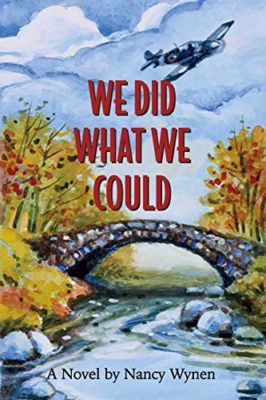
Nancy Wynen’s We Did What We Could is a well-conceived, smart, character-driven novel set across a grand European landscape. Here a formidable trio of young women, groomed for mere social status, demonstrate their strength, endurance, and courage as they move beyond the walls of academia to experience careers. The three must also deal with relationships, family expectations, and life issues amidst the often devastating and upending climate of war.
Lady Archer is a widow from the Great War. As Assistant Head Mistress at St. Martin’s School, she feels girls should receive solid educations and prepare for real professions. With her high level of social ties, Archer looks for “future perfect leaders” within each new graduating class, possessing ideal traits of intelligence and creativity. In May of 1936, Archer sets her sights on three such proteges whose memorable antics foretell their potential for more significant life accomplishments.
In this three-part literary work, Wynen moves the narrative between the interconnected lives of these central characters. In the mind of their individual goals, natural-born leader Maggie Shelford obtains a job at the London Times, Agnes Fletcher heads for nursing school, and creative Ellie DeWever prepares to join the Netherlands foreign services. Ellie’s kindred spirit Gran, another select alumna of St. Martin’s, offers up smart advice to the tune of, “Be prepared, and then you can adjust to whatever happens … Improvise as you go along.”
From royal debutante ceremonies where these three friends sneak an outsider into high society’s ranks to Agnes’ innate ability to bluff her advancement through nursing school, imagination and talent help these women forge ahead. With the continuing influence of Lady Agnes, Maggie finds herself a member of the RAF (Royal Air Force), reporting for the Union Jack, and ultimately a chief press camp officer. Events of the day fill the storyline. With Ellie the first in the group to marry and start a family, Maggie and Agnes begin to contemplate their own destinies and opportunities to find love, romance, and a “real deal” relationship.
As expected, the backdrop of war predominates in a story playing out within a 1936-1945 timeframe. During this uncertain time, life is likened to a ballet where each step was delicate, and “losing one’s balance was costly.” Here towns are destroyed, families are forced from their homes, secrets are buried, and love and loss are intertwined. But the narrative isn’t always frayed with hardship. Wynen aptly weaves humor throughout her work that serves well to balance tension and storyline.
When a significant twist in the plot occurs, Lady Archer’s hard work with her proteges pays off. Here Wynen cleverly brings the story full circle with the re-enactment of an ingenious prank incorporated from their school days. A detailed wrap-up highlights these characters’ futures and leaves Lady Archer hoping for post-war generations instilled with equally creative and indomitable spirits.
For those readers drawn to stories filled with the harsh realities of a war era and the emotional triumphs and tragedies of those involved, We Did What We Could proves a lively and entertaining exploration that showcases the fine art of determination and will power during the best and worst of times.


 An engaging history of ancient Native American peoples is brought to magical life by author David Fitz-Gerald.


 Heart of a Few by Jon Duncan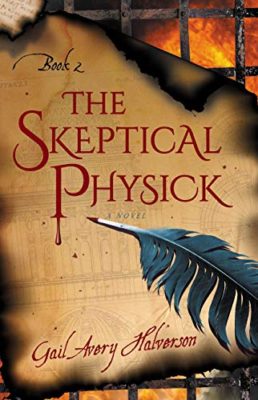






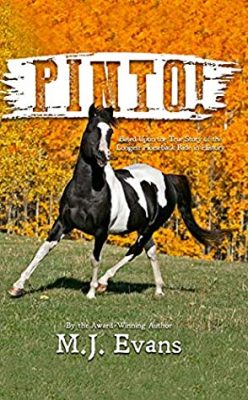
 In the charming and heartfelt Pinto! Based Upon the True Story of the Longest Horseback Ride in History, M.J. Evans brings to life a forgotten piece of American history. Here from a unique perspective, Evans recaptures the legendary journey of the Overland Westerners, a group of four men on horseback who rode over 20,000 miles across the US, over 3 years. Their goal was to visit each of the 48 state capitols, be photographed with the governor, and ultimately reach California for the triumph of the 1915 World’s Fair Panama-Pacific Expo. Of the seventeen horses who joined the trip, whether traded, sold, or lost along the route, only one heroic equine made it the entire way.
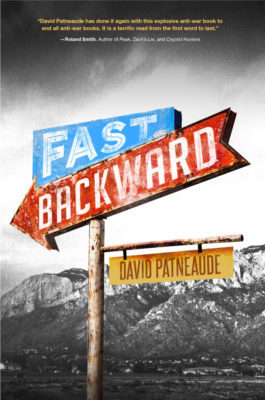
 In Fast Backward, David Patneaude’s most recent YA novel, fifteen-year-old Bobby sets out on his morning newspaper route, but what happens next blows his shorts off, literally. First, he witnesses a blinding light that grows into a mushroom cloud, but no one on the military base where he delivers papers will talk about it. Then, on his ride home, a dot in the distance takes on the shape of a girl, a naked girl in the middle of the desert at the side of the road. Thus begins Patneaude’s novel that brings WWII to life through the eyes of a young man torn by his father’s anti-war sentiments, and his uncle’s military patriotism.
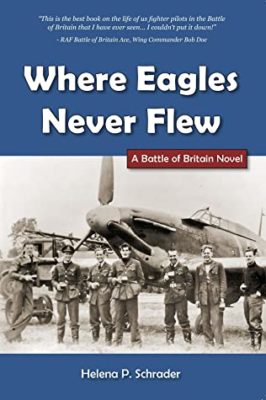
 The Royal Air Force struggles for control of the British sky, facing down the daunting numbers of Luftwaffe aircraft across the English Channel. At the forefront of these battles, the Royal Air Force’s young pilots fight to survive under mounting pressure and deadly German Messerschmitts.