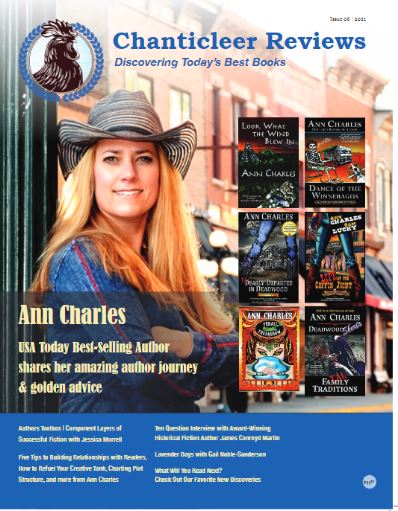
The latest issue features Ann Charles, USA Today Best-Selling Author.
Ann shares her amazing author journey and her secrets to success! She has five, count them, five book series that are filled with mystery, humor, romance, supernatural, and the paranormal. Ann has also been awarded the CIBA Grand Prize for Paranormal Fiction.
Five Tips for Building Relationships with Readers
How to Refuel Your Creative Tank
Charting Plot Structure
Writing Life
Secrets for Writing Series
All this and more in Sharon E. Anderson’s great interview with Ann!
Writing Craft with Jessica Morrell, Top-Tiered Editor and one of Chanticleer’s exceptional Master Writing Class instructors, expands on the components of successful fiction.
Sweet Lavender Days with Gail Noble-Sanderson with her delicious lavender shortbread cookie recipe. Gail is a multi-award-winning author who weaves an epic tale of romance set against World War I and II, full of warmth, family, and the hope that love can indeed conquer all.
What Will You Read Next? Discovery New Reads from this issue’s Chanticleer reviews of these authors’ works from Non-Fiction to Fiction and even an anthology! More than 80 Chanticleer Reviews on the following authors’ works.
Robert L. Slater, Ted Neill, G.R. Morris, Paul E. Vaughn, T. K. Riggins, JW Zarek, Joy Ross Davis, Jeny Heckman, Richard J. OBrien, Chris Karlsen, Corey Lynn Fayman, Kevin G. Chapman, Pamela Beason, Norman M. Jacobs, M.D., Marilyn Larew, Michael Pronko, Michelle Cox, Wally Duff, Ann Charles, Karen Musser Nortman, Anna Castle, James Conroyd Martin, Bruce Gardner, Blaine Beveridge, Joe Vitovec, Sandra Wagner-Wright, Andrea McKenzie Raine, Gerri Hilger, Michael L. Ross, Kari Bovee, David Fitz-Gerald, Sandra Rostirolla, L. A. Thompson, Susan Faw, Tiffany Brooks, Kay M. Bates, Robert D. Calkins, Aric Cushing, Sara Dahmen, Robert Scott Thayer, Simon Calcavecchia, L. E. Rico, Bronwen Evans, Elana Mikalsen, Claire Fullerton, Gene Helfman, Charlie Suisman, Lou Dischler, Eileen Charbonneau, Yorker Keith, Kris Kelso, Julie Jason, Lance Brewer, Franklin Ball, David Okerlund, Linda Jamsen, Cassandra Overby, Stevanne Auerbach, Bill W, Thomas Widman, Karen Keilt, Jill Anderson, Dan Juday, Ilene Birkwood, Dr. Rhona Epstein, Ramzi Najjar, K, Tanner T. Roberts, J. Nell Brown, Maya Castro, Janice S. Ellis, Ph.D, and The Red Wheelbarrow Writers.
Where can you get you copies of the Chanticleer Reviews Magazine?
OR Purchase Print Copies from these Independent Booksellers:
U.S.
Village Books of Bellingham, Wash. They can mail magazines out anywhere and they keep copies of the latest issue of Chanticleer Reviews quarterly magazine in stock on their magazine racks.
Canada & U.K.
If you live in Canada or the United Kingdom, then order your print magazine from Dragon’s Lair: www.DragonsLairArtist.com or email Susan Faw at susan@dragonslairartist.com | We ship a stack to Dragon’s Lair in Ontario, Canada. Then, they can ship them much easier, faster, and for cheap to Canadian addresses.
Advertise? Yes, please! Email DBeaumier@ChantiReviews.com for more information.
Chanticleer Reviews magazine will make a great showpiece for the coffee table, or to take to book signings, or to have in your writer’s den, or to take to other promotional events for your books, or with you to book club meetings, and just in time for the holidays!
Odel Bernini wades deeper and deeper into treacherous political intrigue, in Richard C. Brusca’s Historical Adventure novel, In the Land of the Feathered Serpent.
This story, like the feathered serpent itself, moves time and space to visit an era remembered by many Americans as one where the U.S. government worked to destabilize several Central American regimes who were at odds with its politics.
A young Odel works as chief curator of a world-renowned natural history museum in Seattle, an occasional teacher at a college in nearby Tacoma, and an archaeology hobbyist. His marine biology fieldwork in support of his specialty – the documentation of crustaceans in Central America – brings him time and again to nations long under the political sway of the United States, especially Nicaragua and Guatemala.
Revolutions and counterrevolutions create governments and insurgents that brutalize the local populations, especially the indigenous people. Prodded by his wife, the daughter of an American cultural attaché, Bernini approaches the CIA to ask whether it might fund his continued research in the region in exchange for “some silly things” he could do for them.
Those “silly things” lead to funding from a foundation to cover his travel, but with strings attached.
He collects crustaceans and intel. Having sold his soul, he gradually undertakes more dangerous tasks on the CIA’s behalf. Like a frog placed into room-temperature water, it is almost too late before he realizes that the burner has been lit. In addition to the growing peril to his life, Bernini falls for a devastatingly gorgeous woman he meets in a hotel bar, on the eve of his first assignment.
As things grow more complicated, the malicious Guatemalan army tears through the jungle looking for Bernini. He must contend with the wildlife buzzing and slithering around him in the dark and hopes he can escape – right up until he meets a venomous fer-de-lance snake.
Author Brusca delivers modern man’s Odyssey, both in scale and complexity.
We are riveted to this man’s journey of self-discovery through challenging times as he navigates the siren calls of the CIA and impossibly beautiful and sexually adept women while his mundane life as an academic and museum curator disintegrates. The lead character’s descent into calamitous Central American politics and American foreign policy plays foil to erotic scenes with his wife back home in Seattle, a darkly fascinating and even more beautiful seductress in Central America, and a final twist coupling with a yet more mysterious and enigmatically enthralling woman.
Author Brusca has an effortless style that draws the reader in and manages to convey needed facts of science, political history, and geography that quickly absorb the reader. Brusca delivers a mega-novel that will resonate with readers drawn to sensually charged, clandestine storylines that run through dangerous political landscapes and treacherous jungles. In the end, much like the heroes he echoes, Odel Bernini, is a super-heroic Indiana Jones archetype with a whole bunch of sexy Bond on the side.
Antonius: Son of Rome by Brook Allen focuses on one of history’s most vexing and perplexing figures, Marc Antony. It is also inevitably a prism on modern American politics, with its characters behaving duplicitously, greedily, and ignobly while spinning up service to the greater good.
Historians often cite Antony as a controversial figure whose accomplishments and flaws have been noted by his enemies. Yet, he is as compelling as Richard III or Richard Nixon, with gaps in the accounts of his life that create grounds for curiosity and speculation as to how he became the pivotal figure in western history that he is. Allen weaves a wonderfully realistic and organic story of how a boy grows up desperate and bitter in a disgraced patrician family yet desperately transmutes mistake and tragedy into military achievement.
Marcus Antonius was the eldest of three male children of his namesake father, Marcus Antonius, and Julia Antonia. Of noble birth in Republican Rome, the novel begins as eleven-year-old Marcus learns of his father’s fatal illness, a man who had failed in his duty to govern overseas provinces. His actions as provincial governor – extorting gold from those he should protect, then failing to commit suicide as a Roman general should when such disgrace is discovered – angered the Senate and left his widow and orphans to bear his dishonor.
Young Antonius vows to restore honor to the family name.
He commits to instruction in military practices and interacts with a cast of relatives and characters who aid him and provide additional problems with their political intrigues. His distant cousin, Gaius Julius Caesar, gifts him with a slave who becomes trainer and friend. But young Antonius also acquiesces to baser pursuits, becoming involved, with two other young Roman men of noble birth, in a brothel and gaming club where he indulges copiously. He begins to accrue gambling debts, which lead him to desperation as his moneylender demands repayment that the family’s modest wealth cannot meet. Roman proprieties and political savagery come together as his mother remarries. A plot to rebel against the Republican order includes his new stepfather, whom Antonius has come to esteem, and one of his brothel compatriots. The plot’s failure leads to his stepfather’s death and additional contempt for his family. Even his own joy sows horror; he frees and marries a family slave, only for her to be murdered by his usurious moneylender. Despondent and concerned for the others in his family, he is convinced by his cousin, Caesar, to study abroad in Greece, where his fortunes change.
Allen makes historical Rome real.
She brings to life areas readers might be familiar with, but she also takes us into the homes and less-pleasant places in mid-first-century BC Rome. From murder dungeons to strolls along the Palatine, receiving guests at a family Domus, and the daily interactions of Roman nobles and plebians and slaves, the perspective of young Antonius provides insight to a time two millennia distant and yet of human behavior not much different. As familiar names like Cicero and Caesar and Ptolemy plot and scheme and inveigle for personal glory with the lives of people they disregard in the balance, it’s difficult not to transfer young Antonius’s learning experience into our own era where the covetousness remains pervasive. The backstabbing is only slightly less literal.
Indeed, the novel’s strength lies not in the admirable accuracy of its descriptions and accounts but in Allen’s ability to place the reader directly in the head of her hero. Perhaps it’s difficult to think of a man who drinks, fornicates, and wagers excessively as a hero – but Marcus Antonius relies on honor in most instances, including when it may be to his detriment. As readers share his journey from the Domus Antonii to Alexandria, many will come to understand his philosophy and may be swayed.
Steeped in history, but more than fiction, Antonius: Son of Rome ultimately invites readers to visit another place and time.
Allen presents a flawed but sympathetic character to an enigmatic two-dimensional historical figure that will appeal equally to those already inclined to Roman history and those who might be just as inclined to the modern singer. Antonius: Son of Rome took home 1st Place in the CIBA 2020 Chaucer Awards for Early Historical Fiction.
Alan Fleischauer ushers in his new Action/Adventure Western series with Rescued – and gives us a protagonist worthy of the title “hero.“
John Thurgood (JT) Thomas just found the most unusual cave, housing a strange treasure trove of high-end furniture, extraordinary inventions, and a custom gun. While he’s enjoying his mountain view and wondering what should happen with the goods, he spies another unusual site. Three women follow a wagon of dangerous-looking desperados. JT can’t help but step in, little knowing that action will alter his entire life. As a former lieutenant colonel in the Civil War and U.S. Marshal, JT rescues the three women and finds a fourth sitting in the wagon. He immediately abandons his cave camp and takes the women to nearby Point Stevens Pass, Colorado, where he stays until their safety is secured.
One of the women, however, leads the gang and is responsible for kidnapping the others. Jean Cantrell, a bloodthirsty bank robber, and murderer flees town before the women spill the beans – but not before leaving behind a dead banker.
Hellbent on capturing Cantrell, JT pursues the villain, but another woman, Annabelle Hewitt, insists on accompanying him. JT and Annabelle soon realize their feelings may run more profound than those of “victim and rescuer” when they take shelter in the very cave JT had earlier abandoned. Inside, they soon discover a secret. However, Cantrell isn’t about to give up her need for revenge and her greed, and soon, the new couple will face off with the kidnapper again, and their lives will take an incredible turn once again.
So many characters in this novel are unbelievable survivors, especially the female characters.
Annabelle is the most obvious example of these fierce women. Annabelle is married to a violent, dangerous man, Marcus. They lived in New York, where Annabelle trained as a nurse under the tutelage of Marcus’s father; however, when Marcus turns to alcohol and womanizing, Annabelle makes up her mind to leave with their daughter. Marcus isn’t about to let her go, though, and chases her down, takes their daughter from her, and leaves her penniless and abandoned. Annabelle refuses to return with him and works as a housekeeper in an inn until she saves money to keep traveling. While traversing the vast plains, a group of Cheyenne takes her prisoner. She earns the respect of the tribe as a healer, but her adventure doesn’t stop there. Annabelle creates her own business as a midwife and returns from a visit when the Cantrell gang takes her. Meeting JT makes her even more resolved, especially when the two embark on a trip back to New York to take back her daughter and get her freedom legally through a divorce.
Annabelle isn’t the only female survivor.
Though unbelievably evil in a “super-villain” way, Jean Cantrell is also a survivor. While Annabelle gains strength and independence by helping others, Jean chooses the opposite route; nevertheless, her story is one of survival in the brutal world of the Old West. Jean takes on one of the oldest occupations open to women and becomes a whore until she stumbles into a bank robbery where she quickly, remorselessly kills the would-be robber and takes the money. Once Jean realizes how much easier her life can be, the transition from prostitute to outlaw is quick, and no one gets in her way. Though her path is bloody and ruthless, she knows what she must do to survive. She is respected, albeit through fear, and no one, but JT, is willing to challenge her. Evil or not, Jean is a survivor.
Another great theme in the novel is the kindness of strangers, best seen in the actions of JT Thomas.
JT is the consummate good guy. Lovers of old westerns will recognize his gallantry in that comfortable, protector of weak way. He cannot stop himself from helping everyone he meets. He not only saves these women, but he also insists on paying their way, buying them clothes, and finding other people to safeguard them when he leaves to chase Jean Cantrell. When the plot transitions to the big city of New York, JT proves to be the hero again and again. He becomes fast friends with Mrs. C, the owner of a failing hotel, and finds a way to refurbish and restore her hotel. When he meets Annabelle’s daughter, he makes sure she is cared for in all forms, including hiring her boyfriend to manage the hotel. With a few loose ends left at the novel’s end, JT’s heroic actions seem likely to be continued in subsequent adventures.
From the rugged mountains of Colorado to the grit and glitz of New York City, this novel is a fast-paced, twisting adventure that lovers of westerns will devour. Rescued (JT Thomas Adventures Book 1) took home 1st in Category in the 2019 CIBAs for LARAMIE, Western Fiction.
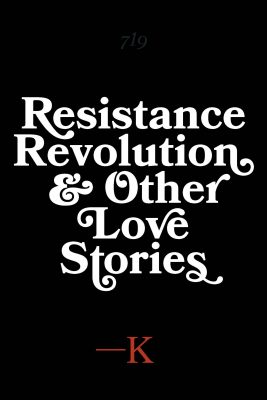
The Ancient Greeks believed that there were eight different types of love. To the poet Emily Dickinson, “… Love is all there is, Is all we know of Love.” But in the words and stories in this collection, Resistance, Revolution and Other Love Stories by K., love sometimes requires desperate action, whether embraced, resisted, or a combination of the two.
The twelve stories here range from the mythic past to a far-flung future as the author goes back to retell the classic myth of “Orpheus and Eurydice.” In “Automatonomatopoeia,” we reach forward into a future that resembles the harsh authoritarian worldview of Orwell’s classic 1984 until its protagonist learns the truth behind the strict conformism that kept him isolated and alone.
Several of the most poignant stories present as contemporary reflections on the forms of love and the ways that society twists love around.
In “Calamity Jane,” the friendship of two teenaged boys crashes into the rocks of their mutual love for the same beautiful and calamitous girl. A girl who seems to like getting between the two friends more than she loves either one of them – or herself.
Meanwhile, in “Vikings” we meet a protagonist caught between several different types of love. He’s in a situation where the best thing he can do may very well destroy him. What could it be? The only certainty, the only way forward – the only way to preserve what he loves is to leave everything he cherishes behind. Can he do it?
The would-be lovers in “Head Down” face a dilemma made all the more heartbreaking because it feels so very real.
This sad tale speaks of the conflict between love and duty, wrapped around a romance that can never be fulfilled because the lovers have met too late. Both parties have commitments that they cannot or will not break. So, they must break each other’s hearts instead.
As with any collection of short stories, whether by multiple authors or by a singular author, not every story will appeal to every reader. That being said, Resistance, Revolution and Other Love Stories, with its wide range of genres, not only showcases the author’s talent, but is certain to please a vast readership. From myth to historical to romantic to speculative, and its exploration of all the different kinds of love from the altruistic to the romantic to the obsessive, those looking to have their hearts touched and their minds blown in the space of a single, beautifully curated collection need look no further.
In other words, Resistance, Revolution and Other Love Stories by K. tops our list for what to read this summer.
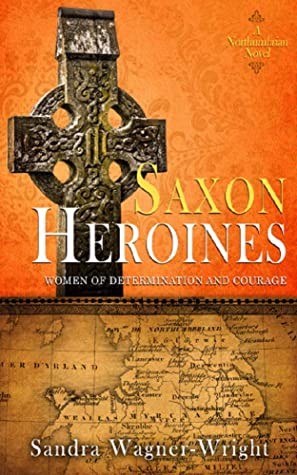
Sandra Wagner-Wright’s Saxon Heroines: A Northumbrian Novel is a rich history of four women many centuries ago.
During a time of constant shifts in power across Northumbria and what would later become England, Christianity begins taking over as the religion of choice in the region. Kings from the area renounce Woden and embrace the new faith, which gives them the divine right to rule.
Part of a series that tells of lesser-known women in history, Saxon Heroines concerns itself with the stories of four women in seventh century Northumbria. The novel splits into three parts, each part focusing on a different woman (women) of early Saxon history. First is Ethelberga of Kent, who becomes the new Queen of Northumbria in 624 and must convert the king to Christianity. The story shifts to Ethelberga’s daughter, Enfleda, in the second part; Enfleda’s daughter, Elfleda, in the third. Throughout the book, we witness Hildeburg’s role in King Edwin’s court to her holy life as the Abbess of Streoneshalh. Each of these women lived and died long ago, but they arguably changed the world.
Wagner-Wright transports her readers to a much more challenging way of life.
With few detailed historical records of seventh-century Northumbria, Wagner-Wright does the impossible task of fleshing out the little-known stories contained in the historical record. She takes what the ancient historians have recorded about these four women and tells their stories as accurately as possible. The women were, as Wagner-Wright writes, “present but not visible,” thus, the only things recorded about them were their titles, who they married, and who their children were. With these few facts, Ethelberga, Enfleda, Elfleda, and Hildeburg have unique voices – ones that have been silent for far too many years.
In her author’s note, Wagner-Wright adds historical context to the story’s events and reveals what happens in the years following the last chapter. Readers will do themselves a favor by reading through the front and back matter before digging into the meat. Just as important as the story itself, these portions will aid in the overall understanding of the text. A tale like Saxon Heroines based in history needs added material for readers to reference.
For lovers of historical and Christian fiction (and non-fiction), Saxon Heroines: A Northumbrian Novel could be the perfect book. Set in a time in which Christianity was taking hold across the region, the women of Saxon Heroines each play a pivotal role in the making of history.
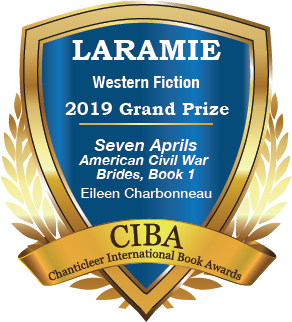
The Laramie Book Awards recognize emerging talent and outstanding works in the genre of Western, Pioneer, & Civil War Historical Fiction and First Nation Novels. The Laramie Book Awards is a genre division of the Chanticleer International Book Awards (The CIBAs).
Chanticleer International Book Awards is looking for the best books featuring, the wild west, pioneering, Civil War, North American History, and First Nation Novels.. These books have advanced to the next judging rounds. The best will advance. Which titles will be declared as winners of the prestigious Laramie Book Awards?
These titles have moved forward in the judging rounds from SLUSH pile to the 2020 Laramie Book Awards LONG LIST and now have progressed to the 2020 SHORTLIST.
Congratulations to the following titles who have advanced to the 2020 Laramie Book Awards SHORTLIST!
Fred Dickey –Days of Hope, Miles of Misery
David Fitz-Gerald –She Sees Ghosts? The Story of a Woman Who Rescues Lost Souls
DL Fowler –The Turn
JR Collins –Legend of Swell Branch
John W. Bebout –The Cause of Darkness- A Story of the Civil War
Eileen Charbonneau –Mercies of the Fallen
James Kahn –Matamoros
Gerry Robinson –The Cheyenne Story
J. Palma –The Chaffee Sisters
Susan Higginbotham –The First Lady and the Rebel
Barbara Salvatore –Magghie
J.C. Graves –Death is a Sharpshooter
J.B. Richard –Jesse
Terry D. Heflin –Scarlet Hem
Mike Shellenbergar –Quail Creek Ranch
Mike Shellenbergar –Refuge
T.K. Conklin –Promise of Spring
Van Temple –Whisperwood: A Confederate Soldier’s Struggle
Rebecca Dwight Bruff –Trouble the Water, a Novel
John Hansen –Elk Meadows
E. Alan Fleischauer –Hunted
Daniel Greene –Northern Wolf
W. Hock Hochheim – Rio Grande Black Magic
Elizabeth St. Michel –Surrender to Honor
These titles are in the running for the Semi-Finalists of the 2020 Laramie Book Awards for Western, Pioneer, & Civil War Historical Fiction and First Nation Novels Fiction.
Which of these works will move forward in the judging rounds for the 2020 Laramie Book Awards for Western/Pioneer Fiction?
Good luck to all as your works move on to the next rounds of judging.
The ShortListers’ works will compete for the Semi-Finalists positions. Finalists will be selected from the Semi-Finalists, and then all Finalists will be recognized at the VCAC21 ceremonies. The First Place Category Winners, along with the CIBA Division Grand Prize winners, will be selected from the 22 CIBA divisions Finalists. We will announce the 1st Place Category Winners and Grand Prize Division Winners at the CIBAs Ceremonies April 21-25th, 2021 live at the luxurious Hotel Bellwether in Bellingham, Wash.
We are now accepting submissions into the 2021 Laramie Book Awards. The deadline for submissions is July 31st, 2021. The winners will be announced in April 2022.
Happy St. Patrick’s Day my dear Chanticleerians! We love all the myriad topics that this holiday brings to mind, Irish History, Mystery, Magic, Romance, and maybe a little beer!
A few fun facts about the holiday:
St Patrick’s is held on the traditional Day of Death, not St. Patrick’s Birthday
Singing happy birthday to St. Patrick is a great idea, but the actual date of his birth is unknown?
Interestingly enough, the color associated with St. Patrick used to be blue!
Why all the beer?
St. Patrick’s Day is often seen as a religious tradition, but a holiday in the middle of Lent can be a little prohibitive in terms of how it’s celebrated. So, the Church would actually lift the restriction on alcohol consumption and meat for the day, so bring on the green beer and Rueben sandwiches!
Why the clover?
The supposed history of the shamrock is that St. Patrick used the three leaves of the clover to explain the Holy Trinity when he preached.
Closer to Home
The US hosts the largest St Patrick’s Day Parade in the World in New York City, though of course that is postponed due to the pandemic. Oddly though, St. Patrick’s Day is only recognized as an official holiday in Suffolk County, Massachusetts, despite people all around the country choosing to celebrate it. However, we have declared March Irish Heritage Month since 1991.
It’s not easy being Green
Maybe skip the leprechaun outfits—no one likes to be a stereotype. Many Irish people, when they first migrated to the US during the potato famine of 1845-49, faced discrimination like most new arrivals here do to this day. They fought for both cultural and religious acceptance.
And Now!
Some of our favorite books we like to curl up with before the weather truly transitions to Spring.
Historical Fiction
To submit to one of our Historical Fiction Awards see the Chaucer Awards (pre-1750s Historical Fiction) here, the Goethe Awards (post-1750s Historical Fiction) here, and the Laramie Awards for Western Fiction here.
I’ll TAKE YOU HOME KATHLEEN by J.P. Kenna
Grand Prize Winner in the Goethe Awards
The 1800s was the age of expansion in the United States, and railroads played a major part in the efforts to move Americans and industry to the Western shores. By the 1860s, this great country, the American experiment as it was called, became engulfed in a brother versus brother bloody Civil War. As the century drew to a close in the late 1880s and early 1890s, America was still reeling from the emotional and economic damage the war had caused. J.P. Kenna uses this struggle as the backdrop for his book I’ll Take You Home Kathleen, the second in his series titled Beyond the Divide.
Kenna’s novel captures the years 1882 to 1898 with its focal point being the Irish immigrants who were seeking to escape famine, lack of land reform along with desiring religious freedom, came to America seeking a better life and more opportunity. The first wave of immigrants were seeking escape from one of the grimmest periods in Irish history–the Great Famine from 1845 to 1852. Author Kenna follows this hard-working group of immigrants who helped lead America into a post-Civil War, industrial, and economic boom that some have called the Second Industrial Revolution.
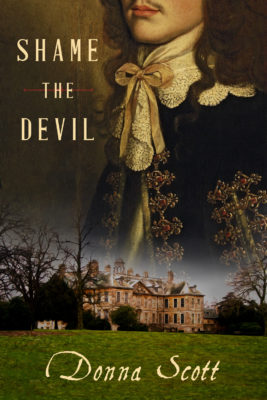
SHAME the DEVIL by Donna Scott
First Place Winner in the Chaucer Awards
Colin and Roddy Blackburne are sent into indentured servitude in England in 1643 with their father. Gavan Blackburne supported the divine right of King Charles I. Still, after the tragic death of his wife that both Colin and Roddy witnessed, he relinquishes his efforts to protect the remainder of his family.
The Blackburnes become stable hands at Appleton Hall, where the viscount’s daughter Emma quickly catches the eye of young Colin. Emma is curious about the young Scots in the stable and drags along Alston, the son of Lord Stillingfleet. The four children start a friendship that intertwines their lives forever.
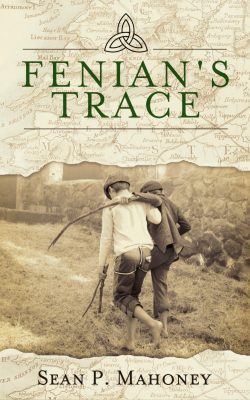
FENIAN’S TRACE by Sean P. Mahoney
First Place Winner in the Goethe Awards
Rory McCabe and Conor O’Neill are hard-working 12-year-olds, whose exploits and progress are narrated by the namesake of Clancy’s Pub who’s taken a liking to them. At times, he rewards the boys’ efforts with tales of their shared Irish heritage, its heroes and its glories. The boys have very different personalities, as Clancy discerns from their reactions to his lore. Rory is outraged as he hears of Ireland’s treatment by the British, while Conor accepts the information more quietly, studiously.
The two boys will soon meet a beautiful girl, Maria, the daughter of a well-to-do neighbor secretly aligned with a revolutionary resistance movement. Both will fall in love, but of the two, Rory will be the more open about his interest, while Conor will hold back, respectful but clearly smitten.
To submit to one of our Mystery or Thriller Fiction Awards see the Mystery & Mayhem Awards here, the Clue Awards here, and the Global Thriller Awards here.
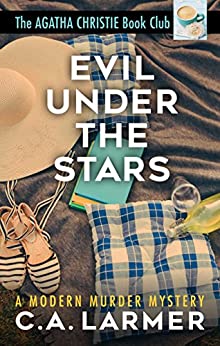
EVIL UNDER the STARS: The Agatha Christie Book Club (Book 3) by C.A. Larmer
First Place Winner in the Mystery & Mayhem Awards
Who commits a murder in a crowd of a hundred people relaxing in a park, and how did the Agatha Christie Book Club miss the entire thing from only a few feet away? In the trendy Sydney suburb of Balmain, Kat Mumford, social media interior design star, has been murdered during the inaugural Cinema Under the Stars. Her distraught husband, Eliot, is clearly the prime suspect, but at the time of Kat’s strangulation, he is nowhere near her. In fact, no one was sitting near Kat, and the crowd seems to have been so absorbed by the movie, Agatha Christie’s Evil Under Sun, that no one saw a thing out of the ordinary.
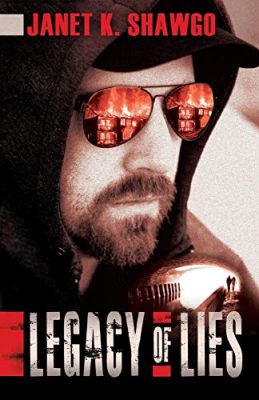
The question is not if history will catch up with you but instead, when will it attack with a vengeance. Characters with a Legacy of Lies discover they can run, but they can’t hide from past actions. When Caren Johnson sees her family and life literally explode in flames, her uncertain future falls into the hands of a mysterious Irishman. His name is Declan Malone, and he claims he’s been sent by her brother to save her from assassins determined to kill her too. How can that be when her brother’s death was reported ten years ago? Declan’s reasons for a hasty departure from Ireland appear suspect and put a target on his back too.
To submit to one of our Romance or Contemporary Fiction Awards see the Chatelaine Awards here and the Somerset Awards here.
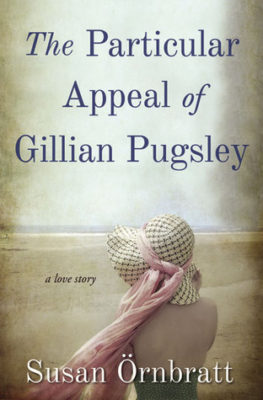
The PARTICULAR APPEAL of GILLIAN PUGSLEY by Susan Örnbratt
First Place Winner in the Chatelaine Awards
Irish-born Gillian McAllister knew she was meant for bigger things than a quiet life among her large extended family. Leaving home at seventeen against her protective father’s wishes, Gillian is looking for adventure – and that’s exactly what she finds. She was a nanny for a maharaja, a caretaker for WWII internees, and a nurse on the Isle of Man before finally becoming a wife, mother, and grandmother in London, Canada, where she spent the majority of her eighty-nine years.
However, with only weeks to live after being stricken by cancer, she knows her time with her beloved granddaughter and namesake is truly precious. Before she goes, she wants to pass on the poems that capture her long, adventurous life to the junior Gilly in hopes the girl will use the poems to write about her adventure – her hidden love story.
BLAME it on the BET (Whiskey Sisters, Book 1) by L.E. Rico
First Place Winner in the Chatelaine Awards
Twenty-six-year-old Hennessy O’Halloran should have it all. She should be enjoying her overpriced apartment in St. Paul, Minnesota, her successful legal career, and her “friends with benefits” neighbor, but in the month since her father’s sudden death, all of those things have become unimportant.
She thought she and her sisters had some time to figure out what to do with Jack’s legacy, an Irish pub he and their deceased mother built from scratch. Still, when they discover a substantial loan agreement secreted away in Jack’s belongings, they realize they only have six weeks to come up with over $100,000, money he borrowed against the business to help finance various expenses on his daughters’ behalves. She finds herself back home in Mayhem, Minnesota, living above the pub and trying desperately to find the funds to save the business.
Choileach, Chanticleer’s Irish cousin, wishes you this:
May your heart be light and happy, may your smile be big and wide, and may your pockets always have a coin or two inside!
Happy St. Patrick’s Day from Sharon & Kiffer & David and the whole Chanticleer Team!
And Remember! You can join the Chanticleer Family Anytime!
Sign up for our Newsletter here! Join our online community, The Roost, here for discounts and special offers!
Join us at our (Virtual) Chanticleer Authors Conference April 21-25, 2021. Read more about our headliners and workshops for that here!
VCAC 21 will feature Bestselling Crime Author Cathy Ace, J.D. Barker – Master of Suspense, C.C. Humphreys – Historical Fiction with a twist, Jessica Morrell – Top-tiered Developmental Editor, and more!
Check out our Editorial Services here and our Manuscript Overviews here, OR, if your work is already polished to a fine shine, it’s time to submit to our Editorial Reviews here and our Chanticleer International Book Awards (CIBAs) here!
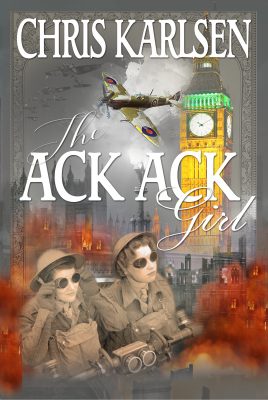
Chris Karlsen’s new work, The Ack-Ack Girl, is the first in her World War II series, Love and War, and serves up plenty of story on both sides of that equation in its portrayal of Ava Armstrong, the “Ack-Ack” girl of the title. And what a story it is!
Bombs are dropping on London in the heat and fire of the infamous Blitz. Shells are falling, as are the buildings that surround them, while fires spring up in the wake of the bombs that never seem to end. But when they finally stop, Ava and her friends are determined to get their loved ones somewhere safe and to find a way to serve up some revenge on the Germans.
The action follows Ava as she enlists in the Auxiliary Territorial Service, the women’s branch of the British Army. She hopes to do more than just “her bit,” but to do it in one of the new ways that become available to women as the men are called to war.
Through Ava’s eyes, we experience her training as one of the “Ack-Ack Girls,” the women who crewed the anti-aircraft batteries placed on the English coasts. In her duties as a spotter, a predictor (calculator), and a gunner, Ava garners respect, pride in her accomplishments and those of her crew – both male and female. One day, love blooms between Ava and an RAF pilot. The new relationship thrills and frightens her at the same time, loving a man who has a dogfight with death every other day.
There are and will be, plenty of World War II stories.
In recent years there has been a plethora of such books featuring the contributions of women to the world-wide war effort, contributions that have frequently gone unsung until now. What makes The Ack-Ack Girl stand out above the crowd is the freshness of its voice and the world as it is seen through the perspective of its titular character.
Ava Armstrong is neither a pampered princess nor a bird in a gilded cage when the story opens. She’s respectably middle-class and has no pretensions. Ava’s doing her best to balance her love and respect for her widowed mother with her strong desire for independence and the need to make something of herself for herself.
The description of the selection and training process for the Ack-Ack crew is both fascinating and delightful because Ava is such a realist. It’s a treat to read about someone who discovers a job, learns they are good at it and is proud of their accomplishments. Nevertheless, Ava struggles over whether to marry or stay in her position where the need could not be greater. Her struggle feels authentic and, therefore, will likely resonate with 21st-century readers.
Chris Karlsen is a master at weaving pulse-pounding action scenes of battle into the heartwarming story of one woman who follows her heart and takes us with her. The Ack-Ack Girl is superb storytelling and one World War II-era novel we highly recommend.
The CHAUCER Book Awards recognize emerging new talent and outstanding works in pre-1750s Historical Fiction. The CHAUCER Book Awards is a division of the Chanticleer International Book Awards (The CIBAs).
The Chaucer Book Awards competition is named for Geoffrey Chaucer the author of the legendary Canterbury Tales. The work is considered to be one of the greatest works in the English language. It was among the first non-secular books written in Middle English to be printed in 1483.
Chanticleer International Book Awards is seeking for the best books featuring Pre-1750s Historical Fiction, including pre-history, ancient history, Classical, world history (non-western culture), Dark Ages and Medieval Europe, Renaissance, Elizabethan, Tudor, 1600s, we will put them to the test and choose the best among them.
These titles have moved forward in the judging rounds from SLUSH pile to the 2020 Chaucer Book Awards LONG LIST and now have progressed to the 2020 SHORTLIST.
These titles are in the running for the Semi-Finalists positions of the 2020 CHAUCER Book Awards for pre-1750s Historical Fiction.Good luck to all as your works move on to the next rounds of judging.
James Hutson-Wiley –The Travels of ibn Thomas
Patrick E. Craig –The Mennonite Queen
Regan Walker –Summer Warrior
N.L. Holmes –Bird in a Snare
Leah Angstman –Out Front the Following Sea
Thoren Syndergaard –Ripley of Valor
Seven Jane –The Isle of Gold
Edward Rickford –The Bend of the River: Book Two in the Tenochtitlan Trilogy
Helena P. Schrader –The Emperor Strikes Back
B.L. Smith –The Fall of the Axe
Dave & Steve Curliss –To Give Thanks – Our Pilgrim Ancestors
Brook Allen –Antonius: Son of Rome
Sherry V. Ostroff –Caledonia
Amy Wolf –A Woman of the Road and Sea
Marilyn Pemberton –Song of the Nightingale: a Tale of Two Castrati
Robert Wright –The Stone Gardner’s Fire, Second Book of the Before They Awaken Trilogy
Jim Fuxa –At War with Mars
Wendy J. Dunn –Falling Pomegranate Seeds: The Duty of Daughters
Denis Olasehinde Akinmolasire –The Mission to End Slavery
Indra Zuno –Freedom Dues
Janet Wertman –The Path to Somerset
Which of these works will move forward in the judging rounds for the 2020 Chaucer Book Awards for pre-1750s Historical Fiction?
Good luck to all as your works move on to the next rounds of judging.
The ShortListers’ works will compete for the Semi-Finalists positions. Finalists will be selected from the Semi-Finalists, and then all Finalists will be recognized at the VCAC21 ceremonies. The First Place Category Winners, along with the CIBA Division Grand Prize winners, will be selected from the 22 CIBA divisions Finalists. We will announce the 1st Place Category Winners and Grand Prize Division Winners at the CIBAs Ceremonies April 21-25th, 2021 live at the luxurious Hotel Bellwether in Bellingham, Wash.
We are now accepting submissions into the 2021 CHAUCER Book Awards for pre-1750s Historical Fiction. The deadline for submissions is July 31, 2021. The 2021 winners will be announced in April 2022.
As always, please contact us at Chanticleer@ChantiReviews.com with any questions, concerns, or suggestions!

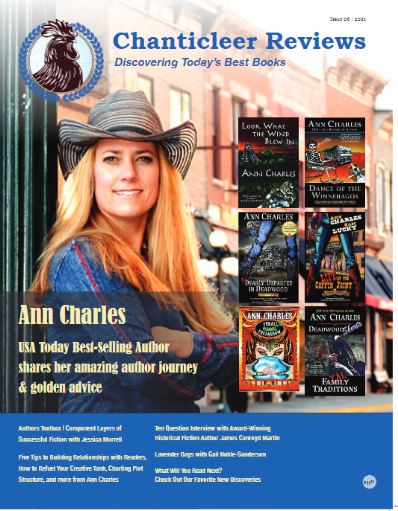 The latest issue features Ann Charles, USA Today Best-Selling Author.


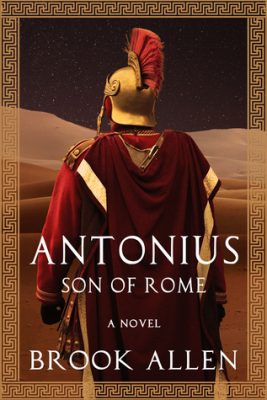
 Antonius: Son of Rome by Brook Allen focuses on one of history’s most vexing and perplexing figures, Marc Antony. It is also inevitably a prism on modern American politics, with its characters behaving duplicitously, greedily, and ignobly while spinning up service to the greater good.

 Alan Fleischauer ushers in his new Action/Adventure Western series with Rescued – and gives us a protagonist worthy of the title “hero.“
 We are now accepting submissions into the 2021 Laramie Book Awards. The deadline for submissions is July 31st, 2021. The winners will be announced in April 2022.





 The CHAUCER Book Awards recognize emerging new talent and outstanding works in pre-1750s Historical Fiction. The CHAUCER Book Awards is a division of the Chanticleer International Book Awards (The CIBAs).