Tag: Historical Fiction

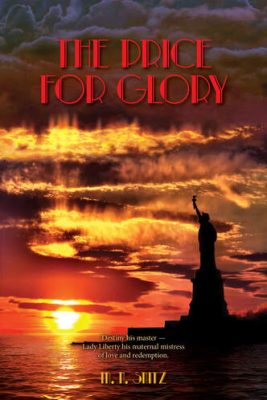
  • The PRICE For GLORY by M.N. Snitz – 20th Century Wartime Historical Fiction, Family Saga, Wartime Fiction

    In The Price for Glory, author M.N. Snitz delivers a compelling multi-generational epic tale of warfare and passion with roots in ancient lore.

    Abraham Steinnermann grows up in a family dwelling in the same German Black Forest where the great Teutonic warrior, Arminius, held off the incursion of Roman soldiers in the first century. This legacy of war and triumph infuse his destiny, sending him down paths that even he, a somewhat narcissistic young man, could never imagine – until forced to live it.

    Bright and handsome, Steinnermann makes up only a few Jews who are accepted at the notably antisemitic Heidelberg University.

    As he studies high finance, his talent for numbers becomes evident, landing him a job in Germany’s banking community as Hitler rises to power. Steinnermann admires Hitler’s determination to recoup his nation’s esteem. For several years, even as the war heats up and Jews become the obvious target, the intelligent young banker continues to excel without harm.

    Steinnermann’s luck, however, cannot hold in Hitler’s Germany.

    One day, two Nazi soldiers come for him. Soon, he struggles to stay alive in the hell of a concentration camp. But Fortune or Fate smiles once again on the young man when a camp guard notices his talent. Steinnermann is offered a job that will lead to his being one of the few survivors.

    As the Allies move in, so does the Red Cross.

    Steinnermann meets the beautiful Merriam, a Red Cross volunteer, and falls in love. The attraction is mutual. The two maintain a long-distance correspondence when Steinnermann relocates to America. Once there, his perspicacity in finance will land him in a selected, fated role. He sends for and marries the woman he adores. His memories of the war and the many times he dodged death are transmuted to the next generation, within the mind of his son Jack, who must serve in Vietnam.

    Snitz, who served in the US Military in Vietnam and was an observer of the Israeli Yom Kippur War, draws together many threads to create his vast tapestry of a multi-generational tale in The Price for Glory.

    He successfully creates in his central character a man the reader may “love to hate” – someone whose skills and intelligence are admirable but whose arrogance and boastfulness seem a colossal deficit. As the story progresses though, Snitz’s protagonist wins the reader over by surviving the deep sorrows and immense perils he faces along the way.

    Wordsmith Snitz seems at home within his story.

    A student of classical literature, who avows writing his first novel in fifth grade, Snitz aptly portrays the feelings of women like Merriam embroiled in a long-distance romance. He depicts the emotions of men like Steinnermann, who are tortured by an insane enemy, and showcases the young Jack who is enmeshed in the terrible duties of warfare.

    The Price for Glory is a lengthy saga taking place on three continents and within the minds of those – young and brash, and old and wise – who carry the understanding of that price all too heavily. This novel is highly recommended.

    5 Stars! Best Book Chanticleer Book Reviews


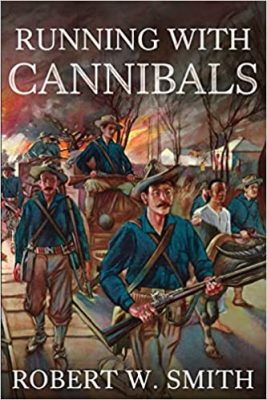
  • RUNNING WITH CANNIBALS by Robert W. Smith – Philippine-American War, Historical Fiction, Military History

    Robert W. Smith tells the story of a forgotten war and the fractured peace that follows in his powerful historical fiction novel, Running with Cannibals.

    It has been said that “War is hell.” It has also been opined that “It is well that war is so terrible, or we should grow too fond of it.” Running with Cannibals is a no-holds-barred, candid portrayal of a war that is glossed over in U.S. history, the Philippine-American War of 1899-1902. It was the first war fought overseas by the U.S.

    Running with Cannibals begins with an unnamed man on the run from an unjust accusation bought with blood and money.

    At first, the reader may wonder how this man ends up halfway around the world to the Philippines, a soldier hiding among other soldiers.

    Through the eyes of Sergeant Ethan Cooper, the reader has an intimate view of the self-fulfilling shibboleths that empower and provoke the U.S. Army into stupidity, atrocity, and self-aggrandizement. They squander the genuine possibility of cooperation and partnership with the Filipinos who were colonized by Spain.

    Running with Cannibals is a story where the truth sets one man, Ethan Cooper, free of the past that dogs his every step. He keeps his head down, desperately trying not to draw attention to himself. So afraid of being seen, Cooper participates in committing monstrous acts against the Filipino people with his fellow soldiers – even against his better judgment.

    When Cooper and his unit leave the capital for the remote villages on a mission that is doomed to fail because of the ignorance and racism of its commanding officer, Cooper’s eyes and the reader’s are fully opened to the U.S. true intent to subdue and subjugate the Filipinos into starvation and death. The more brutality Cooper sees, the more he questions what he’s been told. Not just about the supposed enemy, but about his own side.

    Running with Cannibals is both an adventure and a philosophical and sometimes even angst-ridden journey told through a very close third-person point of view.

    Smith crafts his story with exceptional skill, enabling readers an up-close look at Cooper’s ultimate metamorphosis. Ethan Cooper’s desperate desire to not see what is going on all around him does change over the course of his adventures into a soul-searching journey of purpose and fulfillment.

    Running with Cannibals is an epic tale of war, hell, and redemption that will stick with readers long after reading the last page. Highly recommended.


    5 Stars! Best Book Chanticleer Book Reviews

  • LOVE THAT MOVES the SUN by Linda Cardillo – Historical Fiction, Literary Fiction, Renaissance Fiction


      Blue and Gold Chaucer 1st Place BadgeLinda Cardillo debuts triumphantly into historical fiction with her novel, Love That Moves the Sun.

      Vittoria Colonna, an Italian noblewoman and poet born in 1490, lives with grief and isolation. As an adult, she meets and forms a deep friendship with the revered painter and poet Michelangelo. This meeting forms the center point of the novel that takes readers back and forth through time. The story traces Vittoria’s life from her childhood and betrothal to her future husband Ferrante, to her later years with Michelangelo.

      As a child, Vittoria leaves home for the island of Ischia. There, she lives with her betrothed Ferrante and his aunt Costanza d’Avalos.

      Vittoria and Ferrante’s future union will strengthen political alliances. Later, Vittoria becomes a widow and withdraws from public life for several years. One day, she meets Michelangelo, while he paints The Last Judgement in the Sistine Chapel. Their friendship changes each other’s lives forever.

      Cardillo takes great care with the novel’s front matter. She includes lots of material to help the reading experience.

      In the front sections of the book, readers will find a timeline, to help as the novel shifts around. The author also provides a list of historical figures, and fictional characters added for entertainment value. In her author’s note, Cardillo adds that while she followed facts as much as possible, she filled in the gaps with fiction. This shows respect to the life of Vittoria Colonna. Cardillos brings her to life in fiction as Vittoria did for her husband in poetry.

      A theme of polarity shapes Love That Moves the Sun.

      Michelangelo, an artist of paint and of words, “Sees humanity’s secrets and brings them to life on the page.” But the unwavering expectations of the public burden him. Vittoria struggles between staying in her self-imposed seclusion to pray and write, and the powerful pull towards rejoining society and her bond with Michelangelo. The events of the past and present also mirror each other. Events have a subtle organization that sees them building off the context of what happened before. As the past meets with the present, the gaps in Vittoria’s story come together.  Readers get the full picture of her life and feel like they know her strongly.

      Linda Cardillo’s Love That Moves the Sun keeps alive the memory of Vittoria Colonna’s life and work, as a woman who struggled between being a woman of God and a woman in love. Readers of historical fiction and romance should not miss Love That Moves the Sun.

      Love That Moves the Sun by Linda Cardillo won 1st Place in the 2019 CIBA Chaucer Book Awards for Pre-1750s Historical Fiction.


      5 Stars! Best Book Chanticleer Book Reviews


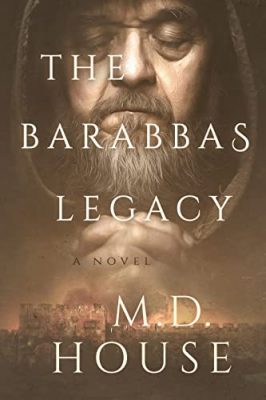
    • The BARABBAS LEGACY by M.D. House – Christian Historical Fiction, Historical Fiction, Ancient World Historical Fiction

      The Roman Empire rules much of the world but faces unrest in its leadership and opposition from the growing movement of Christianity, in this conclusion to the Barabbas Trilogy, M.D. House’s historical fiction novel, The Barabbas Legacy.

      God has a plan for the Barabbas family, and their travels have only just begun. The tense conflict between Roman forces and the Jewish community in Jerusalem comes to a head. Leaders of Christianity rush to help their Jewish brothers and sisters.

      Cornelius, a once-celebrated centurion of the Roman army, stands on trial for believing in God over the Roman Empire. Emperor Nero shows uncharacteristic leniency and exiles Cornelius from the Empire. Cornelius flees before any senators have him assassinated. Once out of Rome’s reach, Cornelius feels called to help grow the Christian community.

      In the introduction to the novel, M.D. House recounts his writing journey.

      He explains how he came to write about a biblical figure we know very little about. Initially wanting to write science fiction and fantasy, House shifted to Historical Christian Fiction after reading a particular bible story. House wondered about the life of Barabbas. He imagined what had led the man to become a prisoner and how his life changed after being freed.

      Very little knowledge of Barabbas has survived, which opens the opportunity for House to create Barabbas, the character. House builds a whole life by using his few brief mentions in the gospels as a jumping point. He developed his protagonist so well that an entire trilogy was needed to tell the complete story.

      The Barabbas Legacy sees Barabbas as an older man with his children grown. Some start families of their own, while others help the evangelical efforts of Christianity in its infancy.

      M.D. House’s The Barabbas Legacy, as well as the first two books in the series, I Was Called Barabbas and Pillars of Barabbas, will appeal to readers of historical fiction and general readers of Christian fiction. The Barabbas Legacy could also be a good book for a Christian book club or Bible study. It features themes about the relationship between people of different faiths and the importance of bravery in one’s beliefs.

      The Barabbas Legacy concludes Barabbas’ tale that started with curiosity and grew into a complete series. M.D. House succeeds in telling the story of Barabbas, a rebel and murderer turned strong follower of Jesus.

      Chanticleer Book Reviews 4 star silver foil book sticker


    • The REFUSED by Ron Singerton – Historical Fiction, Action and Adventure Historical Fiction, Historical Thriller


      Fine artist and award-winning author Ron Singerton turns his astute attention to some little-known history, enmeshed in immortal names and enduring truth in his mystery romance novel, The Refused.

      The story boils from the first page, depicting families from the North and South in 1859 America. The brewing conflict will pull all of them into its orbit. In the South we meet Charlotte, her half-brother and slave, Jerome, who sail to France at war’s end.

      Life and love in Paris become the vibrant heartbeat in The Refused.

      Jack Volant, an aspiring painter and Union cavalry officer, wounded at Gettysburg, travels to Paris following the war to become a more accomplished artist. It is there that he begins a tumultuous relationship with Charlotte, a sculptor who sells her work to Empress Eugenie, wife of the Emperor, and a noted art patroness.

      Jack’s younger brother Steven, while still in America, becomes embroiled in an affair with a professor’s wife. When the professor, an expert shot, learns of it, he challenges the young man to a duel. Fearing for his life, Steven changes his name and flees to Paris where he engages in the eerie occupation of unwrapping mummies in the salons attended by the elite.

      All these dynamic characters, many involved in intrigue and murder, will interact in the decadent City of Light. They enjoy its ambience for only a short time, however, before war finds them once again. In 1870, the influence of the Empress, Prussian militarism and national rivalry will lead to disaster for France in the Franco Prussian war, the siege of Paris. In the chaos, Charlotte, deeply in love with Jack, waits anxiously as he attempts to save his brother and Jerome from the Prussian onslaught.

      The Refused is more than the title of a novel.

      Jack will find himself accepted by and creating new works alongside the Impressionist painters. Their adopted sobriquet, the Refused, stems from their rejection by the mainstream critics of the day. Their band includes Manet, Monet, Pissarro, Degas, Cezanne, and Renoir. They all resolve to paint what they want and hope for success, even if it be posthumous.

      This novel explores far more than artistic expression.

      Even after Prussian victories in the field, Paris holds out and becomes a hotbed of the Parisian underclass, the Communards. Jerome, with his sympathy for the desperately poor, joins the movement, putting his life in danger. As turmoil explodes around them, Jack, Charlotte, Steven, and Jerome attempt to survive as the reign of Emperor Louis Napoleon III and the Second Republic implode around them.

      Singerton writes with verve and intelligence. He fashions several interwoven plots in numerous historical settings, while making all his players come to life as credible people, some with high aspirations and others with low scruples.

      The author provides useful background in his “Author’s Notes.” He cites the real people and fact-based events that he selected for this engaging tale. The narrative encompasses formal dueling, womanly wiles, shadowy views of a typical morgue, costuming, cafés, conditions in Paris in wartime, and many other fine touches that powerfully immerse the reader in the times and places.

      Singerton served in Asia with the US military, was a Civil War cavalry reenactor, an art and history teacher, and enjoys saber fencing and horsemanship. He has penned notable works of historical fiction. And significantly, he is also, like several of the book’s protagonists, a professional artist. All these interests weld neatly together into this enthralling novel, sure to please his current audience and garner new readership.

      Read our reviews of Ron Singerton’s other books by clicking on their titles, A Cherry Blossom in WinterThe Silk and the Sword: Gaius Centurion, Book 2, and Villa of Deceit: A Novel of Ancient Rome.

      5 Stars! Best Book Chanticleer Book Reviews


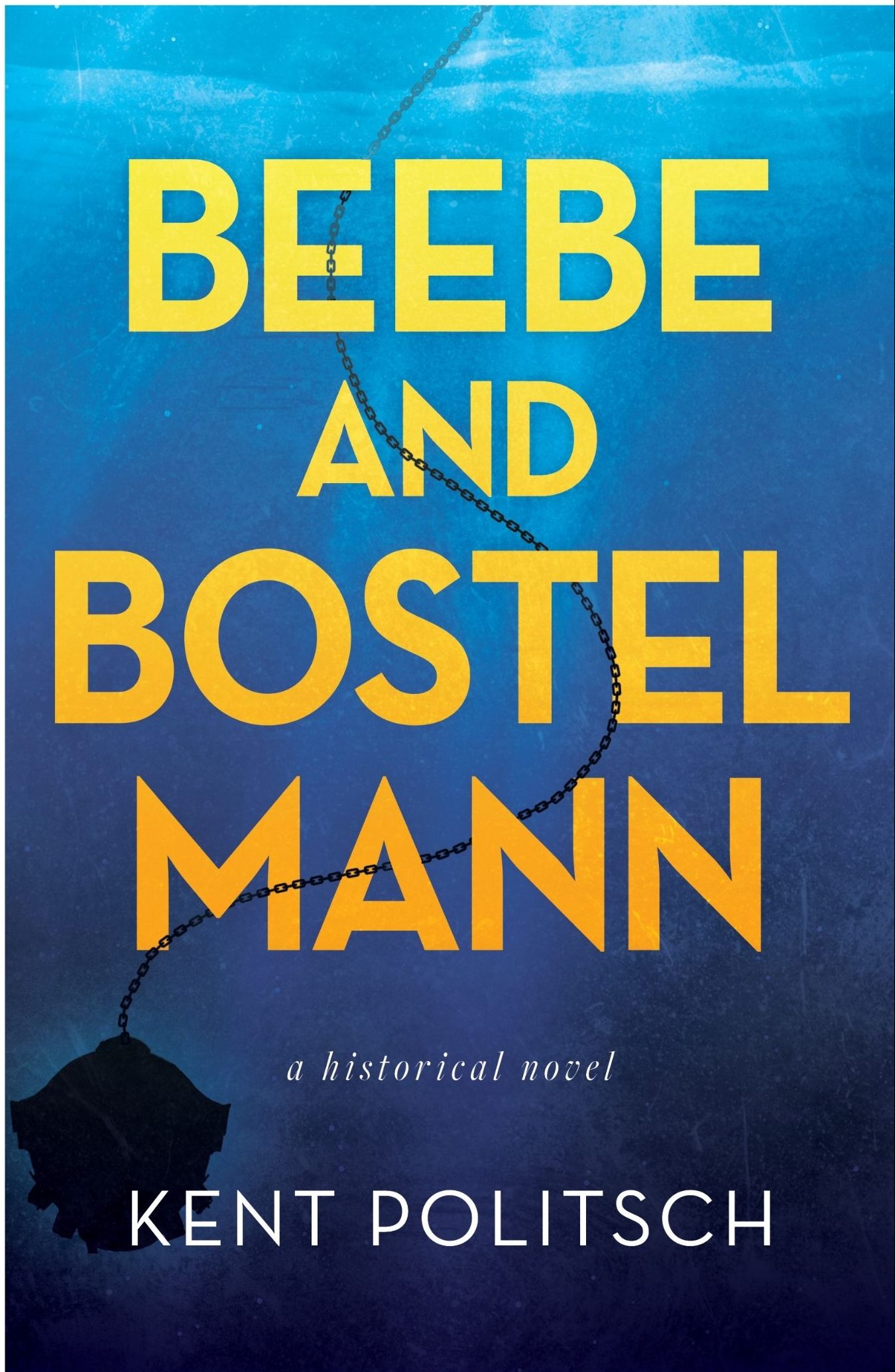
    • BEEBE and BOSTELMANN by Kent Politsch – Historical Fiction, Historical Biographical Fiction, Deep Sea Exploration


      Dive deep into a three-part saga illuminating underwater discovery in Kent Politsch’s historical fiction novel, Beebe and Bostelmann.

      Well-researched with a strong environmental focus, Beebe and Bostelmann captures the incredible accomplishments of a multi-faceted naturalist and adventurer. But this charismatic man, Will Beebe, navigates his own emotional journey as well as the deep sea. Collaborating with him, Else Bostelmann brings life to his oceanographic discoveries through her artwork.

      In 1929, Will Beebe, newly wed to a young female writer almost half his age, sets out to understand the deep sea. As an ornithologist and explorer, he ventures nearly half a mile beneath the ocean’s surface.

      In his passionate quest, he connects with Otis Barton. The famous fortune seeker designs an enclosed submersible able to withstand the pressure of record-breaking dives.

      With entertaining pitches and backing from various patrons, the project begins south of Bermuda. Once there, the research team gathers at a laboratory set up on Nonsuch Island. However, technical delays, necessary testing, precarious refinements, and a stock market crash threaten the completion of the “bathysphere.” But Beebe and Barton persevere. They put their trust, and lives, in the hands of the invention.

      Politsch delivers brilliantly detailed descriptions of Beebe’s various sightings. Whether “coral clinging, weaving seaweeds dangling … tissue-thin pearl shells … ” an unknown quartet of fish, with “bird-like beaks … standing upright on a thin tailfin … colors brilliant” or bioluminescent fish in an abyss likened to “a moonless starlit night” – the intricate  illuminate the nuances of this far-reaching, mysterious seascape.

      Politsch weaves themes of love, loss, and heartfelt burdens through his story.

      While Else Bostelmann employs her unique ability to translate Beebe’s reports into beautiful artistic renderings, Beebe enjoys an open marriage – disregarding his wife’s feelings on the matter; indeed, he has several romantic liaisons. Bostelmann proves a character with the skill to observe human dynamics taking place within the island and its work. And, ultimately, this story shows the need for forgiveness and letting go of resentments.

      Beebe clearly possessed the ability to charm and attract women through both charismatic and intellectual means.

      However, Politsch distinguishes him as a mentor who gave women opportunities in the scientific field. The idea that “There is nothing about science that makes a man wiser than a woman …” may have been Will Beebe’s attitude regarding gender equality at the beginning of the 20th century, though his many liaisons would certainly cloud a person’s image in society today.

      Politsch’s final pages include short biographical sketches of the real-life individuals from whom this work derives. In addition to the intertwining human interest aspect of Beebe and Bostelmann, the author details the many dangerous dives far beneath the water’s surface. These dives highlight the significance of the ocean in the origins of life on our planet – and our ultimate future.

      Amidst the wonder of the sea, Will Beebe and Else Bostelmann play an essential part in the advancement of oceanic science. Beebe and Bostelmann serves as an artful and engaging odyssey introducing their important work to an audience that might otherwise be unaware of their significant place in history.


      5 Stars! Best Book Chanticleer Book Reviews


    • Waking Up Lost: The Adirondack Spirit Series Book 4 by David Fitz-Gerald – Historical Fantasy, Native American Fiction, Coming of Age

      Waking Up Lost: The Adirondack Spirit Series Book 4 by David Fitz-Gerald – Historical Fantasy, Native American Fiction, Coming of Age

      Seventeen-year-old Noah Munch craves acceptance more than anything in David Fitz-Gerald’s coming of age novel, Waking Up Lost.

      As a biracial boy growing up in a small village in upper New York, Noah doesn’t feel that he belongs to either part of his heritage. Having lost his Native American father before he was born, Noah has spent his short life trying to connect with that missing part of himself. Meanwhile, he has to keep the peace with the Wilmington villagers who find his native side offensive. Noah also protects a family secret. His mother, Mehitable, speaks with spirits and his brother, Moses, has an uncanny ability to predict disaster and show up with inhuman speed to prevent it.

      As a result of his complex home life, Noah spends a great deal of time alone. He dreams of someday being a mountain man, living off his wits and the nature around him. However, Noah can’t stop himself from admiring Arminda, the prettiest girl in town. He doubts he will ever have a chance to court the blonde beauty, especially considering the meanest young man in town, Erastus Moss, has spoken for her.

      Erastus, whose grandparents died at the hands of Native Americans on a journey out West, begins to harass Noah when he notices Noah’s interest in Arminda.

      Noah endures taunts, feeling the burden of prejudice and simultaneously the inadequacy of being the only “normal” member of his family until the night he wakes up on top of a mountain.

      He begins to experience strange episodes, which he believes are sleepwalking fits. One night appears inside the home of his beloved Arminda. Once the town discovers his odd behavior, suspicion and fear turn even more people against him, and Erastus uses it as an excuse to escalate his torture. Can Noah stop the crazed man and find a way to control his abilities before it’s too late?

      The fourth installment of the Adirondack Spirit Series revolves around Noah’s coming of age.

      In true bildungsroman style, Noah embarks on both a physical and spiritual journey. He suffers the distance between himself and other boys, including his twenty-year-old brother. Noah, small, scrawny, and by his own admission, doesn’t have the physical presence that others expect of a boy his age. Though often the most handsome boy in Wilmington, Noah’s dark hair and olive skin set him apart in his racist town.

      However, Noah never knew his father’s people, so he has nobody other than his white neighbors to socialize with. He can’t see himself as anything other than a clumsy daydreamer who will never fit in, driving him to live alone in the mountains as his father had done years ago. Noah yearns to connect to the father he resembles, but when he isolates himself, nature and man conspire to bring him right back to the town he hates.

      He finds no solace in his mother and brother, even as they assure him that he possesses great power.

      Even amongst his family, Noah doesn’t fit. He despairs his ordinary nature with a mother who guides spirits to the afterlife and brother with inhuman speed. If he could rely on a secret talent, he could tolerate his neighbors’ prejudice. But when he does develop an unexplainable ability, it proves nightmarish and deadly. Noah never knows when it will happen or, more importantly, where it will take him. Ironically, this strange power becomes paramount in discovering the very purpose he longs to find.

      Faith and trust in God frame Noah’s life.

      Noah often relies on his faith to carry him through the unbelievably tricky situations in his life. In pain, he turns to prayer for comfort and reassurance, and later when he commits a crime (albeit justified), he only frees himself of the burden when he seeks absolution from God. Though his episodes sometimes prove horrific, Noah realizes his power borders on the miraculous.

      He searches for God’s plan for his life even while questioning how he will know it when he sees it. When Noah hits his lowest point, fearing for his life, he feels the “warmth” of God physically and hears His message that Noah isn’t alone. Noah becomes God’s servant, and he begins to understand that he must become what God expects, not what he wants.

      The supernatural elements in the story set it apart from the typical novel of this genre, creating a hybrid between historical and paranormal.

      The family members’ unusual abilities heighten their outsider status. Mehitable raised her biracial sons in a town of hate and prejudice for seventeen years. Though she does have a few staunch supporters, these people can’t always keep the wolves at bay. She and her sons suffer from the racism so prolific during the 1800s in America. Compounding her pariah-like treatment, she speaks to spirits and must keep her gifts secret for fear of further mistreatment. Moses must also keep his powers hidden. Noah suffers for his gift. Though he has no control over its occurrence, the townspeople practically exile him, leaving the young man to find a way to bridge this chasm between himself and others.

      Chanticleer Book Reviews 4 star silver foil book sticker

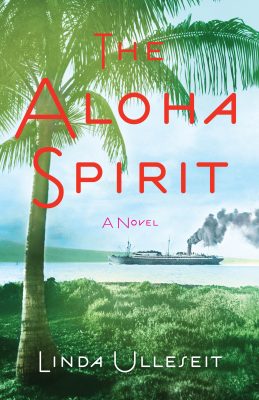
    • THE ALOHA SPIRIT by Linda Ulleseit – Hawaiian Cultural Fiction, World War II Historical Fiction, Women’s Divorce Fiction

      THE ALOHA SPIRIT by Linda Ulleseit – Hawaiian Cultural Fiction, World War II Historical Fiction, Women’s Divorce Fiction


      A blue and gold badge for the 2020 Grand Prize Winner for Goethe Post-1750s The Aloha Spirit by Linda Ulleseit

      In Linda Ulleseit’s novel The Aloha Spirit, we meet the plucky heroine, Dolores, as her father leaves her.

      “Dolores’s father deemed her useless when she was seven. Neither he nor her older brother, Pablo, ever said that, but every detail of their leaving told her so. Papa had tried to explain the Hawaiian custom of hānai to her. All she understood was the giving away, leaving her to live with a family not her own.”

      Her story starts in 1922; the place, multiethnic, multilingual Hawaii. Papa, a sugar cane cutter from Spain who worked in Hawaii, decides to take his son Pablo with him to seek his fortune in California. His wife died five years earlier. He leaves 7-year-old Dolores with a large family on Oahu in an arrangement called hānai, an informal adoption. Dolores doesn’t know the family well. She feels abandoned, with no idea when or if her father will send for her or return.

      There follow years of drudgery in which she works as an adult, laundering clothes for many people at least six days a week as part of her hānai arrangement. The hard-working couple she lives with struggles to survive. Befriended by Maria, an older hānai girl, Dolores escapes her situation when Maria leaves to marry Peter. Dolores goes to live with them, to help Maria through her pregnancy, and for a while, she gets to share their happy family and have some things of her own.

      At age 16, Dolores marries Manolo Medeiros, a boy she met on the beach and barely knows.

      She becomes part of his large, extended Portuguese family, which includes Alberto, a nephew four years younger than Dolores. She hopes the Medeiroses will be the family she always wished for. When she met him on the beach, Manolo gave his interpretation of the aloha spirit: “Aloha begins with love.”… “Love yourself first.”… “Love the land.”… “Love the people.”… “Aloha is the joyous sharing of life’s energy.”

      Dolores has her first child at age 17. But Manolo’s serious drinking problem, anger, and physical abuse of Dolores estranges him from her and the family, forcing her to take more control of her own life and protect her daughters. As Manolo’s behavior worsens, Alberto steps up to support Dolores, and they fall in love. But as part of a devout Catholic family, Dolores can’t possibly divorce Manolo.

      Novelist Ulleseit gives us a vivid picture of the life of a hard-working Hawaiian woman and her community in the early decades of the 20th century.

      Anyone interested in the history of Hawaii or in women’s history will enjoy this book. This book centers on abuse, overwork, and alcoholism as major themes, described in a matter-of-fact way. Dolores lives through interesting times, including the bombing of Pearl Harbor and the United States’ entry into the war, rationing, and the removal of Japanese Americans from Hawaii. Dolores goes to California and visits the World’s Fair, so we get to see the fair through her eyes. A glossary at the end of the book provides translations and a pronunciation guide for the many Hawaiian and Spanish words.

      Linda Ulleseit was born and raised in Saratoga, California, and taught elementary school in San José. In addition to The Aloha Spirit, she wrote Under the Almond Trees, another historical novel, which takes place in California starting in 1896. She has also written a series of Flying Horse books, young adult fantasy books set in medieval Wales. She has an MFA in writing from Lindenwood University, serves as marketing chair of Women Writing the West, and is a founding member of Paper Lantern Writers.

      Linda Ulleseit’s The Aloha Spirit won Grand Prize in the 2020 CIBA Goethe Book Awards for post-1750s Historical Novels.

      5 Star Best Book Chanticleer Reviews round silver sticker

    • Chanticleer Magazine featuring USA Today Bestselling Author Ann Charles is Available in Print and E-Zine

      Chanticleer Magazine featuring USA Today Bestselling Author Ann Charles is Available in Print and E-Zine

      The latest issue features Ann Charles, USA Today Best-Selling Author.

      Ann shares her amazing author journey and her secrets to success! She has five, count them, five book series that are filled with mystery, humor, romance, supernatural, and the paranormal. Ann has also been awarded the CIBA Grand Prize for Paranormal Fiction.

              • Five Tips for Building Relationships with Readers
              • How to Refuel Your Creative Tank
              • Charting Plot Structure
              • Writing Life
              • Secrets for Writing Series

      All this and more in Sharon E. Anderson’s great interview with Ann!

      Order your print copy today!


      Download your e-pub copy today! Click here for a digital copy featuring Ann Charles. 

      Writing Craft with Jessica Morrell, Top-Tiered Editor and one of Chanticleer’s exceptional Master Writing Class instructors, expands on the components of successful fiction.

      Jessica Page Morrell
      Jessica Page Morrell

      James Conroyd Martin, Chanticleer Overall Grand Prize Winning Author known for bringing historical fiction to life, 10 Question Interview.

      James Conroyd Martin, Overall Chanticleer Grand Prize Winner!

      Sweet Lavender Days with Gail Noble-Sanderson with her delicious lavender shortbread cookie recipe. Gail is a multi-award-winning author who weaves an epic tale of romance set against World War I and II, full of warmth, family, and the hope that love can indeed conquer all.

      Award-Winning Author Gail Noble-Sanderson

      What Will You Read Next? Discovery New Reads from this issue’s Chanticleer reviews of these authors’ works from Non-Fiction to Fiction and even an anthology! More than 80 Chanticleer Reviews on the following authors’ works.

      Robert L. Slater, Ted Neill, G.R. Morris, Paul E. Vaughn, T. K. Riggins,  JW Zarek, Joy Ross Davis, Jeny Heckman, Richard J. OBrien, Chris Karlsen, Corey Lynn Fayman, Kevin G. Chapman, Pamela Beason, Norman M. Jacobs, M.D., Marilyn Larew, Michael Pronko, Michelle Cox, Wally Duff, Ann Charles, Karen Musser Nortman, Anna Castle, James Conroyd Martin, Bruce Gardner, Blaine Beveridge, Joe Vitovec,  Sandra Wagner-Wright, Andrea McKenzie Raine, Gerri Hilger, Michael L. Ross, Kari Bovee, David Fitz-Gerald, Sandra Rostirolla, L. A. Thompson, Susan Faw, Tiffany Brooks, Kay M. Bates, Robert D. Calkins, Aric Cushing, Sara Dahmen, Robert Scott Thayer, Simon Calcavecchia, L. E. Rico, Bronwen Evans, Elana Mikalsen, Claire Fullerton, Gene Helfman, Charlie Suisman, Lou Dischler, Eileen Charbonneau, Yorker Keith, Kris Kelso, Julie Jason, Lance Brewer, Franklin Ball, David Okerlund, Linda Jamsen, Cassandra Overby, Stevanne Auerbach, Bill W, Thomas Widman, Karen Keilt,  Jill Anderson, Dan Juday, Ilene Birkwood, Dr. Rhona Epstein, Ramzi Najjar, K,  Tanner T. Roberts, J. Nell Brown, Maya Castro, Janice S. Ellis, Ph.D, and The Red Wheelbarrow Writers.

      Where can you get you copies of the Chanticleer Reviews Magazine?

      You may order print and e-zine copies directly from us! Print copies receive complimentary shipping to anywhere in the United States.

      OR Purchase Print Copies from these Independent Booksellers:

      U.S.

      Village Books of Bellingham, Wash. They can mail magazines out anywhere and they keep copies of the latest issue of Chanticleer Reviews quarterly magazine in stock on their magazine racks.

      Canada & U.K.

      If you live in Canada or the United Kingdom, then order your print magazine from Dragon’s Lair: www.DragonsLairArtist.com or email Susan Faw at susan@dragonslairartist.com | We ship a stack to Dragon’s Lair in Ontario, Canada. Then, they can ship them much easier, faster, and for cheap to Canadian addresses. 

      E-zines!

      Order from Bookchain.ca

      Or download directly from us!

      Advertise?  Yes, please! Email DBeaumier@ChantiReviews.com  for more information.

      Chanticleer Reviews magazine will make a great showpiece for the coffee table, or to take to book signings, or to have in your writer’s den, or to take to other promotional events for your books, or with you to book club meetings, and just in time for the holidays! 


    • IN the LAND of the FEATHERED SERPENT by Richard C. Brusca – Historical Caribbean & Latin Fiction, Magical Realism, Adventure Fiction

      IN the LAND of the FEATHERED SERPENT by Richard C. Brusca – Historical Caribbean & Latin Fiction, Magical Realism, Adventure Fiction

      Odel Bernini wades deeper and deeper into treacherous political intrigue, in Richard C. Brusca’s Historical Adventure novel, In the Land of the Feathered Serpent. 

      This story, like the feathered serpent itself, moves time and space to visit an era remembered by many Americans as one where the U.S. government worked to destabilize several Central American regimes who were at odds with its politics. 

      A young Odel works as chief curator of a world-renowned natural history museum in Seattle, an occasional teacher at a college in nearby Tacoma, and an archaeology hobbyist. His marine biology fieldwork in support of his specialty – the documentation of crustaceans in Central America – brings him time and again to nations long under the political sway of the United States, especially Nicaragua and Guatemala.  

      Revolutions and counterrevolutions create governments and insurgents that brutalize the local populations, especially the indigenous people. Prodded by his wife, the daughter of an American cultural attaché, Bernini approaches the CIA to ask whether it might fund his continued research in the region in exchange for “some silly things” he could do for them. 

      Those “silly things” lead to funding from a foundation to cover his travel, but with strings attached. 

      He collects crustaceans and intel. Having sold his soul, he gradually undertakes more dangerous tasks on the CIA’s behalf. Like a frog placed into room-temperature water, it is almost too late before he realizes that the burner has been lit.  In addition to the growing peril to his life, Bernini falls for a devastatingly gorgeous woman he meets in a hotel bar, on the eve of his first assignment.  

      As things grow more complicated, the malicious Guatemalan army tears through the jungle looking for Bernini. He must contend with the wildlife buzzing and slithering around him in the dark and hopes he can escape – right up until he meets a venomous fer-de-lance snake. 

      Author Brusca delivers modern man’s Odyssey, both in scale and complexity. 

      We are riveted to this man’s journey of self-discovery through challenging times as he navigates the siren calls of the CIA and impossibly beautiful and sexually adept women while his mundane life as an academic and museum curator disintegrates. The lead character’s descent into calamitous Central American politics and American foreign policy plays foil to erotic scenes with his wife back home in Seattle, a darkly fascinating and even more beautiful seductress in Central America, and a final twist coupling with a yet more mysterious and enigmatically enthralling woman. 

      Author Brusca has an effortless style that draws the reader in and manages to convey needed facts of science, political history, and geography that quickly absorb the reader. Brusca delivers a mega-novel that will resonate with readers drawn to sensually charged, clandestine storylines that run through dangerous political landscapes and treacherous jungles. In the end, much like the heroes he echoes, Odel Bernini, is a super-heroic Indiana Jones archetype with a whole bunch of sexy Bond on the side. 


      Chanticleer Book Reviews 4 star silver foil book sticker