Tag: Historical Fiction

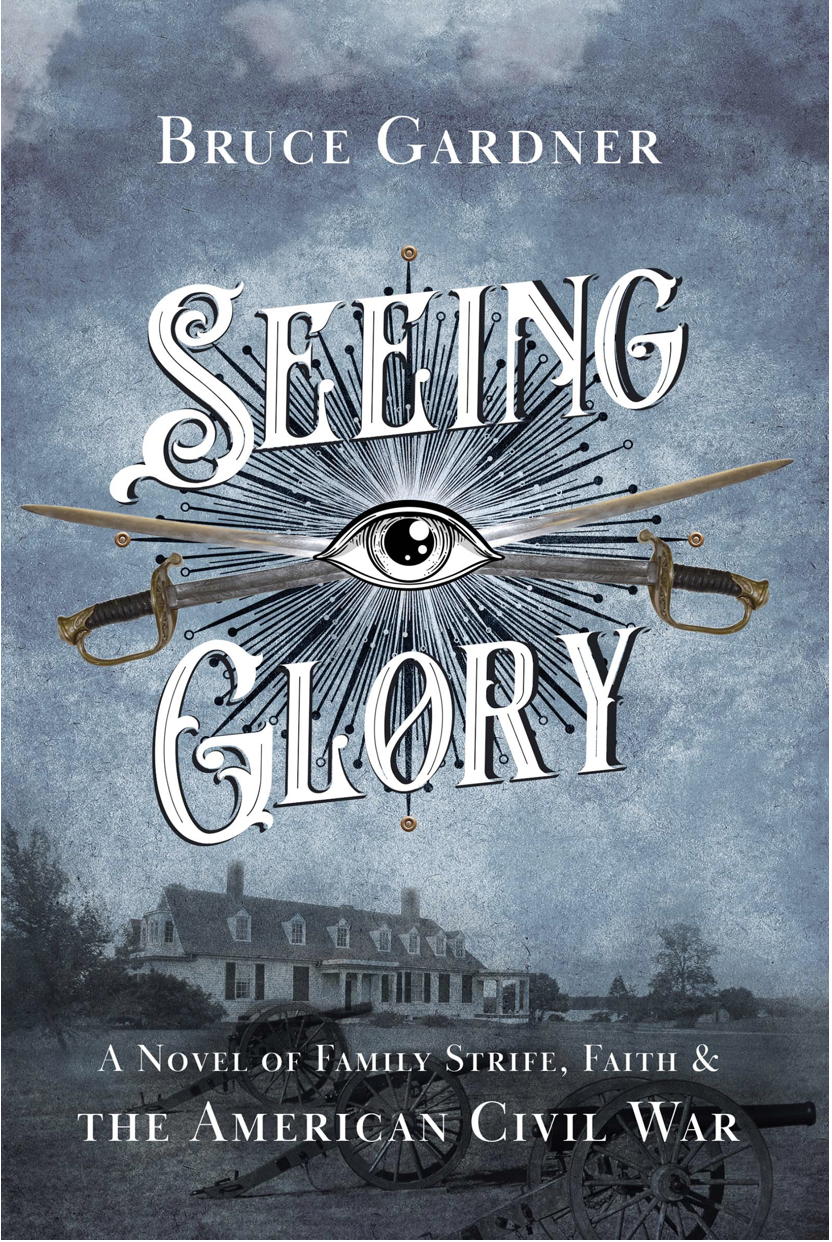
  • SEEING GLORY: A Novel of Family Strife, Faith & the American Civil War by Bruce Gardner- Christian Historical Fiction, Civil War, American Slavery

    Seeing Glory by Bruce Gardner is a sweeping, thought-provoking Christian historical novel of the American Civil War. The novel portrays the critical roles of family ties and religious faith in shaping personal attitudes and actions towards the horrors of slavery and the war itself.

    Spanning the era from the famous abolitionist John Brown’s Pottawatomie Massacre in 1856 through the end of the war nine years later, Seeing Glory focuses on the gut-wrenching conflicts over slavery and the southern way of life faced by David, Emma, and Catherine Hodge, fictional siblings, raised on a wealthy plantation in Virginia.

    David returns home from a prestigious northern college filled with radical new perspectives. He challenges his father’s and his southern church’s assurances that the Bible says slavery is approved by God. When David calls out the truth as he now sees it, he ignites a firestorm that tears him away from his family at the beginning of the Civil War, sparking huge changes in their individual destinies. Soon after meeting Abel Bowman—an ardent abolitionist and follower of John Brown—David moves north to Ohio and becomes an embedded war reporter with Abel’s Union army regiment. Mutual zeal for the abolitionist cause abounds, but will it help or hinder the two men’s endurance of horrific battlefield violence and scandalous personal accusation?

    Devastated by David’s departure from the plantation, his younger sister Emma is torn between the realities of slavery and her Christian faith. Unable to bear the cruelty that she sees her family’s slaves being subjected to, Emma flees north with her maidservant Sallie, one seeking freedom, the other seeking purpose.

    Meanwhile, the elder Hodge daughter, Catherine, strives to be the perfect southern plantation mistress after her mother’s death.  After marrying a Confederate officer, she is forced to manage both her ailing father’s and her 0wn plantation once her husband is off to war. The pressure of her siblings’ abandonment weighs on her as the war creeps closer, threatening to destroy everything she’s worked for.

    Christian beliefs were a big part of the historical abolitionist movement. In Seeing Glory, each of the Hodge siblings and Abel Bowman face their own personal issues of faith, privilege, and forgiveness. It is through the lens of faith that these engaging characters discover their unique paths for surviving the war and supporting the abolition of slavery in the United States. On their journeys, they become involved in many historical events, interacting with famous people like Frederick Douglass, Abraham Lincoln, and Angelina Grimké—a former plantation daughter from South Carolina who eventually became a nationally known abolitionist, journalist, teacher, and women’s rights advocate.

    Although Seeing Glory falls within the Christian Historical fiction genre, Gardner doesn’t shy away from describing how the Bible was too often used by southern politicians, pastors, and churches to justify slavery—but on the other hand how ardent commitment to a “glorious cause” like abolition could at times be taken too far. Likewise, Gardner doesn’t downplay the brutality of slavery nor the destruction and devastation of the Civil War, though his novel is not excessively gruesome or overly explicit in its descriptions.

    Fans of historical fiction will appreciate the compelling mix of fictional and historical characters woven through the emotion-packed saga of Seeing Glory, eager to discover what will happen next. Highly recommended!


    5 Stars! Best Book Chanticleer Book Reviews

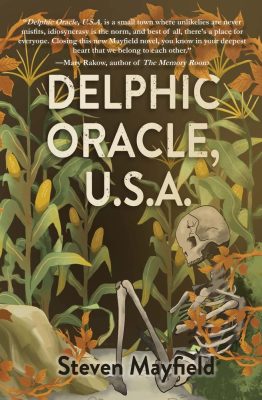
  • DELPHIC ORACLE, U.S.A. by Steven Mayfield – Small Town Fiction, Family Saga, Contemporary Fiction

    The Mark Twain Grand Prize for Steven Mayfield and his book Delphic Oracle U.S.A.The Coen Brothers meet Garrison Keillor in Steven Mayfield’s quirky, offbeat, and often hilarious Delphic Oracle, U.S.A.
    One June afternoon in 1925, seventeen-year-old Maggie Westinghouse, out walking alone as was her custom, comes upon a stranger in a railroad switch-house asleep on a pile of gunnysacks. Maggie, who has always stood a little apart from the town, has recently begun to experience visions that come upon her “in a leisurely way,” ending in a swoon and a restless sleep filled with exotic talk of which she later has no memory. No one knows what to make of it, but they soon will. After this afternoon’s chance encounter with July Pennybaker, a charming grifter on the lam, her world will never be the same. Neither will the town of Miagrammesto Station.

    Eighty-nine years later, in the days leading up to and following the July 4th weekend, domestic dramas are playing out across Delphic Oracle, Nebraska (nee Miagrammesto Station).

    Teddy Goodfellow, given to periodic fits of restlessness, has done a runner only days before the Fourth of July parade. Francis Wounded Arrow, attempting to change the battery in his nearly cherry 1929 Chevy pickup, has gotten his arm stuck and remains there at Peaseblossom Implement & Auto Parts throughout the afternoon, chatting nonchalantly with the various townsfolk, some of them family who wander by. Beagle Gibbs embarks upon his Religious Period and begins interviewing the different denominations in the town, to see which might suit.

    When Teddy bolts, the town responds as it always does. They hold a pool, friends and neighbors, and family each predicting a date and time for his return. The countdown begins. When Francis holds court in Big Bob’s garage, pretending that nothing is amiss—and after he’s privately called upon the Great Father and several of the pantheon of Blessed Uncles to no avail—the entire Delphic Oracle Fire Department is galvanized into action and very nearly saves the day. And Beagle, after a tour of all that the different churches in town have to offer, loses his religious ardor in an unfortunate and rather painful mishap with a nail-gun on the roof of his mother’s house.

    But what happens is only part of the fun. It’s how it all happens—the droll language, the turns of phrase, the reactions of the townspeople—that makes the story.

    This is not a novel to be rushed. This is a novel for those who love tall tales, yarns, sitting on a summer evening on the wide porch, fanning against the heat, and passing the time telling stories. It’s a novel of reflection and escapade. A novel to be savored.

    Structurally, the story is a twist of two timeframes, two narratives. In one, a story that began three generations in the past unfolds. In the other, a bustling town is brought to life through the concurrent stories of several members of the same extended family. The historical strand drives relentlessly forward, those two lives unfurling and intertwining, time passing. The contemporary strand ripples outward, taking in the town and its inhabitants in a luxurious and unhurried manner over a period that encompasses, in storytime, only a few weeks, but that covers, in reflective time, much more than that.

    Time, too, is in a twist.

    It sieves back and forth and collapses in on itself. The past informs the present; and the present (for us readers), the past. Most of our primary present-day characters, the ones we live with over the course of a few weeks in July and August of 2014, remain anchored solidly in time. But the many characters who move like constellations about those steady poles—those we often encounter plucked out of their own timelines—are typically out of sequence.

    This is a novel where a child new to the world, a toddler wailing in a crib, is elsewhere in the tale of the grandfather, long deceased. The stalwart man remembered in the present as the founder of the town puts in an appearance in the past, sixty-odd years after that founding, as a doddering grandfather who’s soiled himself. Another of those long-ago individuals was the flesh and blood precursor to the decades-old human skeleton partially unearthed by Regretful Peasebottom’s dog in a nearby vacant lot two days before the parade.

    The same events sometimes reappear from different perspectives, and we put the full stories together like puzzle pieces, fitting now a future piece, now a past. A prism-puzzle, these pieces twirl and refract the light off themselves and one another, until we understand that the story of one forms a part of the story of all and the story of all reaches into the story of each.

    The effect is a fully fleshed-out town of long acquaintance, filled with people who seem to live and breathe on the page. The author becomes not so much a novelist, as through his narrator an amanuensis. And to spend time with this novel is not so much to read a story as to take up residence in the town for several madcap weeks, every bit at home as though, like the narrator, you’d never truly lived anywhere else.

    Delphic Oracle U.S.A won Grand Prize in the 2022 CIBA Mark Twain Book Awards for Humor and Satire.


    5 Stars! Best Book Chanticleer Book Reviews

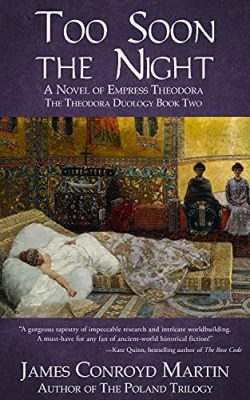
  • TOO SOON The NIGHT: A Novel of Empress Theodora (The Theodora Duology Book 2) by James Conroyd Martin – Historical Fiction, Eastern Roman Empire, Women Leaders

    Too Soon the Night by James Conroyd Martin shows the thrilling heights to which Empress Theodora rose and the crushing depths to which she fell, in the latter half of her life. This story picks up from Fortune’s Child, the first volume of this epic duology.
    This half of Theodora’s incredible journey opens at its close – as she succumbs to the cancer that drove her to dictate the record of her life. She left the task of recording her meteoric rise from actress to empress in the hands of the scribe and historian Stephen, even though she imprisoned him for several years out of fear that he would reveal her greatest secrets.

    But as much as Stephen should hate her for her cruelty, he has his own axe to grind against the man who would slander Theodora after her death with a scurrilous character assassination disguised as biography. So he takes up his pen and continues his recording of – if not Theodora’s unvarnished truth – at least something closer than whatever her enemies would conjure to blacken her name.

    Where Fortune’s Child focused on Theodora’s early years and her rise to power with Emperor Justinian, Too Soon the Night follows her many attempts to consolidate power, protect Justinian, and secure their legacy – even with no direct heir for their throne.

    In spite of the chasm of time between the mid-first century A.D. and the early 21st century, Theodora’s drives and fears are easy to empathize with and understand, even as her complex machinations push the story forward.

    The story is split between Theodora’s history as she tells it to Stephen, and Stephen’s perspective of Theodora as he carries out her will.

    He provides insight into Theodora’s motives and the court and city in which she lives, allowing the reader to see the Empress both as she wants to be seen and as she truly is.

    The story’s setting shows people jockeying for positions in Justinian’s court, unrest among the populace, and the Emperor’s unrealistic dreams of turning the Mediterranean back into a Roman sea. These struggles and desires give the story its tension, framing the life of a singular woman, uniquely powerful for her time.

    This is a long and complex journey, befitting an equally long and complex saga. Those who start at the epic’s beginning will be rewarded with an utterly compelling immersion in a fascinating life.

    Too Soon the Night by James Conroyd Martin won Grand Prize in the 2021 CIBA Chaucer Awards for pre-1750s Historical Fiction.


    Gold Foil Book Sticker Chaucer Grand Prize

    5 Stars! Best Book Chanticleer Book Reviews

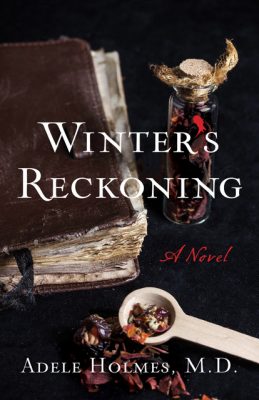
  • WINTER’s RECKONING by Adele Holmes – Southern United States Fiction, Women’s Historical Fiction,


    In Winter’s Reckoning by Adele Holmes, a mercurial new pastor in town threatens the families of two women. 

    Welcome to 1917. A time of suspenders for men and, in the cities, bloomers for women. Horse-drawn wagons range the landscape, stoves burn wood, and people have to use outdoor facilities. A time of few vaccines and no antibiotics. People understood little of most diseases. Germ theory still had ground to cover. Women routinely died in childbirth. Life could vanish in a moment. 

    In rural Jamesville, a Southern Appalachian town, Madeline Fairbanks does what she can to make the lives of friends and neighbors more comfortable. She works as the healer in this community – and has for the past quarter of a century. Madeline eases the passage into and out of life, treating aches and pains in between.

    Maddie comes from a long line of healers. Her grandmother taught her, and she’ll pass along what she knows to her granddaughter in turn. Hannah already has the inclination. The time has almost come to give her the ancestral box, which holds herbal remedy recipes and sketches and notes. That box contains all the learning from the women in their family who came before them.

    Maddie has also trained an apprentice, Renetta Morgan, who is just about ready to begin working in the community, her own community, alone.

    Maddie is white. Renetta is Black. They walk through town together, brazenly traversing from North Main (the white section of town) to South Main (the Black) and back again. Sometimes they go to tend the sick. Sometimes, to the fields and hillsides, gathering the healing flowers and roots and herbs. Other times, they work in Maddie’s cabin, creating tinctures, potions, and ointments. When Renetta learns enough, the two of them must no longer work together.

    The long-promised railroad has recently bypassed the town, spelling a slow death for the community, cut off now from the lifeline of the new transportation. With their Main Street shops shutting down, the townsfolk face hard times. In the South, rigid segregation, Jim Crow laws, black codes, and the Klan divide the community. In Jamesville, the pointy hat boys haven’t been active in recent memory, but that’s about to change. Not everyone turns a blind eye to the flagrant close fraternizing of Maddie and Ren, two uppity women who don’t seem to know their place. Tempers are fraying.

    Into this small town closing in on itself rides a lone horseman one day, who, after a brief look around, announces that he’s the new pastor. Reverend Carl Howard is the match to the powder keg.

    As the town adjusts to this new pastor in their midst, and Reverend Howard takes his measure of the place, we will watch events unfold from the vantage point of three characters, all of whom have secrets to keep. Secrets that could be their undoing.

    With the loss of the railroad, another potential casualty looms – one of education.

    The town is divided on whether to invest in secondary education or not. Currently, only the primary school offers its young charges the most rudimentary learning. Nothing to build on. With more education, Maddie thinks, real change might be possible. Greater equality between peoples, despite their gender or skin color. Greater freedom for women. Or at least a good step in that direction.

    The theme of education and what it can bring – more profound understanding, greater personal freedom and fulfillment, and economic opportunities – underlies the struggle of those for and against keeping women and Blacks “in their place.” One side looks forward to what could be; the other looks back to what has been. The balance of power always tilts in favor of those who have always held it. As the tension mounts, where words fail, violence threatens.

    When a severe winter storm hits, everyone’s lives are suspended.

    As they wait out the freeze, rationing their supplies and tearing up the porch for firewood, Maddie and Ren will come to know things about each other and themselves. And Hannah will grow up a little.

    Set in the brooding rural South, and for a good portion of the novel in the challenging and crystalline world of a deep snowstorm, Winter’s Reckoning is rich in storyline and character with plenty of mystery woven throughout. Simply put, here’s a story that takes on issues whose harm remains with us today. With a climactic pulpit scene that’s not to be missed – and one novel we can highly recommend!

    Winter’s Reckoning was a First Place Winner in the 2021 Goethe Awards.

    5 Stars! Best Book Chanticleer Book Reviews

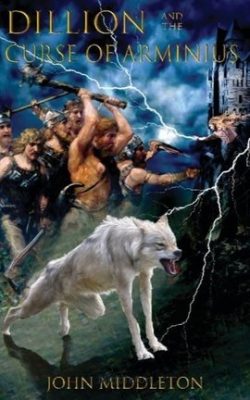
  • DILLION And The CURSE Of ARMINIUS by John Middleton – Historical Fantasy, WWII, Young Adult Fiction

    Hang your disbelief by the door, pull up a chair, and prepare to step back in time to a period of unrest that would forever change the world In Dillion and the Curse of Arminius by John Middleton.
    British and European legends set the stage for ancient warriors with a clarion call to re-awaken to battle—and only the innocents can intervene.

    In 1936, the children of the privileged le Close family pursue their interests and enjoy their lives at their patriarchal home, gifted to the original Baron le Close by King James centuries ago. Since Oakholm Abbey lay on the border of England and Wales, everyone looked to the Baron to protect the surrounding farmlands from Welsh raiders. They would slip down from the wilds of the Welsh hills and valleys just beyond the old monastic estate and do their damage on the population.

    By virtue of their lineage, the youngest generation of the le Close family, Gilbert and Emelia, have certain special abilities. Gilbert is attuned to the animal kingdom—and it to him—and wanders fearlessly into deep forests on the Welsh borderlands where he discovers magical places. These places exude an aura of intense spirituality, bringing Druids and secret ceremonies to mind. On the other hand, Emelia is percipient, although she is only just learning how to understand the meaning of her experiences.

    Unbeknownst to Gilbert and Emelia, trouble brews across the channel.

    They will soon become integral in saving both the lives of their good friends, Axel and Rebecca, German refugees now living in Amsterdam, and in helping good conquer evil in their part of the world.

    Meanwhile, at Schloss Wewelsburg, a centuries old castle in south-western Germany, Heinrich Himmler, the commander of Hitler’s SS, has turned to the occult to realize a dream. He believes in the supernatural and wants to contact and enlist the aid of the fabled Cherusci warriors who conquered the Romans centuries ago to assist in Germany’s attempt to rule Europe.

    Himmler connects with a revenant whose ancestor was second in command to Arminius, the chieftain of the fierce Cherusci tribe that freed the Germanic people of Roman rule.

    What happens next, when the bucolic world of life at Oakmont Abbey collides with the occult, is the stuff of legends.

    Gilbert and Amelia will discover their connections to their ancestral history, and are called upon to fulfill their predestined roles as guardians of a sacred place. They will be sorely tested, and must call upon everything in their beings to survive, to secure the survival of their friends, and to save their way of life.

    In Dillion and the Curse of Arminius, author John Middleton has created a work of fantasy fiction with a plot that will appeal to pre and early teen readers. Much of the writing is lyrical with vivid imagery, creating a mystical mood—set up with a complex storyline and sophisticated language.
    Dillion and the Curse of Arminius won 1st Place in the 2019 CIBA Dante Rossetti Book Awards for Young Adult Fiction.


  • Part Two of The 2021 Chanticleer International Book Awards (#CIBAs) Overall Grand Prize and Division Grand Prize and First Place Category Winners

    Part Two of The 2021 Chanticleer International Book Awards (#CIBAs) Overall Grand Prize and Division Grand Prize and First Place Category Winners

    We are deeply honored and excited to continue to announce the 2021 Winners of the Chanticleer International Book Awards (The CIBAs) with our second of three official postings.

    The winners were recognized at the CIBA ceremony held on June 25th, 2022 In-Person and broadcast live via ZOOM at the luxurious Hotel Bellwether, Bellingham, Wash.


    The CIBA announcements were made LIVE with Chanticleerians flying in and watching from around the globe and North America.

    We cheered on the CIBA winners with our drink of choice, whether in-person or Virtual!

    Btw, Kiffer’s favorite Champagne!

    We want to thank all of the CIBA judges who read each and every entry and then comment, rate, and rank within each of the 25 CIBA Divisions. Without your labors of love for books, the Chanticleer International Book Awards would not exist. THANK YOU!

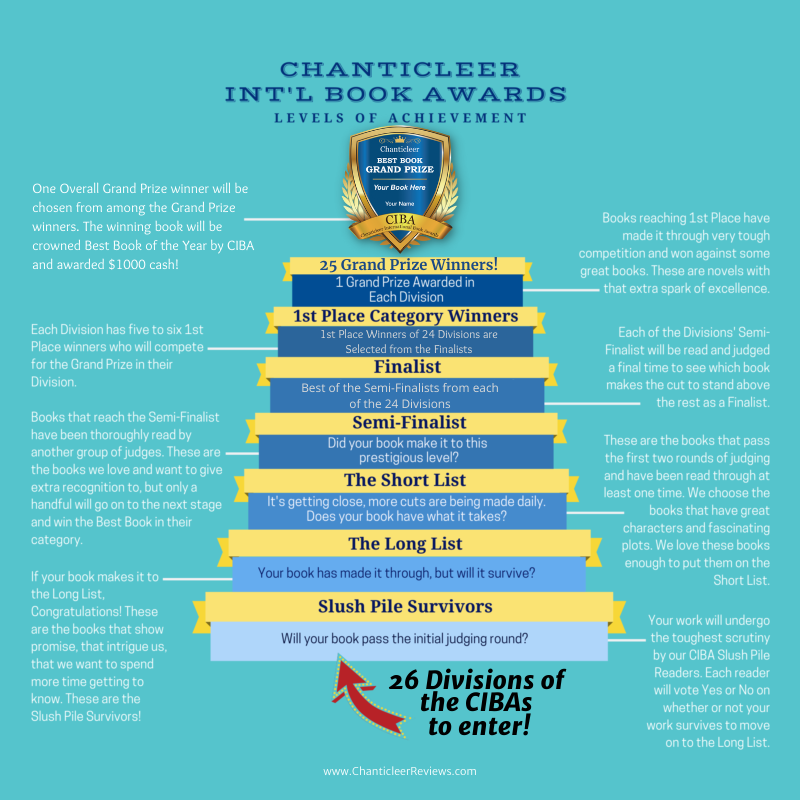
    A pyramid showing the different levels of CIBA Achievement


    We want to thank all of the authors and publishers who participated in the 2021 Chanticleer International Book Awards (the CIBAs). Each year, we find the quality of the entries and the competitiveness of the division competitions increasing exponentially. We added a new level to the judging rounds in 2021—the premier Level of FINALIST per each CIBA Division. The CIBA judges wanted to add the Finalist Level of Achievement as a way to recognize and validate the entries that had outstanding merit but were not selected for the very few First Place Award positions within each genre division.

    This post will recognize the First Place and Grand Prize Winners for the Laramie, Chaucer, Goethe, Hemingway, Chatelaine, Mark Twain, and Somerset Awards.

    For the Cygnus, Ozma, Paranormal, Global Thrillers, M&M, Clue, Little Peeps, Gertrude Warner, and Dante Rossetti Book Awards, please click here for Part 1.

    For the Journey, Hearten, Nellie Bly, I&I, Mind & Spirit, Harvey Chute, Military & Frontline, Series, and Shorts Book Awards, place click here for Part 3

    Coveted Chanticleer Blue Ribbons!

    We are honored to present the

    2021 Chanticleer International Book Awards

    Grand Prize Winners 

    The 2021 CIBA Winners! 


    Western Pioneeer Civil War Fiction Award

    The LARAMIE Book Awards for

    American, Western, Pioneer, Civil War, and First Nation Novels

    The Grand Prize Winner is

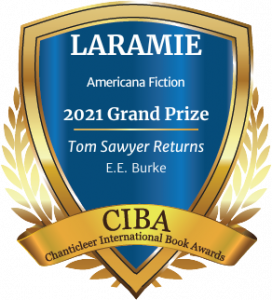
    TOM SAWYER RETURNS by E.E. Burke


    The Chaucer Awards for Historical Novels

    The CHAUCER Book Awards for

    Pre-1750s Historical Fiction 

    Grand Prize Winner is

    Too soon the night Grand Prize Badge


    TOO SOON THE NIGHT by James Conroyd Martin

    Too soon the night cover


    • John A. Martino and Michael P. O’Kane – Olympia: The Birth of the Games
    • Janet Wertman – The Boy King
    • Wendy J. Dunn – Falling Pomegranate Seeds: All Manner of Things
    • Rebecca D’Harlingue – The Lines Between Us: A Novel
    • Patricia Bracewell – The Steel Beneath the Silk
    • James Hutson-Wiley – The Travels of ibn Thomas

    Post 1750s Historical Fiction Award

    The GOETHE Book Awards for

    Post-1750’s Historical Fiction 

    Grand Prize Winner is

    After the Rising Goethe Grand Prize Badge

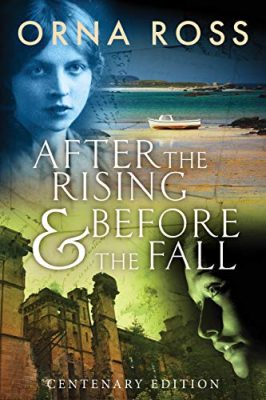
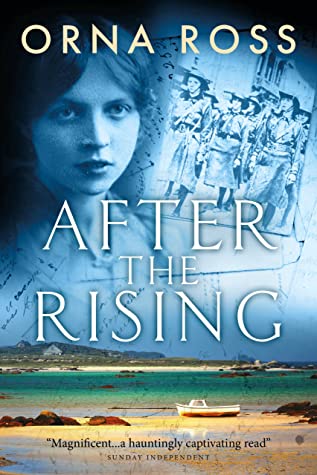
    AFTER THE RISING by Orna Ross

    After the Rising Cover


    • Ron Singerton – The Refused
    • Drema Drudge – Victorine
    • Lee Hutch – Molly’s Song
    • Adele Holmes, M.D. – Winter’s Reckoning
    • Mike Jordan – The Freedom Song
    • Michelle Rene – Maud’s Circus

    Ernest Hemingway looking off to the right

    The HEMINGWAY Book Awards for

    20th Century Wartime Fiction

    Grand Prize Winner is

    EO-N Hemingway Grand Prize Badge


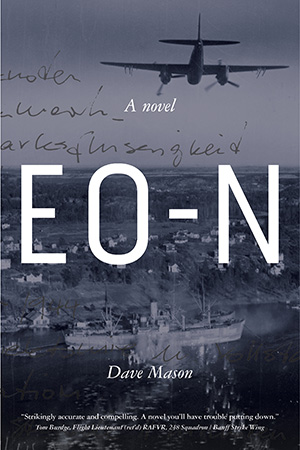
    EO-N by Dave Mason

    EO-N Cover


    • Murray Pura & Patrick E. Craig – Far On The Ringing Plains
    • Marian Exall – Daughters of War
    • Marina Osipova – Too Many Wolves in the Local Woods
    • Richard Alan Schwartz – The Soldier: A Novel of the Vietnam War Era
    • Jerena Tobiasen – The Emerald, Book II of The Prophecy    


    Romance Fiction Award

    The CHATELAINE Book Awards for

    Romantic Fiction and Women’s Fiction

    Grand Prize Winner is

    The Long Desert Road Chatelaine Grand Prize Award Badge


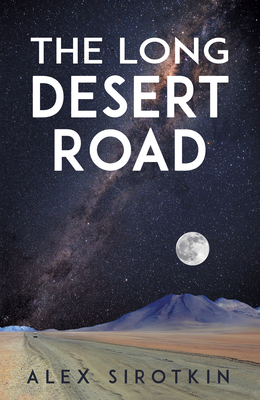
    THE LONG DESERT ROAD by Alex Sirotkin

    The Long Desert Road Cover


    • Deborah Swenson – Till My Last Breath, Book One in the Desert Hills Trilogy
    • Valerie Taylor – What’s Not Said — A Novel
    • Evie Alexander – Highland Games
    • Tina Sloan – Chasing Cleopatra
    • Kana Wu – No Secrets Allowed
    • Emma Lombard – Discerning Grace
    • John W. Feist – The Color of Rain


    The MARK TWAIN Book Awards

    for Humor and Satire

    Grand Prize Winner is

    Certified Mark Twain Grand Prize Badge


    CERTIFIED by Roger Wilson-Crane

    Certified Cover


    Blue and Gold Mark Twain First Place Winner Badge for Best in Category

    • Charlie Suisman – Hot Air
    • Elizabeth Crowens – Babs and Basil, and the Hounds of the Hollywood Baskervilles
    • Lou Dischler – My Only Sunshine: Getting Straight with the Bomb
    • Andy Becker – The Kissing Rabbi: Lust, Betrayal, and a Community Turned Inside Out
    • Anne Pfeffer – Binge  

    The SOMERSET Book Awards

    for Literary, Contemporary, and Mainstream Fiction

    Grand Prize Winner is

    Lies in Bone


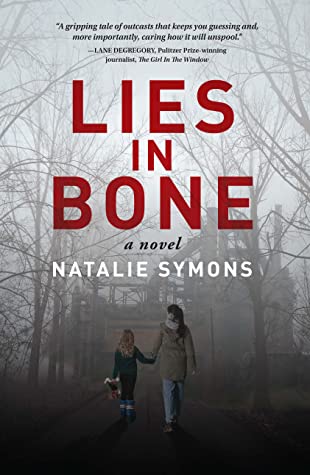
    LIES IN BONE by Natalie Symons

    Lies in Bone Cover


    Blue and Gold Somerset First Place Winner Badge for Best in Category

    • Alex Sirotkin – The Long Desert Road
    • Robert Gwaltney – The Cicada Tree
    • Judy Keeslar Santamaria – Jetty Cat Palace Cafe
    • Kent Politsch – Beebe and Bostelmann, a historical novel
    • Douglas Green – A Dog of Many Names
    • Barbara Linn Probst – The Sound Between the Notes
    • M. J. Simms-Maddox – The Mysterious Affair at the Met


    Congratulations to ALL!

    We will email each winner with more information about their prize packages and more information.

    Be sure to FOLLOW and LIKE us Facebook and on Twitter @ChantiReviews

    Not seeing your Division? Try the links below!

    For the Cygnus, Ozma, Paranormal, Global Thrillers, M&M, Clue, Little Peeps, Gertrude Warner, and Dante Rossetti Book Awards, please click here for Part 1.

    For the Journey, Hearten, Nellie Bly, I&I, Mind & Spirit, Harvey Chute, Military & Frontline, Series, and Shorts Book Awards, place click here for Part 3

    And the OVERALL GRAND PRIZE for the 2021 CIBAs!

    Stay Tuned for Part 3 which will announce the Overall Grand Prize Winner!

    We are now accepting entries into the 2022 and 2023 Chanticleer International Book Awards.

    Click here for more information and submission deadlines: https://test.chantireviews.com/contests/

    As always, if you have any questions, concerns, or suggestions, please email us at Chanticleer@ChantiReviews.com — We will try our best to respond within 3 business days.

    Thank you for joining us in celebrating the 2021 CIBA Winners! – The Chanticleer Team

  • MORAL FIBRE: A Bomber Pilot’s Story by Helena P. Schrader – Historical Fiction, WWII, Historical Aviation


    In Moral Fibre: A Bomber Pilot’s Story, Helena P. Schrader takes readers to 1943 England, where deeply held values of honor and bravery mingle with the importance of one’s place in society. It was a time and place where failures of the former could shatter the latter and change a man’s life forever.

    Within this psychological landscape, the reader is led to wonder, in the case of RAF pilot Christopher “Kit” Moran, will the war break him?

    With thirty-six missions under his belt and as a decorated veteran, Kit suddenly refuses to fly another mission. Although a shock to everyone who knows him, Kit has his reasons. The new assignment comes less than one day on solid ground and two hours of sleep since returning from his most recent bombing sortie over Berlin. In itself a harrowing experience, the mission ended with his best friend, the plane’s skipper, being mortally injured and ultimately dying. The RAF hierarch deems Kit LMF (Lacking Moral Fibre) – a term introduced in 1940 to address those who refused to fly without having a verifiable medical reason. He is sent to a diagnostic center and examined by a psychiatrist.

    The psychiatrist understands. Kit is not insane nor lacking in moral fibre. He was simply “wiped out.”

    So Kit is declared capable and fit for duty and given the opportunity to train as a pilot. This outcome was a far cry from what he, an experienced flight engineer, expected after the incident that sent his career off track.

    The novel really takes off in 1944 when, after completing pilot training in South Africa, Kit returns to England for the final stages of training and ultimately a return to operations. Now he must put his experience and training into practice while sublimating his lingering self-doubt and anxiety about his own resilience. Should he fail, people will die, and his dreams will die with him.

    What ensues takes the reader into the English psyche of that time, tapping the depths of human emotions, holding them up to the light, and revealing their concomitant beauty and ugliness in times of fear and crises.

    Before the war is over for Kit, he finds his inner strength, finds love, and learns the true meaning of sacrifice.

    Meticulously researched and skillfully written, Schrader’s Moral Fibre steps off the pages and comes to life. Her nuanced characters and authentic dialogue also provide a glimpse of Britain’s stratified class-conscious culture during the WWII era.

    Schrader picks a critical period during WWII for the setting and, in so doing, educates today’s readers about the horrors of a war that was and what it takes to save a nation – and perhaps the free world.

    In Moral Fibre: A Bomber Pilot’s Story, Helena P. Schrader again reaffirms George Santanya’s position, “Those who cannot remember the past are condemned to repeat it.”


    5 Stars! Best Book Chanticleer Book Reviews for Moral Fibre

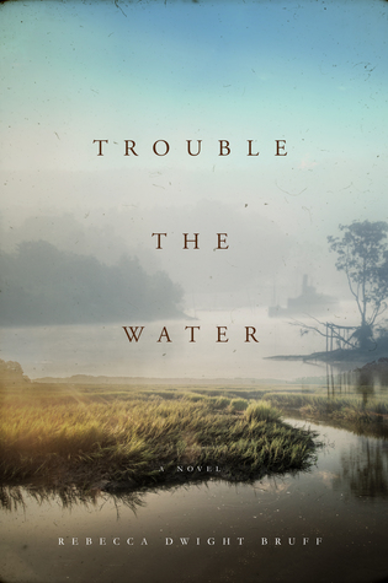
  • TROUBLE the WATER by Rebecca Dwight Bruff – Black & African American Historical Fiction, Biographical Fiction,

    TROUBLE the WATER by Rebecca Dwight Bruff – Black & African American Historical Fiction, Biographical Fiction,


    The 202 Best Book Grand Prize Badge for Trouble the Water by Rebecca Dwight BruffRobert Smalls’ life should have been one for the history books.

    Smalls was born a slave in Beaufort, South Carolina, in 1839. When the first shots of the Civil War were fired upon Fort Sumter, Smalls was an experienced helmsman aboard a small cargo ship plying the coastal waters of South Carolina and the neighboring states. Once the war broke out, he found himself working to support a cause that kept him, his wife, and their children locked in chattel slavery.

    But in a daring escapade that fell somewhere between a raid and a rescue, Smalls planned, with the help of his fellow crew members (also slaves) aboard the CSS Planter, to abscond with the ship, its cargo of munitions taken from Fort Sumter, and bring their families. The plan was to sail the ship as though its white officers were still on board, pretending to be carrying out their orders—at least until the ship was out of the reach of Fort Sumter’s guns.

    If they failed to fool the Confederate batteries as they passed by in the night, the crew planned to set fire to the munitions in the hold rather than return to slavery. If they didn’t manage to strike down the Rebel colors and raise a white flag of surrender before they reached the Union blockade of the harbor, they’d be killed.

    But no price was too high to pay for the hope of freedom.

    This is the story of Smalls’ life from his childhood enslaved to Henry McKee through his hiring out in Charleston to his well-planned, well-executed and incredibly lucky escape, told in this fictionalized autobiography as if seen through the eyes of Robert Smalls himself.

    The reader is inside the protagonist’s own thoughts and feelings as he grows from a childhood of slavery under the watchful eyes of his mother to learn at a very young age that the world in which he lives is designed to keep him in a cage. The unfairness of his world is in the very air that everyone around him breathes. To the point where those who benefit from that unfairness don’t even recognize that they are perpetuating the problem—no matter how good or how righteous or God-fearing they believe they are.

    The lessons are hammered home as Smalls grows up to be a man who can never chart the course of his own destiny or make his own decisions—until he takes that destiny in his own hands at the wheel of that ship.

    Smalls’ well-planned escape is the pivotal point of this true story. That desperate night makes for gripping, edge-of-the-seat reading as the small ship and its anxious crew, along with their praying families, ride the edge between hope and terror for a chance at freedom—no matter the cost.

    But the heart and soul of the story are in the hero’s journey from a childhood as he grasped the cruel institution of slavery through growing consciousness of his precarious place in a world set against him. It’s not just that the reader is able to walk with him, but in this first person perspective his thoughts are laid bare and the reader can feel him reach for his own truth – and his own answers. Rebecca Dwight Bruff wrote a timely and brilliant debut novel that captures the lion-hearted Congressman Robert Smalls who continued to push boundaries for the political rights of African Americans.

    Trouble the Water is an inspiring story of courage and grace under fire in its many forms. It rings with a voice of heroism along with thoughtfulness and sincerity. Stories matter.

    Trouble the Water won the Chanticleer Int’l Book Awards Overall Grand Prize for 2020. 

    5 Stars! Best Book Chanticleer Book Reviews

  • MARK H. NEWHOUSE – 10 Question Interview – Author’s Journey, Author Interviews, Writing Life

    CHANTICLEER 10 Question Author Interview Series with

    Mark H. Newhouse


    A white man in a red polo holdingup a Grand Prize Ribbon and The Devil's Bookkeeper TrilogyWe met Mark H. Newhouse in Florida where he wondered whether or not he should enter his epic historical novel into our CIBAs.

    Turns out he did and he took home the GRAND PRIZE in our new Division, The SERIES Awards for The Devil’s Bookkeepers: The Noose, The Noose Tightens, and The Noose Closes. The series tells the story of what happened to the residence of Lodz, Poland, a Jewish ghetto during WWII.

    Mark’s story is unique and powerful – and his unwavering sense of humor will catch you off guard!

    Let’s get to it. Dear Chanticleerians, meet my friend, Award-Winning Author, Mark H. Newhouse.


    Chanticleer: Tell us a little about yourself, how did you start writing?

    Newhouse: I was born in Germany two years and one day after Mom was freed from Auschwitz and my father from Buchenwald. I lost my grandparents and most of my family in the Holocaust. With my parents struggling as new immigrants and in a terrible marriage, I turned to writing. My pen was a magic wand where I could make the world better. I still think of that as my goal.

    Chanticleer: Wow, there’s a lot there to unpack. I cannot imagine the trauma your parents must have gone through during that horrendous time. Ultimately, I believe to have a goal of making the world a better place is the best goal one could possibly have. When did you realize you that you were an author?

    Newhouse: I think of myself as a ‘struggling author’ because I learn something new every day. It is the challenge of capturing my thoughts and ideas, and learning something new, that makes this so exciting. I feel like an author when I read reviews that tell me I touched a reader’s heart and soul and made a difference in their lives.

    Chanticleer: Well, you certainly touched our souls and made a difference in our lives with your series, The Devil’s Bookkeepers. Your books have won a number of awards and the series as a whole is getting many great reviews. Why did you write this series that is so different than your other work?

    Newhouse: My parents never told us about what they suffered during the Holocaust. They were focused on survival as immigrants. Mom gave me a copy of The Chronicle of the Lodz Ghetto published in 1984 by Yale University Press. Reading the anonymous entries, I was shocked by the true events. I realized few people knew about this incredible story and the efforts by its controversial chairman to save the ghetto by brutally forging it into a factory for the Nazis. I had to try and write this story so my children would know what I didn’t.

    “My pen was a magic wand where I could make the world better. I still think of that as my goal.” – Mark H. Newhouse

    When I read chapters of The Devil’s Bookkeepers to critique clubs, they encouraged me to publish it and enter contests. I was surprised and thrilled when we won. I think the suspense and unique love story keeps people reading. Unlike many Holocaust books, it is not about death and the gas chambers, but about people searching for friendship, love, and survival, in a time of terror. When its protagonist tries to save his loved ones from the tightening Nazi noose, readers ask themselves what they would do. I asked myself that question with every page. It will haunt you.

    Blue and Gold Badge for the 2020 Series Grand Prize for Genre Fiction The Devil's Bookkeepers by Mark Newhouse

    The Devils Bookkeepers The Noose cover ImageThe Devil's Bookkeepers Book 2: The Noose Tightens with Chanticleer BadgeThe Devil's Bookkeepers 3: The Noose Closes, Cover

    Chanticleer: I’m glad you told that story. It needs to be told! And you did it beautifully. What do you do when you’re not writing? Tells us a little about your hobbies.

    Newhouse: I get in trouble. Actually, I was an elementary school teacher who loved working with my sixth graders. I have more than one thousand of my former students on Facebook with me sharing our lives, some more than 50 years after they left my classroom. I think it says a lot about their ‘crazy’ teacher, but also about them that they still care about me. I love feeling I am helping them and others, so I lead a writing group, write the Writing Bug monthly column mailed to thirty-thousand homes, and am Florida Writers Association’s Youth Chairperson and a Board of Directors member. I keep pretty busy. I also play lousy golf, read, swim, and drive my wife crazy.

    Mark and Linda relaxing.
    Mark and Linda relaxing.


    Chanticleer: Mark – that’s just – well, remarkable! The connections you forged with your students, the care and concern you gave them, means a lot. So much that they maintain contact with you! I don’t know of many teachers that have that same influence in their students lives. Good for you! And, dude, it doesn’t look like Linda minds you driving her crazy… How do you come up with your ideas for a story?

    Newhouse: I wish I knew. Ideas drop from the sky—too many–I learned to focus on one at a time. I keep ideas in a file cabinet and carry a pocket notebook to grab ideas as they hit. I get a lot of ideas from news. For example, I read about an elderly woman evicted from her home to build a parking lot and turned it into The Case of the Disastrous Dragon, where a dragon is imprisoned for burning the butts of knights evicting him from his ancestral home. Welcome to Monstrovia, an award-winning comical mystery, started out as a play I wrote for my students. Most of my books started as my way to help my students have fun while learning.

    Welcome to Monstrovia CoverDisastrous Dragon

    Chanticleer: I love the covers! And who wouldn’t want to read a story about a butt-burning dragon? I know I would! How structured are you in your writing work?

    Newhouse: I’m usually at the computer before 6:30 in the morning and work until breakfast. I also like to write after dinner. I’m not a t.v. watcher or video game player. Instead, I sneak into my office whenever my patient wife is busy. My biggest problem is forcing myself to stick to one project at a time. I never thought I had the discipline to finish The Devil’s Bookkeepers trilogy. It was a tough challenge, three years of hard work, but worth it.

    “My advice: join a critique group and be willing to learn from and help others.” – Mark H. Newhouse

    Chanticleer: I’ll say! It’s important to work on your craft. What do you do to grow your author chops?

    Newhouse: When I was young, I thought I had to write by myself, as if in a jail cell. As a teacher, I realized when students worked together, they learned from each other and it was more fun. I join writing groups to improve my work and help others. I attend conferences, read articles. I challenge myself by entering contests such as those offered by Chanticleer. Contest deadlines help break through Writer Block. My advice: join a critique group and be willing to learn from and help others.

    Chanticleer: Ah yes, the magical thinking strikes again. Writing is writing. Many authors get wound up in the notion that everything has  What do you do in your community to improve/promote literacy?

    Newhouse: As an author, especially for children, I work to create positive role models. My heroes are underdogs who solve problems with courage and intelligence, not violence and magic. I try to infuse plots with humor and suspense that make children want to read.

    Don Quixote

    Don Quijote and Sancho Panza
    Don Quixote by Miguel de Cervantes

    I love visiting schools, libraries, and other institutions to share my message: “Never Give Up.” I do presentations to help people learn about the Holocaust. I want to inspire others to end hate and prejudice as well as to preserve their family histories.

    I originated and am ‘Top Cat’ of a club where we collaborate on books we donate to worthy causes. Our latest, SuperBudz, promotes literacy and fights pollution. I am the Florida Writers Association Youth Chairperson and a member of the Board of Directors. We offer clubs, webinars, contests, and a professional conference to help youth writers. I write the monthly Writing Bug column promoting local authors and inspiring writing, mailed to more than 30,000 homes. I’m pretty busy but love it.  It keeps me out of mischief.

    Chanticleer: You are an amazing man, Mr. Newhouse. You truly are. Tell me, what drives you to write for children?

    Newhouse: Being abused and bullied as a child, I want my writing to help others solve problems without violence. I try to empower children, and adults, to face life’s obstacles with hope and faith that they can overcome whatever is thrown at them with courage and intelligence. They don’t need violence and magic to do magical things with their lives.


    “I love visiting schools, libraries, and other institutions to share my message: Never Give Up.” – Mark H. Newhouse

    Chanticleer: I appreciate that message. Give us your best marketing tips, what’s worked to sell more books, gain notoriety, and expand your literary footprint.

    Newhouse: The best advice I give authors is: Don’t sell books, sell yourself. Think of your books as helping others, educating, entertaining, them. Seeing myself as performing a public service, and not just as a book salesman, helped me overcome my marketing phobia. It also steers me to groups and media that may be interested in my contributions.

    Most important: make sure your book is the best it can be. Don’t rush to publish until you have tested your work with your critique group, beta (pre-publication) readers, and have it edited. A final test: enter a contest, especially where you get impartial feedback. Nothing hurts book sales worse than a poorly edited book.

    Chanticleer: That’s good advice! What are you working on now? What can we look forward to seeing next from you?

    Newhouse: I just finished, My Family Secret: The Holocaust, and it won a Silver Medal from the Florida Writers Association, so now I am back writing my multi-award-winning Defenders of Monstrovia comical mysteries. In Book 5, The Case of the Cruel Cyberbullies, a teenage boy and half-human girl face danger when they must solve a tricky case in Monstrovia, a secret sector of the USA where humans are rare. Will the cyberbully get away with murder? That’s the fun of this series. It teaches law in a land of monsters and fictional characters with edge-of-the-seat suspense. I love writing these fun mysteries.

    Killer Knights Book Image Crazy Chicken Scratches Book Cover Image

    Chanticleer: They sound hysterical! Congratulations on your Silver Medal from FWA. What a treat! I do hope we get to see it in our CIBAs… Who’s the perfect reader for your book?

    Newhouse: That’s easy. The perfect readers for my books are children and adults who care. My books deal with things I care about, and I try to create page-turners for people who love humor and mysteries but most importantly, care.

    Chanticleer: I’m raising my hand, can you see me? What is the most important thing a reader can do for an author?

    Newhouse: Buy our books. Seriously, share your thoughts or endorse our books with your reviews on Amazon, Goodreads, or with your friends. Several years ago, a boy wrote me and said, “Rockhound is my favorite human being.” Rockhound, the hero of the Rockhound Science Mysteries, is a teenage dog detective, so that got a laugh, but the best was yet to come: “I know all authors are rich so can I come and swim in your pool?” I replied, “If I had a pool, I would invite you.” I really would.

    Chanticleer: Oh, that’s so sweet. I agree with you – Everyone who picks up a book and reads it needs to review it! Simple as that. Do you ever experience writers block? What do you do to overcome it?

    Newhouse: I have tons of ideas waiting for me, but everyone gets WB at some point. When I get it, I enter contests with a theme. I also have a few quick-tricks. I love titles, so I shake up a Boggle or Scrabble set and see if any of the words suggest a great title. I do a ‘blind’ search in a book: flip to any page, close my eyes and see what words my finger lands on. I then form a title and brainstorm a story idea. Goodbye WB. Hey! Not a bad title.

    Chanticleer: I have never thought of that. How fun! What excites you most about writing?

    Newhouse: Everything. But it is the passion for my story. I care about my subject and my readers. I am excited and proud when readers write about The Devil’s Bookkeepers.

    What readers are saying about The Devil’s Bookkeepers: “I could not put it down.” “It kept me reading all night.” “I felt myself choking.” “One of the most powerful books I have ever read.”

    When you feel you touched someone’s heart and soul, all the sweat is worth it.  I get an amazing high when I hear a child laugh at my creations. I am honored and grateful for the awards and when someone shares how my work made a difference in their life.

    Chanticleer: No doubt, that is a tremendous high. I love it! What other goals do you have?

    Newhouse: I would love to work with a television/film producer to create a miniseries of The Devil’s Bookkeepers. It is an important and powerful story that needs to be shared so it never happens again to anyone. Readers root for the characters and are haunted by the true events. I can visualize the scenes with powerful performances that could win awards. I know it is a long shot but am going to try and send it to agents. The awards from Chanticleer will help open the door.

    Chanticleer: It absolutely will. Thank you, Mark. You are a delight and we are honored to call you friend. You truly do make the world a better place.

    Newhouse: Thank you for allowing me to share my journey and books with your readers. My books are available on Amazon/Kindle. The Devil’s Bookkeepers novels are also available as wonderful audiobooks. For more information, please contact me at www.newhousecreativegroup.com.

    Mark's view
    Mark’s view – nothing short of inspirational!

    Chanticleer: Well, you heard the man! Go seek out Mark H. Newhouse’s works, read them and review them. Trust me, you’ll not be sorry!

    Follow Mark on Twitter

    Or on Facebook!

    You can order his books on Amazon or wherever good books are sold!

  • The DEVIL’s BOOKKEEPERS: The Noose Tightens, Book 2 by Mark H. Newhouse – Jewish Literature, Jewish Historical Fiction, WWII Historical Fiction

    Blue and Gold Badge for the 2020 Series Grand Prize for Genre Fiction The Devil's Bookkeepers by Mark Newhouse

    Mark H. Newhouse, son of German Holocaust survivors, includes the very personal and poignant first-hand sourced materials made available to him by the Yale University Press in his important historical fiction series, The Devil’s Bookkeepers. This inclusion lends a ribbon of humanity and compassion that raise the series to premiere status – a study, if you will, of the immutable human spirit. Newhouses’ series should encourage all who read it that hope is a gift and kindness and understanding is the answer to hate. It is a gripping story of love and survival that will haunt you until it’s shocking climax.

    From the first day of 1942, the conditions in the Jewish ghetto of Lodz, Poland, deteriorate. In Mark H. Newhouse’s historical fiction novel, The Devil’s Bookkeepers: Book 2, The Noose Tightens, those who thought their situation would get better now wish to survive and save their loved ones, But can they?

    The narrator Bernard Ostrowski, an engineer, should have enjoyed the prime of his life. He married a beautiful young wife, Miriam, who gave birth to their newborn daughter Regina. Ostrowski landed a lucky position in the records office of the ghetto’s leader, Chaim Rumkowski (an actual historical figure drawn by the author in dark, realistic detail). Rumkowki uses brutal force to forge the ghetto prisoners into a manufacturing hub for the Nazis in a still hotly debated effort to save its residents as the Nazi noose inexorably tightens.

    Ostrowski’s team includes a young man named Singer. And as the war continues to escalate, Singer urges Ostrowski to escape with his wife and child. Singer even promises to help them do so. However, Singer disappears, leaving an astonishing letter declaring his love for Miriam behind. The letter torments him as he tries to survive and save Miriam and his daughter.

    In the meantime, the Nazis begin deporting Jews from Poland – to where, no one knows.

    Rumkowski receives news that will shatter the bookkeepers’ faith in his leader’s basic decency. As the Nazis ramp up the expulsion of Jews from the city. Ostrowski, finally realizes that the noose is closing on everyone in the ghetto. Starving and weakened, he and Miriam must attempt to escape.

    Newhouse opens each chapter with brief vignettes from the primary sourced materials that will chill the reader.

    This book offers truth enmeshed with a well-crafted, imaginative, and credible story that will change and challenge readers. Newhouse wishes that in absorbing it, we may all say, “Never again to anyone.”

    The Devil’s Bookkeepers series by Mark H. Newhouse is highly recommended and won the Grand Prize in the 2020 CIBA Fiction Series Awards.

    Read our review of the first book in The Devil’s Bookkeepers series, The Noosehere.


    5 Stars! Best Book Chanticleer Book Reviews