The CHAUCER Book Awards recognize emerging new talent and outstanding works in pre-1750s Historical Fiction. The CHAUCER Book Awards is a division of the Chanticleer International Book Awards (The CIBAs).
The Chaucer Book Awards competition is named for Geoffrey Chaucer the author of the legendary Canterbury Tales. The work is considered to be one of the greatest works in the English language. It was among the first non-secular books written in Middle English to be printed in 1483.
Chanticleer International Book Awards is seeking for the best books featuring Pre-1750s Historical Fiction, including pre-history, ancient history, Classical, world history (non-western culture), Dark Ages and Medieval Europe, Renaissance, Elizabethan, Tudor, 1600s, we will put them to the test and choose the best among them.
These titles have moved forward in the judging rounds from SLUSH pile to the 2019 CHAUCER Book Awards LONG LIST and now have progressed to the 2019 SHORTLIST.
These titles are in the running for the Semi-Finalists positions of the 2019 CHAUCER Book Awards for pre-1750s Historical Fiction.Good luck to all as your works move on to the next rounds of judging.
James Conroyd Martin – Fortune’s Child: A Novel of Empress Theodora
Gail Avery Halverson – The Skeptical Physick
Susanne Dunlap – Listen to the Wind
JC Corry – The Storyteller’s Reputation
K.M. Pohlkamp – Shadows of Hemlock
E. L. Diamond – The Wolf of God
Linda Cardillo – Love That Moves the Sun: Vittoria Colonna and Michelangelo Buonarotti
Stephanie Renee dos Santos – Cut from the Earth
Cryssa Bazos – Severed Knot
Kate Murdoch – The Orange Grove
June Hall McCash – Eleanor’s Daughter: A Novel of Marie de Champagne
Catherine Mathis – Death in Coimbra
Patricia J. Boomsma – The Way of Glory
A.L.Cleven – 26.2
Alexandrea Weis – Realm
F. Scott Kimmich – The Magdalene Malediction
Susan Heldt Davis – The Mother’s Tale
James Hutson-Wiley – The Sugar Merchant
Robert Cole – The Falcons of Gebtu
Anna Belfrage – The Cold Light of Dawn
Vince Pantalone – Incident on the Road to Canterbury
Which of these works will move forward in the judging rounds for the 2019 CHAUCER Book Awards for pre-1750s Historical Fiction?
The ShortListers’ works will compete for the Semi-Finalists positions. Semi-Finalists will be announced and recognized at the CAC20 banquet and ceremony. The First Place Category Winners, along with the CIBA Division Grand Prize winners, will be selected from the 16 CIBA divisions Semi-Finalists. We will announce the 1st Place Category winners and Grand Prize Division Winners at the CIBAs Banquet and Ceremony on Saturday, April 18th, 2020 at the luxurious Hotel Bellwether in Bellingham, Wash.
The 16 divisions of the 2019 CIBAs’Grand Prize Winners and the Five First Place Category Position award winners along with recognizing the Semi-Finalists will be announced at theApril 18th, 2020 Chanticleer International Book Awards Annual Awards Gala,which takes place at the Chanticleer Authors Conference that will be held in Bellingham, Wash.
We are now accepting submissions into the 2020 CHAUCER Book Awards for pre-1750s Historical Fiction. The deadline for submissions is June 30, 2020. The 2020 winners will be announced in April 2021.
As always, please contact us at Chanticleer@ChantiReviews.com with any questions, concerns, or suggestions!
The CHAUCER Book Awards recognize emerging new talent and outstanding works in pre-1750s Historical Fiction. The CHAUCER Book Awards is a division of the Chanticleer International Book Awards (The CIBAs).
The Chaucer Book Awards competition is named for Geoffrey Chaucer the author of the legendary Canterbury Tales. The work is considered to be one of the greatest works in the English language. It was among the first non-secular books written in Middle English to be printed in 1483.
Chanticleer International Book Awards is seeking for the best books featuring Pre-1750s Historical Fiction, including pre-history, ancient history, Classical, world history (non-western culture), Dark Ages and Medieval Europe, Renaissance, Elizabethan, Tudor, 1600s, we will put them to the test and choose the best among them.
These titles have moved forward in the judging rounds from SLUSH pile to the 2019 CHAUCER Book Awards LONG LIST. These entries are now in competition for 2019 CHAUCER Shortlist. The ShortListers’ works will compete for the Semi-Finalists positions. Semi-Finalists will be announced and recognized at the CAC20 banquet and ceremony. The First Place Category Winners, along with the CIBA Division Grand Prize winners, will be selected from the 16 CIBA divisions Semi-Finalists. We will announce the 1st Place Category winners and Grand Prize Division Winners at the CIBAs Banquet and Ceremony on Saturday, April 18th, 2020 at the luxurious Hotel Bellwether in Bellingham, Wash.
These titles are in the running for the SHORT LIST of the 2019 CHAUCER Book Awards for pre-1750s Historical Fiction.Good luck to all as your works move on to the next rounds of judging.
James Conroyd Martin – Fortune’s Child: A Novel of Empress Theodora
Gail Avery Halverson – The Skeptical Physick
William S. Roberts – Hatchepsut, Female Falcon Over Egypt
Susanne Dunlap – Listen to the Wind
JC Corry – The Storyteller’s Reputation
K.M. Pohlkamp – Shadows of Hemlock
E. L. Diamond – The Wolf of God
Linda Cardillo – Love That Moves the Sun: Vittoria Colonna and Michelangelo Buonarotti
Alexander Geiger – Flood Tide: An Epic Novel of the Greek Invasion of Persia
Stephanie Renee dos Santos – Cut from the Earth
Cryssa Bazos – Severed Knot
Kate Murdoch – The Orange Grove
June Hall McCash – Eleanor’s Daughter: A Novel of Marie de Champagne
Michelle Toohey – Dark Madonnas
Catherine Mathis – Death in Coimbra
Patricia J. Boomsma – The Way of Glory
Brianna Nichole – The High Priestess and the Half-Blood Prince
A.L.Cleven – 26.2
C. K. Ruppelt – From Darkness – A Novel of the Ancient Roman World
Alexandrea Weis – Realm
F. Scott Kimmich – The Magdalene Malediction
Susan Heldt Davis – The Mother’s Tale
James Hutson-Wiley – The Sugar Merchant
Vince Pantalone – Incident on the Road to Canterbury
Robert Cole – The Falcons of Gebtu
Anna Belfrage – The Cold Light of Dawn
Which of these works will move forward in the judging rounds for the 2019 Goethe Book Awards for post-1750s Historical Fiction?
The 16 divisions of the 2019 CIBAs’Grand Prize Winners and the Five First Place Category Position award winners along with recognizing the Semi-Finalists will be announced at theApril 18th, 2020 Chanticleer International Book Awards Annual Awards Gala,which takes place at the Chanticleer Authors Conference that will be held in Bellingham, Wash.
We are now accepting submissions into the 2020 CHAUCER Book Awards for pre-1750s Historical Fiction. The deadline for submissions is June 30, 2020. The 2020 winners will be announced in April 2021.
As always, please contact us at Chanticleer@ChantiReviews.com with any questions, concerns, or suggestions!
The Goethe Book Awards recognize emerging new talent in post-1750s Historical Fiction. The Goethe Book Awards is a division of the Chanticleer International Book Awards (The CIBAs).
The Goethe Book Awards competition is named for Johann Wolfgang von Goethe who was born at the dawn of the new era of enlightenment on August 28, 1749.
Chanticleer International Book Awards is looking for the best books featuring Late Period Historical Fiction. Regency, Victorian,18th Century, 19th Century, 20th Century, World and other wars, history of non-western cultures, set after the 1750s, we will put them to the test and choose the best among them.
These titles have moved forward in the judging rounds from SLUSH pile to the 2019 Goethe Book Awards LONG LIST. These entries are now in competition for 2019 Goethe Shortlist. The ShortListers’ works will compete for the Semi-Finalists positions.Semi-Finalists will be announced and recognized at the CAC20 banquet and ceremony. The First Place Category Winners, along with the CIBA Division Grand Prize winners, will be selected from the 16 CIBA divisions Semi-Finalists. We will announce the 1st Place Category winners and Grand Prize Division Winners at the CIBAs Banquet and Ceremony on Saturday, April 18th, 2020 at the luxurious Hotel Bellwether in Bellingham, Wash.
These titles are in the running for the SHORT LIST of the 2019 Goethe Book Awards for post-1750s Historical Fiction.Good luck to all as your works move on to the next rounds of judging.
James Anderson O’Neal – Riley and the Great War
Deborah Lincoln – The Trace of a Bird
Vanda Writer – Paris, Adrift
Louella Bryant – Cowboy Code
Lori Swerda – Star-Spangled Scandal
Kari Bovee – Peccadillo at the Palace
Kari Bovee – Girl with a Gun
Kari Bovee – Grace in the Wings
PJ Devlin – Wissahickon Souls
John Hansen – Out of Necessity
John Hansen – Hard Times
Patricia Suprenant – Journey to the Isle of Devils
GS Johnston – Sweet Bitter Cane
Mike Van Horn – Neil Down: A Shot at Immortality
Lee Hutch – So Others May Live
Lucinda Elliot – The Peterloo Affair
Mike Jordan – The Runner
Lisa Braver Moss – SHRUG: A Novel
Melissa Koons – Orion’s Honor
Marina Osipova – How Dare The Birds Sing
Sandra Wagner-Wright – Two Coins: A Biographical Novel
J.G. Schwartz – The Pearl Harbor Conspiracy
Marilyn Pemberton – The Jewel Garden
Rebecca Rosenberg – The Secret Life of Mrs. London
Which of these works will move forward in the judging rounds for the 2019 Goethe Book Awards for post-1750s Historical Fiction?
The 16 divisions of the 2019 CIBAs’Grand Prize Winners and the Five First Place Category Position award winners along with recognizing the Semi-Finalists will be announced at theApril 18th, 2020 Chanticleer International Book Awards Annual Awards Gala,which takes place at the Chanticleer Authors Conference that will be held in Bellingham, Wash.
We are now accepting submissions into the 2020 Goethe Book Awards for post-1750s Historical Fiction. The deadline for submissions is June 30, 2020. The 2020 winners will be announced in April 2021.
I became familiar with him because of the attachment that I have for the following quote of his when I was in high school. I try to live my life by it. But I must confess, when I first saw it, even though it resonated with me, I really had no idea who Goethe was—besides someone’s name to remember on a history exam.
Whatever you can do or dream you can, begin it. Boldness has genius, power, and magic in it. Goethe
Fast forward to 2015…as many of you know, we named the post-1750s historical fiction book awards division of the Chanticleer International Book Awards after Johann Wolfgang von Goethe who was born at the dawn of the new era of enlightenment on August 28, 1749.
Goethe is considered to be the last true polymath.
His collected works comprise of one hundred and forty-three volumes including Faust, Wilhelm Meister’s Apprenticeship, and The Sorrows of Young Werther. More than 10,000 letters and 3,000 drawings of his are extant.
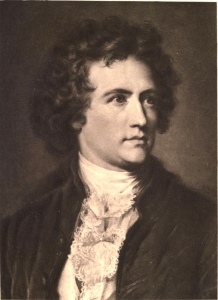
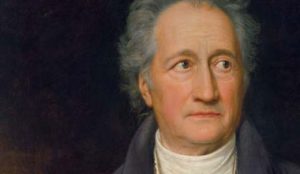
Goethe as a young man
“Goethe’s company could be exhausting. One minute he would be reciting Scottish ballads, quoting long snatches from Voltaire, or declaiming a love poem he had just made up; the next, he would be smashing the crockery or climbing the Brocken mountain through the fog. ” Super Goethe by Ferdinand Mount
“His lifetime, spanning some of the most monumental disruptions in modern history, is referred to as a single whole, the Goethezeit, or Age of Goethe.” The New Yorker magazine, Adam Kirch Feb. 1, 2016
Goethe (1828)
Some events that occurred during Goethe’s lifetime
1750 – The Industrial Revolution began in England
1756 – Wolfgang Amadeus Mozart was born in Salzburg Austria
1761 – The problem of calculating longitude while at sea was solved by John Harrison
1765 – James Watts perfects the steam engine
1770 – Ludwig van Beethoven was born in Bonn, Germany
1774 – Goethe’s romantic novel, The Sorrows of Young Werther, propels him into European fame
1774 – Goethe’s play Gotz von Berlichingen, a definitive work of Sturm und Drang premiers in Berlin
1776 – Adam Smith publishes the Wealth of Nations (the foundation of the modern theory of economics)
1776 – The Boulton and Watt steam engines were put to use ushering in the Industrial Revolution
1783 – The Hot Air Balloon was invented by the Montgolfier brothers in France.
1786 – Le Nozze di Figaro by Mozart premiered in Vienna
1789 – George Washington is elected the first president of the United States of America
1780 – Antoine Lavoisier discovers the Law of Conservation of Mass
1789 – The French Revolution started in Bastille
1791 – Thomas Paine publishes The Rights of Man
1792 – Napolean begins his march to conquer Europe
1799 – Rosetta Stone discovered in Egypt
1802 – Beethoven created and performed The Moonlight Sonata
1802 – A child’s workday is limited to twelve hours per day by the British parliament when they pass their first Factory Act
1804 – Napolean has himself proclaimed Emperor of France
1808 – Atomic Theory paper published by John Dalton
1811 – Italian chemist Amedeo Avogadro publishes a hypothesis, about the number of molecules in gases, that becomes known as Avogadro’s Law
1811 – Jane Austen’s Sense and Sensibility was published anonymously. It was critically well-received
1814 – Steam driven printing press was invented which allowed newspapers to become more common
1818 – Mary Shelley publishes Frankenstein
1832 – Goethe’s Faust, Parts 1 & 2 are published posthumously (March 22, 1832)
Goethe Haus & Museum Frankfurt am Main
Argus (my husband) and I had the fortunate opportunity to visit the house that Johann Wolfgang von Goethe who was born in at Frankfurt am Main. (Afterall, I am a Goethe fangirl.) He was born into a rich family that was a pillar in the middle-class world of one of the rare republics at the time that was virtually a self-governing city-state.* His family’s wealth allowed him to indulge in bourgeois pursuits such as writing plays and studying alchemy.
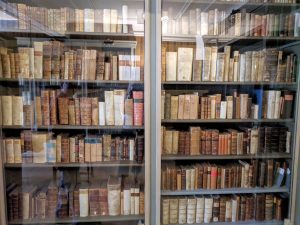
The house where Goethe was born in Frankfurt am MainA photo of a few books from Goethe’s collection on display at the house where he grew up
As to how to pronounce his name, well that is a conundrum. I’ve been told about thirty different ways of how to correctly pronounce Goethe and about twelve of these hail from a late night in a German stueble where the other patrons ( all Germans) conflicted adamantly with each other’s “correct pronunciation.” Nevertheless, here is ahandy link about how to pronounce his name correctly—at least in one viewpoint.
And why was he selected to represent the post-1750’s historical fiction writing competition of the Chanticleer International Book Awards?
Why, indeed!
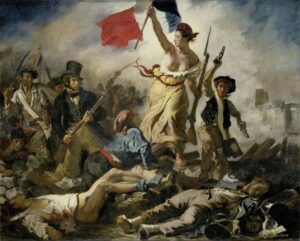
Many historians consider 1750 to be a pivotal date in the history of humankind–in both Western and Eastern history. There are several movements that shaped this new era. Prior to 1750, monarchy was the prevailing form of government. “Citizenry” (as opposed to being a “subject”) was a radical new concept that was taking root due to the British Colonies in America revolting against the British monarchy. The concept that individuals were not just “subjects” of a monarchy, but humans with inalienable rights spread like wildfire throughout Europe leading, to the French Revolution. The 1750s brought about a completely new way of thinking about governance. With this came the concept of the right to own private property rather than being “entrusted” with it by royalty and subjected to the whims of the monarch granting the property.
Liberty Guiding the People by Eugene Delacroix
Secondly, the Secular Revolution with its scientific enlightenment began to take hold in the mid-1700s as an accepted way to see and understand the Universe and our place within it. For the first time in recorded human history, the cultural concepts of religious dominance and doctrine were being challenged. The 1750s brought us the Age of Enlightenment.
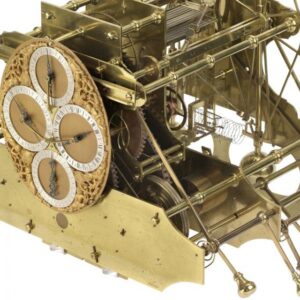
John Harrison’s Marine Timekeeper for Longitude Calculations
Next, the first phase of the Industrial Revolution (1750 – 1914) was brought about by the harnessing of the energy of coal and steam rather than biomass energy (humans and animal muscle power). This lead to mass migrations of humans escaping famine, poverty, and intolerance to take place for the first time in history. Railroads and trains, and steamships, as well as sailing ships with more dependable navigational tools such as the marine chronometer that allowed for safer passage across the oceans, made the migrations possible.
“Goethe was a contemporary of thinkers—Kant, Herder, Fichte, Schelling, Hegel, Wilhelm and Alexander von Humboldt—who carried out an intellectual revolution that is at the basis of most modern thinking about religion, art, society, and thought itself. He knew most of these people well, furthered the careers of several of them, promoted many of their ideas, and expressed his reaction to them in his literary works.
The age they helped to make was an age dominated by the idea of freedom, of individual self-determination, whether in the intellectual and moral sphere or in practical politics—the age both of German Idealism and of the American and French revolutions.
If there is a single theme running through Goethe’s huge and varied literary output, it is his reflection on subjectivity—his showing how in ever-changing ways we make our own selves, the world we inhabit, and the meaning of our lives. Yet he also shows how, without leaving that self-made world, we collide all the time with the reality of things.” Written by Nicholas Boyle for Britannica (2016)
And now back to the Goethe Book Awards for post-1750s Historical Fiction, a division of the CIBAs.
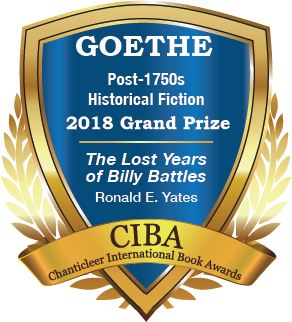
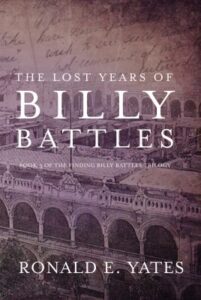
We wish to congratulate 2018’s Goethe Book Awards Grand Prize Winner –
The Lost Years of Billy Battles by Ronald E. Yates
Billy Battles is as dear and fascinating a literary friend as I have ever encountered. I learned much about American and international history, and you will too if you read any or all of the books. Each is an independent work, but if read in relation to the others, the reader experiences that all too rare sense of complete transport to another world, one fully realized in these pages because the storytelling is so skillful and thoroughly captivating. Trust me; you’ll want to read all three volumes. Chanticleer Reviewer’s Note
Congratulations to the 2018 Goethe Book Awards First Place Category Winners!
The Muse of Fireby Carol M. Cram
Mist-chi-mas: A Novel of Captivityby J.L. Oakley
The River by Starlight by Ellen Notbohm
Anna’s Homeby Rosalind Spitzer
None of Us the Same by Jeffrey K. Walker
Behind the Scarlet Letterby Patricia Suprenant
The Pear Tree by K. M. Sandrick
The deadline for entering manuscripts and recently published works into the 2019 Goethe Book Awards is JUNE 30, 2019. For more information, please click here:
We are excited and honored to officially announce the Grand Prize Winner and the First Place Category Winners for the 2018 GOETHE Book Awards at the annual Chanticleer Authors Conference and the 2018 Chanticleer International Book Awards ceremony. This year’s ceremony and banquet were held on Saturday, April 27th, 2019 at the Hotel Bellwether by beautiful Bellingham Bay, Wash.
We want to thank all of those who entered and participated in the 2018 Goethe Book Awards for post-1750s Historical Fiction, a division of the Chanticleer International Book Awards.
Peter Greene,the author ofPaladin’s War, theGrand Prize Winner of the 2017 Book Awards for Goethe Historical Fiction (CIBAs), announced the 2018 Goethe Award Winners at the Chanticleer International Book Awards Banquet and Ceremony.
An email will go out to all First Place Category Winners and Grand Prize Winners with more information, the timing of awarded reviews, links to digital badges, and more before May 31st, 2019 (approximately four weeks after the awards ceremony). Please look for it in your email inbox.
When we receive the digital photographs from the Official CAC19 professional photographer, Dwayne Rogge of Photo Treehouse, we will post the photographs of GOETHE award winners on this page.
Click here for the link to theGOETHE Semi-Finalists.
This post will be updated with photos and more information. Please do visit it again!
The deadline for submissions into the2019 GOETHE Book Awardsis June 30, 2019 Midnight (PST).
Our next Chanticleer International Book Awards Ceremony will be held on Saturday, April 18th, 2020, for the 2019 CIBA winners.
The CHAUCER Book Awards recognize emerging new talent and outstanding works in the genre of pre-1750s Historical Fiction. The CHAUCER Book Awards is a genre division of Chanticleer International Book Awards and Novel Competitions ( The #CIBAs).
These titles have moved forward in the judging rounds to the 2018 CHAUCER Book Awards SHORT LIST. These entries are now in competition for the limited 2018 CHAUCER Semi-Finalists from which the First Place Category Positions will be chosen. The CHAUCER Book Awards Semi-Finalists and First Place Positions along with the CHAUCER Grand Prize Award Winner will be announced at the Awards Gala on Saturday, April 27th, 2019.
Chanticleer Book Reviews is seeking for the best books featuring Pre-1750s Historical Fiction, including pre-history, ancient history, Classical, world history (non-western culture), Dark Ages and Medieval Europe, Renaissance, Elizabethan, Tudor, 1600s, we will put them to the test and choose the best among them. (Looking for Goethe Post 1750 contest or Laramie Western/Pioneer/Civil War contest?)
These titles are in the running for the next round – the SEMI-Finalist positions for the 2018 CHAUCER Book Awards novel competition for pre-1750s Historical Fiction. Good Luck to All!
Nicole Evelina – Mistress of Legend (Guinevere’s Tale Book 3)
Robert Wright – King David’s Lost Crown, Book 1 Before They Awaken Trilogy
Prue Batten – Michael – Book 3 of the Triptych Chronicle
Edward Rickford – The Serpent and the Eagle
Bernard Mann – David & Avshalom — Life and Death in the Forest of Angels
Brett Savill – Medici Apprentice
Gregory Hansen – Pelsaert’s Nightmare
P.K. Adams – The Greenest Branch, a Novel of Germany’s First Female Physician
Amy Wolf – A Woman of the Road
Eileen Stephenson – Imperial Passions – The Porta Aurea
Helena P. Schrader – Rebels against Tyranny: Civil War in the Crusader States
Charlene Newcomb – Swords of the King
Anna Belfrage – The Cold Light of Dawn
Anna Belfrage – Under the Approaching Dark
Kate Murdoch – Stone Circle
Jehan d’Elleby – Lanz & Gwenhevre: Love Against the Tide
Congratulations to these authors for their works moving up to the Short List from the slush pile. These novels will now compete for the (Semi-Finalists) Positions!
The CHAUCER Short Listers will compete for the SemiFinalists positions that will compete for the CHAUCER First-In-Category Positions. First Place Category Award winners will automatically be entered into the CHAUCER GRAND PRIZE AWARD competition. The CBR Grand Prize Genre Winners will compete for the CIBA Overall Grand Prize for Best Book and its $1,000 purse.
Good Luck to each of you as your work competes in the 2018 CHAUCER International Book Awards.
The Chaucer Grand Prize Winner and the Five First Place Category Position award winners will be announced at theApril 27th, 2019 Chanticleer Book Awards Annual Awards Gala,which takes place at the Chanticleer Authors Conference that will be held in Bellingham, Wash.
CHAUCER Grand Prize Award Winners Catherine T. Wilson & Catherine A. Wilson with Edward Rickford and DJ Munro.
We are now accepting submissions into the 2019 CHAUCER Book Awards writing competition. The deadline for submissions into the 2019 CHAUCER Book Awards is June 30th, 2019. Please click here for more information.
As always, please do not hesitate to contact us with any questions, concerns, or suggestions at Info@ChantiReviews.com.

 The CHAUCER Book Awards recognize emerging new talent and outstanding works in pre-1750s Historical Fiction. The CHAUCER Book Awards is a division of the Chanticleer International Book Awards (The CIBAs).
 The Goethe Book Awards recognize emerging new talent in post-1750s Historical Fiction. The Goethe Book Awards is a division of the Chanticleer International Book Awards (The CIBAs).




 We are excited and honored to officially announce the Grand Prize Winner and the First Place Category Winners for the 2018 GOETHE Book Awards at the annual Chanticleer Authors Conference and the 2018 Chanticleer International Book Awards ceremony. This year’s ceremony and banquet were held on Saturday, April 27th, 2019 at the Hotel Bellwether by beautiful Bellingham Bay, Wash.


 The CHAUCER Book Awards recognize emerging new talent and outstanding works in the genre of pre-1750s Historical Fiction. The CHAUCER Book Awards is a genre division of Chanticleer International Book Awards and Novel Competitions ( The #CIBAs).