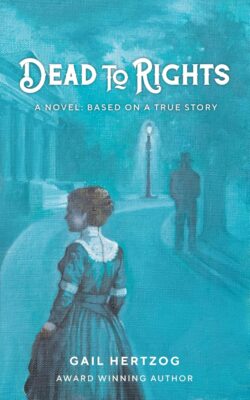
Set during the turbulent years of 1914–1915, Gail Hertzog’s Dead to Rights delivers a raw, bruising, and utterly captivating descent into Winnemucca, Nevada, a desert town where the divide between oppression and savagery is no wider than a razor’s edge.
At the heart of this shadow-ridden world stands Red Forquer—a former Churchill County deputy sheriff turned manipulative, violent, and universally feared crime boss. Even in death, Red’s presence seeps into every corner of the community. Dead to Rights opens with the discovery of his corpse by a local taxi driver, described in a chilling posthumous observation that sets the tone for everything that follows.
The story shifts to the perspective of Gary Lindsay, a lamplighter with a keen eye and intimate knowledge of Winnemucca’s social strata—the scandals, the criminals, the downtrodden, and the self-satisfied wealthy. Through Gary, we learn that Red’s talent for intimidation gave him an uncanny ability to bend others to his will, epitomized in the black leather gloves through which he dealt his violence.
No one can challenge Red’s quiet domination, nor his peculiar combination of charm and menace, even Jo, a strong-willed woman who has vowed not to be manipulated by anyone ever again.
Jo’s escape from her old life is quickly eclipsed by Red’s influence after he interviews her to work at his “Combination Saloon.” Hulda, seeking work as a singer, finds herself immediately assessed by Red not for her talent but for her worth as his pawn. Red calculates the leverage her employment gives him against her powerful father, all while Hulda believes she has found just the perfect stage for her independence.
What arises when Hulda meets Jo is a dangerous alliance that begins with shared glances and hushed conversations. Their mutual need to survive in a world ruled by fists, where trusting the wrong person could quickly end your life, starts a conspiracy against the powers of Winnemucca.
Dead to Rights is a deep exploration into the making of “a being devoid of soul.”
Through the brutal alchemy of Red’s childhood trauma, Hertzog examines the long-term effects of parental abuse and its ability to shape a child’s inner world into something defined by aggression. We follow a soul fractured by early betrayal, how it spends a lifetime spent clawing back power through the very forces that once destroyed it.
Hertzog builds broader themes upon this foundational struggle against cruel authority—the corrosive power of secrets and the fierce resilience of female solidarity—revealing the hidden currents pulsing beneath a patriarchal society. Through these themes, she masterfully presents a gritty, realistic portrait of how power is often won, even in today’s world, not through courage or skill but through psychological manipulation.
Readers are taken on a journey that captures the illusion of choice amidst coercive control, the performance of intimacy vs. transactional reality, the consequences of betrayal, and the search for agency anyway in a world of limited opportunities.
This intricate exploration makes the story much more than a mere glimpse into the past. Dead to Rights opts to leave an unsettling impression of the high cost of survival, as well as the fragile line between it and complicity.
Hertzog’s choice to begin the book with the end is brilliant. Rather than the common whodunit suspense, she embraces a compelling “how-dunit” and “why-dunit” approach. The multi-perspective narrative creates a rich story line with a communal touch to it, a truly immersive experience where readers don’t just become observers, but rather residents of Winnemucca.
Dead to Rights by Gail Hertzog is a great pick for readers who appreciate female protagonists as well as a nuanced exploration of power, trauma, and resilience. Those seeking a mystery that prioritizes the “why” over the “who” in vengeance and solidarity will be utterly absorbed.



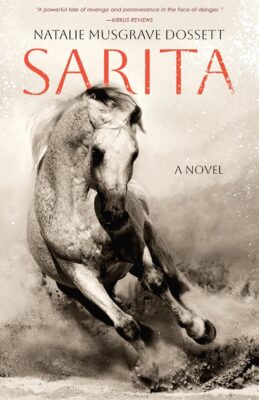
 Set against the backdrop of Prohibition and Pancho Villa’s waning reign of terror, Sarita by Natalie Musgrave Dossett combines a page-turning western adventure and the coming-of-age of a bold young woman.










 Inspired by a true story, Catherine Mathis’s incredible novel,