Tag: Historical Fantasy

  • The 2025 Ozma Book Awards Spotlight for Fantasy Fiction!

    The Search for the Best Fantasy Fiction of 2025 is on!

    Ozma Awards

    The submissions for the 2025 Awards are well underway, and Ozma closes submissions at the end of June!

    Fantasy isn’t just elves and magic—there are so many possibilities for a Fantasy tale, and we love that! From epic quests to urban magic, from steampunk adventures to mythical retellings, the Ozma Awards celebrate the boundless imagination that fantasy fiction offers.

    Let’s Dive into the Categories!

    • Magic, Heroes and Villains is the great variety of books that involve big archetypes and adventures like Six of Crows or The Fourth Wing.
    • Coming of Age Fantasy typically looks at someone coming into their own, like Harry Potter discovering his magical heritage, but it can also be aimed at a younger audience. For YA Fantasy, check out the Dante Rossetti Awards, and for Middle Grade Fantasy, explore the Gertrude Warner Awards!
    • Steampunk/Dieselpunk/Gaslight Fantasy are types of Alternative History and Counterculture. Steampunk features Victorian-era sci-fi or fantasy with an emphasis on steam-powered technology and historical fashions. Dieselpunk has more of an industrial Art Deco, Film Noir aesthetic with elements from the World Wars and Early Cold War—think Bioshock or Blade Runner.
    • Modern and Urban Fantasy is exactly what it sounds like—Jim Butcher’s The Dresden Files is a perfect example. Fantasy elements in realistic, contemporary settings.
    • Myths and Legends and Fairy Tales feature classic Fantasy elements: fairies, King Arthur, folktale-type stories that have enchanted readers for generations.
    • Fantasy – Classic is High Fantasy like Lord of the Rings—epic battles between good and evil in richly imagined worlds.
    • Historical Fantasy is history with magic, where dark sorcerers move in ancient Viking battles or Nazis attempt to secure the Holy Grail.

    Celebrating Our 2024 Grand Prize Winner!

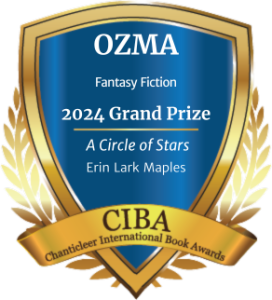
    After months of reviewing hundreds of entries, we are delighted to announce that Erin Lark Maples claimed the 2024 Ozma Grand Prize with her extraordinary novel A Circle of Stars! Throughout last year’s Ozma Book Awards, we’ve had the pleasure of promoting nearly 60 books as they advanced through our competition tiers.
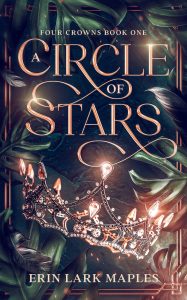
    Circle of Stars

    Ozma Grand Prize Badge for A Circle of Stars by Erin Lark Maples

    Erin Lark Maples’s reluctant hero, compelling narrative, and richly layered world that exemplifies the innovative fantasy storytelling we seek to recognize. In addition to all the featured posts that have already gone out for the Ozma Awards, A Circle of Stars will be regularly promoted throughout the year on the Ozma Awards page and for the next five years in our upcoming Hall of Fame post. Erin Lark Maples will also be invited to participate in a Chanticleer 10-Question Interview, and you can read the Chanticleer Editorial Review for A Circle of Stars here!

    Looking for Your Next Fantasy Read?

    Check out some of these incredible books we’ve reviewed recently that showcase the amazing diversity of fantasy fiction!

    DIOMEDES In KYPRIOS: Diomedia Series Book 2
    By Gregory Michael Nixon
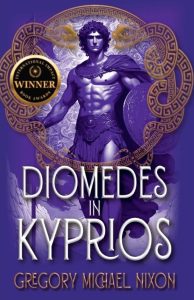
    Diomedes in Kyprios Cover

    Gregory Michael Nixon’s Diomedes in Kyprios, book 2 in the Diomedeia Series, continues the adventures of the godlike yet all too human hero, Diomedes of Tiryns, as he seeks to discover a meaningful destiny in the chaos of the Bronze Age Collapse.

    We begin after the fall of the Hittite Empire, four years after the destruction of Troy. He emerges from the dark river that runs through the underworld where the sacrifice of the Hittite Great King has just occurred, and he has rescued the Hittite Queen from certain death. Nearly drowned but still alive, he recalls only that he had vowed to reunite with the former Queen of the Hittites, the woman he loves named Lieia, at Paphos on the island of Kyprios (ancient Cyprus).

    Lieia must undergo her own “odyssey” to get to Paphos to meet Diomedes. She depends on her band of protectors, but they pay for fare aboard a ship with evil men who cannot be trusted.

    Read more here!

    THE WINTER HEIR: Fractured Kingdoms Book 2
    By J.A. Nielsen
    Dante Rossetti First Place Winner

    The Winter Heir Cover


    The Winter Heir, the second book in J.A. Nielsen’s Fractured Kingdoms series, picks up where the first book, The Claiming, leaves off—with its protagonists struggling under the weight of a vital bargain.

    Lady Dew Drop, Dewy to her friends—and her frenemies—is languishing in the court of the Winter Fae, a summer princess nearly frozen in both heart and spirit as she does her best to fulfill the pact she made with the Winter King. Meanwhile, the man who got her into this mess, the human mage and illegitimate princeling of Telridge—Spence Ferrous—tries to fulfill the deal for her.

    But the story is much bigger than these two young lovers. The Winter King is dying without a legitimate heir. And it’s his own proud, arrogant fault. As much as both the humans and the Summer Fae would be willing to let him suffer the consequences of his own actions—he’s not the only one who will.

    Read more here!

    SUMMER CYCLONE: Magic at Myers Beach Book 4
    By Alan B. Gibson
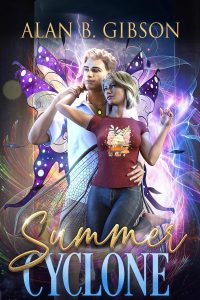
    Summer Cyclone Cover

    The citizens of the three fairy kingdoms clash, forced to live shoulder-to-shoulder alongside ungoverned Outliers. In Summer Cyclone, fourth book of Alan B. Gibson’s Magic at Myers Beach series, unassuming tea-shop manager Stefán tries to find love while keeping all of fairy society from fracturing.

    The three fairy kings, Theos, Zsombor, and Christophe, evacuate their people to Myers Beach. It’s only here that they have any chance of recreating fairy dust after their old sources had been poisoned, and saving every fairy life. They take in the Outliers, remnants of a fallen kingdom, and at first find good will between the groups. But with thousands of fairies moving in, they have to keep everyone on a short leash or else risk humans catching wind of their new neighbors. Resentment of these strange Outliers builds.

    Stefán, a close confidant to Theos, struggles to keep anti-Outlier sentiment at bay with the help of some enigmatic and knowledgeable new friends. Rumors of him giving the Outliers special treatment grow stronger as some fairies begin to suspect that he’s actually one of them.

    Read more here!

    BOOK Of LEPRECHAUNS: The Lore Gatherers
    By Jonathan Uffelman
    Ozma First Place Winner
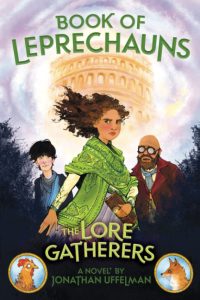
    Book of Leprechauns Cover

    Three leprechauns, Molly, Shaun, and Dorker, have their lives turned upside down when a sinister figure returns to their peaceful village with greed and revenge on his mind. In Jonathan Uffelman’s middle-grade fantasy, Book of Leprechauns: The Lore Gatherers, they embark on a treacherous journey to recover their lost home.

    Shaun McClanahan struggles to support his daughter Molly as she fails a crucial test for young Lore Gatherers—a subculture of Leprechauns who respect the power of stories. Though he’s weighed down by his responsibilities as the protector of his village’s communal gold stash, Shaun tries to overcome his worrying nature by trusting Molly to check on the gold by herself, hopeful that she can prove her worth to the village.

    But when Molly follows her father’s magical instructions to the letter, she discovers with horror that the treasure is missing, save one ancient Roman coin.

    Read more here!

    These reviews represent just a glimpse of the fantastic worlds waiting to be discovered in today’s fantasy fiction.


    See the Chanticleer Difference for Yourself!

    We’re so excited about all the great books we receive every year for both the CIBAs and for our Editorial Reviews. The Chanticleer International Book Awards offers an incredible $30,000 in cash, prizes, and promotion across all divisions!

    This is the journey from beginning to end for the CIBAs! Every list you make means more promotion for you and your work as each advancement tier is posted right here on our website, on our social media, and also out in our newsletter! Your book deserves to be discovered.

    Don’t Let Your Tale Remain Untold!

    Ozma Awards
    Ozma Awards are due June 30, 2025!

    The magic of storytelling lies in sharing your vision with the world. Whether your fantasy features dragons soaring over ancient kingdoms or witches working spells in modern cities, the Ozma Awards are your gateway to recognition and readership.

    Fantasy has the power to transport readers beyond the mundane into realms of infinite possibility. Don’t let your story remain hidden in an enchanted vault—submit to the Ozma Awards today and join the ranks of celebrated fantasy authors who’ve found their audience through Chanticleer!

    You know you want it…

    Enter the Ozma Awards today!

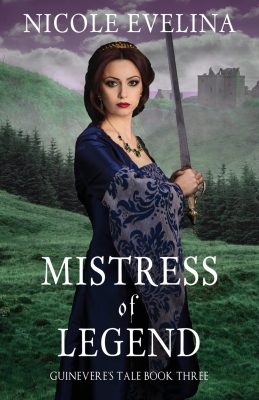
  • MISTRESS Of LEGEND: Guinevere’s Tale Book 3 by Nicole Evelina – Arthurian Legend, Historical Fantasy, Myths & Legends


    In Mistress of Legend, the enticing finale of Nicole Evelina’s Guinevere’s Tale trilogy, matters are life-and-death by the second sentence, pulling readers deep into Guinevere’s fate in this retelling of Arthurian legend.

    We come upon heroine Guinevere in the midst of an ill-fated romance with Lancelot. It’s far from her first troubled entanglement, but the stakes rise as she’s severely injured and faces even more threats, pursued by possible enemies. The novel’s beginning is woven with backstory, which adds suspense to the drama unfolding in Guinevere’s present. This summarizing might be slow for readers familiar with the series, but makes the story accessible for those who haven’t picked up the first two books.

    Many more characters appear, waving the web of intrigue Guinevere finds herself caught in.

    Evelina builds this setting through well-researched cultural details, like the holidays and rites of Guinevere’s pagan world, and the symbolism and ideology of the Christianity that threatens to blot her world out.

    Though it’s a work of fantasy, Mistress of Legend has the feel of magical realism. Paranormal abilities like Guinevere’s “sight” fit subtly within Evelina’s carefully constructed foundation. Details down to ritualistic makeup and intoxicants are based on fascinating historical truths, many of which are explained in the author’s notes at the end.

    Evelina avoids foreshadowing to ensure her characters’ futures long remain inscrutable. Unpredictable shifts in individuals and relationships seem to arrive at every turn, making for a thrilling, if at times mystifying, read. Guinevere’s relationship with Morgan, Arthur’s second wife, feels uncertain until the end, as the two vacillate from enemies to friends and back again. Meanwhile, Mordred, son of Morgan and Arthur, undergoes surprising development that makes perfect sense only in retrospect.

    The use of “the sight” by characters like Guinevere and Morgan provides windows into other places, even the future, as the women experience highly realistic visions.

    This allows Evelina to show two places at once without using multiple points of view (though some characters are so fascinating that readers may wish they could see things through their eyes). Instead, only Guinevere’s perspective is given, and readers feel her claustrophobic sense of being trapped in the mechanisms of fate.

    Along with the characters involved in it, this tale of political intrigue only grows more complex with time.

    The story begins to feel like a tapestry whose threads disappear and reappear in the weave. Some characters – even main ones – vanish and are nearly forgotten, only to return when they’re least expected. Guinevere’s life-threatening injuries, so crucial to the first pages, are soon eclipsed by even more pressing problems. Yet they return to the narrative from time to time, the marks left behind to remind the aging Guinevere of how much she’s lived – and how much is still in store.

    Mistress of Legend fits well within the literary tradition of retelling classics from a strong woman’s point of view.

    It’s a great pick for readers of magical realism, historical fiction, and new twists on old classics. It takes things a refreshing step further, too, with a strong female character who remains formidable, agile, and the subject of much male attention as she ages past 40. Youth is no threat to Guinevere. The foolish grabs for power that surround her are.

    The pace of the novel shifts wildly: speeding through seasons, only to suddenly slow and zoom in on the intense details of a moment. At times, it feels a bit like whiplash – but surely that’s how Guinevere felt, as the life she built crumbled time and time again. Readers remain close within her viewpoint, feeling everything she feels, in a world whose only constant is change. Ambitious though she is, her true quest is simply for peace.

    Mistress of Legend by Nicole Evelina won First Place in the 2018 CIBA Chaucer Book Awards for Pre-1750s Historical Fiction.

    The Guinevere’s Tale series by Nicole Evelina won Grand Prize in the 2021 CIBA Book Series Awards for Fiction Series.


    5 Star Best Book Chanticleer Reviews round silver sticker


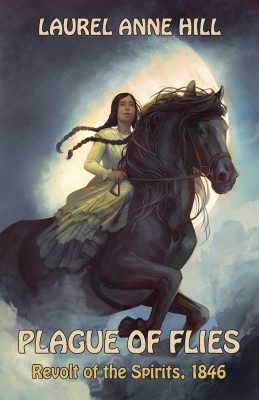
  • PLAGUE Of FLIES: Revolt of the Spirits, 1846 by Laurel Anne Hill – Historical Fantasy, Old West, YA Magical Realism


    Ozma Grand Prize Badge for Plague of Flies by Laurel Anne HillSixteen-year-old Catalina Delgado’s hopes of marrying her love are troubled by strange, unnatural dangers, in Laurel Anne Hill’s novel, Plague of Flies.

    Like every dutiful daughter in 1846, Catalina worries about her reputation. However, she must also gain the approval of Ángelo Ortega’s family. Unfortunately, when three strangers ride onto her family’s small ranch in Alta California, she knows that more than her dreams are at risk. Alta California has just been invaded by the men of the Bear Flag, and Catalina fears what will become of her homeland now that it has been claimed by the Yankees. The nearby ranch owned by the valiant General Vallejo has been raided, owners and their servants terrorized and held captive. Plus Bear Flaggers have murdered additional friends of Catalina’s family on a beach.

    In connection with the recent killings, the three strangers are harbingers of a dire prophecy repeated to Catalina by a dying vaquero. Catalina is destined to be carried off by a spirit man riding a black Andalusian stallion. She will be tasked to do the bidding of Coyote, a trickster spirit who is trying to stop the advancement of the Bear Flaggers. Catalina grapples with her uncertainty and disbelief, but she desperately wants to save her family. When Spirit Man appears to her, she must ask herself how far she is willing to go to keep her loved ones alive.

    As a teenage girl in a repressed age and society, Catalina should be fearful of everything. And though in many ways she has been sheltered, she has also learned the ways of the vaquero, roping and riding alongside her brothers.

    Her strict upbringing is meant to protect her virtue and to keep her reputation spotless until she is given in marriage. Catalina’s mother takes this obligation so seriously that she locks her daughter in her room at night to protect her. Catalina is meant to obey and isn’t even allowed to speak openly with her father or grandfather. As the head of the family, these men wield complete control over Catalina’s life and destiny. But now, this strange prophecy claims her future. She is chilled by the whispers of the dying vaquero who had taught her many of her skills.

    His voice seems to remain with her past his death, speaking warnings and wisdom inside of her head.

    When the strangers reveal themselves as Oljon natives and close relatives of Catalina, her entire self-image is upended. Thinking of herself as a Costanoan rather than a proud Mexican of Spanish descent makes her doubt her worth and lose hope of claiming the love of Ángelo Ortega, whose father will likely not agree to the match when he hears of her heritage.

    She prays for courage in her meeting with Spirit Man, not yet realizing she already possesses more courage than any of the men in her life. Again and again, she rides with the magical being who forces her to find Coyote’s gold. Though she constantly fears Spirit Man’s abilities, she faces him, even questioning his directives and, at times, refusing to do as he commands. She believes her role in the prophecy will save her land from Bear Flaggers, and even though she has difficulty reconciling her religious beliefs with the Spirit Man’s appearances, she continues with her mission.

    Catalina even risks her life and Spirit Man’s anger to rescue Ángelo when he joins the army and is taken by the Bear Flaggers. Regardless of the danger and the fear, Catalina accepts the rapid changes in her fate and future.

    Plague of Flies surrounds Catalina with questions of destiny, and her place in it.

    Catalina’s well-laid plans are wiped out by a series of events that seems relatively unconnected to her life. Just like falling dominoes, these events collapse Catalina’s dreams and fulfill a prophecy older than Catalina herself. The question, however, is whether the future of her homeland is likewise connected. Catalina must decide whether to follow the prophecy as an inevitability, or to chase her own dream of a simple ranch life with a husband and children. If Catalina refuses the call of Spirit Man, will all of Alta California suffer? Is she willing to save the land while losing herself?

    Plague of Flies by Laurel Anne Hill won Grand Prize in the 2021 CIBA OZMA Book Awards for Fantasy Fiction.


    5 Stars! Best Book Chanticleer Book Reviews

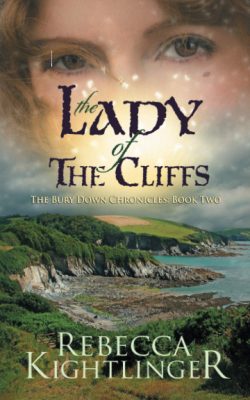
  • THE LADY Of The CLIFFS: Book Two in the Bury Down Chronicles by Rebecca Kightlinger – Historical Fiction, Historical Fantasy, Coming of Age


    In The Lady of the Cliffs, an ambitious sequel in the Bury Down Chronicles by Rebecca Kightlinger, a teenager embarks on a journey that will bring her face to face with unexpected destiny.

    The year is 1286 CE in Cornwall, England. At the turn of her seventeenth year, Megge and her cousin Brighida find themselves dealing with a new loss, one that breaks both their hearts. As heirs to the Book of Seasons and Book of Times respectively, they have to protect the books from sinister hands as they hold knowledge and wisdom that must one day be united. The power of these two books calls for a duty that is far greater than any woman of Bury Down has ever borne.

    As they take part in a final right of passage that the women of Bury Down perform for their dead, Megge, an apprentice weaver, takes on new challenges that Brighida, an apprentice seer, cannot foretell. Megge begins having dreams and visions. In one of her dreams, she sees a rolling sea drive itself into a cove at the foot of a cliff, and a silken voice asking her to return to the cliffs of Kernow, a place that she has only seen in her slumber.

    When a mysterious old woman begins telling strange tales, Megge chooses to heed the call of the voice in her dreams and travels to the sequestered inlet only known as The Sorrows.

    With a gripping and stoic style of magical realism and fantasy, The Lady of the Cliffs hurtles along at a sharp pace.

    This story shows the depths of both great loss and great achievement, even as they’re entwined. Showcasing the close bond among the women of Bury Down offers emotional and inquisitive exploration. Evocative language describes the book’s locations as the author melds folklore, fantasy elements, and a true historical era. Kightlinger also offers helpful references to guide readers through this world.

    This is a fairly large book of 262 pages but the richness of the narrative keeps the reader enchanted until the very end. Kightlinger brings life to all her characters, and her imagination shines from each page.

    Impressionistic and lyrical dialogue highlights scenes from each of the two women’s lives.

    Bridgida misses her mother, whose murder she witnessed; Megge worries about the voice that lingers in her dreams, urging her to go to a place she knows little of. Both mature through times of hardships and duty. These strong and purposeful characters confront situations that challenge their beliefs and comfort, providing us with a thorough look into their quirks and temperaments.

    Altogether, The Lady of the Cliffs is an intricate and lush addition to the historical fantasy genre from one of the literary maestros of our time.


    5 Stars! Best Book Chanticleer Book Reviews

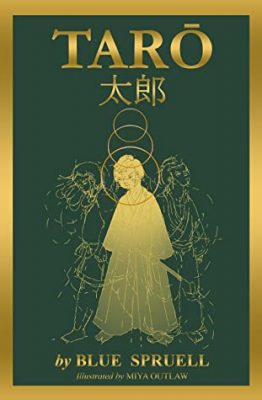
  • TARO: The Legendary Boy Hero of Japan by Blue Spruell, illustrated by Miya Outlaw – Japanese Mythology, Historical Fiction, Action & Adventure


    TARO Legendary Boy Hero of Japan Dante Rossetti Grand Prize BadgeAdventure, classic tales, fantasy, and exciting action combine in TARO: Legendary Boy Hero of Japan, a well-poised debut novel by award-winning author Blue Spruell.


    In the turbulent final decades of the sixteenth century, feudal Japan reeled in mayhem as the central hereditary dictatorship collapsed, and tyrannical powers fought to control the empire. TARO: The Legendary Boy Hero of Japan is the story of how one man revolutionized a nation by taking its reigns and forging a new destiny through his depths of compassion and determination.

    The story begins with Taro as a young boy. As an heir to the Takeda family, Taro enjoyed reading, much to his father’s disapproval, as he wanted him to follow in his footsteps as a skilled Samurai. Tragedy changes Taro’s presumed destiny when his parents are murdered in a fierce power struggle, leaving him an orphan. Shortly after, a witch saves him from drowning and begins Taro’s new life of adventure, introducing him to a world of mythical creatures. On this new journey, Taro discovers shocking secrets about his lineage, and with them, his ultimate purpose in medieval Japan.

    Author Spruell has written an enrapturing novel that brews literary art and imperial Japanese culture with the complexities of human life.

    Imbued with historical elements, this novel is tightly plotted to recreate three famous Japanese folktales that will hold your attention to the last sentence. The graceful and precise prose careens readers through a unique period and place in history, with universal appeal.

    Clearly, Spruell did thorough research before writing this novel.  His enthusiasm and attention to intricate historical detail shape the plot, shedding a light on this period of Japanese lifestyle, society, and, tradition. Allowing the characters’ warmth, frustration, and hope to speak, TARO: The Legendary Boy Hero of Japan becomes a collective attestation to the fortitude of a people and a reflection on the initial stages of a nation’s history.

    The feather in the cap of this novel is Miya Outlaw’s grand and enlightening illustrations, which bring out the spirited and energetic life of the Samurai, a world that is uncommon and unknown to many.

    The atmospheric representation of disillusionment and yearning that pervades the novel makes this story emotionally resonant. Further, its crystalline writing and flow are cinematic, resulting in a narrative that defies the limitations of any targeted genre.

    Indeed, TARO: The Legendary Boy Hero of Japan is a remarkable literary feat. Themes such as betrayal, deceit, zeal, and self-sacrifice are vividly evoked and provide a panoramic view of what it took to restore balance in power in a country that was almost torn apart by years of war and ruthless ruling families. Brutal and intense, this work is an excellent addition to its genre.

    Taro: Legendary Boy Hero of Japan by Blue Spruell and illustrated by Miya Outlaw won Grand Prize in the 2021 CIBA Dante Rossetti Book Awards for Young Adult Fiction.


    Dante Rossetti Gold Foil Grand Prize Book Sticker

    5 Stars! Best Book Chanticleer Book Reviews

  • Waking Up Lost: The Adirondack Spirit Series Book 4 by David Fitz-Gerald – Historical Fantasy, Native American Fiction, Coming of Age

    Waking Up Lost: The Adirondack Spirit Series Book 4 by David Fitz-Gerald – Historical Fantasy, Native American Fiction, Coming of Age

    Seventeen-year-old Noah Munch craves acceptance more than anything in David Fitz-Gerald’s coming of age novel, Waking Up Lost.

    As a biracial boy growing up in a small village in upper New York, Noah doesn’t feel that he belongs to either part of his heritage. Having lost his Native American father before he was born, Noah has spent his short life trying to connect with that missing part of himself. Meanwhile, he has to keep the peace with the Wilmington villagers who find his native side offensive. Noah also protects a family secret. His mother, Mehitable, speaks with spirits and his brother, Moses, has an uncanny ability to predict disaster and show up with inhuman speed to prevent it.

    As a result of his complex home life, Noah spends a great deal of time alone. He dreams of someday being a mountain man, living off his wits and the nature around him. However, Noah can’t stop himself from admiring Arminda, the prettiest girl in town. He doubts he will ever have a chance to court the blonde beauty, especially considering the meanest young man in town, Erastus Moss, has spoken for her.

    Erastus, whose grandparents died at the hands of Native Americans on a journey out West, begins to harass Noah when he notices Noah’s interest in Arminda.

    Noah endures taunts, feeling the burden of prejudice and simultaneously the inadequacy of being the only “normal” member of his family until the night he wakes up on top of a mountain.

    He begins to experience strange episodes, which he believes are sleepwalking fits. One night appears inside the home of his beloved Arminda. Once the town discovers his odd behavior, suspicion and fear turn even more people against him, and Erastus uses it as an excuse to escalate his torture. Can Noah stop the crazed man and find a way to control his abilities before it’s too late?

    The fourth installment of the Adirondack Spirit Series revolves around Noah’s coming of age.

    In true bildungsroman style, Noah embarks on both a physical and spiritual journey. He suffers the distance between himself and other boys, including his twenty-year-old brother. Noah, small, scrawny, and by his own admission, doesn’t have the physical presence that others expect of a boy his age. Though often the most handsome boy in Wilmington, Noah’s dark hair and olive skin set him apart in his racist town.

    However, Noah never knew his father’s people, so he has nobody other than his white neighbors to socialize with. He can’t see himself as anything other than a clumsy daydreamer who will never fit in, driving him to live alone in the mountains as his father had done years ago. Noah yearns to connect to the father he resembles, but when he isolates himself, nature and man conspire to bring him right back to the town he hates.

    He finds no solace in his mother and brother, even as they assure him that he possesses great power.

    Even amongst his family, Noah doesn’t fit. He despairs his ordinary nature with a mother who guides spirits to the afterlife and brother with inhuman speed. If he could rely on a secret talent, he could tolerate his neighbors’ prejudice. But when he does develop an unexplainable ability, it proves nightmarish and deadly. Noah never knows when it will happen or, more importantly, where it will take him. Ironically, this strange power becomes paramount in discovering the very purpose he longs to find.

    Faith and trust in God frame Noah’s life.

    Noah often relies on his faith to carry him through the unbelievably tricky situations in his life. In pain, he turns to prayer for comfort and reassurance, and later when he commits a crime (albeit justified), he only frees himself of the burden when he seeks absolution from God. Though his episodes sometimes prove horrific, Noah realizes his power borders on the miraculous.

    He searches for God’s plan for his life even while questioning how he will know it when he sees it. When Noah hits his lowest point, fearing for his life, he feels the “warmth” of God physically and hears His message that Noah isn’t alone. Noah becomes God’s servant, and he begins to understand that he must become what God expects, not what he wants.

    The supernatural elements in the story set it apart from the typical novel of this genre, creating a hybrid between historical and paranormal.

    The family members’ unusual abilities heighten their outsider status. Mehitable raised her biracial sons in a town of hate and prejudice for seventeen years. Though she does have a few staunch supporters, these people can’t always keep the wolves at bay. She and her sons suffer from the racism so prolific during the 1800s in America. Compounding her pariah-like treatment, she speaks to spirits and must keep her gifts secret for fear of further mistreatment. Moses must also keep his powers hidden. Noah suffers for his gift. Though he has no control over its occurrence, the townspeople practically exile him, leaving the young man to find a way to bridge this chasm between himself and others.

    Chanticleer Book Reviews 4 star silver foil book sticker

  • WANDERS FAR – An Unlikely Hero’s Journey: Part of the Adirondack Spirit Series by David Fitz-Gerald – Native American Literature, Historical Fantasy Fiction, Folklore

    WANDERS FAR – An Unlikely Hero’s Journey: Part of the Adirondack Spirit Series by David Fitz-Gerald – Native American Literature, Historical Fantasy Fiction, Folklore

    An engaging history of ancient Native American peoples is brought to magical life by author David Fitz-Gerald.

    In the early 1100s, in a region now known to us as the Adirondack Mountains of northern New York, a small band of tribal people is living in longhouses, growing crops, fishing, hunting, and enjoying certain rituals such as face and body painting, occasional migration for food survival, and even seasonal “vacations,” all while willingly obeying a simple form of governance with elements of basic democracy. In this tribe, we meet Wanders Far, a child who earns his nickname after showing a propensity to disappear and explore since he could walk. His mother, Bear Fat, is the recognized chieftainess of their group, mother of a large brood, one of whom is stolen as the book opens. Wanders Far would be considered an unusual child in any society, gifted with a highly accurate memory and the ability to visualize future events. He can also run like the wind, and with his love for travel, he is often the first to see and warn his people of danger, such as a cadre of warriors from a hostile tribe heading towards his home settlement.

    Fitz-Gerald’s book interweaves family chronology, legend (such as tales of Hiawatha), and fact-weighted history into what is essentially a human drama focused on the personal lives of Wanders Far and his cultural community. Through the happenings described, we learn more about how such indigenous people survived and progressed. We see them fishing, hunting, and foraging, as well as loving, celebrating, and mourning. One dominant theme concerns the mixture of tribes in the area – Mohawk, Onondaga, Oneida, Cayuga, and Seneca. We see how they interact, with some being more generally friendly and others being enemies who may become allies as, in the future, they will meld into what is called The Iroquois Confederacy, serving a significant role in the founding of the first European colonies. We see Wanders Far and his relatives – all with earthy, practical names like Squash, Gentle Breeze, and Big Canoe – as real people who laugh and cry, fall in love, make war and form alliances in their nature-bound, intuitively guided, pre-technological circumstances.

    Imbuing his hero with “second sight” along with exceptional physical prowess, Fitz-Gerald states that he was drawn to compose the story of Wanders Far through his own powers of imagination coupled with a fascination for the region where he himself has lived and explored. He draws a dynamic portrait of how specially gifted people were and can still be welcomed into the fold despite their differences. Wanders Far will experience a long life, here skipping from his early twenties to his mid-seventies, and readers will hope that a future novel may reveal more of the exploits of his full manhood. A small hint at the book’s end alludes to a distant identity and makes us want to see more from this multi-talented, highly creative author.

    Wanders Far won First Place in the CIBA 2019 Laramie Awards for American Western Fiction.

  • DESTINY’S WAR (Saladin’s Secret #1) by Pyram King – Alternative History, Alternative History Science Fiction, Historical Fantasy

    DESTINY’S WAR (Saladin’s Secret #1) by Pyram King – Alternative History, Alternative History Science Fiction, Historical Fantasy

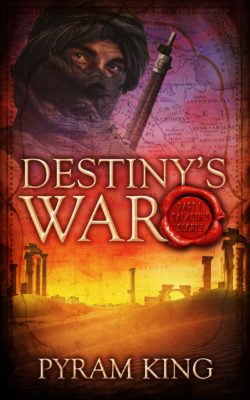
    Destiny’s War is the first in a series of novellas that fictionalize the experiences of a war correspondent, occasional amateur archeologist and sometimes caravan guard Francis Marion Jager during the Desert Campaign of the Great War; the war that was supposed to have been the end of all wars, later known as World War I.

    Jager, a young American far from home scraping together a living at the edge of an unsung campaign of a brutal war, left behind a diary of his exploits – a journal that the author has turned into compelling prose wrapped around meticulous research.

    Jager is a character caught between multiple sides and perspectives while carefully observing them all. As an American, his observations of the British units with whom he serves, including their attitudes towards their Bedouin allies as well as their German and Turkish enemies, is often sly and cutting. At the same time, he exhibits empathy with the common soldier.

    It is 1917, and the war has been going on for three years. Everyone seems to have lost track of its purpose, morale is low, and some have lost their moral centers.

    Although still a very young man, Jager has already seen too much; he is as war-weary as any of the soldiers he reports on, and is afraid to befriend anyone out of the very reasonable fear that they will not survive. He is a man who has taken too many losses to sign himself up for more. And yet he becomes involved again anyway.

    As a speaker of not merely English but also his grandfather’s native German and the Arabic language of the Bedouin tribes, Jager can see into all the sides of this conflict. Having learned his Arabic while traveling with those tribes, he respects their position considerably more than the British who are allied with them by policy but disparaging of them in practice.

    He is the quintessential outsider, able to see all sides of the conflict while being part of none.

    Destiny’s War is just the tip of the iceberg of Jager’s experiences. As the story opens, the young man is attached to the Camel Corps, spying for the famous Gertrude Bell. Quite suddenly, he has a historical artifact that entirely too many factions will kill to obtain.

    This is only the beginning of his story. Readers who love the epic sweep of Lawrence of Arabia will find themselves immersed in that bygone era, as seen through the eyes of a man who met everyone and experienced it all.

    In the end, Destiny’s War feels like the opening chapter of an absolutely fantastic story. It’s a small sampling, the merest taste of a tale that feels like it will be epic. Indeed, the only criticism that most readers are likely to have is that the story feels too short. It’s a tease and a treat.

    Readers will be left salivating for the next chapter. This one is highly recommended for readers who love the sweep of history and want to feel as if they are there.