Tag: Heartwarming

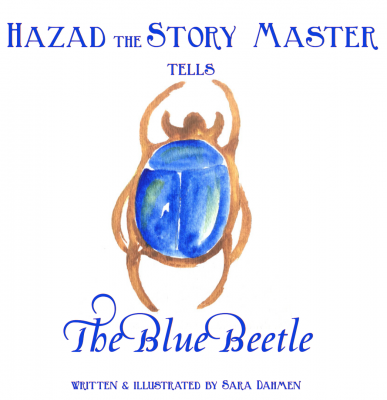
  • HAZAD the STORY MASTER TELLS the BLUE BEETLE by Sara Dahmen – Children’s Literature, Belief in Self, Work, and Others, Determination/Drive

    HAZAD the STORY MASTER TELLS the BLUE BEETLE by Sara Dahmen – Children’s Literature, Belief in Self, Work, and Others, Determination/Drive

    A beautiful story of determination, dedication, and drive to fulfill one’s goals, even when those goals seem impossible to achieve, wrapped up in love for family and belief in self and others.

    Renni dreams of becoming a scribe, but his family is too poor to afford school. Renni’s father, Pentu, wants to give his son the education he craves; however, he has no job, and finding a way to earn the money proves nearly impossible for Pentu because he doesn’t have the strength required for most of the jobs in the city. After trying and failing at farming and fishing, Pentu returns home dejected, but Renni greets him each time with a reassuring hug.

    When he finally tries his hand at carving, Pentu is noticed by the local goldsmith who gives him a job. Pentu excels at making scarabs, a much-valued part of Egyptian culture. His favorite is a large, expensive lapis lazuli scarab, and Pentu knows that selling the jewel will give him the money needed to educate Renni for as long as he likes. When a traveling merchant finally buys the blue beetle, Renni will be able to make his dream come true.

    In this third volume of the Story Master series, Hazad, the storyteller, transports children to ancient Egypt where education is a privilege. With Pentu’s repetitive trials, this beautifully illustrated frame story is a bit like a cumulative tale. No matter how hard Pentu tries, he endures disappointment after disappointment; however, he never stops trying. His “never give up” attitude is inspiring. No matter the hardship, he will overcome anything to give his son the education he desires.

    The lesson about the value of education isn’t lost on the reader either. Children often undervalue the opportunity to learn while Renni yearns for only that, but even in the midst of Pentu’s disappointments, Renni remains positive. With every failure, he supports his father, reassuring Pentu of his love and never berating his father for being unsuccessful as he searches for his niche.

    In this celebration of artistry, The Blue Beetle will touch and inspire children to appreciate what they have, never stop trying regardless of the obstacles, and dream big.

    Sara Dahmen has worked in numerous facets in the publishing industry, including editing trade publications. Not only does she write children’s books, she also illustrates them and her historical fiction series, Flats Junction. However, publishing isn’t Sarah’s only talent. She is a copper and tinsmith apprentice, a wedding planner, and creator of her own cookware line. Throughout all of her many successful ventures, Sara cherishes life with her children and her husband.

    5 Star Best Book Chanticleer Reviews round silver sticker

  • The WELL: WHAT HAPPENS WHEN the MIND RELEASES but the HEART SUSTAINS by Colleen Golden – Aging Parents, Heartwarming, Coma

    The WELL: WHAT HAPPENS WHEN the MIND RELEASES but the HEART SUSTAINS by Colleen Golden – Aging Parents, Heartwarming, Coma

    The subtitle of Colleen Golden’s lovely book, The Well, asks a searching question:  “What happens when the mind releases but the heart sustains?”  There are few greater mysteries and that’s exactly why this charming and touching novel will appeal to so many readers.

    At the outset, the central character, seventy-six-year-old Grace, has been in a coma for a few months. That doesn’t stop the feisty and funny protagonist from addressing readers, however, and taking us with her on a transcendental journey in which we’ll meet many of her family members and friends.

    While her grown children sit in her room at the nursing home and worry about her being in a seemingly vegetative state, Grace hears every word. The voices seem to be coming from deep within a well, and she sits gingerly on the edge of that well, sometimes leaning over it to eavesdrop more carefully. She reminisces about her life spent in the Midwest, musing about her dimming short-term memory, and shares vivid recollections of flappers (she herself is a great dancer), the first telephones, the excitement over indoor plumbing, radios, televisions, highways, and rockets to outer space.

    It’s a joy to spend time with Grace in this limbo dimension because she’s a thoroughly engaging storyteller and a very astute observer of the human condition. While she seldom judges, she’s quick to point out mischief, like the time one of her sisters stole a boyfriend from another sister, or when teenagers slipped into a vacant house for a romantic rendezvous. So many of Golden’s characters are familiar; they remind us of people we’ve known, people we’ve lost, and people we dearly miss.

    As time goes by, Grace realizes she can do more than just listen to people. She experiments with “dissolving” into their thoughts and discovers that she can help them solve dilemmas and find their way out of difficult and sometimes dangerous situations. She herself finds her way to her old kitchen, where she’s happiest, and starts to bake. While she used to make delicious cakes and pies, she now kneads the dough to fashion a puppy who bounds to life and becomes an adored companion. Well, if that works, why not make people? She does just that, an entire cast that includes old friends and her deceased husband who looks just as he did when he was a handsome, young man.

    Grace creates streets and buildings and before long has created an entire town which she names “Possibilities.” Not bad for an elderly woman in a coma! There are reasons, revealed carefully, for all of Grace’s creativity, as well as lessons to be learned from these paranormal sojourns. Grace has lived a long life but there are loose ends to be tied before she discovers what the next chapter holds for her.

    This material in a less gifted author’s hands might run the risk of sentimentality or frivolity, but Golden wisely has Grace contemplate the sadness of life, along with the joy. There are nocturnal activities at the nursing home that, when discovered, enrage and devastate her children.

    Everyone knows heartache and loss, and Grace has lived long enough to experience her share. In a moment that brings Emily of Our Town to mind, Grace glimpses her deceased mother, describing the scene thus:  “The sun’s brilliance silhouettes her against the horizon, and bedazzles the grass into a field of emeralds.”  Golden’s prose is imbued with a wistful nostalgia, so perfect for a book that considers the variedness of life and the questions of death.  While we don’t know all the answers, this novel helps us realize that because “love makes a good conduit,” the possibilities are, indeed, endless.

    5 Star Best Book Chanticleer Reviews round silver sticker

  • INTERVIEW with Grand Prize LARAMIE AWARD-WINNER, JACQUIE ROGERS!

    In honor of the Laramie Awards month, we decided to interview one of our very favorite authors, Jacquie Rogers. It should come as no surprise that Jacquie won the Laramie Grand Prize in 2016 for her rip-roaring, shooting, tooting, humorous Western that features Honey Beaulieu, Man Hunter!

    Jacquie Rogers is a regular contributor for the Western Fictioneers blog. She presents at RWA conferences and workshops, Chanticleer Authors Conferences, and  Western Writers of America. Her works are known for their hilarity, adventure, mistaken identities, and romance. Rogers’ books are  a hit for anyone who has a penchant for classic Westerns and Shakespearean comedies. She lassos the genres together in a most enjoyable way making her tales a true pleasure to read. From saddles sores and thorns from the trail, to finally being able to breathe when the last binding on the corset is released, even the most die hard Western readers will be impressed with Roger’s knowledge and expertise she portrays as she takes you back in time to the Old West.
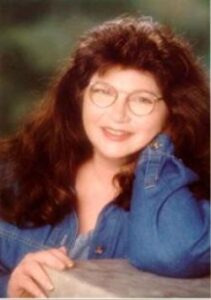
    Jacquie Rogers: Thanks for inviting me to the Chanticleer blog.  I’ve been privileged to be part of the Chanticleer family right from the get-go, so that makes it extra special for me to be here.  I had help, though—the folks at the Pickle Barrel Bar and Books on Facebook choose my questions, so here we go!

    Chanticleer: We’re so glad you have some time to spend with us. Let’s jump right in…What areas in your writing are you most confident in? What advice would you give someone who is struggling in that area?

    Rogers: Dialogue and chaos.  For dialogue, the advice is easy—listen to people talk.  Two nuances I’ve noticed is they rarely speak in complete sentences and seldom use the other person’s name.  More specifically, listen to people who are similar to your characters.  In the case of Honey Beaulieu, I draw strength from the old Missourians in our family, and mix in a little Owyhee County speak.  As for chaos scenes, the main thing to remember is that the first thing you think of is also the first thing the reader will expect, so turn left when expected to turn right.

    Chanticleer: That’s really good advice, Jacquie. How do you keep track of all the… left turns? Do you work with a storyboard? 

    Rogers: When a character turns left and it’s a better idea than what you’d planned, then it’s best to go with them.  However, that does cause a ripple effect on that particular thread, and sometimes several or all threads.  I try to veer into position so I don’t have to go back and change things, but very often that simply can’t happen.  Either way,  from the turn-left point forward, the whole plot needs to be tweaked.  I’m happy to take the fun route to the end, but I do have to know where and how the story is going to end, and all the characters need to be in the right spot for that to happen, and all (or most, in the case of a serial type series such as Honey Beaulieu – Man Hunter) threads need to be tied in a neat bow.  So it’s a matter of connecting the dots in a logical but relatively unpredictable manner that allows the reader to play along with you.  Because books are really a group activity—the interaction of characters, readers, and the author.

    Even with all that, continuity errors can and do occur.  My first line of defense is Your WorldKeeper, Diane Garland.  She has an eagle eye for continuity and can take me all the way through the thread so I can see what needs fixing  Or sometimes it can’t be fixed (e.g., in a previously published book), and we have to come up with a logical explanation for how things are in the current book.  I work with her as I’m writing, so she usually nails my hide to the wall before even the editor sees the story.

    Rogers: An author can’t keep writing unless readers buy the books—simple economics.  Books are expensive to produce.  So telling others about the author’s books is absolutely gold.  There are a variety of ways to do this, including sharing the author’s posts on social media, reviews (many advertising sites require a certain number of reviews before the author can purchase ads), and telling all your friends in real life to buy the book.  Visibility is the name of the game.  And keep reading!  Your enjoyment is a gift to me.

    Chanticleer: Thank you for mentioning the social media aspects and sharing. Very important. What are you working on now? What can we look forward to seeing next from you?

    Rogers:  My next book will be Hearts of Owyhee #6, Much Ado About Mail-Order Brides.  If you’ve read the third and fifth books of the series, you’re acquainted with the McKinnon brothers.  This book will be Bram’s book.  He’s the oldest brother and the hardest to place because he’s perfect.  Flawed heroes are much, much easier to write.  But since he’s perfect, he has to end up in an impossible situation, and I’ve definitely got him in a big to-do.  Believe me, he has a lot more help than he wants.  I’ll start writing next week and hope to have the book done by the end of the year.

    Chanti: Oh, we’ll be looking forward to that! We love it when characters get knocked around! Let’s move on to craft… It’s important to work on your craft. What do you do to grow your author chops?

    Rogers: I try new techniques.  For instance, I wrote I Heard the Brides on Christmas Day in four points of view—and it’s only a 15,000-word story.  I think I pulled it off but believe me, I won’t be doing that again!  Also, the Honey Beaulieu series is in first person point of view, and the narrative is written in Honey’s vernacular just as if she were actually speaking.  I did this because we think the way we talk, so the narrative can’t be in modern correct grammar.  My Hearts of Owyhee series is in the third person.  So I’m always switching back and forth, writing one book in first and one in third.  That gives me the opportunity to remember the strengths in each and apply them in both series.

    When I first started writing, I read a ton of craft books.  I was so hung up on the rules that I couldn’t write a word for nearly a year, so I tossed it all out and decided the only way to write is to let my hair down and go for it.  Then I heard an interview with Johnny Depp where he remarked that actors had to be brave enough to look stupid (paraphrasing).  I think that goes for writers, too.

    Chanti: We love that you were naturally brave enough to follow your gut on this one. And we love that Johnny Depp backed you up on this one… because, you know, Johnny Depp! Let’s switch gears a bit – give us your best marketing tips, what’s worked to sell more books, gain notoriety, and expand your literary footprint.
    Western Pioneeer Civil War Fiction Award

    Rogers: Depends on what year, month, time of day.  This business is changing fast.  When MySpace was king, I had a strong presence there.  I’ve never had much success on Twitter and only go there because I feel like I should.  Facebook is the place to be right now, which isn’t to say that it’ll still be popular next year.  It’s important to have a presence on social media that is personable (notice I didn’t say “personal”), where people see you and want to be your friend.  This is what marketing is all about these days—the personal touch.  Frankly, I think we’re moving on from social media to real people in the real world contact.  The pendulum is swinging back.  That’s why I put on the Silver City event every year, and try to get out as much as possible to meet my readers.

    I also think it’s important to hang out with other industry professionals—reviewers, publishers, and other authors.  Getting a Chanticleer review and entering the Chanticleer contest is great for raising the discoverability of your books.  Attend the conference and blast pictures all over social media.   The added bonus is that these conferences are lots of fun as well as informative.


    Chanticleer: Talk a little more about the Silver City event… What was that like? Who came? How did you set it up – C’mon, Jacquie! Spill the beans!

    Rogers: I enjoy getting together with my readers and fellow book lovers, and I had this bright idea that it would be fun to meet where the Hearts of Owyhee series is set, which is in Owyhee County, Idaho.  (Owyhee is pronounced oh-WYE-hee, and is the original anglicized spelling of Hawaii.)  Most of the books in the series have scenes in Silver City, and two of them are set there for most of the story.  Silver City is a treasure that few people know about.  It’s a genuine Old West town that still exists as it did in the 19thCentury.  There’s no power or telephones—although they did have telephones in the early 1880s.  The Idaho Hotel is a gem and staying there is like spending the weekend in a living museum, although it’s a soft landing because they did install flush toilets and showers.  The hotel restaurant has always been known for its fine cuisine and believe me, the current owners are living up to the historical standards.  Jerri Nelson’s pies are simply divine.

    There’s a lot more to say about the place, but I’ll go on to the event.  Keep in mind that Silver City is not a tourist town.  You won’t find staged shoot-outs or slot machines (that work).  People there live like folks did in the 1800s.  So visitors live like that, too.  What does it mean?  It means that whatever we do, we have to create ourselves.  If we want music, then we need to play it.  I can’t play anything so I enlisted the aid of fiddler Daria Paxton and her dad, Matt Paxton, who plays guitar and sings.  They’re both talented musicians and old family friends—my dad and Matt’s parents were in the same class.  Relationships were everything in the old days, and there, they still are today.

    The event in Silver City is for everyone, young and old.  In the olden days, families would come to a dance.  The musicians would play and everyone would dance, including the kids.  Then the kids would play and dance until they got tired, and the parents would put them to bed on the pile of coats while they continued to party into the night.  That’s the feeling I wanted to create at our event and we succeeded.  Wildly.  Some of us dressed in costume, others didn’t.  No one really cared because we all were there to have a rip-snortin’ good time.  Which we did.

    Poet Roberta Whittemore joined me at the book signing and that was fun.  Everyone raved about the melodrama, billed as the worst melodrama in history, which had a terrible script (I wrote it), and bad actors (except for Ichabod—he was great, and so were Curtain Rod #1 and Curtain Rod #2).  But the audience participated and had a great time.  The cool thing was that half the audience were walk-ins, not part of the event, and they loved it.  After that, we had an auction for charity.  Sherry Walker chaired the auction with Ken Walker as the auctioneer.  The gals in the kitchen soon learned not to bang pans or he’d call their bid.  We raised over $300 for the Children’s Tumor Foundation to find a cure for neurofibromatosis.

    So I’d like to invite everyone to join us next year.  The tentative date is July 20-21, 2018.  Information will be on my website at http://www.jacquierogers.com/silvercityevent.html.

    Chanticleer: What a terrific event! Thank you for letting us in on Silver City! What do you do when you’re not writing? Tells us a little about your hobbies.

    Rogers: Reading is my first love, make no mistake about it.  I was a reader long before I ever wrote a single word of fiction.  Other than that, I like rodeo, cooking (but not doing the dishes), and baseball.

    Chanticleer: Tell us more! What’s your favorite rodeo event? If we came to your house for dinner, what would you cook? and Who’s your favorite baseball team? 

    Rogers: Favorite rodeo event—well, that would be hard to pick.  Of course, I love the bull-riding but all of the events are fun to watch.  I like all the rough stock events, but then I’m amazed at the ropers, too.  And I know how hard it is to run the barrels without knocking one over.  I also look forward to the specialty acts they bring in.  At the Snake River Stampede, they had the Stampeders—a horseback drill team that performs in the dark so all you see is the lights on the horses and rides.  It’s pretty spectacular.

    If you came to my house for dinner, you’d get down home cookin’.  I cook everything from scratch—even yogurt and salad dressing.  I do buy mayonnaise, though, because we eat too much of it when I make it myself.  So what’s on the menu?  How about homemade bread bowls filled with genuine Idaho potato soup, salad with ranch dressing, and strawberry shortcake (with real shortcakes hot out of the oven) for dessert?  Or maybe you’d like Thai fried rice, spring rolls, and bok choy stir fry.  I’m willing to give just about anything a go.

    As for baseball, I’m a Mariners fan, unfortunately.  Go M’s!

    Chanticleer:  That all sounds good! What led you to write in the western humor genre?

    Rogers: Writing westerns was a simple choice—I grew up where the Old West is still alive so I didn’t have much to research.  Also, in light of the urbanization of our country and the vast change in communications, I want to do my part to keep the culture in people’s awareness.  It’s hard to explain to someone how people lived in the late 1800s without television and cell phones, and that’s why we have so much fun at the Silver City event.  We’re not connected, so we have to create our own entertainment and [gasp] actually visit with one another face to face.

    Humor?  I don’t actually write humor.  Every time I do, no one laughs.  There’s one line in Blazing Bullets in Deadwood Gulch (Honey Beaulieu #3) that absolutely cracked me up, but not one person has laughed or even noticed it. [Update: one person finally got it!  Made my day.]

    Chanticleer: Really, no humor? Well, certainly situational, character driven humor. We love your books and love how you put your characters in situations they can’t possibly imagine! How structured are you in your writing work?
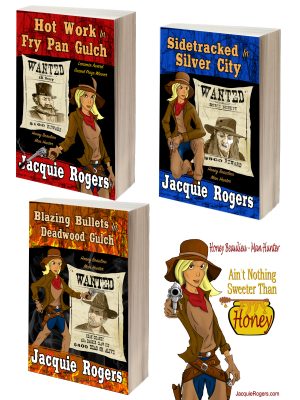
    Rogers: Horribly unstructured and unfocused.  My marbles are rattling around somewhere and they’re not even in the same room, or house, or state.  How I ever manage to finish a book is beyond me.  But when the deadline looms, I do hunker down and git ’er done.

    However, my approach to writing a novel is quite structured.  I don’t write a single word until I know the main and secondary characters inside and out.  The better I know the characters, the easier it is to throw obstacles in their way (that’s also called plotting).  I always have one scene in mind for the opener.  But I confess that the opening scene very rarely stays the opening scene.  The first scene I wrote in the Honey Beaulieu series will be in book #5.  The first scene I wrote in Much Ado About Miners is now in chapter 7.  I always start too far in, probably because I have little tolerance for backstory and I want to get on with things.

    Chanticleer: We appreciate that, Jacquie. How do you approach your writing day?

    Rogers: I always try to leave off in the middle of a scene so I don’t have to figure out what I’m going to write.  So after that scene is finished, then I check with my plot bones chart to see if I’m on track.  If not, I turn left.  Actually, I turn left a lot because sometimes things happen on the page that are too fun to throw out, so then I have to make it work with the rest of the story.  An example is Louie Lewie in Blazing Bullets in Deadwood Gulch.  He was supposed to be a throwaway character, but he kept coming into the story, so I resigned myself that he’s now part of it.  In fact, he’ll probably be in the next book, too.  So a lot of my day is thinking and while I’m thinking, the best way to come up with new ideas is to bake bread.  My extended family gets a lot of bread.

    Once everything’s figured out for the day, I fire up my laptop and use speech recognition to rough out a scene.  Believe me, “rough” is the right word considering when I said “bustier” it typed “buzzard ears.”  I end up with about 90% dialogue.  Then I send the scene to my desktop computer and edit using the keyboard.  If the scene starts out at 500 words, it’ll be 1,000 by the time I’m done adding the narrative.  A side note: I detest description and always skip it when I’m reading for pleasure, which means I have to make an extra effort to make sure I’ve created a picture for the reader.  This is by far my weakest area.

    Chanticleer: Ah, bread. Here’s the part where we wish we lived closer! The idea of using speech recognition software is pure genius – and time-saving, too. How do you come up with your ideas for a story?

    Rogers: I actually don’t know.  Usually, some phrase, prank, or predicament makes me laugh.  Then I put characters to it and voila! We have the concept for a new book.  Honey helps me out because I know that if I dig a hole big enough, she’ll keep me entertained.

    My entertainment is the determiner as to whether I use an idea or not.  If I’m entertained, then I hope the readers are, too.  But on the other hand, if I get bored writing, then you can bet that readers will also be yawning.
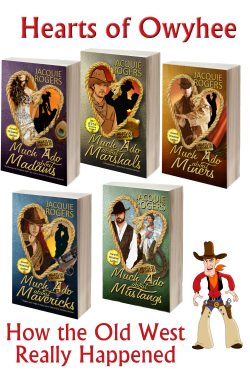
    A few of my ideas for books are identifiable, though.  In Sleight of Heart, I wanted to write a heroine who was as good at math as Aunt Grace, and I always wondered how she’d get along with Maverick.  So Lexie Campbell and Burke O’Shaughnessy were born.  The idea for Much Ado about Mustangs came from an article I read in The Owyhee Avalanche about the local theater group booking a national star to headline their local production.  Hence, we have Lady Pearl Montford and local rancher Josh McKinnon, whose heart’s desire was to raise Friesians.

    The next book I’m going to write, Hearts of Owyhee #6: Much Ado About Mail-Order Brides, came from the fact that the hero, Bram McKinnon, is perfect.  Perfect is boring.  Perfect makes for no conflict.  Unless he’s put in a situation where there’s absolutely no solution.  Bwahahaha.  Naughty me.

    As for Honey Beaulieu, what happens isn’t much of a surprise.  What’s interesting about her is the journey, so I’m always on the lookout for incidents that aren’t exactly your usual bill of fare.  Honey obliges by reacting in ways that surprise me every time.  Of course, she constantly changes the plot, too, which can get frustrating.  But I learned just to go along for the ride and let Honey take me with her.  We get along much better that way.

    Chanticleer: And what a ride! Thank you, Jacquie, for being our first interview of the year! We love what you do and love how you do it.

    Rogers: Thanks again for inviting me here today!

     

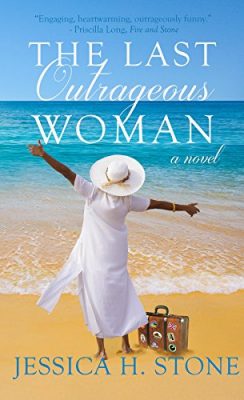
  • THE LAST OUTRAGEOUS WOMAN by Jessica Stone – Contemporary Women’s Fiction

    THE LAST OUTRAGEOUS WOMAN by Jessica Stone – Contemporary Women’s Fiction

    Life is meant for living – outrageously in Jessica Stone’s latest novel, The Last Outrageous Woman.

    Eighty-six-year-old Mattie’s life is dwindling away at Florida’s Restful Palms Retirement facility but she has a plan—an outrageous plan. And it just might work. Taking advantage of a crisis situation, Mattie tricks a staff member into signing a release paper that will be their ticket out.

    Each woman has a secret longing to be fulfilled. For Mattie, it’s a sea voyage as described to her by a long-lost lover; food-obsessed Dolores wants to honor her Irish heritage by kissing the Blarney Stone; quiet, easily dominated Edna has a dream of riding a camel—in Egypt; Rose never got to say goodbye, her way, to her deceased brother buried somewhere in Wisconsin; and Helen remembers how her two sons, both killed in military service, loved Australia, leaving her with the desire to go there and pet a kangaroo.

    To accomplish their mad scheme, the women who will become known to the world as “the grannies” enlist the help of Edna’s young bohemian niece Katie, who will make connections for them—not just on flights, but with people in all the places they touch down. Sneaking out of Restful Palms with passports and very little luggage (they share necessities and take only one change of clothing each) the grannies head first for Wisconsin.

    By the time they reach Ireland they have become a phenomenon on Facebook, and once their trek takes them to Australia, they have hundreds of thousands of “friends” who watch their exploits and cheer them on via YouTube. They become so admired by global social media fans that a dance is invented in their name, hoisting them to overnight Facebook fame—even though none of them quite understand what Facebook is, or even exactly how to use a cell phone.

    But not all their adventures are fun. The grannies are hunted by a pair of greedy sisters trying to make sure their aging mother does not waste “their” inheritance and are swindled by con men who see them as easy marks. Their ramblings wind down in Cairo, but the reader senses that for Mattie, the “last outrageous woman,” the trip will never really end.

    Each woman finds what she seeks, but in ways very different than anticipated, in this rollicking tale of spirit and spunk. One of them enjoys true love for the first time; one will get long-sought revenge; one will find herself while getting lost; one will let the experience of reunion with her departed loved ones carry her away; and Mattie will discover that the sea can have a far different look and meaning than she had expected.

    Told by best-selling author (Doggy on Deck) Jessica H. Stone, The Last Outrageous Woman transports the reader along with the grannies, to exotic locales that Stone herself has explored. Both a skilled and imaginative writer, the author surely knows that her own exploits, borrowed for this amusing, fast-paced yarn, would give her the well-earned title of “outrageous woman.”

    She also deserves extra kudos for showing that older folks are still fully human—capable of dancing, loving and celebrating life—while not side-stepping some of the undeniable pitfalls of aging—aches, fears, and memory loss.

    Five run-away grannies prove that dreams are worth pursuing, life is worth celebrating, and you’re never too old for true love in Jessica H. Stone’s engagingly fun and poignant tale of women pursuing their hopes and dreams in spite of society’s so-called best intentions.

  • MY EXTRAORDINARY LIFE by Monica Sucha Vickers – Memoir, Inspirational

    MY EXTRAORDINARY LIFE by Monica Sucha Vickers – Memoir, Inspirational

    Monica Sucha Vickers was born in 1954, her parents’ first child. Their love for her overcame the shock they experienced when they saw that she was severely handicapped.

    Born without legs and missing her right arm, Vickers was probably a “thalidomide baby,” although her mother’s medical records are mysteriously lacking the proof of that speculation. Advised by doctors to institutionalize their tiny daughter, her parents took her home instead, and, without discussing their secret sorrows, they raised Monica with courage and without barriers.

    Her father pushed her to try new things—navigating stairs and participating in sports. Initially sent to a special needs school, she complained that she was out of place there, so she was transferred to typical schooling.

    In college she and a roommate took a long trip out west in the author’s hand-controlled auto, inspiring her to move from the Midwest of her birth with its icy winters to sunny California. She became an expert medical transcriptionist, typing twice as fast with one hand as most of her co-workers could with two. It was here she met and eventually married a construction engineer who designed a special office space for her home business. Together they happily entertained their large extended families.

    After her rather sheltered upbringing, the author gradually saw that the world can be cold and hurtful to people with handicaps; she speaks out boldly on that subject. She states that her grandmother, who taught her to bake, prepare fresh garden veggies, ride a tricycle, even sew and embroider, provided the impetus for this memoir. Her grandmother was, and still is, her hero.

    Vickers writes with a rare combination of gusto and aptly chosen phrasing, reflecting her own spirited but well-planned approach to life’s adversities, of which she has had more than her fair share. Her prose is plain and her observations frank, showing her creative talent along with the ability to objectify her experience in an unusually balanced manner.

    The book contains many photographs showing not only the extent of her disabilities, especially in early childhood, but also the means she has used to overcome them over the course of her tough but courageous life: the heavy but cosmetically sculpted artificial legs, the various wheelchairs, her hand-operated car, her athleticism as a swimmer, her unconventional but very effective typing method. Here, Vickers admonishes readers about what not to do and say to handicapped and wheelchair bound persons, which is enlightening and edifying.

    Avoiding any temptation towards bitterness, especially in the matter of the probable cause of her disabilities, Vickers has boldly included numerous honest appraisals penned by family members and friends about growing up with and knowing her. This willingness to see herself as others see her sometimes brings her back to the awareness of the adage, “People will see your disability before they see you,” a hard lesson that took her a long time to absorb.

    This is an important memoir that serves to bridge a gap between people of all shapes and sizes – no matter what their condition. An honest and courageous chronology of a life that truly deserves to be called “extraordinary.” Monica can be reached via her Facebook page or her website, which is listed at the top of this review.

    5 Star Best Book Chanticleer Reviews round silver sticker

  • The CHATELAINE Awards for Romantic Fiction 2016 First Place Category Winners

    The CHATELAINE Awards for Romantic Fiction 2016 First Place Category Winners

    Romance Fiction AwardThe CHATELAINE Awards Writing Competition recognizes emerging new talent and outstanding works in the genre of  Romantic Fiction and Women’s Fiction. The CHATELAINE Awards is a division of Chanticleer International Novel Writing Competitions.
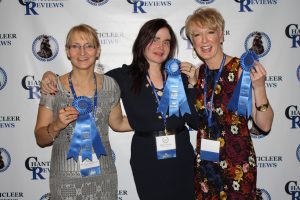
    Congratulations to the 2016 CHATELAINE Awards First In Category Award Winning Romantic Fiction Novels:

    • The Chatelaine Award Winning Authors: M.A. Clarke Scottt, Diana Forbes, & Gail Avery Halverson

      Historical Romance: The Boundary Stone by Gail Avery Halverson

    • Adventure/Suspense: Dair Devil: A Georgian Historical Romance  by Lucinda Brant
    • Romantic & Sensual: Mistress Suffragette by Diana Forbes
    • Clean/Restorative: Building Mr. Darcy by Ashlinn Craven
    • Contemporary Romance: The Art of Enchantment by M A Clarke Scott

    CONGRATULATIONS to  M. A. Clarke Scott, author of the Chatelaine GRAND PRIZE winner — The Art of Enchantment!

    Chatelaine Grand Prize Winner M. A. Clarke Scott

    The 2016 CHATELAINE Short Listers competed for these First Place Category Positions. The CHATELAINE First Place Category Award Winners’ novels have competed for the CHATELAINE Grand Prize Award for the 2016 Romantic Fiction and Women’s Fiction Novel. These winners were announced and recognized at the annual Chanticleer Authors Conference and Awards Gala, Bellingham, Wash., on April 1st, 2017.

    The First In Category award winning titles will receive an award package including a complimentary Chanticleer Book Review of the winning title, digital award badges, shelf talkers, book stickers, and more.

    Congratulations to those whose works made the CHATELAINE Awards 2016 FINALISTS and SHORT-LISTERS lists.

    More than $30,000 worth of cash and prizes will be awarded to the 2017 Chanticleer Novel Writing Competition winners! Fifteen different genres to enter your novels and compete on an international level.

    We are now accepting entries into the 2017 CHATELAINE Awards. The deadline is August 31st, 2017  Click here for more information or to enter.

    More than $30,000 worth of cash and prizes will be awarded to the 2017 Chanticleer Novel Writing Competition winners! Fifteen different  genres to enter your novels and compete on an international level.


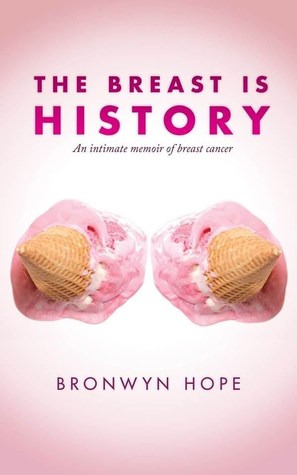
  • The Breast is History: An Intimate Memoir of Breast Cancer by Bronwyn Hope – Inspirational Non-Fiction

    The Breast is History: An Intimate Memoir of Breast Cancer by Bronwyn Hope – Inspirational Non-Fiction

    A realistic, up-close look at life as a cancer patient and survivor. The Breast Is History is a strong tool of hope and humor in the darkest days of any woman’s life.  

    In September 2011, Bronwyn Hope received her initial diagnosis of breast cancer; by March 2013 she had had both breasts removed, had gone through numerous chemo and radiation treatments, taken thousands of pills, and come out of it with a gritty, positive philosophy.

    When she was first diagnosed, a close friend advised her to start a blog, something very far from her mind at that moment. But, her friend reasoned, she could inspire others with her story. This was not a fanciful idea, given that Bronwyn was and is a powerhouse—an avid athlete, media maven, entrepreneur, activist, mother, and writer. She took her friend’s advice and this book is the result, a sometimes day-by-day journal of her battle with a disease she admits we often think of as a death sentence.

    Through the blog and, one suspects, because of her generally extroverted nature, Bronwyn discovered a very positive aspect of her illness: the immediate outpouring of warmth, good wishes, gifts and visits from a host of friends and family members. But as time passed, and her treatments, especially chemo, took their toll, she records many days of lonely suffering, struggling with nausea, pain in every part of her body, the loss of all body hair, and feelings of profound weakness and despair.  Yet she constantly, remarkably, tries to recoup her pre-cancer strength and endurance.

    A visit to a Catholic church and a later whirlwind trip to India provide spiritual insights. During her own cancer challenge, Bronwyn’s sister Fiona was also diagnosed with cancer. Helping Fiona through what she had already experienced became a sustaining factor for Bronwyn.

    The author does not shy away from tough issues, or from the occasional use of profanity when appropriate. She displays a secure knowledge of many complex medications and their effects and side effects. By detailing how her illness progressed, she provides a guideline for others. Her account is not without humor: she had been a large-breasted woman and had named her breasts Nicky and Paris. Nicky was the first to go, early on, and Paris about two years later. Photographs show the author with her once-straight hair, then hairless (with husband and dog getting a shave in sympathy) and then with the incongruously curly hair that grew in later.

    There will be no doubt as one reads this honest account, that Hope has walked the walk and is also very capable of talking the talk. Her wisdom, based on a long, harrowing experience, is anything but saccharine. She concludes, “I am not angry or depressed or saddened by what cancer has taken away from me. I am instead, empowered and strengthened by what it has given me: lessons that are priceless.”

    5 Star Best Book Chanticleer Reviews round silver sticker

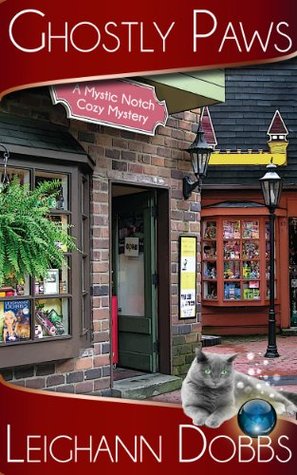
  • Ghostly Paws (Mystic Notch #1) by Leighann Dobbs – Cozy Mystery

    Ghostly Paws (Mystic Notch #1) by Leighann Dobbs – Cozy Mystery

    When murder comes to the sleepy hamlet of Mystic Notch, recently relocated crime journalist Wilhelmina Chance and her grandma’s crime-solving cat jump into the case with two feet and four paws.

    Mainly, Willa wants to start over. After her car accident left her with a temperamental leg and a strange ability to see ghosts, she hopes taking over her grandmother’s bookstore in Mystic Notch will offer her needed peace. That is, until, with the help of her grandmother’s cat, Pandora, Willa discovers Lavinia Babbage’s body in the library basement.

    When Lavinia’s ghost appears to her, Willa not only finds out that Lavinia’s death was no accident, but that someone in Mystic Notch is to blame. And Lavinia only leaves her with a few clues to determine who might have a motive to kill the local librarian.

    What Willa doesn’t know is that her cat, Pandora, is part of an elite species sworn to help humans—and that Pandora is just as intent on finding Lavinia’s killer as she is. With Pandora’s help, Willa starts putting the pieces of the puzzle together. She just has to hope that her investigations don’t get in the way of those actually getting paid to solve the crime—namely, her sheriff sister, Augusta, and the handsome but slightly intimidating sheriff, Eddie Striker (and his steely gray glances).

    This is the first in Leighann Dobbs’ “Mystic Notch: series, and the atmosphere Dobbs creates is exquisitely cozy. While there are a few hiccups in this debut novel, they can be forgiven as the series promises to deliver more enjoyable and affably cozy hours of reading–especially with a few of Dobbs’ few magical flourishes thrown in. Mystic Notch is a town that any cozy mystery fan can look forward to hanging out in. The story is enjoyable overall, especially in the last third. The reveals are delightfully unpredictable, and the ending offers a satisfying conclusion.

    The role of the cats also adds an intriguing element to the overall story and reveals important parts of the mystery in a way that not only fits with the plot but provides some surprises along the way. The cats also offer a significant source of humor, which is a winning element throughout the story.

    This debut novel of the Mystic Notch mystery series is perfect for cozy mystery lovers and looking for a humorous and feel-good escape.

  • WALLS for the WIND by Alethea Williams – The Orphan Trains of Hell on Wheels

    WALLS for the WIND by Alethea Williams – The Orphan Trains of Hell on Wheels

    A poignant tale set in the post-Civil War era of the United States in the rough-and-tumble boomtowns that follow the transcontinental railway as it was being built. The author focuses heavily on the often-forgotten plight of orphaned and immigrant children from the crowded cities of the East where they disembarked from the “coffin ships.” Many were packed on “orphan trains” heading west. The book leads off in New York City and eventually heads to Dakota Territory as readers learn about the plight of these orphans.

    Several children’s welfare movements began to deal with the thousands of homeless children of indentured servants and impoverished immigrants. One of these programs was a welfare program that transported orphaned and homeless children from the highly populated Eastern cities and placed them in foster homes located throughout the rural Midwest. These trains operated from 1854 to 1929 and relocated some 200,000 orphaned, abandoned or homeless children. Their plight is the core of Alethea Williams’ historical fiction titled Walls for the Wind.

    Kit Calhoun’s character, the protagonist, was created to portray one youngster among the estimated 34,000 children roaming the streets of New York City, enmeshed in despair and hopelessness in the 1850s. Kit eventually finds herself in the care of the influential Reverend Howe, founder, and director of the Immigrant Children’s Asylum. Kit is fortunate as she is given education and training as a young ward. As time passes and Kit grows older, she takes a job as assistant to the elderly director, Rev. Howe. Having felt the genuine love and care from a person to redirect the course of her own life, Kit passionately goes about the task of rescuing other homeless children.

    Kit finds the work empowering and important, but she also faces an inner struggle at times that the author, Alethea Williams, expertly develops. The author is adept at weaving historical fact, vivid descriptions of the times, and an engrossing plot-line through a young woman’s perspective in this male dominated time.

    The pace of the novel picks up when Kit heads west on an orphan train to help place children with farm families on the frontier. Obviously, Kit would like to see the children adopted by loving parents, but what she quickly discovers is the families the children are being placed with, treat the children as little more than indentured servants who are forced to pay for their room and board as farmhands and laborers with little nurturing or no time for education.

    Not being able to accept this fate for four particular children, Kit decides to adopt them herself when the Orphan Train reaches its destination in Colorado.

    Though her actions are noble, supporting her newly adopted children is a struggle. They live out of a tent and Kit must take in laundry to earn money. But it’s never enough. To make matters worse, she is assaulted by a gambler. At this point, Kit has total disdain for men as she has come to the belief that all men are users and want women for only one thing. When she finally encounters a man that breaks this mold she openly struggles with trust issues.

    A vivid and multi-layered take on the turbulent post-Civil War times that examines with wide open eyes the Wild West environs and the human cost of the “Manifest Destiny” that lead to Transcontinental railway and the U.S. expansion west.

    Author Alethea Williams’ characters portray the difficulties and challenges of these hard scrabble times with a refreshing perspective from a young woman who is trying to make her way. The closing chapters of this powerful tale play out this struggle in breathtaking fashion. An enlightening and informative read of the United States’ not so distant past.


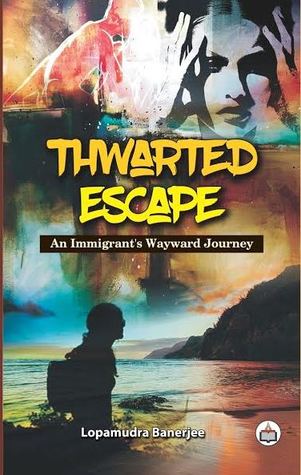
  • THWARTED ESCAPE: An Immigrant’s Wayward Journey by Lopamudra Banerjee – a stirring narrative

    THWARTED ESCAPE: An Immigrant’s Wayward Journey by Lopamudra Banerjee – a stirring narrative

    In her book, “The Art of Memoir,” Mary Karr recalls hearing novelist Don DeLillo once say that a fiction writer starts with meaning and then manufactures events to represent it, whereas a memoirist starts with events, then devises meaning from them.

    Lopamudra Banerjee does just that in her memoir “Thwarted Escape: An Immigrant’s Wayward Journey.” She takes us through a journey of achievements and sorrows while using words to make meaning of her spirituality, her femininity and her literary identity.

    Broken down into four volumes, the book is a collection of essays and articles, many of which were previously published in print, online anthologies and literary journals.

    Depending on which chapter you’re reading, you could say Banerjee is a memoirist, a creative writer, an essayist or a journalist. But no matter what label you choose for her writing, you will see Banerjee has major writing talent – the culmination of a passion that was borne at an early age when she considered words her playmates.

    “I have been in love with these moments of restlessness and release as these clusters have formed a pattern called words. I watched this written world of prose and verse, as with my hands, my body, I absorbed these nuances of creation,” she writes.

    Through the pages, Banerjee transitions from a small town girl in India who makes her way to the United States. She has traveled to many places throughout the US and in one chapter where she derives the book’s title, “Thwarted Escape,” she talks about her departure to Omaha, Nebraska, as in this stirring passage: “I am an ordinary, commonplace refugee in North America, and like many others of my ilk, have embedded myself in a family, far flung from what is called ‘original home.’ Like many others, I am striving to gain the status of the coveted Non-resident Indian, a legitimate work permit to survive in a distant land while my heart continues to ache with the desire to be rocked in the bosom of my mother and to revisit the havens of my childhood.”

    With the power of narrative in her life, Banerjee lives with the secret ambition to “get published” and to let the world read her stories. Thankfully, she has fulfilled her dream of compiling such a book and sharing with us her engaging and well-written stories of grief, death in her family, motherhood, and femininity.

    In a particularly moving section of the book, Banerjee introduces us to Taslima Nasrin, a Bangladeshi novelist and poet who has lived in exile since 1994 amid death threats for her outspoken feminist views and criticism of Islam. With admiration for Nasrin’s voice, Banerjee includes newspaper clippings (scans from the original print versions) of Nasrin and explains some of the abuse and hardship the activist has endured. As a graduate student of English literature, Banerjee harnesses Nasrin’s power and draws parallels to other literary greats.

    “I realize how [fusion_builder_container hundred_percent=”yes” overflow=”visible”][fusion_builder_row][fusion_builder_column type=”1_1″ background_position=”left top” background_color=”” border_size=”” border_color=”” border_style=”solid” spacing=”yes” background_image=”” background_repeat=”no-repeat” padding=”” margin_top=”0px” margin_bottom=”0px” class=”” id=”” animation_type=”” animation_speed=”0.3″ animation_direction=”left” hide_on_mobile=”no” center_content=”no” min_height=”none”][Virginia] Woolf, how Taslima [Nasrin], how Sylvia Plath, trapped and tangled in a women’s bodies, have suffered the heat and passion of their literary selves…”

    Banerjee ends the book with letters she wrote to her family and other people while she was pregnant and during other periods in her life. We readers are grateful Banerjee has found the courage and energy to publish all of these personal stories that are so moving, eloquently written, and significant in both her life and the lives of women.[/fusion_builder_column][/fusion_builder_row][/fusion_builder_container]