Tag: Goethe Awards

  • GOETHE Book Awards for post-1750s Historical Novels – a division of the 2020 CIBA Awards

    GOETHE Book Awards for post-1750s Historical Novels – a division of the 2020 CIBA Awards

    Post 1750s Historical Goethe Fiction AwardThe Goethe Book Awards recognize emerging new talent in post-1750s Historical Fiction. The Goethe Book Awards is a division of the Chanticleer International Book Awards (The CIBAs).


    The Goethe Book Awards competition is named for Johann Wolfgang von Goethe who was born at the dawn of the new era of enlightenment on August 28, 1749.

    Chanticleer International Book Awards is looking for the best books featuring Late Period Historical Fiction. Regency, Victorian,18th Century, 19th Century, 20th Century, World and other wars, history of non-western cultures, set after the 1750s. These books have advanced to the Premier Level of Achievement in the 2020 CIBAs.

    We have received a large number of Historical Fiction in the last years to the point that we need a new division! See Hemingway Awards for our new division!

    The 2020 GOETHE Book Awards First Place Category Winners and the GOETHE Grand Prize Winner were announced by Gregory Erich Phillips on Saturday, June 5, 2021 at the Hotel Bellwether and broadcast via ZOOM webinar and Facebook Live.

    NOTE: We received so many wonderful historical novels that we decided that another division was needed—the Hemingway Book Awards for 20-century Wartime Novels—to recognized these important works. If you entered the Goethe Book Awards with a wartime novel (WWI, WWII, Vietnam Conflict, etc), please check the Hemingway Book Awards post.

    It is our privilege and profound honor to announce the 1st in Category winners of the 2020 GOETHE Awards, a division of the 2020 CIBAs.

    This is the OFFICIAL 2020 LIST of the GOETHE BOOK AWARDS First Place Category Winners and the GOETHE Grand Prize Winner.

    Congratulations to all!
    Congratulations to the 2020 1st Place Winners in the GOETHE Book Awards! 

    • Linda Ulleseit – The Aloha Spirit     
    • Wendy Long Stanley – The Power to Deny       
    • Ben Wyckoff Shore – Terribilita      
    • Donna Scott – The London Monster   
    • Michelle Cameron – Beyond the Ghetto Gates    
    • Pamela Jonas – Beneath a Radiant Moon   
    • Dorothea Hubble Bonneau – Once in a Blood Moon  
    • Jule Selbo – Breaking Barriers: A Novel Based on the Life of Laura Bassi


        The Grand Prize Winner for the CIBA 2020 Goethe Awards is:

        Linda Ulleseit for

        The Aloha Spirit
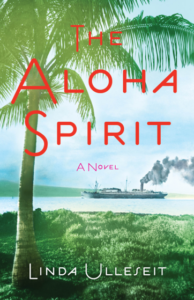
        Cover of The Aloha Spirit by Linda Ulleseit


        The 2021 GOETHE Book Awards winners will be announced at CAC22 on April 10, 2022. Save the date for CAC22, scheduled April 7-10, 2022, our 10 year Conference Anniversary!

        Submissions for the 2021 GOETHE Book Awards are open. Enter here!

        Don’t delay! Enter today! 

        A Note to ALL the WINNERS: The coveted CIBA Blue Ribbons will be mailed out starting in July. We will contact you with an email to verify your mailing address and other items. We thank you for your patience and understanding.
      • The 2020 Finalists for the GOETHE Book Awards for post-1750s Historical Fiction CIBAs

        The 2020 Finalists for the GOETHE Book Awards for post-1750s Historical Fiction CIBAs

        Post 1750s Historical Goethe Fiction AwardThe Goethe Book Awards recognize emerging new talent in post-1750s Historical Fiction. The Goethe Book Awards is a division of the Chanticleer International Book Awards (The CIBAs).


        The Goethe Book Awards competition is named for Johann Wolfgang von Goethe who was born at the dawn of the new era of enlightenment on August 28, 1749.

        Chanticleer International Book Awards is looking for the best books featuring Late Period Historical Fiction. Regency, Victorian,18th Century, 19th Century, 20th Century, World and other wars, history of non-western cultures, set after the 1750s, we will put them to the test and choose the best among them.

        These titles have moved forward in the judging rounds from the 2020 SHORT LIST to the SEMI-FINALIST POSITION and have now progressed to the 2020 FINALISTS.  

        The 2020 Finalists for the Goethe Book Awards

        Congratulations to these works that advanced to the Premier Finalists Level of the CIBA judging rounds:

        • Helena P. Schrader – Where Eagles Never Flew: A Battle of Britain Novel
        • Conor Bender – Jubilee
        • Linda Ulleseit – The Aloha Spirit
        • Eileen O’Finlan – Erin’s Children
        • Jon Duncan – Heart of the Few
        • Grahame Shannon – Bay of Devils
        • Leslie K. Barry – Newark Minutemen
        • Richard Alan Schwartz – Wind Chimes, War and Consequence A Novel of the Vietnam War Era
        • Liza Nash Taylor – Etiquette for Runaways 
        • Kari Bovee – Folly at the Fair
        • Betty Bolte – Becoming Lady Washington
        • J.L.Oakley – The Quisling Factor
        • Brigitte Goldstein – Babylon Laid Waste-A Journey in the Twilight of the Idols
        • Nancy H. Wynen – We Did What We Could
        • Gail Noble-Sanderson – The Lavender Bees of Meuse 
        • Michelle Cameron – Beyond the Ghetto Gates
        • Kathryn Gauci – The Poseidon Network
        • Dorothea Hubble Bonneau – Once in a Blood Moon
        • Pamela Jonas – Beneath a Radiant Moon
        • Donna Scott – The London Monster
        • Jule Selbo – Breaking Barriers: A Novel Based on the Life of Laura Bassi
        • Theo Czuk – Hastings Street: Boulevard of Blues
        • Ben Wyckoff Shore – Terribilita
        • Carmela Cattuti – Between the Cracks: one woman’s journey from Sicily to America
        • Wendy Long Stanley – The Power to Deny

        These titles are in the running for the First Place Winners of the 2020 Goethe  Book Awards for post-1750s Historical Fiction. 

          Good luck to all as your works move on to the next rounds of judging.


          The First Place Category Winners, along with the CIBA Division Grand Prize winners, will be selected from the 23 CIBA divisions Finalists. We will announce the 1st Place Category Winners and Grand Prize Division Winners the CIBAs Ceremonies June 5th, 2021 virtually (Free) and LIVE at the luxurious Hotel Bellwether in Bellingham, Wash.

          VCAC21 laurel wreath
          Register today!


          We are now accepting submissions into the 2021 Goethe Book Awards for post-1750s Historical Fiction. The deadline for submissions is July 30, 2021. The  2021 winners will be announced in April 2022.

          Please click here for more information.

          Don’t Delay! Enter Today! 

          As always, please do not hesitate to contact us with any questions, concerns, or suggestions at Info@ChantiReviews.com.


        • The 2020 GOETHE Book Awards for post 1750s Historical Fiction – the Semi-Finalists for the GOETHE Division of the 2020 CIBAs

          The 2020 GOETHE Book Awards for post 1750s Historical Fiction – the Semi-Finalists for the GOETHE Division of the 2020 CIBAs

          Post 1750s Historical Goethe Fiction AwardThe Goethe Book Awards recognize emerging new talent in post-1750s Historical Fiction. The Goethe Book Awards is a division of the Chanticleer International Book Awards (The CIBAs).


          The Goethe Book Awards competition is named for Johann Wolfgang von Goethe who was born at the dawn of the new era of enlightenment on August 28, 1749.

          Chanticleer International Book Awards is looking for the best books featuring Late Period Historical Fiction. Regency, Victorian,18th Century, 19th Century, 20th Century, World and other wars, history of non-western cultures, set after the 1750s, we will put them to the test and choose the best among them.

          These titles have moved forward in the judging rounds from the 2020 Goethe Book Awards LONG LIST to the SHORT LIST and have now progressed to the 2020 SEMI-FINALISTS.  

          The 2020 Semi-Finalists for the Goethe Book Awards

          • James Hockenberry – Send The Word
          • Helena P. Schrader – Where Eagles Never Flew: A Battle of Britain Novel
          • Conor Bender – Jubilee
          • Linda Ulleseit – The Aloha Spirit
          • Eileen O’Finlan – Erin’s Children
          • Jon Duncan – Heart of the Few
          • Grahame Shannon – Bay of Devils
          • Leslie K. Barry – Newark Minutemen
          • Richard Alan Schwartz – Wind Chimes, War and Consequence A Novel of the Vietnam War Era
          • Kari Bovee – Folly at the Fair
          • Betty Bolte – Becoming Lady Washington
          • Kit Sergeant – The Spark of Resistance: Women Spies in WWII
          • Jomo Merritt – Sons of a Mauffen King
          • J.L.Oakley – The Quisling Factor
          • Brigitte Goldstein – Babylon Laid Waste-A Journey in the Twilight of the Idols
          • D.V Chernov – Commissar
          • Gail Noble-Sanderson – The Lavender Bees of Meuse 
          • Michelle Cameron – Beyond the Ghetto Gates
          • Kathryn Gauci – The Poseidon Network
          • Dorothea Hubble Bonneau – Once in a Blood Moon
          • Nancy H. Wynen – We Did What We Could
          • Pamela Jonas – Beneath a Radiant Moon
          • John Hansen – Secrets of the Gros Ventre
          • Donna Scott – The London Monster
          • Jerena Tobiasen – The Crest, Book I of The Prophecy
          • Jule Selbo – Breaking Barriers: A Novel Based on the Life of Laura Bassi
          • Liza Nash Taylor – Etiquette For Runaways- A Novel
          • Theo Czuk – Hastings Street: Boulevard of Blues
          • Sandra Perez Gluschankoff – Thorns for Raisel
          • Ben Wyckoff Shore – Terribilita
          • Carmela Cattuti – Between the Cracks: one woman’s journey from Sicily to America
          • Lucinda Brant – Deadly Kin: A Georgian Historical Mystery
          • Wendy Long Stanley – The Power to Deny
          • David Selcer – The Old Stories, a.k.a Da Alt Geshikhtem
          • Pyram King – Destiny’s War – Part 1: Saladin’s Secret

          These titles are in the running for the Finalists of the 2020 Goethe  Book Awards for post-1750s Historical Fiction. 

          The Semi-Finalists’ works will compete for the Finalists positions, and then all Finalists will be announced at the VCAC21 ceremonies.

          The 22 divisions of the 2020 CIBAs’ Grand Prize Winners and the Five First Place Category Position award winners will be announced at the April 25th, 2021 Chanticleer International Book Awards Annual Awards Gala, which takes place at the Chanticleer Authors Conference that will be held in virtually Bellingham, Wash. 

            Good luck to all as your works move on to the next rounds of judging.

            Goethe Book Awards Semi-Finalist Badge

            The Semi-Finalists’ works will compete for the First Place Winner positions, and then all will be recognized in the evenings at VCAC21 April 22-24th from 6-8 p.m. PST.

            The First Place Category Winners, along with the CIBA Division Grand Prize winners, will be selected from the 23 CIBA divisions Finalists. We will announce the 1st Place Category Winners and Grand Prize Division Winners the CIBAs Ceremonies June 5th, 2021 virtually (Free) and LIVE at the luxurious Hotel Bellwether in Bellingham, Wash.

            VCAC21 laurel wreath
            Register today!


            We are now accepting submissions into the 2021 Goethe Book Awards for post-1750s Historical Fiction. The deadline for submissions is July 30, 2020. The  2021 winners will be announced in April 2022.

          • The 2020 GOETHE Book Awards for post 1750s Historical Fiction – the Short List – 2020 CIBAs

            The 2020 GOETHE Book Awards for post 1750s Historical Fiction – the Short List – 2020 CIBAs

            Post 1750s Historical Fiction AwardThe Goethe Book Awards recognize emerging new talent in post-1750s Historical Fiction. The Goethe Book Awards is a division of the Chanticleer International Book Awards (The CIBAs).


            The Goethe Book Awards competition is named for Johann Wolfgang von Goethe who was born at the dawn of the new era of enlightenment on August 28, 1749.

            Chanticleer International Book Awards is looking for the best books featuring Late Period Historical Fiction. Regency, Victorian,18th Century, 19th Century, 20th Century, World and other wars, history of non-western cultures, set after the 1750s, we will put them to the test and choose the best among them. The Short Listers’ works will compete for the Semi-Finalists positions. Semi-Finalists will be announced and recognized at the CAC21 banquet and ceremony. We will announce the 1st Place Category winners and Grand Prize Division Winners at the CIBAs Banquet and Ceremonies April 21-25th, 2021 at the luxurious Hotel Bellwether in Bellingham, Wash. at the 2021 Chanticleer Authors Conference–whether virtual, hybrid, or in-person.

            These titles have moved forward in the judging rounds from SLUSH pile to the 2020 Goethe Book Awards LONG LIST and have now progressed to the 2020 SHORTLIST.  


            The 2020 Shortlist for the Goethe Book Awards


            • James Hockenberry – Send The Word
            • Helena P. Schrader – Where Eagles Never Flew: A Battle of Britain Novel
            • Conor Bender – Jubilee
            • Linda Ulleseit – The Aloha Spirit
            • Eileen O’Finlan – Erin’s Children
            • Jon Duncan – Heart of the Few
            • Grahame Shannon – Bay of Devils
            • Leslie K. Barry – Newark Minutemen
            • T. Matt Ryan – One Hell of a Shipmate
            • Richard Alan Schwartz – Wind Chimes, War and Consequence A Novel of the Vietnam War Era
            • Kari Bovee – Folly at the Fair
            • James Padian – A Patriot’s Challenges
            • Betty Bolte – Becoming Lady Washington
            • Kit Sergeant – The Spark of Resistance: Women Spies in WWII
            • J.P. Kenna – The Anarchist Girl’s Confession
            • Jomo Merritt – Sons of a Mauffen King
            • J.L.Oakley – The Quisling Factor
            • Brigitte Goldstein – Babylon Laid Waste-A Journey in the Twilight of the Idols
            • D.V Chernov – Commissar
            • Gail Noble-Sanderson – The Lavender Bees of Meuse 
            • Michelle Cameron – Beyond the Ghetto Gates
            • Kathryn Gauci – The Poseidon Network
            • Dorothea Hubble Bonneau – Once in a Blood Moon
            • Nancy H. Wynen – We Did What We Could
            • Pamela Jonas – Beneath a Radiant Moon
            • John Hansen – Secrets of the Gros Ventre
            • Eileen Harrison Sanchez – Freedom Lessons – A Novel
            • Elizabeth St. Michel – Lord of the Wilderness
            • Donna Scott – The London Monster
            • Jerena Tobiasen – The Crest, Book I of The Prophecy
            • James Ross – Hunting Teddy Roosevelt
            • Jule Selbo – Breaking Barriers: A Novel Based on the Life of Laura Bassi
            • Linda Stewart Henley – Estelle: A Novel
            • Gregory Erich Phillips – Guilty as Angels
            • Vicky Oliver – Love and Suffrage in Manhattan
            • Roger Newman – Will O’ the Wisp: Madness, War and Recompense
            • Theo Czuk – Hastings Street: Boulevard Of Blues
            • Sandra Perez Gluschankoff – Thorns for Raisel
            • Ben Wyckoff Shore – Terribilita
            • Carmela Cattuti – Between the Cracks: one woman’s journey from Sicily to America
            • Wendy Long Stanley – The Power to Deny
            • David Selcer – The Old Stories, a.k.a Da Alt Geshikhtem
            • Pyram King – Destiny’s War – Part 1: Saladin’s Secret
            • Lucinda Brant – Deadly Kin: A Georgian Historical Mystery 
            • Cris Harding – Red Wing

            These titles are in the running for the Semi-Finalists of the 2020 Goethe  Book Awards for post-1750s Historical Fiction. 

            The 22 divisions of the 2020 CIBAs’ Grand Prize Winners and the Five First Place Category Position award winners will be announced at the April 25th, 2021 Chanticleer International Book Awards Annual Awards Gala, which takes place at the Chanticleer Authors Conference that will be held in virtually Bellingham, Wash. 

              Good luck to all as your works move on to the next rounds of judging.

              Goethe Book Awards Semi-Finalist Badge

              The ShortListers’ works will compete for the Semi-Finalists positions. Finalists will be selected from the Semi-Finalists, and then all Finalists will be recognized at the VCAC21 ceremonies. The First Place Category Winners, along with the CIBA Division Grand Prize winners, will be selected from the 22 CIBA divisions Finalists. We will announce the 1st Place Category Winners and Grand Prize Division Winners at the CIBAs Ceremonies April 21-25th, 2021 live at the luxurious Hotel Bellwether in Bellingham, Wash.


              We are now accepting submissions into the 2021 Goethe Book Awards for post-1750s Historical Fiction. The deadline for submissions is July 30, 2020. The  2021 winners will be announced in April 2022.

            • PECCADILLO at the PALACE: An Annie Oakley Mystery by Kari Bovée – Historical Thrillers, Women’s Historical Fiction, Biographical Fiction

              PECCADILLO at the PALACE: An Annie Oakley Mystery by Kari Bovée – Historical Thrillers, Women’s Historical Fiction, Biographical Fiction

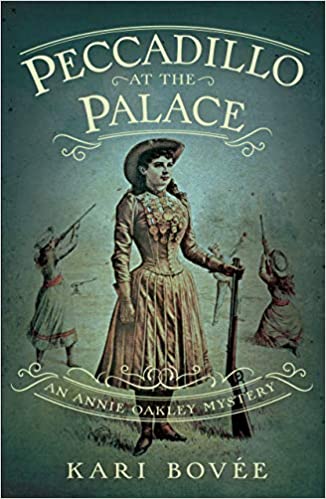
                Kari Bovée’s Peccadillo at the Palace, the second book in the Annie Oakley Mystery series, is a historical, mystery thriller extraordinaire. Fans of both genres will thrill at Bovée’s complex plot that keeps us guessing from its action-packed beginning to the satisfying reveal at the end.

                The book opens with the Honorable Colonel Buffalo Bill Cody’s Wild West Show to England on a voyage to perform for Queen Victoria. They are not on the high seas long, when Annie’s beloved horse, Buck, jumps overboard. Her husband and the Queen’s loyal servant, Mr. Bhakta, jump in to save the horse, or was Mr. Bhakta already dead before he reached the water? Thus, begins the mystery of who killed Mr. Bhakta, leaving all to wonder, is the Queen safe?

                Someone wanted the Queen’s man dead, and he is, but was it a matter of racism, intrigue, or an accident? Annie’s search for clues points her in several directions, but is it the doctor, or the woman dressed in rags with the posh accent, or the crass American businessman and his floozy wife? All have motive.  Even Annie’s husband has motive with his Irish background and ties to the Fenians and the Irish Republican Army (IRA).

                Annie rushes through her days, trying to find clues and care for her husband who fell ill on the voyage and isn’t recovering. Is her husband’s illness seasickness, flu, or something else? Her husband forbids her to search for clues, fearing that Annie will get herself in over her head, but “Little Miss Sure shot” has no fear – as long as she’s packing her pistols.

                Annie follows her leads from the ship, the State of Nebraska, to the show’s camp at the Earl’s Court, the market, and the Queen’s court. In a sea of suspects, everyone looks guilty. But, are Annie’s hunches always right?

                This wild romp through England’s royal court is sure to thrill readers as tantalizing clues lead us astray; even as the body count rises and suspects are murdered.

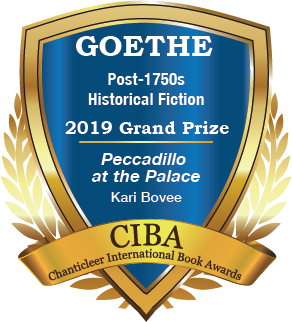
                Peccadillo at the Palace by Kari Bovée is a page-turner from beginning to end, so much so, that Bovée took home the Grand Prize in the CIBA 2019 GOETHE Awards for Historical Fiction. Readers will burn the midnight oil with this one. Highly recommended.

                A marvelous, riveting whodunit with a complicated hero in Annie Oakley at the helm. A perfect read for mystery lovers and one we love. Highly recommended.


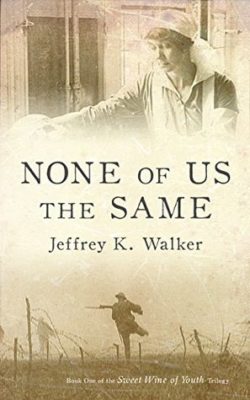
              • NONE OF US THE SAME by Jeffrey K. Walker – Literary, WWI, Friendship

                NONE OF US THE SAME by Jeffrey K. Walker – Literary, WWI, Friendship

                Five young friends from then-English Newfoundland and Ireland together join a regiment to serve in the war, as does a young nurse from Dublin. At first, a reader might be lulled into thinking this is a light-hearted Irish dialect-filled romp a la Finian’s Rainbow, but the novel takes us deep into the lives of its characters as they serve in the bloody trenches, convalesce, and try to live normal lives despite the physical and emotional damages they suffered.
                Diedre, the tough but emotionally scarred nurse, Jack, who left “bits” of him on the battlefield, Will, with his invisible yet no-less devastating wounds—these are a few of the complex yet wholly identifiable characters who become alive through this novel’s pages. These are no simplistic people. Their humanness, their frailties confronted by the awfulness of the war, gives the book its special heart.

                As much as we live through the late 1910s and early 1920s, there are few strictly historical passages. The characters live in those times, not declare them. There are no “war is over” scenes, only the heartbreaking aftermath of the war’s end on the characters. Yet, the book ends with the central characters’ futures well in hand, moving through the post-war era with the 1920s, Prohibition, and the foreshadowing of “the Troubles” beginning to play a part in all their lives.

                Above all, the book is about enduring friendships and the nature of being human. The author compels us with his characters and how they rally together in times of crises and stand up for one another when the going gets tough. There is no sugar-coating what happens to them, and yet their long-standing bonds are what pulls them through for readers to form a special connection with one and all of them. The reader may be better for having met them all. Certainly, None of Us the Same will stay with the reader long after the book is put down.

                None of Us the Same is the first of three novels in the series entitled “Sweet Wine of Youth,” and won First Place in the CIBA 2018 GOETHE Awards for Historical Fiction.


              • The MUSE of FIRE by Carol M. Cram – Historical Fiction, Historical Romance, Theater Life

                The MUSE of FIRE by Carol M. Cram – Historical Fiction, Historical Romance, Theater Life

                Grace Johnson dreams of a life bigger than the one expected of a woman in the early nineteenth century. At twenty-two, she should be hoping for marriage and a home of her own. Instead, after a childhood spent privately acting for her mother, Grace secretly longs for a life in the spotlight, a place on a London stage, embracing the roles of Shakespeare’s greatest heroines. Alas, she fears her dream will never come true. Not only is Grace overly tall, clumsy, and what some would call plain, her father, a harsh man, blames her for her mother’s death. When his temper and drunkenness cause him to beat Grace, she finds herself alone on the dark streets of London’s theatre district, where a young man named Ned Plantagenet rescues her.

                Ned, a stage manager at the Theatre Royal in Covent Garden, gives Grace a place to stay, and as their friendship grows, he takes her to a play, a rare event for the woman who has only seen one other play years ago. When she fills in for an absent chorus girl one night, she knows this is where she belongs and defies her father by begging her estranged aunt for a place to stay. However, the more time spent with her newfound theatre family, the more Grace realizes her mother and aunt had a strange connection to the cast and crew. Questions emerge. In this world where women’s dreams have little agency, Grace must decide just how far she is willing to go to build a new life for herself.

                Perhaps the most striking trait of Grace Johnson is her willingness to accept the stigma associated with acting in the early 1800s. Though better than in centuries past, the theatre atmosphere was considered morally corrupt for women, even married ones. This world of impassioned men playing daring roles sure to seduce even the most hard-hearted of women often led to unwanted pregnancies and homeless girls, and Grace isn’t immune to the charms of one such rogue. Grace is well aware of what society might say about her, but that won’t stop her now. She makes her way on her own terms, doing what she must to continue acting even following her father’s disownment and her somewhat forced marriage. When her first acting performance flops, she licks her wounds then forges ahead.

                This optimistic-survivor attitude isn’t particular to Grace alone, though. Both Mr. John Kemble and Ned exhibit the same trait. Mr. Kemble, renowned actor and owner of the Theatre Royal, knows he must find a way forward when fire destroys his precious theatre. Kemble begs and borrows to finance a new building, one that’s larger than any other theatre in England and later stands firm against the raging crowds rioting in every theatre. Ned understands that ‘he can’t change what [he] can’t change’ and refuses to mourn his lowly birth in the Foundling Hospital. This broad-shouldered, gentle giant rose from an orphanage to become the right-hand man of Kemble, a staple in the wings of this successful company. He is like everyone’s big brother, protective and watchful, a “white knight,” showing his bravery during the OP Riots and his pure heart caring for Grace in her hour of need.

                This sprawling historical fiction takes the reader spinning through time with a cast of real-life stars of the London theatre in the early nineteenth century. The fictional characters interweave through the true story of two significant fires in the theatre district and the “Old Price” Riots, which disrupted theatre-goers and actors for months. Readers will see what life was like for the actors of the day as well as the average patron.

                The Muse of Fire won 1st Place in the CIBA 2018 GOETHE Awards for Late Historical Fiction.

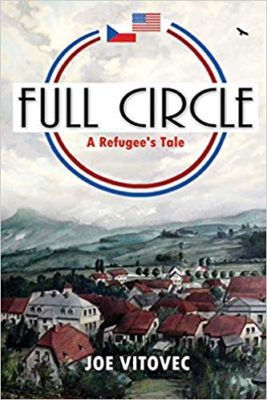
              • FULL CIRCLE: A Refugee’s Tale by Joe Vitovec – WWII Historical Fiction, Literary Fiction, European WWII Refugee Historical Fiction

                FULL CIRCLE: A Refugee’s Tale by Joe Vitovec – WWII Historical Fiction, Literary Fiction, European WWII Refugee Historical Fiction

                In the prologue of this lucid and gripping novel, Joe Vitovec notes that although Full Circle: A Refugee’s Tale is fiction, he “attempts to acquaint the reader with some of the locales and events that made this period so memorable, and leave a record for those who may one day wish to revisit the past.” He has done an extraordinary job with this literary recreation of the experiences of the “displaced persons” following World War II.

                Vitovec takes the reader on a journey that begins with a boy in 1938 in a small town in Czechoslovakia and ends some fifty years later with that boy, now a middle-aged man, returning to his childhood home. What transpires in the intervening years is the heart of this politically and emotionally complex story, one with which many will be able to relate, while others will learn from and perhaps consider the current global refugee crisis with fresh insights and compassion. It is not a tale any reader will likely forget.

                Jan Neuman is only eight when the men of his village leave for a military encampment and prepare to fight the Nazis who have invaded their lands. They never get the chance. As decreed by the Munich Conference, this area of Czechoslovakia is handed over to Hitler and made a German protectorate. The townspeople feel demoralized and live in constant terror that the Germans will arrest them for showing the slightest loyalty to their ousted leader or native culture. They endure degradations, subsisting on soup bones and potatoes, and Jan’s father, the town’s tailor, is made to sew Nazi uniforms.

                Years pass, and finally, the Allied invasion buoys their spirits and hopes. One miraculous day, there are American soldiers in town, happy to share cigarettes and peanut butter, and make friends with the locals. Jan, a teenager, views the Americans as “bordering on godlike,” as does everyone in the village. This euphoric time is short-lived, however, with the departure of the liberating soldiers and arrival of the Russians, followed by a communist coup. The communists are eager to make arrests, and the townspeople become fearful and distrustful of one another.

                As a student who works on a political newspaper, Jan is brought to the communists’ attention and will likely be arrested. When he hears of a resistance army being formed elsewhere, he stealthily leaves town with his friends. However, just as their fathers were denied the chance to fight, Jan and his friends discover that the resistance military base is in fact a refugee camp in Regensburg. Although it’s technically an American camp, it is run by Germans. He and his friends are told, “As refugees, you have no citizenship status, no rights.” Conditions are harsh, the camp overcrowded with Poles, Russians, Ukrainians, and Czechs. Morale is exceedingly low as people wait to see where they’ll be sent next. Although everyone wants to go to America, there are no fast or direct routes. Indeed, Jan’s refugee life has just begun.

                Like so many others, Jan must attempt to rebuild his life again and again. Over the next two years, he will travel from camp to camp, make an ill attempt to join the French Foreign Legion, experience a devastating low outside the sewers of Paris, fall in love, and finally sail to America where his troubles are far from over.

                Vitovec delivers a riveting story in beautiful and poignant prose, reminding us that the impact of war can be total, even for those who never set foot on a battlefield. Political losses hurt people deeply, but the loss of sense of self is endlessly tragic. Displacement is not just a geographic issue, but a psychological one. How much of our identity is built on where we are from? Who are we if we belong to no country? Imagine, if you can, owning nothing but memories, memories of a time and place, of a people who used to belong to a country and spoke its language. Imagine every identifying detail scrubbed from you, the only thing that motivates you is the instinct to stay alive. For years, the existence of the displaced boiled down to just that – a place to lay their heads at night, bread to keep their stomachs from aching, and perhaps the tiniest glimmer of hope that they were y headed somewhere that wasn’t yet another refugee camp, a place they would one day call home.

                A book for political leaders, teachers, students, and anyone with a desire to not repeat the past. It’s a book that serves to remind us of what we have and what can be taken from us at a moment’s notice.

                Full Circle, A Refugee’s Tale by Joseph Vitovec won First in Category in the CIBAs 2018 Goethe Awards for Late Historical Fiction.


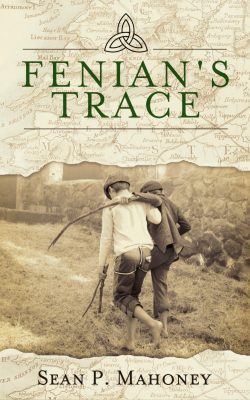
              • FENIAN’S TRACE by Sean P. Mahoney – Historical Fiction, British & Irish Literary Fiction, Irish Historical Fiction

                FENIAN’S TRACE by Sean P. Mahoney – Historical Fiction, British & Irish Literary Fiction, Irish Historical Fiction

                Rory McCabe and Conor O’Neill are hard-working 12-year-olds, whose exploits and progress are narrated by the namesake of Clancy’s Pub who’s taken a liking to them. At times, he rewards the boys’ efforts with tales of their shared Irish heritage, its heroes and its glories. The boys have very different personalities, as Clancy discerns from their reactions to his lore. Rory is outraged as he hears of Ireland’s treatment by the British, while Conor accepts the information more quietly, studiously.

                The two boys will soon meet a beautiful girl, Maria, the daughter of a well-to-do neighbor secretly aligned with a revolutionary resistance movement. Both will fall in love, but of the two, Rory will be the more open about his interest, while Conor will hold back, respectful but clearly smitten.

                When the deep divide between Ireland and its oppressors begins to heat up, the boys, older now and more independent, again respond differently. Rory wants to join in and even die, if need be, for freedom, while Conor takes a more practical path. Then circumstances force both of them to the test, to demonstrate their deepest loyalties.

                Author Sean P. Mahoney has won a prestigious Nicholl Fellowship for his screenplay version of Fenian’s Trace, which he subsequently adapted to the novelThe story focuses on the Easter Rising of 1916, when Irish patriots rose up, incensed by fighting alongside the British in World War I, while Britain continued the suppression of Irish rights. It is into this hotbed of revolutionary fervor that Rory and Conor, along with many others, are swept up.

                Mahoney peppers his narrative with atmospheric touches, including many Irish words and speech cadences (captured wonderfully in the audiobook narration of Liam Carney) along with the fabled legacy of Fenian’s Trace, a patriot’s gravesite. It is on those grounds that the boys establish their chosen fortress, with significant consequences.

                This wide-ranging panorama is a rich mix of folklore and fact, heroism during warfare, politics, and a star-crossed youthful love affair that will take on increasingly deeper meaning and, in the end, call for the ultimate sacrifice. Fenian’s Trace will appeal to readers across several genres, and as one might expect from Mahoney’s success in screenwriting, readers will delight in this colorful tale that begs for a cinematic version.

                Fenian’s Trace won 1st Place in the 2017 Goethe Awards for Historical Fiction (post-1750s).


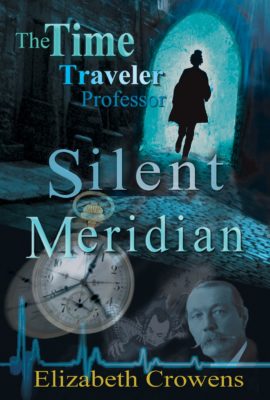
              • The TIME TRAVELER PROFESSOR, Book One: SILENT MERIDIAN by Elizabeth Crowens – Steampunk, Sherlockian, Time Travel

                The TIME TRAVELER PROFESSOR, Book One: SILENT MERIDIAN by Elizabeth Crowens – Steampunk, Sherlockian, Time Travel

                A budding concert pianist delves into the realms of spiritism, sexuality, and scary foreshadowing through his time travel adventures in Elizabeth Crowens’ steampunk novel, Silent Meridian.

                John Patrick Scott, a conservatory student, meets with Arthur Conan Doyle in Edinburgh, Scotland under unusual circumstances because of an elusive and mysterious red book. Arthur, lacking inspiration and tired of his Holmes character, covertly employs John as a ghostwriter. The two also indulge in the transmigration of souls and time travel. The latter topic is of high interest to the young aspiring musician since he has already accrued a handful of time-travel experiences via a mechanism of his creation. Although Arthur introduces John to nightly practices of communicating telepathically, John doesn’t include the beloved author in his time-traveling adventures until years later.

                John’s time-traveling skills sharpen to the point that he no longer needs his device and uses his grandfather’s timepiece instead. He becomes particularly fixed on exploring his past, especially his school days at the Underground University; he includes Wendell Mackenzie, his old schoolmate, on his adventures—some of which John escapes just in the nick of time. Over time, John finds it difficult to distinguish between time travel and dreams and seeks the help of Sigmund Freud and Carl Jung. His adventures take a dark turn when they predict an impending war.

                Sherlock Holmes’ enthusiast, Elizabeth Crowens, spins a wild tale riddled with glimpses of stories and themes from the early 20th century. Crowens’ quirky narrative, which covers sixteen years, could easily befit behind-the-scenes to John’s ghostwriting connections to Doyle’s published works: The Man with the Twisted Lip, The Adventure of Charles Augustus Milverton, and The Adventure of the Greek Interpreter, to name a few.

                Scenes regularly flip from John’s music studies and his time-travel quests, and are heavily punctuated with references to prominent historical figures and their thematic connections of the era, such as H.G. Wells, J.M. Barrie, Jules Verne (fantasy and sci-fi); Sigmund Freud, Carl Jung (psychology); and Aleister Crowley, Theodore Reuss (metaphysical). While sexual identity plays a close second to the last parenthesized theme scenes, providing only innuendos. John continuously processes his particular leanings, weighing his feelings as a woman in some of his time-travel ventures and amid affairs against Doyle’s and Wells’ free-love beliefs.

                Crowens balances nonfiction with fiction by incorporating memorable characters, such as Whit, John’s annoying tutor, and Finn (who John dubs Sherlock), John’s “Jiminy Cricket” guide who is only visible to John and comes and goes as he pleases. Sure to be a new favorite for Sherlock Holmes’ aficionados, Silent Meridian’s cliff-hanging closure is a perfect segue to the second book in Crowens’ The Time Traveler Professor series, A Pocketful of Lodestones.