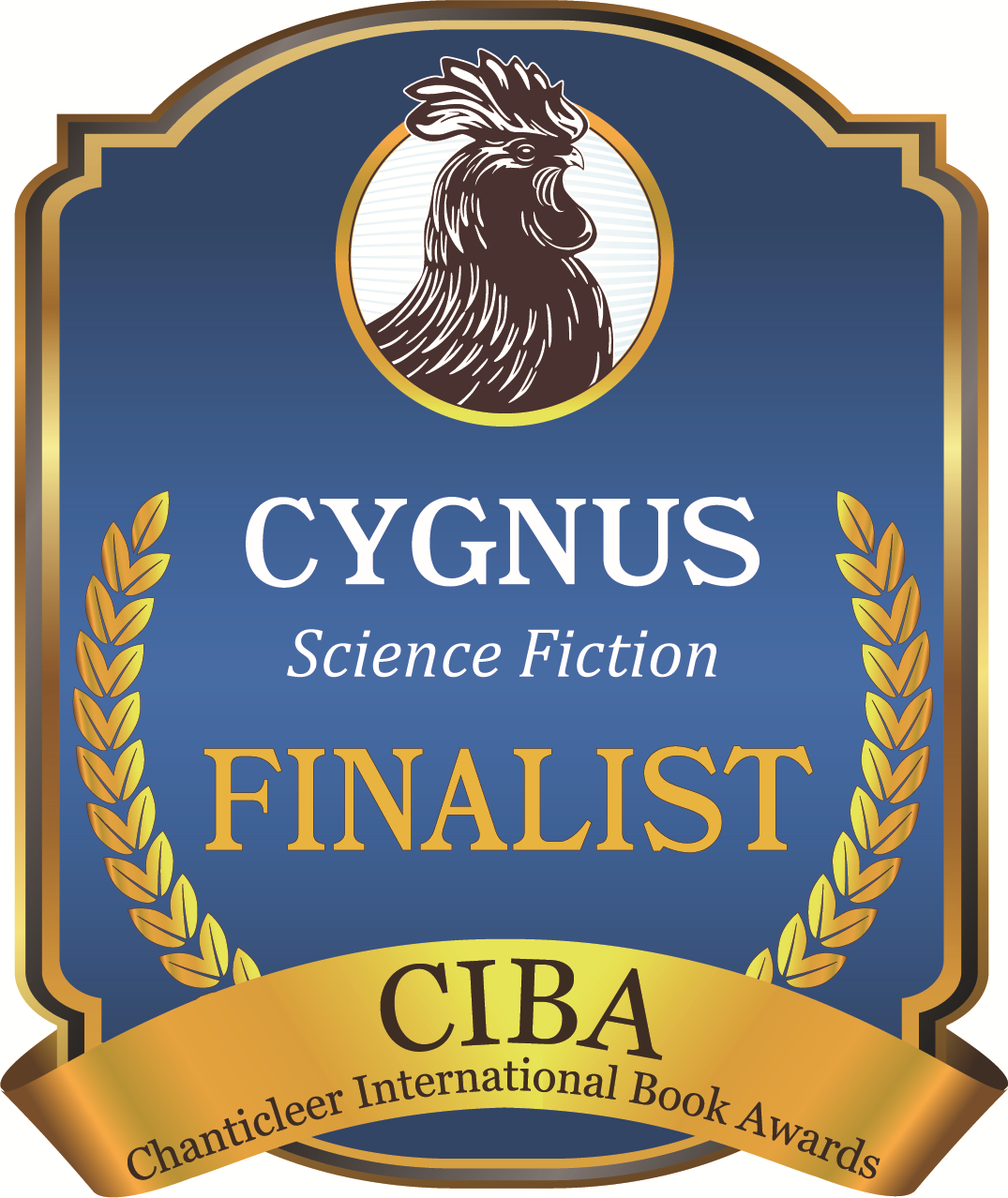
The Cygnus Book Awards recognize emerging new talent and outstanding works in the genre of Science Fiction, Steampunk, Alternative History, and Speculative Fiction. The Cygnus Awards is a genre division of Chanticleer International Book Awards and Novel Competitions (The CIBAs).
Chanticleer International Book Awards is looking for the best books featuring space, time travel, life on other planets, parallel universes, alternate reality, and all the science, technology, major social or environmental changes of the future that author imaginations can dream up for the CYGNUS Book Awards division. Hard Science Fiction, Soft Science Fiction, Apocalyptic Fiction, Cyberpunk, Time Travel, Genetic Modification, Aliens, Super Humans, Interplanetary Travel, Climate-Fiction, and Settlers on the Galactic Frontier, Dystopian, our judges from across North America and the U.K. will put them to the test and choose the best among them.
The 2021 CYGNUS Book Awards First Place Category Winners and the CYGNUS Grand Prize Winner were announced by Wendy Kendall on Saturday, June 25, 2022 at the Hotel Bellwether and broadcast via ZOOM webinar.
This is the OFFICIAL 2021 LIST of the CYGNUS BOOK AWARDS First Place Category Winners and the CYGNUS Grand Prize Winner.
J.W. Zarek – The Devil Pulls the Strings
Sarah Lahey – Nostalgia Is Heartless, Book Two
Akosua Sankofa – Monmouth Deep
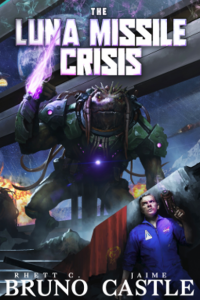
Rhett C. Bruno – Vicarious
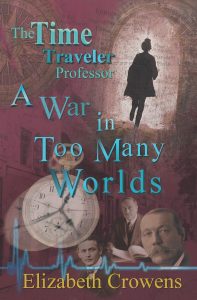
Elizabeth Crowens – A War in Too Many Worlds
Steven Seril – The Destroyer of Worlds: ‘An Answer to Every Question’
Charlene Newcomb – Echoes of the Storm
The Grand Prize Winner for the CIBA 2021 CYGNUS Awards is:
A War in Too Many Worlds
By Elizabeth Crowens
PROMOTING OUR AUTHORS!
Attn CIBA Winners! More goodies and prizes will be coming your way along with promotion in our magazine, website, and advertisements in Chanticleer Int’l Book Awards long-tail marketing strategy. Welcome to the CIBA Hall of Fame for Award Winners.
This post has been posted on the Chanticleer Facebook Page. We try to tag all authors listed here in the FB post. However, for FB to allow us to tag an author, that author must LIKE our page and Follow Chanticleer Reviews. FB rules — not ours.
Additionally, we also post on Twitter. Chanticleer Twitter’s handle is @ChantiReviews
Orclick hereto go directly to Chanticleer’s Twitter feed.
The 2022 CYGNUS Book Awards winners will be announced at CAC23 on April 29, 2023. Save the date for CAC23, scheduled April 27-30, 2023, our 10 year Conference Anniversary!
Submissions for the 2022 CYGNUS Book Awards are open until the end of June. Enter here!
A Note to ALL the WINNERS: The coveted CIBA Blue Ribbons will be mailed out starting in August. We will contact you with an email to verify your mailing address and other items. We thank you for your patience and understanding.
A Huge Congratulations to all of the Chanticleer Int’l Book Awards (CIBAs) Finalists!
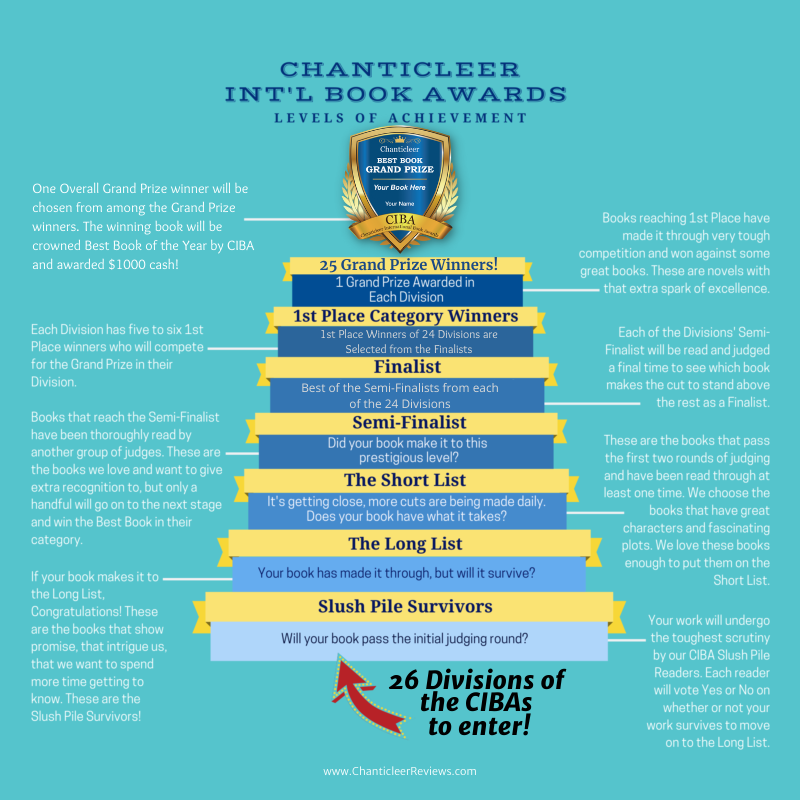
Every tier of the CIBAs is an important one, though few manage to rise this far in the ranks.
For our Shorts and Series Authors, this post has links to all of the Finalist Awards for the 3 CIBA Division Lists we have for Collected Shorts, Individual Shorts, and Series. We will have a separate post for Fiction and Non-Fiction.
All Finalists in attendance will be recognized at the Chanticleer Authors Conference, and we will announce the Winners at the CIBAs Ceremonies on Saturday, June 25th at the Chanticleer Banquet. We can’t express how excited we are to be able to do this in person with our fully vaccinated and boosted staff in a healthy metro area.
Now let’s take a step back and look at where we came from to make this happen.
The remaining tiers are the First Place Winner, the Grand Prize Winners, and finally, the coveted Overall Grand Prize Winners. The Overall Grand Prize Winner takes home the $1000 and more! See the Book Award details here.
Now, presenting the links to the Non-Fiction Awards Finalists
We have badges available starting with the Short List. If you need a digital badge reflecting your tier level, please email info@ChantiReviews.com with your division and rank, and we will send you one as soon as possible.
The 10th Anniversary Chanticleer Authors Conference is June 23-26, 2022
Make sure your Award gets the attention it deserves on Goodreads.com
In the Librarian Manual on Goodreads, you can go to your Book Edit Page — Literary Awards.
You want to list the Award for Chanticleer International Book Awards (CIBA) Winners, and be sure to include the year and what place you received. For example:
The year Long List, Short List, Semi-Finalist, or Finalist.
Note from Goodreads: “To add a new award or edit an existing award, you’ll need help from one of our volunteer librarians or a staff member.” For assistance, post in the Goodreads Librarians Group.
Always double check that you’ve written everything correctly before posting it. The search function for Awards on Goodreads is both case and punctuation sensitive.
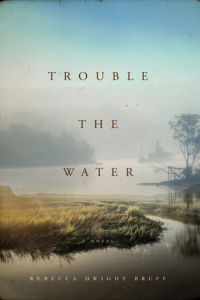
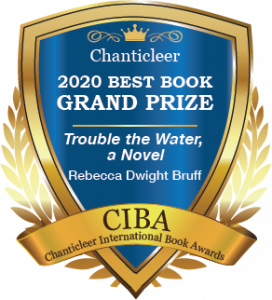
The Overall Grand Prize Winner for the 2020 CIBAs was Rebeca Dwight Bruff’s book Trouble the Water
This year we introduced the Non-Fiction Division for Military and Front Line Book Awards. These books focus on Narrative Non-Fiction that highlights the lives of service members, medical workers, and generally those who engage in public service. This is a division we’ve been waiting to launch for years, and we felt this was the year to make it happen. While we still are updating our site for this division, all 24 of our other CIBAs are now accepting entries for 2022.
Remember, you don’t have to be present to win, but it sure is a lot more fun! The CIBAs Ceremonies will also be livestreamed for those who can’t attend in person. Information about how to watch will be sent out by the week of the Conference to all finalists.
The esteemed WRITER Magazine (founded in 1887) has repeatedly recognized the Chanticleer Authors Conference as one of the best conferences to attend and participate in for North America.
Featuring: International Best Selling Author Cathy Ace along with experts in the business and marketing and promotion for authors from Kickstarter to Hindenburg.
The Cygnus Book Awards recognize emerging new talent and outstanding works in the genre of Science Fiction, Steampunk, Alternative History, and Speculative Fiction. The Cygnus Awards is a genre division of Chanticleer International Book Awards and Novel Competitions (The CIBAs).
Chanticleer International Book Awards is looking for the best books featuring space, time travel, life on other planets, parallel universes, alternate reality, and all the science, technology, major social or environmental changes of the future that author imaginations can dream up for the CYGNUS Book Awards division. Hard Science Fiction, Soft Science Fiction, Apocalyptic Fiction, Cyberpunk, Time Travel, Genetic Modification, Aliens, Super Humans, Interplanetary Travel, Climate -Fiction, and Settlers on the Galactic Frontier, Dystopian, our judges from across North America and the U.K. will put them to the test and choose the best among them.
These titles have moved forward in the judging rounds from all 2021 CYGNUS Science Fiction Semi-Finalists to the 2021 Cygnus Book Awards FINALISTS. All FINALISTS will be recognized at the Chanticleer Authors Conference. First Place and Grand Prize Winners will be chosen from the 24 Division Categories.
Congratulations to the 2021 CYGNUS Book Awards for Science Fiction Semi-Finalists!
J.W. Zarek –The Devil Pulls the Strings
Sarah Lahey –Nostalgia Is Heartless, Book Two
Spaulding Taylor –Last Star Standing
Akosua Sankofa –Monmouth Deep
Rhett C. Bruno –Vicarious
Peter Greene –Light of Ganymede
Kristie Clark –Dragon Gold
Charlene Newcomb – Echoes of the Storm
D.H. Ford – Cosmic Swap
William M. Hayes –Save Him
William X. Adams –Alien Dream Machine
PA Vasey –Trinity Evolution
Daniel C. McWhorter –Revival: The Gaia Origin, Book Two
Jenn Lees –Restoring Time: Community Chronicles Book 4
William X. Adams –Alien Panic
Elizabeth Crowens –A War in Too Many Worlds
Sandra J. Jackson –Catching Butterflies
Dana Claire –The Connection
Gina Detwiler –Forgiven
Sam Stea –The Edge of Elsewhere
Steven Seril –The Destroyer of Worlds: ‘An Answer to Every Question’
We will announce the 1st Place Category winners and Grand Prize Division Winners at the CIBAs Banquet and Ceremony on Saturday, June 25th, 2022 at the luxurious Hotel Bellwether in Bellingham, Wash. sponsored by the 2022Chanticleer Authors Conference.
These titles arein the runningfor the FIRST PLACE WINNERS positions of the 2021 Cygnus Book Awards novel competition for Science Fiction!
Good luck to all as your works compete on the next rounds of judging.
The next round of judging will decide which books move on to the Finalist positions for the 2021 CYGNUS Book Awards for Science Fiction novels.
PROMOTING OUR AUTHORS!
This post has been posted on the Chanticleer Facebook Page. We try to tag all authors listed here in the FB post. However, for FB to allow us to tag an author, that author must LIKE our page and Follow Chanticleer Reviews. FB rules — not ours.
FLEXIBLE REGISTRATIONS ARE AVAILABLE for these challenging times.
Seating is Limited. The esteemed WRITER Magazine (founded in 1887) has repeatedly recognized the Chanticleer Authors Conference as one of the best conferences to attend and participate in for North America.
The Cygnus Book Awards recognize emerging new talent and outstanding works in the genre of Science Fiction, Steampunk, Alternative History, and Speculative Fiction. The Cygnus Book Awards is a genre division of Chanticleer International Book Awards and Novel Competitions (the CIBAs).
Chanticleer International Book Awards is looking for the best books featuring space, time travel, life on other planets, parallel universes, alternate reality, and all the science, technology, major social or environmental changes of the future that author imaginations can dream up for the CYGNUS Book Awards for Science Fiction.
Hard Science Fiction, Soft Science Fiction, Apocalyptic Fiction, Cyberpunk, Time Travel, Genetic Modification, Aliens, Super Humans, Interplanetary Travel, Climate Fiction (Cli-Fi), and Settlers on the Galactic Frontier, Dystopian, our judges from across North America and the U.K. will put them to the test and choose the best among them.
These titles have moved forward in the judging rounds from all 2021 CYGNUS Science Fiction Long List to the 2021 Cygnus Book Awards SHORT LIST. These entries are now in competition for 2021 Cygnus Semi-Finalists. FINALISTS will be announced and recognized at the Chanticleer Authors Conference (CAC22).
The 2021 CYGNUS FINALISTS will be selected from the CYGNUS Semi-Finalists.
The First Place Category Winners, along with the CIBA Division Grand Prize winners, will be selected from the 24 CIBA divisions’ Finalists.
We will announce the 1st Place Category winners and Grand Prize Division Winners at the CIBAs Banquet and Ceremony on Saturday, June 25th, 2022 at the luxurious Hotel Bellwether in Bellingham, Wash. sponsored by the 2022 Chanticleer Authors Conference.
These titles are in the running for the SEMI-FINALS of the 2021 Cygnus Book Awards novel competition for Science Fiction!
Join us in cheering on the following authors and their works!
J.W. Zarek –The Devil Pulls the Strings
Sarah Lahey –Nostalgia Is Heartless, Book Two
Joe Butler –Of All Possibilities
Michael Hicks Thompson –Clouds Above
Spaulding Taylor –Last Star Standing
Dale Renton –DART
S. W. Lawrence, MD –Earth Dragon
Max Mason –Novastrom: Adventures from the Zrax Wars
Mark D. Owen –Impact
Steven Seril –The Destroyer of Worlds: ‘An Answer to Every Question’
Akosua Sankofa –Monmouth Deep
John Teton –The Book of Geezer
Gary Clark –The Given
Rhett C. Bruno –Vicarious
Timothy S. Johnston –Fatal Depth
Peter Greene –Light of Ganymede
Kristie Clark – Dragon Gold
Dimple Patel Desai –The Lambda Factor
John J Spearman –Pike’s Potential
Charlene Newcomb –Echoes of the Storm
D.H. Ford –Cosmic Swap
William M. Hayes –Save Him
William X. Adams –Alien Dream Machine
Michael J Metroke –The Masada Affair
PA Vasey –Trinity Evolution
Daniel C. McWhorter –Revival: The Gaia Origin, Book Two
Robert C Littlewood –Deviance
Jenn Lees –Restoring Time: Community Chronicles Book 4
Bernie Koenig –B.R.A.I.N.
Daniele Kasper –Cut Her Out In Little Stars
William X. Adams –Alien Panic
Elizabeth Crowens –A War in Too Many Worlds
Sandra J. Jackson –Catching Butterflies
Dana Claire –The Connection
Gina Detwiler –Forgiven
Sam Stea –The Edge of Elsewhere
Good luck to all as your works move on the next rounds of judging.
PROMOTING OUR AUTHORS!
This post has been posted on the Chanticleer Facebook Page. We try to tag all authors listed here in the FB post. However, for FB to allow us to tag an author, that author must LIKE our page and Follow Chanticleer Reviews. FB rules — not ours.
FLEXIBLE REGISTRATIONS ARE AVAILABLE for these challenging times.
Seating is Limited. The esteemed WRITER Magazine (founded in 1887) has repeatedly recognized the Chanticleer Authors Conference as one of the best conferences to attend and participate in for North America.
The Somerset Awards: Understanding Literary Fiction
Ah yes, literary fiction, often thought of as the highest form of writing. If only people could define exactly what it means.
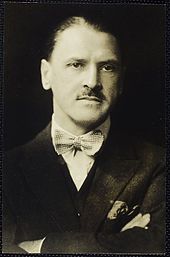
Here are a few of Somerset Maugham’s work that typify literary fiction:
Of Human Bondage
The Razor’s Edge
The Moon and Sixpence
And far too many to list here.
Let’s start with some writing tips from Somerset Maugham himself.
There are three rules for writing a novel. Unfortunately, no one knows what they are.
Every production of an artist should be the expression of an adventure of his soul.
I always find it more difficult to say the things I mean than the things I don’t.
The fact that a great many people believe something is no guarantee of its truth.
To acquire the habit of reading is to construct for yourself a refuge from almost all the miseries of life.
Impropriety is the soul of wit.
When I read a book I seem to read it with my eyes only, but now and then I come across a passage, perhaps only a phrase, which has a meaning for me, and it becomes part of me.
We do not write because we want to; we write because we have to.
I write only when inspiration strikes. Fortunately it strikes every morning at nine o’clock sharp.
If you can tell stories, create characters, devise incidents, and have sincerity and passion, it doesn’t matter a damn how you write.
What a start! We still need to figure out this Literary Fiction business though. Before we dive into that, if you want to read more about Somerset Maugham, consider looking out our previous spotlight here where we discuss him at length!
To read more about the time he wrote in, click here.
So What is Literary Fiction?
The easiest way to attempt to answer this question is to start with what Literary Fiction is being defined in opposition to. Literary Fiction is not Genre Fiction.
So what’s Genre Fiction?
Genre Fiction is written for people to enjoy it generally. It often follows a formula that uses conventional storytelling. The stories are meant to entertain, are plot driven, and they usually have a happy ending. As a result, there’s almost never a question of how to market genre fiction, making it easier to sell.
So, if we take the opposite of all those and apply them to literary fiction, what do we get?
It doesn’t follow a formula
Uses unconventional storytelling
Examines what it means to be human
It can be difficult to read
Character focused (not plot)
Endings vary or can even be uncertain
LIterary Fiction isn’t an exact science
That’s a tough sell! Of course, not all of these elements need to apply
Many literary fiction books are the kinds that stay with us for years after we read them. Chances are the longtime favorite that changed your life is a literary fiction book, or at least possesses some elements of it.
Here’s some contemporary Literary Fiction you may have heard of:
The term “literary fiction” is controversial and for good reason. As more “literary” writers venture into genre fiction, the lines of distinction have blurred. Sometimes, it’s not always clear. Perhaps, it is genre fiction that’s just pushing its own boundaries.
It’s clear that Literary Fiction is a complex genre, worthy of being written and read. We’re happy to say that we’ve done our fair share here at Chanticleer! Check it out below!
HARD CIDER By Barbara Stark-Nemon Grand Prize Winner in Somerset Awards
Abbie Rose Stone is a woman determined to follow her newly discovered dream of producing her own craft hard apple cider while navigating the ups and downs of family life with her grown sons and husband.
Abbie Rose knows how to deal with adversity, and dives headfirst into this new chapter of her life with energy and passion. She describes her early adulthood years of infertility struggles and the hardscrabble way she built her young family through invasive medical procedures, a surrogate attempt, and adoption barriers.
MARTHA By Maggie St. Claire First Place Winner in Somerset Awards
In the unique and compelling voice of an aging woman teetering on the edge of financial ruin, Maggie St. Claire’sdebut novel,Martha,takes the reader from affluent residential areas of Los Angeles to its urban streets of despair, shadowing a 71-year-old, retired bank teller as she comes to grips with the challenges and adversities that threaten her existence.
This is the story of Martha Moore, many years divorced, estranged from her only child, and living a lie, as she enters her golden years. The most important things in her life, outside her pride in her desirable Hancock Park bungalow, are her book club friends. She attends their meetings dressed in her finest, projecting what she hopes is the image of a well-educated, well-to-do, Los Angeles dowager. The three wealthy women who comprise the remainder of the group are her best, perhaps only friends, and sometimes that’s a stretch.
MOURNING DOVE By Claire Fullerton First Place Winner in Somerset Awards
Camille Crossan appears to be living an idyllic life in Claire Fullerton’s poignant, evocative novel,Mourning Dove. Living in a superbly appointed mansion in “magnolia-lined and manicured” Memphis during the 1960s and 1970s, Camille’s family life shimmers with Southern charm. Her mother, Posey, usually outfitted in a Lily Pulitzer shift, Pappagallo shoes, and a signature shade of pink lipstick, is a beauty with the wryest sense of humor and steel determination.
As a young girl, Camille, known as Millie, sees how those in her mother’s social orbit are captivated by her aura, how men are easily seduced by her flirtatious charm. Society is a game played by those who know its rules, and Posey means to win. Every time. She, however, isn’t even the charismatic one in the family – that’s Finley, Millie’s older brother, who brims with intelligence, startling good looks, and messianic magnetism. A peek beneath the shiny surface of gracious Southern living, however, reveals enormous cracks in the foundation of the Crossan family. One of the first things the adult Millie tells us about her brother is that he is dead. She takes the reader back, though, to their childhood and coming of age, a tumultuous journey that both binds and separates the siblings.
Judy Keeslar Santamaria’s skillfully crafted debut novel, Jetty Cat Palace Café, takes the reader from the sophisticated urban areas of Washington state to its remote cranberry coast, accompanying professor Morgen Marín on a life-altering quest.
Like a present-day recipient of a DNA test gone wrong, when 34-year old Morgen, celebrated pianist and music professor, leaves after visiting her elderly grandmother Eleanor, her mind is spinning. Eleanor, preparing for the inevitable, shared family history, documents, and longstanding questions, which blindsided her granddaughter.
JOEL EMMANUEL By J.P. Kenna First Place Winner in Somerset and Clue Awards
Set in the Pacific Northwest in the 1970s, Joel Emmanuel by JP Kenna rewards its readers with the story of a boy coming of age and how he understands the changes around him. Kenna’s style echoes the English novels of the 19th century.
Young Joel Emmanuel Webber, named for a Wobbly executed long ago in 1915, lives with his mother, Nance Raindance, in a cabin on the Skagit River near Seattle before it was a technopolis. Their world is antiquated even for the 1970s and defined by farming, fishing, and basics like a woodburning cookstove, kerosene lamps, and candles. Joel calls his mother by her given name, doesn’t know his father, and lives an open life free of school and, even occasionally, clothing. He is sensitive and easily succumbs to tears.
When you’re ready,did you know that Chanticleer offers editorial services?We do and have been doing so since 2011.
Our professional editors are top-notch and are experts in the Chicago Manual of Style. They have and are working for the top publishing houses (TOR, McMillian, Thomas Mercer, Penguin Random House, Simon Schuster, etc.).
If you would like more information, we invite you to email Kiffer or Sharon at KBrown@ChantiReviews.com or SAnderson@ChantiReviews.com for more information, testimonials, and fees.
We work with a small number of exclusive clients who want to collaborate with our team of top-editors on an on-going basis.Contact us today!
Chanticleer Editorial Services also offers writing craft sessions and masterclasses. Sign up to find out where, when, and how sessions being held.
A great way to get started is with our manuscript evaluation service, with more information availablehere.
And we do editorial consultations for $75. Learn more here.
If you’re confident in your book, consider submitting it for a Editorial Book Reviewhereor to one of our Chanticleer International Awardshere.
And remember! Our 10th Anniversary Chanticleer Authors Conference (CAC22) will be April 7-10, 2022, where our 2021 CIBA winners will be announced. Space is limited and seats are already filling up, so sign up today! CAC22 and the CIBA Ceremonies will be hosted at the Hotel Bellwether in Beautiful Bellingham, Wash. Sign up and see the latest updates here!
Writer’s Toolbox
Thank you for reading this Chanticleer Writer’s Toolbox article.
One of the most frequent questions we hear at Chanticleer is “What division should I submit my story to?” All our divisions are divided by genre and sub-genres. Some can be pretty tricky to parse. For example, is your mystery novel a Not-So-Cozy Mystery, a Thriller, or a Global Thriller?
First a breakdown on our Awards program genres, and then let’s talk about why it’s important for authors to understand their own genre.
The Chanticleer Int’l Book Awards (CIBAs)
We currently have 24 different divisions! Six of those are Non-Fiction, and the other 18 are some flavor of Fiction. You can see all of our Awards Divisions here. We’ll start with a focus more on the general sections on our website which are as follows:
Speculative Fiction
Mystery, Suspense, Thriller
Young Adult or Children’s Literature
Historical Fiction
Literary and Contemporary
Romantic Fiction
And, of course, Non-Fiction
Remember we have the Shorts and Series Awards, too, but both of those focus within these genres above. There’s a huge swath of other genres, hence each of the above categories being broken into at least three different genres, but that’s a good place to start.
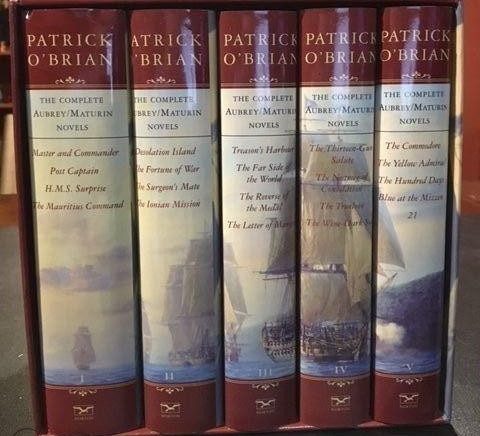
The Complete Aubrey – Maturin Novels Set – 21 complete novels – Kiffer likes how the covers create a scene. And, yes, she has read the complete series.
Patrick O’Brien’s Jack Aubrey and Stephen Maturin series crosses many genres: Historical fiction, action/adventure fiction, romance (yes, romance), military fiction, etc.
The series starts in 1800 with the Napoleonic Wars and carries through to the Battle of Waterloo in late 1815.
Some say Aubrey and Maturin are the inspiration for “inseparable fictional duos” such as Kirk and Spock of the original Star Trek TV series (79 episodes) by Gene Roddenberry, Holmes and Watson sixty stories by Arthur Conan Doyle, Joe Leaphorn and Jim Chee of the award-winning Navajo Nation mystery series by Tony Hillerman, and Walt Longmire and Henry Standing Bear of theLongmire novel series.
Understanding Genre:
When writing in general, it helps to think of your work in terms of different points of view. Often English teachers will refer to this as the Rhetorical Situation of your writing, which comes in the following parts:
Audience: Who will be reading it? This is more than people who buy your book, but also your writing group, beta readers, professional editors you pay, agents, publishing editors, bookstore employees, and then the specific people to who your book will appeal.
Medium: Quite literally what is it written on and how it is delivered. Paper, ebook, audiobook, graphic novels, hybrid.
Message: What it says
Genre: The conventions and context regarding how this information is typically presented
Purpose: The intention of the writing
Naturally, we’re going to focus on Genre here.
Take a moment and consider this question: What is Genre? It may even be worth pausing to write down your thoughts before continuing.
It’s a little more complicated than “Apples and Oranges”
In “Dukes, Deaths, and Dragons: Editing Genre Fiction” from What Editors Do, Tor Executive Editor Diana Gill Diana Gill asks the same question, and she provides her own answer:
“What is genre? Merriam-Webster defines it as ‘a category of artistic, musical, or literary composition characterized by a particular style, form, or content.’ Genres of fiction include mystery, science fiction, romance, fantasy, westerns, erotica, and horror. Genre fiction can be commercial, it can be literary—and it can be both.”
A quick internet search shows that there are typical standards for most genres when it comes to word count, which can help when plotting or editing your work. Let’s look at that genre list from before, but add in word counts:
You can read up on some more of the general rules of genre in this older, but still worthwhile blog from Ruth Harris here.
Standard word counts for different genres are important to keep in mind as knowing how long your novel is affects your storytelling!
Speculative Fiction 90,000-120,000
Mystery 70,000-90,000
Young Adult 50,000-80,000 (much shorter for Early Readers and Middle Grade)
History 100,000
Literary 100,000
Romance, 50,000 + (shorter is usually better for romance)
Non-Fiction is a little too varied to put a fine point on it. George Saunders tells his reader in A Swim in a Pond in the Rain that he received “the Cornfeld Principle” from movie producer Stuart Cornfeld, which states:
“[E]very structural unit needs to do two things: (1) be entertaining in its own right and (2) advance the story in a non-trivial way.”
George Saunders
If your story is excessively long, it may be worth it to look at entire chapters and ask yourself that question. At best, you may find out you have two books, or as we have seen here at Chanticleer, three books instead of one, but no matter what happens your story will probably be stronger for it.
A reminder from Kiffer: Remember each chapter should have its own story arc and should end in such a way that the reader can’t wait to indulge in the next chapter as the story develops its overall arc.
Each story within a series should contain a portion of the overall arc of the series.
This works for whatever genre or genre’s you are working in—even those with fractured time-lines.
What is the point of genre, or, put another way, who uses genre?
This goes back to the question of Audience when we consider a book. Remember who we said might be reading this with an eye toward genre:
Your Writing Circle
Beta Readers
Professional Editors
Agents
Publishing Editors
Bookstore employees
Distributors (the gauntlet of a successful sales strategy)
ISBN – & Cataloging
Library of Congress
Copyright
Your Readers!
While understanding the genre can help you with narrative conventions and writing decisions, writing in a genre also establishes an unspoken contract between you and the reader. If you break the contract, your readers might be a little frustrated with you. That said, common forms of genre blending can be found in Young Adult Fiction, Middle Grade Fiction, and Romance Fiction.
You might be asking why on earth you would need to even bother with a genre when all you want to do is reach your readers directly. Well, there’s a simple answer…
Marketing! Marketing! Marketing!
What will you do to help your book be discovered?
Knowing your genre not only helps you understand the conventions (like length) for what you are writing, but it also helps readers find your book. Think about when you go into a bookstore. Is there a section you automatically beeline for? Do you look to see if they’ve separated out Horror from SciFi and Fantasy instead of putting it all in Speculative Fiction? Are you a frequent peruser of the Local Author shelves? Having clear sections and genres (even more abstract ones like Local Authors) helps to orient your reader to best find your book!
Author Platform = Discoverability
In spite of how having a clear genre can help book sales, we often hear is that someone’s book defies genre, or it can only be described as the most literary fiction around, or it just doesn’t fit one of the 24 Awards divisions we offer. Well, those authors aren’t alone in that feeling.
An interesting example of this is Kazuo Ishiguro’s book The Buried Giant. Ishiguro seemed to be reluctant to call the book fantasy, and indeed you’ll find it in the general fiction section of most book stores. (The same is true for his book Klara and the Sun, which is narrated by a robot, but somehow not science fiction.) Ursula K. LeGuin, a fervent champion of genre fiction, had this to say:
“Familiar folktale and legendary ‘surface elements’ in Mr Ishiguro’s novel are too obvious to blink away, but since he is a very famous novelist, I am sure reviewers who share his prejudice will never suggest that he has polluted his authorial gravitas with the childish whims of fantasy.” (Read the full Guardian article detailing this here)
The Brilliant Ursula K. Le Guin
So What Does Genre Do?
Genre is a form of categorization that helps people sell your books. Ishiguro, as the winner of the Nobel Prize in Literature can sell work on his name alone. And using a genre isn’t so bad! Think about times that you’ve queried for your manuscripts or even when you see people pitching their work on Twitter’s #pitmad event. You see books advertised saying:
The next Harry Potter!
Jack Reacher fans have found their new series!
Friends of Tolkien fantasy will be happy here!
Perfect for Star Trek and Star Wars fans alike!
While these claims may be less original than agents and publishers would like, they get the idea of genre across, and if you’re familiar with those titles you know exactly the kinds of books being described without even reading a summary.
Then there is the advice of J.D. Barker, Master of Suspense
CROSSING GENRES and WHY YOU SHOULD DO IT!
J.D. Barker asked his attendees at his presentation at a Chanticleer Authors Conference session, “What do you write? Thrillers? Mysteries? Paranormal?”
Hands were flying up. Then he asked, “Horror?” Sharon Anderson’s hand flew up. He looked at her for a couple of seconds and said, “I guess you’ll be happy with not making much money, then.”
Say What?
He went on to explain how authors limit their audiences when they use certain words. Horror, it turns out, is one of those words. Many people read thrillers, quite a few read mystery novels, and who doesn’t like a good paranormal? But when you say “horror,” people tend to shy away. Sure, you’ll get your fans. But, as Barker adroitly pointed out, you may not get those readers who love the other genres – and would most likely love what you have to offer, too.
This is important because your horror novel may contain elements of a thriller – why wouldn’t it? Likewise, your novel probably has a storyline that needs solving. The point J.D. was making is this – don’t scare away your readers by telling them your novel is only one thing. Think carefully about your marketing and promote your work in such a way as to garner the largest appeal. (Read the full interview with J.D. in our magazine.)
JD Barker presents at CACs and VCACs.
Having a flexible genre that fits into a more popular one (consider paranormal and horror or paranormal and romance) has the potential to greatly expand your readership.
If you’re having trouble identifying your genre and need another pair of eyes on your work, you can always sign up for one of our Manuscript Overviews here.
Keep an eye out!
Did you enjoy this article? We’re planning on doing a series breaking down the ins and outs of different genres in a series of Genre Deep Dives to help you know if your work is a police procedural or a cozy mystery – or whatever else you might be writing!
Thank you for spending part of your writing day with Chanticleer Reviews!
Chanticleer Editorial Services – when you are ready
Did you know that Chanticleer offers editorial services?We do and have been doing so since 2011.
Tools of the Editing Trade
Our professional editors are top-notch and are experts in the Chicago Manual of Style. They have and are working for the top publishing houses (TOR, McMillian, Thomas Mercer, Penguin Random House, Simon Schuster, etc.).
If you would like more information, we invite you to email Kiffer or Sharon at KBrown@ChantiReviews.com or SAnderson@ChantiReviews.com for more information, testimonials, and fees.
We work with a small number of exclusive clients who want to collaborate with our team of top editors on an ongoing basis.Contact us today!
Chanticleer Editorial Services also offers writing craft sessions and masterclasses. Sign up to find out where, when, and how sessions being held.