Tag: First Place Winner

  • BLAME it on the BET (Whiskey Sisters, Book 1) by L.E. Rico – Wholesome Romance, Small-Town Romance, Family Values

    BLAME it on the BET (Whiskey Sisters, Book 1) by L.E. Rico – Wholesome Romance, Small-Town Romance, Family Values

    Twenty-six-year-old Hennessy O’Halloran should have it all. She should be enjoying her overpriced apartment in St. Paul, Minnesota, her successful legal career, and her “friends with benefits” neighbor, but in the month since her father’s sudden death, all of those things have become unimportant.

    She thought she and her sisters had some time to figure out what to do with Jack’s legacy, an Irish pub he and their deceased mother built from scratch. Still, when they discover a substantial loan agreement secreted away in Jack’s belongings, they realize they only have six weeks to come up with over $100,000, money he borrowed against the business to help finance various expenses on his daughters’ behalves. She finds herself back home in Mayhem, Minnesota, living above the pub and trying desperately to find the funds to save the business.

    Enter Bryan Truitt, land developer and business “matchmaker,” sweeps in with a letter of intent to purchase the pub sans Jack’s signature. Even though Jack had planned to sell the bar and settle his debt, his daughters can’t bring themselves to sell to the slick, fast-talking Bryan, no matter how hot he looks in his ridiculously overpriced suit and Italian loafers. Bryan, despite his initial desire to arrive, conquer, and depart this Midwest winter land, finds himself drawn not only to small-town life but also to the confident, courageous Hennessy. When Bryan wagers against Hennessy’s ability to raise the money to save the business, neither realizes the stakes are much higher than just the pub. Will they risk their hearts to win a future together?

    Blame it on the Bet is full of vivid characters. From Bryan’s hard-nosed assistant Helen to the matchmaking, Father Romance, the novel overflows with realistic, lovable characters, right down to Jackson, a curse-word-loving toddler whose specialty is his spectacular aim with flung food. These folks feel so human, readers will easily fall for them, and their quirky town of Mayhem, where a psychic baker who reads fortunes in pies and everyone owns at least one rescue cat and all of them–the cats not the humans–wear sweaters. The humor is a welcome addition to a genre that sometimes takes itself much too seriously, and good ole Midwestern honesty means there isn’t the elaborate game playing plaguing many romances.

    The O’Halloran sisters lend themselves to a significant theme within the novel. Known as the “whiskey sisters,” Hennessy, Jameson, Walker, and Bailey are as varied as the alcohol for which they are named, but together, they create a tight-knit unit dead-set on saving their father’s legacy. That legacy, that sense of belonging to something worth more than the individual, permeates every aspect of the plot. The sisters drop everything to pull together and face the challenge head-on, to hold onto their father’s dream, a dream which built the very foundation of each of them. Family pride drives not only the girls but, in a way, the entire town as they pull together to save O’Halloran’s with chili cook-offs and quiz nights. The fight for the town’s favorite becomes one of pride. Even Bryan becomes embroiled in his own struggle for and against legacy when he battles his familial demons in the form of his father’s past and his unintentional tie to it. He must acknowledge his own history before he may create a new future with Hennessy, becoming a member of the family he has chosen, in a home he never expected to find.

    Lovers of romance will fall for this couple and this town. It will wrap you up in a cozy blanket and keep you warm as a cup of hot cocoa on a cold Minnesota day – or wherever you happen to call home.

    Blame it on the Bet by L. E. Rico won First in Category in the CIBA 2018 Chatelaine Awards for Romantic Fiction.




  • FULL CIRCLE: A Refugee’s Tale by Joe Vitovec – WWII Historical Fiction, Literary Fiction, European WWII Refugee Historical Fiction

    FULL CIRCLE: A Refugee’s Tale by Joe Vitovec – WWII Historical Fiction, Literary Fiction, European WWII Refugee Historical Fiction

    In the prologue of this lucid and gripping novel, Joe Vitovec notes that although Full Circle: A Refugee’s Tale is fiction, he “attempts to acquaint the reader with some of the locales and events that made this period so memorable, and leave a record for those who may one day wish to revisit the past.” He has done an extraordinary job with this literary recreation of the experiences of the “displaced persons” following World War II.


    Vitovec takes the reader on a journey that begins with a boy in 1938 in a small town in Czechoslovakia and ends some fifty years later with that boy, now a middle-aged man, returning to his childhood home. What transpires in the intervening years is the heart of this politically and emotionally complex story, one with which many will be able to relate, while others will learn from and perhaps consider the current global refugee crisis with fresh insights and compassion. It is not a tale any reader will likely forget.

    Jan Neuman is only eight when the men of his village leave for a military encampment and prepare to fight the Nazis who have invaded their lands. They never get the chance. As decreed by the Munich Conference, this area of Czechoslovakia is handed over to Hitler and made a German protectorate. The townspeople feel demoralized and live in constant terror that the Germans will arrest them for showing the slightest loyalty to their ousted leader or native culture. They endure degradations, subsisting on soup bones and potatoes, and Jan’s father, the town’s tailor, is made to sew Nazi uniforms.

    Years pass, and finally, the Allied invasion buoys their spirits and hopes. One miraculous day, there are American soldiers in town, happy to share cigarettes and peanut butter, and make friends with the locals. Jan, a teenager, views the Americans as “bordering on godlike,” as does everyone in the village. This euphoric time is short-lived, however, with the departure of the liberating soldiers and arrival of the Russians, followed by a communist coup. The communists are eager to make arrests, and the townspeople become fearful and distrustful of one another.

    As a student who works on a political newspaper, Jan is brought to the communists’ attention and will likely be arrested. When he hears of a resistance army being formed elsewhere, he stealthily leaves town with his friends. However, just as their fathers were denied the chance to fight, Jan and his friends discover that the resistance military base is in fact a refugee camp in Regensburg. Although it’s technically an American camp, it is run by Germans. He and his friends are told, “As refugees, you have no citizenship status, no rights.” Conditions are harsh, the camp overcrowded with Poles, Russians, Ukrainians, and Czechs. Morale is exceedingly low as people wait to see where they’ll be sent next. Although everyone wants to go to America, there are no fast or direct routes. Indeed, Jan’s refugee life has just begun.

    Like so many others, Jan must attempt to rebuild his life again and again. Over the next two years, he will travel from camp to camp, make an ill attempt to join the French Foreign Legion, experience a devastating low outside the sewers of Paris, fall in love, and finally sail to America where his troubles are far from over.

    Vitovec delivers a riveting story in beautiful and poignant prose, reminding us that the impact of war can be total, even for those who never set foot on a battlefield. Political losses hurt people deeply, but the loss of sense of self is endlessly tragic. Displacement is not just a geographic issue, but a psychological one. How much of our identity is built on where we are from? Who are we if we belong to no country? Imagine, if you can, owning nothing but memories, memories of a time and place, of a people who used to belong to a country and spoke its language. Imagine every identifying detail scrubbed from you, the only thing that motivates you is the instinct to stay alive. For years, the existence of the displaced boiled down to just that – a place to lay their heads at night, bread to keep their stomachs from aching, and perhaps the tiniest glimmer of hope that they were y headed somewhere that wasn’t yet another refugee camp, a place they would one day call home.

    A book for political leaders, teachers, students, and anyone with a desire to not repeat the past. It’s a book that serves to remind us of what we have and what can be taken from us at a moment’s notice.

    Full Circle, A Refugee’s Tale by Joseph Vitovec won First in Category in the CIBAs 2018 Goethe Awards for Late Historical Fiction.


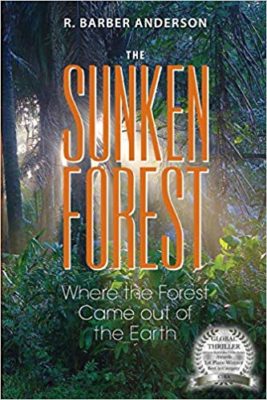
  • The SUNKEN FOREST by R. Barber Anderson – Thriller & Suspense Action Fiction, Literary Fiction, Military Thrillers

    The SUNKEN FOREST by R. Barber Anderson – Thriller & Suspense Action Fiction, Literary Fiction, Military Thrillers

    American timber company, NTI, flies over a remote area of the Congo with sophisticated instrumentation. Data shows an immense, deep depression in the jungle floor, a giant caldera from an extinct volcano. Despite the depth of the crater, the canopy level above remains constant and gives no clue of what lies below. To NTI, this could be an indication of tropical hardwoods beneath, potentially the size of mature redwoods. To the indigenous tribes, the sunken forest is a forbidden zone guarded by a legendary black devil who brings sure death to trespassers.

    NTI sends a group in to explore and determine if their data is correct, that what lies beneath is an untapped bonanza of timber. The group persuades a few local tribe members to guide them. They make it to the edge of the caldera and are never heard from again. When the tribal guides return home, they suffer banishment for showing strangers the way to the forbidden zone.

    Zora de Rycken, an outdoor adventurer with exceptional jungle survival skills and Special Forces training, is enlisted to guide NTI scientist Carver Hayden to discover the fate of the first group and to complete their unfinished mission.

    Once in their expedition staging area in Brazzaville, Congo, the second NTI team encounters an unscrupulous Russian billionaire, Oleg Levkov, with a timber company of his own. Though it would seem they are in competition, Oleg assures them his only interest is in the legendary black devil. Oleg is a big game hunter with a fascination for big cats. He is sure through his own research that the black devil is a giant black lion no one has seen before, and he wants to be the first to kill one.

    When the NTI team arrives at their basecamp, the nearest open ground in the vicinity of the caldera big enough to land a helicopter, and the starting point for the previous NTI team, Oleg is already there. Oleg’s team has secured a native guide, Ngiome. Oleg’s helicopter departs just as the NTI team arrives, and Zora is sure she sees members of Ngiome’s tribe aboard. Has Oleg kidnapped these people to secure Ngiome’s services?

    One thing is certain, no matter which company wins the timber rights to The Sunken Forest, the result will be the same. Pristine jungle unlike any in the world will be laid waste leaving nothing but an empty muddy scar on the Congo.

    Barber Anderson weaves a captivating tale that lays out the consequences of Industrial greed and conservation set against a thrilling backdrop of jungle, violence, and sex.


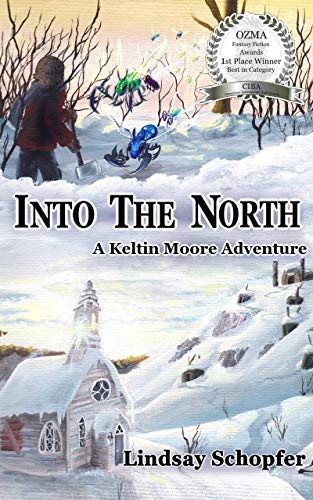
  • INTO the NORTH: A Keltin Moore Adventure by Lindsay Schopfer – Epic Fantasy, Steampunk, Action/Adventure

    INTO the NORTH: A Keltin Moore Adventure by Lindsay Schopfer – Epic Fantasy, Steampunk, Action/Adventure

    If Jack London had written about hunting fantastic beasts in a fantasy-tinged “Great White North” during a gold rush, instead of real animals in the Klondike, he’d have created a hunter like Keltin Moore and a beast like the Ghost of Lost Tap.


    The adventures of Keltin Moore read a lot like London’s best adventure stories, only written as if they were inspired by Larry Correia’s Monster Hunter International series. The combination leads to a chilling story (in more ways than one) about a professional beast hunter and his companions on a quest to make some money and save a town from a beast that no one has survived. Still, everyone has seen the aftermath of its depredations.

    They call it the Ghost of Lost Tap because it moves like a ghost. Or something supernatural. And no one has been able to catch it, certainly not the little band of shakedown artists calling themselves the Hunter Guild that has sprung up in the ramshackle boomtown of Lost Tap.

    The story focuses on the character of Keltin Moore, the last of a long and storied family of professional beast hunters. Keltin learned his trade at his father’s knee, and like his father, is used to hunting alone. But in his second adventure, he is traveling with an apprentice, young Jaylocke, who needs to learn a trade to earn his place as an adult among his own people.

    In Lost Tap, Keltin and Jaylocke band together with old friends that they fought with in the first book of Keltin’s adventures, The Beast Hunter. While they hunt the “Ghost,” Keltin finds himself meditating on the nature of leadership, his need to be alone versus his understanding that he needs others to bring down this unstoppable beast, and his feelings of responsibility to those under his care and in his heart.

    Keltin is a fascinating character. This second installment of the series provides a thought-provoking perspective on his profession, his responsibilities as a leader, and his desire to save people, often from their own mistakes.

    At the same time, the world that Keltin inhabits, as much as it will remind readers of London’s tales of the Klondike, is a fantasy world and not London’s historical one. Except for the beasts themselves, with atypical and strangely asymmetric biology, there is little magic in this world or not that is seen in this story.

    Beasts are killed with guns, not spells. No matter how unnatural they seem, a bullet to the brain, once Keltin manages to determine where a beast’s brain actually is, kills them just fine. But the places Keltin refers to, and the sentient nonhumans that he meets and befriends, remind the reader that this is a different world with its own history.

    While these reminders are not enough to make the reader feel they have missed too much by starting with this second book in the series, they do serve to tease the reader that there are stories yet to be told. We love this adventure/fantasy so much, we happily recommend readers to start with the first book in the series and then move on.

    Into the North: A Keltin Moore Adventure by Lindsay Schopfer is such a terrific story on its own that readers will feel compelled to pick up the other stories just to catch up on all the action! Highly recommended.

    Into the North: A Keltin Moore Adventure won First Place in the CIBA 2018 OZMA Awards for Fantasy Fiction.


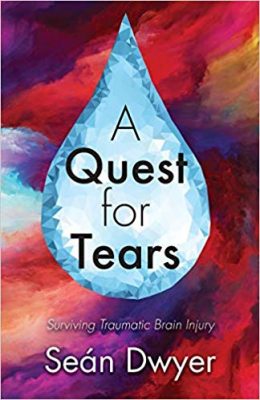
  • A QUEST for TEARS: Surviving Traumatic Brain Injury by Seán Dwyer – Memoir, Traumatic Brain Injury, Inspirational

    A QUEST for TEARS: Surviving Traumatic Brain Injury by Seán Dwyer – Memoir, Traumatic Brain Injury, Inspirational

    Journey Narrative Non Fiction 1st Place Best in Category CIBA Award gold an blue badge.


    A Quest for Tears by Sean Dwyer is a captivating memoir written four years after the author suffered a Traumatic Brain Injury (TBI) as the result of a rear-end car collision.

    While such casualties often foster long-term, unpredictable damage and seem a medical mystery, here Dwyer’s goal is to share his unique roadmap of struggles and experiences, while also advocating for fellow TBI survivors.

    At age fifty-four, Dwyer was a college educator, fluent in Spanish, and a creative writer who had authored two novels and a work of nonfiction. A prolific songwriter, he was also blessed with an excellent memory, supportive of the talent of colleagues, and was always able to display his emotions easily. But in the aftermath of his January 29, 2015 accident, life changed.

    Initially diagnosed with whiplash, back sprains, a leg wound, and soft-tissue damage to his arm, subsequent tests revealed a concussion and TBI. Now, in addition to dealing with the expected discomfort of his outer physical injuries, Dwyer was forced to navigate the arduous, mired path of debilitations faced by those dealing with head trauma. From a first-person perspective showcasing determination and resilience, Dwyer journeys through a slow, laborious labyrinth towards recovery. With a touch of wit, he applies the moniker

    “Sean 2.0” to his injured self, and like a software upgrade, he begins to explore the new cognitive alterations of his brain.

    Dwyer now faces life with an extreme sensitivity to light. Also, there is the absence of the familiar “earworm” that once inspired music and stories. His now quiet brain struggles for words has difficulty reading and lost the sense of musical enjoyment. Minimal laughter and a noticeable inability to shed tears lead him to wonder, “Am I going to be an emotional zombie for the rest of my days?

    Dwyer went from being a man with high regard for hygiene and fashion standards to an individual preferring comfortable attire and choosing vibrant novelty socks that delighted his injured brain. Painful head movements during a simple haircut caused him to eliminate the grooming event for two years. This was the new Dwyer.

    Dwyer seeks numerous treatments over several months, from physical therapy and acupuncture to neuropsychologists and craniosacral practitioners. During a visit with a priest, he looked for help from the sacrament of healing. Attending conferences with fellow TBI survivors proves an essential part of his recovery, as he learns progress can still occur well beyond the one-year mark of the initial injury. Lightening the intensity of this autobiographical account, Dwyer distinguishes the one-year “smashiversary” of his accident with a celebration at a local Mexican restaurant. Along with a cathartic, hanging car pinata, a gifted plaque featuring the accident photo Dwyer was always quick to produce in conversation, is humorously preserved with the fitting caption “stronger than steel.”

    The importance of the much-needed understanding and support he received from his wife and family, the medical community, and a vast tribe of friends, students, and colleagues continues to be imperative in Dwyer’s recovery.

    Mock classroom set-ups helped him acclimate to possibilities for teaching, while fellow writers proved compassionate in fueling his need to find new pathways for creative expression. Dwyer weaves poignant moments throughout his story, including an unexpected conversation with a wheelchair-bound boy who inspired him to push through his newfound obstacles. He also highlights the guiding force of his beloved elder feline companion, Sophie, who proved the utmost source of comfort throughout his ordeal.

    Written primarily as a resource for TBI survivors, their caregivers, and members of the medical community who often fail to distinguish the difference between intelligence and brain health, Dwyer’s A Quest For Tears is a remarkable achievement. Ultimately it proves a positive affirmation of the human spirit, focusing on the ability to learn and adapt when faced with the unique challenges brought on by sudden brain injury — a powerful and inspiring read.

    A Quest for Tears won First Place in the CIBA 2018 Journey Awards for Memoir/Biographical works.


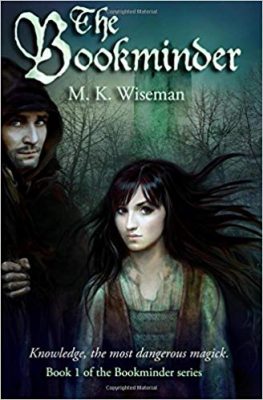
  • The BOOKMINDER by M.K. Wiseman – Fantasy, Coming of Age, Magic

    The BOOKMINDER by M.K. Wiseman – Fantasy, Coming of Age, Magic

    More than anything, Liara just wants to belong. As an orphan “fey” child in the seventeenth century, Liara has been a ward of the Church for ten of her sixteen years. Grateful to be taken in and cared for by Father Phenlick, she knows most of the villagers want her gone.

    The product of a rape by a magical creature, Liara is imbued with magic and in many ways is magic itself. The powerful wizard who created the creatures responsible for the attack during the attack on the valley, knows nothing of her existence. Father Phenlick enlisted the help of Nagareth, the wizard of the woods, to shield Liara and the village from further assaults all while outlawing the very power he is secretly trusting.

    At St. Sophia, Liara is safe until she steals from the village busybody. When Liara’s extensive hidden stash is discovered in a “magicked” hollow tree, the Venetian soldiers who protect the valley force Father Phenlick to ostracize Liara. Abandoned by even her friends, Liara is taken in by Nagareth, who promises Phenlick that he will not teacher Liara his craft. Liara begs Nagareth for magical instruction, but he only allows her to care for his extensive magical library. Gradually, Nagareth sees great potential in his new ward, but when everyone in Dvigard is killed by a mysterious plague, he begins to fear that he can’t protect her from her powerful creator who will want her powers for his own if she is discovered.

    Liara cannot see the danger around her, and as her own magical knowledge grows through her maintenance of Nagareth’s books, her only goal is to exact revenge against her father. As her abilities grow so does her anger and confusion at the only person standing between her and her destruction.

    Liara is a complex, dynamic character. Her history gives her more than normal teenage problems. Liara’s mother was driven crazy by the rape and was never able to truly care for or love Liara, leaving Liara to the cruelty of the villagers. Without Father Phenlick, Liara would never have survived, and though he tries to give her a home, he isn’t able to fill the emptiness deep within her. Liara desperately needs something and somewhere of her own, which is why she steals–to fill her life with things that are her own. In creating her hollow-tree hiding place, she creates that place where she isn’t afraid to be herself. Though she is unaware of her own magic, it is as much a part of her as her history.

    In the beginning, all Liara wants is to grow that power. She desires the very thing others accuse her of having to give her what she has never had, but it’s a double-edged sword. She is hated for her supposed abilities even before she shows evidence of magic, but when she finds the magic she wants so badly, it will define her. She wants others to see she has feelings and dreams, but in the very thing she wants most, this undeniable power, people will see only that. She limits herself to this magical creature, and that drive quickly becomes an obsession. Only too late does she see Nagarath’s minimal use of magic isn’t a waste. She almost allows her prejudiced idea that magic should be grandiose to cloud the important lesson she learns about living simply, living for love and not power. As she grows through her relationship with Nagareth, she learns what magic should truly be.

    The evolving bond between Liara and Nagareth is a beautiful story. Only nine years Liara’s senior, Nagareth sees Liara as a child in the beginning, but over the novel’s development, he begins to see Liara as a true companion. The joy she brings to his life, the peace she makes him feel, even though she annoyingly begs him to teach her magic, becomes invaluable to the lonely wizard.

    He wants to make sure she has a life of stability, not fear. As he opens himself up more and more, he becomes her friend. He realizes she has given him more than he has returned and relents in his promise not to teach her. Nagareth grows as much as his precious ward.

    The Bookminder won 1st Place in the CIBA 2017 OZMA Awards for Fantasy Fiction.


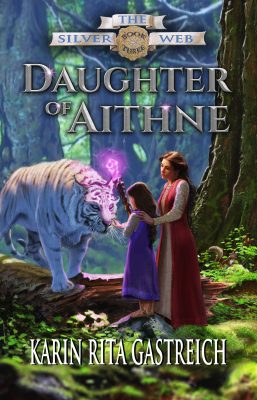
  • Daughter of Aithne: The Silver Web Series, Book 3 by Karin Rita Gastreich – Romance Fantasy, Sword & Sorcery, Magic Realism

    Daughter of Aithne: The Silver Web Series, Book 3 by Karin Rita Gastreich – Romance Fantasy, Sword & Sorcery, Magic Realism

    Writer and ecologist Karin Rita Gastreich draws inspiration from her trips to the magical forests of Costa Rica to bring life to the Silver Web series. An unforgettable journey, Daughter of Aithne, is the finale to the epic story of Queen Eolyn the High Maga, set in a world of seemingly never-ending war where female practitioners of magic (maga) are feared.

    Set ten years after the conclusion of Gastreich’s second installment in the series Sword of ShadowsDaughter of Aithne begins during an era of abundant peace. That peace quickly turns to turmoil when a group of Eolyn’s magical progeny commits an act of grave betrayal by kidnapping Princess Elisara, daughter of the former Queen Taesara.

    The Mage King Akmael immediately orders all maga to lay down their arms and have their magic bound. For years magas have been prosecuted for having magic and were all but annihilated by the crown. Except for a small amount that managed to escape hoping to one day be able to live their lives of magic according to their beloved culture. Fear of women’s magic is still alive in the kingdom, and the King, wishing only to protect his queen and her daughters, attempts to avoid an outbreak of war by banning all magas use of their craft.

    Gastreich uses vivid language to transport readers into the story. An overarching theme of distrust and vying for loyalties in and among kingdoms presented in this third installment of the Silver Web series is reminiscent of other high fantasy series such as George R. R. Martin’s A Song of Ice and Fire. Gastreich masterfully executes an effective use of narrative misdirection throughout the story.

    Karin Rita Gastreich has an apparent love for the magic of nature and breathes that into the heart of her books, but she also successfully sets real-world issues at the forefront. She follows a common trope within the Young Adult genre by taking an issue from today and melding it into her narrative. Here, the main element in the Silver Web trilogy is the stark contrast of beliefs and opinions centering around magic and especially female magic welders. Many fear their magic and believe magas are dangerous, but then have little or no issue with male mages.

    A triumphant story of adversity, Daughter of Aithne is the exciting conclusion to the Silver Web series. Readers of all ages may hope this is not the last time Gastreich will return to her fantastical world of magic.

    Daughter of Aithne won 1st Place in the CIBA 2017 OZMA Awards for Fantasy novels.


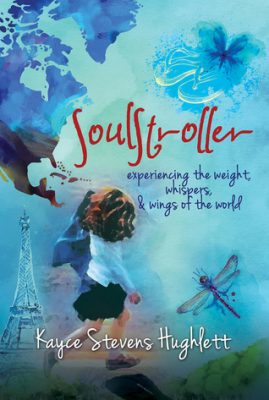
  • SOULSTROLLER: Experiencing the weight, whispers, & wings of the world by Kayce Stevens Hughlett – Women’s Biographies, Personal Transformations, Self-Help

    SOULSTROLLER: Experiencing the weight, whispers, & wings of the world by Kayce Stevens Hughlett – Women’s Biographies, Personal Transformations, Self-Help

    In a creative blend of existential memoir and artful travel journal, Kayce Stevens Hughlett’s SoulStroller takes readers along on an adventurous journey of self-discovery. Reminiscent of Elizabeth Gilbert’s popular Eat, Pray, Love, Hughlett focuses on family issues, ancestral memories, and dreams explored within the context of personal travels, focusing on the importance of moving beyond our comfort zones.

    Here we come to learn that a SoulStroller is a term used for an individual who ventures into the fullest version of their true selves. Guided by intuition and spiritual essence, they stroll through life with a feeling of curiosity, compassion, contentment, and gratitude. Like a pilgrim on a quest, they follow their heart, rather than move ahead with a tourist mentality of set goals and to-do lists.

    Raised with the traditional expectations of the “good girl,” Hughlett lived the first 30 years of her life within 150 miles of Oklahoma City, an area of white, middle-class, conservatives. The blinders came off when she moved to Seattle. Divorced, and remarried with two children, Hughlett indicates that when everything is FINE, sometimes that refers to the acronym for “fucked up, insecure, neurotic, and exhausted.”

    It is during a trip to Mexico in search of a therapeutic boarding school for her troubled son that she finds a sense of peace and a firm idea of place as she falls in love with the desert landscape. With the outstretched arms of the saguaro cactus offering a sense of peace, it is in this moment that everything changes.

    Hughlett’s journeys go far beyond visits to the likes of the Eiffel Tower and Louvre. Whether enjoying the delicacy of an eggplant and cheese sandwich on the banks of the Seine or meeting a charmingly eccentric and her poodle, Hughlett learns to distinguish the essential rhythms of her own life.

    Hughlett writes with a comfortable conversational voice that invites readers into her world view; one that she approaches with both exuberance and trepidation. The overall narrative unfolds in a generally chronological sequence, though journal entries and recollections can at times reflect past memories or events.

    Insightful words from several authors, poets, scholars, and artists are used to grace the opening of each chapter, including contributions as varied as those of Roald Dahl, Thich Nhat Hanh, Gloria Steinem, and Henry Miller. Mark Twain’s quote seems to epitomize the central “SoulStroller” sentiment in “Sail away from the safe harbor. Catch the trade winds in your sails. Explore. Dream. Discover.”

    Each section of the book concludes with a simple practicum highlighting suggestions for readers to venture into their own SoulStrolling mindset. Exercises range from quiet meditation and writing prompts, to practicing self-kindness and ideas for travels off the beaten path.

    While Hughlett considers that her story may be too personal or esoteric for some readers, her work speaks to her positive growth, as her travels and experiences have allowed her to trust her own voice and value the lessons of her own journey. This is a book that strings together individual pearls of wisdom that have universal appeal.

    SoulStroller by Kayce Stevens Hughlett won 1st Place in the CIBA 2018 Journey Awards for Narrative Non-Fiction.


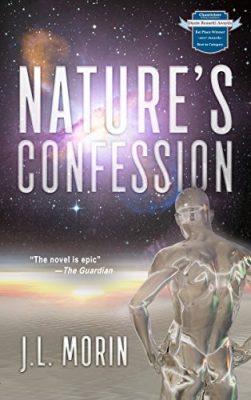
  • NATURE’S CONFESSION by JL Morin – Time Travel Romance, Science Fiction, Y/A Post-Apocalyptic Science Fiction

    NATURE’S CONFESSION by JL Morin – Time Travel Romance, Science Fiction, Y/A Post-Apocalyptic Science Fiction

    In a dystopian near-future where nobody is safe, the world is ruled by a ruthless capitalist. Humankind’s last hope may be a fourteen-year-old named Boy. Part sci-fi, part diverse love story, Nature’s Confession by J.L. Morin is an ecological coming of age novel that spans the universe.

    The story opens with Boy, so-called because he hasn’t reached an age where he will be named yet for security reasons, managing to survive in the dystopian world he calls home. On next year’s earth, humanity is essentially enslaved by a worldwide corporate government, not for the people or by the people, but one that operates to ensure its citizens are brainwashed, downtrodden, and too exhausted to be able to offer any sort of resistance. When Boy stays after school one day, he meets a man who turns out to be his long-time idol—Tyree. Tyree is a member of the resistance and recruits Boy to help him and their cause, believing that Boy may be their last hope.

    As the story progresses, readers are introduced to a motley assortment of characters. Valentine, Tyree’s daughter, is a genius whose inventions have the power to change the world. Porter, Boy’s dad, shows up throughout the story as different versions of himself crossing over from other realities and timelines. Eleanor, most often referred to as Mom, leaves her stressful, humdrum life on earth to become a Member of Starliament. A telepathic dog-like hupcha with six tails and the wise, albeit manmade, Any Gynoid lead the crew to befuddle polluters.

    Almost every character gets their own chapter devoted to their point of view. Most of these chapters are told in the third person while a few switch to first-person narration. Boy, our hero, gets surprisingly few chapters. Rather than having Boy’s character be the main focus of the novel, Morin instead uses him as a frame for the book—showcasing him at both the beginning and the end. Boy’s journey unfolds through the eyes of those who surround him.

    Nature’s Confession—that she might not be able to sustain the human race anymore—will appeal to readers who like their sci-fi broad and far-reaching. This novel continually moves from one plot point to the next, often switching characters to give a broader sense of the story, and never lingers too long on the technicalities. Alien lifeforms, alternative clean energy sources, intergalactic travel as well as time travel, and multiple realities abound in this diverse, multi-cultural love story. Morin does an excellent job using Nature’s Confession as a timely foil for the challenges our society faces regarding climate change, big industry, sustainability, and how the human race will survive. Highly recommended!

    Nature’s Confession won 1st Place in the CIBA 2017 Dante Rossetti Awards for Young Adult Fiction.


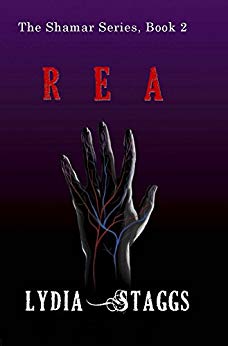
  • REA: The Shamar Series, Book Two by Lydia Staggs – Paranormal & Urban Fantasy, Dark Fantasy, Romantic Action/Adventure

    REA: The Shamar Series, Book Two by Lydia Staggs – Paranormal & Urban Fantasy, Dark Fantasy, Romantic Action/Adventure

    Rea is a fast-paced paranormal romance featuring a super-sexy supernatural male lead and a career-minded young woman who are madly in love with each other; and, as it happens, each with their own demons to face. Gabriel and Juliet must each learn to confront their pasts and honor each other’s strengths if they are to not only continue their love but to survive their fate. Rea is book two in the Shamar series by Lydia Staggs.

    Rea is the continuation of Gabriel and Juliet’s love story and showcases the struggles of not only a human romance, but a paranormal one as well. Gabriel is Shamar while Juliet is human. The Shamar are a race of rigidly hierarchical, supernatural creatures who can transform into wolves and are sworn to protect humans. Gabriel, constantly aware of his dual nature as both man and wolf, struggles with how his wolf, a pair-bonding, aggressive creature, would prefer to interact with Juliet, the woman he is sure he wants to spend the rest of his life with. The wolf side of Gabriel often causes him to be jealous and possessive and he grapples with Juliet’s need for personal space and time.

    Juliet is a veterinarian, hoping to get into her dream residency. On a tour at the hospital however, she realizes that a man from her past works there, a man she would give almost anything to avoid—Ryan. Ryan is involved with the Amoveo, vampire-like former humans who can shapeshift and ruthlessly control human thought. They are the Shamar’s sworn enemies as they delight in violence and destruction.

    Ryan, it turns out, has been involved in experiments on captive Shamar. Gabriel takes it upon himself to find out what these experiments entail and what he discovers is nothing short of horrifying. But does he dare tell Juliet what he’s discovered?

    Juliet and Gabriel quickly realize that if they are to deepen their relationship, they must each let the other one in—they must share what they have been trying so hard for so long to hide. For it is only together that either one can succeed.

    Rea by Lydia Staggs won First Place in the 2017 CIBAs for Paranormal Fiction.