
Tag: Family

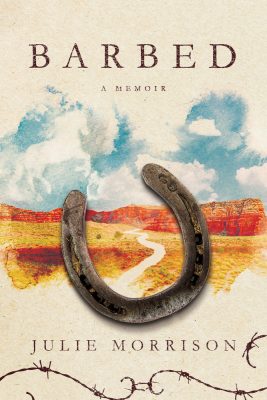
  • BARBED A Memoir by Julie Morrison – Women’s Biographies, Memoirs, Ranching

    BARBED A Memoir by Julie Morrison – Women’s Biographies, Memoirs, Ranching

    blue and gold badge recognizing Barbed: A Memoir by Julie Morrison for winning the 2023 Journey Grand PrizeJulie Morrison saddles up to take us for a ride through the harsh dry mountains of northern Arizona and beyond in her memoir, Barbed.

    Readers visit the ranch where Julie’s parents try to keep the family legacy alive. Julie reveals a cowboy’s world where she meets walls instead of doors but never gives up.

    Barbed opens with Morrison living in the rainy Seattle area with her husband. But the lure of a cowboy’s life on the range working cattle and riding horseback beckons them both. Julie needs salvation like this for her marriage, now distant and cold.

    Reality turns their idealistic, romantic fantasies into a daily grind of working the land. Julie and her husband fight the losing battles of finding enough water and grassland for the cattle and keeping recreationalists from cutting their fence lines. And worse yet, who would have thought mud would be a problem in arid Arizona? Readers learn about the workings of a cattle ranch as Morrison tries one fix after another to save the property.

    Morrison realizes that the operation hemorrhages money.

    To move the budget from red to black, she must make some significant changes. But the cowboys she works with as a manager meet these changes with resistance at every step. The cowboys ride the horses until their joints are out of alignment and their feet are bruised and lame. Julie’s attempt at proper horse husbandry becomes another leak in the ranch’s finances, and she struggles between the money problems of the ranch and what she can do for these poor animals. Morrison soon reaches the breaking point.

    Morrison’s exploration of self bolsters her in this harsh world. She sees the success of other ranch women and a select few men, people who support her efforts and encourage her even when she wants to drop from exhaustion and self-recrimination.

    This memoir does not pussy-foot around complex issues that women experience in business or marriage.

    Morrison never lets conflict stop her, though she acknowledges that depression can hold her back. Her bravery will inspire readers who might not have to stand toe-to-toe with hardened cowboys or encounter rattlesnakes during an average workday. As she works through the problems of the ranch, she also works through her own self-discovery.

    She sees her father, a man she loves, as so pressured to continue the family legacy without incurring more expenses that he perpetuates problems rather than helping her solve them. Until her arrival, his deference to “the cowboy way” had gone unchallenged as something acceptable. In addition, the similarity between the cowboys who work her family’s ranch and her husband shines too bright to ignore. Morrison pulls the cover off the lies we tell ourselves as women to remain in the security of failed relationships and not seek the path of healing and strength.

    This memoir opens the book on a fascinating, nontraditional life filled with adventure and mishap.

    Morrison, alone, supports her ideas and dreams of a better world for the horses she cares for and for herself. However, the harsh life she lives and the disappointments she suffers do not break her. They move her forward toward the healing she needs.

    Barbed abounds with sagacity and affirmations that ring true for readers who may never set foot on a ranch or ride a horse. This tough, savvy woman shows us how to persevere and survive in the harsh climate of a failing business and a failing marriage. She teaches us how to let go of what doesn’t work and find what does, and how to keep trying even when all doors seem to be firmly shut. Morrison keeps on knocking.

    Julie Morrison’s aptly titled memoir, Barbed, connects her myriad of encounters into one cohesive tapestry. She faces the difficulty of not backing down or taking the easy path of giving up and embraces what happens when she reaches the other side. Does she find Nirvana? Morrison finds a life worth living, and she moves forward to contentment. She saddles a new horse and rides a new path, and in the end, she finds herself.

    5 Star Best Book Chanticleer Reviews round silver sticker

  • Summer Girl by Linda Watkins – Coming of Age Fiction, Women’s Literature & Fiction, Romance Fiction

    Summer Girl by Linda Watkins – Coming of Age Fiction, Women’s Literature & Fiction, Romance Fiction


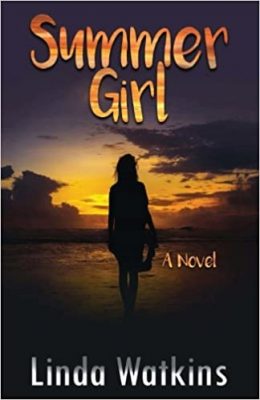
    Blue and Gold Somerset First Place Winner Badge for Best in CategoryVisit an idyllic island off the coast of Maine, long before the days of the internet and social media, in Linda Watkins’ romance novel, Summer Girl.
    Jake, a local teenage boy on Cutter Island meets Andi, who visits for the summer with her mom and stepdad. In this summer of 1965 the two hit it off almost immediately, spending every moment they can together.

    But not long after they profess their love for one another, tragedy strikes, forcing them apart with little hope of ever seeing each other again.

    Twenty years pass until the summer of 1985. Jake, now a successful writer, returns to Cutter Island with his wife and kids for the first time in many years. Andi also arrives with her husband and young son. Once they learn of each other’s presence on the island, all the memories of that summer long ago come flooding back. And so do the unanswered questions of what happened on that fateful night. But a different question burns in their hearts and demands to be answered. Does first love, true love, ever really die?

    Watkins’ writing flows elegantly.

    Andi and Jake look back on their past with nostalgia, heartbreak, and regret. Cutter Island and the characters on it feel immediately familiar, like old friends in a place we’d like to visit. This summer vacation on a quiet island community off the coast of Maine, with all the fresh seafood at an arm’s reach, comes to life. Past and present in Summer Girl take place in a time before the internet became ingrained into everyday life. Readers can take a momentary break to disconnect and truly get lost in the story.

    Jake and Andi show their impressive amount of depth, and accurately portray the simple naivete of youth during the fateful summer in which they meet. Their romance stays grounded and realistic. Watkins’ beautiful writing paints a picture of inexperienced teenagers with honesty and vulnerability that makes their parting even more emotional.

    Summer Girl tells a story of love against all odds.

    True love leaves an infinite effect on someone’s life, for better or for worse. This story stands on love, hope, and perseverance. Accept the invitation to the remote Cutter Island and smell the mouthwatering preparations of the summer night’s lobster bake. Keep an eye out for Jake and Andi among the hungry locals and vacationers.

    Summer Girl by Linda Watkins won 1st Place in the 2018 CIBA Somerset Book Awards for contemporary literary novels.

    5 Star Best Book Chanticleer Reviews round silver sticker

    Somerset Literary and Contemporary Chanticleer International Book Awards 1st Place Winner oval Gold Foil sticker

  • JERKWATER by Jamie Zerndt – Native American Fiction, Friendship Fiction, Ethnic & Regional Fiction

    JERKWATER by Jamie Zerndt – Native American Fiction, Friendship Fiction, Ethnic & Regional Fiction

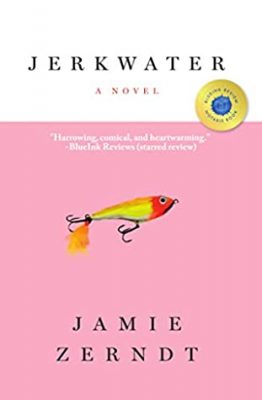
    Blue and Gold Somerset First Place Winner Badge for Best in CategoryThree friends in Mercer, Wisconsin find ways to deal with their problems amid a racist town in Jamie Zerndt’s Jerkwater.

    Shawna Reynolds’ life changed when her white stepdad murdered her Ojibwa mother. Now living with her Naan (grandmother), Shawna surrounds herself with those who make her feel most comfortable. Besides Naan, she clings to her horse Seven, her behind-the-scenes Ojibwa boyfriend Elmer, and two white friends: Kay O’Brien and her son Douglas. But racial tension cuts through the town of Mercer itself, galvanized by a fight over fishing rights.

    Soon after the death of her husband Norm, sixty-four-year-old Kay O’Brien learns that she nears the late stage of Alzheimer’s disease. Norm’s sudden demise shocks her and Douglas to the point that she withholds her recent diagnosis from him. Kay has a few church-lady friends, but feels closest to Shawna, spending time together drinking foul-tasting Manhattans. Shawna divulges that she’s been accepted into veterinary school, and in turn, Kay discloses her Alzheimer’s.

    Douglas, who blames himself for his father’s death, takes over his dad’s unstable car repair business more out of guilt than aptitude. However, amongst the apparent doom and gloom of their lives, Shawna connects with animals, Douglas develops his art, and Kay still has enough wits about her to create positive change.

    The three friends share something vital: they understand pain.

    Each one struggles with their own unresolved issues: Shawna, anger over her mother’s death; Kay, health problems and the loss of her husband; and Douglas, caught between guilt and his desire to be an artist.

    Jenna, a newbie who runs a hippish coffee house in town, takes an immediate interest in Douglas and his artwork. In the meantime, Kay discovers Norm’s poems written to a secret French love. But this upsetting news gets lost in the “Alzheimer” translation. She believes herself to be the secret love and takes off on Seven, babbling in nonsensical French. Although the situation is nothing less than strange, the friends have no idea that this bizarre moment will initiate a flurry of unforgettable and life-changing events.

    Raconteur extraordinaire Jamie Zerndt produces a witty yet moving story of friendship.

    Alternating his latest novel between three third-person narratives, Zerndt weaves in the local information about the Ojibwa and their constant fight with racist fishing rights in the highly-populated white town of Mercer, Wisconsin. Zerndt paints a convincing and visceral picture of emotion through his principal cast on many levels: low self-esteem, depression (leading to alcoholism), anger, and fear. His characters stay grounded, unremarkable, and relatable, especially Kay who struggles with the fact that she has no control of her mental state – something the older generation dreads.

    Undoubtedly, sadness abounds from one page onward. But so does humor, love, and tenderness.

    The humor arrives in darkness and sarcasm, as the characters face death and hate coming from a town dripping in racism. Sometimes, you have to laugh at pain in its face, and that’s precisely what Shawna, Kay, and Douglas do. Love unfolds awkwardly as an escape for Shawna and as a revelation for Douglas. Religion also comes into play as Kay bounces her thoughts of God between her relationship to the Catholic church, the church ladies she chums with, and a hippish priest who offers his services in an unorthodox way.

    While chapters close on cliffhangers and tension builds with each character, Zerndt offers very little in the way of clues to the story’s apex. Instead, he uses the element of surprise, which allows readers to experience the depths of Shawna, Douglas, and Kay in ways they may not think possible.

    Kudos to Zerndt for a brilliant literary work! Jerkwater is an absorbing read from beginning to end.

    Jamie Zerndt’s Jerkwater won 1st Place in the 2019 CIBA Somerset Book Awards for Contemporary and Literary Novels.

    5 Star Best Book Chanticleer Reviews round silver sticker

    Somerset Literary and Contemporary Chanticleer International Book Awards 1st Place Winner oval Gold Foil sticker