Tag: Family

  • CONTEMPT Of COURT by Ken Malovos – Legal Thriller, Courtroom Procedural, Family

    M&M Blue and Gold 1st Place Badge ImageWhat happens when a judge orders you, an attorney, to do something that you cannot possibly do without putting yourself in even greater legal jeopardy? What happens when you’re threatened with contempt of court for failing to follow the judge’s demand? That’s the crux of the legal issue faced by Sacramento trial attorney Mike Zorich in Contempt of Court, the first novel in writer Ken Malovos’ series about the Sacramento, Calif. lawyer.

    The threat of contempt is only one piece of the troubles that surround Zorich. He’s mugged, his home is broken into, his computer is stolen, a stranger tries deliberately to run him off the road, and even more weighs on his shoulders.

    Why is this happening to him? And could all these issues be related? Is this punishment by a former client for unsuccessfully defending him when he was a legal defender? Maybe someone in a current civil case he’s representing has strong enough reasons to want him harassed. And why does the judge in that complex  case present him with an impossible issue: to hand over documents that another judge in the same case has ordered to be kept under seal or face contempt of court, including jail time?

    This is a good novel for readers who enjoy legal fiction told with a a deep dive into the law.

    Contempt of Court offers an intimate view of the everyday world of a working attorney. Readers get an insider’s glimpse of Zorich’s law practice as well as how he as an attorney works with a colleague who is defending him. One of the strongest parts of the book is Zorich’s recollection of how he dismantled a hostile witness in court through skillful interrogation. It’s a close-up look of how an attorney operates in court that is not often given enough time in TV shows and other legal dramatizations.

    Zorich is an emotionally compelling protagonist, struggling as he copes with the loss of his late wife to cancer, his relationship with his college-age son, and with a girlfriend who must walk the  difficult line of being the new woman in his life after his tragic loss. But primarily this is a book about the practice of law and how those who serve learn how to abide by and pervert the causes of justice.
    Contempt of Court by Ken Malovos won 1st Place in the 2014 CIBA M&M Awards for Cozy and Not-So-Cozy Mystery Novels.


    M&M 1st Place Gold Foil book sticker image

  • SOMETIMES WHEN I’M BORED by Deborah Serani, Psy.D – Children’s Activity Books, Children’s Development Books, Picture Books

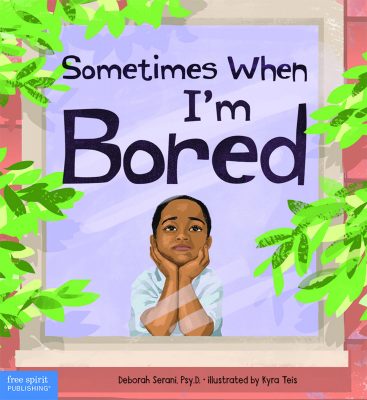
    Deborah Serani’s Sometimes When I’m Bored is a colorful children’s book that highlights the challenges of being bored as a child in an inquisitive and reflective way. It also teaches children how to navigate this complex emotion. Dr. Serani is also an award-winning psychologist in practice for over thirty years.

    The story starts with a little boy explaining how when he feels bored, that “nothing feels fun.” He gives examples (staring out the window, not preferring his toys, completing multiple readings of all his books) of his complex feelings in the story opening, which are relatable as both a child and an adult. He decides to ask his mother for suggestions on how to cure his reluctance to do all his usual and familiar hobbies. The two share a relationship that is bridged by easy-to-understand language.

    Momma reminds him that he could see his feelings of boredom as meaning that “something special is waiting” for him. His well-meaning and good-natured mother provides numerous suggestions to her son. The boy starts spending time resting with his father, or writing a letter to a loved one and following his curiosity. These tender moments are beautiful, the bond the two share is sweet and loving. Kyra Teis’ illustrations are full of vibrant color, with double page spreads showing texture and closeness in the characters.

    Sometimes When I’m Bored flows naturally and effortlessly while touching on the challenges of feeling bored as a child and as an adult.

    Boredom, although at times can feel inconvenient or inappropriate, teaches us all to use our curiosity and openness. We must, like the little boy in Sometimes When I’m Bored, learn and take the advice from those around us to help nurture these new habits in wonder.

    Moreover, if we do not honor our disinterested feelings, we are unable to grow as individuals. Serani teaches children about this lesson in her lovely book and this book, like the others in the Sometimes When series, give a safe space for all to articulate their thoughts without judgement and only in awe.


    5 Stars! Best Book Chanticleer Book Reviews

  • VOICES of NAVAJO MOTHERS and DAUGHTERS: Portraits of Beauty by Kathy Eckles Hooker with photos by David Young-Wolff – Navajo History, Memoirs, Indigenous Culture


    Voices of Navajo Mothers and Daughters: Portraits of Beauty by Kathy Eckles Hooker is a heartwarming work exploring the relationships between Navajo mothers and daughters, their connections with each other and their families, and their hopes and dreams for their children as they encounter a world far removed from their traditional lives.

    In these insightful interviews with Navajo women—grandmothers, mothers, and daughters—the twenty-one families that the author spoke to talked about their backgrounds and histories. They contrasted how the elder women grew up compared to their daughters and granddaughters (such as the lack of amenities like electricity, running water, or internal combustion vehicles). And they explored the many ways that traditional matriarchal Navajo culture continues to enrich their lives today.

    David Young-Wolff’s memorable, warm photographs of the interview subjects let us see the faces behind the stories. The charming presentations of the women, often with the backdrop of the land they grew up in and even of the family hogan, the traditional Navajo home, give the reader insight into the closeness between the generations and the natural and human environments that have shaped their lives.

    The thoughtful tales these women tell are interspersed with painful reminiscences about points in American history that changed their culture’s ways of life. Events such as the Long Walk, in which more than 10,000 Navajo were forcibly marched by the US military to a reservation in what is now New Mexico, and the Navajo-Hopi Land Dispute, the judicial results from which echo even now.

    In an outer society so dependent on cars, the elder women note how they were dependent on horse and buggy in their younger years. One woman recalls a memory of wonder when she saw a car for the first time. For some, water was only available by walking a certain distance to a well, and during times of drought, only used for feeding livestock or drinking.

    In addition, they tell stories about life in traditional homes. Sometimes these women remember their homes warmly and sometimes not. One family speaks of the heartbreak of having a home destroyed and the pets and livestock killed by persons unknown, despite being on good terms with their neighbors.

    The interviews in each case mention how the elders emphasized the need for education. But sometimes that “education” came in the form of abusive boarding schools that tried to erase native culture from the children they taught.

    Language is an especially important issue discussed by the women, both young and old.

    Only one of the families interviewed had a daughter who went to a boarding school that taught both Navajo and English. In the majority of cases, speaking Navajo was actively discouraged at the boarding schools. The disconnect of having to learn English to participate in the dominant American culture reflects on their lives and families even now.

    Then there are stories about traditional ceremonies, specifically about the kinaaldá, a four-day ceremony celebrating the girl’s first menses. The women tell warm and humorous tales about what’s involved (including running every day for four days, each day longer, to make sure the young woman is strong enough to withstand what her life will entail), and they describe the trials and tribulations of baking a cake that family and friends will enjoy… but the girl herself cannot.

    This book reveals how traditional culture has informed and continues to infuse the daily lives of Navajo women. Stories about arranged marriages, some expected and some a surprise (in one case only finding out the young woman is getting married the next day!), are eye-openers and provide food for thought.

    One of the recurrent themes that shape these women’s stories is the question of how to support their children and how the next generations would be educated and grow to support themselves. The traditional art of weaving was a major or even sole source of income for a significant number of women in the book. Some of the elder women recount how they discouraged learning the art so that their daughters could do better than they did. In turn, some of the daughters mourned that they never learned the traditional art, feeling bereft of a connection to their ancestors.

    Questions about what wisdom and skills we choose to pass along to our children are of course not unique to Navajo women; however, readers will enjoy Hooker’s way of illuminating this particular window into Navajo culture from the women who so graciously shared their journeys.

    Voices of Navajo Mothers and Daughters: Portraits of Beauty by Kathy Eckles Hooker, is a deeply moving, must-read for mothers and daughters everywhere, and one book we highly recommended!


    5 Stars! Best Book Chanticleer Book Reviews

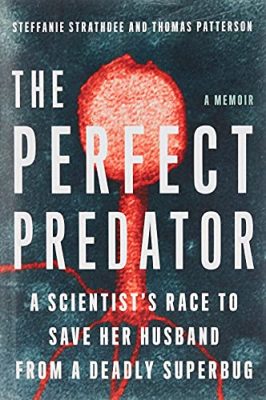
  • The PERFECT PREDATOR: A Memoir by Steffanie Strathdee and Thomas Patterson – Memoirs, Medical, Microbiology

    The Perfect Predator is just the kind of edge-of-the-seat scientific/medical thriller that Robin Cook and Michael Crichton used to write, that nail-biting search to find the right treatment in the nick of time to prevent a pandemic from sweeping the world.

    The difference here is that The Perfect Predator is a true story, and the pandemic that epidemiologist Steffanie Strathdee fights on behalf of her husband is one that scientists have been warning about for decades. Her husband wasn’t even the first to be struck down by it – but he was the first to receive a cure that could save many others. If only the world heeds the warning made so clear in this spellbinding book.

    On vacation in Egypt in late 2015, Strathdee’s husband contracted a stomach bug. Nothing he hadn’t had before and shrugged off, but this time was different. Somewhere along the way from the pyramids to the clinic to the first of several medevac flights, Thomas Patterson came into contact with one of the deadly, antibiotic resistant virus strains known as “superbugs” – and it decided he’d make an excellent host. At least until it killed him.

    And it tried. Over and over again. From Egypt to Frankfurt Germany to the world-class medical center at UC San Diego, where the couple both worked. Where they had contacts in just the fields that they’d need in order for Steffanie to cobble together the ultimate “Hail Mary” pass. That it would be possible to send a killer, a virus killer, into Tom’s body to eliminate the deadly virus that would otherwise eradicate Tom Patterson’s life.

    If it worked, it would be a miracle. But also a clarion call to whoever reads this book that a century of use and overuse of antibiotics has created these superbugs that can no longer be vanquished by what was once a miracle drug. And that if the research and medical establishments don’t get a handle on the problem and find methods of treatment that do not rely on antibiotics, the 1.2 million people who died from antibiotic resistant bugs in 2019 is only going to be the tip of a very large and deadly iceberg.

    The Perfect Predator is a compelling story of scientific research that has a very human-centric story at its beating heart.

    Steffanie’s memoir of what happened, to her husband, to her family, to her colleagues and to herself is beautifully written. It is also a story that is absolutely chock-full of the science behind everything she does. Not to worry! Steffanie’s writing style thoroughly explains the science without ever getting bogged down – and while making it accessible to any non-scientist reading this account.

    And she never loses sight of the human face on all those details, not just what she is going through personally. While she needs to separate “Wife Steffanie” from “Scientist Steffanie” in order to get things done. It is very clear how difficult that is. She is also painstaking in giving credit and kudos to all those who made this journey possible.

    The Perfect Predator is the story of one woman’s successful quest for a medical miracle. Any reader who enjoys medical and/or scientific thrillers will be right on the edge of their seat every step of the way. But it’s the warning at the center of the story that will chill those same readers to their bones.

    The Perfect Predator by Steffanie Strathdee and Thomas Patterson won 1st Place in the 2019 CIBA Journey Awards for Narrative Non-Fiction and Memoirs.


  • A SPLINTERED STEP: A Sarah McKinney Mystery by Marian Exall – Mystery, International Crime, Suspense

    Blue and Gold Clue 1st place badgeHow does one avoid family at all cost? A change to name and identity? Participate in AA? Use of a drug or alcohol as a coping habit? Live in a trailer home?
    Check out Marian Exall’s third book, A Splintered Step, in the Sarah McKinney series to find out what happens with her in Wales!

    In the second book, Sarah lands an offer to help her mentor locate his distant daughter, and this adventure takes her to rural Dordogne, France. She also must confront her own inner challenges and dangers. Now, McKinney faces her family fears and the origins of her demons in a heart-stopping and heart-breaking story!

    We learn more about a special someone in Sarah’s life who asks her to visit during the time between Christmas and New Year’s Day. She reconnects one evening with a musician named Deke. He ends up being her long-lost brother Shane who is in hiding from their abusive parents and plays covers of Rolling Stones songs. Exall describes all her characters effortlessly, making them lifelike, vivid and dynamic.

    Even though the conflict of McKinney’s family is troubling and for some hard to read, her supportive journalist beau Dykstra leads her on a fact-finding mission that is impossible to ignore.

    The pair reconnect over a cozy meal, where he surprises her with a lovely and sentimental family heirloom as a gift. They decide haphazardly to travel after attending the funeral of Dykstra’s beloved mentor, whose death came suddenly. While on their travels, they spend the first part of their trek getting to know Sarah’s musician brother, Deke. The two continue and after hours of driving into the white and cold dark winter, the snowbanks pile up and force them to reconsider their choice. As luck would have it, they end up at a bed and breakfast and spend the night, which is the scene for a plot twist!

    Sarah’s story and family origins make for good imagery and believable characters with great dialogue. Some transitions didn’t flow effortlessly and seemed out of place such as the bird sanctuary at the B&B, but overall, the story is well crafted and is hard to put down. The chemistry between Dykstra and McKinney uses their professions to their advantage to solve the case: Dykstra is a journalist; McKinney is an international advocate. Dykstra is no fuss and only out to get the next big story, but McKinney loves a good adventure which helps the two balance each other out.

    Although the descriptions of Wales as a location are sparse, the dialogue between a local host and his uncle (Uncle Georgie & Michael) give us a clearer understanding of the rural setting.

    The love and tenderness that Sarah shows her brother is also a bright light in their dark and abusive family’s past. Plus, the plot-lines pulling on Dykstra and McKinney compel readers to devour this whodunnit page turner.

    Readers will enjoy the story with or without the first two books in the Sarah McKinney series. A Splintered Step is a tale not for the faint of heart as there are some violent scenes, but it is worth continuing to see if the two can solve the case. The best audience for this book is someone who likes a good mystery, likes to travel in Europe and enjoys the Rolling Stones.

    A Splintered Step by Marian Exall won 1st Place in the 2019 CIBA Clue Awards for Suspense & Thriller Mysteries.


    5 Stars! Best Book Chanticleer Book Reviews

    Clue CIBA First Place Winners gold foil sticker image

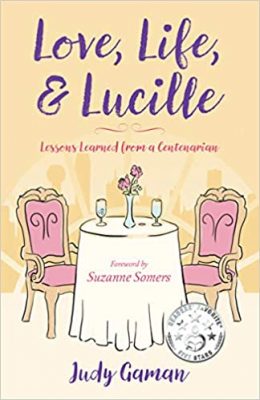
  • LOVE, LIFE and LUCILLE: Lessons Learned from a Centenarian by Judy Gaman – Biography, Women’s Memoirs, Aging

    Blue and Gold 2020 Badge for the Hearten Grand Prize for Inspiring & Uplifting Non-Fiction Love, Life, and Lucille by Judy Gaman

    Award-winning author, motivational speaker, and podcast host Judy Gaman befriends a fun-loving and feisty centenarian in her CIBA Grand Prize-winning novel, Love, Life, and Lucille.

    The list of titles and accolades Judy Gaman has accrued begin to pale when she encounters Lucille Fleming for the very first time. The whole reason for the meet-up with the centenarian was specifically to get her opinions on “aging gracefully,” the featured topic of a new book Judy planned to write. What was scheduled as an hour-long interview turned into an absolutely delightful, near three-hour visit. Lucille turned the tables and began asking questions about Judy’s life with compelling earnestness—something Judy rarely experienced. She was unprepared yet exhilarated.

    Judy couldn’t stop thinking about this “dressed to the nines” woman with an ear-to-ear smile and a sturdy, affectionate hug. Her contact with this larger-than-life woman was so infectious, Judy made up an excuse—so that she could see her again. During that second meeting, the two became fast friends as they set Fridays aside as their day to get together. Before their next planned meeting, Judy learned that Lucille had gone into cardiac arrest. She was dead for three minutes before she came back full of vim and vigor as if nothing had happened. Five months later, Lucille was more than ready for TV interviews. With that, Judy made plans to write a second book about Lucille and their relationship.

    Once Lucille agreed to Judy’s literary plans, their Friday get-togethers morphed into long, memorable, eye-opening, and at times, heart-wrenching lunch outings. 

    The two would share their life experiences—many happier Lucille memories than Judy’s dark, divorced-riddled childhood recollections. At the same time, those outings provided valuable lessons for Judy. She realized she had stopped thinking about her work to-do list but, instead, was “simply living in the moment” when she was around Lucille. “With every lesson, she taught me, she was making me stronger, both mentally and emotionally.” Judy had no idea that her newfound strength from her newfound best friend would carry her through a series of unforgettable roller-coaster events.

    Award-winning author Judy Gaman retells the remarkable, life-changing story of her relationship with Lucille, the woman who profoundly changed her life. 

    Life, Love, and Lucille reads more like fiction than nonfiction. A true storyteller, Gaman enthralls her audience by taking common scenarios—visiting a friend; going to restaurants—and turning them into significant unanticipated spiritual encounters. During those moments, Gaman realizes that Lucille’s optimism came from years of perseverance through life’s ups and downs, which gave her optimism and determination, qualities severely lacking in Gaman’s life. Little by little, Lucille’s passion for life and people began to penetrate the carefully-protected recesses of Gaman’s heart. 

    Gaman’s first-person narration delicately weaves a consistent theme highlighting the pair’s incredibly close relationship: Lucille’s stories; how Lucille’s stories affected Gaman; Gaman’s personal, gut-wrenching struggles with family members; and the testing and strength of their faith in God that led to wholeness. 

    Drawing each chapter to a cliffhanging close further heightens the storyline. From one human-interest situation to the next, Gaman fills her narrative with a sequence of circumstances, slowly evolving from lighter, happier junctures to more heart-rending ones. Judy Gaman masterfully weaves her story, heartfelt, funny, outrageous – all to a compelling must-read narrative. 

    Through Gaman’s Love, Life, and Lucille, Judy Gaman gifts us all with the experience of what it is like to meet a woman who chose hope, love, and life above all else. Highly recommended!


    5 Stars! Best Book Chanticleer Book Reviews


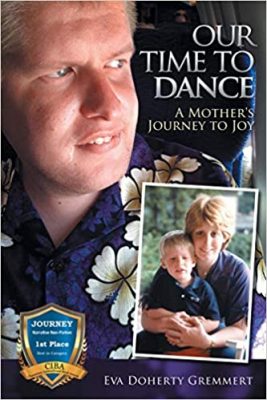
  • OUR TIME to DANCE: A Mother’s Journey to Joy by Eva Doherty Gremmert – Epilepsy, Biography, Parenting

    Our Time to Dance: A Mother’s Journey to Joy by Eva Doherty Gremmert demonstrates the importance of advocacy for those who are disabled, intellectually or otherwise.

    In the early morning of August 18th, 1979, Eva Doherty Gremmert awoke with a contraction. A young mother already, Eva is worried about how she will cope with caring for two infants. She tried to calm her concerns by remembering that babies typically arrive easier and more quickly the second time around; however, the delivery ends up being long and exhausting. Once her son Nick arrived, Eva could not shake the feeling that something might be wrong. For the first several months of Nick’s life, doctors actively ignored her concerns and told her nothing was wrong with her son.

    A mother knows best, and with a lot of courage and determination, Eva and her husband Arden finally find a doctor that listens and agrees with their concerns.

    Their world becomes full of physical therapy and pediatric neurological appointments. When Nick reaches school age, Eva and Arden also become very involved in ensuring he receives the right educational program. Sometimes, a whole new program needed to be created. The road is often tricky, but Nick is full of life and love, and of course, dancing.

    Eva crafts Our Time to Dance into a beautiful story of a mother’s unyielding love. She holds nothing back as she describes her fears of motherhood and the emotional toll of caring for her intellectually and physically disabled son. This book ultimately is not just about Nick’s particular story but also about the importance of advocating for those with disabilities and their families. Eva describes many instances where educational professionals could not provide Nick with the proper program and, subsequently, underestimated his unique abilities and potential to learn.

    The structure of the book has two timelines that transition back and forth.

    One timeline begins just before Nick is born – the other picks up when Nick reaches adulthood and experiences more severe seizures. This results in his doctor’s suggestion that they prepare for the possibility of his passing. Eva and Arden decide to take a big road trip so that Nick can visit friends, possibly for the last time. As they depart, Gremmert reflects on the many challenges throughout Nick’s life, from physical therapy and his education. On every page of this story, readers see Nick’s abundant love and joy with everyone he meets.

    Eva hopes that by writing Our Time to Dance, readers will “find the strength and hope they need and the joy they desire.” Finding the good in difficult situations makes going through them a little easier.

    The powerful message contained in Our Time to Dance makes the book a treasure, and is sure to help those who live with and work with persons with disabilities. Gremmert won First Place in the CIBA 2019 Journey Book Awards for narrative non-fiction for her inspirational work. Highly recommended!


    5 Stars! Best Book Chanticleer Book Reviews


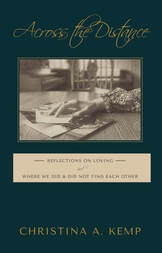
  • ACROSS the DISTANCE: Reflections on Loving and Where We Did & Did Not Find Each Other by Christina A. Kemp – Memoirs, Biographies of Women, Dysfunctional Families


    In her nonfiction debut Across the Distance, Christina Kemp showcases a collection of eight personal stories that delve into the most poignant relationships throughout her life.

    The well-crafted narratives encompass relationships with her parents, brother, childhood friends, boyfriends, and mentors as they moved in and out of her life. Themes of love, loss, distance, self-preservation, and healing rise to the surface.

    Within the book, Kemp ponders the course of a romantic relationship as she realizes that love cannot make underlying differences disappear. At thirteen years old, her father died, and Kemp analyzes how she was able to come to terms with his death, reflecting on his kindness and heroic deeds. Several years later, she is diagnosed with the same condition that took her father; she feels as if she carries her father’s memory in the cells of her own body.

    There is a clear distance between herself and her mother. Harmful and passive-aggressive tendencies placed the two at odds. While Kemp appreciated the Saturday morning conversations they often shared, her mother seemed more concerned with criticism than connection. The woman could shove her daughter across the room without reason. Regarding her rage, the author aptly describes it as “hot explosive sandbags that otherwise leaked at the seams.” Eventually, Kemp learned to accept the child/parent schisms.

    With a background in counseling psychology, Christina A. Kemp delivers an in-depth assessment of her personal connections that will resonate with readers.

    Examining these relationships brings clarity to familial ties and how they affect every other relationship in life. Indeed, Kemp better understands how to love on her own terms and realizes when to leave a relationship. One could spend a lifetime attempting to understand the landscape of relationships that make us who we are.

    Each of the stories opens with a simple black & white photo.

    The magpie cat, Lucy, stretches on hind legs, looking for an escape beyond the confines of her new island home. The model beauty of Kemp’s mother shows with full wavy hair and makeup, a scarf tied jauntily around her neck. A lone sailboat on distant waters captures the lingering loss of her father. Each image renders a stark, yet ethereal quality connected to Kemp’s life.

    Kemp’s styling renders the beauty and harshness of significant moments in artful detail.

    One day, the author overhears a lively conversation between a father and daughter about college plans; it is with shame and sorrow that Kemp realizes she’ll never share that experience. And then, amidst the rural surroundings of a northwest island, she considers the natural beauty of the changing seasons. The colorful descriptions and intimate detail throughout the text prove refreshing. Consider, “the island winds playing like a symphony.”

    Across the Distance is most definitely a personal journal. However, even as the author finds catharsis in her stories, readers, too, will find meaning in the telling.

    Readers are invited to take the book as a sequential whole or read one story portrait at a time. Either way, they will gain insight and understanding as they journey through this book and explore the intimate workings of relationships.

    Across the Distance will appeal to those who seek to understand the connections and divisions we so often encounter in our lives.


    5 Stars! Best Book Chanticleer Book Reviews


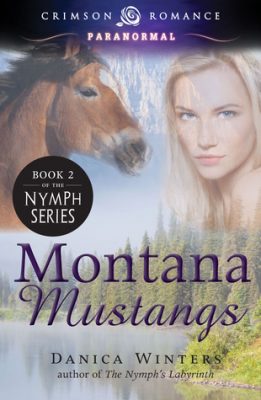
  • Montana Mustangs: Book 2 of the Nymph Series (Nymph’s Curse) by Danica Winters – Paranormal Romance, Mystery, Family Relationships

    Chatelaine 1st Place Best in Category Blue and Gold BadgeAura Montgarten needs to find her sister, Natalie, in Danica Winters’ paranormal romance, Montana Mustangs.

    At first, Aura hopes that Natalie just went off with friends and didn’t bother to call. But the silence continues for more than a week. Aura jumps in her truck to search the last place Natalie’s cell phone had been used, a mountain near Somers, Montana, behind a place called the Diamond Ranch. Before she can get onto the mountain to search, Aura becomes embroiled in a darker mystery when she finds a mutilated hand near where Natalie had been staying. With the gruesome discovery, she fears that Natalie ran into more serious trouble than she had first suspected.

    When a handsome sheriff’s deputy questions her, Aura feels a stirring she hasn’t ever experienced.

    Dane Burke, a no-nonsense lawman, has a case to solve. He shouldn’t be thinking about the mysterious, beautiful drifter in any way except as a possible suspect. With one failed marriage and a non-existent relationship with his estranged brother, he can’t allow himself to feel anything, not even lust. Little does he know, Aura feels much the same, but for very different reasons. Aura keeps her true identity hidden: a shape-shifting nymph. As part of her supernatural nature, any man who loves her or that she loves will die. The two delve deeper into the mystery and the search for Natalie, and their feelings become impossible to deny.

    Dane and Aura have juxtaposing relationships with their respective siblings.

    Aura and Natalie couldn’t be closer. As demigods, the two nymphs have lived for over five hundred years. They share the same curse, connecting them by something else–the need, but inability, to love. Because they cannot allow themselves to find love in a mate, they only have each other. Though Natalie has often “gone wild” and let her Mustang side free for days or weeks at a time, she always returns to her sister who hasn’t shifted in many years. In fact, the two have never gone seven days without speaking before. Aura will do anything to find her sister, even if it means using her nymph powers of seduction to force Dane to help her.

    Dane and his brother, Zeb, couldn’t be further apart. For over twenty years, Dane has stayed away from the Diamond Ranch, once his childhood home and owned now by Zeb. Dane vowed to never return to the ranch when he caught his wife in the arms of his brother. Absence has not made their hearts grow fonder. When Dane shows up at the ranch to question his brother, Zeb meets him with a shotgun, and when Dane releases Zeb from custody, the two brawl in a parking lot. Aura can’t understand their interactions because of her closeness with Natalie.

    Aura and Dane must both face their fear of love.

    Dane was hurt before, however Aura knows that for her, life and death hang in the balance of her love. She wants to protect Dane from her curse. This presents an ironic twist considering Dane, the consummate protector, has sworn to save lives even at the cost of his own. Aura seems fearless, but in truth her fear of love controls her to the point she has never shared her secrets with any man. She uses her hundreds of years of watching humans cruelly hurt animals as part of her excuse—how could she possibly love them?

    Despite her fear, Aura can’t deny she actually enjoys Dane’s controlling nature, the predator and prey feelings that excite her nymph nature. Her feelings go beyond lust, though, coming from “somewhere hidden,” a place no man has ever touched. These new feelings make her consider allowing herself to love and be loved. Though she has always prided herself on being free, she knows she has never truly been so because of her fear of love. Dane’s love becomes the very thing to break her from the bonds of that fear.

    Danica Winters’ Montana Mustangs won 1st Place in the 2014 CIBA Chatelaine Book Awards for Romance Fiction.

    Chatelaine 1st in Category gold foil book sticker image

    Chanticleer Book Reviews 4 star silver foil book sticker


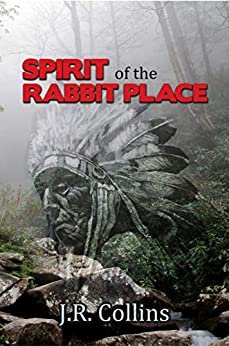
  • SPIRIT of the RABBIT PLACE (Choestoe Book 3) by J.R. Collins – Native American Literature, American Western Fiction, Historical Action & Adventure

    SPIRIT of the RABBIT PLACE (Choestoe Book 3) by J.R. Collins – Native American Literature, American Western Fiction, Historical Action & Adventure


    Laramie Western Fiction 1st Place Best in Category CIBA Blue and Gold BadgeWhen gold miners discover Choestoe Valley, Jebediah Collins must fight for his family – whether blood-related or not – in J.R. Collins’ historical adventure, Spirit of the Rabbit Place


    Fourteen-year-old Jebediah Collins lives in paradise, also known as Choestoe Valley, or to the Cherokee as the “land where the rabbits dance.” The Collins consider Dancing Bear, a Cherokee elder, and his relatives as family. They share with and help each other in good times and bad.

    When Jeb’s grandfather settled in the valley after immigrating from Ireland, he quickly learned the benefits of befriending the Native Americans living in the area. Now Jeb’s father, Thompie, gives freely of his farm’s bounty to the Cherokee, who help work the land and teach the Collins how to survive in this beautiful but deadly landscape. Cain, Jeb’s older brother even marries Rose, Dancing Bear’s daughter, and becomes a full-fledged Cherokee warrior in his own right. Dancing Bear symbolically adopts Jeb, who shares an age with his own son, Wolf. Jebediah and Wolf become blood brothers, learning to be Cherokee warriors together and taking on any and every adventure that comes their way.

    Their adventures take a darker turn with the arrival of gold miners to their sacred valley.

    These unscrupulous men threaten their very way of life. The ruthless miners capture Wolf and force him into slavery, pushing Jeb to risk himself for the chance to rescue his friend.

    The third novel in the Choestoe series builds on a theme of unity. Jeb’s family and nearly all of the settlers in the valley honor and respect the Cherokee who inhabited this area long before the settlers arrived. From plowing fields to hunting game, the Collins family and Dancing Bear’s clan work seamlessly, easily with each other. Under the age-old adage, “treat folks how you want to be treated,” Jeb understands that what he does and says will be returned to him tenfold. Though the white man’s greed threatens to change his home forever, he would never make an enemy of the Cherokee, a people so much more knowledgeable than his own. He trusts implicitly and without question, and with that comes the need to protect and love his family.

    The people of Choestoe take responsibility for one another.

    Their hearts beat as one; their minds think as one. When any neighbor needs help, neither the settlers nor their Cherokee brethren forsake them, chasing down murderous outlaws and helping free slaves. More people than just Jeb’s family show this amazing generosity of spirit. Throughout the valley, families return in kind the goodness shown to them. Mrs. England, for example, takes in orphaned children, especially those with disabilities and special needs.

    The settlers not only want to fight for their way of life, but also for the ancient ways of their Cherokee neighbors, who the gold seekers and US government treat more cruelly every day. This community defines the emotional journey of Spirit of the Rabbit Place.

    Spiritualism plays an important role as well, with a mixture of and deep respect for Cherokee and Christian beliefs.

    Jeb’s faith often brings him comfort and strength, and many times, the Cherokee turn to prayer for direction and guidance on huge decisions. Though he fears evil when he comes face-to-face with it, Jeb knows the Great Creator protects him and finds solace in the idea that no evil can hurt someone who is protected by the Peace of Jesus. All of the Cherokee warriors repeatedly assure Jeb, whose Cherokee name is Spirit Filled One, that he should trust in and heed the voice of the Spirit that comes to him; that very faith not only saves him and George Black Oak, Wolf’s blood uncle, but also shows them some much-needed information in the midst of an important emotional struggle. This faith shines through in Jeb’s loving nature and brings light to all those around him.

    Spirit of the Rabbit Place (Choestoe Book 3) by J.R. Collins won 1st place in the 2019 CIBA Laramie Book Awards for Western and Americana fiction.

    Click on these titles to read our reviews of the first two books in this powerful series, The Boy Who Danced with Rabbits and Living Where the Rabbits Dance.

    5 Star Best Book Chanticleer Reviews round silver sticker

    Laramie Americana Fiction gold foil book sticker image