Tag: Family Saga

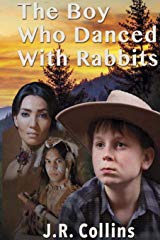
  • The BOY WHO DANCED WITH RABBITS by J. R. Collins – U.S. Historical Fiction, Romantic Action/Adventure, Family Saga

    The BOY WHO DANCED WITH RABBITS by J. R. Collins – U.S. Historical Fiction, Romantic Action/Adventure, Family Saga

    J.R. Collins has given a voice to an ancestor, Jeb Collins, who was almost killed at birth – twice. His survival is significant for that, but also for the fact that in another part of the Georgia mountains, a Cherokee boy, Wolf, is born on the same night. The families of the two boys will meet and mix in the early days of American settlement when everyone had to struggle for survival, and such friendships were still possible.

    Jeb learns smatterings of Cherokee language, and Wolf and his kin pick up English with a sharp mountain twang from their settler neighbors. Together Jeb and Wolf explore the mystical, mountainous part of Appalachia named Cho-E-Sto-E for the prevalence of rabbits there.

    Both of the boys’ fathers remember and despise the British who killed the American rebels and betrayed the Indians who agreed to help them; and both hate all evil-doers, like the ones who kidnapped Jeb’s sister or the sneak-thieves who stole from Jeb’s family. But most of all, they will stand united against a nearby tribe that wants Wolf’s sister as a bride for their leader.

    The author grew up in the region he describes so vividly in this, his first novel, and has a sequel, the award-winning, Living Where the Rabbits Dance. The story, focusing on the boy’s view of a sometimes-dangerous world, is told in a satisfyingly recognizable dialect, using many endearing folk expressions – one of our favorites being, My heart melted like butter on a hot biscuit.

    This multilayered saga presages the time that will come when the Cherokees will be marched away on the Trail of Tears, and family connections like those depicted here will be destroyed in the name of Manifest Destiny. It is heartening to read about the few years enjoyed by such friends as Jeb and Wolf when they could roam the land together with the approval of their elders. There is a finely-honed homage paid to two religions, the Christianity of the Collins clan and the animist visionary beliefs of the Cherokees, each playing a role in Jeb’s perceptions of the world around him.

    From learning to fish to making bead bracelets from local gemstones, to seeing visions invoked by Cherokee spirits, here is a tale of a boy coming of age in a significant time and place. Collins’ book records that history, that atmosphere, with equal measures of zeal and reverence.

    The Boy Who Danced with Rabbits by J. R. Collins won First Place in the 2017 CIBAs for the Goethe Awards, Western Fiction.


  • LOVE and OTHER CONSOLATION PRIZES: A Novel by Jamie Ford – Family Saga, Asian American Literature & Fiction, Historical Fiction

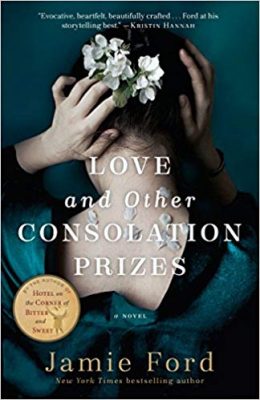
    LOVE and OTHER CONSOLATION PRIZES: A Novel by Jamie Ford – Family Saga, Asian American Literature & Fiction, Historical Fiction

    In 1902, the year of the Boxer Rebellion in China, five-year-old Yung Kun-ai watches as his mother buries his newborn sister in a tiny grave that she has dug with her fingers. The starving mother hadn’t been able to feed her. She kisses her son and gives him her only possession, a filigreed hairpin, then tells him he must remain in the cemetery until his “uncle” comes to take him to America, to a new life in a new world. “This is my gift to you,” she says as she shuffles away.

    These words, and the poignant story that follows, bring to mind two words from the title of author Jamie Ford’s New York Times bestseller first novel—‘bitter’ and ‘sweet’. This is his third…worthy of equal praise.

    Yung spends that chilly night shivering, in fear of the nearby fighting between rebels and soldiers, and in doubt of his future. But his mother’s gift does indeed come to pass. A voyage of many weeks in the hold of a freighter takes him to Seattle. His early years there are not easy, however. Fathered by a white missionary, he is a half-breed and the brunt of taunting and worse by both his peers and his elders. Nonetheless, he ably gains an education, takes the name of Ernest Young, and begins to earn a living as the twelve-year-old houseboy and driver at a high-class brothel called The Tenderloin in Seattle’s Garment District. The other occupants—servants as well as the ‘working girls’—become the family he has yearned for. Some years later, he has his own family with Gracie, a Japanese immigrant known as Fahn when he met her (for the second time) at The Tenderloin.

    The story hops back and forth between the first and seventh decades of the century, centering on Seattle’s Alaska-Yukon-Pacific (AYP) Expo in 1909 and the city’s World Fair in 1962. A raffle at the former is what brings Ernest to The Tenderloin. During the latter, Ernest and Gracie’s daughter Juju, a journalist, has been asked by her editor to write a then-and-now story of the two fairs, based on interviews with old-timers who have been to both. Her primary interviewee is to be her father, she thinks, but he stalls her, offering only tidbits—nothing that would put her story on the front page. Why is he so reluctant? Is there a tale he doesn’t want to share, not only with the newspaper’s readers but even with his daughter?

    This historical novel is brought to a literary level not only by the author’s expertise with language but also by the extent of his research into the facts around which the story is woven. In an Author’s Note, Ford explains that his inspiration for writing is a “never-ending appetite for lost history—the need to constantly turn over rocks and look at the squishy things underneath.”

    For this novel, one of those rocks was the 1909 Alaska-Yukon-Pacific Exposition. From yellowing newspaper articles relating to the Expo, he learned that both the suffrage movement and “social evils” such as brothels (not only the moral evil but the spread of syphilis) were at their height in Seattle at that time. One article told of a child (named Ernest), who was donated by the Washington Children’s Home Society as a raffle prize at the AYP. Another described a climb up Mount Rainier by Washington suffragettes. Much was written about the plight of East Asian immigrants, economically forced into servitude and prostitution. Jamie Ford drew on these articles and other historical documentation to create this touching story and to bring to life its colorful and accurately drawn characters.

  • MY CHRISTMAS ATTIC by Dennis Clausen – Heartwarming, Seasonal Literature, Family Saga

    MY CHRISTMAS ATTIC by Dennis Clausen – Heartwarming, Seasonal Literature, Family Saga

    A lonely child’s fantasy life intersects with reality in this Korean War-era tale of separation and reunion.

    At almost nine, Jake often escapes into his imagination, blotting out a couple of situations developing around him. He and his mother are hoping against hope that his father might someday return from the Korean War, and Jake cannot read. Words just seem to jumble up before his eyes, the other kids make fun of him, and worse – bullying has become routine.  These days, Jake tries every ruse to skip school until he is referred to a reading counselor who figures it out. Jake is dyslexic, as is the counselor, and this may mean he is, in fact, more intelligent than average, as well as unusually intuitive.

    Intuition begins to seep into Jake’s life as he spends time in the attic arranging the Christmas ornaments, wishing it could be “Christmas forever” for himself, and for everyone. One of the decorations is a porcelain figure of an old bearded man, Ebenezer, who holds a mysterious, unreadable scroll. Deciphering the scroll’s message will lead Jake into a world of psychic visions, ultimately leading to his conviction that his father is alive. Jake’s mother, who has built a sentiment-laden shrine to her lost love, holds on to the last shreds of hope even as her soldier husband is officially presumed dead. Together, she and Jake will learn the surprising truth.

    Author Clausen (Prairie Son) has an excellent grasp of the emotive power of the past to awaken the reader to timeless influences. In this story, the Ebenezer ornament said to be 100 years old, links old customs with a child’s search for peace and reassurance in the present. As the boy travels through time with the ancient sage, he becomes stronger, better able to face his current struggles.

    Clausen writes with authority about these two subjects, dyslexia and its effects on the mind, and “The Forgotten War” in Korea, where thousands of American soldiers remain unaccounted for to this day. He also links the earnest, childlike wishes of Jake to find solace and create solutions to the pervasive sadness of a mother mourning her husband while doing her best to support and encourage their only child.

    The novel begins and ends in a present-day framework in which we learn that Jake has incorporated his childhood adventures into an adult striving to expand the “forever Christmas” concept to a broader spectrum.

    Plausible fantasy with a clear connection to our national past composed by a practiced wordsmith, My Christmas Attic can be appreciated as a classic seasonal saga with a cinematic quality that speaks of broader possibilities.

  • BEFORE WE WERE YOURS by Lisa Wingate – Historical Fiction, Child Trafficking, Family Saga

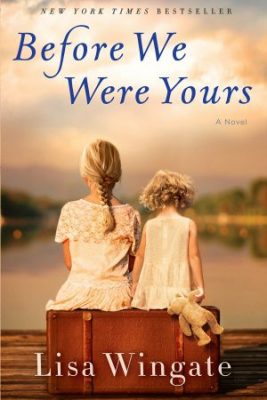
    BEFORE WE WERE YOURS by Lisa Wingate – Historical Fiction, Child Trafficking, Family Saga

    For three decades (1920-50), the Tennessee Children’s Home Society (Memphis) appeared to be an above-board adoption agency but was actually a center for child trafficking. Under Georgia Tann’s greedy leadership, dozens of impoverished children were literally snatched from their mothers’ arms at birth, provided forged identify papers and sold to the highest bidder. What could be the harm? These “river rats” would have lives they could never have dreamed of in their affluent new homes.

    In this historical fiction novel, Lisa Wingate has done the world a great service by laying bare the life-long abuse, trauma, and despair that the “orphans” and their helpless parents endured (through large doses of willful blindness, the remaining records were not unsealed until 1995 – far too late for most chances of reunion).

    Wingate readily spans the generational gap by employing two women, bouncing back and forth between what was and what is. Rill Foss (eventually to become May Weathers and finally May Crandall) relives the brutal abduction from the Arcadia (riverboat home) to the grim reality of the children’s home before ending up after a long life in a nursing home. Living a life of privilege due to family pedigree, Avery Stafford uses her considerable legal skills to ferret out the truth as to why her dementia-suffering grandmother seems to be holding back a family secret – one that could well scuttle her father’s chances for re-election to the Senate.

    With that narrative technique put into play, readers will be intrigued to see if they can put the pieces of this familial puzzle together before the principals do.

    Real-life Georgia Tann is fictionally recreated and given a most believable tone as the ruthless baby-snatcher-for-cash. Her staff members include a nasty mix of Mrs. Murphy, a vicious matron who delights in all manner of threats and punishment alongside her pathetic cousin, Riggs, who tries to lure the prettiest of the girls into his lair and bed. All three of these failed humans can turn on the charm at the drop of a potential “buyer.” Not surprisingly, even forced adoption seems better than staying in the squalid conditions of their “rescue” home.

    By the time the skeletons finally escape the closet, it is truly disturbing what those who ought to have known better and have never gone to bed hungry will do in the name of “improving” the lives of our most vulnerable souls. Surely those days are over…

  • THERE WAS AN OLD WOMAN by Hallie Ephron – Literary Mystery, Family Saga, Aging Parents

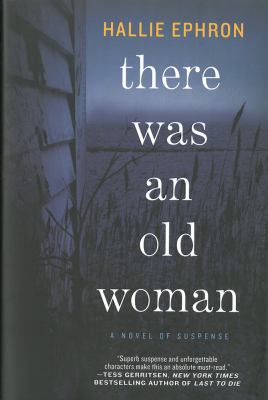
    THERE WAS AN OLD WOMAN by Hallie Ephron – Literary Mystery, Family Saga, Aging Parents

    Evie Ferrante is busy assembling her first exhibit as Senior Curator of the Five Burroughs Historical Society. It’s a big deal and she’s up for the challenge. She’s overseeing the placement of a B-25 airplane engine which had been found at the bottom of an elevator shaft in the Empire State Building. It happened to land there after a crash in the ’40s. The theme of the exhibit is how fire and disaster shaped New York City.

    As Fate would have it, that’s when disaster pays Evie a call in the form of a text message from her sister Ginger, It’s Mom. Call me.

    And what a disaster it is.

    Evie must drop everything to fly out and help her sister sort through their dysfunctional alcoholic mother’s life. As Ginger deals with Mom at the hospital, Evie deals with her mother’s house, which is much worse than she feared. Outside, it’s tagged with graffiti and the stairs have almost rotted through. Inside, it’s like a homeless encampment, filled with garbage, dead food containers, empty liquor bottles, cockroaches, moths, spiders, and reeking of decay. Evie digs in. As she cleans, she searches her mother’s records trying to assess her financial and insurance situations and stumbles upon envelopes stuffed with cash, thousands of dollars just lying around.

    Where did the money come from, and why is it just sitting there?

    Ephron is a talented writer and does a splendid job of creating a sense of place with richly drawn characters embroiled in realistic predicaments. At its heart, the story is a mystery wrapped around an issue so many now face, caretaking for parents in physical and mental decline, and the burden and stress it puts on families. We feel it, we recognize it, we understand it. Ephron is writing fiction with a gravitas rooted in reality and that’s why her books are so good.

    The story unfolds naturally and isn’t force. One mystery seems to lead to another linking the lives of the two main characters and none of their problems are trivial or easily solved. And as in most good stories, things only seem to get worse the deeper you dig, until it seems there’s no way out.

    There was an Old Woman is a contemplation of where we are in a society, our relationships within our families, and the struggle we all face.


  • AWAY at WAR: A CIVIL WAR STORY of the FAMILY LEFT BEHIND by Nick K. Adams – Historical/Bibiography, Family Saga, Civil War

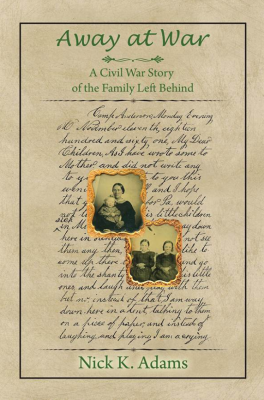
    AWAY at WAR: A CIVIL WAR STORY of the FAMILY LEFT BEHIND by Nick K. Adams – Historical/Bibiography, Family Saga, Civil War

    In 1861, like so many other American men, David Brainard Griffen took leave of his family and enlisted in the army, volunteering as a soldier for the Union. Also like so many other American men, he hoped he’d be home in a few months, that this Civil War would soon be over, and he’d be reunited with his wife, Minerva, his daughters, Alice, seven-years-old, Ida May, five-years-old, and his infant son, Edgar Lincoln. To minimize the pain of separation from his family, he wrote them letters from the field of battle, more than 100 accounts of what he was doing and witnessing as a 2nd Minnesota Volunteer. While the book is one of historic fiction, the letters are genuine, and the characters are based on actual people. The author of this fine account, Nick K. Adams, is the great-great-grandson of Corporal David Brainard Griffen.

    As compelling as the Corporal’s letters are, the mainstay of this book is about those left behind on the Minnesota prairie. In the introduction, Adams notes, “I invite you, dear reader, into the lives of this family who represent the high personal cost that waging war – for whatever cause, good or evil, inevitably produces.”  In this manner, the reader spends time with a family doing the best it can while the head of the household is away.

    One feels like an invisible member of the clan while watching Minerva and her children go about their ordinary, but in many ways, extraordinary lives. Their days are made up of chores. They care for chickens and livestock, barter eggs in the nearby town of Alba for fruit, shoes, and fabric. They make candles out of beeswax and tallow and plant crops to harvest. Livestock are slaughtered. Minerva teaches her daughters to make cheese, a skill she learned during her girlhood in Vermont. They visit with family members who live in the area, enjoy spring and summer days and bundle warmly for the frigid Minnesota winters. Alice attends school and, eventually, Ida May does as well. Edgar Lincoln graduates from baby clothes to his first set of overalls.

    It’s the minutiae of life, the everyday details that build and hold this family, and every family, together. But the reminder of the Civil War is always there. Alice uses a game of checkers to explain warfare to her little sister, and the family gathers to read and reread letters from a husband and a father they miss dearly. They write to him, as well, letting him know how they are coping in his absence. And, of course, there is the added tension of not knowing how long the war will last and whether Brainard will be among the fortunate men to make it home.

    Like the best young adult novels, this book draws a universal audience.  Every reader will feel enriched reading this vivid, charming, and poignant account of farm life in the mid-19th century amidst the backdrop of the Civil War. In addition to an account of family life, one learns much about practical matters in a rural, historic setting.

    Teachers who use Laura Ingalls Wilder’s books in their curriculums will want to add Away at War: A Civil War Story of the Family Left Behind to their lesson plans. There’s a connection between the authors; Alice Griffen married Laura Ingalls Wilder’s cousin. For those interested in simply reading Brainard Griffen’s letters, Adams published them as a collection in an earlier work, My Dear Wife and Children:  Civil War Letters from a 2nd Minnesota VolunteerPut in the context in this lovely novel, however, the letters are a reminder of what was happening in these lives when pen wasn’t put to paper, when a mother and her children had to do whatever was necessary to get through the day and rest for the coming one. This book is both simple and profound, a reminder of a time and place during a tumultuous time in American history.

    Away at War: A Civil War Story of the Family Left Behind won 1st Place in the 2017 CIBA competitions for unique stories of the United States, the Laramie Awards.

    My Dear Wife and Children: Civil War Letters from a 2nd Minnesota Volunteer won Mr. Adams 1st Place in the 2016 CIBA competitions for Memoir, the Journey Awards.


  • The ONE APART by Justine Avery – Family Saga, Fantasy, Metaphysical/Visionary

    The ONE APART by Justine Avery – Family Saga, Fantasy, Metaphysical/Visionary

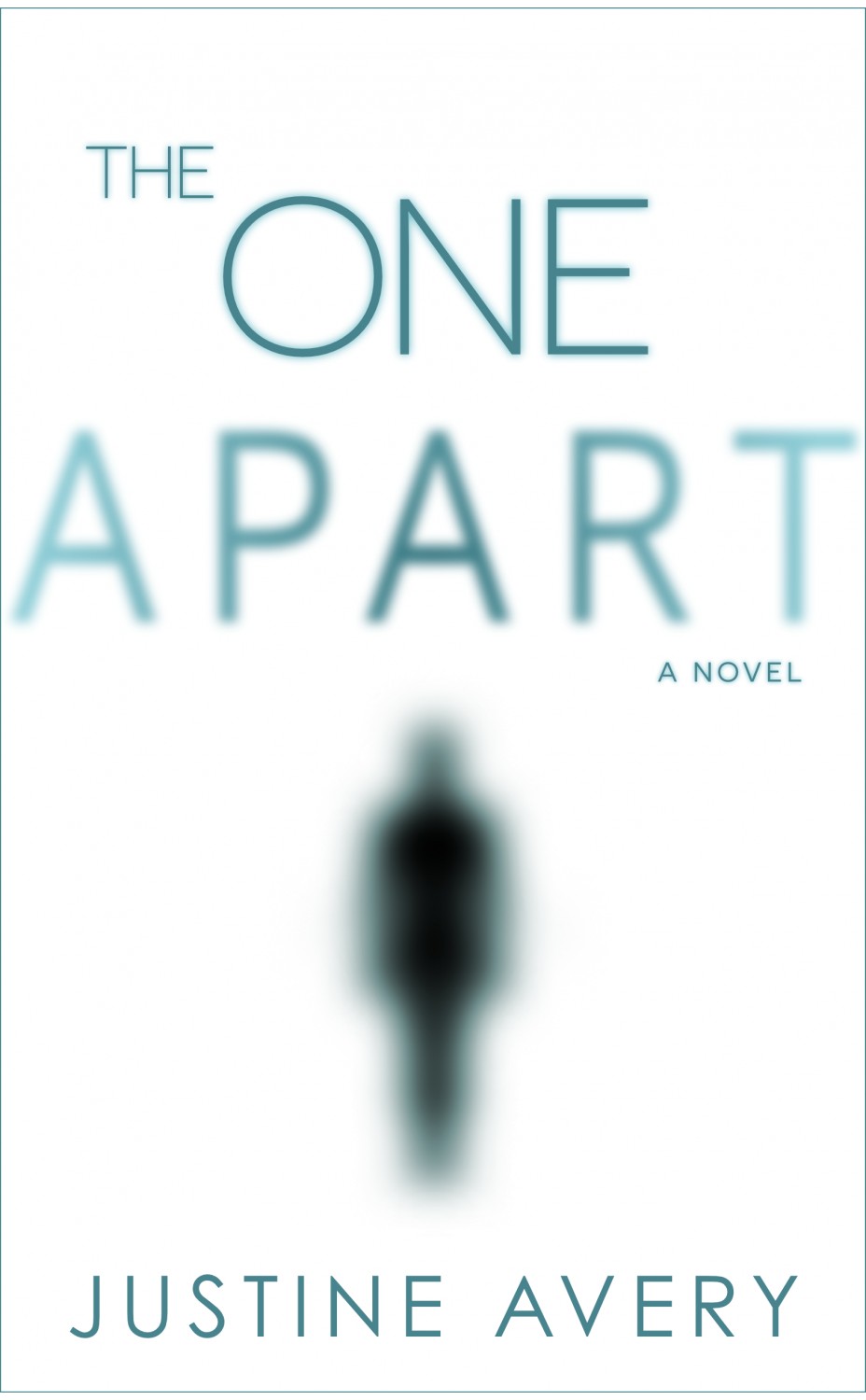
    A perfect blend of realism, fantasy, and deep spirituality awaits those who open Justine Avery’s novel, The One Apart. It is what readers bring to the novel – faiths, belief systems, philosophical dilemmas – that will influence and shape their perceptions of this fascinating and compelling read. Avery’s book, like life, is full of instruction for those who want to be fully aware.

    Aware of what?

    Everything—including awareness itself.

    This is certainly the case for the main character, Aaron, a remarkable boy who lives with his mother, Sancha, and his grandmother, Maria. Although she’d planned to give Aaron up for adoption, Sancha bonds so deeply with her son at birth that she can’t fathom life without him. His grandmother realizes his uniqueness, too, as the newborn communicates with her through blinking his eyes. He makes astonishing progress through developmental milestones, walking and reading within the first months of life.

    As a toddler, he speaks with the wisdom of a timeless soul. Maria suspects that these physical and mental feats indicate that her grandson is chosen for a special purpose, but she hopes he’ll live as normal a life as possible. He’s distracted, however, by a malevolence that only he can see.  As Aaron comes of age, he strives to act normal and blend in, but his very few close friends and girlfriend notice his preoccupation, his never being fully present in this world.

    There’s a reason for Aaron’s constant distraction, for his never feeling a part of this life; he is connected to “the Apart,” the other-worldly dimension that is both removed from human existence, “corporeality,” but ever at hand. Since childhood, he has sensed that his true name is Tres and that his existence as Aaron is somewhat play-acting. His hyper-awareness alerts him to his “OnLooker,” a sort of guardian angel who’s a liaison between Aaron and the sagacious luminary beings of the Apart that consult and advise on Aaron’s tutelage.

    Much of the book involves Aaron learning, with the instruction of his OnLooker, how to fully experience awareness, to understand that every moment is this moment despite previous lives and the variety of life’s experiences. At a critical juncture in the novel, Aaron is given a choice, one that will impact his own existence dramatically but also that of all other beings. The author adroitly merges Aaron’s worldly existence and his relation to the realm of the Apart in a poignant and satisfying conclusion to the novel.

    This is a quiet book, one that allows the reader the time and space to experience life with its main characters. The stillness is at times deeply peaceful, at other times eerie and ominous. The novel illustrates the power of compassion and empathy, but also the chilling consequences when power is exercised for self-serving purposes.

    While the character of Aaron has similarities to various religious and mythic figures, the author has also imbued him with a uniqueness and a relevance to our times. This book will stay with you long after you finish it, a hallmark of excellent literature. Justine Avery’s The One Apart inspires deep contemplation of self, community, and individual and collective purpose.


    The One Apart won First Place in both
    OZMA and SOMERSET Awards in 2017!


  • DRAGON SPEAKER – Book One of The Shadow War Saga by Elana A. Mugdan – Fantasy, Family Saga, Action/Adventure

    DRAGON SPEAKER – Book One of The Shadow War Saga by Elana A. Mugdan – Fantasy, Family Saga, Action/Adventure


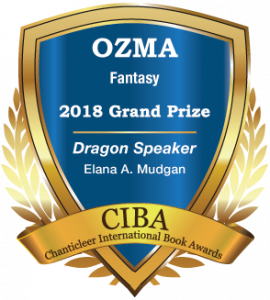
    Dragon Speaker, Book One of The Shadow War Saga by Elana A. Mugdan won the CIBA 2018 Grand Prize in the OZMA Awards for Fantasy Books! Congratulations!


    Ozma Grand Prize Winner Badge for Dragon SpeakerA young girl is charged with rescuing a dragon and, ultimately, saves her world in this wide-reaching fantasy conception of love, war, danger, and magic. Massive amounts of magic!

    Keriya is a simple girl of no great pedigree who lives in Aeria where everyone except her wields some form of magic. At age 14, she knows she will not be selected to prove herself worthy of a greater destiny in the annual Ceremony of Choice. But she has to try. Even though the consequences of failure will be a life of slavery, she yearns for the opportunity. She approaches the selection committee and begs ─no, demands ─ a chance.

    Like the others chosen in the Ceremony, she goes alone into the forest to seek her destiny. There she meets the great god Shivnath who assigns her the task of locating and protecting the last of the dragons, Thorion. She must fight against the most pervasive evil; a monstrously powerful force named Necrovar, skulking in the land of Allentria. In giving her the necessary, but unnamed, gifts to accomplish the task, Shivnath gives her shining purple eyes that mark her as unique, perhaps dangerously so.

    However, no one believes Keriya’s claim that Shivnath has given her the ability to fight Necrovar without help. But Keriya knows her destiny. She takes the name Soulstar to give herself inner strength, and the adventure begins.

    Keriya’s journey is longer and more crooked than she had envisioned, and soon she is joined by her childhood rival, Roxanne who has many magical powers and by Fletcher, whose magic, like his personality, is rather weak. Dangers surround the trio at every turn, and they soon learn that trust must be earned and friendships must be carefully guarded.

    Author and award-winning fantasy film-maker Mugdan has been writing this intriguing saga since she was in high school, and perhaps because of that, has retained a remarkable empathy for her teen heroine. Keriya is a multi-faceted character, capable of getting fed up with her shortcomings and ashamed of her failures while maintaining in her spirit the belief that she will have what it takes to act courageously in a crisis. Mugdan movingly depicts Keriya gaining the skills and confidence she will need for cosmic combat. The author also shows this growth in Keriya’s companions Roxanne and Fletcher, who are themselves facing challenges they never dreamt of; and the three are gradually gaining respect for each other.

    Mugdan also manages to make the dragon a sensitive, likable player in this fantasy, while at the same time creating some super-unlikeable evil-doers: shadowbeasts, giant slugs, bogspectres, and of course the almost unconquerable Necrovar. Add to this a bit of romance, some supernatural magic, and at least one acrimonious enemy lurking in the background, and you have the recipe for a highly successful first in series fantasy novel.


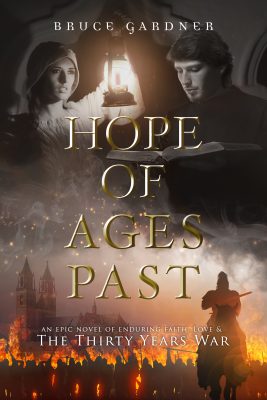
  • HOPE of AGES PAST by Bruce Gardner – Historical Fiction, Thirty Years War, Historical Romance, Family Saga

    HOPE of AGES PAST by Bruce Gardner – Historical Fiction, Thirty Years War, Historical Romance, Family Saga

    A saga writ large on the stage of 17th Century Central Europe,  Hope of Ages Past portrays the deeply personal impacts of religious faith and love amidst the brutality of war.

    Peter Erhart and Hans Mannheim are teenagers when they first meet in the Bohemian capital city of Prague at the outbreak of the Thirty Years War in 1618. These are two of the three central, fictional, characters in Bruce Gardner’s noteworthy interweaving of fact and reasoned conjecture set during the first half of the war. The boys represent the two religious factions in that conflict: Peter is Protestant; Hans, Catholic. The meeting in Prague, based on a real event including actual historical participants, provides the backdrop for a fictional drama that is set in motion when Peter reaches beyond the sectarian divide to help Hans at a moment of deep disgrace. Hans will never forget that kindness.

    As rebellion and conquest fire up across Europe, Peter, in his twenties, becomes a contentedly married Lutheran pastor in Magdeburg, Germany. Opposed by powerful rivals and threatened by the Catholic imperial army now approaching the city, he encounters Anna Ritter – a country peasant girl of uncommon beauty and inner strength who has secretly admired him for years and who is destined to share his trials. Each must fight bravely for the survival of their families and friends when local villains invade countryside cottages and the army, led by an awe-inspiring Black Knight, besieges the city. At the pinnacle of their trial, unthinkable tragedy brings Peter and Anna together and links their fates with Hans, now a grown man with a reputation to prove. Events eventually bring the three together in the siege’s aftermath, and a strange and unexpected reconciliation occurs — one that is put to the ultimate test in a final, horror-filled ordeal.

    Gardner, delving deeply into the philosophical issues at the core of the Thirty Years War, very deftly maintains an over-arching theme of religious differences – and similarities – in the midst of a thrilling, continually evolving panorama of warfare, intrigue, and romance. Interlocking the two storylines – interpersonal and international – is the repeated possibility for human compassion to emerge despite deep religious disagreements. Gardner’s skillfully drawn characters, both Catholic and Protestant, are confronted with choices – to kill, to help, or to ignore their fellow human beings in times of terrible suffering. Gardner fairly and intelligently presents the positions of both groups.

    Love conquers hate and uplifts two great faiths in Bruce Gardner’s Hope of Ages Past, contrasting romance, religion and family cohesion with the upheaval of battle and blood, all balanced by a thought-provoking, well-considered overview of the western world’s Christian heritage.

    Ultimately, Gardner has gifted us with an epic novel of enduring faith and love set amidst the brutality of the Thirty Years War in Europe. A very good read.


  • The ONE APART by Justine Avery – Metaphysical & Visionary, Literary, Family Saga

    The ONE APART by Justine Avery – Metaphysical & Visionary, Literary, Family Saga

    A perfect blend of realism, fantasy, and deep spirituality awaits those who open Justine Avery’s novel, The One Apart. It is what readers bring to the novel – faiths, belief systems, philosophical dilemmas – that will influence and shape their perceptions of this fascinating and compelling read. Avery’s book, like life, is full of instruction for those who want to be fully aware.

    Aware of what?

    Everything—including awareness itself.

    This is certainly the case for the main character, Aaron, a remarkable boy who lives with his mother, Sancha, and his grandmother, Maria. Although she’d planned to give Aaron up for adoption, Sancha bonds so deeply with her son at birth that she can’t fathom life without him. His grandmother realizes his uniqueness, too, as the newborn communicates with her through blinking his eyes. He makes astonishing progress through developmental milestones, walking and reading within the first months of life.

    As a toddler, he speaks with the wisdom of a timeless soul. Maria suspects that these physical and mental feats indicate that her grandson is chosen for a special purpose, but she hopes he’ll live as normal a life as possible. He’s distracted, however, by a malevolence that only he can see.  As Aaron comes of age, he strives to act normal and blend in, but his very few close friends and girlfriend notice his preoccupation, his never being fully present in this world.

    There’s a reason for Aaron’s constant distraction, for his never feeling a part of this life; he is connected to “the Apart,” the other-worldly dimension that is both removed from human existence, “corporeality,” but ever at hand. Since childhood, he has sensed that his true name is Tres and that his existence as Aaron is somewhat play-acting. His hyper-awareness alerts him to his “OnLooker,” a sort of guardian angel who’s a liaison between Aaron and the sagacious luminary beings of the Apart that consult and advise on Aaron’s tutelage.

    Much of the book involves Aaron learning, with the instruction of his OnLooker, how to fully experience awareness, to understand that every moment is this moment despite previous lives and the variety of life’s experiences. At a critical juncture in the novel, Aaron is given a choice, one that will impact his own existence dramatically but also that of all other beings. The author adroitly merges Aaron’s worldly existence and his relation to the realm of the Apart in a poignant and satisfying conclusion to the novel.

    This is a quiet book, one that allows the reader the time and space to experience life with its main characters. The stillness is at times deeply peaceful, at other times eerie and ominous. The novel illustrates the power of compassion and empathy, but also the chilling consequences when power is exercised for self-serving purposes.

    While the character of Aaron has similarities to various religious and mythic figures, the author has also imbued him with a uniqueness and a relevance to our times. This book will stay with you long after you finish it, a hallmark of excellent literature. Justine Avery’s The One Apart inspires deep contemplation of self, community, and individual and collective purpose.