Tag: Family Saga

  • V.C. Andrews – The Author that’s Still Publishing Forty Years After Her Passing

    V.C. Andrews was trapped in an attic

    And she created worlds of gothic horror

    The gothic horror and paranormal fiction that V.C. Andrews pioneered continues to captivate readers today—and at Chanticleer, we know exactly what makes these dark, atmospheric stories work. That’s why our Shelley Awards (named for Mary Shelley, the Mother of Horror) celebrate the best in paranormal and horror fiction each year.

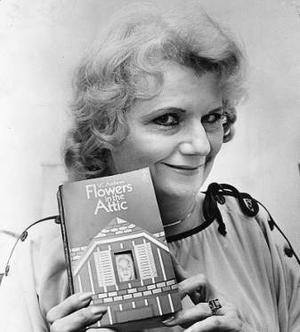
    V.C. Andrews, rose, blonde, woman

    V.C. Andrews, born Cleo Virginia Andrews on June 6, 1923 in Portsmouth, VA, faced a secluded life in her parent’s home, but that didn’t stop her from creating several series with unique characters and plots that will keep you up at night.

    From Personal Struggle to Gothic Masterpiece

    Flowers in the Attic by V.C. Andrews follows the lives of four children whose mother kept them imprisoned in an attic for years in order to collect an inheritance. Released in 1979, it became an instant sensation and led her to write four more books in the Dollanganger Family Series. Its dark themes of family strife and isolation reflected a similar scenario playing out in Andrews’ own life, and she used her experience to speak through the character Cathy Dollanganger, who narrates the story.

    V.C. Andrews, Flowers in the Attic, Books, covers, series

    The dark tale of children kept locked away in an attic somewhat mirrored Andrews’ own life. Born the youngest child and only daughter of three children, she suffered a devastating fall from a stairwell at school as a teen. The accident required several surgeries and resulted in crippling arthritis that left her wheelchair bound and in the care of her mother for much of her life. Just as with many children, that close relationship with her emotionally distant mother, even as she fully supported her daughter’s writing career, proved difficult at times and, when her father passed away in 1957, Andrews used the commissions from her art sales to support her family.
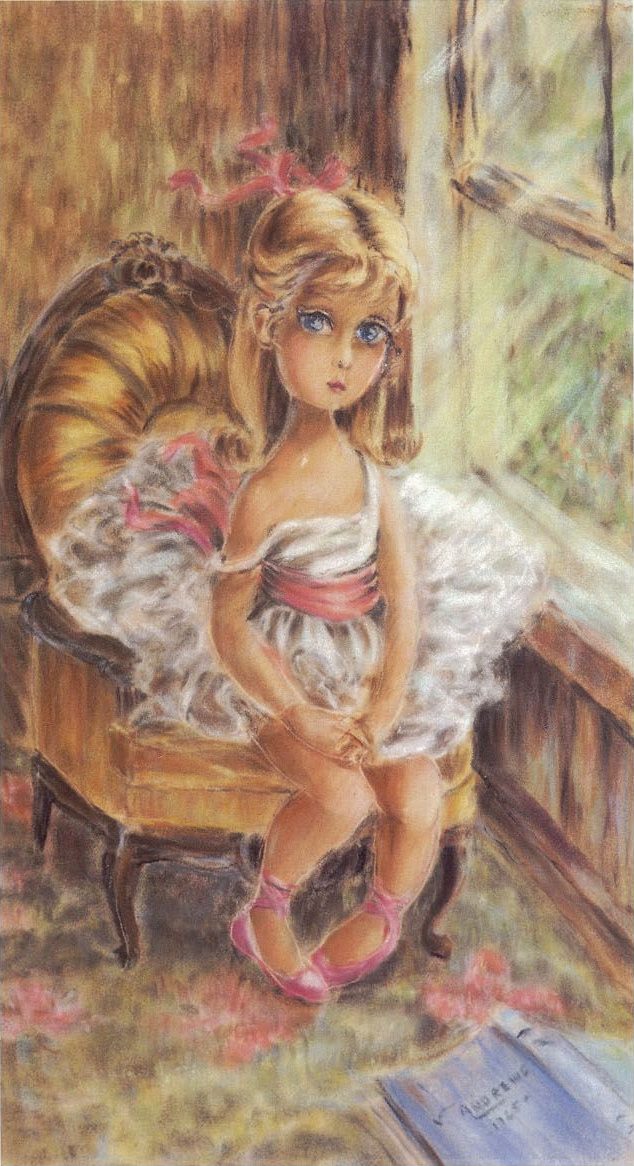
    VC Andrews, painting, art, girl

    The Fast-Paced Formula That Hooked Millions

    Later in life, Andrews turned to writing, beginning with a science fiction novel in 1972 titled Gods of Green Mountain, which was published posthumously in 2004 as an ebook. In 1975, Andrews completed the manuscript for Flowers in the Attic in two weeks, only to have the novel returned with a note to “spice up” and expand the story. Published in 1979, it was an instant success, reaching the top of the bestseller lists in just two weeks. Andrews published a new novel every year after that, earning Andrews larger advances and a growing readership.

    “I think I tell a whopping good story. And I don’t drift away from it a great deal into descriptive material,” she stated in Faces of Fear in 1985. “When I read, if a book doesn’t hold my interest in what’s going to happen next, I put it down and don’t finish it. So, I’m not going to let anybody put one of my books down and not finish it. My stuff is a very fast read.”

     

    V.C. Andrews, red, watch, finger, blonde, plant, woman

    A Literary Legacy That Defies Death

    V.C. Andrews wrote novels that combine Gothic horror and family saga, often revolving around family secrets and forbidden love. Her best-known novel, Flowers in the Attic, was the catalyst to a career that spanned decades, with stories exploring those same themes. Today, her fans have 104 books and 27 series that continue to enthrall readers and inspire Hollywood filmmakers.
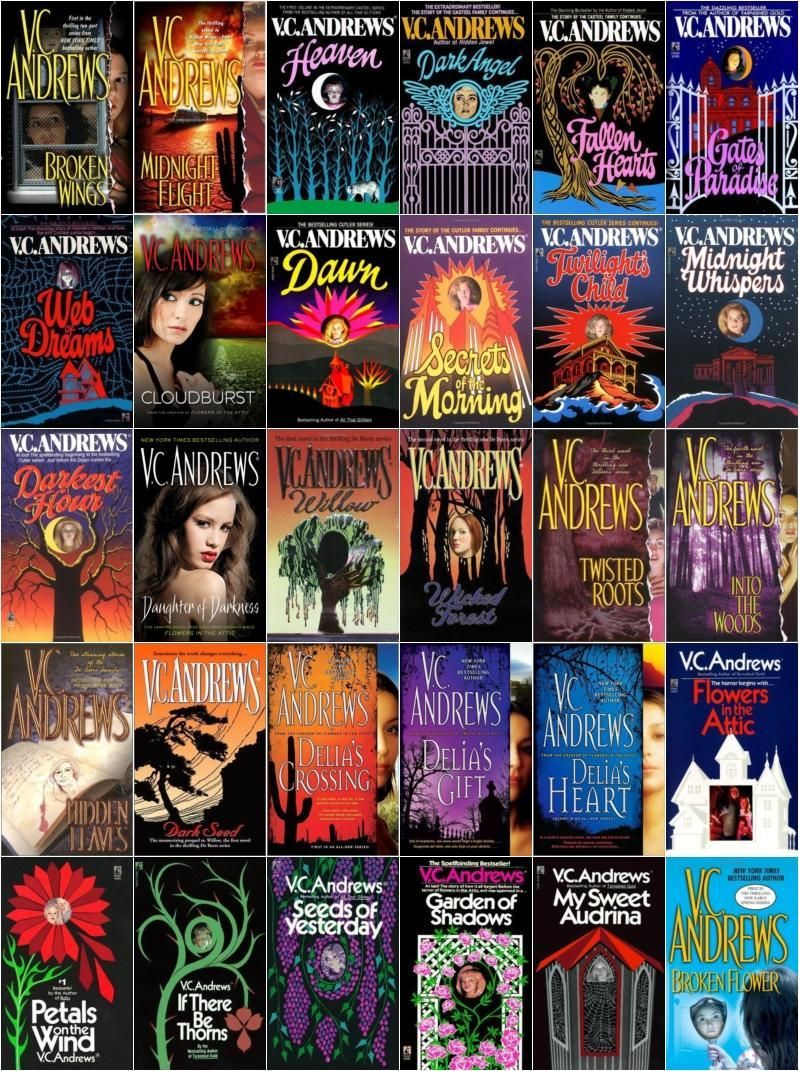
    V.C. Andres, books, covers

    After Andrews’s death from breast cancer in 1986, ghostwriter Andrew Neiderman was hired, initially, to complete two unfinished works, Garden of Shadows and Fallen Hearts that were published soon after. It’s these two novels that are considered the last novels to be almost completely written by Andrews herself, but many more books inspired by her writing and written by Neiderman continued to be published. Forty years later, Andrews’ literary legacy continues to grow, inspiring not only the ghostwriter who continues her stories, but also the many readers who have escaped into her world of family drama and isolation—making Andrews one of the most beloved modern horror writers today.
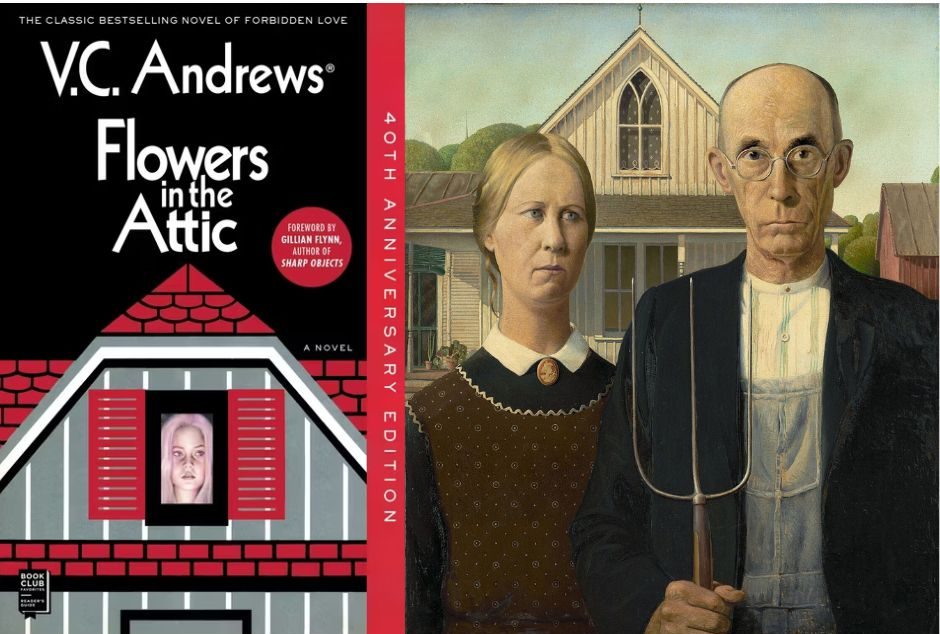
    American gothic, Grant wood, Flowers in the Attic, VC. Andrews

    Gothic Art Meets Family Nightmares

    When I think of Andrews’ novels, particularly Flowers in the Attic, I’m reminded of the famous artwork, American Gothic by Grant Wood—family dynamics painted with a nod to the type of horror that penetrates and unsettles the family dynamic. Surely, Andrews must have pulled from her own conflicted emotions about her family to create a novel that resonates with the love/hate relationships we all grapple with. — Dena Weigel


    V.C. Andrews, book, woman, blonde

    Happy Birthday to V.C. Andrews, an author whose legacy in horror extends beyond her life to entertain and unsettle readers for years to come!


    Does Your Gothic Horror Deserve the Same Recognition?

    The Shelley Awards for Paranormal Fiction features an image of Mary Shelley at her writing desk

    The gothic horror and paranormal fiction that V.C. Andrews pioneered continues to captivate readers today—and at Chanticleer, we know exactly what makes these dark, atmospheric stories work. That’s why our Shelley Awards (named for Mary Shelley, the Mother of Horror) celebrate the best in paranormal and horror fiction each year.

    If your horror novel carries themes of family secrets, supernatural elements, psychological terror, or gothic atmosphere like Andrews’ masterworks, the Chanticleer International Book Awards (CIBA) Shelley Division wants to discover it. Our judges understand the nuances that separate good horror from unforgettable horror—the kind that keeps readers turning pages late into the night.
    You know you want it…

    The 2025 Shelley deadline is June 30th—just weeks away! Whether your work explores paranormal romance, supernatural powers, unexplained phenomena, or psychological horror, professional recognition through the Shelley Awards gives your book the credibility boost that social media alone cannot provide.

    Thriller Suspense Fiction Award

    For suspense and thriller authors, don’t overlook our Clue Awards division, perfect for works that blend mystery with darker elements.

    Submit to the Shelley Awards before the June 30th deadline and join the ranks of professionally recognized horror and paranormal fiction.

    Check back next week as we’ll be featuring several articles about outstanding paranormal fiction and the authors who master this challenging genre!
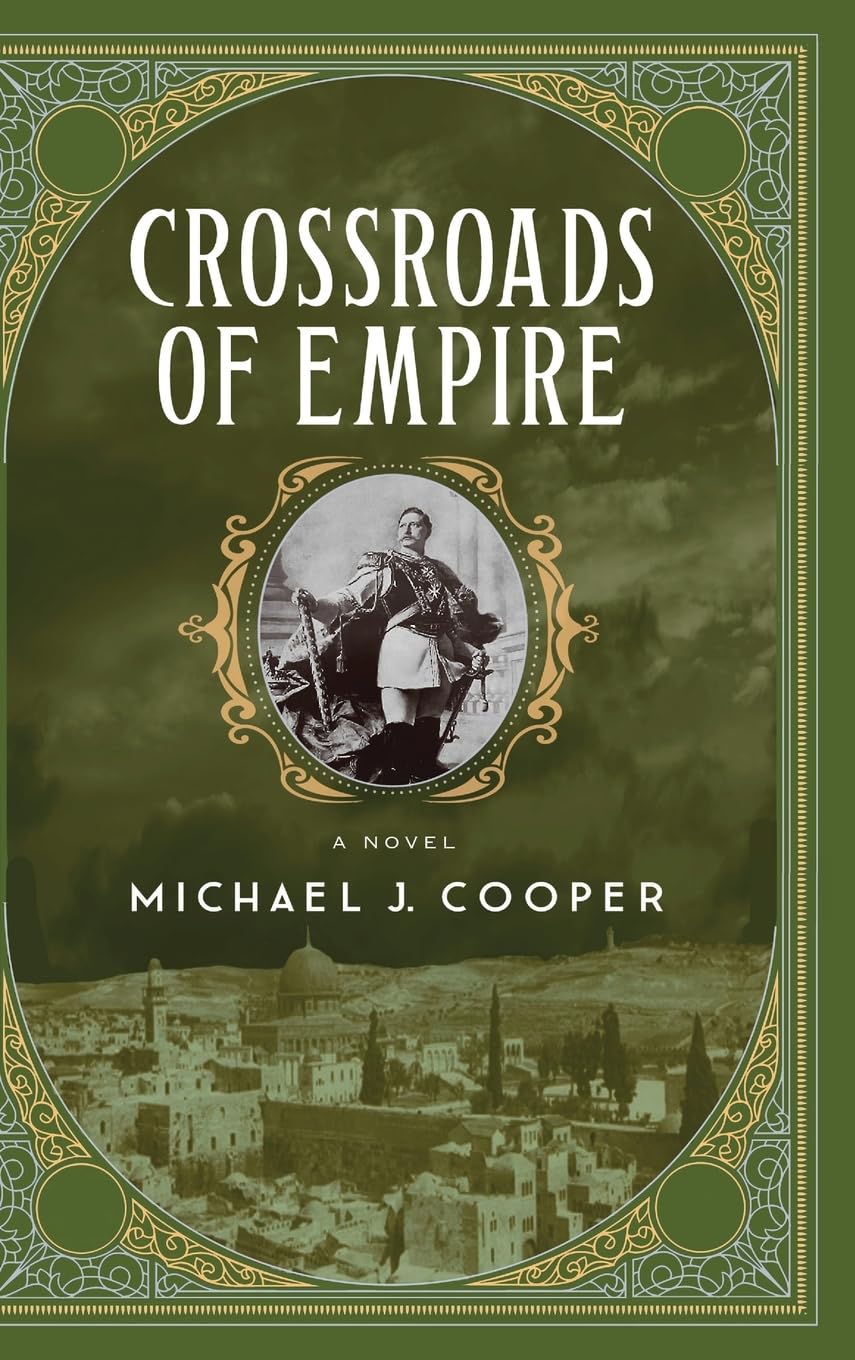
  • CROSSROADS Of EMPIRE by Michael J. Cooper – Historical Fiction, World War I, Family Saga

    Crossroads of Empire by Michael J. Cooper brings readers back into sixteen-year-old Evan Sinclair’s journey through the battlefields of WWI. The adventures and the war itself pick up right where the award-winning Wages of Empire left off. 

    As in the first book, Evan begins his part of this story by going missing, this time not just from his father’s perspective, but from his own. Severely injured during his service with the Flemish resistance, Evan is discharged from a French field hospital. He’s on his way back to England by hospital ship when it is sunk by a German U-boat. When he reaches British shores as the sole survivor in a lifeboat, he’s left with amnesia and has no memory of who he is.

    Evan’s search for his own identity leads him to Rosslyn Castle, the Sinclair family’s ancestral home in Scotland. There he unravels secret family histories and connections long buried. Finally, with assistance from a wise woman, Evan regains his memory. Without the protection the amnesia provided, he faces a host of painful and traumatic memories.

    Crossroads of Empire brings to life a journey of self-discovery set against a backdrop of the war in motion. The horrific trench warfare along the Western Front, the disastrous defeat of the Entente at Gallipoli, and the British route of the Turks at the Suez Canal are made real and vivid to the reader.

    Likewise, Evan’s journey takes place while the imperial powers jockey for position at the crossroads of empire in the Middle East as the Ottoman Empire, the ‘sick man of Europe,’ teeters on the brink of dissolution. The British, seeking to expand their colonial empire, feed the flames of Arab independence through T.E. Lawrence’s missions to the Bedouin tribes and to the man who would be king of an independent Arab State, Faisal son of Hussein, the Sharif of Mecca.

    Cooper’s skillful storytelling sets an unrelenting pace with the international events of the early twentieth century coupled with Evan’s search for answers—about himself and his family’s history.

    Back in England, biochemist and Zionist Chaim Weizmann gives his expertise in the production of key munitions components to the British government in the hope of leveraging his critical contribution to the war effort for the promise of Britain’s backing of a Jewish homeland in Palestine.

    And all the while, Kaiser Wilhelm II looms over the conflict, hoping to sweep in and take the prize he’s always coveted – as have so many others over the centuries – Jerusalem.

    Cooper deftly lays out separate strands of memorable historical and fictional characters across the globe – from Kaiser Wilhelm to a Red Cross volunteer – to bring this chapter of history to life. He elegantly intertwines the multiple strands he has created, making for a read that is both a gripping page turner and a series of carefully observed character studies.

    Two parallel and equally compelling tracks make Crossroads of Empire impossible to put down. First, Evan’s story, which gives readers a young hero they can root for, and then an insightful and multi-dimensional perspective on a dramatic historical struggle now a century in the past, though one that still reverberates in the present.

    The war is thus seen through a kaleidoscope of perspectives beginning with Evan’s father Clive Sinclair at work in London’s War Office, and also includes a fascinating array of people and places which allows the reader to fully experience the war through immediate first-hand experiences. These figures, marvelously brought to life, range from Gertrude Bell and T.E. Lawrence to a proto-Nazi Guido von List in the service of the kaiser, to the future King Faisal of Iraq and the future first president of Israel, Chaim Weizmann.

    As Evan recovers in Rosslyn Castle unravelling long-hidden family mysteries, the war rages on—from the killing fields of the Western Front, to the debacle of Gallipoli, to Lawrence’s mad race across the Sinai to warn Cairo of an Ottoman attack on the Suez Canal. Throughout, Crossroads of Empire races through its world at a breathless pace that will leave readers gasping for more.

    Beautifully written in a voice and in details that capture the era, Crossroads of Empire is a must-read for readers of all ages with high hopes for more of Evan’s adventures yet to come.

    5 Star Best Book Chanticleer Reviews round silver sticker

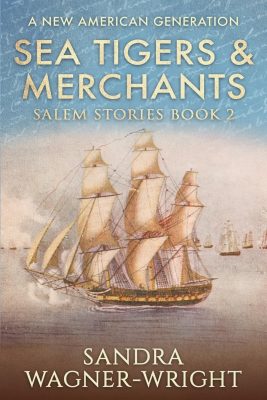
  • SEA TIGERS And MERCHANTS: Salem Stories Book 2 by Sandra Wagner-Wright – US Historical Fiction, Family Saga, Maritime Historical Fiction


    Two families vie for power in mercantile 18th-century Salem. Sea Tigers and Merchants, the second book in Sandra Wagner-Wright’s Salem Stories series, returns to a world of treacherous storms, tantalizing wealth, and the demands of high society on its children.

    Elias Hasket Derby, Sr. has kept his promise to his wife Eliza—they rule Salem. Hasket’s merchant ships bring in great fortune, while Eliza holds court as the most influential woman in the city’s social spheres. And their ambitions have grown to meet their station. Hasket launches his riskiest endeavor—the Grand Turk, a ship so massive she’s nearly too heavy to be pulled out of the docks. Meanwhile Eliza, snubbed by George Washington’s stay at another family’s mansion, insists they build a house so grand it will put all others to shame.

    Such success, of course, draws the envious eye of Hasket’s competitor.

    The Crowninshield family has an uphill battle before them. The patriarch, George, Sr., is unable to employ all his own sons as captains of his small fleet—leaving them to work for their uncle Hasket. But George shares Hasket’s ambition. With the support of his wife, Hasket’s sister Mary, he builds greater ships of his own. If only he could get his eldest sons to follow his wishes, all his goals would fall into place.

    But the pressures of the Crowninshield family weigh heavy on its sons, Geordie and Edward.

    Geordie throws himself eagerly upon the waves to travel far from home. When he does walk the shore of Salem, he spends his nights at Ship Tavern, where he takes an interest in the newly arrived barmaid, Lizzie Rowell.

    Edward had all but left the family years ago, moving away from Salem and marrying into a fishing family of much simpler means. But escaping the control of a man like George Crowninshield isn’t so easy, even if serving on one of his ships puts him in serious danger. Duty to family is of the utmost importance in Crowninshield’s world.

    From the wealthiest merchant to an overworked barmaid, everyone must decide what they’re willing to risk for a better life.

    Lizzie Rowell risks her aunt’s fury, and the loss of her home and occupation, for the affection of Geordie Crowninshield. And when an unexpected complication arises between them, Lizzie finds herself at the mercy of those with more wealth and power than she could ever hope to touch.

    Wagner-Wright imbues Salem with authentic life, drawing readers into the last decade of the 18th century.

    Sensory descriptions flow in the cool sea air, carrying the smell of bridal fruitcakes and bitter hull-sealing pitch. We see the finery of wealthy dress, and the structure of lavish mansions as the characters wait on the shore for their far off dreams to come true.

    Moments of hardship and pain punctuate the seafaring journeys, reminding readers of just how difficult it was to run a ship in days past, and why the goods they carried were so valuable. The captains have to handle the material needs of a great wooden vessel and its crew, while dealing with ever-shifting markets and unstable—or even hostile—foreign governments.

    Readers get a view into the complexities of trade in the early days of the United States. Without a strong navy backing them, these American merchants have to tread carefully around both pirates and privateers. We also act as witness to the growing social world in the burgeoning country, with historical figures like George Washington playing his part as a living fixture of high society. Eliza rants about his visit upstaging her daughter’s wedding, while bemoaning his choice of residence.

    Sea Tigers & Merchants maintains its accurate image of life in Salem with clearly focused research and a deep fascination for the historical setting.

    Such a complex time in history could be difficult to grasp, but Wagner-Wright keeps the story clear and well-paced. She uses her grasp of the setting to carefully guide readers through the precarious world of trade and sailing in Early American history. By providing enough context for unfamiliar details, she prevents readers from missing key notes in the story. Which is especially impressive with such a large cast of characters.

    Family legacy shapes this cast of characters, defining every relationship they have.

    The new and old generation alike must make personal sacrifices for the sake of their family and reputation. Some begin to crack under that pressure, like Elias, Hasket’s heir, whose penchant for gambling leads him into mounting debt.

    Family and business become ever more complicated as they intersect. Hasket is not only George’s greatest rival, but also his brother-in-law. He employs his nephews as captains, despite knowing their father’s ambition is to topple him and his growing business empire. Even marriage can’t soothe these strained bonds completely. A person’s very attendance to their loved one’s wedding carries heavy implications.

    Stepping between the perspectives of its ensemble, Sea Tigers & Merchants gives a rich view of these characters’ inner lives.

    Their personalities shine through dialogue and thought. Each person has a unique understanding of the world, prompting readers to consider deeply what they think about the figures of this story. Although mistakes abound driven by selfishness, fear, or unrelenting pressure, it’s easy to empathize with everyone’s particular struggles.

    Captain Nathaniel “Nath” Silsbee stands out early on. Not a member of either powerful house, his own family has fallen on hard times, and it’s only by succeeding on the sea that he has any chance to saving his mother and siblings. He perseveres through misfortune, giving his voyages a gripping importance.

    As we see these characters grow through the years, a universal need becomes clear. Everyone seeks to follow their inner compass and yet be understood by those around them.

    Whether a character knows exactly what they want in life, or is in ways a stranger to themselves, they yearn for connection beyond the practical demands of power and wealth. This theme is never more pressing than in the question of marriage. The hope for a true partner shines on the horizon, but all could be lost by a person’s conflicts with their place in society, be it on land or sea.

    For some, the sea is a tool of commerce, a treacherous but bountiful place to build their fortune. For others, it tethers itself to the soul as a deep connection from which they cannot drift away.

    Each time someone sets out to sea, there’s no guarantee they’ll return. For those with a family, they risk leaving them behind without the means to support themselves. But for captains, especially those with shares in the ship or cargo, the reward is enough wealth to build an entire life. Readers will feel the desire and apprehension of these seafarers, while getting to see the myriad ways fortune can ebb and flow.

    But even if someone makes their fortune and comes to shore for good, their heart might linger forever on the waves. That life creates a distance between people. Wagner-Wright takes the time to explore in detail how the sea shapes each character’s view of themselves, and their connections back home.

    With the next generation starting households of their own, this series is poised to continue its expansive saga.

    Sea Tigers & Merchants concludes with exciting steps laid out before many of the characters, setting up the next part of the tale. Historical fiction readers will find a complex and satisfying tale in Sandra Wagner-Wright’s Salem Stories series.

    Read the review for book one in the Salem Stories, Ambition, Arrogance, and Pride here!

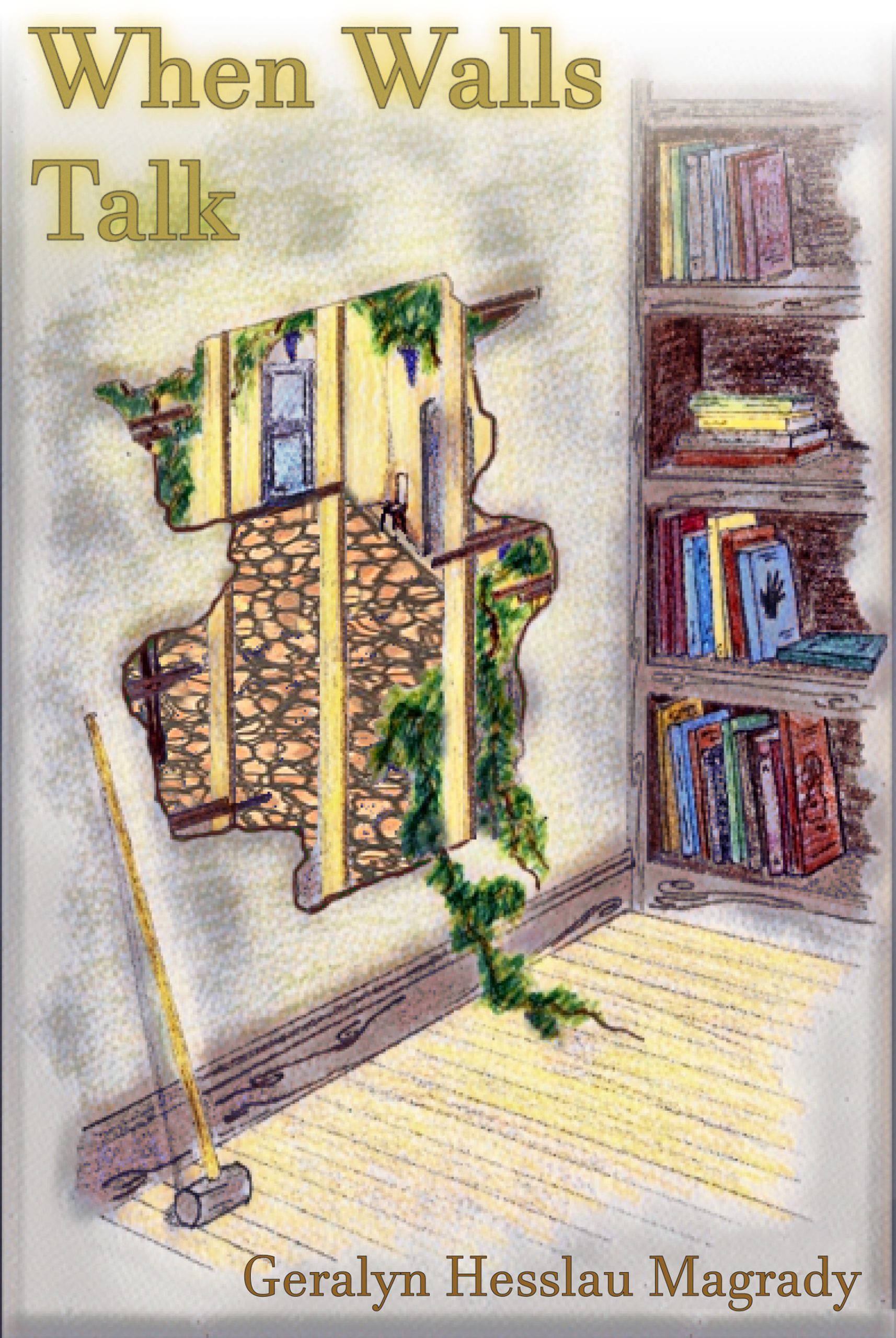
  • WHEN WALLS TALK by Geralyn Hesslau Magrady – Contemporary Fiction, Family Saga, Family Relationships

    Toni has the chance to start her own business in the building of her family’s old bakery. But history waits within those walls. In Geralyn Hesslau Magrady’s novella, When Walls Talk, Toni and her father uncover secrets they could never have expected.

    The Russo Bakery, with its 1920s architecture had been the family business since the four Russo brothers first opened its doors. Decades later, Toni and her widowed father plan a complete redesign of what their ancestors made to fulfill her dream of owning a bookstore. As the walls fall around the Russo family business, a long-hidden truth brings about profound personal changes for Toni.

    Toni takes this giant leap into the unknown, unsure if she’s even prepared to own a business. But the bookstore is the key to her hope for a better future, her only path to escaping a past tragedy.

    In the face of death and loss, Toni is crippled with a feeling of powerlessness. Fighting to never feel that pain again, she builds walls high within her spirit to shut out joy in her life, knowing that openness will only lead to more pain.

    The life Toni leads now is reduced to mindlessly putting one foot in front of the other, until a heartfelt promise, a secret, pushes her to act on her dream. The decision will demand more of her than she expects, and she’s not ready for the emotions she’ll face, but the promise compels her forward.

    Magrady draws readers immediately to Toni and her father Paulie, their conflicts a careful reflection of the human struggle we all share. Their friends are likewise compelling, bringing the periphery of their lives forward in the storytelling.

    Paulie eagerly joins his daughter’s project, working to manage the tension and strain that had once existed between them. Family ties have driven Paulie his whole love, paired with pride in his Italian heritage.

    Neither Toni or her father expected or wanted to learn the secrets they stumble across about their family, but history cannot be undone. They have each other and friends new and old to help absorb what the bakery-turned-bookstore has to say. As the walls tumble down, one can only hope Toni will find her own happiness, because the message heard When Walls Talk is a powerful one.

    Award-winning author Geralyn Hesslau Magrady gently weaves an emotional story of despair, surrender, and a glimmer of hope. When Walls Talk provides an insightful look at the human spirit, what it must face, and whether it can endure.

    The Chicago neighborhood comes to life as a character itself, artfully depicted with the Bakery as the heart of the story.

    When Walls Talk invites readers into a world where family secrets can forge new beginnings. The novella brings the loss, legacy, and uplifting power of hope in a family into beautiful relief. A perfect pick for anyone who relishes stories of resilience and indomitable spirit.


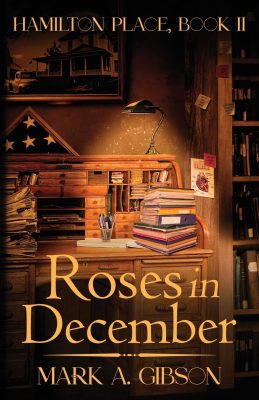
  • ROSES In DECEMBER: Hamilton Place, Book 2 by Mark A. Gibson – Family Saga, Contemporary Fiction, War in Afghanistan

    Roses in December is the epic conclusion to Mark A. Gibson’s compelling two-part family saga, Hamilton Place. Now focusing on the family’s next generation, James Hamilton Jr.—Jimmy—follows in the footsteps of the father he never met, a Vietnam War hero who died in battle, and ultimately finds his own path in life.

    Pressured by a conning mother-in-law only out for monetary gain, the elder Jimmy’s widow, Becca, is pushed to marry Mack Lee, her deceased husband’s older brother who proves to be a cheating and abusive husband. Trapped in this loveless marriage, Becca hopes that attending church will remove her son from the toxic influence of her new husband and set him on the right path to a good life. But it’s the discovery of young Jimmy’s superior photographic memory that opens the door to a brighter future, and he sets a course to an outstanding medical career, coupled with military service in Afghanistan.

    Gibson delivers the recent past with a great sense of immediacy, showing events that ripple into our contemporary world using pop references that are relevant in today’s world.

    There is no shying away from the thorny reality of world conflicts and tragedies, such as the 9/11 terror attacks. Jimmy’s budding empathy and photographic memory become both a blessing and a curse when all the best and worst parts of his life are only one visual recall away. This unique and imaginative narrative follows Jimmy as he grows into a man named James who must come to terms with his most painful experiences.

    Roses in December develops on the themes of love, loss, and resilience revealed in its predecessor, A Song That Never Ends, with thematic vines are grafted together into a deeply rewarding whole.

    Many of the same elements from the first book return in this two-part series, with its details now paying off, from a special photograph the Vietnam medic uses to cover a chest wound, to James referencing the unique bandage to his hospital interns. Roses in December is laced with connective details that immerse the reader in the lives of its characters as family mysteries come to light, including the long-held secret that Becca has kept from her son, James. And the story comes full circle when the adult James shares the full family history with his own children.

    While Roses in December can certainly stand on its own, reading Gibson’s books in sequence will help lay a solid foundation for this generational saga. It will also serve to impart a core of knowledge about the characters and their relationships, and their development within the family’s overall dynamic. Together these volumes prove a truly satisfying duo, with Roses in December blossoming into a beautiful conclusion to the Hamilton Place Series.

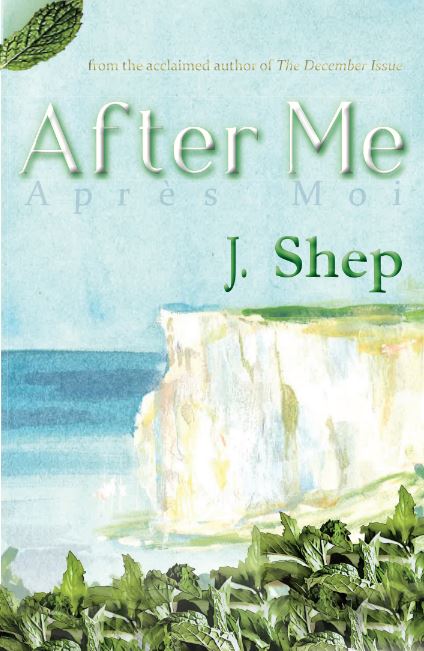
  • AFTER ME by J. Shep – Historical Fiction, Family Saga, Post World War II France


    The arrival of a mysterious package makes for an enticing beginning in J. Shep’s After Me. Inside we find a manuscript with the same text as the book we’re about to read. This inventive start lends a sense of realism and truth to what follows and creates a vivid yet hazy quality, like memory itself.

    After Me travels back in time to rural France just after World War II. The setting appears idyllic at first—almost unbelievably so. Still, there’s a disturbing undercurrent felt from the start. Not from an unwanted presence, but rather from an absence.

    Told from the perspective of Ellande, a young boy, he recounts the summer his parents die in an accident and he and his nine-year-old little sister, Madeleine-Grace, are sent to their extended family’s summer home in France. Their care seems competent at first—but cracks in the façade gradually emerge as Ellande begins his tale.

    Aside from their mourning, life seems lovely in the beginning. Lavender-hued skies at sunset, and the scent of peony soap permeate the background of this tale. Ellande recalls the light-filled home’s orderly kitchen where meals are made with fresh herbs from the garden and numerous aunts, uncles, and cousins create a large roster of characters. Readers may feel a bit disoriented encountering so many new names, as well as the French words and traditions sprinkled throughout the text. But that disorientation offers the reader insight into the mental state of the children as they navigate this strange summer of loss and learning.

    The home’s idyllic nature springs almost entirely from a single character: Aunt Adèle. A tireless worker, she keeps the house beautiful and functional, doing the cooking, cleaning, gardening, and taking care of the childcare with grace and joy. As the novel progresses, her surviving siblings emerge as toxic counterpoints who are bitter, unhappy, and unwilling to pitch in around the house.

    While some of their issues and instability can be traced back to the war and its aftereffects, the family strife isn’t just a product of wartime tragedies. Instead, issues that emerge are largely ones of character. Aside from Adèle, the adults in the house share little interest in the traditions, values, and work performed for the betterment of the family. They prioritize idleness and petty feuds, and their children largely take after them.

    As the summer unfolds, the peaceful narrative slowly takes on a sinister quality.

    But Ellande and Madeleine-Grace are different. Their mother Juliette was the sibling most aligned with Adèle, and the children have inherited her sense of tradition and good values. They take pride in helping the childless Adèle around the summer house. Still, with Juliette gone, the burden on Adèle grow heavier. Adèle’s siblings are resentful of her homemaking abilities and unbreakable spirit and continually punish her for a lifetime of perceived slights.

    Though this is a modern novel, it’s written in a traditional style and slow pace, evoking novels of long ago. It has a dream-like quality, with beautifully specific descriptions that exist alongside the uncertainty of memory.

    And readers will be well-rewarded for their patience with the slow early sections. Not only do fantastic details of real traditions emerge as the story progresses—such as the harvesting of fleur de sel—but so does an intense narrative of family and intangible inheritance. As Ellande and Madeleine-Grace come of age, they’re confronted with questions of who will keep those traditions alive, why, and at what cost?

    Ultimately, After Me is a tale of breaking generational curses. A shocking turn near the end seems to suggest that even the most well-intentioned will never escape the burdens of family trauma and destruction. But this is a story within a story, and most of the main characters will find some sort of closure, though the finishing touches may take decades to emerge.

    After Me starts out as gentle and luxurious as a rolling meadow. Yet it ends up confronting some of life’s greatest questions and most haunting mysteries. This combination makes for an evocative novel whose message will linger long after the last page has been turned.


  • A SONG THAT NEVER ENDS: Hamilton Place Book 1 by Mark A. Gibson – Family Saga, Historical Fiction, Coming of Age


    A Song That Never Ends, the first volume of a two part series by Mark A. Gibson, opens a dramatic fictional saga of the Hamilton family from the late 1930s Depression era, to 1967 and the Vietnam conflict. Here against the backdrop of a South Carolina tobacco farm, we come to witness a family in turmoil.
    The calm and reserved Walter Hamilton and his rebellious, impulsive wife Maggie strive to build a life and raise a family. But the couple is tested by a series of misfortunes—miscarriages and stillbirths, and Walter’s enlistment during WWII leaving him with guilt-induced PTSD as he deals with the memory of fallen comrades.

    At the center of this heartfelt story is James, the middle child, who at the tender age of eight is forced from his home due to a horrific accident and sent to live with a widower uncle.

    James proves to be an extremely intelligent and talented youngster who longs for a connection to his family. In the meantime, he learns from his gracious uncle to deal with dire situations and unexpected circumstances in life, as well as the importance of having a charitable heart. Under the tutelage of this kind, caring, and nurturing man, the story begins to evolve into a coming-of-age tale.

    Clearly a character driven work, author Gibson aptly weaves themes of love, loss, and resilience throughout.

    Though James is unjustly relocated it ultimately proves a positive experience, spending time away from his own dysfunctional family including a depressed mother who drowns her sorrows in vitriol, a ne’er do well, self-centered brother, and a father wrapped up in his own laments. We see how the twists of life shape the character and emotions of these engaging individuals.

    While the story prologue opens in 1967, the narrative quickly moves to the 1930s and subsequently keeps a steady pace as chapters move the action ahead in chronological order.

    Gibson carefully places the story within its historical context by showcasing details of each passing era. Here readers will witness the struggles to provide and survive during an economic depression, and the feelings of family separation and a husband’s need to serve in WWII. Years later we see a son follow suit and get shipped off to fight an unfavorable conflict in the jungles of Vietnam. In another instance, when enthusiastic teens rebuild an old roadster, Gibson provides a solid history of stock car racing and its roots with the bragging rights of bootleggers.

    Gibson keeps his audience invested up until the final moments when the closing page notes “To Be Continued…” It’s the perfect set-up for the second volume to continue with the Hamilton family saga. Whatever Gibson has in store for his readers is sure to be another well-crafted experience rich in both character and detail.


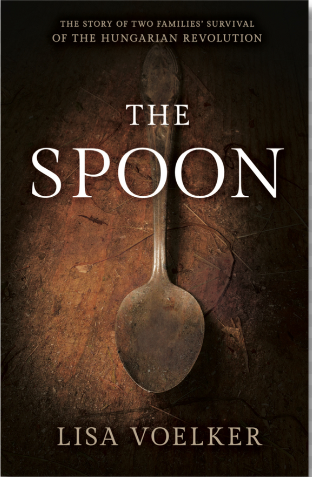
  • THE SPOON: The Story of Two Families’ Survival of the Hungarian Revolution by Lisa Voelker – Historical Fiction, Family Saga, Hungary


    Lisa Voelker’s historical fiction novel, The Spoon, takes us back to the 1950s in Hungary during the daring student uprising, and attempted revolution, in Buda and Pest. The author weaves historical facts with fiction in the form of family lore that has been handed down for generations.
    We follow scores of people whose lives intersected during this uprising of 1956. The revolution was, at its inception, a time of joyous upheaval, but in less than two weeks became one of devastating dissolution. People fled Hungary by the thousands, but not before giving the Soviet Union a taste of their discontent.

    Voelker introduces Rebeka, a member of the Varga family with old ties to the bourgeoisie, who lived a life of privilege on a farm east of Buda and Pest. As well as Peter, a member of the Turea family who attends Budapest Technical University, where students began demonstrating against the Hungarian Government that was under Soviet control.

    Voelker’s cast of characters stems from over a dozen families, some involving four generations, so even as this story focuses on Rebeka and Peter, we get the sense that it is truly the story of a nation. It’s the story of a people who are embroiled in the ramifications of a revolution attempt that was less than two weeks long but reverberated for decades.

    The national pride and courage of the demonstrators stands out.

    Their resilience and continued opposition against the Soviet super-power, pushed forward by the resistance fighters, never wavered. Voelker captures that loyalty and bravery on every page, just as her well-researched novel captures the imagination.

    The ultimate mystery of the book is based on actual family lore, and Voelker keeps us turning the pages to find out what the significance and importance of a particular object is. She gives clues that whet our appetites, and with perfect timing reveals the satisfying conclusion.

    Rebeka and Peter move through the uprising along with friends, family, and people they meet along the way. Voelker’s mastery in developing these interesting individuals keeps us invested in their stories and their successes— and yes, sometimes their failures.

    There are tragedies, as with any war-like situation, and this is an underdog story, much like many international news stories that we see today.

    As philosopher George Santayana wrote: “Those who cannot remember the past, are condemned to repeat it.” This idea has been paraphrased and passed down in many variations, but the truth behind it remains, and we commit this error at our own peril.

    Voelker plays with themes of liberty, freedom, nationality, family bonds, first love, war, and more.

    Her ambitious novel delivers an excellent read while also making connections between the past and the present, and showing us the strength of the family myth— stories that we pass down through generations.

    Lisa Voelker’s The Spoon matches the interest of any history buff, any war novel aficionado, or any reader who loves learning while they enjoy a good book.

    The Spoon by Lisa Voelker won First Place in the 2023 CIBA Goethe Awards for Late Historical Fiction.


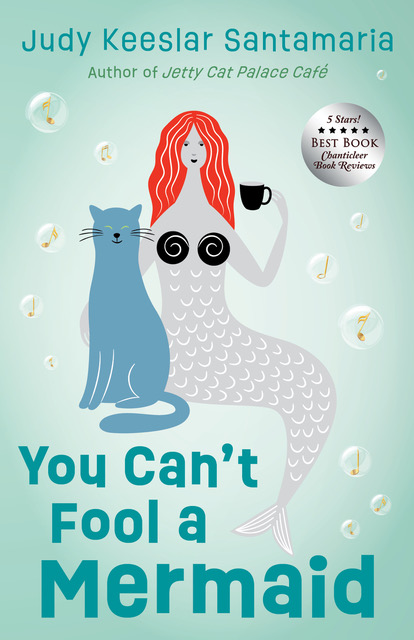
  • YOU CAN’T FOOL A MERMAID by Judy Keeslar Santamaria – Magical Realism, Family Saga, Self Discovery

    Blue and Gold Badge Recognizing You Can't Fool a Mermaid by Judy Keeslar Santamaria for winning the 2023 Somerset AwardYou Can’t Fool a Mermaid by Judy Keeslar Santamaria is a glorious dance of well-intentioned ghosts. In the words of Violet, a twenty-one-year-old pianist, it’s “bewitching as hell.”



    Santamaria opens with a tiny mermaid bodysurfing through the gutters of Seattle. College student and pianist Violet Bacon chalks up “gutter-mini-mermaid” to her wildly imaginative mind, but when she stumbles upon a magical theater-turned-piano-rescue with a retinue of shopkeeping cats, the separation between imagination and reality no longer seems as important as discovering her true self.

    Violet has been living a lie: keeping up the pretense that she’s dating a woman to make her father angry. She reluctantly goes along with what other people want and pretends she doesn’t desperately need a cat. As she practices a complex Stravinsky concerto, her abiding love for music is all that sustains her.

    But Hector Kouris, the proprietor of the theater-turned-rescue, reintroduces Violet to her childhood piano, Bossy.

    The piano seems to speak to her through phantom notes in the days that follow. Santamaria deftly folds a menagerie of other companions into Violet’s life, living and inanimate: a friendly pigeon guide, a blue cat from the ocean, a mysterious and otherworldly busker who knows more than he should, and a patchwork-quilt tote bag that collects treasures leading to hidden truths.

    With the help of this host of confidantes, Violet learns about not only her deceptive father, but the history of all those she loves. (Those who enjoyed Santamaria’s debut novel will be delighted to learn that the character Morgen from Jetty Cat Palace Café returns as Violet’s mentor.)

    Motif after motif enters the story, first in ripples, then in rivers, until oceans of symbols haunt Violet’s life in a wild storm that sings, “to thine own self be true.” Santamaria’s expert handling of magical realism will leave you wondering what is real as she convinces you to just “go with the flow but be mindful.”

    Santamaria guides readers to connect with the ghosts of their past just as Violet does, for people sometimes need to go backward before they can move forward.

    At the center of Violet’s journey through family history lay a mysterious tragedy that occurred at the theater years ago. Violet learns secret after secret in a heart-wrenching crescendo until she finally discovers the spirit at the heart of this beautiful patchwork story. Readers will come away understanding that no one can escape their ancestry, but the way people respond determines whether the past is a prison cell or a key.

    As part of Violet’s journey, Santamaria invites readers to explore many cultures and communities. Her handling of neurodivergence and disability is especially thoughtful.

    This book is the perfect choice for anyone who enjoys cats, magical realism, a dash of romance, music, and characters who bravely face intergenerational trauma. It doesn’t allow any character to be singularly villainized, for all live in the shadow of their ancestors. If you were raised to doubt yourself but have since learned that you can’t fool your inner mermaid, this book might haunt you long after you finish reading it.

    5 Stars! Best Book Chanticleer Book Reviews

  • A GRAVE EVERY MILE: Ghosts Along the Oregon Trail Book 1 by David Fitz-Gerald – Historical Fiction, Oregon Trail Fiction, Family Saga


    Blue and Gold Badge recognizing Ghosts Along the Oregon Trail by David Fitz-Gerald for winning the 2023 Series Grand PrizeEach day’s trumpet blasts the predawn quiet of the sleeping wagon train, demanding that its migrating families face what’s ahead, whether incredible scenery or mortal danger, in David Fitz-Gerald’s A Grave Every Mile.

    This beautifully told story mixes adventure, survival, community, and history, all shown through the eyes of Dorcas, a feisty mother of four. She’s dreamed of hitting the trail to the storied West for so long, but much about this trip and their destination remains unknown.

    Another wagon travels alongside hers. Who are they? Will they remain strangers, or become friends? Now that Dorcas stands with her family at the trail’s starting point and on the brink of changing their lives forever, a tremor of doubt surfaces about what lies ahead. Is her family strong enough to face their future? Will it be everything she and her husband hoped for? That future is 720,000 turns of the wagon wheels away, and there may be A Grave Every Mile. It all starts with that first pull by the team of oxen.

    The action starts on page one when an intense fistfight breaks out amid a crowd of people stocking up their wagons.

    The crowd cheers on the two combatants in a frenzy. Dorcas, however, has seen enough. Leveraging her athletic and tall physique, she moves in to break up the fight. Her boldness will have to carry her forward on the trail, as she and her family face unfamiliar challenges every day. They struggle to keep their wits and sense of humor about them through the rigors of the daily chores and travel. Even something seemingly straightforward, like crossing a river, requires skill and careful planning in 1850.

    Human nature remains unpredictable. A traveling caravan becomes a community of individuals with joys, but also concerns and burdens.

    Can these strangers pull together in tough times and help each other, or do they tear each other apart? Each family’s story is deeply touching. Traveling this path, the tensions and frictions within a family grow until they can’t be ignored. Further down the trail, those wounds may not be able to heal.

    Children are not immune to the effects of these wild, open spaces. As with adults, previously hidden aspects of their personalities take hold.

    Dorcas sees her oldest daughter’s soulful reaction to tragedy as bordering on the paranormal. Her adventurous son becomes even more daring, while her other son enthusiastically begins a newsletter as he researches and documents incidents along the way. Underlying all the travails, there is love. Sometimes that love is found when and where it is not expected. Sometimes it sparks jealousy. And so often that love is cherished. Yet, there will come a time when Dorcas is going to have to make a very difficult choice.

    Climb on board and get those wheels turning to experience a journey into the frontier of 1850, described in full sensory detail.

    Award-winning author David Fitz-Gerald’s fascination with this era is skillfully displayed throughout this novel. Historical insights and facts are skillfully woven into the plot, with a hint of the paranormal sparking some intrigue. His memorable characters warm the heart, excite the conscience, and will often take readers by surprise. This novel’s unique writing style is incredibly engaging, as the pages and the days on the trail eagerly turn from one to another.


    5 Stars! Best Book Chanticleer Book Reviews