Tag: Family & Relationships

  • SOUR FLOWER by Maryanne Melloan Woods – YA Coming of Age, Family Relationships, 1970s


    blue and gold badge recognizing Sour Flower by Maryanne Melloan Woods for winning the 2023 Dante Rossetti Grand Prize

    Sour Flower, the unpublished feel-good coming-of-age novel by Maryanne Melloan Woods, contrasts the joys of teen friendship with the hardships of growing up in a broken family.

    As a fourteen-year-old in 1970s San Francisco, Marigold (call her “M”) Hayes is fed up with her life.

    M is very much aware of her role as the mature buzzkill in the family. Her parents, college dropouts and now divorced hippies, barely have it together. M often has to act as the mature adult for the sake of housing and basic necessities. With a spaced-out father who barely supports them and a mother who thinks her daughter is a square, it’s a miracle that M has kept her family afloat for so long.

    When her English teacher suggests M apply to Barnum—an elite prep school offering scholarships to students in need—she dares to hope. Maybe this could give her a chance to pursue her dream of becoming a financially stable businesswoman.

    But the application process poses its own challenges, one being an in-person interview with Barnum and her tragically embarassing parents. As she prepares her application alongside Philip and Gabi, her best friends who also come from broken homes, M must contend with a range of insecurities both childish and adult.

    She stalks Barnum students to determine how she can fit in, sells her crocheted patterns at street fairs to make ends meet, and helps her friends see their own potential as she strives to find her writing voice for her application essay. M faces an uphill battle where the stakes for a young teenage girl seem impossibly high.

    As a writer, Woods masterfully approaches the bildungsroman with equal parts levity and melodrama.

    M makes a compelling and flawed protagonist. She extends her parental role to protecting her younger brother, making sure he gets every opportunity to experience the joys of childhood—often at the expense of her own. M’s ambition to break out of the conditions that hold her back propels her into the awkward antics and embarrassing mishaps rife in any well-penned young adult novel.

    The backdrop of 1970s San Francisco’s hippie scene makes for a pivotal plot point, as M’s family butt heads with their stances on the Vietnam War unfolding in real time thousands of miles away.

    A comedy of errors follows many of M’s sour-hearted decisions, but it’s precisely this trouble that draws people close to her personal authenticity.

    As she begins to attain true maturity, M learns to embrace the contradictions in her life and in the lives of others. She discovers along the way that some of her so-called nemeses may be more like her than they’d care to admit. Fans of Louise Rennison’s Confessions of Georgia Nicolson series and Greta Gerwig’s Lady Bird would find Sour Flower heartwarming in M’s aching desire to fit in, and in the lesson to take life a little less seriously while learning to accept all of its complexities.

    Sour Flower by Maryanne Melloan Woods won Grand Prize in the 2023 CIBA Dante Rossetti Awards for YA Fiction.

  • WHEN WALLS TALK by Geralyn Hesslau Magrady – Contemporary Fiction, Family Saga, Family Relationships

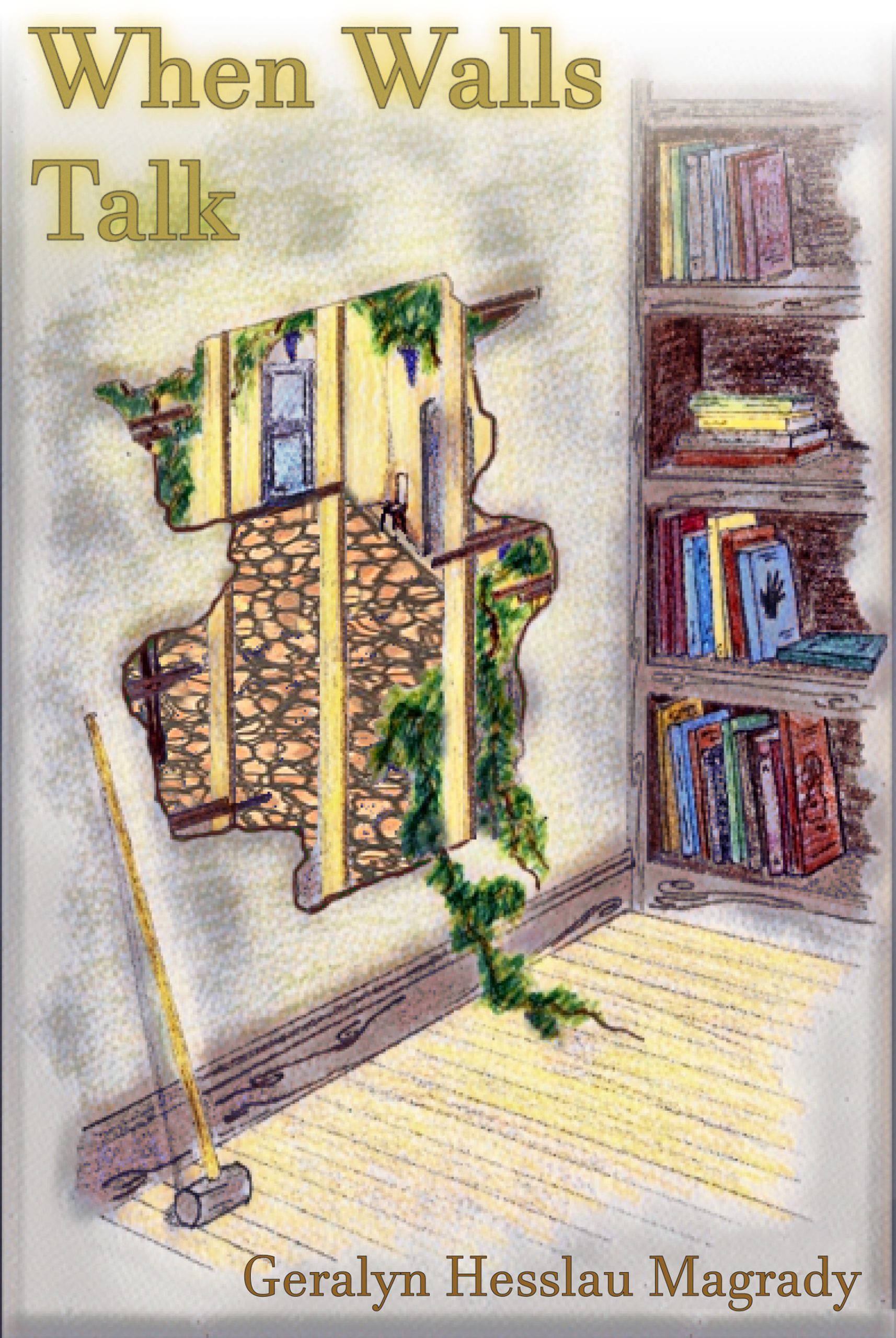
    Toni has the chance to start her own business in the building of her family’s old bakery. But history waits within those walls. In Geralyn Hesslau Magrady’s novella, When Walls Talk, Toni and her father uncover secrets they could never have expected.

    The Russo Bakery, with its 1920s architecture had been the family business since the four Russo brothers first opened its doors. Decades later, Toni and her widowed father plan a complete redesign of what their ancestors made to fulfill her dream of owning a bookstore. As the walls fall around the Russo family business, a long-hidden truth brings about profound personal changes for Toni.

    Toni takes this giant leap into the unknown, unsure if she’s even prepared to own a business. But the bookstore is the key to her hope for a better future, her only path to escaping a past tragedy.

    In the face of death and loss, Toni is crippled with a feeling of powerlessness. Fighting to never feel that pain again, she builds walls high within her spirit to shut out joy in her life, knowing that openness will only lead to more pain.

    The life Toni leads now is reduced to mindlessly putting one foot in front of the other, until a heartfelt promise, a secret, pushes her to act on her dream. The decision will demand more of her than she expects, and she’s not ready for the emotions she’ll face, but the promise compels her forward.

    Magrady draws readers immediately to Toni and her father Paulie, their conflicts a careful reflection of the human struggle we all share. Their friends are likewise compelling, bringing the periphery of their lives forward in the storytelling.

    Paulie eagerly joins his daughter’s project, working to manage the tension and strain that had once existed between them. Family ties have driven Paulie his whole love, paired with pride in his Italian heritage.

    Neither Toni or her father expected or wanted to learn the secrets they stumble across about their family, but history cannot be undone. They have each other and friends new and old to help absorb what the bakery-turned-bookstore has to say. As the walls tumble down, one can only hope Toni will find her own happiness, because the message heard When Walls Talk is a powerful one.

    Award-winning author Geralyn Hesslau Magrady gently weaves an emotional story of despair, surrender, and a glimmer of hope. When Walls Talk provides an insightful look at the human spirit, what it must face, and whether it can endure.

    The Chicago neighborhood comes to life as a character itself, artfully depicted with the Bakery as the heart of the story.

    When Walls Talk invites readers into a world where family secrets can forge new beginnings. The novella brings the loss, legacy, and uplifting power of hope in a family into beautiful relief. A perfect pick for anyone who relishes stories of resilience and indomitable spirit.


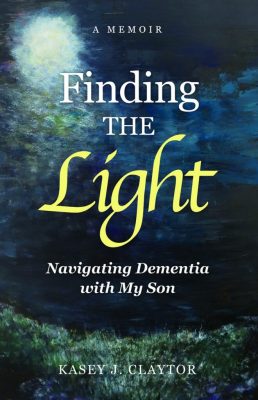
  • FINDING The LIGHT, Navigating Dementia with My Son by Kasey J. Claytor – Inspirational Memoirs, Living with Disease, Family & Relationships

    Some stories are impossible to look away from, and from its very first sentence, Finding the Light, Navigating Dementia with My Son by Kasey J. Claytor proves itself one of them. “…when my 49-year-old son, Justin, was first diagnosed with a form of early-onset dementia, I was stunned.” Without hesitation, the book draws readers into a saga of family, illness, and resilience.

    Although a memoir, Finding the Light is in many ways an instructional text, too. Readers don’t need similar medical situations to draw from Claytor’s lessons of improvement. The conversational, approachable writing style serves this purpose well.

    Although it’s in chronological order, this is an unconventional, modern text.

    Traditional scene-based paragraphs are offset by poetry, informative sidebars, and even the full text of letters sent throughout Justin’s illness. Claytor deftly shifts between these sections, building a cohesive narrative from which readers can easily learn.

    The past is vibrant and immediate: Claytor chronicles events in rich yet simple prose as Justin falls deeper into frontotemporal dementia, or FTD.

    Yet Claytor also pauses often to address readers directly with a reflective tone from the present day. This gives welcome context to the book’s main narrative. She uses everything she’s learned to help readers understand Justin’s illness. FTD is a progressive, terminal disease—and a mysterious one, with no known cause. Finding the Light explains FTD patiently, without delving too far into medical details or terminology.

    Claytor’s an adept records-keeper, combining her carefully recreated personal experience with thorough research.

    The details she offers, from specific dates to particular images (piles of unopened mail, drives along the river road), give the story a tangible quality, as though readers are having this experience alongside her. Yet sometimes, the details come in the stark form of a list or a set of bullet points instead. These breaks from traditional prose offer a sense of the fractured, clinical experience that a terminal illness can become.

    At times, Claytor’s emotions burn bright, particularly in her frustrations with the poor training and management at several care facilities. Yet she quickly pulls back from these moments of anger or frustration, letting her present-day self take over with calm reflection instead. She explains her calmness well, however, instructing readers, through example, on the deep value of patience and compassion.

    Claytor truly excels at “finding the light,” just as the book’s title suggests.

    “Every time I read these words like ‘horrible’ about FTD, it hurts like a paper cut,” she writes. This book offers consistent positivity without the emotional artifice that self-help or instructional books sometimes resort to. Claytor accepts Justin’s changing situation, watching him revert in many ways to his child self, and even finds beauty in this process. She finds true acceptance. And throughout this book, readers may learn how to accept similarly challenging situations in their own lives.

    Finding the Light often feels like a long and enthralling conversation over coffee with a friend.

    Between its accessible writing style and the unpredictable medical situation, the book becomes impossible to put down. At each turn readers will find a surprising development, such as when Justin contends with COVID, or when he must repeatedly move to new facilities. And each development is carefully contextualized with compassion for Justin, for his caretakers, and for everybody touched by the impacts of FTD. A literary rhythm emerges: touching scene, thoughtful reflection, clear information.

    As Justin’s tale with FTD comes to a close, Claytor addresses the reader one last time, with a message for the painful, difficult turns in life.

    The final sections of the book are written in the second person, as Claytor wraps up the narrative with a set of clear, actionable takeaways. The last chapter, “7 Survival Tips for Rough Times,” is a welcome reminder that while everyone’s challenges are different, we must all face them. The test is how we navigate these experiences. Thanks to Finding the Light, readers will have a roadmap for travelling through whatever dark paths life has in store with grace, acceptance, and love.


    Reviewed by Chanticleer Book Reviews 4 Stars! round silver foil sticker

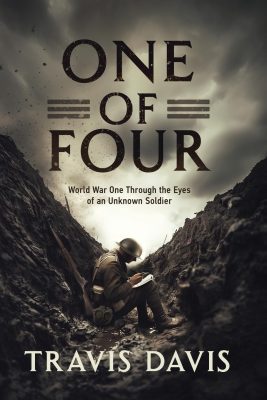
  • ONE Of FOUR: World War One Through the Eyes of an Unknown Soldier by Travis Davis – Historical Fiction, WWI, Family Relationships


    One of Four: World War One Through the Eyes of an Unknown Soldier by Travis Davis is a compassionate and intimate portrait of the tenuous and unforgiving First World War, as shown through the eyes of an American soldier on France’s front lines.
    Based on real people and events in 1918 France, One of Four begins with a young French girl, Camille, who stumbles upon a diary lying next to an unknown American soldier. He was killed among his comrades in a German ambush near the banks of the Aire River, as he tried to protect his fellow soldiers. When Camille comes of age, she leaves her hometown to seek a better life in Paris. There, she is killed after joining a German resistance group. But before her death, she tucked the soldier’s diary in her Bible and hid it in a local bookstore.

    Decades later, a man by the name of Walter travels to France with his son, Alex, to whom he’d become estranged after the painful divorce from Alex’s mother. He hopes this will be a journey of healing and exploration and that their time together will revive their shaky relationship. While there, Alex purchases the Bible left by Camille many years ago. By reading the hidden diary entries of the soldier together, Alex and Walter’s relationships takes an unexpected turn.

    One of Four deftly alternates between Walter and Alex’s story—detailing their growth, reflections, musings, and dialogues—and the soldier’s diary records of his experiences in France.

    The unknown soldier is among the first American to leave the United States to fight in Europe, and his diary entries recounts the excitement and joy that he and his comrades felt upon boarding the ship for France—even as an air of uncertainty casts a long shadow over their lives.

    His narrations relay the enthusiastic reception the US military received in France, but the entries take on a more somber tone as he details the vivid brutality of the war amidst harsh weather conditions. Hiding in desolate muddy trenches, the soldier is worn down by the constant sound of cannons, rigorous combat training and drills, and the sorrowful deaths of his friends from disease and shell fire alike. The author presents these experiences to readers in a succinct and often fervent manner. His wish was to return home, and although his wish was not granted, his thoughts and feelings live on in the diary, even as his remains are laid to rest in the Tomb of The Unknown Soldier back in his home country.

    Davis asserts, “Kindness can be found even in the worst conditions known to man; you don’t have to look far. The compassion that lies in a man’s heart is, at times, overwhelming, and those same hearts are trained to kill their fellow man.”

    The text demonstrates this idea impeccably, with readers retracing the steps of the unknown soldier in the period between 1917-1918, through the bloodshed for which the war was infamous. Yet, his narrations provide an unwaveringly honest panorama of his dedication and loyalty to his fellow soldiers in the face of tremendous challenge.

    This powerfully told tribute to a brave American soldier is not only emotionally resonant but also a worthy demonstration of the resilience of the human spirit in the face of insurmountable tragedy. Here, literary fiction and historical threads are woven together expertly, as the writer whisks us back to a bleak era, one that implores us to reflect and learn as we draw strength from those who came before us. Ultimately, One of Four by Travis Davis is a page-turner whose payoff upon its conclusion is well worth a read.


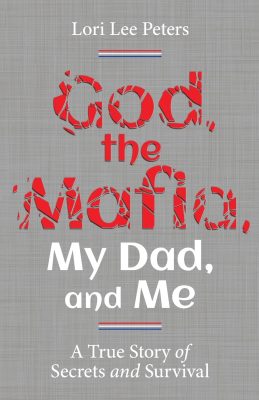
  • GOD, The MAFIA, MY DAD, and ME: A True Story of Secrets and Survival by Lori Lee Peters – Memoirs, Family Relationships, Organized Crime


    God, the Mafia, My Dad, and Me by Lori Lee Peters begins in the voice of a child, compelling not just for its narrative honestly, but for the fact that it might not be reliable. As the book opens, we learn that this narrator firmly believes she will be killed.



    Readers can easily see through the childlike hyperbole, but that doesn’t detract from the intrigue. How did a kid come to such an extreme conclusion? Is there any seed of truth to it? These questions will hook readers from the start.

    Author Peters set out to write a book about her dad. God, the Mafia, My Dad, and Me tells the true story of her father, and his fascinating work helping the FBI tackle Mafia activity in Lodi, California. Yet in the end, this is a memoir in which the compelling lead character – young Lori – overshadows her father in many ways.

    We only see Lori’s father through Lori’s eyes, so he seems larger-than-life. Lori herself becomes the truly fascinating figure, especially as her life grows more complex with age. At first, the book holds little suspense, as young Lori unpacks the seemingly-straightforward details of her and her father’s life. Yet what seems to be an idyllic childhood starts to break down as the narrator reveals her complicated family dynamics and very real fears. Lori’s fear of God takes on a literal meaning, far beyond religion. In fact, it starts to tear apart her life.

    Author Peters provides every detail with remarkable calmness, giving a window into the adult writing the story.

    Yet the book maintains the voice of a child until near the end, which may leave readers wishing for more reflection from present-day Lori. Instead, we walk closely with young Lori through the twists and turns of a childhood plagued by fear. Her father’s challenges dealing with the Mafia undercover become more tangible, and in some ways, easier to face. They seem to pale in comparison to Lori’s nebulous personal troubles, especially since she’s so afraid to speak them out loud.

    Peters includes moments from her father’s perspective, recreated from later research. These recreations feel less lively than other scenes, but ultimately, the book is more memoir than biography. Scenes increasingly focus on Lori’s life as time progresses, and readers will feel drawn in by the truthful way she relates her struggles.

    God, the Mafia, My Dad, and Me avoids traditional chapter headings, and initially jumps back and forth through time, which can create some confusion. However, later sections settle into a steady rhythm as Lori enters adulthood, plagued by growing anxiety and secret issues with grasping reality itself.

    Watching her slowly confront, then overcome, these inner problems is the heart of the book, and provides an ending even more satisfying than her father’s win over the Mafia.

    As a narrator, Lori offers compelling moments of honesty and understanding, such as when she goes through a messy divorce with vast compassion for her soon-to-be ex. When she grows up, the adult Lori emerges as a stronger and more reliable narrator, giving readers reflection and depth that ties the book together. This warm and thoughtful voice that will keep readers invested throughout the story.

    God, the Mafia, My Dad, and Me by Lori Lee Peters won Grand Prize in the 2022 CIBA Shorts Awards for Novellas, Collections, and Anthologies.


    Shorts GP gold sticker

    5 Stars! Best Book Chanticleer Book Reviews

  • WOMAN STRONG by Anna Casamento Arrigo – Poetry, Family & Relationships, Political Strife


      Anna Casamento Arrigo’s Woman Strong showcases themes of love, heartbreak, death, disease, and political strife.

      In the newly-released audio version, Casamento, with the help of her narrator Valentina Latyna, captures the essence of life and living. Latyna brings these poems to warm, sensuous life. Her accent, at once elegant and romantic, lifts the poems off the page and gives them voice.

      The pearls strung into Woman Strong’s beautiful strand of poetry will stun and amaze readers. Many of them speak to the strength of women, as can be expected from the title, but many others talk about the fragile nature of life, of love, and of time.

      Each poem explores a theme, some overlapping, and all of them provide the hope that we are strong enough to survive anything.

      Casamento’s reminiscences of childhood show a creative mind already at work bending metaphors and figures of speech as she scrapes a knee or witnesses a transgression.

      One poem stands out in particular, the three-part “Just Ice.” In part I, it discusses an old woman who is the butt of the neighborhood jokes because she doesn’t like dogs pooping in her yard. Casamento gives this invisible woman a voice and reveals her as human. As a young woman, she brought conversation and blueberry muffins.

      The muffins appear again in Part II, where she talks to a veteran in the hospital, who is “between knowing and accepting.” Vincent had fought in a war seeking justice but failed to find it. Instead, he lost his limbs, and now questions justice as he calls it “Just Ice.”

      In part III, she enters a church, hoping to find justice when a woman who wears a smile “between knowing and accepting” joins her. “Just Ice” kept repeating in the silence.

      Casamento laments that humanity cannot exist in a world filled with just ice.

      In “Exorcizing the Monster,” she tells of a day she becomes faceless, and as she writes, she exorcizes the monster, Cancer.

      “Woman Strong,” explores hell and heaven separated by a fissure, where Casamento finds herself with an inescapable truth. She grows through the pain of her uncertainty, remembering her art and her passions, which become her solace.

      “Clothing Drive” is about mining for memories, and “Wanted Desire” takes us to the edge of sensuality through her masterfully descriptive language.

      Her title poem “Woman Strong,” as most of the poems in the collection are, is lyrical and powerful with images of strength as a mother, and the power as a lover to reveal the source of every woman’s strength: perseverance, patience, and love.

      Casamento’s thoughtful words come clearly through Latyna’s heart-felt and skilled readings.

      Take this collection of poems with you on your next long walk. You won’t be sorry.


      5 Stars! Best Book Chanticleer Book Reviews

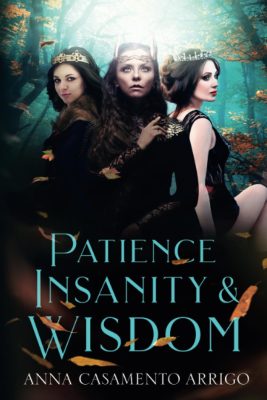
    • PATIENCE INSANITY And WISDOM by Anna Casamento Arrigo – Poetry, Family & Relationships, Mental Health

      Patience Insanity and Wisdom, Anna Casamento Arrigo’s poetry collection, dances seamlessly between reflective, philosophical, whimsical, colorful, and especially therapeutic.

      In her author bio, Arrigo shares that she turned to poetry as part of her recovery from a stroke. This gives a glimpse into the true depth of these poems, which offer healing to the reader as well. Arrigo deals with issues of love and loss, depression and survival, and life itself. Her poems carry the echo of her struggle, softly alluded to, but not blatantly laid bare.

      Arrigo’s poems take the reader through our shared human experiences. “I am enough” and “I am here” lay between “In Silence”. “Insanity” shares a painful childhood, “A constant stream of hateful words/slurred/rising from a golden whiskey tumbler.” “Wizard Wings” reflects on growing up, “From my toddler years/Through that period when neither girl nor woman be-.” “One soul” shares the joy and bittersweetness of the parent-child relationship, “it was not too long ago You held my hand/ Precious memories and hugs/One Soul We two/Divided in half.”

      “Just Another Birth Day” brings full circle the impact of the loss of one’s mother, “yesterday a mom celebrated her 68th birthday in heaven,” and yet, her continued presence in her children’s lives continues on, “Listen my dear children to the sound of the wind/ I’m there./Watch as dawn sips the darkness away./ I’m there/ Reach out and touch the roses-/comforted in essence of their being/ I’m there. I’m there/Speak my name/ Mom?/’I’m here’.”

      Patience Insanity and Wisdom does not shy away from the realities of grappling with life.

      “Depression” has this subtitle: “A dedication to the far too many who wear the mask. You are NOT alone,” empathizing with this common, yet hidden experience, “Waiting for those daily doses of ‘Happy Pills’/To bring my soul back to me-/For year/So many years…” and “Depression is not contagious-/Remove your mask!”

      “Hold On!” is a shout of encouragement, acknowledging the struggle for some with suicide awareness, “days when everything hurts -Wishing you would disappear…There will be day/ Of fighting back/Standing up/Holding on.”

      “Holding on Letting go” starts with the line, “It hadn’t been an easy death. But the will to die was less than my will…to survive […] Holding on/Letting go/A separation/Decisive/And in eternities bound…/Where my projected self-free falls/Letting go.”

      The poems share pages with Arrigo’s art, mostly impressionistic compositions with a wonderful mingling of bright and cool colors.

      To add to this experience, Arrigo partnered with musician Paul Simeone, setting some of these poems to music videos which can be found on YouTube and SoundCloud. Patience Insanity and Wisdom is like a dessert cart in a favorite restaurant, with poems that should be taken in small portions and savored to enjoy them fully.


      5 Star Best Book Chanticleer Reviews round silver sticker