Tag: Family drama

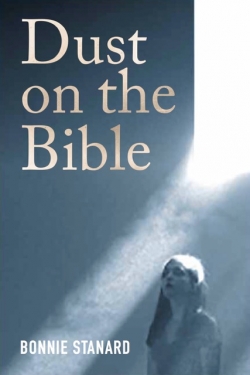
  • DUST ON THE BIBLE by Bonnie Stanard, a moving coming-of-age story

    DUST ON THE BIBLE by Bonnie Stanard, a moving coming-of-age story

    A poignant tale from start to finish, Dust on the Bible by Bonnie Stanard is a vivid and emotionally captivating story about the strife of a family living in rural South Carolina in 1944.

    Lily, a twelve-year-old farm girl, wraps readers around her heart. While struggling to understand the mysteries of death, God, family, and school bullies, she endures poverty and agonizes over her missing father. Lily is hungry for knowledge, but a sixth grade bully turns school attendance into misery. Lily is an easy target; she is quiet, poor, and wears homemade feed sack dresses. This is Lily’s story, one year of her life when she transitions from childhood innocence to the edge of her awakening.

    Readers first see Lily on a cold, October morning, while she warms her backside in front of the cook stove. Stanard does a superb job in crafting imagery that evokes the senses; readers can see the small kitchen and feel the morning chill. The author’s descriptive words and phrases are fresh and easy to relish as readers follow Lily through the seasons, from bitter winter to scorching summer.  

    Lily’s consummate yearning to know what happened to her father moves the plot steadily forward. No one will talk to her about him, but she keeps asking. And every time she does, it causes trouble. Lily is bright, curious, and needs answers. When family members do reply to her questions, they keep comments short and simple; they shirk her questions to try to shield her from something they believe that she doesn’t need to know. But, this creates even more questions and adds fuel to her active imagination. Nonetheless, their answers paint character sketches of each person in the story.

    Grandpa owns the one-thousand-acre cotton farm that he runs without the help of a tractor. He and Grandma have opened their home for four of their five adult children, including Lily’s mother and Lily herself. The overcrowded home is without indoor plumbing, cold on frosty winter mornings, and oppressing with stifling heat in the summer. They all share the endless chores and the long days of hard-scrabble living for a meager living.

    Stanard creates a family with a non-nonsense way of life, but the family also carries a deep abiding love for each other; no matter what. Even when Lily’s youngest uncle, Archie, goes overseas, despite the family’s subdued fear, their love for him shines through in their reaction to the letters he writes to them.

    Stanard has created a strong protagonist in Lily—one  in whom we can feel the relentlessness and restlessness of youth as shown in one of my favorite lines in her work.

    “She daydreamed of sleeping late as she wanted to. Of swimming in Ma George’s pond. Of catching lightening bugs and building forts. Of shooting the .22 rifle.  Most of all she wanted Grandpa to teach her to change gears so she could drive the pickup.”

    A few paragraphs later, Lily’s reality ensues.

    “Don’t matter whether she wants to. Lily’s old enough to know what work means,” said Florence. [fusion_builder_container hundred_percent=”yes” overflow=”visible”][fusion_builder_row][fusion_builder_column type=”1_1″ background_position=”left top” background_color=”” border_size=”” border_color=”” border_style=”solid” spacing=”yes” background_image=”” background_repeat=”no-repeat” padding=”” margin_top=”0px” margin_bottom=”0px” class=”” id=”” animation_type=”” animation_speed=”0.3″ animation_direction=”left” hide_on_mobile=”no” center_content=”no” min_height=”none”][Lily’s mother replied to Grandpa when he told Florence that maybe it was too hot for the twelve-year-old Lily to work in the summer afternoons.]

    Stanard’s writing deftly shapes the narrative and the setting. Her pitch perfect dialogue conveys Lily’s “tween” age while conveying the social strata of her world. Readers are pulled into her thoughts, her reactions, and the family dialogue––walking through her world, seeing it through her eyes, and feeling it through her heart. Lily is a brave individual seeking to find her own place in the world while enduring difficult times on many fronts.

    Dust on the Bible is a moving novel with an honest perspective of what it was like for some who grew up in poverty in the South during the Second World War. The coming-of-age story of Lily is candidly related, drawing on all the senses. Lily’s story and her world will linger with readers long after they’ve finished reading the final pages.

     [/fusion_builder_column][/fusion_builder_row][/fusion_builder_container]
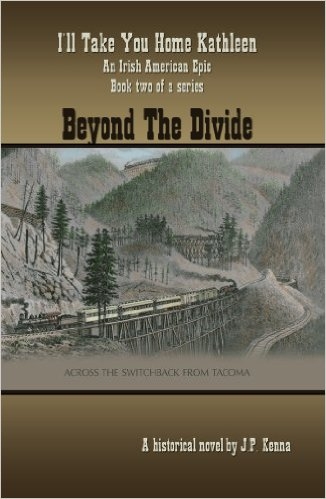
  • I’ll TAKE YOU HOME KATHLEEN by J.P. Kenna, a historical fiction novel

    I’ll TAKE YOU HOME KATHLEEN by J.P. Kenna, a historical fiction novel

    The 1800s was the age of expansion in the United States, and railroads played a major part in the efforts to move Americans and industry to the Western shores. By the 1860s, this great country, the American experiment as it was called, became engulfed in a brother versus brother bloody Civil War. As the century drew to a close in the late 1880s and early 1890s, America was still reeling from the emotional and economic damage the war had caused. J.P. Kenna uses this struggle as the backdrop for his book I’ll Take You Home Kathleen, the second in his series titled Beyond the Divide.

    Kenna’s novel captures the years 1882 to 1898 with its focal point being the Irish immigrants who were seeking to escape famine, lack of land reform along with desiring religious freedom, came to America seeking a better life and more opportunity. The first wave of immigrants were seeking escape from one of the grimmest periods in Irish history–the Great Famine from 1845 to 1852. Author Kenna follows this hard-working group of immigrants who helped lead America into a post-Civil War, industrial, and economic boom that some have called the Second Industrial Revolution.

    Kenna does a magnificent job rooting this story firmly in the time period in which it takes place. He does so by sprinkling some well-known figures of the time throughout the book. He not only touches upon these real-life historical figures, but they become part of the conversation between the stories’ characters. [fusion_builder_container hundred_percent=”yes” overflow=”visible”][fusion_builder_row][fusion_builder_column type=”1_1″ background_position=”left top” background_color=”” border_size=”” border_color=”” border_style=”solid” spacing=”yes” background_image=”” background_repeat=”no-repeat” padding=”” margin_top=”0px” margin_bottom=”0px” class=”” id=”” animation_type=”” animation_speed=”0.3″ animation_direction=”left” hide_on_mobile=”no” center_content=”no” min_height=”none”][See Editor’s Note below]

    The enthusiasm for growth is palpable in the conversations held within the book’s pages.

    “An empire, Francis! An empire of farms stretching beyond what our small  East Coast vision can imagine. And of towns with schools, churches, stores, maybe mills. And beyond the wheat country is timber…and minerals. An empire stretching clear to the Pacific!”

    For as much excitement there was for expansion, there was just as much trepidation when it came to the relationship between the workers and their bosses. You will come to experience and understand the struggle between fledgling labor unions (aka Brotherhoods) and the railway owners. It is easy to sense how imperative to the rail workers the labor movement was to establish their rights when you encounter characters in the book making statements as such as these:

    “That all our Brotherhood’s will become one big union of all railway men and we shall be able to meet the big bosses, and owners head on, by the Pennsylvania, Central, P & R or the B & O! Or the Lackawanna or the Lehigh Valley or the Vanderbilt or Gould roads – or some monopolizing combine yet unheard of!”

    The book as a whole follows the timeline of the fictional James Fitzpatrick-Mary Dolan, as well as the Kathleen and Francis Scanlon families. What plays heavy in the narrative is how these fictional families interact and partake in sometimes heated discussions regarding the very real labor, economic, and social issues of the day which greatly affected their lives.

    J.P. Kenna in the aftermath of the book states,

    “My goal here has been to enliven the depiction of fictional characters – of ordinary people – using the broad brushstrokes of history, of real people and events. Both inhabit the closing decades of the 19th century – a time period within the living memory of people still alive not so long ago.”

    Kenna’s I’ll Take You Home Kathleen, is a gripping tome of historical fiction that follows two families as they face the social, economic, and political currents of the time that portrays the heartache of families enduring war and economic tough times. The perseverance of the hardworking Irish immigrants of the late 1800s in rebuilding a war-ridden county and then doing the back breaking work required for the westward expansion of the United States is brilliantly portrayed within these pages.

    Editor’s Note: Related historical figures to the novel’s time period:

    James T. Hill, railway mogul and businessman was intent on expanding the railroad to the Pacific and north to Canada; Belva Ann Lockwood, women’s rights activist and one of the first (if not the first) female candidates to run for President of the United States as a National Equal Rights Party in 1884 and 1888; George M. Pullman, the designer of his namesake Pullman sleeping car; and Eugene V. Debs, American union leader and five time candidate of the Socialist Party of America.[/fusion_builder_column][/fusion_builder_row][/fusion_builder_container]

    5 Star Best Book Chanticleer Reviews round silver sticker

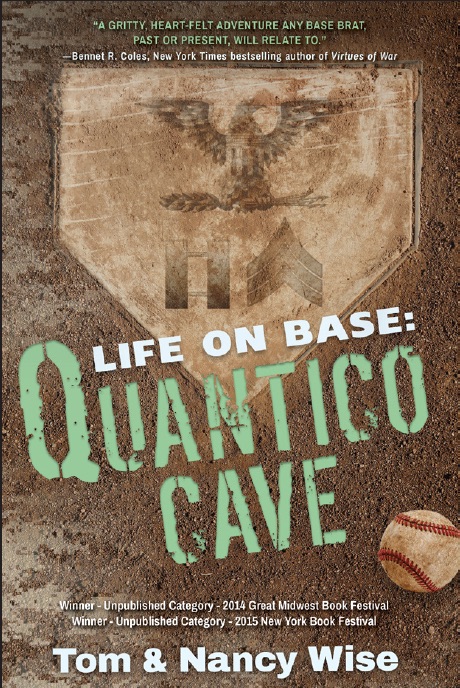
  • LIFE ON BASE: QUANTICO CAVE by Tom and Nancy Wise,

    LIFE ON BASE: QUANTICO CAVE by Tom and Nancy Wise,

    Life on Base: Quantico Cave is a riveting portrayal of the lives of children whose parents serve in the armed forces. Being a teenager is hard enough, but adding the constant uprooting and moving from base to base adds its own unique challenges as well as rewards.

    The story focuses around young Stephen, a “military brat”—a term that these children use to distinguish themselves from their civilian counterparts. Stephen finds himself uprooted once again from his most recent home in California and moved across the country to Quantico Bay, Virginia. His father is a Marine and relocating often has become a part of Stephen’s life. However, becoming accustomed to something is not the same as liking it. And Stephen didn’t like it. No matter the location the houses looked the same, the colors were the same, even the base housing furniture was made from the same Naugahyde vinyl. However, the faces did change and, like most of the other kids; Stephen knew the drill about making friends quickly, along with finding his place in the military-influenced hierarchy of who is who among the kids.

    Quite frankly, Stephen was becoming complacent about the continuous moving and felt that life was becoming the same old same old, but that was all about to change.

    An old acquaintance from Stephen’s past has returned and things are not perfect between the two. From day one of their renewed “relationship,” Rick is determined to make life difficult for Stephen. What was Stephen to do with someone that constantly wanted to fight? This rivalry sets the background for a story that all middle school to high school children can relate to—there always seems to be a bully or a hotheaded kid to contend with and no way to avoid the inevitable conflicts.

    For those unaware of the surroundings of Quantico Bay, authors Tom and Nancy Wise give a good background in the introduction. The USMC base is located near the Potomac and was built right over top of old Civil War encampments. This setting provides the local military brats with trench works, cannon balls, and makeshift bunkers that, simply put, make it an irresistible place to hang out.

    The story takes a gripping and unsuspected twist when a hurricane hits the base. When Stephen goes exploring the next day, amidst the uprooted trees and overflowing creeks, he discovers a mysterious cave. Little did he know how much of an integral role that this cave will take in his life and the lives of his cohorts.

    This book not only does an admirable job of giving readers an insight on military base life for a youth growing up, it also gives an accurate portrayal of life as a kid today. Challenges exist, personalities will clash, and there will always be that one person that tends to resort to bullying to prove that he or she is king/queen of the hill.

    Authors Tom and Nancy Wise effectively use this book, while telling a suspenseful story, to show middle grade readers that there are positive ways to handle these situations without sounding preachy or admonishing. Avoiding physical confrontations, resolution of disagreements with the help of others, the value of real friendship, and the importance of family are issues that are wrestled within this captivating and enlightening book that will appeal to parents and children alike. All of this is delivered in a truly engaging and spirited story—the first installment of the “Life on Base” series—that will ring true to young people of all walks of life about the challenges that they face every day.


  • I ONCE KNEW VINCENT by Michelle Rene, a historical fiction novel

    I ONCE KNEW VINCENT by Michelle Rene, a historical fiction novel

    Seven-year-old Maria Hoornik already knows more about life than she should, hiding in a curtained alcove whenever her alcoholic prostitute mother, Sien, brings customers home. One day, Sien brings home a different kind of man—an unknown artist, Vincent Van Gogh.

    Vincent, longing for stability amidst his frustrations and failures, is determined to create a cock-eyed semblance of family life with Sien, who is pregnant with another man’s child, and her daughter Maria, with whom he immediately bonds, admiring her critical honesty and calling her “Little Cat.”

    The three, and then Sien’s baby Wilhelm, form a fascinating ménage in new author Michelle Rene’s speculative novel based on considerable historical fact. Rene depicts Maria as a prodigy who comprehends her mother’s self-destructive habits all too well. Rene elucidates, through Maria’s curious gaze, the made-up family’s grinding poverty, Vincent’s stubborn insistence on doing his art his way despite his lack of economic success, and the constant quarrels over money and morals.

    The child unwillingly absorbs the distress when Vincent’s arrogant parents refuse to continue supporting their son’s liaison with a known whore, forcing Sien to revert to her old ways to provide food. Maria’s maturity is underscored in troubling vignettes: she sells her hair so they can all have one Christmas dinner, sacrifices a piece of cake to make a “soup” to feed baby Wilhelm when Sien’s milk runs dry, and rushes home in a thunderstorm to try to stop Vincent from discovering that Sien is once again up to her old tricks.

    Rene has designed Maria’s story with verve, splashing colorful images across a well-planned canvas: “Silence crept into the room and pulled up a chair for a nice long visit.” She deftly conveys a child’s perception of Van Gogh’s mental miasma: “Knowing what mood he would be in became a fine art in itself. I quickly became a master of that art.” The text is satisfyingly interspersed with the artist’s actual sketches and paintings of Sien, a notably ugly woman, and Maria, a serious, self-contained little girl rocking a cradle or sitting quietly while her mother sew; a little girl who, like Vincent, clearly wishes for the security of a real family.  

    Told through the eyes of a child, I Once Knew Vincent offers an imaginative study of a tormented genius who would create some of the world’s most recognized artworks. ​ ​


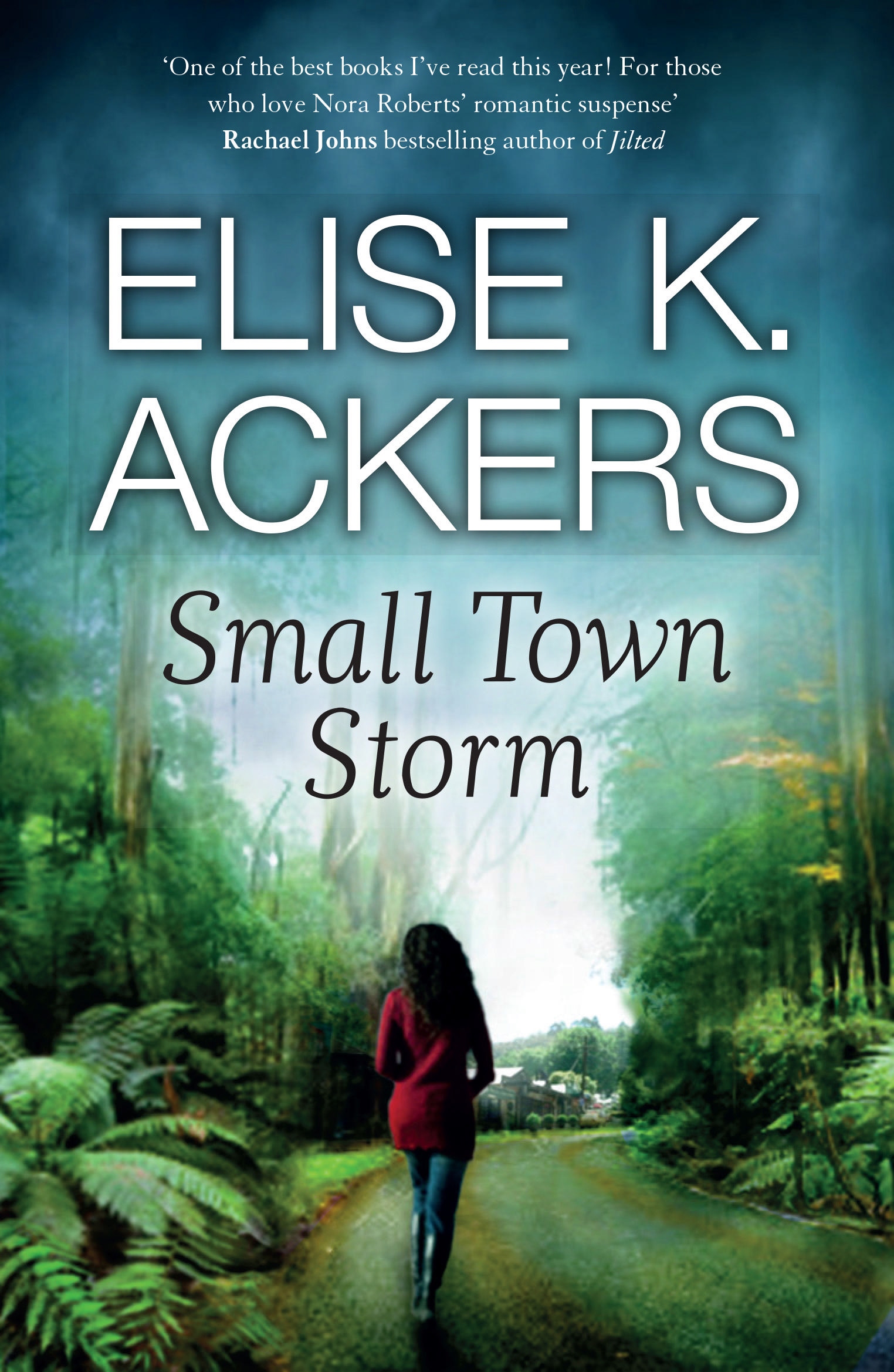
  • SMALL TOWN STORM by Elise K. Ackers – a chilling and dark contemporary thriller

    SMALL TOWN STORM by Elise K. Ackers – a chilling and dark contemporary thriller

    Aptly titled, Elise K. Ackers’s Small Town Storm is an intriguing and electric mystery set in contemporary Olinda, Australia. Jordan Hill and Erica Lawrence were inseparable childhood best friends until one fateful night when Erica’s family was torn apart and Erica disappeared without a trace.

    Jordan has always assumed she died. Nineteen years later, Jordan is the new senior constable in his hometown. He has several issues to contend with, including catching up on the small town gossip he has missed out on over the years while living in Melbourne. But when he runs into Erica, a ghost from his past, things take a turn for the worse.

    Erica, too, is newly returned to Olinda, taking a position as a veterinarian in the same town where she disappeared from all those many years ago. Jordan, who has spent years devastated by her supposed death, is shocked and angry when he encounters her—doesn’t she understand the pain she caused him? Erica, too, is saddened by Jordan’s less than warm response. To make matters worse, a murder has shaken the peaceful town and Erica is the sole suspect. Erica and Jordan must put aside their differences in order to find answers.

    Ackers takes a fascinating premise and enlivens it with sparkling dialogue, small town details, and excellent characterization. Readers will be immediately captivated by both the mystery plot and the burgeoning romance between Erica and Jordan.

    Additional layers of intrigue surrounding why Erica left town nineteen years before and what happened to her family add depth and complexity to the plot. Even secondary characters are well-drawn, lending the story an authentic voice and making the menacing plot palpable and chilling. The novel moves at a brisk pace ratcheting up the suspense level to a crescendo on all fronts. Fans of mysteries and suspense novels will be sure to be captivated by Small Town Storm, but be warned that this is a darker mystery complete with serial killers and gruesome acts.

    Fans of mysteries and suspense novels will surely be captivated by the engrossing Small Town Storm, an intriguing and well written mystery page-turner that will have you double-checking your locks and looking over your shoulder. Elise K. Ackers is certainly one to watch.


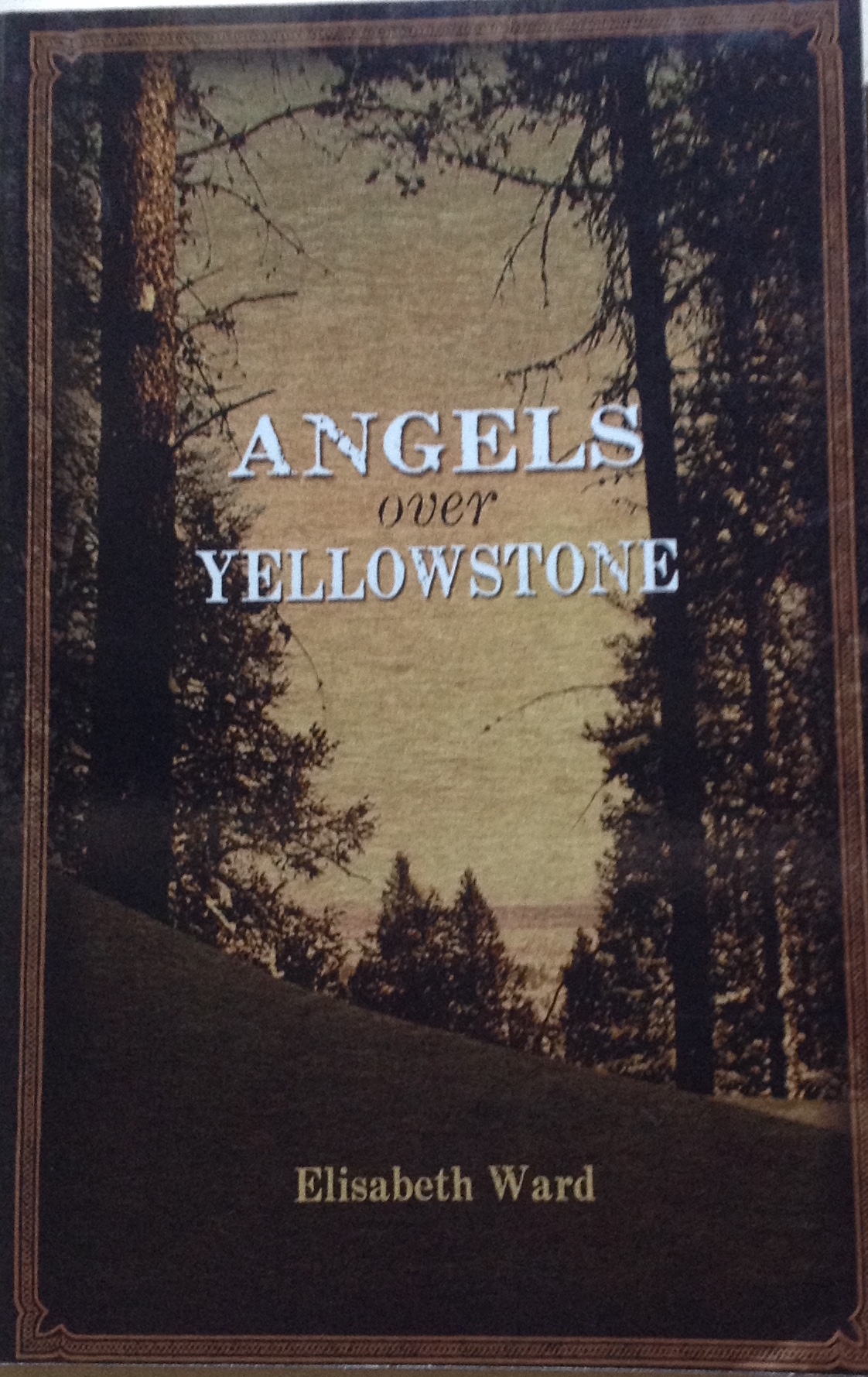
  • ANGELS OVER YELLOWSTONE by Elisabeth Ward – a richly drawn saga

    ANGELS OVER YELLOWSTONE by Elisabeth Ward – a richly drawn saga

    An atmospheric picture from American frontier history, Angels over Yellowstone explores larger societal issues through the lens of one small family’s experience as their lives are dramatically affected by the demands of a growing young nation.

    In the 1890s in Wyoming, the United States government has decided to fully claim lands in the Yellowstone region that were earlier designated as national parkland. The American Women’s Suffrage movement was in full swing, the Sierra Club was founded, the Boston subway being built, and the Wounded Knee Massacre had just taken place—these were just a few of the events that were shaping this young nation at this time.

    In poet/author Elisabeth Ward’s  paean to pioneer life, a young woman, Casey Potter, will be especially affected by this news, when soldiers arrive at her cabin one morning to announce that she, her trapper husband Lang, and their little girl Ginger, must move away so that the land around them can be viewed by tourists, untouched by human influence.

    The simple life they share will be sacrificed to the greater good, to national domain and the preservation of pristine nature.

    Living so remotely from civilization, barely able to think in terms of national agendas, Casey understands only that she and her family have to leave the cabin home they love, forced off the hunting grounds whose bounty has fed their family. But knowing that the soldiers will return soon to burn down their precious homestead, they acquiesce.

    Accepting their fate, the three vacate their hearth and home as they are forced to set out and start anew. However, Casey and Lang return to report their moving on to a fellow trapper. It is their return that brings about fatal consequences. Coming to terms with the loss of her home and then the loss of her husband is almost more than Casey can bear. Casey considers the notion of suicide until she finds solace in simple rituals, what she calls “service” or the simple rituals of everyday life.

    Ward’s characters are lyrically and powerfully drawn as are her evocative images of the time and place of this young nation at the turn of the new century. The author deftly juxtaposes Casey’s reluctant departure from her secure landscape with Lang’s earlier expedition when he met the girl with rust-colored hair: “…After seeing Casey McGregor’s hair he felt everything was dull.” The author interweaves poetry into the story, intensifying the emotional content. The pulse of her plot is unwaveringly strong, holding the reader to the page.

    To some, Ward’s concentration on one white family’s tribulations may seem somewhat skewed, since the biggest losers in the opening of the national parklands were undoubtedly the Native American peoples. Nevertheless, Ward’s tale underscores some larger truths about our twin American conflicting aspirations, to conquer and to conserve.

    Angels over Yellowstone combines a richly drawn saga of personal love and loss with some provoking philosophical questions about the American ethos.

  • DESTINY’S SECOND CHANCE by Kate Vale, a heartwarming women’s fiction novel

    DESTINY’S SECOND CHANCE by Kate Vale, a heartwarming women’s fiction novel

    Two decades ago, librarian Isabella Campbell made the wrenching decision as a young, unwed mother to put her newborn child up for adoption. Though Bella wanted to keep her daughter, her rigid and disapproving parents insisted that a child needed both a mother and a father, not a single, inexperienced, teenage mother. Bella reluctantly agreed, but only if she was allowed to receive regular updates from the adoptive parents. The parents complied for a short period of time, but then Bella heard nothing more from them.

    Upon returning home from a business trip, Bella finds a letter from her daughter’s adoptive father, Nolan Harris, giving her permission to contact Destiny, who is now twenty-one. Bella is instantly thrown into emotional turmoil, thrilled yet very apprehensive. Would Destiny even want to meet or talk to her? Had her daughter’s adoptive mother, who had always disapproved of keeping Bella in their lives, continue to be a roadblock? And why had Nolan Harris chosen this moment in time to contact her after all these years?

    With a deft hand, author Kate Vale weaves this stressful, yet welcome complication into the daily events of Bella’s busy life—the distressing illness of a close friend who runs a local bookstore, the difficult relationship with her mother, who has never let Bella forget about her “little mistake”, and, of course, the new romantic interest in Bella’s life, Gavin, the nephew of her elderly ill friend. The result is a compelling novel rich in detail, heart-warming in its delicate yet realistic portrayal of the impact of adoption on all the lives it touches.

    Vale has a real talent for drawing characters one wants to get to know, and for understanding the emotional impact of the events that shape our lives. Destiny’s Second Chance draws the reader in from the very beginning, providing a thoughtful and satisfying story about people who feel like close friends.

    Life is messy, and life-altering decisions are never just good or bad, but rather create a mixture of emotions that run the gamut from satisfaction that one perhaps made the right decision, to guilt or despair over the toll that decision has taken in the intervening years. Vale understands this, and has described these conflicting emotions beautifully.

    This book will stay with readers long after they put it down. Highly recommended for those who enjoy women’s fiction and stories of family relationships.

  • The CHATELAINE 2014 AWARDS FIRST PLACE Category Winners for Women’s Fiction and Romance Novels

    The CHATELAINE 2014 AWARDS FIRST PLACE Category Winners for Women’s Fiction and Romance Novels

    Chanticleer Book Reviews is honored to announce the First Place Category Winners for the CHATELAINE AWARDS 2014 for Women’s Fiction and Romance Novels, a division of Chanticleer Blue Ribbon Writing Competitions.


    book award for Romance Novels The Chatelaine AwardsThe CHATELAINE  Awards recognize emerging new talent and outstanding works in the genre of Women’s Fiction and Romance Novels. The First Place Category Winners will be recognized at the Chanticleer Authors Conference and Awards Gala held in late September 2015.


    Chanticleer Reviews is proud to be a literary affiliate of the Historical Novel Society.


    Congratulations to the CHATELAINE FIRST PLACE Category 2014 Award Winners:

    • Historical: Catherine A. Wilson and Catherine T. Wilson  for The Order of the Lily  
    • Romance Regency: Kerryn Reid for Learning to Waltz 
    • International Intrigue/World Events: Kristine Cayne for Deadly Betrayal
    • Contemporary: Kim Sanders for The Ex Lottery
    • Mystery/Suspense/Thriller Romance: Donna Barker for Mother Teresa’s Advice for Jilted Lovers
    • Blended Genre:  Janet Shawgo for Find Me Again
    • Inspirational/Restorative: Peggy Patrick for Surrendered II: Pride 
    • Romance & Adventure: Martha Rather for Kismet or Kamasutra
    • Fantasy/Mythological: Danica Winters for Montana Mustangs
    • Jane Austen Inspired: Betty Codd for Eleanor Grace 
    • Debut Novel: Julie LeMense for Once Upon a Wager
    • YA: M.A. Clarke Scott for The Dissimulation of Doves 
    • Women’s Fiction: Kate Vale for Destiny’s Second Chance
    • Women’s Fiction/Humorous: Lisa Souza for  Beauty and the Bridesmaid 
    • First Loves: Jennifer Snow for The Trouble with Mistletoe

    CONGRATULATIONS!

    To view the 2014 Chatelaine Finalists whose works made it to the short list, please click here.

    Good Luck to the Chaucer First Place Category Winners as they compete for the CHATELAINE AWARDS 2014 GRAND PRIZE position!

    The 1st Place Category Winners compete for the CHATELAINE AWARDS 2014 GRAND PRIZE position. The 2014 CHATELAINE category winner was announced at the Chanticleer Authors Conference and Awards Gala in September 2015. See the Grand Prize Winners.

    The deadline for The Chatelaine Awards 2014 was August 31, 2014.
    The deadline for The Chatelaine  Awards 2015 is August 31, 2015.

    GRAND PRIZE Overall Chatelaine Awards Winner from 2013:

    KCHOICESate Vale for Choices

    To view the 2013 Chatelaine Award Winners, please click here.

    To enter the 2015 Chatelaine Awards, please click here. The deadline is August 31, 2015.


    To enter your work into a Chanticleer Writing Competition, please click here. 

    CBR’s rigorous writing competition standards are the reason literary agencies seek out our winning manuscripts and self-published novels. Our high standards are also another reason our reviews are trusted among booksellers and book distributors.Chanticleer Book Reviews & Media, L.L.C. retains the right to not declare “default winners.” Winning works are decided upon merit only. Please visit our Contest Details page for more information about our writing contest guidelines.

    Please do not hesitate to contact Info@ChantiReviews.com with any questions, concerns, or suggestions about CBR writing competitions. Your input and suggestions are important to us.

    Thank you for your interest in Chanticleer Book Reviews international writing competitions.

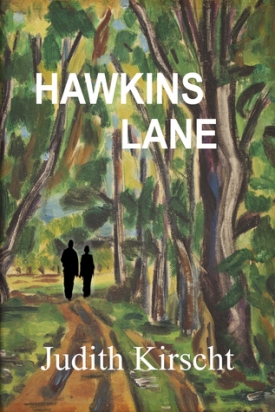
  • HAWKINS LANE, by Judith Kirscht, a literary romantic mystery

    HAWKINS LANE, by Judith Kirscht, a literary romantic mystery

    Judith Kirscht has penned a poignant story of two good people who struggle to escape their past and carve out a fulfilling life together. At its very core, this novel asks the compelling question of whether you can overcome the influences of family, and also, whether you can survive the consequences of your own actions.

    As far as the people of the small town of McKenzie Crossing are concerned, Ned Hawkins is from the wrong side of the tracks. And that’s putting it mildly—his father is a convicted murderer, his brother an alcoholic with a violent streak. Ned has spent his entire life feeling trapped and attempting to outrun his family’s legacy.

    As Hawkins Lane opens, Ned has escaped on his daily trek into his beloved Cascade Mountains to find peace and solace.  By chance, he comes upon a young woman, Erica Romano, fishing in a creek far from town. Erica is also escaping from the demands of her family, though their circumstances are very different: Erica is the daughter of the town’s new physician and related to the rich and powerful McDonald family, owners of the local mill.

    For both, it is love at first sight. Ned has grave reservations about exposing Erica to his family and wants to protect her by keeping his distance. Erica persists, convincing him that she needs him as much as he needs her.

    Unfortunately, family almost always finds a way to impact one’s life, and depending on the family, that impact can lead to tragedy. Ned’s brother, who has been spiraling out of control ever since their father was sent to prison, ends up in trouble with the law. Erica, who is by nature a risk-taker, places herself in danger far too often, and the mountains are not always a forgiving place. However, when Ned’s father is released from jail he spreads his own brand of poison, driving deep wedges and creating divided loyalties. Erica and Ned are challenged in ways that even they could not predict nor expect.

    Hawkins Lane is an excellent and, ultimately, a redemptive story about the heart-wrenching tragedies a family can survive, and about the healing powers of nature and friendship. The characters and the story will linger long after the last page is read and you will be captivated from the first page.

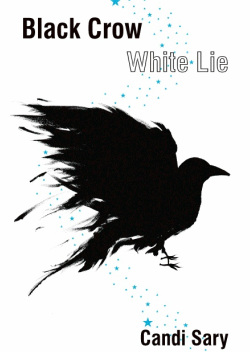
  • BLACK CROW WHITE LIE by Candi Sary

    BLACK CROW WHITE LIE by Candi Sary

    After years of moving from motel to motel with his alcoholic mother, Carson Calley has grown old enough to start questioning his gypsy life. The stories he’s been told – father died a war hero, a past life as a medicine man – slowly unravel as the 13-year-old begins to spread his wings.

    However, of all his mother’s stories (I’d wouldn’t lie,” she assures him, “the gods … plant things in my head”), Carson knew one was true – he did possess the gift of healing. Since his earliest days, his hands would fill with heat and then emit tiny “stars” that soothe his mother’s tortured heart and frequent hangovers. Yet despite this power, Carson also experienced rages that he can’t control, an anger seated in his mother’s frequent long absences. To distract himself, he grabs his skateboard and wanders the streets of Hollywood.

    Author Sary adroitly captures the real Hollywood: streetwalkers, grit and grime, tattoo parlors and head shops and gangs of idle youth. She also portrays its denizens free of stereotype and with a lyric eye: Carson’s mother “had a worn-out kind of beauty – like a thirsty flower.” Of Carson’s few friends, tattoo artist Faris “looked like a live page from a comic book,” while Casper, the albino owner of a local head shop, “looked like he had a light bulb inside of him.”

    Faris gives Carson gruff, fatherly advice, world-weary insight into his mother’s issues and stories, and the boy’s first tattoo: a small black crow to remind him of his father, who, he’s told, killed a crow with his bare hands. Casper offers something else: when Carson heals his deaf ear, the head shop proprietor sets up a back room where the boy can practice healing.

    Accepting her son’s readiness to heal, his mother arranges for him to work with a mentor: Lolo, a healer and an actress. Unfortunately, Lolo digs a little too deep into her part. She puts the idea of raising the dead into the teen’s mind, and he immediately decides to fly to Washington, D.C., and bring his father back to life. He needs to earn some money first, though, so in the meantime, he heals people during the day and skateboards with a gang of stoner kids at night. At school, a classmate, Rose, torments his heart. It’s a tenuous existence, but it’s all life offers Carson.

    And it doesn’t last. His mother’s drinking increases as her longtime boyfriend, Jackson, toys with her heart. When she goes into rehab, Carson questions the truth of all she’s told him. Lies begin to unravel. Carson makes the trip to D.C.’s Cemetery of Heroes, but what he finds is more painful truth, followed by an even greater shock when he returns home. Carson’s faith in all he knows is shaken to the core. Can the healer heal his own heart?

    A writer with a casual but empathetic voice, Sary succeeds in portraying teen angst without melodrama, in depicting compassion without sentimentality, and in creating a world of characters on the margins of society whose depth and complexity outshine any Hollywood hero.

    Black Crow White Lie by Candi Sary earned a First In Category position in the highly competitive Dante Rossetti Awards for Young Adult Fiction, a division of Chanticleer Reviews International Writing Competitions.