Tag: Family drama

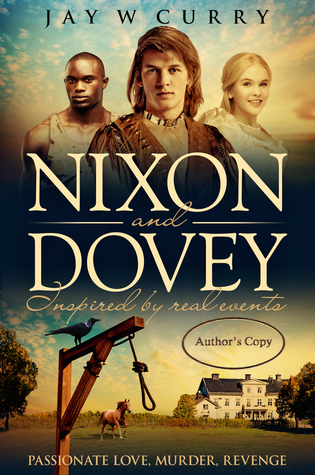
  • NIXON and DOVEY: The Legend Returns by Jay Curry – Antebellum South, Gun Slinging, Historical Fiction

    NIXON and DOVEY: The Legend Returns by Jay Curry – Antebellum South, Gun Slinging, Historical Fiction

    Launch into a gun-slinging, horse racing, antebellum southern historical biographically-based novel in this larger than life surprise, Nixon and Dovey: The Legend Returns.

    Imagine searching through the local archives in hopes of discovering a long-lost ancestor only to stumble upon a memoir written about the early days of the area in which this ancestor lived. And another find – an article about the ancestor that has alluded you for so long surfaces. As you read it, however, your stomach turns. The ancestor you have sought for so long turns out to be the most notorious murderer and villain of the day. In this page-turner, Jay Curry tells the story of his ancestor, Nixon Curry, and his sad end.

    Curry opens his tale at the very beginning: Nixon learns to shoot and ride as a youngster and finds he’s quite good at it. In fact, he loves riding so much his one desire is to open a stable and breed thoroughbreds – just like the rich people in his town. Unfortunately, Nixon is not rich, nearly unforgivable in the antebellum south. And Nixon, much to the dismay of his father, has a temper.

    He may have been able to climb his way out of the first tragic situation, by, perhaps winning the Governor’s Cup, the big horse race of the day. But the second, his volcanic disposition, he will never be able to escape. Now Jay Curry’s ancestor must come to grips with the fact that dreams don’t always come true and life doesn’t always go according to plan.

    At its heart, though, this book is a love story. Nixon falls in love with a senator’s daughter, Dovey Caldwell. Unfortunately for the ill-fated lovers, her daddy has already set her up with Nixon’s arch rival and wealthy Southern son. Much like the sorry tales of love-struck couples of yore, the youngsters run off together and cause all sorts of consternation.

    Nixon and Dovey: The Legend Returns is a heart-pounding, page-turning read straight from the pages of an 1800’s diary and family lore of author, Jay Curry.

    5 Star Best Book Chanticleer Reviews round silver sticker

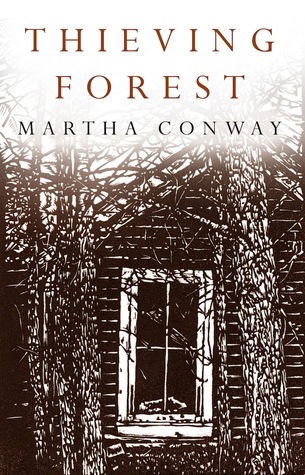
  • Thieving Forest by Martha Conway – Women’s Historical Fiction

    The story is set in 1806 and follows five sisters who are on their own after the recent passing of their parents. The five are faced with the choice to remain and run the family store in the tiny settlement along the edge of Ohio’s Great Black Swamp or pull up stakes and join the youngest sister living with their aunt in Philadelphia.

    By the banks of the Great Black Swamp, one woman fights to save her sisters caught between two cultures in Martha Conway’s tale, Thieving Forest.

    The world is filled with such events that when the right author develops characters and plunges them into a real-world timeline, history comes alive. Martha Conway has succeeded in doing this in her debut novel, Thieving Forest.

    Conway turns the story up a notch early as four of the older girls are kidnapped by a band of Potawatomi Indians who raid their home. Seventeen-year-old Susanna is left behind, and though shaken deeply, quickly comes to her senses and determines to rescue her siblings.

    Trust is the theme as the story unfolds. The kidnapping is somewhat of an unexpected occurrence as the family had good relations with the natives. The issue is complex and Susanna finds herself questioning who she can trust along with the sad realization that sometimes people are not always who they claim to be. The sisters are eventually reunited, but as is true in real life, things can never be the same.

    Martha Conway paints a stunning portrait of life in the early days of the United States expansion into the West. She has done her research, and it shows as she delves into Native American tribes and the relationship they have with the European settlers.

    Detailed descriptions of day-to-day life, including the hardships experienced, are fleshed out with complex and engaging characters. A tale of self-discovery, personal growth, romance, family ties, loyalty and more in this book readers will find hard to put down.

    5 Star Best Book Chanticleer Reviews round silver sticker

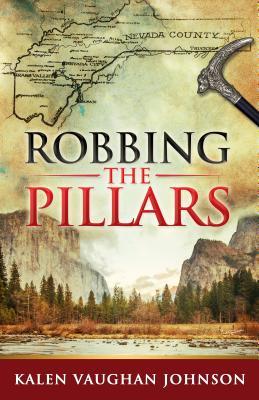
  • Robbing the Pillars by Kalen Vaughan Johnson – Historical Fiction

    Robbing the Pillars by Kalen Vaughan Johnson – Historical Fiction

    When James MacLaren flees his native Scotland, he leaves a body behind – but not his hatred of the upper class. In England, he meets and weds Emma, but will the skeletons in their shared past remain silent?

    Robbing the Pillars crosses the Atlantic and lands in Nevada City, California at the beginning of the Gold Rush, amidst the discovery of seemingly endless supplies of the precious mineral. James and Emma, now with their young daughter Charlotte, come out to California by wagon train accompanied by Emma’s best friend, Althea and her son Justin.

    Along the way and upon arrival in the region, they meet friends and ruffians including an entrepreneurial chancer with a conscience, an inveterate loser with a taste for alcohol and his eye fixed on Althea, and a Mexican who finds that MacLaren is the first white man he can trust.

    MacLaren involves himself in mining, engineering, and homesteading while Emma and Althea get a taste of town life and community activism. Their children meanwhile are growing up with a sense of true freedom that their European-born parents could never have known. In pursuit of his personal quest, Justin will come up against Althea’s past; and the beautiful, willful Charlotte and her father must learn to live with the pangs of lost love.

    Meanwhile, the territory is changing rapidly. Big men with big ideas are taking an interest in the fate of the new state and move to monopolize its resources. Into this mix, author Vaughan Johnson has expertly interwoven both fictional characters and real “empire barons” such as Leland Stanford, Collis Huntington, and Mark Hopkins into her epic tale.

    This first part of a planned series ends with the rumbling of war that splits the nation and brings about a sad parting that begs for a reunion in a later volume.

    Author Kalen Vaughan Johnson has created a large canvas; her knowledge of the region – its history, the mix of cultures, the lilt of varied accents, even the cuisine – highlights her obvious talent for creating richly detailed historical fiction. The title, for example, references an arcane aspect of mining in which, as the miners retreat from a played out vein, they risk dislodging the roof pillars as they go, endangering their lives by ferreting out every last flake of gold. Johnson depicts with equal verve and realism the lives of the rich, the wannabes, and those at the bottom struggling upward.

    A sweeping look at personal idealism and autonomy pitted against the forces of greed and manipulation, Robbing the Pillars is an emotive family saga solidly rooted in the American dream.

    5 Star Best Book Chanticleer Reviews round silver sticker


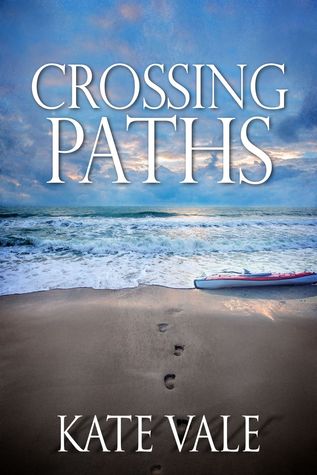
  • CROSSING PATHS (Geneva Shores Book 2) by Kate Vale

    CROSSING PATHS (Geneva Shores Book 2) by Kate Vale

    Two lovers reunited after decades apart, after they were tragically separated, find they can’t pick up where they left off, but love is always worth fighting for.

    Kate Vale fans will be pleased with her latest book in the Geneva Shores romantic fiction series that takes place in the Pacific Northwest. It features soon-to-be divorced Trish who is overjoyed to be reunited with Denis, the father of her grown son, after a boating accident decades earlier tore them apart. But trying to renew their relationship is made complicated by the great distance between them as well as her pending divorce with Richard. She is also intent on maintaining good relationships both with her son, Chet, and her stepson with Richard, Ed.

    To make things harder for Trish, Richard does not want the divorce and he is willing to go to great lengths to stop it from happening. Meanwhile, Trish and Denis are falling deeper and deeper into love. Trish is a character who many will relate to as she struggles to dig her way out of a mess that leaves her vulnerable. Though her relationships are not always easy, she is a kind-hearted individual who fights to keep her family together as much as she can.

    Richard’s son Ed, who helps run Richard’s real estate business, starts learning that Richard does not always close deals by the book. And Ed is already unable to connect with his father as he is afraid to reveal a detail about himself that may destroy their relationship. Trish and Denis struggle to make it as complicated family relationships and meddling from Richard threaten to undermine their newly rekindled love.

    Crossing Paths is a novel about the struggles of real and difficult connections that are glorified and demonized and reflects the conflicts and rapport of myriad relationships, romantic, familial and otherwise. Kate Vale excels at writing classic romance novels. Readers who are wanting steamy sex scenes or action/adventure tales should look elsewhere. Vale delivers real-life scenarios and characters that real-life women can identify with and then supplies the hopeful endings that avid romance readers desire. Pour yourself a cup of tea or a glass of your favorite wine and enjoy.


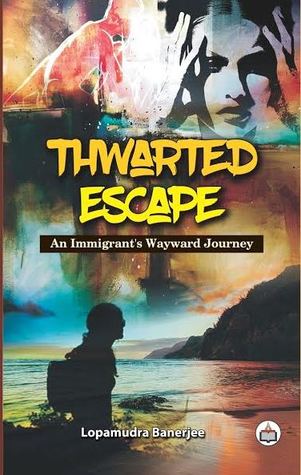
  • THWARTED ESCAPE: An Immigrant’s Wayward Journey by Lopamudra Banerjee – a stirring narrative

    THWARTED ESCAPE: An Immigrant’s Wayward Journey by Lopamudra Banerjee – a stirring narrative

    In her book, “The Art of Memoir,” Mary Karr recalls hearing novelist Don DeLillo once say that a fiction writer starts with meaning and then manufactures events to represent it, whereas a memoirist starts with events, then devises meaning from them.

    Lopamudra Banerjee does just that in her memoir “Thwarted Escape: An Immigrant’s Wayward Journey.” She takes us through a journey of achievements and sorrows while using words to make meaning of her spirituality, her femininity and her literary identity.

    Broken down into four volumes, the book is a collection of essays and articles, many of which were previously published in print, online anthologies and literary journals.

    Depending on which chapter you’re reading, you could say Banerjee is a memoirist, a creative writer, an essayist or a journalist. But no matter what label you choose for her writing, you will see Banerjee has major writing talent – the culmination of a passion that was borne at an early age when she considered words her playmates.

    “I have been in love with these moments of restlessness and release as these clusters have formed a pattern called words. I watched this written world of prose and verse, as with my hands, my body, I absorbed these nuances of creation,” she writes.

    Through the pages, Banerjee transitions from a small town girl in India who makes her way to the United States. She has traveled to many places throughout the US and in one chapter where she derives the book’s title, “Thwarted Escape,” she talks about her departure to Omaha, Nebraska, as in this stirring passage: “I am an ordinary, commonplace refugee in North America, and like many others of my ilk, have embedded myself in a family, far flung from what is called ‘original home.’ Like many others, I am striving to gain the status of the coveted Non-resident Indian, a legitimate work permit to survive in a distant land while my heart continues to ache with the desire to be rocked in the bosom of my mother and to revisit the havens of my childhood.”

    With the power of narrative in her life, Banerjee lives with the secret ambition to “get published” and to let the world read her stories. Thankfully, she has fulfilled her dream of compiling such a book and sharing with us her engaging and well-written stories of grief, death in her family, motherhood, and femininity.

    In a particularly moving section of the book, Banerjee introduces us to Taslima Nasrin, a Bangladeshi novelist and poet who has lived in exile since 1994 amid death threats for her outspoken feminist views and criticism of Islam. With admiration for Nasrin’s voice, Banerjee includes newspaper clippings (scans from the original print versions) of Nasrin and explains some of the abuse and hardship the activist has endured. As a graduate student of English literature, Banerjee harnesses Nasrin’s power and draws parallels to other literary greats.

    “I realize how [fusion_builder_container hundred_percent=”yes” overflow=”visible”][fusion_builder_row][fusion_builder_column type=”1_1″ background_position=”left top” background_color=”” border_size=”” border_color=”” border_style=”solid” spacing=”yes” background_image=”” background_repeat=”no-repeat” padding=”” margin_top=”0px” margin_bottom=”0px” class=”” id=”” animation_type=”” animation_speed=”0.3″ animation_direction=”left” hide_on_mobile=”no” center_content=”no” min_height=”none”][Virginia] Woolf, how Taslima [Nasrin], how Sylvia Plath, trapped and tangled in a women’s bodies, have suffered the heat and passion of their literary selves…”

    Banerjee ends the book with letters she wrote to her family and other people while she was pregnant and during other periods in her life. We readers are grateful Banerjee has found the courage and energy to publish all of these personal stories that are so moving, eloquently written, and significant in both her life and the lives of women.[/fusion_builder_column][/fusion_builder_row][/fusion_builder_container]

  • The UNEVEN ROAD: Book Two of First Light by Linda Cardillo —  a coming of age novel

    The UNEVEN ROAD: Book Two of First Light by Linda Cardillo — a coming of age novel

    Ringing with the changes from the deceptively placid 1950s to the turbulent 1960s, from the picturesque New England island of Martha’s Vineyard to the bloody jungles of Viet Nam, The Uneven Road is a sophisticated coming-of-age novel that intersects with historical events of this period.

    The second book of Linda Cardillo’s award-winning series, First Light, is written with verve and intelligence. Cardillo carefully constructs The Uneven Road with rich characterizations, diverging and interlocking plot elements, and fine attention to detail that explores family dynamics and the search for individual identity.

    This gripping saga continues when Izzy, Mae and Tobias’ seven-year-old daughter, contracts polio. Their twelve-year-old boy, Josiah, feels responsible not only for his sister’s pain, but all the troubles in his small world. Jo’s conflicted feelings escalate when he realizes that Mae’s island property, Innisfree, will be sold to pay for Izzy’s surgery. Even though he loves Izzy and wants her to walk without crutches, his parent’s cold-blooded willingness to part with Innisfree drives Jo to smash an important symbol of his past, the ceremonial Wampanoag drum bestowed on him by Tobias, and then runs away to Boston, where he stays with his Irish uncle, a policeman. Finally he enlists in the army, winding up as a medic on the killing fields of Viet Nam.

    Cardillo’s precise writing adds credibility to the vivid scenes that take place in Viet Nam where Jo struggles with the necessity to kill the enemy while charged with saving lives. Later, the author, again, deftly describes Jo’s very different experiences when he returns to the US, where he hangs out in a commune. No matter, Jo maintains his family contact mostly through Izzy, now in college on the mainland. Back on Chappy, Mae, going through her own changes, longs to see her son again. His journey home with Izzy and her friend Grace will re-connect him with his people, both Irish and Native American, and reveals to him that he and his mother are more alike than they ever thought possible.

    Captivatingly infused with often raw emotions and haunting memories of race, heritage, culture, and family dynamics, The Uneven Road, scatters its characters over time and place and draws them back together again with enduring values of family love and respect for heritage.

  • RIO – The STREET KID STARGAZER by Craig S. Wilson – a thriller coming of age story that takes place in contemporary Rio de Janeiro

    RIO – The STREET KID STARGAZER by Craig S. Wilson – a thriller coming of age story that takes place in contemporary Rio de Janeiro

    This international YA crime thriller, one that could have been ripped from the latest headlines, is set in beautiful Rio de Janeiro. Juxtaposed against the glamorous hi-life of the iconic city, the author—Craig S. Wilson brings into focus the city’s gritty and deadly underground crime scene with its drug lords and cartels.

    The destitute lives of 16-year-old Lucas and his siblings are already placed in turmoil when their mother passes away. But their troubles are exasperated when Lucas’ older brother is suddenly murdered in cold blood outside their squalid tiny hovel in the shanty town (called a favela) where they live a meagerly existence along with millions of other impoverished Brazilians.

    Instead of panhandling, young Lucas tries his luck at shining shoes. But in an impromptu moment, he steals his customer’s wallet. Daniel Burke, a visiting American, is his rube. Daniel traveled to Rio to reconnect with old family roots, but is now left with no money and is taken pity on by Gabriela, an enchanting airport employee whom he asks for help. Thus, Wilson begins weaving his tale of the Rio Street Kid Stargazer.

    Lucas, needing a permanent means of support for his younger sisters, turns to a widely-feared drug lord, Antonio Cruz Mendez—known as “Dez”–for work. When a drug deal turns violent and Lucas must flee, he is shocked when he bumps into Daniel again. When Daniel and Gabriela, simply trying to retrieve his wallet, they inadvertently become dangerously entangled in young Lucas’ life that now includes dealing with corrupt police and the underground crime syndicates turf wars.

    Wilson did hit a couple of road bumps with this first novel, including pieces of the plot and character motivation that some may find on the side of unrealistic. Some readers may decide that the author is telling the reader too much while and not “showing enough.” But many will find that these shortcomings do not diminish the likability of the protagonists or the investment in Lucas’ mental chess game with “Dez.”  Like his younger protégé, Dez is a product of his environment—the poverty stricken “favelas” in which it seems that the only way to escape is by succumbing to a life of crime or face a destitute future.

    Many will appreciate the novel’s honest snapshots of Rio de Janeiro, which includes its luxurious hotels and beautiful landscapes while thoroughly delving into the ugly underground and severe issues of such abject poverty. Wilson crafting of Daniel’s character is allows us to see Rio as a newcomer. We soon learn, as Daniel did, that this unique city’s charm has a lot to offer, but is quite risky for tourists and locals alike. Daniel’s character is developed as he becomes more connected with his roots to Rio and is forced to reconsider his life and his “success” as an employee of Lehman Brothers investment bank.

    Overall, Wilson’s cultural interpretation of Rio de Janeiro, along with his grasp of its extreme poverty level and the seedy underground that takes advantage of it, is reason to pick up this book for an informative cultural  read—especially with the aftermath of the 2016 Summer Olympics and the FIFA World Cup and the fall of Lehman Brothers. The romantic elements, along with the chaotic and complex action will have many readers looking forward to book two in this series that states “Sometimes good people do bad things for a greater good.”


  • BELIEVE by Annaliese Darr — Magical Realism & Mysteries

    BELIEVE by Annaliese Darr — Magical Realism & Mysteries

    Spring O’Flaherty has an unusual problem. From childhood she’s been not only clairvoyant, but also able to see auras. These are not just faint, she can see them if she squints auras, but vibrant auras, dark auras, life force fading auras –a virtual kaleidoscope of energies always swirling.

    Fortunately, she comes from a loving and religious family that understands her special talents and helps her deal with them the best that they can. Her father is a preacher in the Blue Ridge mountain country of western Virginia, and often takes the family on revival trips and her mother doesn’t discount her daughter’s unique “gift.”

    Even with her family’s support, Spring has some terrifying experiences in her youth that made her suppress her powers and reject God. (“Holding the person you love as he bleeds out is enough to turn anyone into a cynic,” she tells her mom.) She walks away from the painful past and works hard to build a normal life, becoming an attorney in Atlanta where she tries to block her “gift.” Her new world disdains and disavows the mysterious, intangible forces, which suits Spring just fine.

    That is, until she meets Jed Collinsworth, a charming, handsome, and well-bred Southern gentleman who is also a top-level district attorney from a wealthy family. When her dream comes true and he asks her to marry him, she then begins to balk from fear that learning of her powers will not only repel Jed personally, but that worries that her “gift” becomes public knowledge that it might ruin his career.

    So, she seeks help from a psychologist, who takes her back to the beginning. Through revisiting her memories, she starts to integrate who she was with whom she is, while hoping to find a way to live with her gift, and trying to be honest with the man she loves without scaring him off or ruining his career.

    Annaliese Darr, the author, writes of the Appalachian culture of tent revivals, blue grass & gospel music, and beliefs in “psychic gifts” and the old ways with a deftness and clarity that juxtaposes Spring’s new life chapter in the big city. Darr’s dialogue and characters are refreshing and captivating while her heartwarming story encompasses mystery and murder.

    The novel is split between her backstory, brought out through the counseling sessions, and the front story of how she deals with Jed and her powers (“I could feel the noose of destiny tightening around my neck”). The narrative is straightforward with no ruffles and flourishes, but is written sometimes with witty and loving banter and sometimes it is written with palpable sadness that steps the reader through a complex tale and time switches without confusion. Darr balances the mystery of “what happened?” with “what happens next?” as she capably builds the suspense and tension on several fronts.

    Spring’s refusal to tell Jed her secret is frustrating to him and to her—especially because Jed is someone whom we, the readers, can believe can deal with it. However, at the point her hesitation turns implausible, we recognize the true battle Spring is fighting. Readers will find themselves rooting for Spring (and for Jed) and for the bad guys to get what they so justly deserve in this very special story that will touch your heart and pull you in.

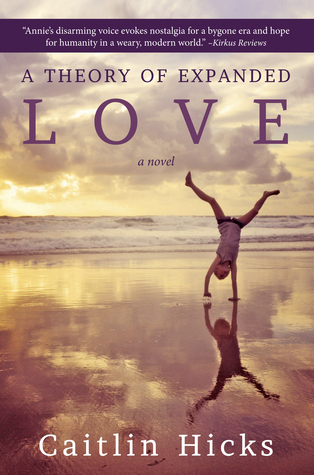
  • A THEORY OF EXPANDED LOVE by Caitlin Hicks, a bold, coming-of-age novel

    A THEORY OF EXPANDED LOVE by Caitlin Hicks, a bold, coming-of-age novel

    Confused by conflicting messages from family and church, a young girl takes big issues of life, love, and trust into her own hands.

    It is 1963, and American Catholics are stirred. First, by the death of the pope, and later, the assassination of the first Catholic president. Preteen Annie Shea, one of eleven children in a devout Catholic family, is the narrator. Because her father, a soon-to-retire Naval officer, once had a chance encounter with a priest who is now a cardinal, Annie sees her parents shamelessly promoting themselves in the community and church as friends of the possible next pope.

    As we begin to live among the Sheas, we see a passive, harried mother who suffers in secret from the early loss of a baby and a well-meaning father who is tyrannical in pursuit of prestige, trying to control his unruly brood with strict moral injunctions backed up by a belt. But his rules can’t stop Annie from wondering: why is it a sin to lie, except about the family’s supposed connection to the papacy? Why can’t she talk to someone about a family member creeping into her bedroom and feeling her up?

    Worst of all, in a religious culture where babies are so wanted and life so precious, why is her older sister consigned to a convent to “repent” and, Annie learns, have a baby that will be taken away for adoption before anyone in the family even looks at it? Annie’s sudden bold rebellion may tear the family apart—or bring it together in ways never envisioned.

    Canadian author Caitlin Hicks is a playwright and actress who has crafted this coming-of-age novel like a series of episodes in a fast-developing family television drama. Annie is a likable, gutsy girl stuck in the contrast between what she knows in her heart to be right and what she is being told by various patriarchs—dad, priest, and pope.

    Authentic, amusing, wise beyond her years, Hicks’ heroine marches forth like a modern Maid of Orleans to remind others of their true moral duty. Hicks composes with confidence and competence, deftly manipulating the modalities of the fateful events of 1963 to reveal the Sheas as a sort of “every family,” with strong bonds of caring and some notable fault lines.

    A Theory of Expanded Love is a teen’s-eye view of what happens when doctrine threatens to outweigh compassion, and how balance can be restored with a few bold moves.

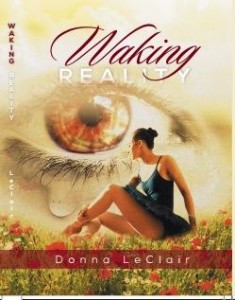
  • WAKING REALITY by Donna LeClair, a courageous memoir about surviving abuse

    WAKING REALITY by Donna LeClair, a courageous memoir about surviving abuse

    Writing a memoir is more than merely putting facts down on paper and regurgitating the gory details of our painful past. We’ve all had heartbreak and joy, but the glue must be in the story. As American author Susan Shapiro (“Five Men Who Broke My Heart”) puts it, “A novel that is merely autobiographical is a great disappointment, but a memoir that reads like a novel is a great surprise.”

    Donna LeClair does the genre justice in Waking Reality, her page-turning memoir. It will make you appreciate full disclosure honesty rather than disparage over a writer evincing her suffering, which occurred mainly at the hands of men, including her father. This memoir is for anyone willing to go along for the ride with a writer who exposes her life’s nooks and crannies, some uplifting, and many horrifyingly unreal.

    Through engaging and well-written prose, LeClair relates the 1963 murder trial known as State of Ohio v. Bill Bush, a police sergeant who murdered three members of one family. Bush happened to be her uncle and the family he tore apart, hers. Due to the circumstances of the trial, LeClair and her sisters were in protective custody. Imprisoned at ten years old in her own home, she was forced to crawl so she “would not be within visual range of a shooter.” She stopped watching TV because the glowing screen alerted potential intruders when the family was home.

    Amid the horror, LeClair introduces the word “hologram” 27 times (I counted), evoking themes of truth, light, and above all, faith, as in this passage early in the book: “Lurking behind these seasoned holograms are withering spirits who weep in unfathomable chateaux, scrutinizing the tumbling of their gingerbread thoughts. None of our lives’ fantasies or any of our hearts’ desires can put crumbling pieces back together, but if you secure the courage to journey inward, the key to your happiness reflects there.”

    She doesn’t just tell us the story of her childhood fear, she sings it, using these fairytale-like passages: “I know angels carried me home that day because I was too young to make the journey unaccompanied, and hell is too far of a gallop for legs groomed not for devil’s track. Wings of godliness cloaked my thought’s defiance of belief and knowing; the communion of virtue and endurance heralded a sanctuary of nudities unbeknownst to my virgin eyes.”

    To some, the fantasy interludes may be a distraction; others will see the distorted sense of reality her child self endured. “Mirror, mirror of the truth, I beg of you, show no more. Why do I have to look inside? It would be easier to hide… Hide, if you wish, but there is no escape to all those things buried deep inside.”

    LeClair apparently honed her literary acumen in high school, but not by attending class and taking notes. Detecting a deep sadness in her student, LeClair’s English teacher excused her as long as she produced a short story or poem by the end of the day.

    Waking Reality is recommended reading for anyone looking for an engrossing account of a woman’s courageous story growing up in the 1960s. You will want to see that she emerges through the dark tunnel of abuse; LeClair has two children and three grandchildren and does lectures around the country.