Tag: Family drama

  • THE CAMERA’S EYE by Judith Kirscht – Mystery, Family Saga, Pacific Northwest

    THE CAMERA’S EYE by Judith Kirscht – Mystery, Family Saga, Pacific Northwest

    A peaceful home in the San Juan Islands turns perilous when two women are persecuted by residents who have plenty to hide when The Camera’s Eye is turned on them. Master storyteller Judith Kirscht presents a thrilling mystery with heart, ripe for today’s environment and rich for readers.

    Veronica and Charlotte considered themselves unlikely targets of hate crimes, after all, who wouldn’t like two nice white-haired ladies who share a home for economy and company on an island in Washington’s Puget Sound? Both women have tragic family histories which they thought they’d left behind, but trouble never really lies quietly for long.

    Veronica has the gift of capturing the truth with her constant companion, Constance, her beloved Nikon camera. When she captures an uncomfortable truth in their new neighborhood, the eye of persecution turns and focuses on her and Charlotte. In The Camera’s Eye, the reader comes face to face with how perception encourages action, and how action can either heal or destroy.

    From the beginning scene, Veronica and Charlotte are in jeopardy as a rock is thrown through their window in the middle of the night. Who would do such a thing? With pasts that cultivated their own sets of demons, the friends have their own ideas, and the field is rife with possibilities. However, when the local law enforcement shows up and suggests that their lifestyle is to blame for the attack, the women go on the defense and start their own investigation as to who and why they have suddenly become targets.

    This story is not to be confused with a cozy. Kirscht opens the story with violence and forces the reader to examine the many results of hard decisions made with the best intentions, and question philosophies based on the letter of the law rather than on love. It’s a mystery, certainly, but with an unrelenting grip and careful sleuthing that feels more sinister as the plot unfolds.

    Rich with superb dialogue and beautifully penned scenes, The Camera’s Eye is typical of Kirscht’s style and readers will be hard-pressed to set this book down. As one event leads to another escalating event, our characters wits and wills are tested as they struggle to make sense of the violent hatred surrounding them and the blatant disregard for their well-being at the hands of the authorities who are supposed to protect them.

    A Chicago native and multi-award-winning author, Judith Kirscht makes her home on an island in the Puget Sound in Washington state where she spends her time taking her dogs for walks, discussing dinner plans with friends, and penning her next literary masterpiece. The Camera’s Eye is Kirscht’s fifth novel.

    “In a world where too many rocks are thrown at those who represent anything other than the norm in middle-class white America, two friends decide to take matters into their own hands and stand up to the hatred with which they are targeted in order to save their home and ultimately their lives. Hot off the shelf from the literary award-winning author, Judith Kirscht, The Camera’s Eye will challenge the reader to focus on what they believe and how their beliefs inform their actions. A very important book for our times.”

    5 Star Best Book Chanticleer Reviews round silver sticker

  • MY DEAR WIFE and CHILDREN: CIVIL WAR LETTERS FROM a 2nd MINNESOTA VOLUNTEER by Nick K. Adams – Civil War Memoir, Family Letters

    MY DEAR WIFE and CHILDREN: CIVIL WAR LETTERS FROM a 2nd MINNESOTA VOLUNTEER by Nick K. Adams – Civil War Memoir, Family Letters

    Collected and annotated by the great-great-grandson of a Union soldier, these recollections of the Civil War take on new life and meaning in current times.

    Nick K. Adams, a retired schoolteacher and Civil War re-enactor, was fortunate to have access to letters written by his ancestor, Brainard Griffin. A Minnesota farmer, Griffin volunteered to fight for the Union, leaving behind his wife Minerva, their two young daughters and baby son. His first letter home was written on September 30, 1861. The letters, 100 in all, express his longing to be back home while describing in often minute detail the life of an ordinary combatant.

    Griffin wrote the letters in quiet times, holding a board or his knapsack on his lap as a table. The repeated themes are poignant: loving messages to his wife and children, advice for the management of the farm, even bits of gossip.

    Money worries were constant; at one point Griffin washed the clothes of other soldiers so he could send more of his pay back to his family. Around the mid-point in his service he avows that, “experience is a good school,” assuring “Nerva” that when he returns, he will “prize” his time with family and home.

    Griffin’s regiment traveled extensively through Kentucky, Tennessee, and Alabama, constantly on the alert, experiencing battles, sickness and the travails of heat, mud, and snow. He observed the ravages of war in the farming communities and burned-down towns he passed through and saw firsthand the horrors of a field hospital. He met slaves and engaged them in personal conversation. He often lamented “the curse of slavery” and vowed to fight to end it. From the outset, he believed that the war would soon be over—in a few months, or a year at the most. His accounts of mealtimes indicate the increasing stress on the army’s resources: from coffee twice a day, pancakes, beef, fresh fruits, even pies, to half rations for months at a time, and towards the end of his accounts, mostly salted meat and crackers.

    Despite his optimism that the war would soon end, and his repeated visions of returning to Minerva and the children, Griffin was killed in the first few moments of the savage Battle of Chickamauga, two years after his first letter home, and was buried by Confederate soldiers in a mass grave.

    Adams has taken care to present the letters in their original form. Before each section, he highlights the coming contents and includes a map of troop movements. Though there is repetition, it seems fitting that almost every letter begins and ends with loving greetings to Griffin’s wife and children (some written directly to the girls), and that all express the simple daily trials of the foot soldier. Griffin had illnesses, lost teeth, grew a beard, and never ceased encouraging his wife in her work on their homestead.

    His homey remarks and even a bit of good-natured joking show him as a strong-willed, positive person, and his views on the progress of the national struggle reveal him as a thoughtful patriot with a mind to the future of his country and all its inhabitants.


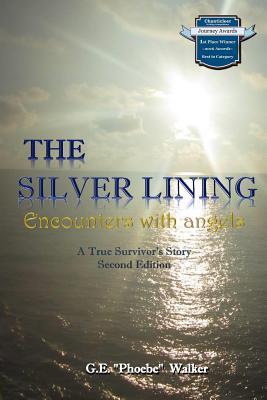
  • The SILVER LINING: ENCOUNTERS WITH ANGELS by Phoebe Walker – Memoir

    The SILVER LINING: ENCOUNTERS WITH ANGELS by Phoebe Walker – Memoir

    Imagine a crisp autumn afternoon, taking a walk with a favorite companion on a country lane. You share stories about life’s ups and downs; you both laugh and cry. When you get to your destination, you give each other a goodbye hug and part separate ways with a smile, feeling a sense of strength in your friendship.

    Meandering through the pages of Phoebe Walker’s, The Silver Lining Encounters with Angels, is like a walk down this country lane, leaving us with warmth and hope.

    Admittedly, Walker’s book is a tough read – a story rife with abuse, her parent’s divorce at a young age, a suicide attempt, battling Multiple Sclerosis (MS) and other health concerns, and a near-death experience. It’s a lot to handle, for both the author and reader, but Walker makes the story accessible and down to earth with her conversational tone. Flipping through the pages is like a fireside chat.

    In one early and instrumental memory, Walker recalls how she was introduced to God. In 1989, her friend Christi said, “speaking to Jesus was just like talking to your best friend.” Accepting Christi’s advice, Walker became convinced that certain people in her life were placed there by God as “silver linings.” “God provides the crutches,” Walker says in her memoir.

    And so it went in Walker’s life, assigning silver linings to people who helped during dark days, including her loving husband Chip. The memoir is engaging and heartfelt, a recommended read for anyone wishing optimism and hope amid adversity.

    Not only do we learn that Walker survived incredibly tough times, but also she thrived, earning a college degree, having children, and living a full life, later without vision due to MS.

    A theme of revelation is what led her to write and share her story. She says: “By allowing myself to become fully exposed, I’m confident that not only will I continue on my journey of healing, but that it will offer hope, peace, and perhaps even direction to others. That makes sharing my story fully worth [it].” Today, she maintains a website displaying her art and ways she helps others through a life coaching business.

    While Walker’s book takes us on an emotional rollercoaster, even to the edge of despair, she holds our hand with thoughtfulness and humor. She avoids lecturing and being preachy by staying in her own story, ultimately showing how her deep faith has healed her during life’s challenges.

    5 Star Best Book Chanticleer Reviews round silver sticker


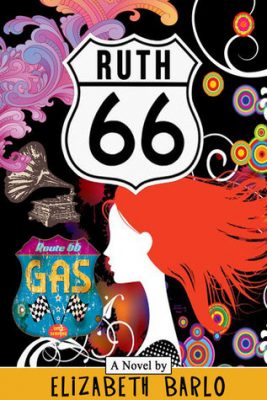
  • RUTH 66 by Elizabeth Barlo – Humorous, YA, Family & Social Issues

    RUTH 66 by Elizabeth Barlo – Humorous, YA, Family & Social Issues

    When a banged-up old bus pulls into his family’s driveway, Charlie has no idea that the rattling junker would be his ride to freedom. For years he’d been suffering under the thumb of a cold-hearted mother and a vindictive twin sister, while his father languished behind bars for tax fraud. The only family member with whom the young man held a loving bond was his grandfather, Opa Bill. Since Bill’s recent death, Charlie has been holding it together by listening to the music he and his grandfather loved. That musical thread weaves its way throughout the story as a sort of narrative jukebox.

    Now Charlie’s respectable Oma Ruth has careened back into his life in a shocking new incarnation: a freewheeling hippie in kaftan and beads, unafraid to swap barbed words with her appalled daughter, nor to insist that Charlie accompany her on her road trip. He’s dead-set against it – he’d just found his dream job at a record store – and is disgusted when his mother dumps him on her mother without hesitation.

    So Charlie sets out with Ruth – and, as it turns out, with Opa Bill, whose urn rests on the dashboard. At first, Ruth’s bizarre behavior and Charlie’s resentment at being dragged along make for a very uncomfortable ride. She insists on traveling without modern technology, but when she relents and allows his iPod and a new stereo system, the thaw begins.

    Although Route 66 is the road they travel as they head west, this is no travelogue about nostalgic remnants of yesterday. This is a journey of discovery: of Charlie’s strength and capacity to love, of Ruth’s ability to be honest with herself, of her secrets and those of her late husband, and of the people who will teach them along the way.

    There’s the comical Count Doobie, and Jonas the Swede, who appreciates Ruth’s beauty and makes her feel truly free. There’s also heartbroken Barry, who, with his daughter Rosie, barely keeps afloat a strip joint in the middle of nowhere, Texas. And there’s even Charlie’s embittered sister Becky, who rediscovers compassion and her affection for her twin away from their mother’s toxic influence.

    Above all, there’s Rosie, the beautiful young woman who pines for her missing mother and valiantly offers to become a stripper to help her father’s business. She sets Charlie’s heart and hormones on fire, turning him into a bumbling puppy before he learns to overcome his insecurities and grow into a hero of sorts. Their relationship becomes entangled in the revelation of Ruth’s secrets, but the resolution is both satisfying and a bit of a relief.

    A word of caution to the straight-laced reader: Ruth has embraced the hippie lifestyle to its fullest, and so you’ll find pot-smoking, swearing, nudity, and sex, as Charlie and Rosie let loose their teenage hormones and Ruth re-engages her lost libido. But far more than that, there is love, forgiveness, and bravery on this journey, not to mention a lot of laughs, some wonderfully wacky moments, and at times exciting and literally explosive revelations.

    5 Star Best Book Chanticleer Reviews round silver sticker

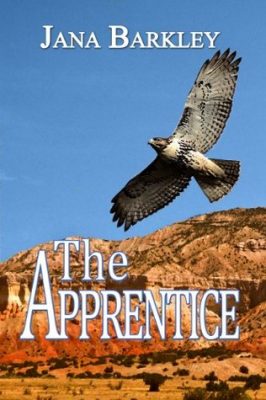
  • The APPRENTICE by Jana Barkley – Contemporary Women’s Literature, Falconry, Cancer

    The APPRENTICE by Jana Barkley – Contemporary Women’s Literature, Falconry, Cancer

    Forty-three-year-old Sam’s secure life is unraveling. It’s not just that her marriage ended two years ago, or that her job leaves her exhausted, or even that her son has essentially become a food-and-laundry-services-only visitor. It’s the combination of a cryptic phone call from her doctor’s office and the crushing claws of an improperly imprinted raptor that spin Sam down an entirely new adventure as an apprentice in the art of falconry.

    Since an apprentice needs a sponsor, Sam considers friendly Mary Kate or knowledgeable Mike, but unfortunately neither is close enough geographically for it to work. Instead, they suggest the best choice is clearly the mysterious (bordering on surly) Hank Gerard. He has experience raising and flying a wide variety of birds. So with gentle prodding, she and Hank become sponsor and apprentice, and Samantha’s life changes forever. She’s no longer a lonely, harried corporate marketing executive. She’s a falconer in training.

    Unfortunately, she’s a would-be falconer fighting a terminal cancer diagnosis. Sam tries valiantly to keep up with this physically demanding new hobby, but both the disease and the chemotherapy intended to cure it put a strain on her efforts. Readers may find it improbable that someone going through cancer treatment will feel up to full tilt running through a field a few days after chemo. Some patients will, of course, but some won’t. It might pull some readers out of the story if they have had a rough experience themselves or know someone who has.

    Sam’s challenges of learning the art of falconry progress alongside her chemo treatments, and the growing tension between her and her sponsor:  “The next step is a psychological one, too, and probably the biggest. He has to jump from his perch and come toward you in order to get his meal, now. In other words, he’s jumping toward the big scary thing—you.” (p. 119)

    It comes as no surprise that the author is an expert instructor at West Coast Falconry. The company is based in Northern California and offers classes, instruction and public education in the 5000-year-old sport.

    The Apprentice transports the reader to a raw, natural world, one with fields of sweet smelling sage, soaring hawks and diving falcons. The language and beauty of falconry is woven expertly into the narrative, providing the reader a glimpse into a rarified world while providing believable, relatable characters.

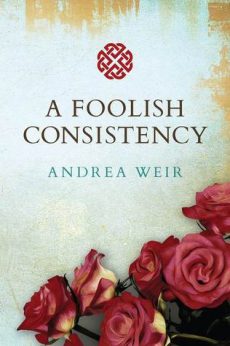
  • A FOOLISH CONSISTENCY by Andrea Weir – Women’s Literature, Family Drama, Romance

    A FOOLISH CONSISTENCY by Andrea Weir – Women’s Literature, Family Drama, Romance

    The course of true love almost never runs in a true straight-line, and this is certainly the case in Andrea Weir’s lovely romantic novel about second chances, A Foolish Consistency.

    Although Fate seems to have smiled on Dr. Will Tremaine and Callie Winwood, former sweethearts a couple of decades ago, when they meet again in an emergency room, their second chance at love is problematic. Will is a widower in Westin, a community in the East, and Callie is a divorcée in California. It’s not just the entire country that separates them, but the events of the last twenty-five years. Their attraction to each other is undeniable, however, and as feelings reawaken, they take the first steps to reconnect and build something new, something they hope will last.

    Inevitably, they have obstacles to overcome. Will’s children, Lizzy and Wiley, are thirteen and eleven, respectively, and still grieving the death of their mother, Joanna, two years earlier. Their maternal grandparents behave almost as if their mother were still alive, and they never acknowledge that Joanna suffered from mental health issues. While Lizzy reacts to her father’s new girlfriend with typical adolescent angst and anger, her grandparents completely overreact and plot to gain custody of their grandchildren. Their motives for doing so blind them to the reality of the situation and pit Will and his children against Callie and her grown children, especially her son, Ben, in his early twenties.

    Considerable depth is added to the narrative by Callie’s understanding of Lizzie’s feelings.  Having lost her own mother at an early age, Callie vividly recalls how difficult it was to accept her father’s new girlfriend who eventually became her stepmother. Although Callie loves Will deeply and wants a future with him, she also understands that Lizzy’s feelings are a priority, one that requires a great deal of patience and sensitivity. These qualities make Callie even more attractive to Will who reassures his children that his girlfriend is not seeking to take their mother’s place.

    Most scenes alternate between Callie’s first-person point of view and Will’s third-person outlook. This interchange between the female and male experiences of the romance gives the novel an intimate robustness, very appropriate for the narrative. The author handles the pacing just right, and the reader roots for the outcome one always wants in a romance. Still, the protagonists have much to learn about each other and themselves, and the author does not settle for a too easy denouement.

    Love once lost is not always easy to regain, even when the couple in question are like peas and carrots. Andrea Weir brings memorable characters, shimmering and confident prose, and realistic dialogue to her stellar contemporary romance of mid-life star-crossed lovers seeking a second chance in A Foolish Consistency.


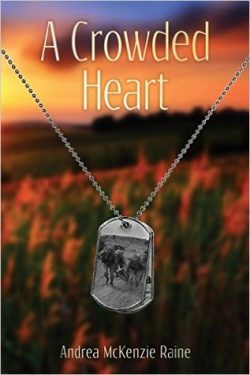
  • A CROWDED HEART by Andrea McKenzie Raine – Literary, Historical Fiction, Veteran/PTSD

    A CROWDED HEART by Andrea McKenzie Raine – Literary, Historical Fiction, Veteran/PTSD

    Willis Hancocks survives fighting in Western Europe during World War II but faces continuing battles of the mind at war’s end in Andrea McKenzie Raine’s poignant study of the plight of the former soldier in her historical novel, A Crowded Heart.

    Willis decides to remain in London rather than return to his native Canada where his parents and sister live near Vancouver. Eager to put the war behind him, he marries Ellie, an intelligent young woman who has studied art at Cambridge University. Her affluent parents approve of Willis, and her father offers to finance his new son-in-law’s study of law at Cambridge. The newlyweds’ future could not look rosier.

    This is, however, the story of a man who is haunted by the terrors of the battlefield. Life cannot proceed smoothly for someone who wakes from sleep in terror, who is plagued by survivor guilt, anxiety, and depression. Willis struggles to find his footing but repeatedly fails as he fights personal battles with alcohol, infidelity, and deception.

    Admittedly, these are poor weapons of choice to face the daily struggle of postwar life, and although he has periods of relative calm and sobriety, his sins and regrets continue to multiply. He recognizes his inadequacies as a husband and a father of two sons, one born out of wedlock to a mistress. Although Willis manages to earn his degree in law and launch a practice with his war buddy, Sam, he is never victorious at achieving inner peace.

    Raine wisely expands the narrative of the novel to reveal the wide net of war. Willis is not the only victim; the people in his life experience the after-shocks of fighting as well. Ellie is a dutiful wife but she is alone in her marriage, painting in secret because she can’t share her work with her emotionally remote, often absent husband. Willis spends years away from his family in Canada, neglecting them, and returns only when summoned after his mother’s death. He doesn’t engage with either of his sons and arranges to abandon the younger one altogether. It’s clear that the war will leave its mark on the next generation as well.

    The ending of the novel is not surprising, but it is powerful and deeply affecting. One is left thinking of all the soldiers who escape death but are nonetheless robbed of their lives. Standing beside them are loving, distraught family members and friends, people who fervently hope for a cure – some miracle that will return traumatized veterans to their former selves. Not to give up on those who have already given up on themselves is the challenge. Raine reminds us that doing so requires a full heart, indeed, a crowded heart.

    5 Star Best Book Chanticleer Reviews round silver sticker

  • The FLYING BURGOWSKI by Gretchen Wing – YA, Social & Family Issues, Fantasy

    The FLYING BURGOWSKI by Gretchen Wing – YA, Social & Family Issues, Fantasy

    In many ways, Gretchen K. Wing’s protagonist in The Flying Burgowski, Jocelyn Burgowski (Joss, for short) is a typical teenager.  She admires and appreciates a favorite teacher, argues with her older brother, Michael (in an awkward rebellious stage), and hangs out with her friends, the popular Savannah and the sweet social misfit, Louis. She loves to relax with a good book, usually one in the Harry Potter series. The third is her favorite.

    Then there are the atypical aspects of Joss’s life.  She lives off the coast of Washington, on Dalby Island, beautiful with its tall fir trees and surrounding water, although not a mall or a MacDonald’s in sight. Her father runs the all-purpose store and shocks his children when he abruptly marries Lorraine, the seemingly stereotypical librarian.  Joss’s mother abandoned the family nine years earlier for mainland life and has struggled with alcoholism and pill addiction.

    And then there’s Joss’s very vivid dreams, dreams in which she takes flight and soars over the island.  Unlike Harry Potter, she doesn’t need a broom.  No, she flies as freely as a bird.  On her fourteenth birthday, which occurs on the summer solstice, she discovers that the dreams were preparation for the real thing.  She instinctively takes off from The Toad, a large rock on the island, and life will never be the same.  How could it?  Even if she and Michael (in trouble again for driving his father’s truck into a ditch and smoking pot) weren’t sent to the mainland to spend time with their mother, Joss’s life is forever on a new course, one that is mapped against the sky.

    To Wing’s enormous credit, the novel never loses its convincing realism despite the main character’s spending a good portion of it in the sky, her arms outstretched, her body turning as she banks left and right, her lungs filling with the scent of lilies. The author weaves these scenes seamlessly, beautifully into the narrative.  We root for Joss as she plans her flight sessions, catch our breath when she takes a rough landing, her skin scraped, and worry with her that she’ll be sighted by someone who happens to look up at the evening sky. The realism is complemented, however, by the exhilaration of these scenes. Joss is so thrilled by the experience of flight that the reader wants to take her hand and witness what she does as a human bird, to feel that rush of air swim against our skin.

    Joss’s gift for flight, of course, is mired in old and interesting secrets that involve her mother and even her new step-mother. Her aerial talent is tested when she adjusts to a new school, unkind classmates, her mother’s substance abuse relapses, and the surprising but welcome maturation of her brother. Wing’s poignant and sensitive handling of Joss’s and Michael’s time on the mainland underscores the protective power of sibling relationships in the face of parental weakness or failure. The self-growth that they experience as a result stays with them when they return to Dalby Island and resume life as they knew it, but with far greater self-awareness.

    The Flying Burgowski isn’t your typical young adult book and that’s a very good thing.  Wing infuses realistic teen life, with all its problems, with a hefty dose of magic realism, and the result is an engaging and captivating fusion.  After reading it, don’t be surprised if you find yourself looking up at the sky, ready to sight the lucky human endowed with the gift of flight.

    5 Star Best Book Chanticleer Reviews round silver sticker

  • The SPANISH CLUB by Danielle Burnette – Y/A, Fiction

    The SPANISH CLUB by Danielle Burnette – Y/A, Fiction

    Seven Chicago teens spend one eventful week on a chaperoned field trip to Mexico. Traveling with the intention of cultural immersion, they instead learn love, forgiveness, and some serious life lessons.

    St. Francis High School Spanish Club members Brianna and her BFF Dana, along with five other friends are on a field trip that they won’t soon forget. It’s the summer before their senior year, and adulthood—with all of its attendant major decisions—looms. Flying into Mexico City accompanied by teachers Mrs. Fritz and Miss Yancy, they meet Miguel the guide, who ushers them through La Ciudad’s myriad monuments, cathedrals, and markets, as well as Teotihuacán, Guanajuato, and Guadalajara. It’s quite the whirlwind trip, with Miguel’s impassioned recounting of history adding meaning and depth for students and readers alike. Indeed, the rich imagery of the hi about astorical landmarks blossom on the page, and the descriptions of the people, the food, and the art should fire the imaginations of teen readers and instill in them a desire to travel to Mexico City and beyond.

    That said, The Spanish Club is not a travel essay, but a young adult drama, stocked with classic teen yearnings, choices, vanities, and pranks. Author Burnette does a marvelous job of imbuing the narrative with colorful angst: “At once, every blemish on Brianna’s body itched and squirmed for Enrique’s attention, and she stiffened under the weight of all her imperfections.” Her characters embody every emotional high and low – especially protagonist Brianna Garrett.

    Brianna is inseparable from her BFF, Dana Tate, until she discovers, with equal parts shock and delight, that heartthrob Enrique has shared her distant admiration since freshman year. A rift grows between the girls, and not only because of Enrique. Dana is jealous of Brianna’s growing friendship with dance team leader Stacia.

    But boys and BFFs aren’t the only things commanding Brianna’s attention.

    Before the trip, Brianna needed to acquire her passport. What she soon discovered forces a rift between the parents she always counted on for the truth. Brianna was adopted. And her parents never once disclosed the information. Now in Mexico, she rages against them and shuns their long-distance calls. But what brings eventual forgiveness is not her identity but her friend Dana.

    Throughout the story, the World Cup serves as a foreboding backdrop, with the alarming zeal of local news reports of fan-related tragedies. This culminates in a frightening confrontation that departs from the story’s general lightheartedness to make a sobering point, but also, brings Brianna and Dana back together, making The Spanish Club a very good summer read for Y/A audiences.

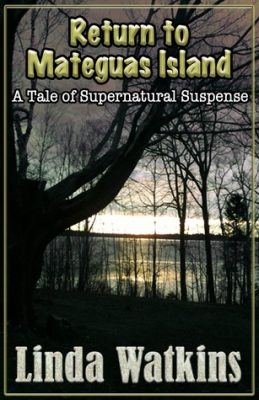
  • RETURN to MATEGUAS ISLAND by Linda Watkins – Literary Thriller/Paranormal/Occult

    RETURN to MATEGUAS ISLAND by Linda Watkins – Literary Thriller/Paranormal/Occult

    Return to Mateguas Island picks right up with the same intrigue, suspense, drama and mystery that Mateguas Island contained. A page turner from the beginning, this is a tale you will not want to walk away from. The story begins years later with, Karen Anderson along with her new husband Dex and her two teenage daughters returning to the island. Karen goes quite reluctantly, but daughters, Sophie and Terri, are on a mission to find out the truth about their father who went missing and subsequently declared dead.

    Return to Mateguas Island would fit nicely in the supernatural genre but has enough suspense throughout to lean toward this genre as well. This mixture of the two genres makes the story more complex and holds the reader’s interest throughout.

    In this second novel, author Linda Watkins has already established and developed her characters and yet goes deeper into development within these pages. The books do stand alone, but to get a full picture, it is advised to start at the beginning with Mateguas Island to fill in backstory and ascertain each character’s story arch as the tale continues.

    This story answers many of the questions from the first book. By the end of Return to Mateguas Island, however, you are left with just as many new questions and just as hungry for a third installment.

    Upon their return, Karen and the girls find the island relatively unchanged from the day they had left it behind. A day Karen hoped would have been the last they would see of this mysterious venue. The memories were too painful and too jarring for Karen and this quickly bubbled to the surface. As with the previous book, there is something just beneath the surface of things that happen on the island, subsequently, as readers dig into the second book, they will find themselves in a familiar environment.

    The story unfolds rather quickly as Karen once again displays odd behavior as the family returns to their old home. The intense story continues as a well-paced read with many twists and turns. The book holds its own next to the first novel and carries the tale, skillfully and smartly weaving in events that serve to whet readers appetites for the third book.

    High suspense and flashes of horror beckon American Gothic readers to Return to Mateguas Island, the second book in Linda Watkins trilogy –a stunning success leaving readers posed in anticipation for the next installment.

    5 Star Best Book Chanticleer Reviews round silver sticker