Tag: Family drama

  • MY CHRISTMAS ATTIC by Dennis Clausen – Heartwarming, Seasonal Literature, Family Saga

    MY CHRISTMAS ATTIC by Dennis Clausen – Heartwarming, Seasonal Literature, Family Saga

    A lonely child’s fantasy life intersects with reality in this Korean War-era tale of separation and reunion.

    At almost nine, Jake often escapes into his imagination, blotting out a couple of situations developing around him. He and his mother are hoping against hope that his father might someday return from the Korean War, and Jake cannot read. Words just seem to jumble up before his eyes, the other kids make fun of him, and worse – bullying has become routine.  These days, Jake tries every ruse to skip school until he is referred to a reading counselor who figures it out. Jake is dyslexic, as is the counselor, and this may mean he is, in fact, more intelligent than average, as well as unusually intuitive.

    Intuition begins to seep into Jake’s life as he spends time in the attic arranging the Christmas ornaments, wishing it could be “Christmas forever” for himself, and for everyone. One of the decorations is a porcelain figure of an old bearded man, Ebenezer, who holds a mysterious, unreadable scroll. Deciphering the scroll’s message will lead Jake into a world of psychic visions, ultimately leading to his conviction that his father is alive. Jake’s mother, who has built a sentiment-laden shrine to her lost love, holds on to the last shreds of hope even as her soldier husband is officially presumed dead. Together, she and Jake will learn the surprising truth.

    Author Clausen (Prairie Son) has an excellent grasp of the emotive power of the past to awaken the reader to timeless influences. In this story, the Ebenezer ornament said to be 100 years old, links old customs with a child’s search for peace and reassurance in the present. As the boy travels through time with the ancient sage, he becomes stronger, better able to face his current struggles.

    Clausen writes with authority about these two subjects, dyslexia and its effects on the mind, and “The Forgotten War” in Korea, where thousands of American soldiers remain unaccounted for to this day. He also links the earnest, childlike wishes of Jake to find solace and create solutions to the pervasive sadness of a mother mourning her husband while doing her best to support and encourage their only child.

    The novel begins and ends in a present-day framework in which we learn that Jake has incorporated his childhood adventures into an adult striving to expand the “forever Christmas” concept to a broader spectrum.

    Plausible fantasy with a clear connection to our national past composed by a practiced wordsmith, My Christmas Attic can be appreciated as a classic seasonal saga with a cinematic quality that speaks of broader possibilities.

  • AGED in CHARCOAL: A Stu Fletcher, PI Mystery Novel by Jeffrey Ridenour – Noir, Mystery, Detective Mystery

    AGED in CHARCOAL: A Stu Fletcher, PI Mystery Novel by Jeffrey Ridenour – Noir, Mystery, Detective Mystery

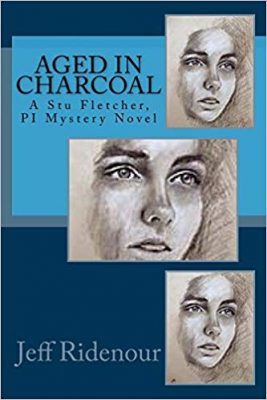
    Aged in Charcoal by Jeffrey Ridenour is a classic hardboiled detective novel set in 1960s Bay area California. This novel features dirty cops, bribes, an inept justice system, and Stu Fletcher, an ex-cop turned detective, who despite his jaded outlook wants to do the right thing.

    Fletcher has been hired by Maggie Ogilvy following her husband’s apparent suicide to find his long-lost sister, Bernie. Maggie doesn’t let Fletcher know what she plans to do once Bernie is found, only that she wants to know her whereabouts. It seems to have been her husband’s last wish to see his sister because Charles Ogilvy—a wildly successful architect who had his eye on running for lieutenant governor before his death, strangely didn’t leave behind any sort of suicide note. Instead, his last writing was a note to himself reading: “Find Bern. Must apologize.”

    With nothing much more to go on, Fletcher finds himself embarking on what feels like a wild goose chase and more than once realizes he has run into a wall and must backtrack. He soon gets the idea to ask a local artist to draw pictures of Bernie, each one progressively aging her so that he may be able to show people what she possibly looks like now. But the closer he seems to get to finding Bernie, the farther away he gets from what is to be expected from a case like this. Along the way, Fletcher also has to contend with the local mob and soon finds himself in mortal danger.

    This is the first book in the Stu Fletcher, PI thriller series. And while Ridenour unravels his story at a leisurely pace where nothing seems to happen quickly in the world of private investigating, the plot doesn’t want for twists and turns. This mystery uses slang from the time period in which it’s set, the ‘60s, and as such, some modern readers may cringe at some of the time-authentic slang. What readers will also find is a large cast of characters who serve to flesh out the setting, and an often-stark writing style that wastes no time in getting right to the point.

    Aged in Charcoal reveals the seedy underbelly of the justice system—from dirty cops to inefficient courts. And in the end, the only good ending may be the justice you make for yourself.

    Aged in Charcoal won First Place in the CIBA 2017 Clue Awards for Mystery novels.


  • BEFORE WE WERE YOURS by Lisa Wingate – Historical Fiction, Child Trafficking, Family Saga

    BEFORE WE WERE YOURS by Lisa Wingate – Historical Fiction, Child Trafficking, Family Saga

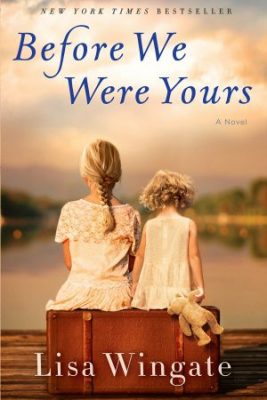
    For three decades (1920-50), the Tennessee Children’s Home Society (Memphis) appeared to be an above-board adoption agency but was actually a center for child trafficking. Under Georgia Tann’s greedy leadership, dozens of impoverished children were literally snatched from their mothers’ arms at birth, provided forged identify papers and sold to the highest bidder. What could be the harm? These “river rats” would have lives they could never have dreamed of in their affluent new homes.

    In this historical fiction novel, Lisa Wingate has done the world a great service by laying bare the life-long abuse, trauma, and despair that the “orphans” and their helpless parents endured (through large doses of willful blindness, the remaining records were not unsealed until 1995 – far too late for most chances of reunion).

    Wingate readily spans the generational gap by employing two women, bouncing back and forth between what was and what is. Rill Foss (eventually to become May Weathers and finally May Crandall) relives the brutal abduction from the Arcadia (riverboat home) to the grim reality of the children’s home before ending up after a long life in a nursing home. Living a life of privilege due to family pedigree, Avery Stafford uses her considerable legal skills to ferret out the truth as to why her dementia-suffering grandmother seems to be holding back a family secret – one that could well scuttle her father’s chances for re-election to the Senate.

    With that narrative technique put into play, readers will be intrigued to see if they can put the pieces of this familial puzzle together before the principals do.

    Real-life Georgia Tann is fictionally recreated and given a most believable tone as the ruthless baby-snatcher-for-cash. Her staff members include a nasty mix of Mrs. Murphy, a vicious matron who delights in all manner of threats and punishment alongside her pathetic cousin, Riggs, who tries to lure the prettiest of the girls into his lair and bed. All three of these failed humans can turn on the charm at the drop of a potential “buyer.” Not surprisingly, even forced adoption seems better than staying in the squalid conditions of their “rescue” home.

    By the time the skeletons finally escape the closet, it is truly disturbing what those who ought to have known better and have never gone to bed hungry will do in the name of “improving” the lives of our most vulnerable souls. Surely those days are over…

  • PRAIRIE SON by Dennis M. Clausen – Early 20th-Century Orphans, Family Drama, Biographies & Memoirs

    PRAIRIE SON by Dennis M. Clausen – Early 20th-Century Orphans, Family Drama, Biographies & Memoirs

    Lloyd Augustine Clausen has but one early memory of his real mother, in which she hugs him tightly displaying a deep love for him. Everything that follows is chaos and fear. He is handed over to an orphanage and by the time he is four or five years old, Lloyd knows two things: his adoptive Pa and Ma do not love him, and his role on the farm is to shut up and do as he is told. He takes Pa’s lunch pail out to him daily and tries to stay out of Ma’s way. For her part, Ma simply ignores him unless he does even the smallest thing wrong, inciting her evil temper.

    Had it not been for the daring protection of the farm’s two dogs, Buster and Minnie, Lloyd might well have been seriously injured or even killed by his adoptive mother. For example, one day he trips and falls down, breaking some eggs. Unconcerned whether or not he is hurt, Ma attacks him with a frying pan, only to be stopped by Buster. Another time, when Pa is in town playing cards, his Ma has a mysterious visitor come to the farm. When she locks Lloyd in the cellar, a place of total darkness, Buster finds a way to get his nose into the small space and offer comfort. Buster and Minnie, in fact, behave more like parents than the ones with whom he’s stuck.

    A friendly, mostly silent farmhand stays for a while and teaches Lloyd the art of machine repair and other skills needed to tend the farm, as Pa is increasingly lackluster in that regard. When the Great Depression hits, the family is often on the verge of starvation.

    Lloyd’s bright moments come when he spends time with a fellow orphan, Delores, condemned like him to be tricked, spat on and called “bastard” by the other, un-adopted children. A wandering cowboy once offers him a ride on his horse. Gypsies make him a fishing pole. And occasionally, neighbors, seeing the boy’s plight, step in to assure that Ma and Pa treat him better.

    Despite his terrible existence, Lloyd sometimes finds inspiration in the world of nature or the random kindness of others. As Lloyd grows older, he begins to research his past and through a series of serendipitous events, begins to find the answers he seeks.

    In 1979, author Dennis Clausen learned that his father Lloyd, who had been a distant but loving figure for him, was dying of cancer. He encouraged his father to write his memoir. The old man’s words, painfully written out on a few notepads, displayed a great talent for storytelling. Those words form the basis of this luminous coming-of-age saga of sorrow upon sorrow and the will of one little boy to keep looking for a better way.

    Bleak scenes of a weeks-long blizzard, a plague quarantine, and a tornado worthy of The Wizard of Oz provide lowering drama, as if the boy’s personal woes – being socked around by Ma, belted by Pa, and almost thrashed by school children until a local bully took his side – were not severe and frustrating enough. The direct effects of the Depression and then, rumors of World War II through the tinny voice of Roosevelt on the radio, fill out the historical picture. And, happily, the book’s ending is a kind of victory for the tough, lonely fighter.

    Clausen has skillfully woven his father’s handwritten pages into a riveting story worthy of Steinbeck, a cinematic setting redolent of fundamental American community values, and a paean of hope for all orphaned children.


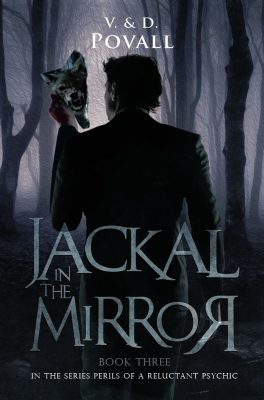
  • JACKAL in the MIRROR by V.&D. Povall – Ghosts, Mystery/Suspense, Thriller

    JACKAL in the MIRROR by V.&D. Povall – Ghosts, Mystery/Suspense, Thriller

    Panic surfaces as bodies of murdered young women are found in the once peaceful lake located by a small, rural town in California. No one can find the murderer, let alone stop him. In the third psychic adventure book by authors V. & D. Povall, the reluctant psychic Sarah Thompson will follow a voice that rings with agony. She will try to track and stop the killer in Jackal in the Mirror.

    Sarah Thompson has embraced the love of her new family and seems to be managing her sometimes unpredictable sixth sense. She makes plans for a fun four-day escape with her girlfriends from work to Eureka, California; a weekend that turns into a heart-pounding, fist-tightening trip of the most shocking events. It all starts when Sarah explores the little town’s shops. A strange book, Jackal in the Mirror, finds Sarah in the town’s antique bookstore. The book mystically weaves a story of murder, terror, misplaced loyalties, sweet love, and innocence. Sarah is the only one who can hear the call for help, the only one who knows that time is running out for someone, the only one who can help.

    In fact, the spirit driving the book’s messaging is insistent that Sarah is the only one allowed to hear the story. Sarah finds herself increasingly emotionally and physically isolated by the ghostly storyteller, to the point that phone reception to loved ones is mysteriously cut off, and even best-intentioned friends are blocked from helping. Sarah is truly left on her own to solve this mystery. Her worried husband Conrad does all he can to try and find her, but she is secreted away, out of reach. Sarah can only hope that with the clues from the story she can piece together the mystery and save an innocent life.

    The authors are a husband and wife writing team that has also authored screenplays, and fiction novels, in addition to this murder-mystery series. They’ve partnered in creating yet another tale that entertains and captures the imagination. Their writing is rich and exciting; readers may find they cannot put the book down.

    Jackal in the Mirror explores dimensions of trust, loyalty, and love when tested by separation, misunderstanding, and regret. At times the spirit’s sentiment is so strongly insistent in urgently guiding Sarah that the underlying emotion can only be expressed poetically. Still, emotion is not always sweet, sometimes, as Sarah discovers, it is hidden fury.

    Read our reviews of the first two novels in this riveting series, The Gift of the Twin Houses and Secrets of Innocence.


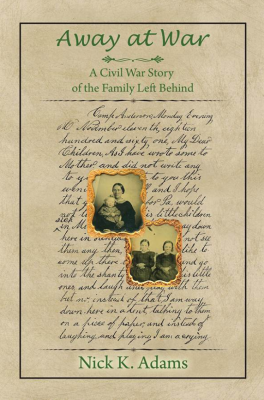
  • AWAY at WAR: A CIVIL WAR STORY of the FAMILY LEFT BEHIND by Nick K. Adams – Historical/Bibiography, Family Saga, Civil War

    AWAY at WAR: A CIVIL WAR STORY of the FAMILY LEFT BEHIND by Nick K. Adams – Historical/Bibiography, Family Saga, Civil War

    In 1861, like so many other American men, David Brainard Griffen took leave of his family and enlisted in the army, volunteering as a soldier for the Union. Also like so many other American men, he hoped he’d be home in a few months, that this Civil War would soon be over, and he’d be reunited with his wife, Minerva, his daughters, Alice, seven-years-old, Ida May, five-years-old, and his infant son, Edgar Lincoln. To minimize the pain of separation from his family, he wrote them letters from the field of battle, more than 100 accounts of what he was doing and witnessing as a 2nd Minnesota Volunteer. While the book is one of historic fiction, the letters are genuine, and the characters are based on actual people. The author of this fine account, Nick K. Adams, is the great-great-grandson of Corporal David Brainard Griffen.

    As compelling as the Corporal’s letters are, the mainstay of this book is about those left behind on the Minnesota prairie. In the introduction, Adams notes, “I invite you, dear reader, into the lives of this family who represent the high personal cost that waging war – for whatever cause, good or evil, inevitably produces.”  In this manner, the reader spends time with a family doing the best it can while the head of the household is away.

    One feels like an invisible member of the clan while watching Minerva and her children go about their ordinary, but in many ways, extraordinary lives. Their days are made up of chores. They care for chickens and livestock, barter eggs in the nearby town of Alba for fruit, shoes, and fabric. They make candles out of beeswax and tallow and plant crops to harvest. Livestock are slaughtered. Minerva teaches her daughters to make cheese, a skill she learned during her girlhood in Vermont. They visit with family members who live in the area, enjoy spring and summer days and bundle warmly for the frigid Minnesota winters. Alice attends school and, eventually, Ida May does as well. Edgar Lincoln graduates from baby clothes to his first set of overalls.

    It’s the minutiae of life, the everyday details that build and hold this family, and every family, together. But the reminder of the Civil War is always there. Alice uses a game of checkers to explain warfare to her little sister, and the family gathers to read and reread letters from a husband and a father they miss dearly. They write to him, as well, letting him know how they are coping in his absence. And, of course, there is the added tension of not knowing how long the war will last and whether Brainard will be among the fortunate men to make it home.

    Like the best young adult novels, this book draws a universal audience.  Every reader will feel enriched reading this vivid, charming, and poignant account of farm life in the mid-19th century amidst the backdrop of the Civil War. In addition to an account of family life, one learns much about practical matters in a rural, historic setting.

    Teachers who use Laura Ingalls Wilder’s books in their curriculums will want to add Away at War: A Civil War Story of the Family Left Behind to their lesson plans. There’s a connection between the authors; Alice Griffen married Laura Ingalls Wilder’s cousin. For those interested in simply reading Brainard Griffen’s letters, Adams published them as a collection in an earlier work, My Dear Wife and Children:  Civil War Letters from a 2nd Minnesota VolunteerPut in the context in this lovely novel, however, the letters are a reminder of what was happening in these lives when pen wasn’t put to paper, when a mother and her children had to do whatever was necessary to get through the day and rest for the coming one. This book is both simple and profound, a reminder of a time and place during a tumultuous time in American history.

    Away at War: A Civil War Story of the Family Left Behind won 1st Place in the 2017 CIBA competitions for unique stories of the United States, the Laramie Awards.

    My Dear Wife and Children: Civil War Letters from a 2nd Minnesota Volunteer won Mr. Adams 1st Place in the 2016 CIBA competitions for Memoir, the Journey Awards.


  • DRAGON SPEAKER – Book One of The Shadow War Saga by Elana A. Mugdan – Fantasy, Family Saga, Action/Adventure

    DRAGON SPEAKER – Book One of The Shadow War Saga by Elana A. Mugdan – Fantasy, Family Saga, Action/Adventure


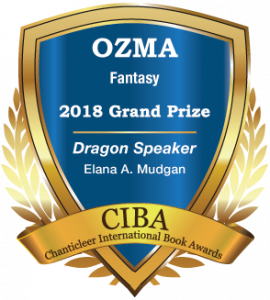
    Dragon Speaker, Book One of The Shadow War Saga by Elana A. Mugdan won the CIBA 2018 Grand Prize in the OZMA Awards for Fantasy Books! Congratulations!


    Ozma Grand Prize Winner Badge for Dragon SpeakerA young girl is charged with rescuing a dragon and, ultimately, saves her world in this wide-reaching fantasy conception of love, war, danger, and magic. Massive amounts of magic!

    Keriya is a simple girl of no great pedigree who lives in Aeria where everyone except her wields some form of magic. At age 14, she knows she will not be selected to prove herself worthy of a greater destiny in the annual Ceremony of Choice. But she has to try. Even though the consequences of failure will be a life of slavery, she yearns for the opportunity. She approaches the selection committee and begs ─no, demands ─ a chance.

    Like the others chosen in the Ceremony, she goes alone into the forest to seek her destiny. There she meets the great god Shivnath who assigns her the task of locating and protecting the last of the dragons, Thorion. She must fight against the most pervasive evil; a monstrously powerful force named Necrovar, skulking in the land of Allentria. In giving her the necessary, but unnamed, gifts to accomplish the task, Shivnath gives her shining purple eyes that mark her as unique, perhaps dangerously so.

    However, no one believes Keriya’s claim that Shivnath has given her the ability to fight Necrovar without help. But Keriya knows her destiny. She takes the name Soulstar to give herself inner strength, and the adventure begins.

    Keriya’s journey is longer and more crooked than she had envisioned, and soon she is joined by her childhood rival, Roxanne who has many magical powers and by Fletcher, whose magic, like his personality, is rather weak. Dangers surround the trio at every turn, and they soon learn that trust must be earned and friendships must be carefully guarded.

    Author and award-winning fantasy film-maker Mugdan has been writing this intriguing saga since she was in high school, and perhaps because of that, has retained a remarkable empathy for her teen heroine. Keriya is a multi-faceted character, capable of getting fed up with her shortcomings and ashamed of her failures while maintaining in her spirit the belief that she will have what it takes to act courageously in a crisis. Mugdan movingly depicts Keriya gaining the skills and confidence she will need for cosmic combat. The author also shows this growth in Keriya’s companions Roxanne and Fletcher, who are themselves facing challenges they never dreamt of; and the three are gradually gaining respect for each other.

    Mugdan also manages to make the dragon a sensitive, likable player in this fantasy, while at the same time creating some super-unlikeable evil-doers: shadowbeasts, giant slugs, bogspectres, and of course the almost unconquerable Necrovar. Add to this a bit of romance, some supernatural magic, and at least one acrimonious enemy lurking in the background, and you have the recipe for a highly successful first in series fantasy novel.


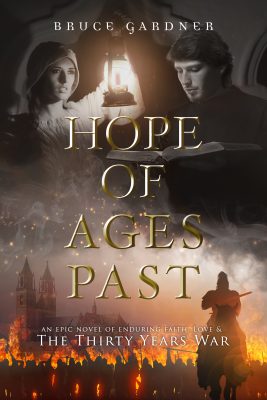
  • HOPE of AGES PAST by Bruce Gardner – Historical Fiction, Thirty Years War, Historical Romance, Family Saga

    HOPE of AGES PAST by Bruce Gardner – Historical Fiction, Thirty Years War, Historical Romance, Family Saga

    A saga writ large on the stage of 17th Century Central Europe,  Hope of Ages Past portrays the deeply personal impacts of religious faith and love amidst the brutality of war.

    Peter Erhart and Hans Mannheim are teenagers when they first meet in the Bohemian capital city of Prague at the outbreak of the Thirty Years War in 1618. These are two of the three central, fictional, characters in Bruce Gardner’s noteworthy interweaving of fact and reasoned conjecture set during the first half of the war. The boys represent the two religious factions in that conflict: Peter is Protestant; Hans, Catholic. The meeting in Prague, based on a real event including actual historical participants, provides the backdrop for a fictional drama that is set in motion when Peter reaches beyond the sectarian divide to help Hans at a moment of deep disgrace. Hans will never forget that kindness.

    As rebellion and conquest fire up across Europe, Peter, in his twenties, becomes a contentedly married Lutheran pastor in Magdeburg, Germany. Opposed by powerful rivals and threatened by the Catholic imperial army now approaching the city, he encounters Anna Ritter – a country peasant girl of uncommon beauty and inner strength who has secretly admired him for years and who is destined to share his trials. Each must fight bravely for the survival of their families and friends when local villains invade countryside cottages and the army, led by an awe-inspiring Black Knight, besieges the city. At the pinnacle of their trial, unthinkable tragedy brings Peter and Anna together and links their fates with Hans, now a grown man with a reputation to prove. Events eventually bring the three together in the siege’s aftermath, and a strange and unexpected reconciliation occurs — one that is put to the ultimate test in a final, horror-filled ordeal.

    Gardner, delving deeply into the philosophical issues at the core of the Thirty Years War, very deftly maintains an over-arching theme of religious differences – and similarities – in the midst of a thrilling, continually evolving panorama of warfare, intrigue, and romance. Interlocking the two storylines – interpersonal and international – is the repeated possibility for human compassion to emerge despite deep religious disagreements. Gardner’s skillfully drawn characters, both Catholic and Protestant, are confronted with choices – to kill, to help, or to ignore their fellow human beings in times of terrible suffering. Gardner fairly and intelligently presents the positions of both groups.

    Love conquers hate and uplifts two great faiths in Bruce Gardner’s Hope of Ages Past, contrasting romance, religion and family cohesion with the upheaval of battle and blood, all balanced by a thought-provoking, well-considered overview of the western world’s Christian heritage.

    Ultimately, Gardner has gifted us with an epic novel of enduring faith and love set amidst the brutality of the Thirty Years War in Europe. A very good read.


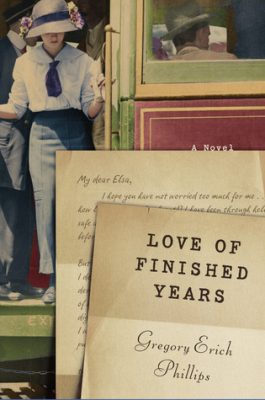
  • LOVE OF FINISHED YEARS by Gregory Erich Phillips – Historical Fiction, Literary, WWI

    LOVE OF FINISHED YEARS by Gregory Erich Phillips – Historical Fiction, Literary, WWI

    Overall Grand Prize Badge for Gregory Phillips's book The Love of Finished YearsAn immigrant’s journey, a forbidden love, a war to end all wars collide on the pages of a beautifully written historical fiction, Love of Finished Years by Gregory Erich Phillips.

    At twelve years of age, Elsa Schuller carries no expectations when she reaches Ellis Island in 1905. In fact, she has no idea why her father insists on leaving Germany for this supposed Land of Opportunity. Riddled with nothing less than challenges and hardship working in the sweatshops in lower Manhattan, Elsa’s only ray of hope is learning how to read and write English.

    Her studying pays off when she’s hired seven years later to work as a maid and translator for an upper-middle-class family, the Grahams, on Long Island. For the first time, Elsa begins to dream of something more than the ragged gray life she and her family have lived thus far.

    Elsa is not quite sure what to make of Dafne, the Grahams’ ebullient yet impulsive seventeen-year-old daughter, who disregards class distinction and is fascinated by Elsa. After a time, the maid and her mistress become good friends. A few years later, Dafne becomes engaged to a close friend to both Dafne and Elsa, Glenn Streppy.

    Unfortunately, their engagement is overshadowed by the war that is brewing. And to Dafne’s disappointment, Glenn enlists in the army. It doesn’t help that he unexpectedly catches her with his best friend when he tries to visit her while on leave from his military responsibilities.

    Glenn cuts off all contact with Dafne, which saddens Elsa as she misses his friendship. In a daring move, Elsa visits him at his stationing post just before his transfer to Europe. It is during this short visit she realizes that she is in love with him. Moreover, Glenn reciprocates her adoration. While Dafne successfully snubbed the social mores of the day, Elsa cannot. She is still just an immigrant from a poor family—a poor German family—and has no right to fall in love with a man of standing.

    While guarding her emotions, Elsa has something even worse to consider: the reality that this encounter may very well mark the last time she’ll ever see her dear friend, Glenn, alive.

    Award-winning author Gregory Erich Phillips produces a poignant early 20th-century plot. So much more than your typical love story, Love of Finished Years raises readers’ consciences and invites them to consider the realities of a time not too long ago (and in some ways, still relevant in today’s discourses on immigration) when people were divided not only by language but by the social mores and their class in American society, but also between rich and poor, “citizen” and “immigrant,” male and female.

    Incorporating various themes into his absorbing plot, Phillips highlights the importance of workers’ rights (Triangle Shirtwaist Factory) the Women’s Suffrage movement; and the plight of immigrants, especially during The Great War. Some examples include the use of propaganda against the American Germans (via Liberty Bonds); again, the use of propaganda to boost American support, and the immorality of war.

    Laced with a well-defined cast, Love of Finished Years opens at a critical moment in Elsa’s life before taking readers back in time to her arrival to America followed by a chronological lead up to her relationship with Glenn and Dafne. Key to Phillips four-part story line is his use of genteel dialogue—typical of that era—to build emotional tension not only between his primary characters but secondary characters as well.

    From the riveting opening that takes place in NYC’s Lower East Side’s sweatshops until its gripping conclusion, this enthralling novel vividly portrays the desperate times of German immigrants landing at Ellis Island in 1905 in search of a better life. A timely read, illuminating the issues we are still experiencing a century later, Phillips reminds us that love, light, and perseverance can help us find a way to overcome almost any obstacle.

    Love of Finished Years is destined to claim a spot alongside our favorite reads. Love of Finished Years was awarded the Chanticleer Grand Prize while still in manuscript form. It has since been published and is highly recommended!

    5 Stars! Best Book Chanticleer Book Reviews

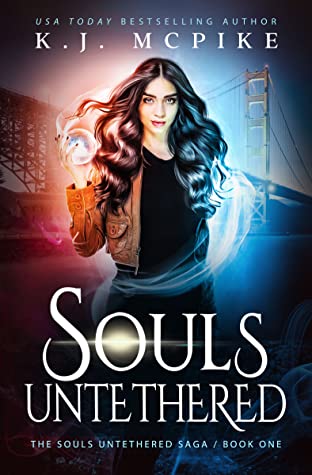
  • SOULS UNTETHERED SAGA, Book 1 by K.J. McPike – YA Metaphysical, Contemporary, Action/Adventure

    SOULS UNTETHERED SAGA, Book 1 by K.J. McPike – YA Metaphysical, Contemporary, Action/Adventure

    Lali Yavari has her hands full. She’s the oldest of five siblings, a bright, sensitive daughter of a scientist (her father) and a loving mother. Except, her mother up and abandoned the family leaving only a cryptic note behind. And now Lali’s having strange visions of things and people she does not know coupled with the disturbing ability to astral project her consciousness to another place—another dark and beautiful place.

    Imagine her surprise when one of the people from her visions shows up as the new kid (#hottie_alert) at school! The surrounding cast includes her boy-crazy best friend, Paisley (and Paisley’s new annoying side-kick), and Nelson, a buddy Lali has grown up with since pre-school. Just to be clear: Nelson is not fond of NewBoy, Kai. In fact, Nelson is downright irritated over all the attention Lali is suddenly giving to the new boy. But Kai’s arrival at school is no accident. He knows more about Lali than she does—why she’s having visions and, perhaps more importantly, what the visions mean. He may even be able to help Lali decipher her mother’s note, thus solving the puzzle of her whereabouts.

    But his assistance comes with a price. Kai’s baby sister also disappeared shortly after she was born, and Kai wants Lali to find her. Kai knows something no one else does: Lali is the only person who can astral project to the alternate reality of Alea.

    Alea is filled with thick white trees and grass that’s red and yellow. Beautiful or not, Lali soon learns that Alea is a dangerous place whose citizens are watched by a controlling government with a police force known as the “Eyes and Ears.” Could this surveillance operation have something to do with Lali’s mother’s disappearance? If so, what has her mother done to earn their wrath—and how is her mother connected to Alea in the first place? Past and current events collide in a deeply suspenseful narrative that will have readers turning page after page to determine which characters are good and which are evil. Fittingly, Lali’s brothers and sisters get in on the action and the adventure ramps up in nail-biting intensity.

    McPike gives us a strong family full of teasing, quarreling and sarcasm, yet indisputable evidence of a deep and abiding trust between brothers and sisters alike. The dialogue is fast-paced, witty, and wholly believable throughout the book. Here we have a splendid contemporary metaphysical young adult novel that deserves a place alongside our beloved Ursala Le Quin.

    Souls Untethered is the story of an endearing, resourceful teenager who will stop at nothing to reunite her family.

    *Note: Souls Untethered original title, Xodus, won first place in the 2016 Dante Rossetti Awards for Paranormal Y/A Fiction.

    • Writing: Excellent
    • Sex: None
    • Violence: Some physical combat, nothing graphic
    • Narration: Prologue is in 3rd person; the main novel is in 1st person; Epilogue is in 3rd
    • Tense: Past
    • Mood: Suspenseful with comedic moments

    5 Stars! Best Book Chanticleer Book Reviews